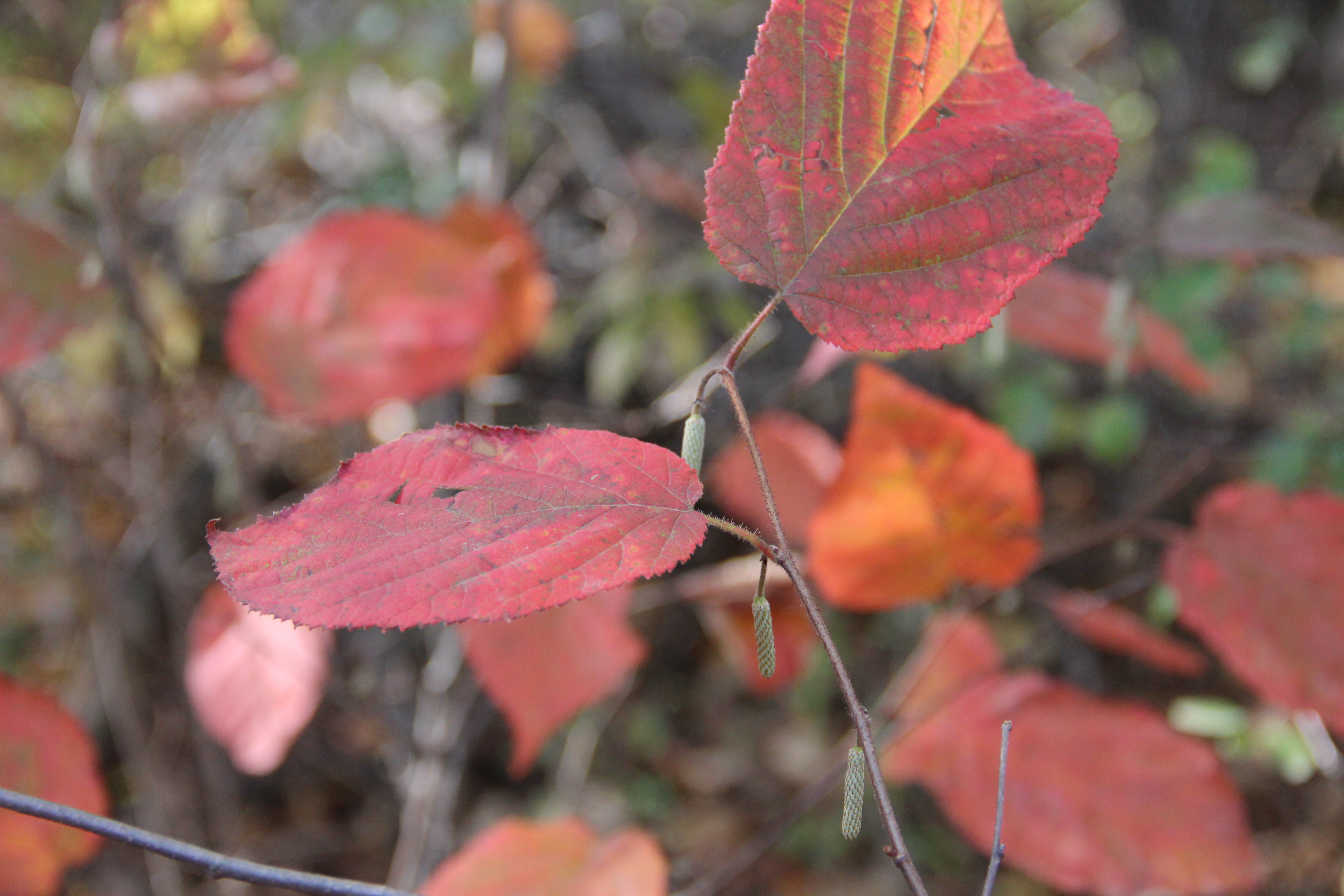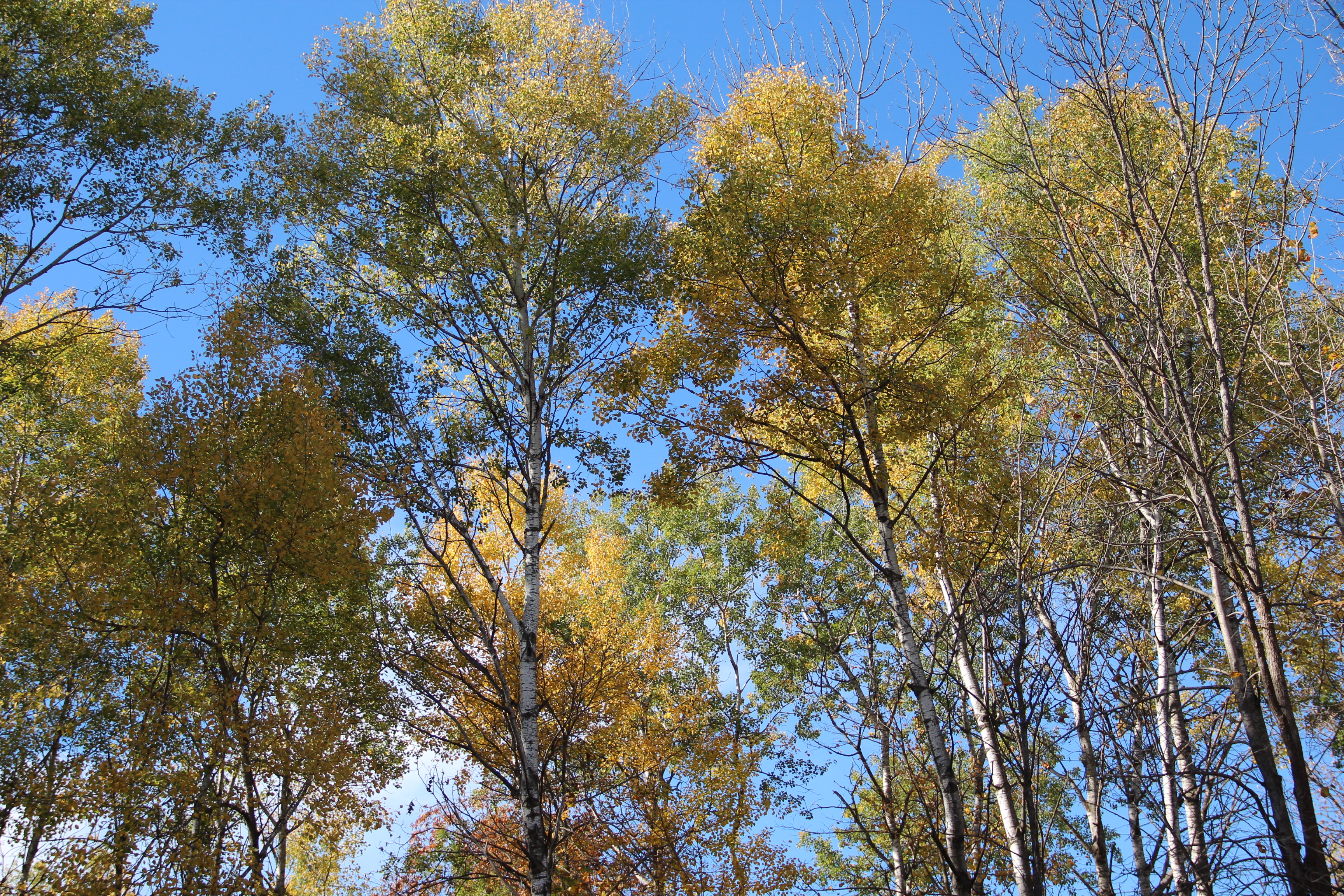
Aspen, hazelnut, oak — both red and white — add their glow to the autumn hardwood forest. Carotenoid pigments, which color pumpkins, yellow squash and corn, produce yellow, gold and orange leaf coloration. Anthocyanins produce red and purple colors in raspberries, grapes, cherries and some autumn leaves. The brown coloration found in some species of oak is produced by tannins, which also color tea, some kinds of wine, and some nuts, such as walnuts, pecans and acorns. On a recent day-trip to our cabin, I photographed changing leaves in the woods along the Snake River in east central Minnesota. Each tree has a unique beauty in the shape and color of its autumn leaves.
Nature Photography
Early October Wildflowers: Zigzag Goldenrod
Twelve or more species of goldenrod grow in Minnesota. All provide an important source of autumn nectar to bees, butterflies and insects, and also give a burst of long-lasting color at the end of the growing season. Most goldenrod species grow in sunny locations, but zigzag goldenrod (Solidago flexicaulis) prefers shady woods and woodland borders. It’s smaller, daintier and better-behaved than many of its cousins.

A patch of zigzag goldenrod (Solidago flexicaulis) grows in dappled sun near a hazelnut thicket along the banks of the Snake River in east central Minnesota.
Known also as broad-leaved goldenrod, it has oval-shaped leaves rather than thin narrow ones typical of many goldenrods. The stem bends a little bit at each node, hence the name zigzag. An interesting fact: Sometimes allergy sufferers blame their misery on goldenrod, but ragweed is the true culprit. Unlike ragweed pollen, which is wind-dispersed, goldenrod has sticky pollen that is dependent upon insect pollination. So, if you’re sneezing in the fall, it is primarily caused by the pollen of ragweed and nettle! To learn more about the difference between ragweed and goldenrod, visit the University of Minnesota Extension website for an excellent, succinct overview.
Lake Darner Dragonfly
I love dragonflies for their aerial acrobatics, beautiful colors and ancient presence — they’ve flown Earth’s skies for about 300 million years. In Minnesota, a few species of large, colorful dragonflies are active into October. Last week I found a darner (Aeshna) dragonfly sunning itself on a nearby cabin.
Called darners for the resemblance of their long abdomen to a darning needle, the blue or mosaic darners can be confusing to tell apart. I believe the one I photographed is a lake darner (Aeshna eremita), based on the notched side stripe, the vivid greenish-blue jewel-like coloration of the stripes, its length (about three inches) and its vertical perching position. It flew away before I could get close enough to see its facial markings. Lake darners are native to Canada and the northern United States, and are the largest species of North American darner. They prey on mosquitoes, wasps, mayflies and most other kinds of soft-bodied insects.
Related Websites:
The Dragonfly Website includes a great overview of dragonfly facts in its “Frequently Asked Questions” section.
ARKive.org features a profile and photos of the lake darner, along with thousands of other plant and animal species.
Misty Autumn Morning
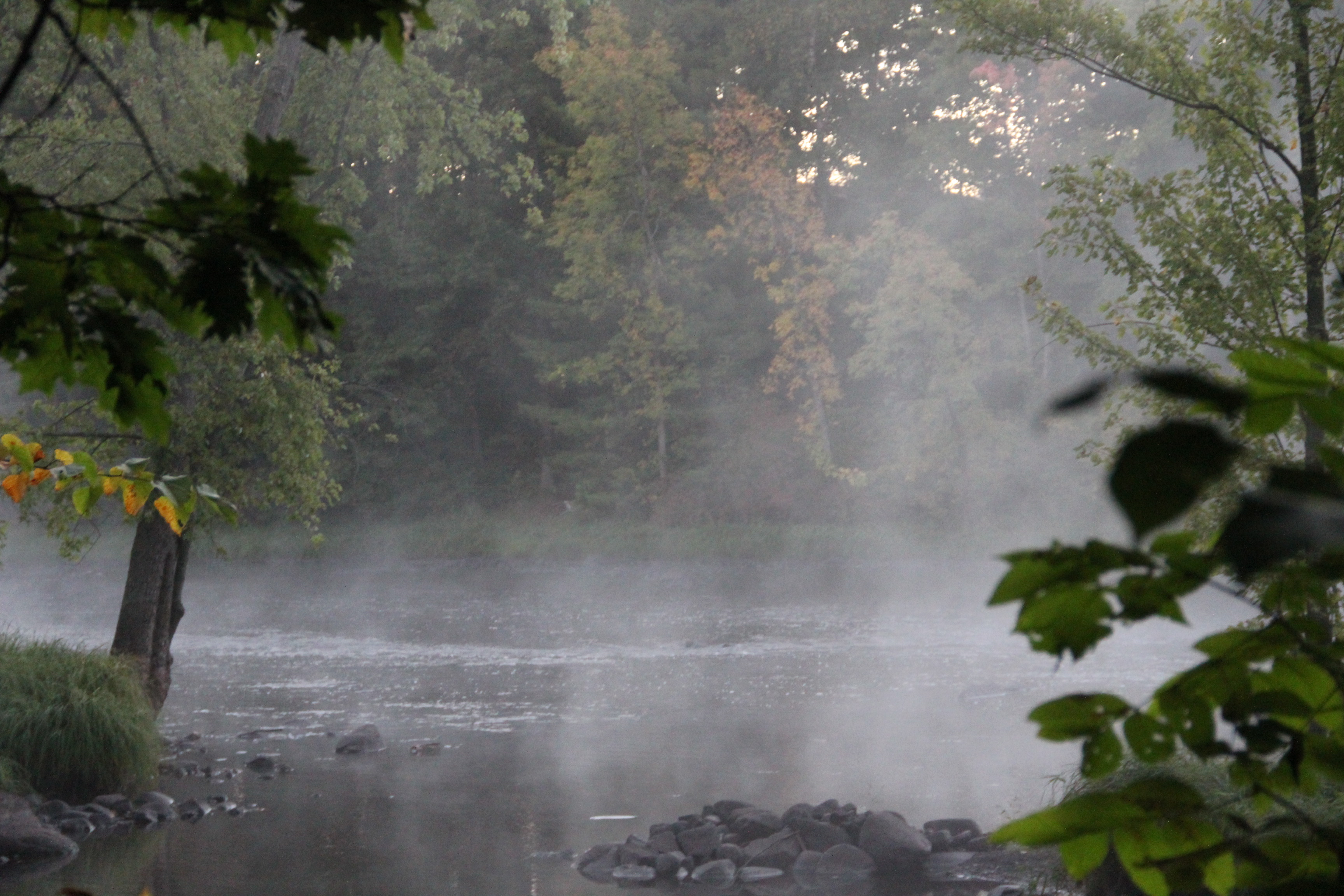
Mist curls, rises, swirls over the Snake River in the light of early dawn and a full moon. It is the morning of the autumnal equinox. The air is calm and chilly, about 42 degrees. A touch of autumn color tints a few trees. Pileated woodpeckers and a northern flicker sound their ringing calls in the woods. A small group of black-capped chickadees gurgle softly to each other as they hunt for insects in the hazelnut bushes on the riverbank. In a few minutes, the sun will rise, the mist will vanish and the day will gradually warm to 70 degrees. But for now, the river valley is hidden and serene.
September Garden
Our garden reached its peak a few weeks ago, but it’s still full of color and life in mid-September. Butterflies, many species of bees, and dragonflies are present. A tiny charcoal-colored mouse slices off the black-eyed Susan flower heads leaving long, empty stalks. (One year I found a mouse’s stash of flower heads and seeds in my garden toolbox!) A family of cardinals eats red yew berries; chipmunks and squirrels munch on the last of the beacon apples. Here are a few of the flowers and insects in our garden on this warm, sunny afternoon in St. Paul, Minnesota:
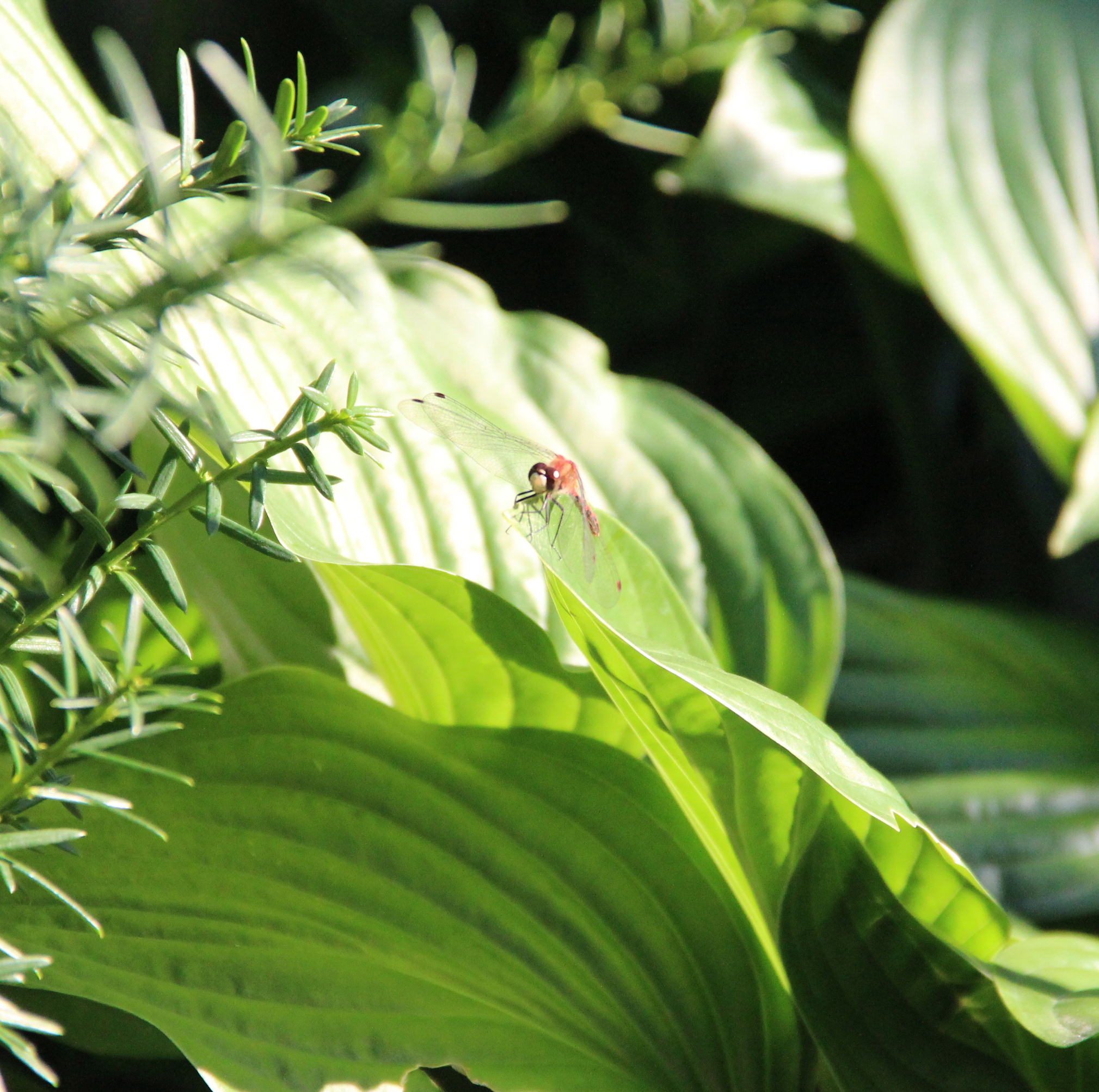
White-faced meadowhawk dragonflies patrol the garden for mosquitoes and other small, soft-bodied insects. Many years these dragonflies are active in our garden until mid-October.

Heath asters (Symphyotrichum ericoides) are native to the eastern and midwestern United States and Canada.
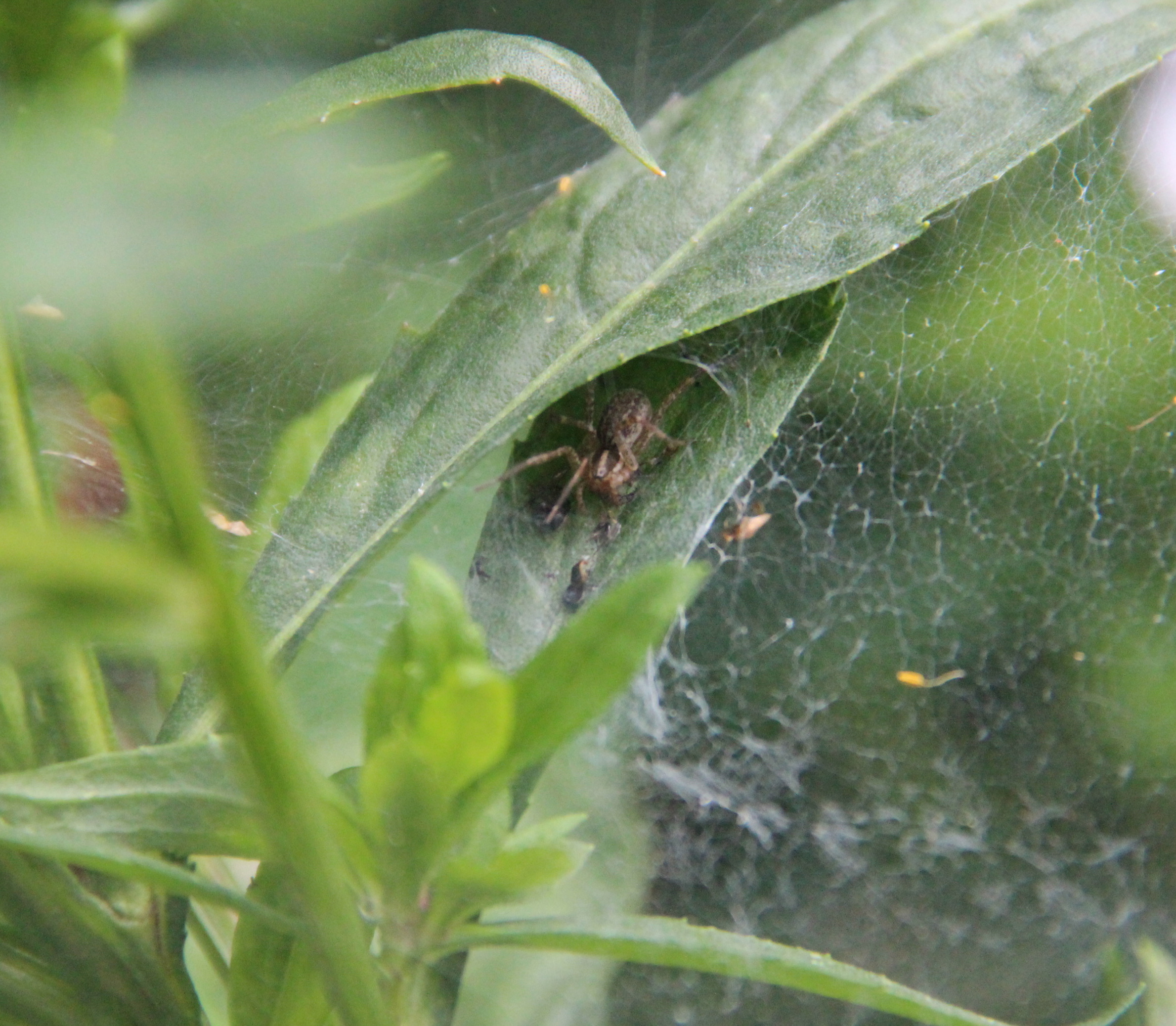
Grass funnel spiders (Agelenopsis) are shy spiders that build flat webs with a funnel or tube at the back of the web. The spider rests out of sight in the funnel. When an insect lands on the web, the spider quickly captures it, bites it and wraps it in silk.
After many days without monarchs, a straggler sipped nectar from several different flower species.