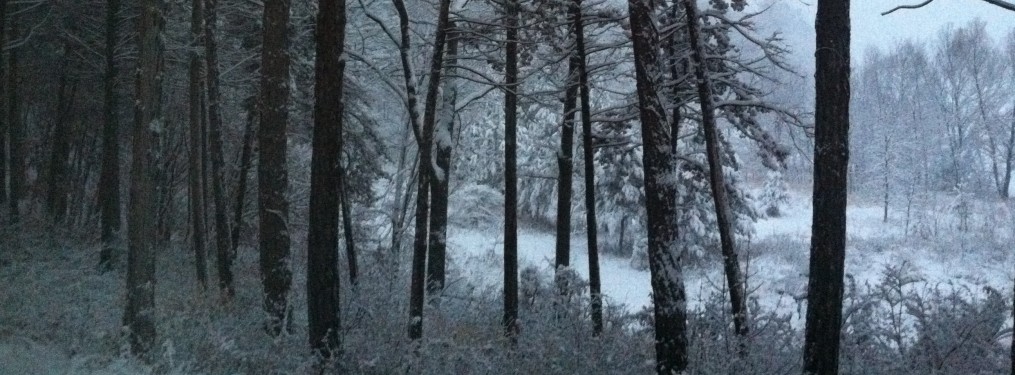
Musings on a Patch of Sunlight

We are creatures of the sun. We seek out solar spaces — places of warmth and light, though they are fleeting in Minnesota’s late October days. I share my spot of radiance with lady bugs, a meadow hawk dragonfly, a butterfly, bumblebees and a hardy green bee. They soak up energy to power their flight muscles, and I to relax sore back muscles. I revel in this gentle warmth and comfort of a sort I won’t feel again until next spring. 

These solar rays travel 93 million miles (150 million kms) in approximately eight minutes and fuel most of life on Earth. Specialized green plant cells called chloroplasts capture sunlight and transform it into glucose to power a plant’s existence. This converted solar energy is transferred to all creatures who eat the plants, and, in turn, to all who eat the creatures.

We are the stuff of stars, our atoms born in the fusion furnace of some sun, who knows where or when. Scientists believe that most hydrogen and helium atoms were produced during the Big Bang about 13.8 billion years ago. As stars began to “burn” and move through their life cycle, the hotter, denser stars produced heavier elements needed for life, such as carbon, nitrogen and oxygen. The heaviest elements (anything greater than iron) were generated during supernovae, when old, very large, heavy burning stars collapsed and exploded, spewing out elements into the universe to be used again.

I like to ponder these mysteries of creation and connection, of where our atoms have been and will someday be after my time. What better place to reflect than within a warm pocket of sunlight shared with a few earthly companions?

A green bee (Agapostemon ssp.) nectars on (Heliopsis ‘bleeding heart’).

An autumn meadowhawk dragonfly (Sympetrum vicinum) suns on our garden wall. These dragonflies often remain active into November.
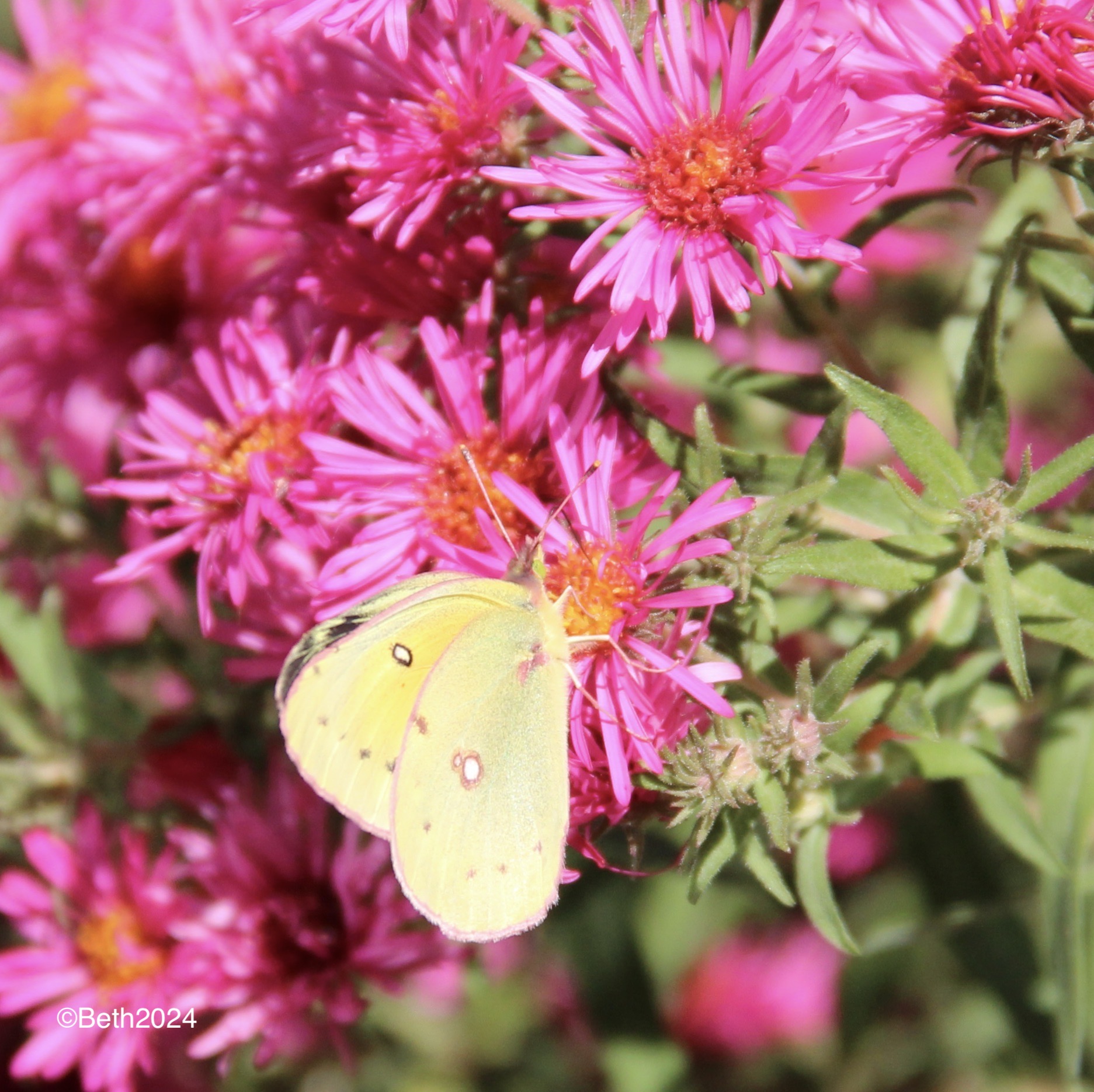
An orange sulphur (Colias eurytheme), nectars on the last of the asters (Symphyotrichum novae-angliae).

Sources and Further Reading
The Early Universe

Cosmic History

Our Sun: Facts 

DOE Explains Nucleosynthesis

Are We Made of Stardust?

Baltimore Orioles

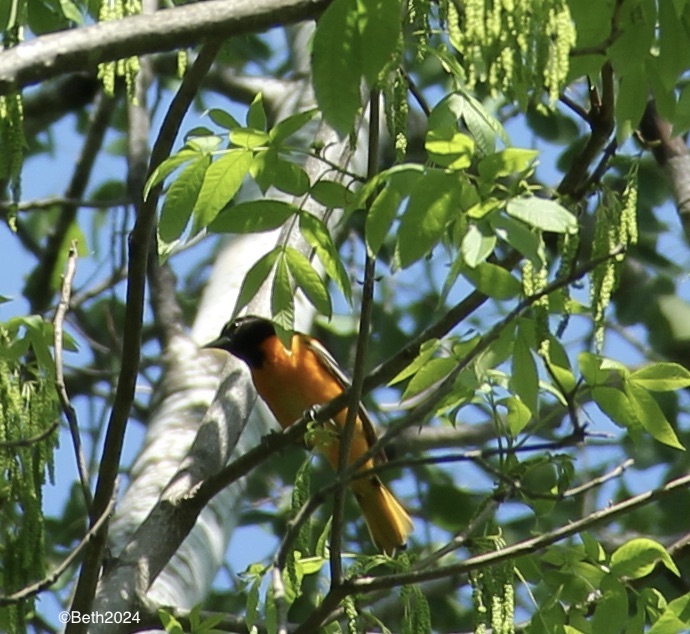
Baltimore orioles were named for the orange and black colors on the heraldic crest of the Baltimore family of England, for which the City of Baltimore, MD, is also named.

Like miniature suns, Baltimore orioles (Icterus galbula) light up early summer’s lush green foliage. About the size of a red-winged blackbird, these orioles are colorful members of the blackbird family. They are often recognized for their golden color and beautiful woven hanging-basket nests.¹

I saw my first Baltimore oriole in the Twin Cities when I was five or six. Graceful American elms lined every street then, and were the preferred nesting tree of orioles. Since the demise of the elms by Dutch elm disease, many of the orioles I see and hear are in the woods at our cabin. In the city, I find them most often when I walk next to the Mississippi River and around the Minneapolis lakes. Their call is described as paired, pure flutelike notes. They’re easy to listen to and their song contains fewer harsh notes than other oriole species.

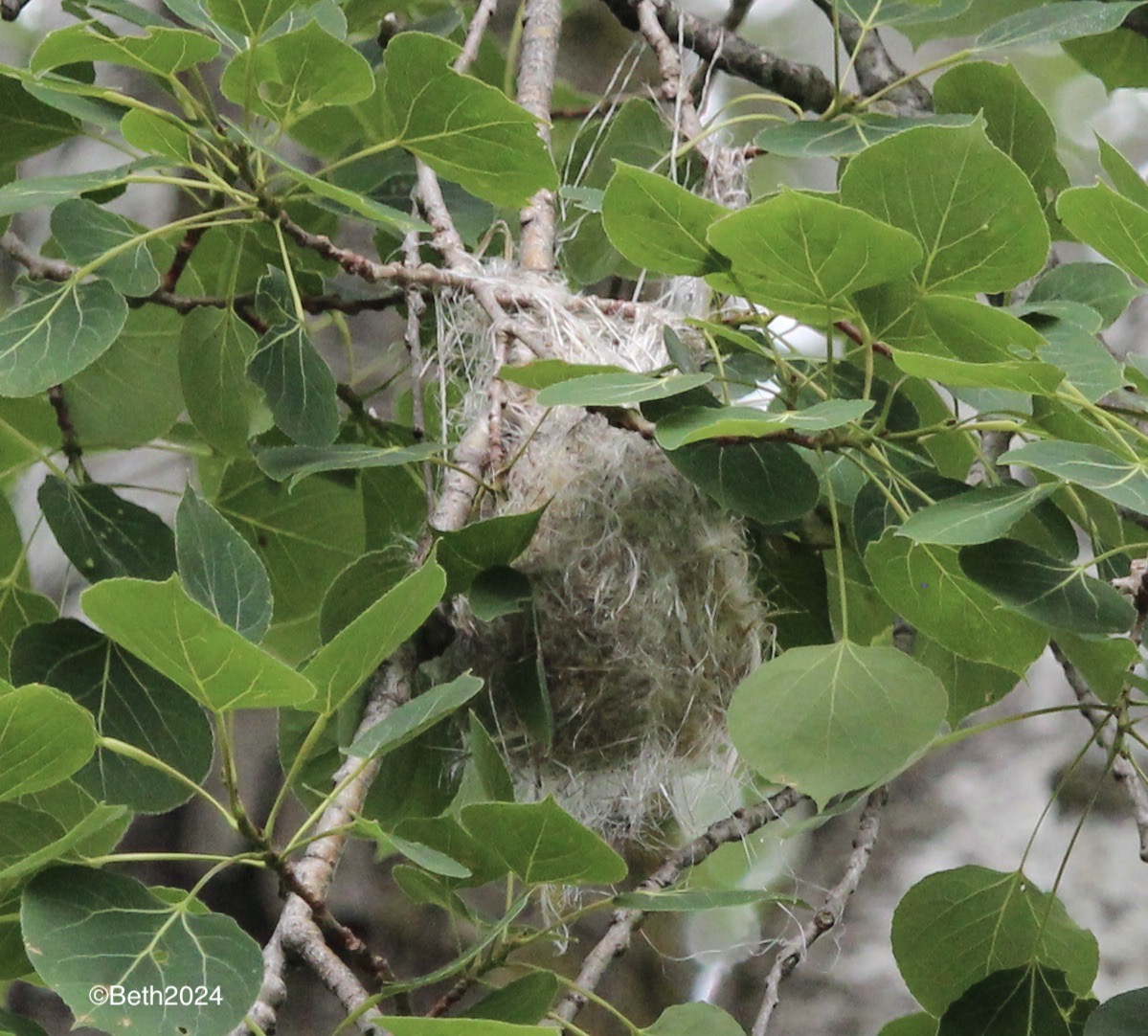
Most years, they weave a nest in the outer branches of quaking aspens that overhang our cabin yard, but one year, they nested in a red oak tree next to the cabin. The female constructs the nest using a combination of plant fibers, such as long strips of bark from grape and other vines, grasses and hair. She often selects artificial fibers, too — yarn, fishing line and twine. The two outer layers of the nest provide the saclike structure. The third inner layer consists of soft hair, wool and downy fibers to protect the eggs and hatchlings.

Female Baltimore orioles skillfully weave a hanging nest of natural and artificial materials, such as grapevine, hair, fishing line and twine. They may use wool, down from cottonwood trees or milkweed to line the nest.

When left to their own resources, Baltimore orioles typically eat caterpillars, moths and many other types of insects. Like warblers and flycatchers, they dart out and back from foliage to snatch flying insects. At other times, they remind me of chickadees as they perform acrobatics over and under tree branches in search of beetles, aphids and spiders. They also like flower nectar and fruit, and can sometimes damage fruit crops. During spring and fall migration, our neighbors, Ed and Melinda, keep a fresh dish of grape jelly on their deck railing for the orioles. My father-in-law always suspended fresh orange slices from the bird feeder pole for them. Both delights attracted lots of orioles (and hornets in autumn)!

An immature oriole feeds on grape jelly, one of their favorite foods.

Baltimore orioles spend most of the year on their wintering grounds in Central America, southern Mexico and Florida. They breed in eastern and northern North America as far west as the Central Great Plains and north into southern Canada. Their time in Minnesota is brief: I usually spot my first oriole in mid-May and see the last one in early September. In addition to Baltimore orioles, Minnesota is also the summer residence of orchard orioles and, occasionally, Bullock’s oriole.

Female and immature male Baltimore orioles are sometimes difficult to tell apart.

¹In the Great Plains states, the Baltimore and Bullock’s orioles frequently interbreed and produce hybrid offspring. Between 1983 and 1995, scientists believed that the birds were one species, which they named the northern oriole. Later, genetic testing proved they were two separate species and ornithologists returned to using “Baltimore” and “Bullock’s.”

Sources and Further Reading

All About Birds – Baltimore Oriole

Audubon Field Guide – Baltimore Oriole

Mining Bees

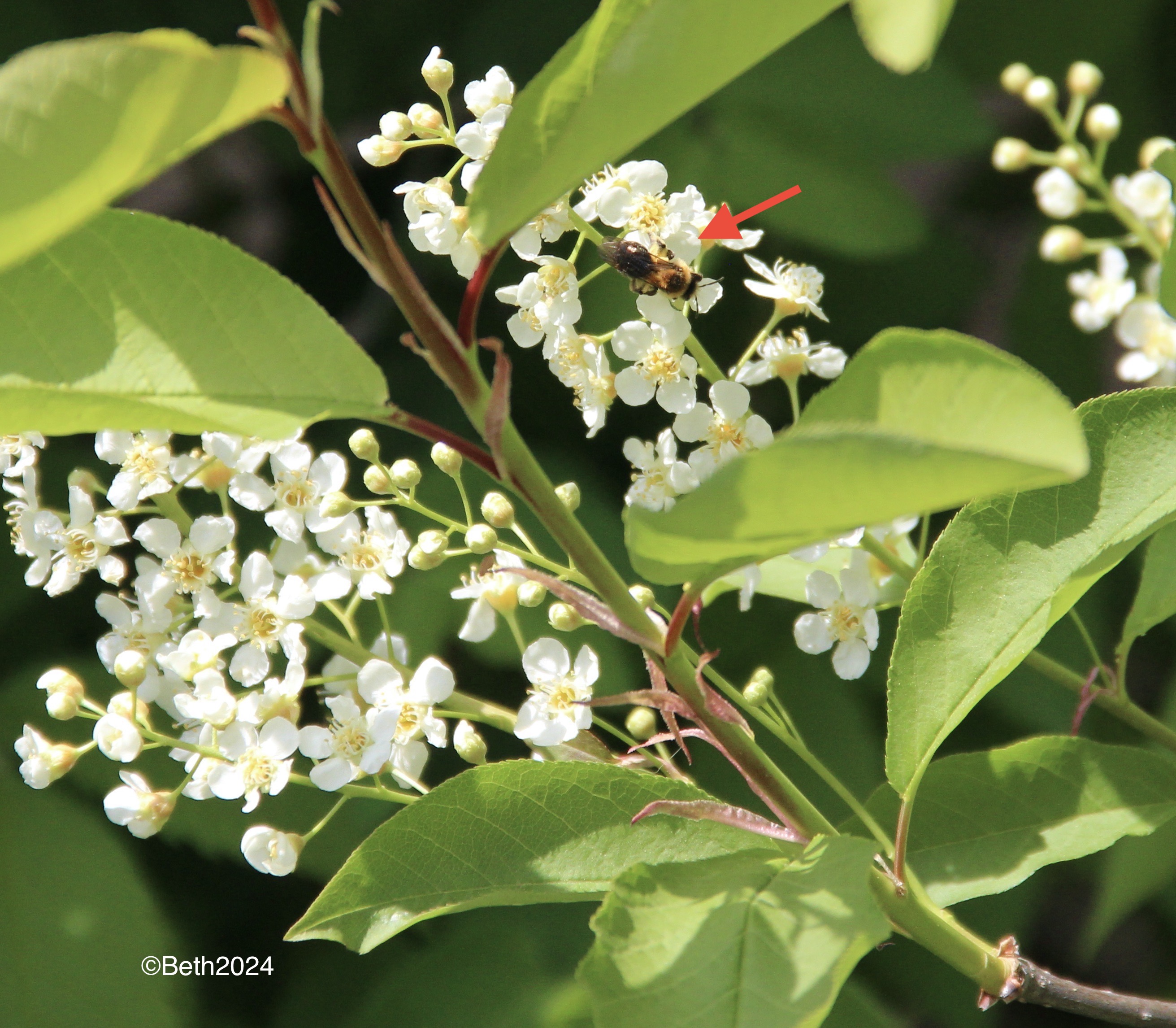
A mining bee (Andrena spp.) pollinates Canada cherry blossoms (Prunus virginiana, ‘Canada Red’).

Redbud, crabapple, dogwood, wild plum and cherry are just a few of the trees blooming in May. What’s pollinating all these beautiful blossoms? 

More than 500 species of native bees are responsible for pollinating many of Minnesota’s spring flowers and trees. Mining bees (Andrena spp.) are one of the earliest to emerge and get busy. Like bumblebees, they are wrapped in warm, fuzzy hair that helps insulate and equip them to be active when it’s still too cold for honey bees to work. 

Mining bees are solitary ground nesters. Unlike honey bees, bumblebees and others that nest in a colony, each mining bee digs her own individual spot, though they often nest near each other. Look for their small burrows, (about the diameter of an average pencil), in an exposed area of ground. I’ve seen them in soil along garden walls, in bare ground in the garden, or bordering sidewalks. The nests are only active for a very short time in spring and are interesting to watch. Female mining bees place small balls of pollen and nectar in their tunnels, lay an egg on top of each ball and then seal the chamber. Each larva will feed on the pollen and nectar during its development. The female dies soon after reproducing, while the larvae overwinter in their tunnels, typically leaving the following April or May to mate and continue the life cycle.

A mining bee (Andrena spp.) is dusted with pollen after working inside a Siberian squill (Scilla siberica) blossom.

Other species of mining bees reach adulthood in late summer and fall. Their life cycle is similar to their springtime cousins’, but they pollinate a range of different flowers, such as goldenrod and wild asters.

Sometimes people want to oust mining bees for fear of being stung, or they dislike the appearance of tiny tunnels in their garden or lawn. Unlike hornets and wasps, these small bees are quite docile and rarely sting unless handled roughly. They’re focused on producing the next generation and aren’t interested in sampling your supper or glass of wine! (In fact, most of the bees zipping around the nesting area are males, who don’t have stingers.) When I notice their nests, I just work around them and the bees ignore me. They’re more active when the sun warms their nesting area, so it’s easier to garden near them when it is shady and cool.

Besides pollinating flowers and fruit trees across North America, mining bees are prey for many songbirds, small rodents, jumping spiders, some species of ants and other insects.

Further Reading and Sources

Backyard Ecology

Bug of the Week (UW-Milwaukee)

Sharp-Eatman Nature Photography

Spring Blues

Siberian squill (Scilla siberica) grow under an ash tree in our backyard.

They appeared early this year. Fresh green tips of Siberian squill (Scilla siberica) pushed through bare, frost-free soil in February. When they began to bloom, a spring snowstorm buried them beneath a shimmering blanket. Though not a native wildflower, their Russian and Turkish origins outfit them well for the toughest of Minnesota winters. The melting snow watered them, spurring growth and bloom. I love their ultramarine blue radiance, a color infrequent among flowers. They attract many early native bees and honey bees to our urban garden when few other spring ephemerals are blooming.1 Our backyard hums with the gentle drone of bees — the first I’ve heard since last November. I’ve missed them.

1If you don’t have Siberian squill in your garden, it’s best not to plant them. A non-native, they can become invasive, especially near woodlands and other natural areas.

Common Snowdrops

Common snowdrops (Galanthus nivalis) blossom early this winter.

Common snowdrops popped early this winter; the calendar said February, but the air felt like March. First, creamy teardrops dangled from blue-green stalks nestled in shredded hosta leaves and fallen spruce cones. The teardrops opened to pearly bells etched in spring green. They look fragile as they quiver in the wind, but these hardy bulbs, which are native to Northern Europe, parts of Asia and the Middle East, usually grow and bloom through snow cover and cold. Even with this year’s mild winter, these fresh blossoms are a joyful sight, a symbol of warming sun and soil.

Further Reading:

Wisconsin Horticulture

Ornaments Stir Memories, Gratitude

The ornaments hanging on our family Christmas tree hold memories of people we cherish, events from our lives, times past and present. Most were gifts from family members, close friends, and students whom I taught in middle school; all are meaningful. 

As I hang them on our tree, memories flare to life. I recall the excitement and happiness of the gift givers, especially our young son and my students. Their faces, shining with excitement and joy to share their presents, were gift enough.

Some of the ornaments are handmade, such as the madonna and child that my sister cross-stitched when she was pregnant with her first child. A hand-knitted pair of tiny green-and-white mittens, a child’s wooden rocking horse, miniature Winnie-the-Pooh and Piglet figurines, and a sliver of a Santa moon are just a few of many special ornaments we received when our son was a baby. As he grew, he created his own decorations; from his toddler hand print and “Christmas countdown” paper chains, to a Nativity creche, candle, and beaded snowflake ornaments made in elementary school. He was so eager to show us his creations that it was hard for him to wait until Christmas!

Many of our ornaments symbolize nature’s gifts: Owls, warblers, black-capped chickadees, cardinals, a bumblebee, cricket, chipmunk, raccoon, miniature bears, Christmas acorns and pinecones. They evoke memories of hikes, biking trips, and quiet days spent at our cabin. I recall a family of barred owls raising a ruckus on a nightly hunt in the oak trees, the red fox family that lived under our porch one spring, wood thrushes’ morning chorus and the serenade of crickets on hot summer nights.

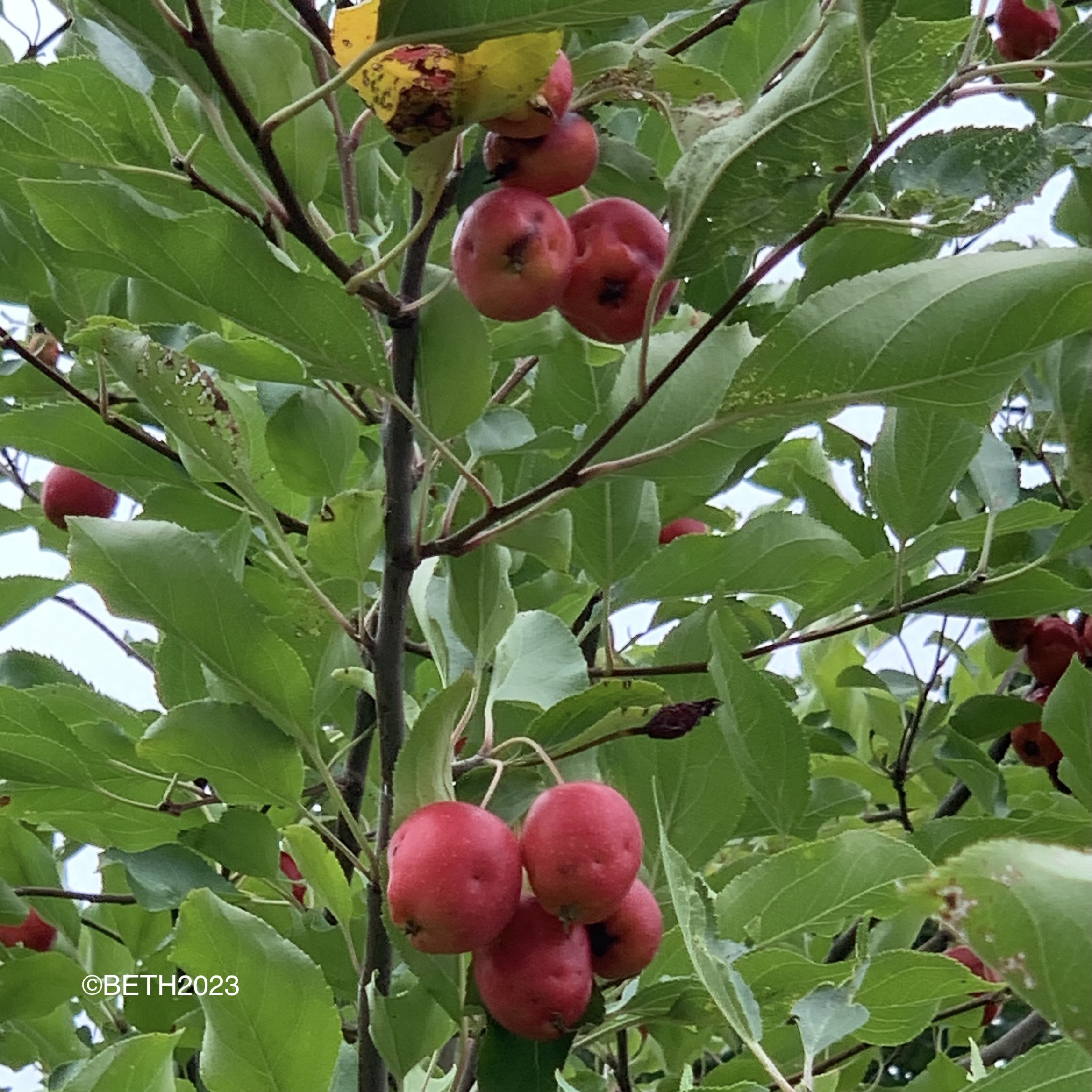
More than two dozen tiny red apples punctuate the branches with bright bursts of color. They are from former students and from my mother, who always finished her tree with the bright globes. This is our sixth Christmas without Mom. I recall the aromas of balsam fir and freshly baked Christmas cookies that scented our home each year as I grew up. Old-fashioned butter cookies, merry mincemeat bars, Christmas cake cookies and spritz are just a few of the treats that Mom baked each December. There are also jolly snowman ornaments that my dad gave to our son. They are happy-looking fellows that remind me of Dad, who died little more than three years ago. I miss him and we are so grateful for the joyful Christmas we shared together his last year.

Fragile glass and delicate handmade ornaments, created by a group of Ukrainian nuns, add a traditional touch to our tree. There are six soft-blue Wedgwood ornaments from my aunt. Old-fashioned glass icicles, teardrops, globes and other shapes glow in the soft white light. They stir my earliest childhood memory of Christmas: My brother and I would make a blanket nest under the lighted Christmas tree. In our darkened living room, we listened to Christmas carols and talked softly. We watched the multicolored lights and our reflections dance across the glass globe ornaments hanging above us. I felt peaceful and content. I never wanted the Christmas season to end.

In the yearly ritual of decorating our tree I experience, again, the love and joy of so many cherished people — both living and those no longer with us. I hold them close and bless each one in gratitude. 

November Sunset

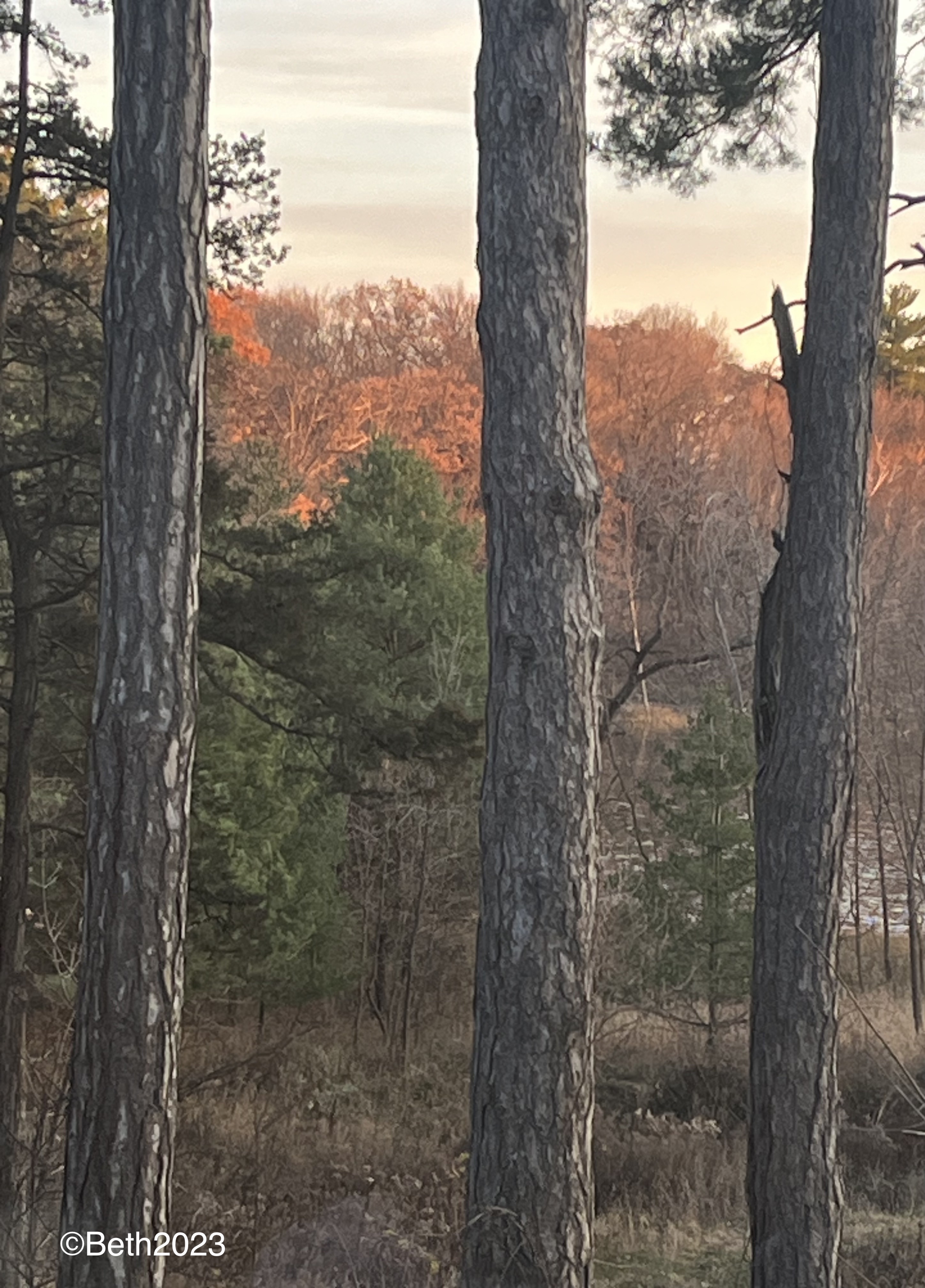
In November, the setting sun ignites red oak crowns and tints clouds with magenta, peach and rose. There’s neither summer’s long-lasting light, nor winter’s rapid descent into darkness. Dusk’s cool fingers seep in, chilling the air as the sun sinks in the southwest. In the tree tops, a group of robins roosts in a lingering sliver of sunlight. For a few moments they softly whistle their cheery song as though it were a spring evening. Time gently slips away in shadows of amethyst.

Common Milkweed, Hidden Beauty

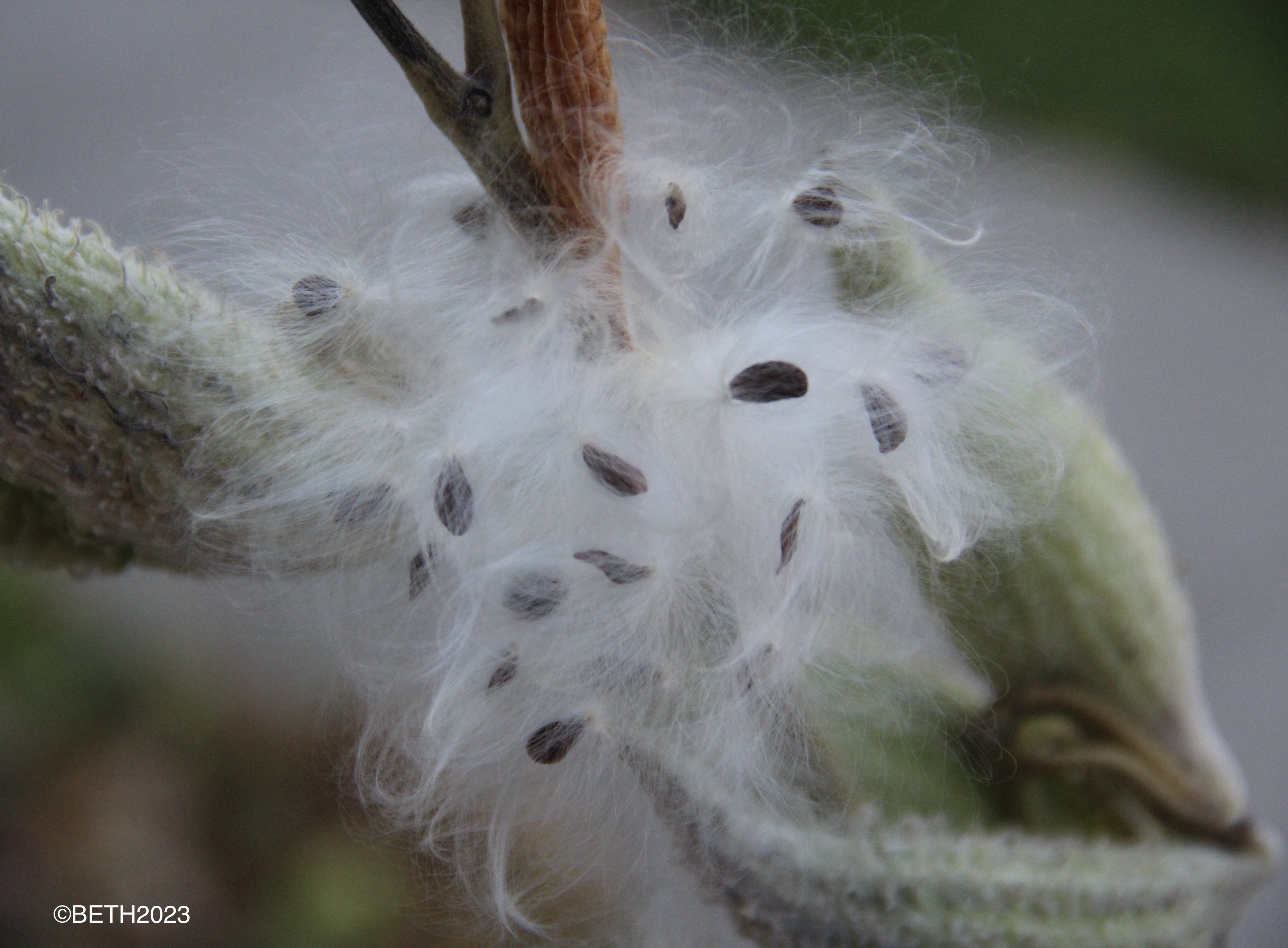
Gusty winds tease common milkweed seeds from their pods.

Its beauty isn’t on the outside. Common milkweed (Asclepias Syriaca), despite its attractiveness to monarch butterflies, isn’t the showiest of plants. Its large, smooth leaves and warty pods lack the delicacy of many native plants. Milkweed’s beauty is hidden within its pods.

Tiny green pods arise from fertilized pink, aromatic flowers.

Over the summer, small, perfumed pink flowers are fertilized and form tiny green pods or follicles. As they ripen, they grow to three-to-five inches in length. Inside, oval-shaped flat, brown seeds tethered to white, satiny strands designed for wind dispersal are arranged around a central column. Each is neatly tucked into a crevice on a membrane attached to the top and bottom of the pod.

Oval-shaped seeds attached to satiny strands are neatly arranged around a central column.

Wind fluffs the silky fibers into parachutes to disperse the seeds.

When the seeds mature, the pods dry and crack open. As wind enters the split pods, the silky strands unfurl and balloon into parachutes. One by one the seeds spin out of the pod like shimmering wind-borne dancers that glow in the autumn sunlight. I love to watch them sail — sometimes floating on a gentle breeze, sometimes scurrying on gusty winds. The empty pod is pretty too: Cream-to-gold colored and smooth inside, except for the center membrane, which is grooved to anchor individual seeds.

The empty pod is satiny smooth except for the grooved central column where the seeds were attached.

These lovely seeds used to be rare in Twin Cities urban areas, but now many residents grow one or more of 14 native milkweed species in their yard and boulevard gardens to attract monarchs and other butterflies.¹

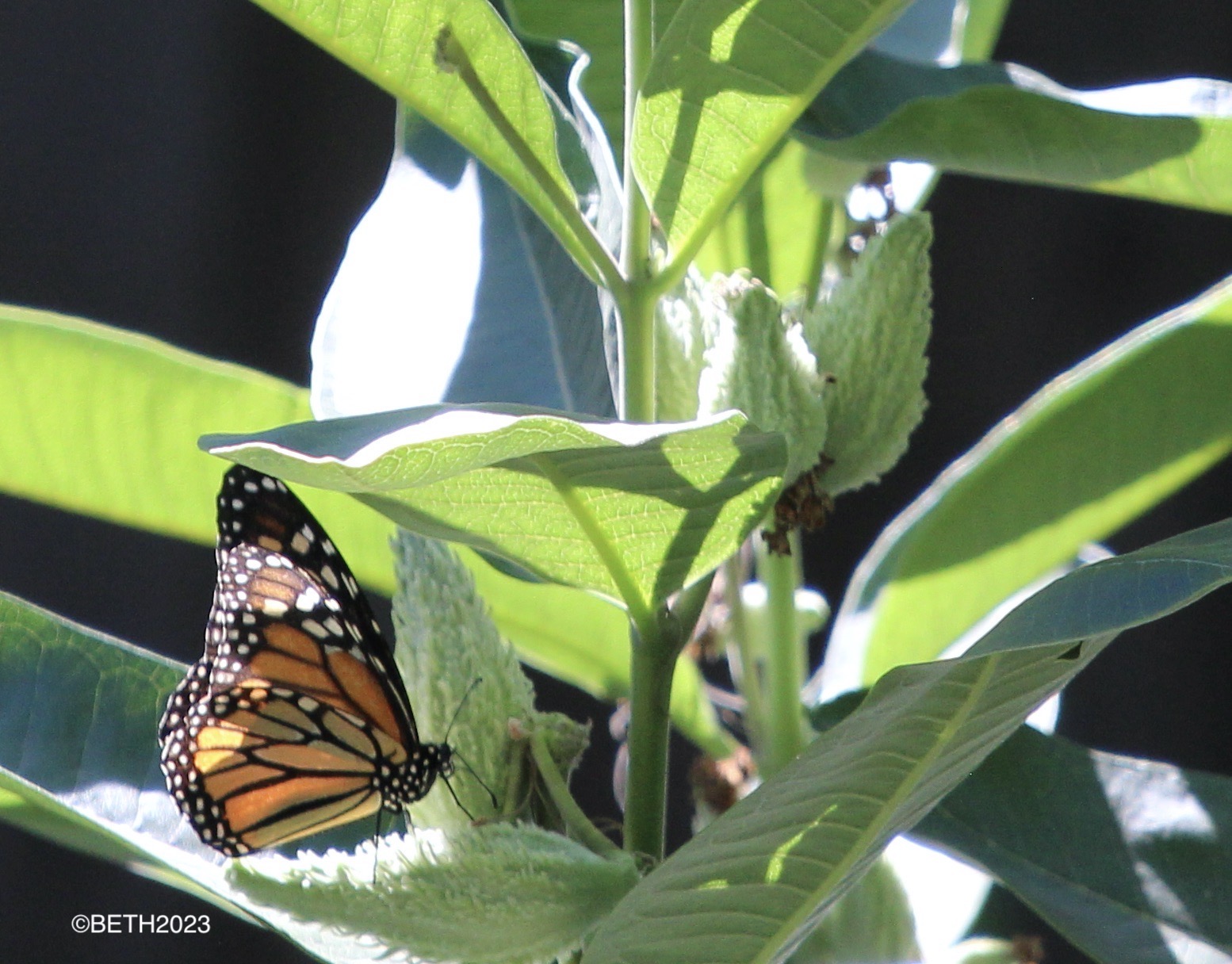
Milkweed plants are the sole host plant for monarch butterflies.

¹When handling milkweed, it’s best to wear gloves and eye protection. The plant’s milky latex sap can cause eye and skin irritation on contact. According to several sources, the sap is slightly toxic to humans if eaten in large amounts. Animals are also affected by it, but most avoid the plant. This substance helps to make monarch butterfly caterpillars unpalatable to birds.

Sources and Further Reading

Eloise Butler Wildflower Garden Common Name Plant List

Milkweeds of Iowa and Minnesota (Xerxes.org)

Minnesota Milkweeds for Monarchs

Monarch Joint Venture

Spreading Milkweed, not Myths


Autumn’s Bountiful Berries

Last May, blossoms delicate in form and scent ornamented woodlands and trails. Their luminous beauty lured early bees and butterflies to pollinate them. All summer the tiny ovaries slowly swelled. Fragile blossoms morphed into bright green beads, whose soft curves plumped and ripened to globes of rose, fiery red, purple, frosty blue and pearly white. Sun, heat, rain and pollinators concocted a gift lovely to look at and brimming with energy — a feast for birds and mammals throughout autumn and winter. Here’s a small sampling of nature’s autumn gifts:

Migrating songbirds, as well as turkeys and grouse, favor the white berry-like drupes of gray dogwood (Cornus racemosa).

Wild plum trees (Prunus americana) provide food for mammals, such as deer, raccoons and foxes. Songbirds, turkeys and other birds will also eat them.

Pale dogwood berries (Cornus obliqua) are high in fat content and are eaten by songbirds and mammals, such as chipmunks, white-footed mice and squirrels.

Highbush cranberry (Viburnum opulus spp.) is not a true cranberry. According to the USDA’s plant guide, the fruit often isn’t eaten until late winter. Repeated thawing and freezing makes it more palatable.

Though carrion flowers (Smilax sp.) smell rotten, their berries do not, and are winter food for songbirds and a few mammals, such as Virginia opossum and raccoons.

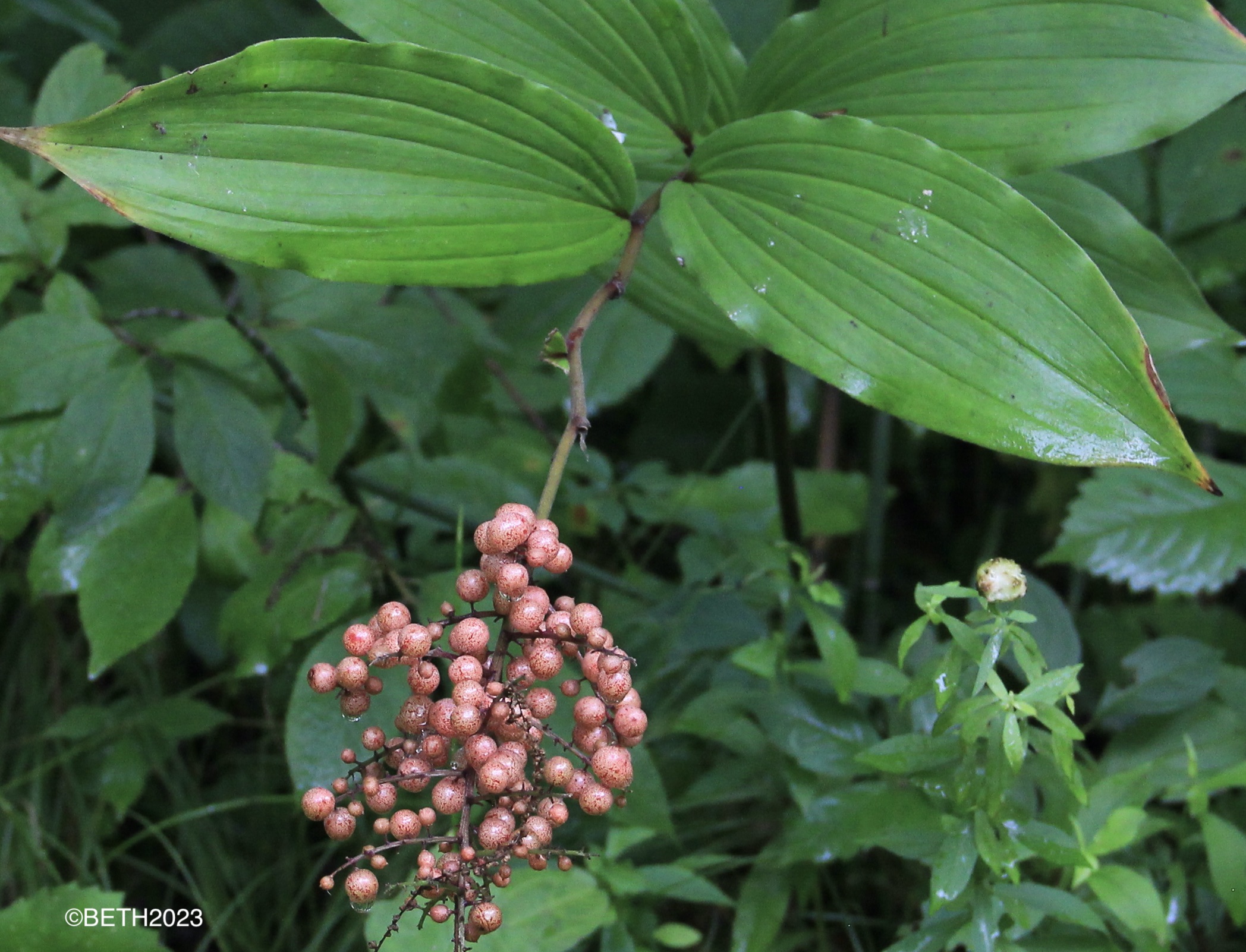
False Solomon’s seal (Maianthemum racemosa) fruit are often pink with red spots, but also can be solid red. They are eaten by woodland birds, such as the veery, and by white-footed mice.

Sources:

Eloise Butler Wildflower Garden Common Name Plant List

Illinois Wildflowers

Minnesota Wildflowers

Beyond Monarchs and Viceroys

Great-spangled fritillaries sport a checkerboard pattern on their dorsal wings. A creamy yellow band separates silvery spots or “spangles” on the ventral surfaces.

In late summer, chances are good that you’ll notice lots of orange-and-black butterflies in gardens, meadows or roadside areas. But, not every one that you see is a monarch, or its look-alike, the viceroy. Fritillaries, another group of large orange-and-black butterflies, are on the wing into September in the Upper Midwest, favoring open sunny gardens, grasslands, and meadows.

Fritillary comes from the Latin word “fritillus,” which means checkerboard or dice — and most butterflies in this family sport a checkered design on their wings. Of Minnesota’s 12 fritillary species, the most widespread are the great-spangled, Aphrodite, Atlantic, silver-bordered, meadow and variegated.

I’ve spotted great-spangled fritillaries (Speyeria cybele) in our garden and along country roads where I’ve recently walked. The largest of Minnesota’s fritillaries, with a wingspan of 2.5-to-4.0 inches, great-spangled adults display an orange, brown and black pattern of stripes, dots and bars on their upper wings. The undersides of the hindwings shimmer with two rows of large silver spots (referred to as spangles) separated by a wide, creamy yellow band not seen in other fritillaries.

Faded colors and worn, jagged-edged wings indicate an elderly great-spangled fritillary nectaring on this thistle.

In June, great-spangled males appear first, followed by females about a month later. Females lay eggs in late summer and fall, placing them singly, on or near the base of common violet species (viola) — violets alone are the host plant for their larvae. The caterpillars hatch in the autumn, but stay hidden in leaf litter until the following spring when violets are freshly growing. Caterpillars are black with reddish-orange knobs that give rise to black spines. They are secretive and only feed at night.

Great-spangled fritillary caterpillars, and many other fritillary larvae, feed only on violet (viola) species.

Unlike their violet-dependent larvae, adult fritillaries nectar on many different flower species, including milkweed, clover, black-eyed Susan’s, vetches, thistles, Joe-Pye, monarda, members of the mint family, dogbane and many types of coneflowers. Fritillaries are preyed upon (especially the caterpillars) by dragonflies, paper wasps and other large insects, spiders and birds.

What can you do to help these beautiful pollinators? If you have violets in your garden, don’t weed them all out. Without violets, there would be no fritillaries! Leave a few in your garden or yard year-round for great-spangled and other types of fritillary caterpillars to eat.

Most common in eastern North America, great-spangled fritillaries range from British Columbia across southern Canada and the northern United States to the Atlantic, south to central California, northern New Mexico and northern Georgia.                              

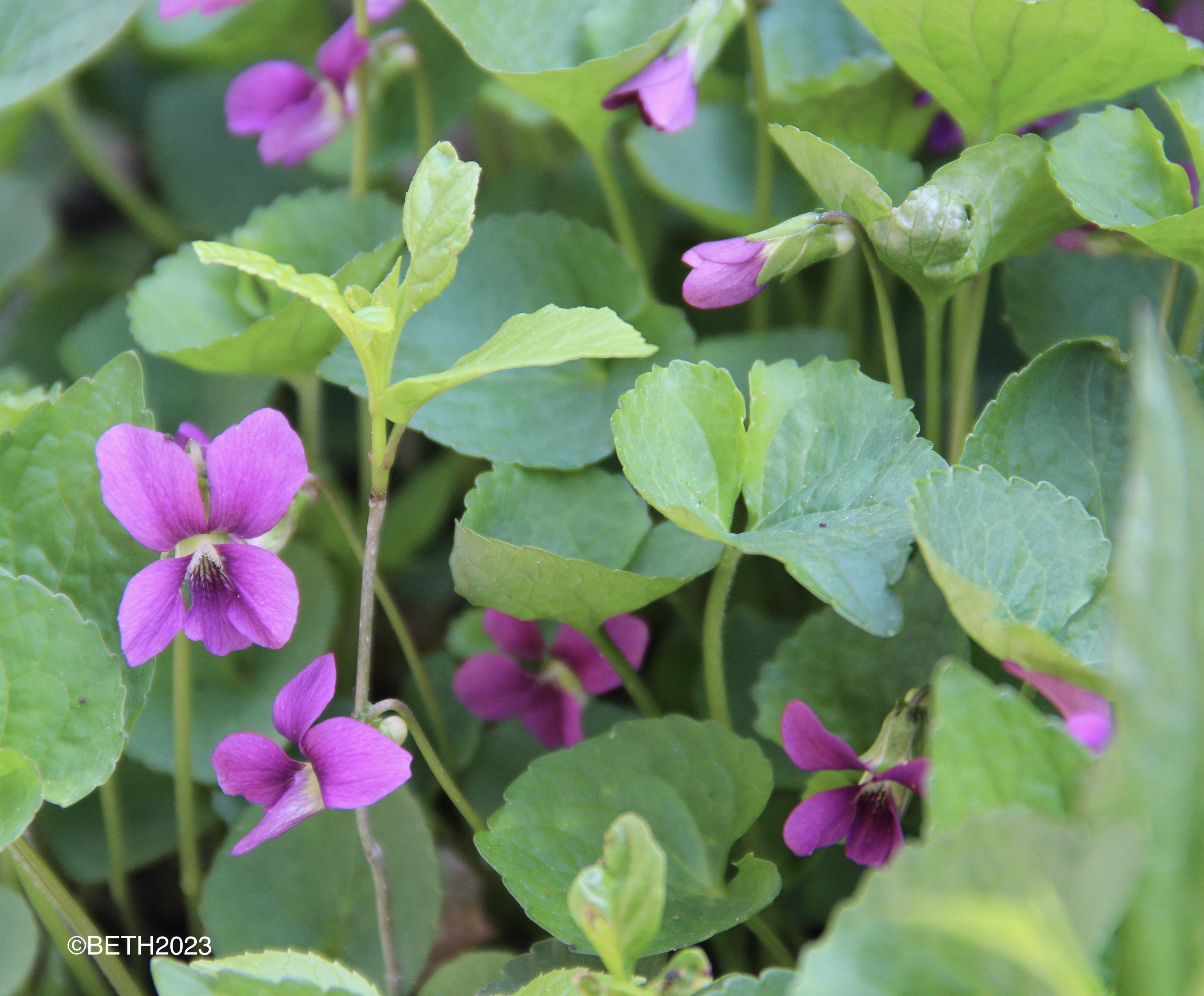
Leave a few violets tucked into your garden so that fritillaries can lay their eggs on them in the fall. Caterpillars will feed on them in the spring.

Sources and Further Reading

Butterflies and Moths of North America

North American Butterfly Association

University of Kentucky Entomology

Weber, Larry. (2006). Butterflies of the North Woods. Duluth, Minnesota: Kollath & Stensaas Publishing