Autumn Leaves

When leaves change color in autumn, people often say that the trees are “putting on their fall colors”.  In fact, many of the yellow and orange colors are already present in the leaves during the summer and are masked by chlorophyll, a green pigment. (The red and purple colors are primarily made in late summer as sugars are trapped in the leaves.)  Scientists haven’t yet identified all of the factors that influence the color change in leaves, but the primary factor is the decreasing amount of daylight in the fall.  As the days shorten, the veins that bring water and nutrients to leaves for chlorophyll production slowly close off.  Without nutrients, the chlorophyll dies and the leaves’ other colors are unmasked.

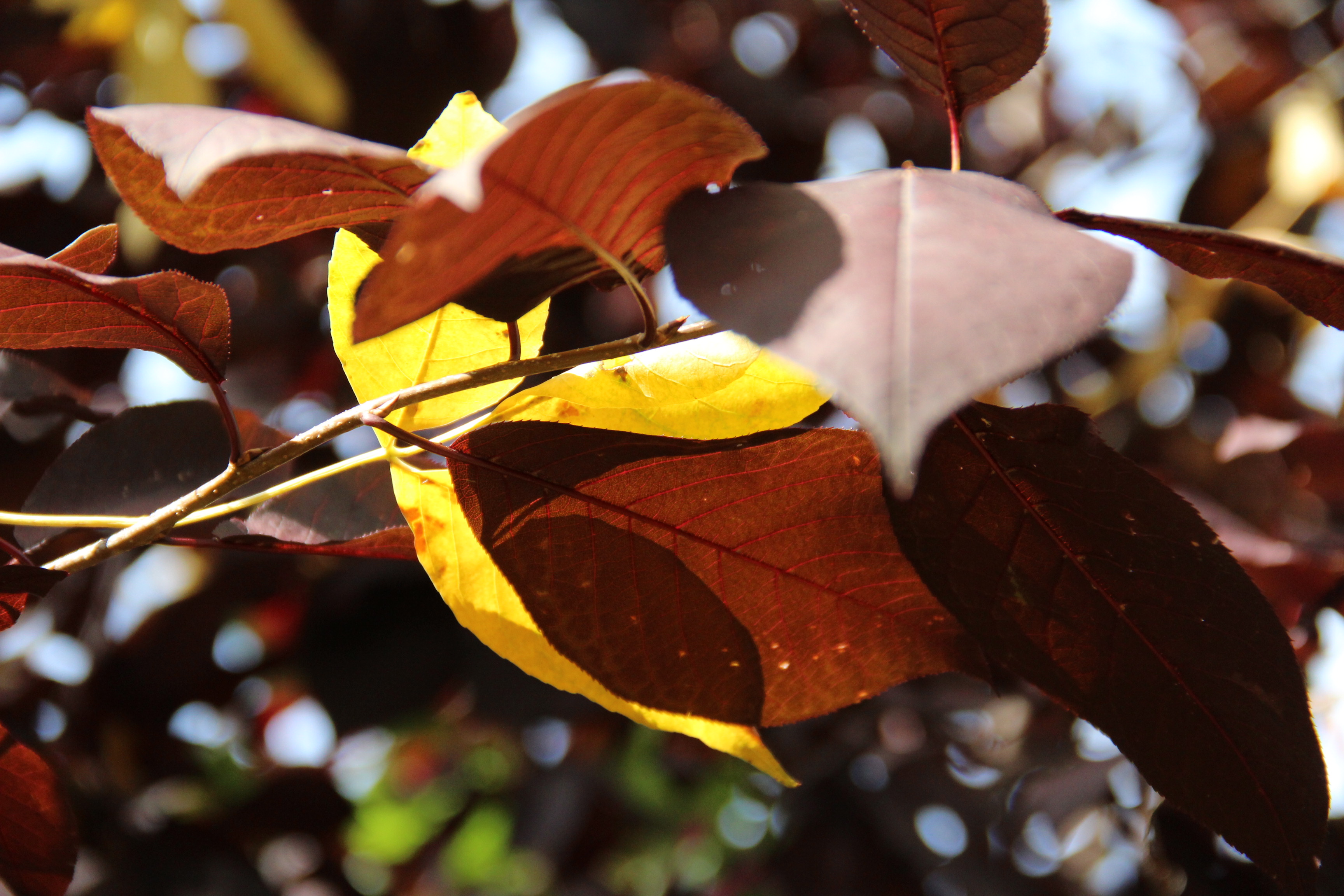
Lemony ash leaves (Fraxinus pennsylvanica) fall and mingle with Canada cherry leaves (Prunus virginiana).

Lemon-colored ash leaves (Fraxinus pennsylvanica) fall among Canadian red cherry tree branches (Prunus virginiana).

Green ash leaves have changed to bright lemony-yellow and are pulled from the tree by wind and rain.  They are the first trees in our St. Paul neighborhood to change color, along with white ash.  Black walnut, hackberry and a few sugar maples also have begun to change, with just a hint of muted color showing in red maples.  (More about autumn leaves in future posts.)

 Green ash (Fraxinus pennsylvanica) is one of the first trees to change color and drop its leaves.

Green ash (Fraxinus pennsylvanica) is one of the first trees to change color and drop its leaves.

To learn more about why leaves change color in the fall, visit the USDA Forest Service, or the Morton Arboretum websites.

Autumn Garden Creatures

Last Friday was a golden day with gentle sun, temps in the 70s and a southerly wind.  I walked at lunchtime and spent a few minutes in our back garden observing insects, birds and chipmunks.  It was the final day before a strong Canadian cold front and soaking rains moved in — and probably my last chance until spring to enjoy some of the garden’s inhabitants:

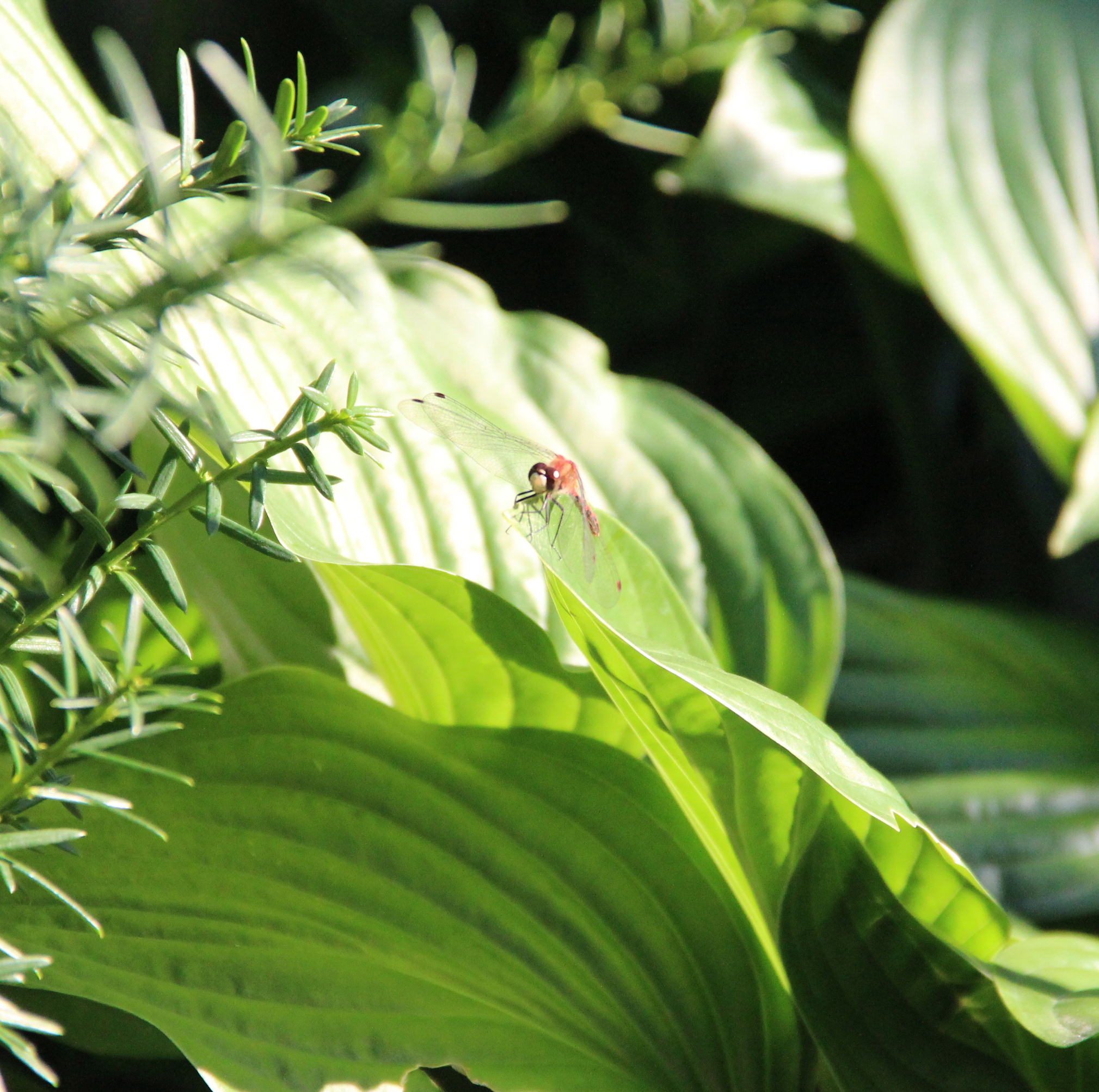
Autumn meadowhawk dragonflies, which fly late into autumn, still patrolled the garden.  The reddish-colored mature females, with clear wings tinted amber at the base and red spots at the top, added jewel-like color to the changing garden.

A male autumn meadowhawk dragonfly (Sympetrum vicinum) suns on a stone wall in the garden.

A female autumn meadowhawk dragonfly (Sympetrum vicinum) suns on a stone wall in the garden.

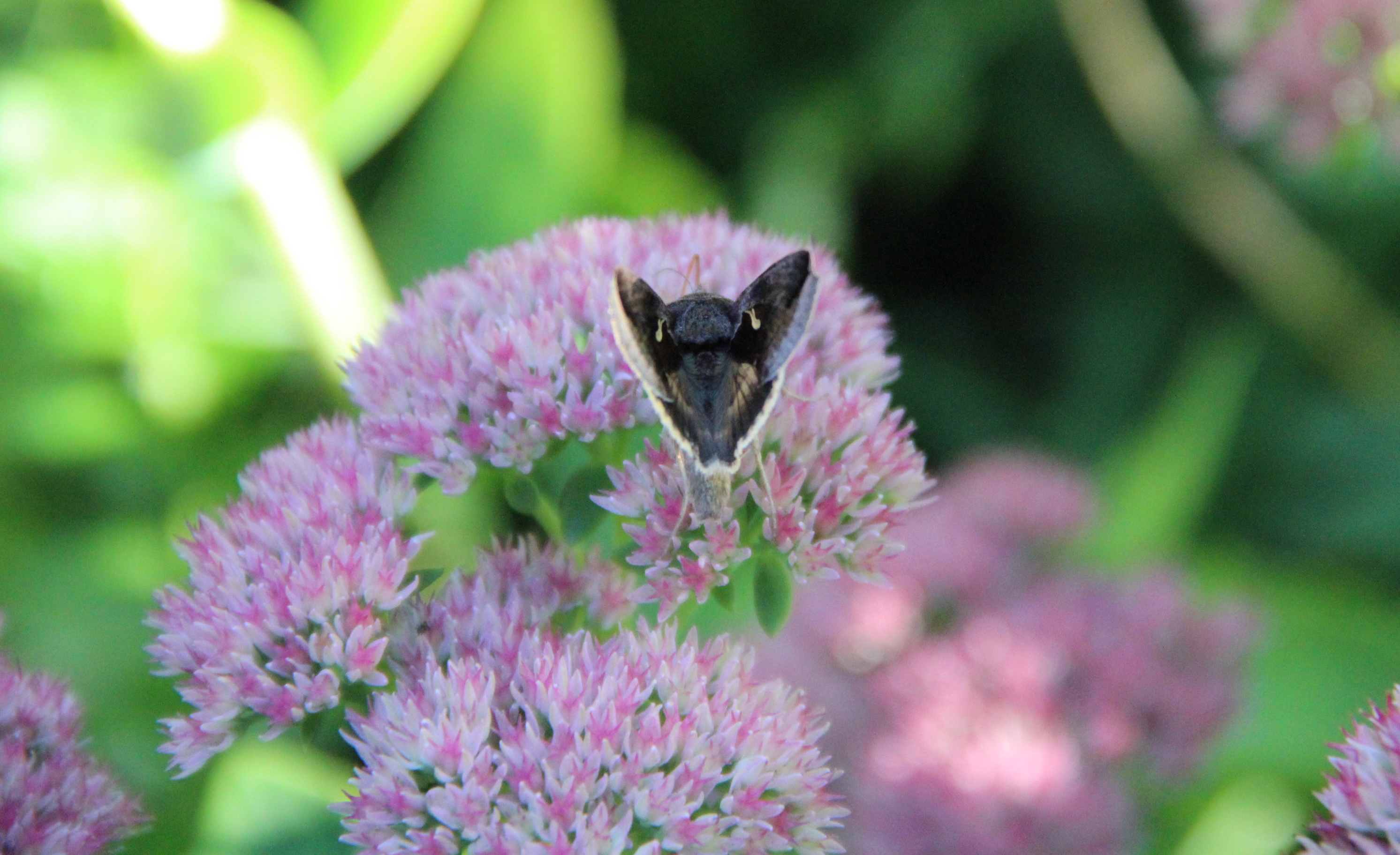
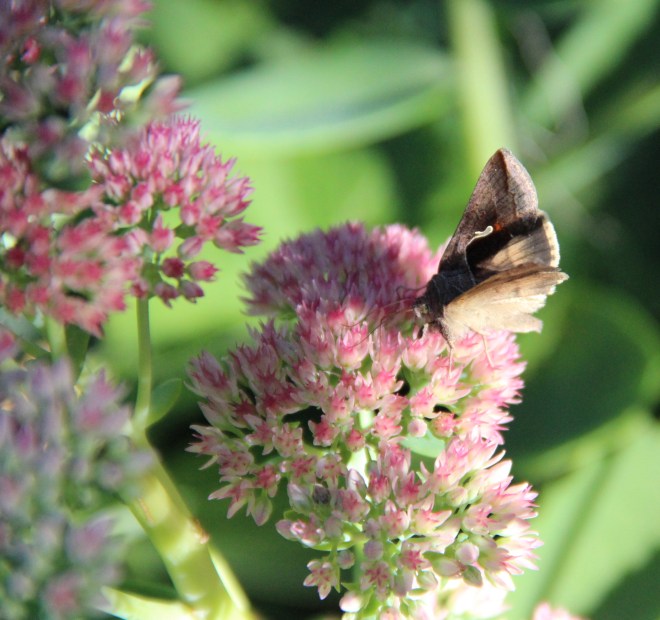
A celery looper moth visited the garden from morning until dusk each day for more than a week.  Though it’s not colorful, the contrast between the chocolate-brown wings and the bright silvery-white curved markings makes it glow in the sunlight.  Though looper larvae can be agricultural pests, the adults pollinate many varieties of plants.  This one seemed to prefer Sedum ‘autumn joy’.

A celery looper (   ) nectars on Sedum 'autumn joy'.

A celery looper (Anagrapha falcifera) nectars on Sedum ‘autumn joy’.
Celery looper

Side view of a celery looper moth.

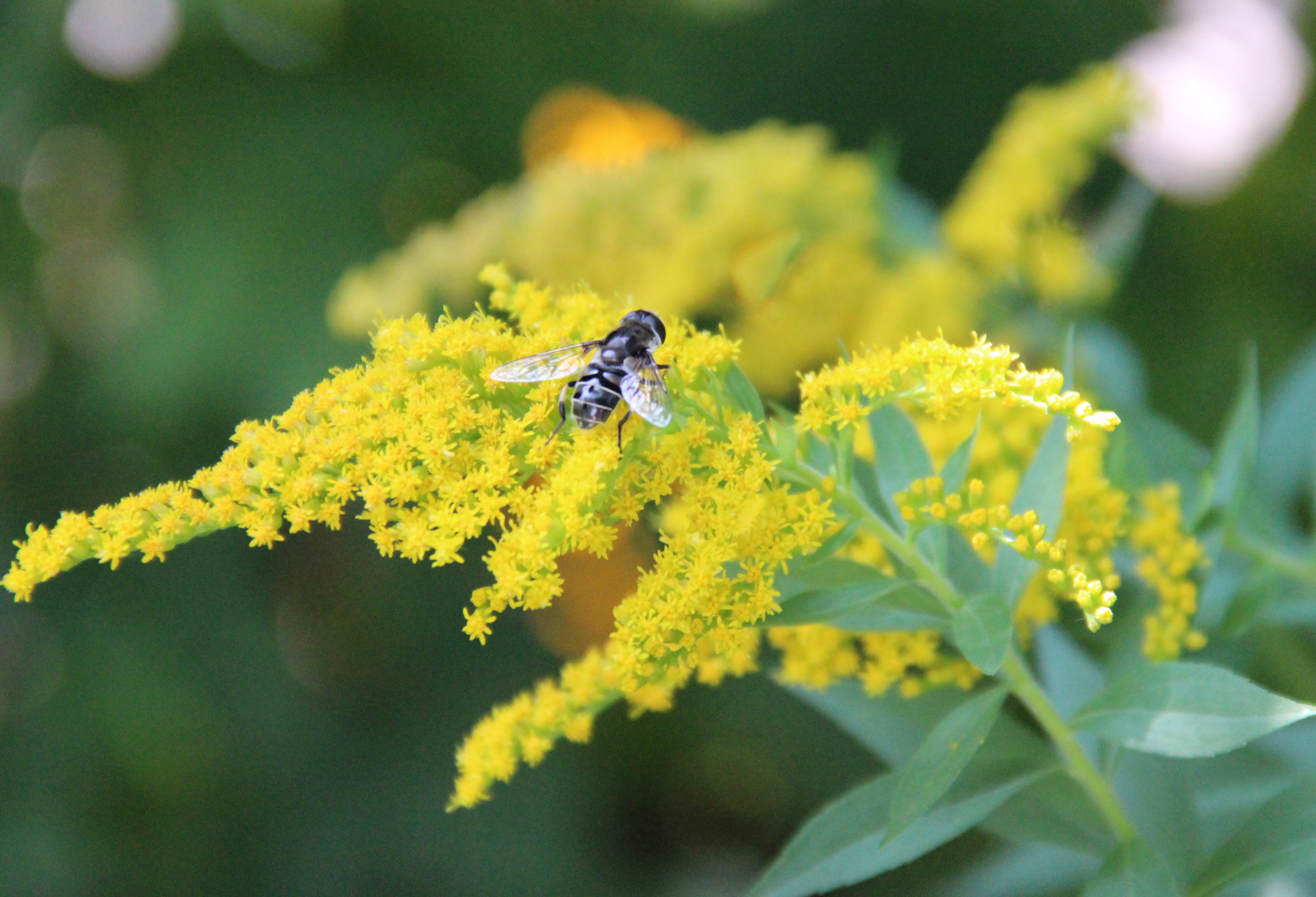
Syrphid flies, also known as hover flies or flower flies, are small insects that zip between flowers much quicker than bees and wasps.  Syrphid flies are bee and wasp look-a-likes, but they don’t sting or bite!  Many species are helpful in the garden for two reasons:  The adults pollinate flowers and the larvae eat aphids and leaf hoppers, which cause a lot of damage and disease in plants.  They are called hover flies because they often hover in midair over the garden before zooming off in a new direction — sometimes flying backwards.  They are known as flower flies for their pollinating presence in the autumn garden.
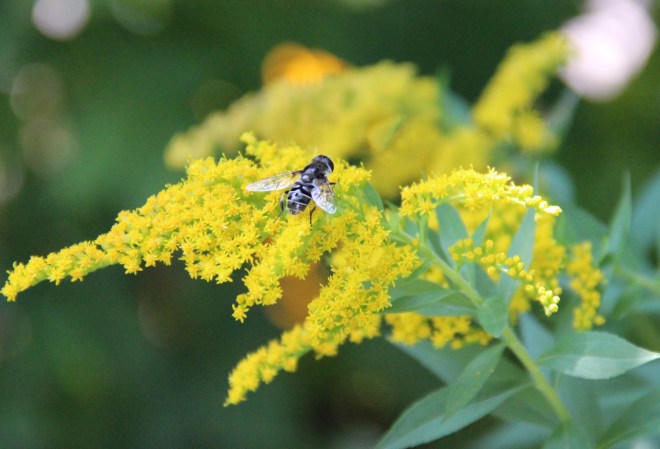
A Syrphid fly, (Eristalis) pollinates native goldenrod.
A syrphid fly, (Eristalis) pollinates native goldenrod.

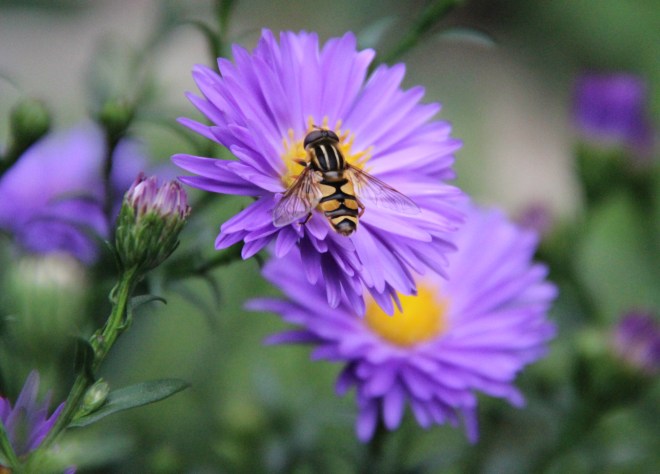
Another species of Syrphid fly pollinates garden asters.

Another species of syrphid fly (Helophilus) pollinates garden asters.

Hidden among the garden plants, an eastern chipmunk gathered seeds to store for winter use in its nearby den.  There’s a stable chipmunk population in our urban neighborhood, in spite of many gardeners’ attempts to eradicate the rodents.  At least the chipmunks retire to their dens until spring, unlike squirrels, which raid the garden during the growing season and the suet feeder during the winter months!

An eastern chipmunk surveys the backyard from its perch on our back steps.

An eastern chipmunk (Tamias striatus) surveys the yard from its perch on our back steps.

The backyard bird population is changing as many bird species migrate south.  For example, most of the warblers, orioles and swallows have left; ruby-crowned kinglets, yellow-rumped warblers and white-throated sparrows are passing through from further north.  Daily visitors to our garden, trees and hedges include northern cardinals, blue jays, American goldfinches, black-capped chickadees, white-breasted nuthatches, American robins and a brown creeper. I don’t have a telephoto lens yet, so I don’t photograph many birds.  An excellent website with photos, key facts, bird calls and other information is allaboutbirds.org.

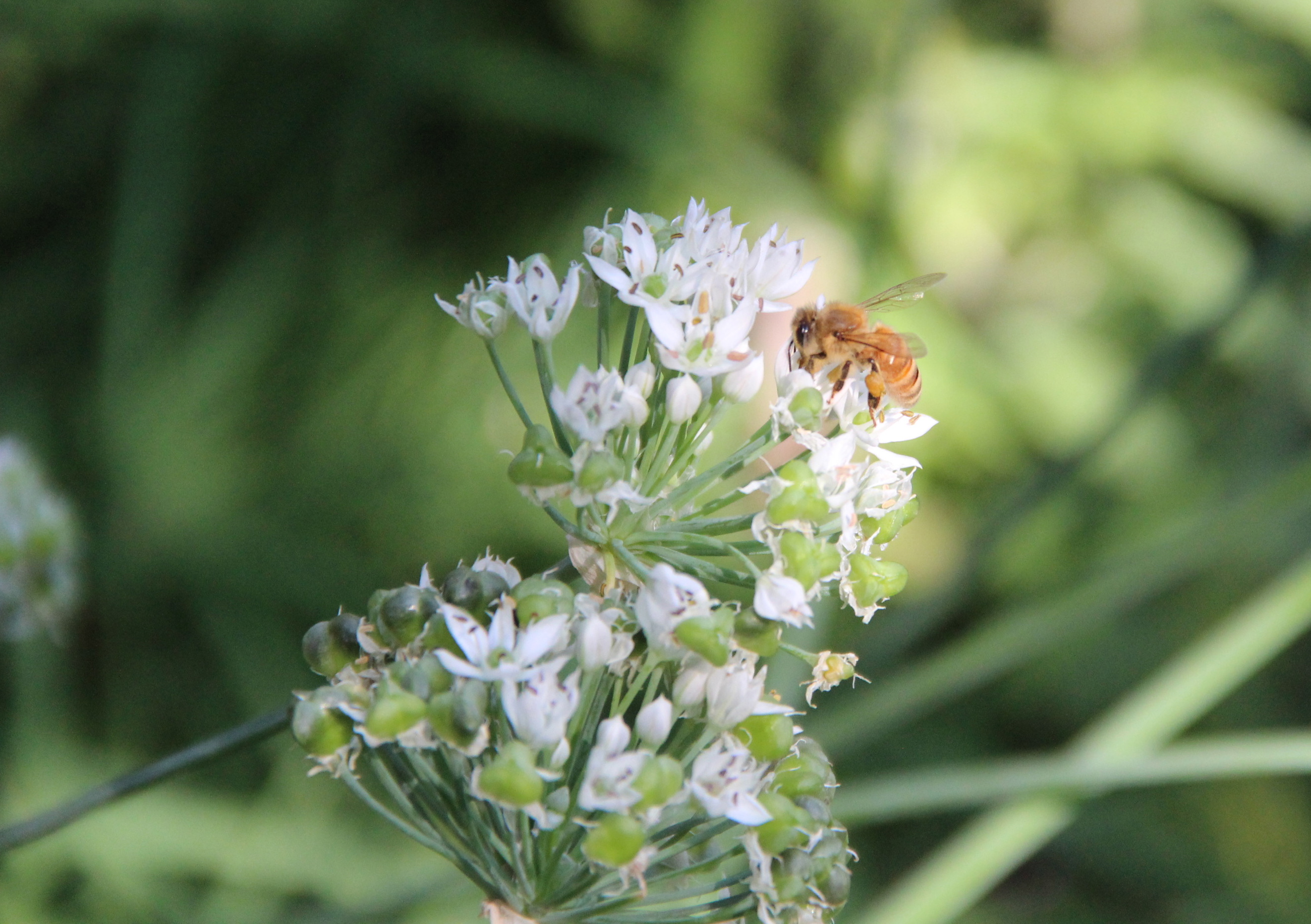
Lastly, bumble bees and honey bees nectared on the Sedum ‘autumn joy’ and garlic chives. (Earlier in the summer, I pruned the sedum to different degrees so that it would continue to bloom late into autumn.)  The sedum and asters were the main attraction for insects last week.  I haven’t seen either bee species since the weather turned cold and rainy.  I miss their industrious presence and look forward to their return next spring.

A honey bee nectars on garlic chive blossoms (Allium tuberosum).
A honey bee nectars on garlic chive blossoms (Allium tuberosum).

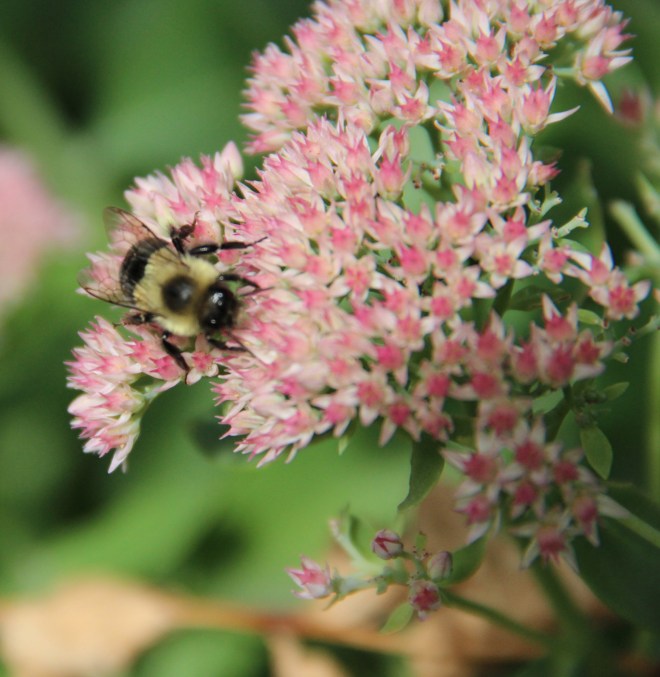
A bumble bee (Bombus) nectars on Sedum 'autumn joy'.

A bumble bee (Bombus impatiens) nectars on Sedum ‘autumn joy’.
October Garden

Last weekend’s heavy rain and thunderstorms were badly needed to help gardens, trees and shrubs prepare for winter.  The downside is that the rain knocked off most of the blossoms on garden phlox, helenium, Russian sage, hosta and other flowering plants.  A few species continue to bloom in small numbers providing nectar for native bees and honey bees.  Here’s a sample of what’s still blooming in our garden in St. Paul, Minnesota, on October 11:

Japanese toad lily (Tricyrtis)

Japanese toad lily (Tricyrtis ‘Tojen’).

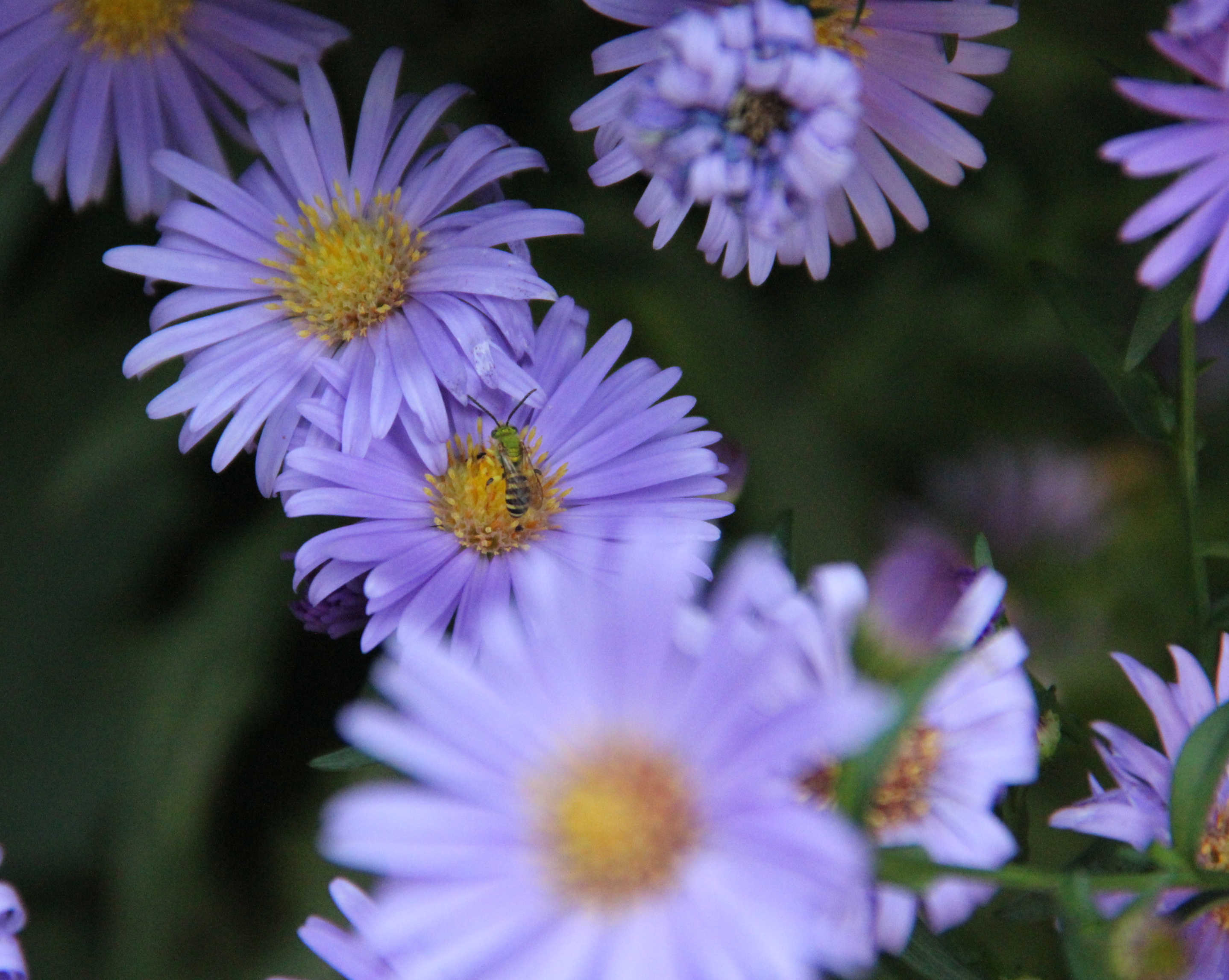
Aster novii-belgi with green bee (

(Aster novii-belgi) with green metallic bee.

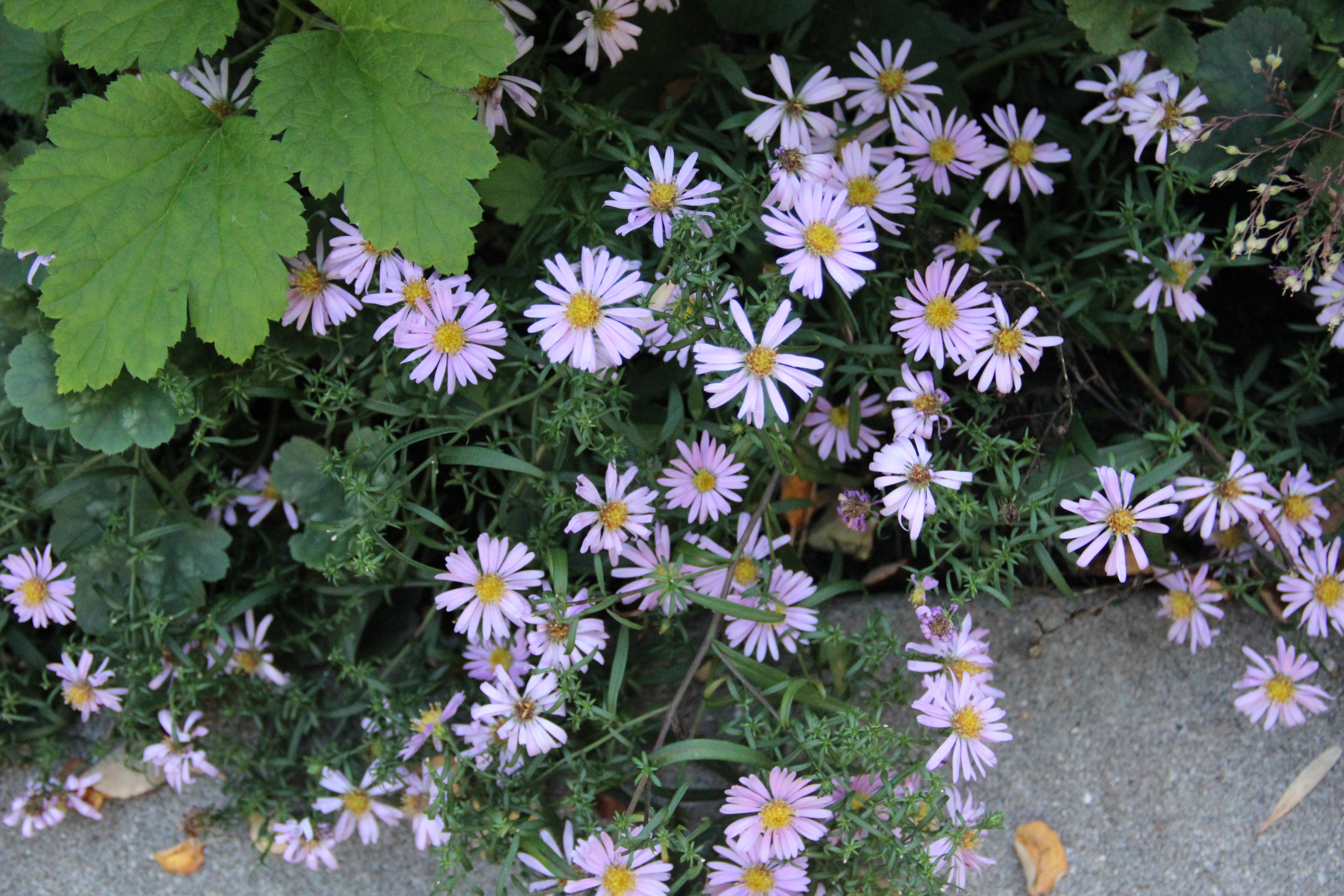
Dwarf wood asters (Aster novi-belgii 'Woods pink')

Dwarf wood asters (Aster novi-belgii ‘Woods pink’).

Thin-leaved coneflower (Rudbeckia triloba) is a native wildflower that appeared under our ash tree a few summers ago.  The tree is a favorite perch for birds and gray squirrels and

Thin-leaved coneflower (Rudbeckia triloba) is a native wildflower that appeared under our ash tree a few summers ago. The tree is a favorite perch for birds and gray squirrels, which must have either dropped or excreted the seeds.

The yellow bloom of Chrysanthemum rubellum 'Mary Stoker' will develop pink highlights as it ages.

The yellow blooms of (Chrysanthemum rubellum) ‘Mary Stoker’ will develop pink highlights as they age.

Purple morning glories last all day in the gentler autumn sunlight.

Purple morning glories last all day in the gentler autumn sunlight.

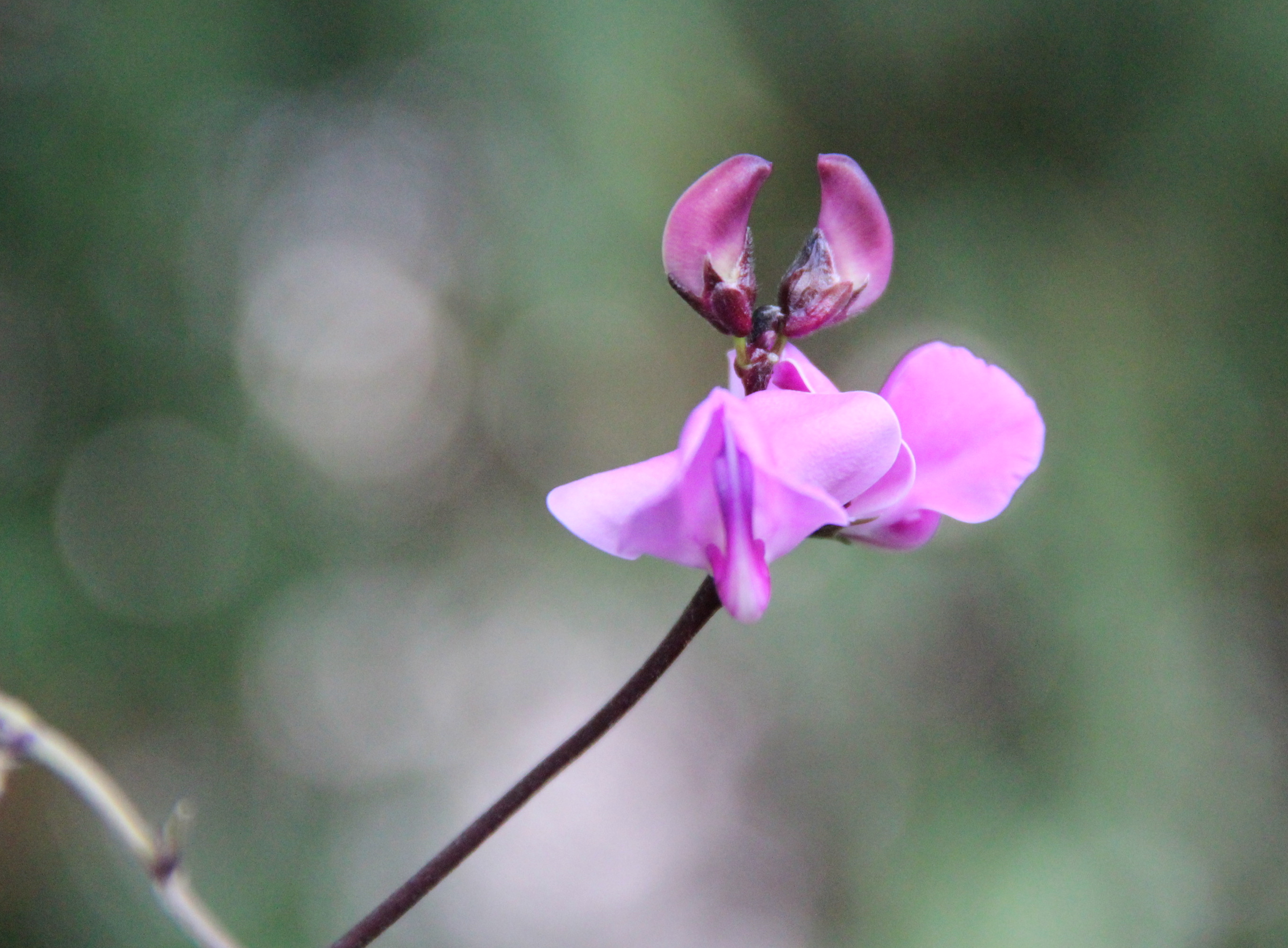
A few hyacinth beans (Dolichos lablab) continue to blossom.

A few hyacinth beans (Dolichos lablab) continue to blossom.

Russian sage (Perovskia atriplicafolia) with Rosa 'Henry Kelsey' (Canadian Explorer series) in the background.

Russian sage (Perovskia atriplicafolia) with Rosa ‘Henry Kelsey’ (Canadian Explorer series) in the background.

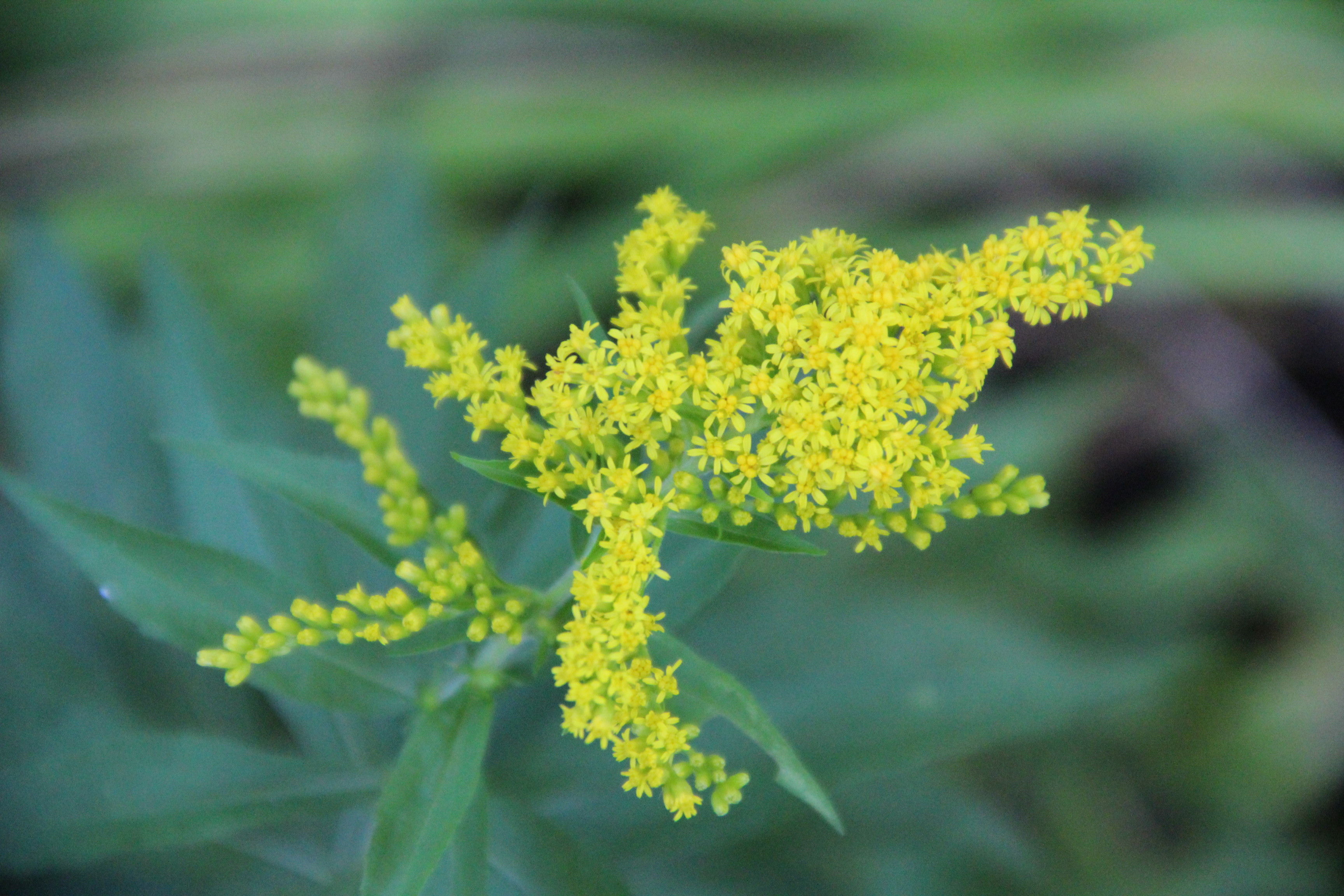
Native goldenrod

Native goldenrod brightens up our autumn garden.

Orange Sulphur Butterfly

Today’s warm temperatures and south winds brought an orange sulphur butterfly to our garden.  Normally a common butterfly, this is the first one I’ve seen all year. The orange color on the upper wing, and dark black spots help to distinguish it from other sulphur butterflies.  Adults drink nectar from many species of garden flowers; this one visited garden phlox and asters.  The caterpillars prefer red clover, white clover, vetches and alfalfa.  Other insects seen in the garden today include a potter wasp, paper wasps, bumble bees, honey bees, metallic green bees, flower flies, cicadas and an autumn meadowhawk dragonfly.

An orange sulphur butterfly (Colias eurytheme) drinks nectar from garden phlox.

An orange sulphur butterfly (Colias eurytheme) drinks nectar from garden phlox.

September Garden

Our garden reached its peak a few weeks ago, but it’s still full of color and life in mid-September.  Butterflies, many species of bees, and dragonflies are present.  A tiny charcoal-colored mouse slices off the black-eyed Susan flower heads leaving long, empty stalks.  (One year I found a mouse’s stash of flower heads and seeds in my garden toolbox!) A family of cardinals eats red yew berries; chipmunks and squirrels munch on the last of the beacon apples.  Here are a few of the flowers and insects in our garden on this warm, sunny afternoon in St. Paul, Minnesota:

Asters with spotted Joe-Pye weed and Japanese anemones

Asters novi-belgii with spotted Joe-Pye weed and Japanese anemones.

White-faced meadowhawk dragonflies patrol the garden for mosquitoes and other small, soft-bodied insects.  Many years these dragonflies are active in our garden until mid-October.

A male white-faced meadowhawk dragonfly.

A white-faced meadowhawk dragonfly (Sympetrum obtrusum).

Heath asters (Symphyotrichum ericoides) is native to the eastern and midwestern United States and Canada.

Heath asters (Symphyotrichum ericoides) are native to the eastern and midwestern United States and Canada.

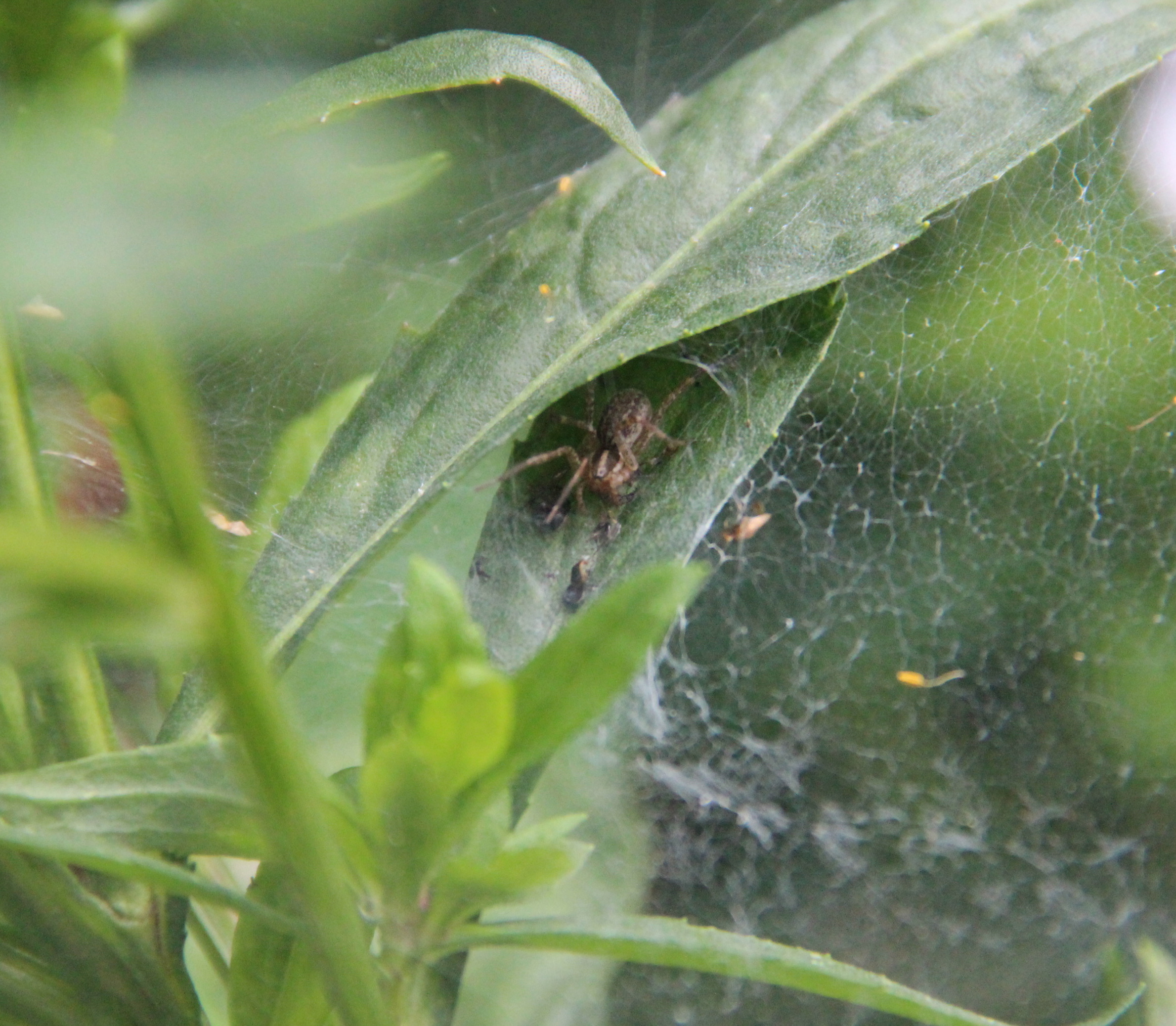
Grass funnel spiders (Agelenopsis) are shy spiders that build flat webs with a funnel or tube at the back of the web.  The spider rests out of sight in the funnel.  When an insect lands on the web, the spider quickly captures it, bites it and wraps it in silk.

A funnel spider spun its web among the helenium plants.

A funnel spider spun its web among the helenium plants.

After many days without monarchs, a straggler sipped nectar from several different flower species.

A monarch sips nectar from a spotted Joe-Pye weed plant.

A monarch sips nectar from a spotted Joe-Pye weed plant.

Native white turtlehead  (Chelone glabra) brightens up a shady spot in the garden

Native white turtlehead (Chelone glabra) brightens up a shady spot in the garden

Red Admiral Butterfly

A splash of bright red flashed by as I counted monarch butterflies in our garden late Wednesday afternoon.  Perched in a sunny spot on the apple tree trunk, a red admiral (Vanessa atalanta) fanned its wings, flew around the backyard a couple of times and landed on a lower limb of the tree.

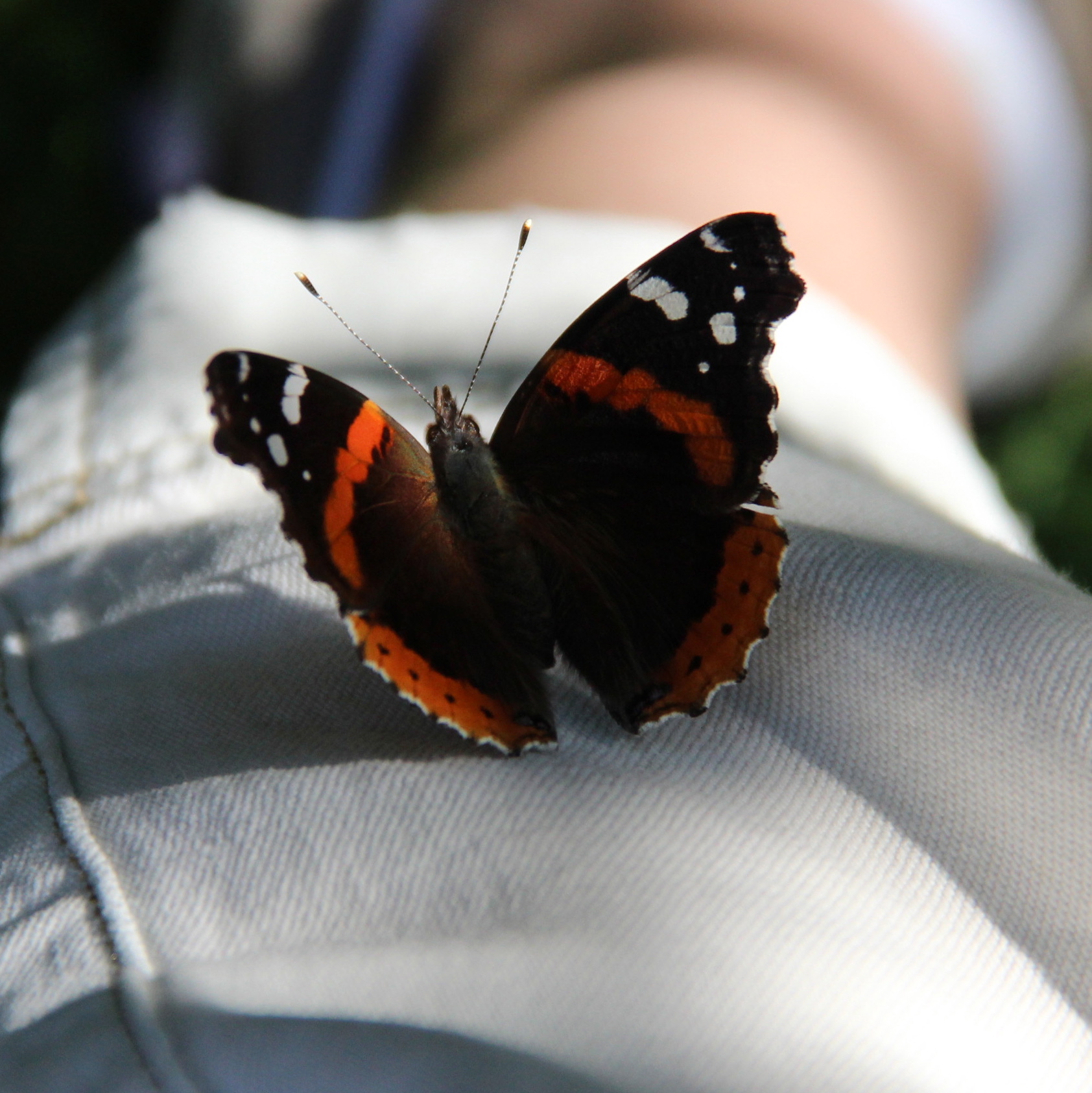
The red-barred upper wings of a red admiral that perched on my leg.

The red-barred upper wings of a red admiral that perched on my leg.

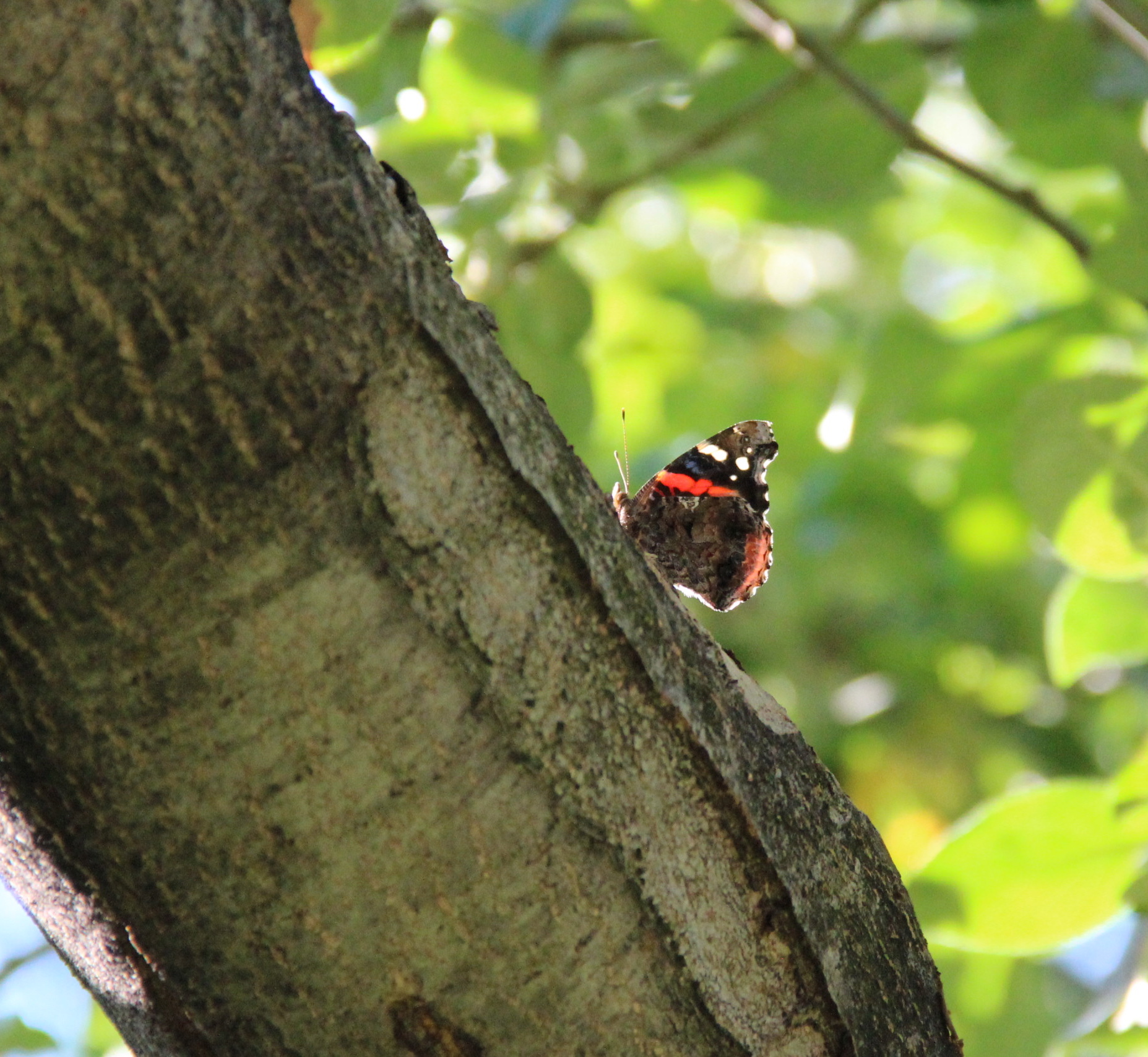
Named for the red-bar markings on their black upper wings, red admirals also sport white marks in the upper corners of the forewings.  The underside of the wings, which is often visible when the butterfly perches, is a mottled brown, tan and black, with a pink band and white spotting on the forewing.

The mottled underwings are marked with a pink bar and white spotting in the forewing.

The mottled underwings are marked with a pink bar and white spotting in the forewings.

Red admirals range from near the Arctic Circle to as far south as Guatemala.  (They also live in Europe, Asia and North Africa, and have been introduced in other parts of the world.)  They prefer moist areas such as fields, meadows, open woodlands, gardens and yards.  Red admiral caterpillars prefer to eat nettle leaves; adults eat overripe fruit, tree sap, and the nectar of many types of flowers, such as aster, blazing star, spotted Joe-Pye weed and red clover. In Minnesota, there are one-to-two broods each year.  The butterflies of the second brood are smaller and less colorful than the first brood.  Most migrate to the southern states in autumn, but a few successfully hibernate in the north during mild winters.  Many years, this butterfly remains active into October and I’ve seen them as early as mid-April in the spring.

For more information about the red admiral and other butterflies, visit:

http://minnesotaseasons.com

http://butterfliesandmoths.org

Bumblebee “Buzz Pollination”

Last Sunday afternoon was quiet in the garden; too cool for the loud whining of cicadas, and no wind to swish and rattle the leaves.  However, a persistent high-pitched buzzing in the anemones was driving my husband nuts.  Turns out it was the sound of several bumblebees releasing pollen through sonication or buzz pollination.  In sonication, bumblebees, and other native bees, hold onto a flower with their jaws or legs, press the upper portion of their body into the flower and rapidly vibrate their flight muscles to jar loose pollen.  The freed pollen clings to the bee’s furry body.  Some of it is collected in the bee’s pollen baskets to be brought back to the colony, and some fertilizes the next flower that the bee visits.  (The pollen basket is located on the outside of the bee’s back leg.  It’s easy to see when it contains pollen because it will be yellow, orange or red, depending on the type of pollen it contains.)  Buzz pollination is essential to plants such as blueberries, cranberries and tomatoes, in which the pollen is firmly attached deep inside a tubular anther.  However, bumblebees also use it to release pollen in other flowers, such as the Japanese anemones in our garden.

A bumblebee buzz pollinates a Japanese anemone in our garden.

A bumblebee buzz pollinates a Japanese anemone in our garden.

In addition to the buzz pollination video link in the text above, find out more about pollination and bumblebees from master naturalists Paul and Mary Meredith at VictoriaAdvocate.com.