Common Milkweed, Hidden Beauty

Gusty winds tease common milkweed seeds from their pods.

Its beauty isn’t on the outside. Common milkweed (Asclepias Syriaca), despite its attractiveness to monarch butterflies, isn’t the showiest of plants. Its large, smooth leaves and warty pods lack the delicacy of many native plants. Milkweed’s beauty is hidden within its pods.

Tiny green pods arise from fertilized pink, aromatic flowers.

Over the summer, small, perfumed pink flowers are fertilized and form tiny green pods or follicles. As they ripen, they grow to three-to-five inches in length. Inside, oval-shaped flat, brown seeds tethered to white, satiny strands designed for wind dispersal are arranged around a central column. Each is neatly tucked into a crevice on a membrane attached to the top and bottom of the pod.

Oval-shaped seeds attached to satiny strands are neatly arranged around a central column.
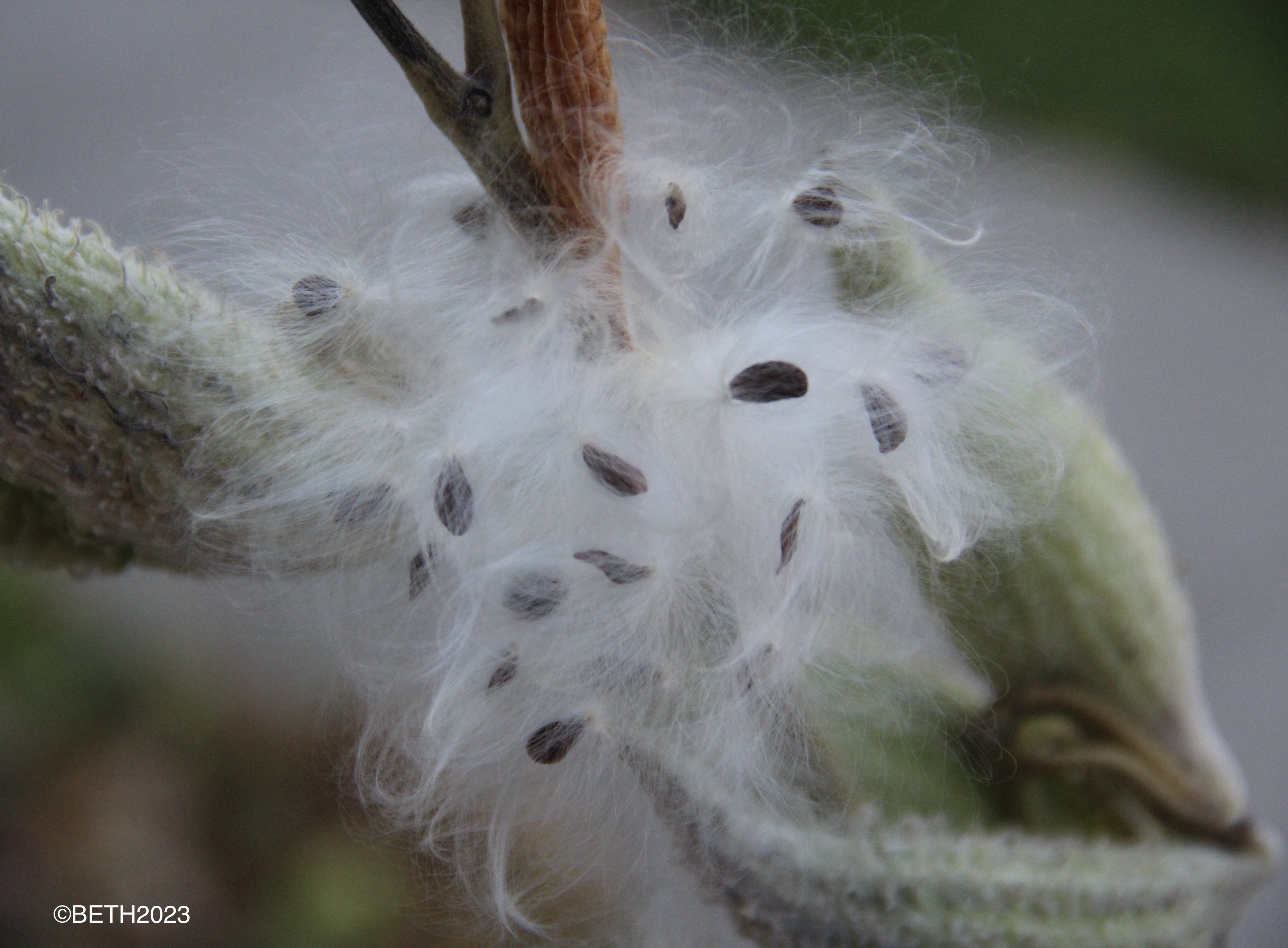
Wind fluffs the silky fibers into parachutes to disperse the seeds.

When the seeds mature, the pods dry and crack open. As wind enters the split pods, the silky strands unfurl and balloon into parachutes. One by one the seeds spin out of the pod like shimmering wind-borne dancers that glow in the autumn sunlight. I love to watch them sail — sometimes floating on a gentle breeze, sometimes scurrying on gusty winds. The empty pod is pretty too: Cream-to-gold colored and smooth inside, except for the center membrane, which is grooved to anchor individual seeds.

The empty pod is satiny smooth except for the grooved central column where the seeds were attached.

These lovely seeds used to be rare in Twin Cities urban areas, but now many residents grow one or more of 14 native milkweed species in their yard and boulevard gardens to attract monarchs and other butterflies.¹
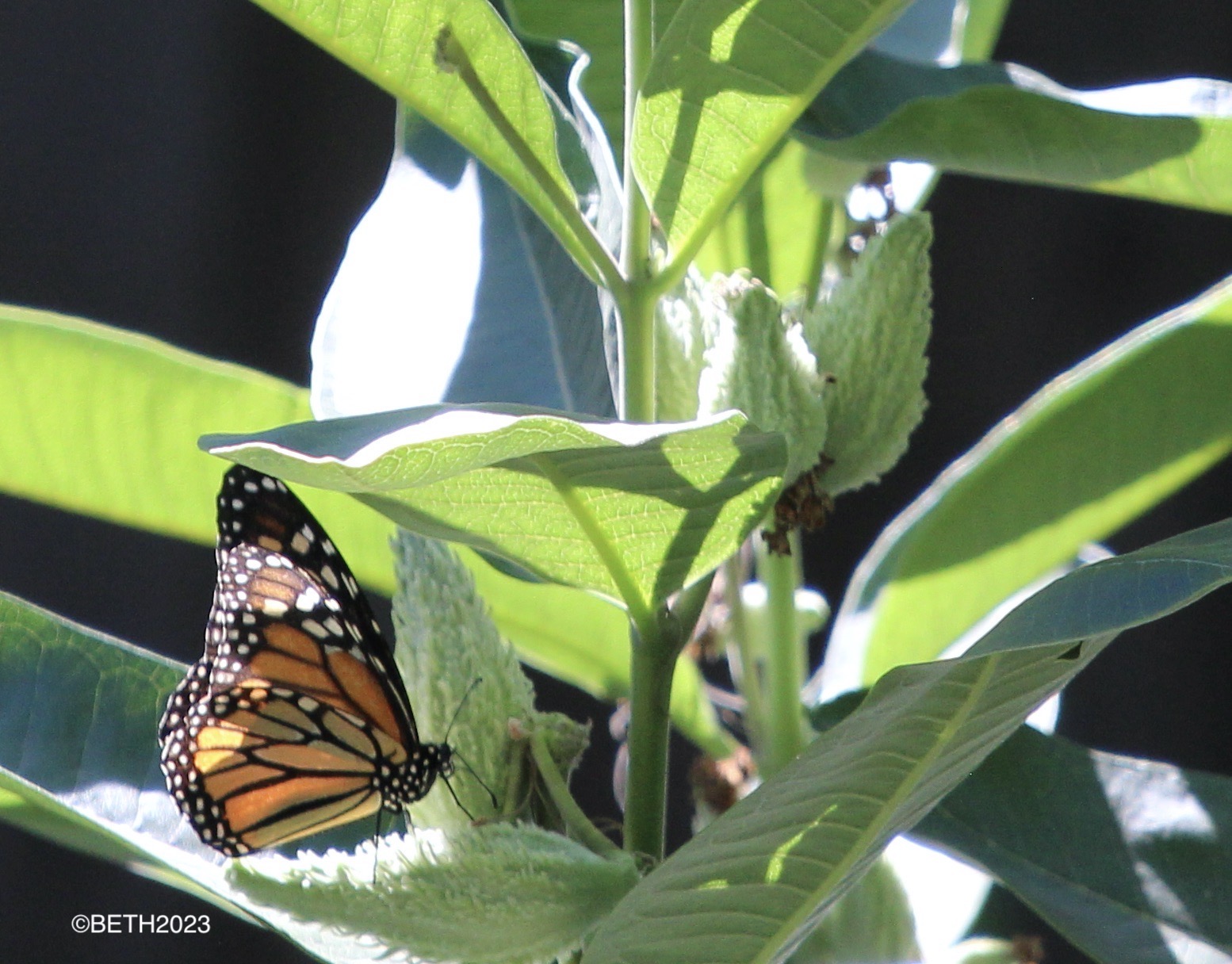
Milkweed plants are the sole host plant for monarch butterflies.

¹When handling milkweed, it’s best to wear gloves and eye protection. The plant’s milky latex sap can cause eye and skin irritation on contact. According to several sources, the sap is slightly toxic to humans if eaten in large amounts. Animals are also affected by it, but most avoid the plant. This substance helps to make monarch butterfly caterpillars unpalatable to birds.

Sources and Further Reading

Eloise Butler Wildflower Garden Common Name Plant List

Milkweeds of Iowa and Minnesota (Xerxes.org)

Minnesota Milkweeds for Monarchs
Monarch Joint Venture

Spreading Milkweed, not Myths


Seed Story

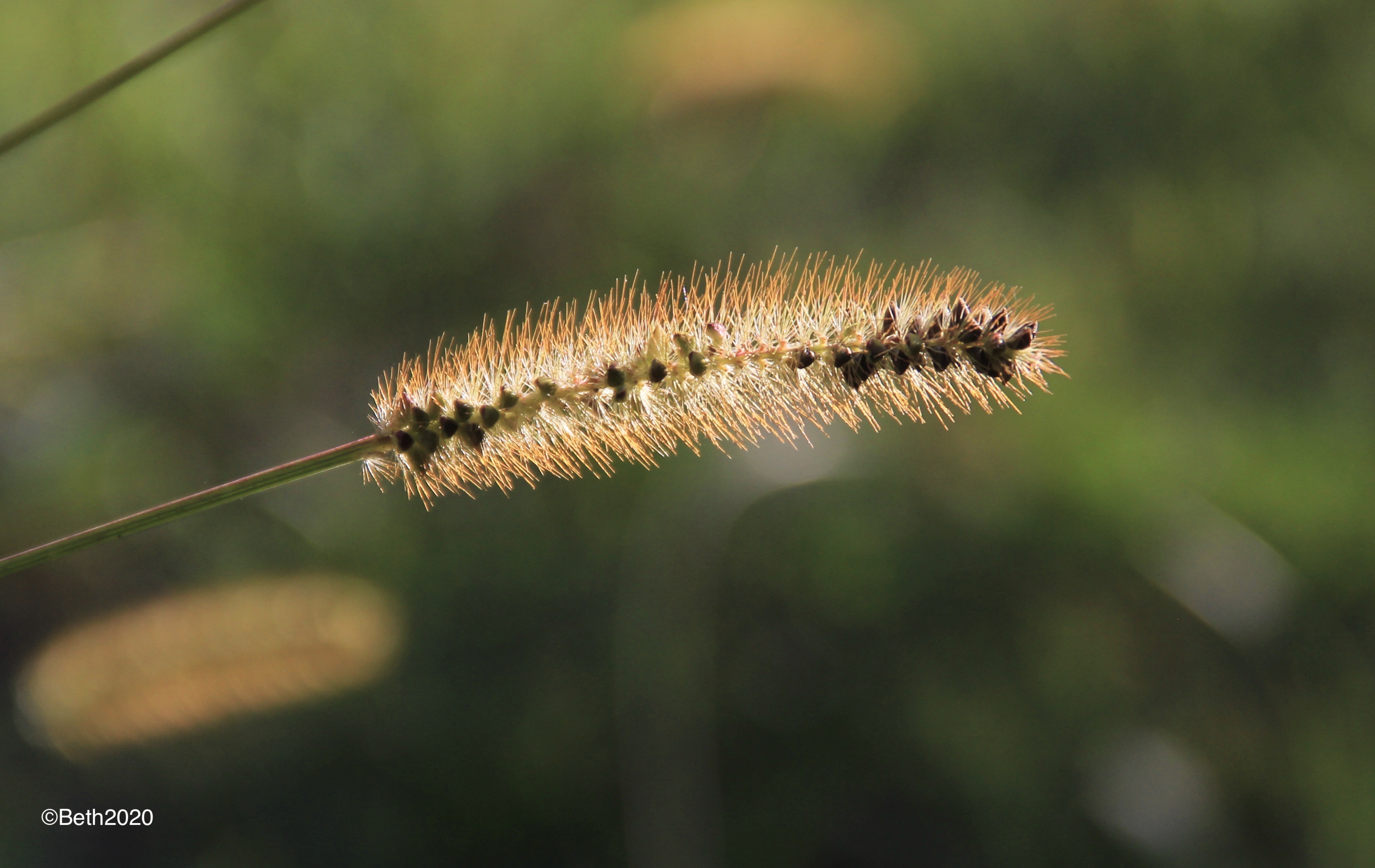
Prairie grass seeds glow in late-afternoon sun.

Seeds are tiny packets of possibility nestled in the earth. One could easily mistake a seed for a piece of soil, a pebble, or fragment of some spent plant. But each holds a spark of life waiting to ignite in spring’s intense sun and snowmelt.

I have loved seeds for as long as I can remember. As a young child I held morning glory, blue flax, nasturtium and snap dragon seeds as my mother prepared the ground for planting. She cultivated the soil, tossed out pebbles and broke up pieces of clay. We traced a shallow furrow in which I placed the seeds, buried them and watered them with her help.

In elementary school, we grew green beans in Dixie cups.  A bean seed is substantial enough for a child to get a good grip on its silky-smooth shape. Our classroom bubbled with excitement the morning we arrived to find pale green sprouts pushing through the dirt! The challenge was to get the seedlings home without breaking them off. I grew mine on strings attached to the side of our garage; not fancy, but the stalks vined upward, blossomed white and yellow, and we ate fresh green beans a few weeks later. 

Another year, my brother’s class grew pumpkins. He planted his seedlings in a corner of our urban backyard. By mid summer, baby pumpkins grew over, under and even between the wooden pickets of our fence! That October, he loaded his wagon, lugged it around the neighborhood and sold all of his pumpkins at the bargain price of 10 cents a piece.

I also cherish memories of teaching our son about seeds. We planted tomatoes, radishes, beans, carrots, dill, basil, parsley and borage. He loved to watch for the first sprouts and sampled the baby carrots and beans as they grew. On warm summer mornings, we’d gently run our hands over the herbs to release their aromas. One year, the parsley plants were host to eastern black swallowtail butterfly caterpillars. They demolished the parsley, but taught the butterfly life cycle hands-on.

Seeds of purple hyacinth (Lablab purpureus) and scarlet runner (Phaseolus coccineus) beans produce colorful blossoms and pods.

Some seeds are nondescript. Others hold beauty in their patterns, pods and shapes. Purple hyacinth bean seeds look like ice cream sandwiches and scarlet runner bean seeds are colored crimson and black like the last bit of light in a stormy evening sky. Canada columbine, Siberian iris and day lily seeds are shiny black beads that gleam in their spilt pods. Others, like white snakeroot and asters, are clouds of fluff designed to disperse on the wind. Whether humble or eye-catching, each must fall to the dirt, be buried and moistened. Only then can its journey to light and life begin.

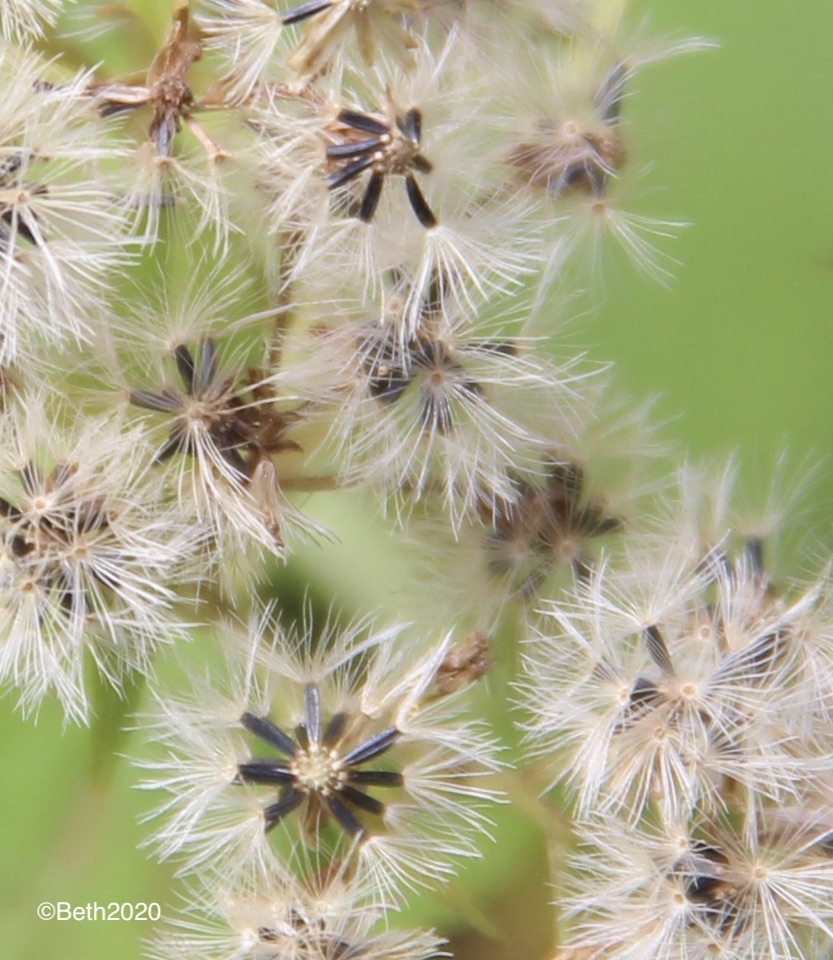
Oblong black seeds and fluff of native white snakeroot (Ageratina altissima) ripen in October.

Ripe Canada columbine (Aquilegia canadensis) pods break open to release shiny, black seeds.