Ornaments Stir Memories, Gratitude

The ornaments hanging on our family Christmas tree hold memories of people we cherish, events from our lives, times past and present. Most were gifts from family members, close friends, and students whom I taught in middle school; all are meaningful. 

As I hang them on our tree, memories flare to life. I recall the excitement and happiness of the gift givers, especially our young son and my students. Their faces, shining with excitement and joy to share their presents, were gift enough.

Some of the ornaments are handmade, such as the madonna and child that my sister cross-stitched when she was pregnant with her first child. A hand-knitted pair of tiny green-and-white mittens, a child’s wooden rocking horse, miniature Winnie-the-Pooh and Piglet figurines, and a sliver of a Santa moon are just a few of many special ornaments we received when our son was a baby. As he grew, he created his own decorations; from his toddler hand print and “Christmas countdown” paper chains, to a Nativity creche, candle, and beaded snowflake ornaments made in elementary school. He was so eager to show us his creations that it was hard for him to wait until Christmas!

Many of our ornaments symbolize nature’s gifts: Owls, warblers, black-capped chickadees, cardinals, a bumblebee, cricket, chipmunk, raccoon, miniature bears, Christmas acorns and pinecones. They evoke memories of hikes, biking trips, and quiet days spent at our cabin. I recall a family of barred owls raising a ruckus on a nightly hunt in the oak trees, the red fox family that lived under our porch one spring, wood thrushes’ morning chorus and the serenade of crickets on hot summer nights.

More than two dozen tiny red apples punctuate the branches with bright bursts of color. They are from former students and from my mother, who always finished her tree with the bright globes. This is our sixth Christmas without Mom. I recall the aromas of balsam fir and freshly baked Christmas cookies that scented our home each year as I grew up. Old-fashioned butter cookies, merry mincemeat bars, Christmas cake cookies and spritz are just a few of the treats that Mom baked each December. There are also jolly snowman ornaments that my dad gave to our son. They are happy-looking fellows that remind me of Dad, who died little more than three years ago. I miss him and we are so grateful for the joyful Christmas we shared together his last year.

Fragile glass and delicate handmade ornaments, created by a group of Ukrainian nuns, add a traditional touch to our tree. There are six soft-blue Wedgwood ornaments from my aunt. Old-fashioned glass icicles, teardrops, globes and other shapes glow in the soft white light. They stir my earliest childhood memory of Christmas: My brother and I would make a blanket nest under the lighted Christmas tree. In our darkened living room, we listened to Christmas carols and talked softly. We watched the multicolored lights and our reflections dance across the glass globe ornaments hanging above us. I felt peaceful and content. I never wanted the Christmas season to end.

In the yearly ritual of decorating our tree I experience, again, the love and joy of so many cherished people — both living and those no longer with us. I hold them close and bless each one in gratitude. 
Seed Story

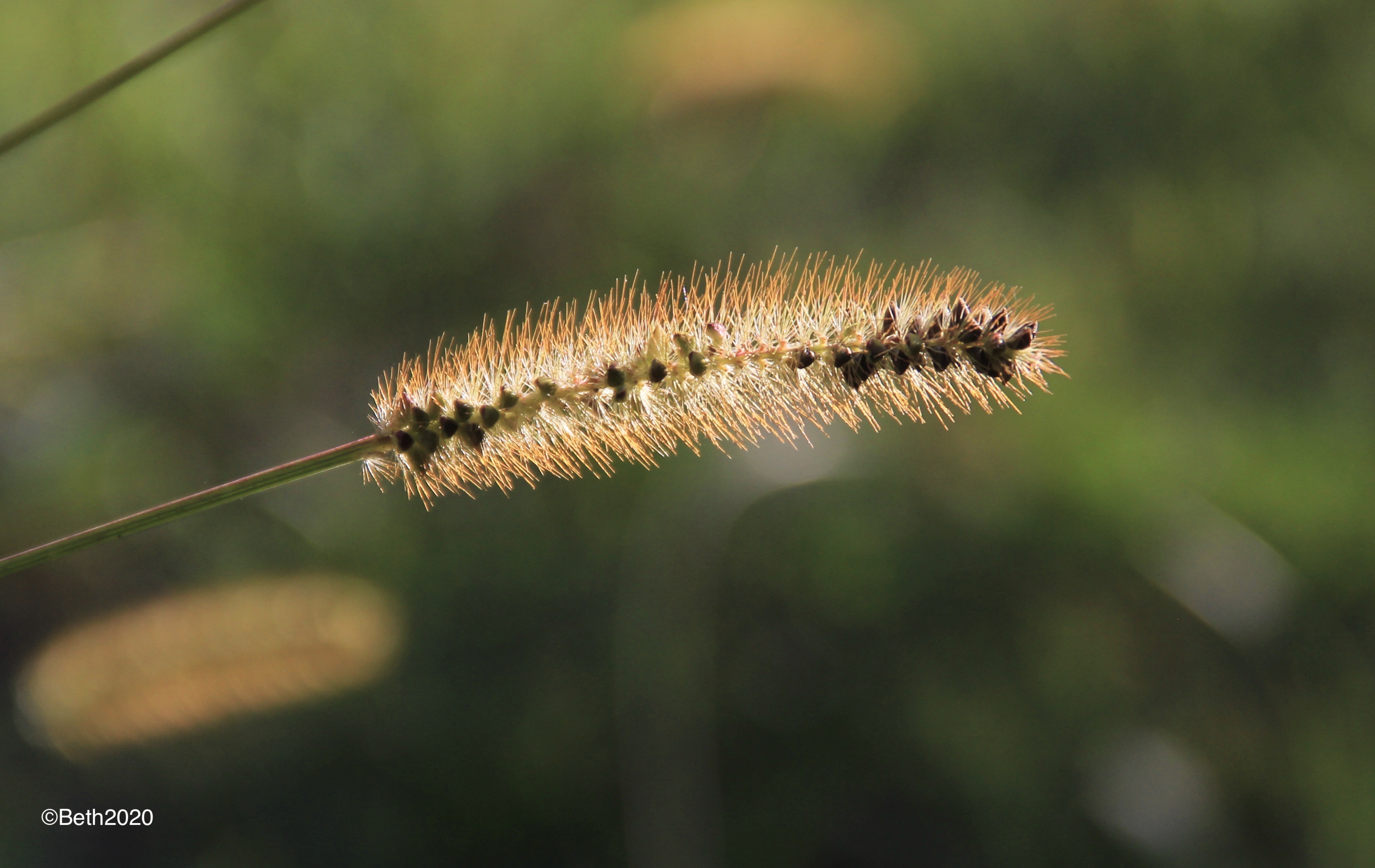
Prairie grass seeds glow in late-afternoon sun.

Seeds are tiny packets of possibility nestled in the earth. One could easily mistake a seed for a piece of soil, a pebble, or fragment of some spent plant. But each holds a spark of life waiting to ignite in spring’s intense sun and snowmelt.

I have loved seeds for as long as I can remember. As a young child I held morning glory, blue flax, nasturtium and snap dragon seeds as my mother prepared the ground for planting. She cultivated the soil, tossed out pebbles and broke up pieces of clay. We traced a shallow furrow in which I placed the seeds, buried them and watered them with her help.

In elementary school, we grew green beans in Dixie cups.  A bean seed is substantial enough for a child to get a good grip on its silky-smooth shape. Our classroom bubbled with excitement the morning we arrived to find pale green sprouts pushing through the dirt! The challenge was to get the seedlings home without breaking them off. I grew mine on strings attached to the side of our garage; not fancy, but the stalks vined upward, blossomed white and yellow, and we ate fresh green beans a few weeks later. 

Another year, my brother’s class grew pumpkins. He planted his seedlings in a corner of our urban backyard. By mid summer, baby pumpkins grew over, under and even between the wooden pickets of our fence! That October, he loaded his wagon, lugged it around the neighborhood and sold all of his pumpkins at the bargain price of 10 cents a piece.

I also cherish memories of teaching our son about seeds. We planted tomatoes, radishes, beans, carrots, dill, basil, parsley and borage. He loved to watch for the first sprouts and sampled the baby carrots and beans as they grew. On warm summer mornings, we’d gently run our hands over the herbs to release their aromas. One year, the parsley plants were host to eastern black swallowtail butterfly caterpillars. They demolished the parsley, but taught the butterfly life cycle hands-on.

Seeds of purple hyacinth (Lablab purpureus) and scarlet runner (Phaseolus coccineus) beans produce colorful blossoms and pods.

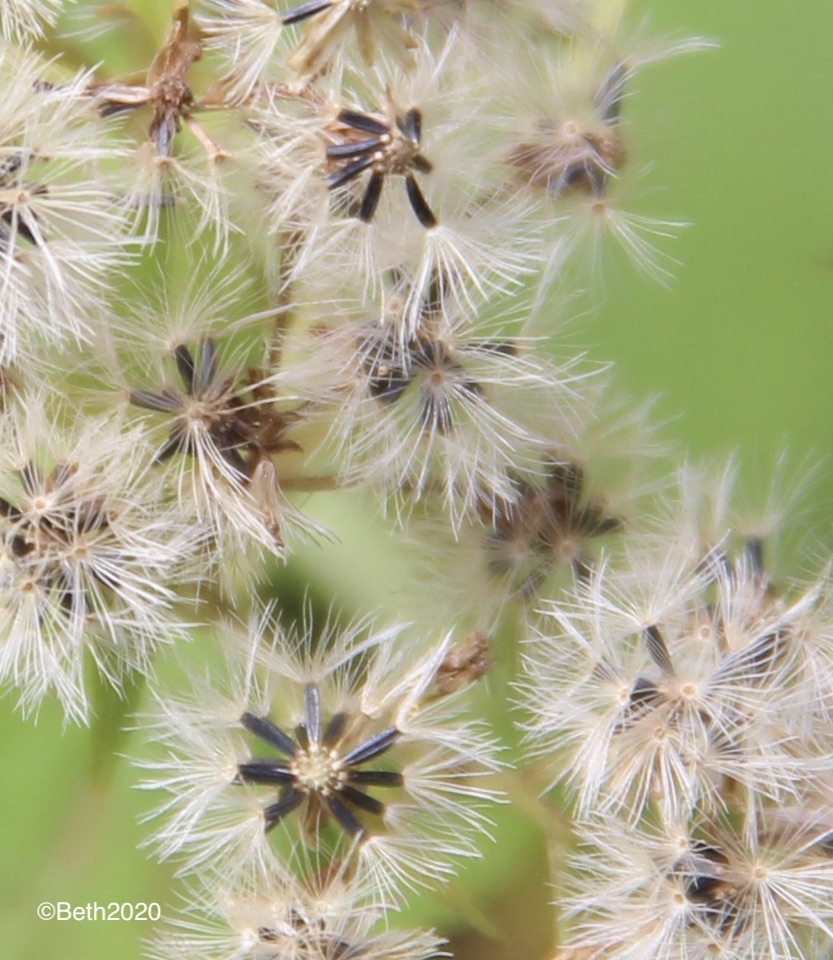
Some seeds are nondescript. Others hold beauty in their patterns, pods and shapes. Purple hyacinth bean seeds look like ice cream sandwiches and scarlet runner bean seeds are colored crimson and black like the last bit of light in a stormy evening sky. Canada columbine, Siberian iris and day lily seeds are shiny black beads that gleam in their spilt pods. Others, like white snakeroot and asters, are clouds of fluff designed to disperse on the wind. Whether humble or eye-catching, each must fall to the dirt, be buried and moistened. Only then can its journey to light and life begin.

Oblong black seeds and fluff of native white snakeroot (Ageratina altissima) ripen in October.

Ripe Canada columbine (Aquilegia canadensis) pods break open to release shiny, black seeds.

Memories of Birds

I heard a flock of robins this morning, murmuring softly to each other in the silver maples and hackberries. A male cardinal, tucked into our arbor vitae, whistled his “what cheer” melody. They sang memories of my dear friend Cathy Borden, who died one year ago today.

Cathy loved birds and, as I held her hand in the silence of a January evening, a flock of robins filled the trees outside her window at Our Lady of Peace hospice. She would have loved seeing the robins. Though she wasn’t conscious, she stirred when I described their rusty breasts, black heads and charcoal backs, and how they picked berries in the twilight.

I spun tales of steamy summer afternoons when we hiked the woods and fields of Eagan, just a small city at that time; of goldfinches collecting thistledown to line their cozy nests, rose-breasted grosbeaks flashing their lovely badges along the hiking trail, and tiny common yellowthroats calling “wichity-wichity”in the willow scrubs.

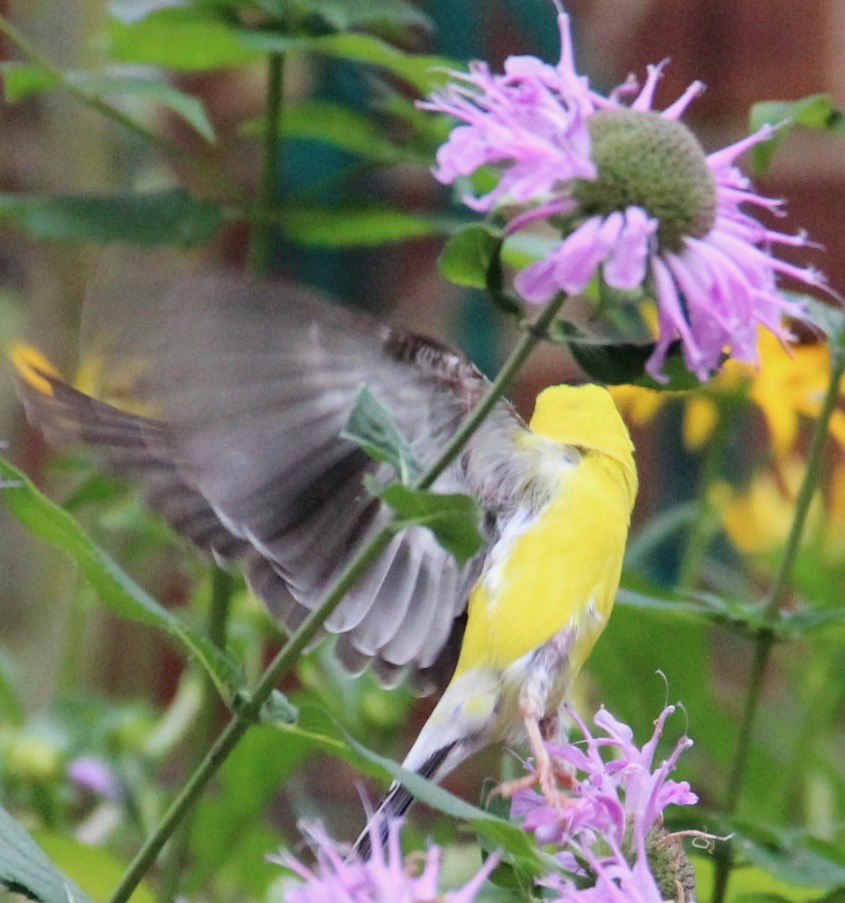
An American goldfinch spreads its wings in the bee balm patch.

An American goldfinch (Spinus tristis) spreads its wings to fly from the garden.

The birds continue to awaken beautiful memories. One night last November, when the “moon of freezing over” shone full and close, a great-horned owl hooted from a spruce in our front yard. I eased open a window to listen to its soothing call and remembered evening bike rides with Cathy in the bluff country of southeastern Minnesota.  We rode wooded trails where barred owls with liquid black eyes watched us from tree limbs overhead, a hen turkey and her flock of fuzzy poults scurried about the path in front of us, and night herons croaked their calls at dusk.

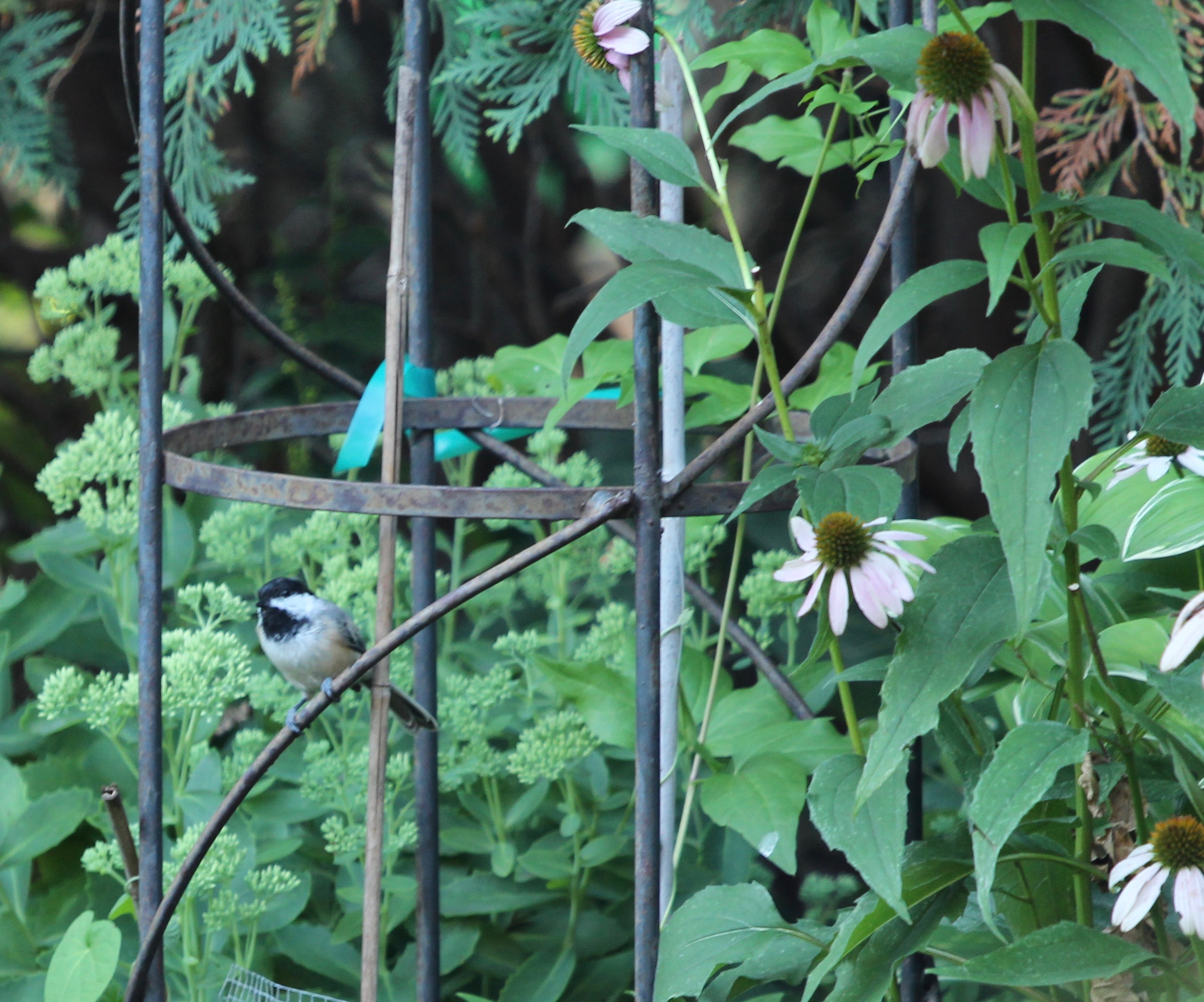
Black-capped chickadees are companionable in the garden and the woods.

Black-capped chickadees (Poecile atricapillus) are companionable in the garden and the woods.

Perhaps it’s the tiny black-capped chickadee, Cathy’s favorite bird, that most often brings her to mind. One fine morning last spring after a night of thunderstorms, chickadees whistled to each other in my garden and the year’s first lily of the valley opened, covered in rain droplets. (She loved these flowers and tried to grow them for many years.) Cathy would have rejoiced in the antics of the chickadees, in the abundance of my lily of the valley garden, and in the beginning of a new day so fresh and lovely.

Lily of the valley(Convallaria majalis) is native to Northern Europe and Asia.

Lily of the valley(Convallaria majalis) is native to Northern Europe and Asia.