More Than a Weed

I’ve battled bishop’s weed (Aegopodium podagraria) in my garden for 35 years.¹ As much as I detest it, (please don’t plant it), I’ve learned that what’s despised by one creature may mean survival to another. Bishop’s weed, a member of the parsley family, is one of a small number of host plants or “homes” for native black swallowtail butterfly caterpillars.²

A black swallowtail caterpillar (Papilio polyxenes) feasts on bishop’s weed, a member of the parsley family.

As I dug out the weeds a couple of weeks ago, I spotted a caterpillar with light blue-green and black stripes dotted with yellow. The clues to its identity were its location on a member of the parsley family, the only plant type that black swallowtails live on and eat, and the color and pattern of its stripes. (It looked similar to a monarch, but monarch caterpillars only eat milkweed and their stripes are yellow, black and white.) I searched through the rest of the bishop’s weed and found a second caterpillar. In May I’d seen an adult black swallowtail visiting the weed, where it must have deposited eggs.

Two rows of well-defined yellow spots help to distinguish the black swallowtail from other swallowtail species in our area.

Not a rare butterfly, but a handsome one, the black swallowtail (sometimes called the parsley swallowtail) is native to the eastern United States and Canada. Its body and wings are black with highlights of yellow, blue and orange. The tail ends in two narrow lobes that give it the common name of swallowtail. Two rows of bright yellow spots mark the wings. The hindwings are blue in the area between the yellow rows near the tail. Each hindwing ends in a circular reddish spot. The underside of each wing has rows of light yellow spots, with bands of orange separated by spatterings of blue. Females usually show more blue coloring and males usually have more yellow. The wing span is 3.5 – 4.5 inches, with the female generally larger than the male.

The undersides of the hindwings are marked with bright orange and a dusting of blue.

In the Upper Midwest, black swallowtails produce two generations of offspring between May and October. The second generation overwinters in a brown chrysalis until the following spring. The caterpillars in my garden probably hatched in May. Depending on weather conditions and host plant availability, the eggs hatch in three-to-nine days. The caterpillars eat and grow through five stages, or instars, as they increase in size and change in appearance, which may take up to 30 days. The mature caterpillar forms its chrysalis and molts one final time. The ones I saw will leave their chrysalises in two-to-three weeks as mature black swallowtails ready to produce the next generation. Adults nectar on clover, milkweed, thistle, bee balm and other perennials. Watch for them to be on the wing in July — and, consider growing one of the more well-behaved members of the parsley family, such as dill, carrot, parsley or sweet fennel, on which this lovely creature can live and dine!

1Also known as goutweed and ground elder, this non-native member of the parsley family was imported and marketed as a fast-growing ground cover that was frequently planted with European buckthorn (Rhombus cathartica) and creeping bellflower (Campanula rapunculoides). There’s also a variegated form called snow-on-the-mountain. Over the years, we’ve had it chemically treated, dug out and the soil replaced, but it returned each time. Now, I just try to prevent it from spreading.
²Other members of the parsley family include carrot, dill, sweet fennel, Queen Anne’s lace and, of course, parsley.

Further Reading:

Butterflies and Moths of North America
Wisconsin Horticulture – UW-Madison

Weber, Larry. (2006). Butterflies of the North Woods. Duluth, Minnesota: Kollath & Stensaas Publishing.

Wild Roses

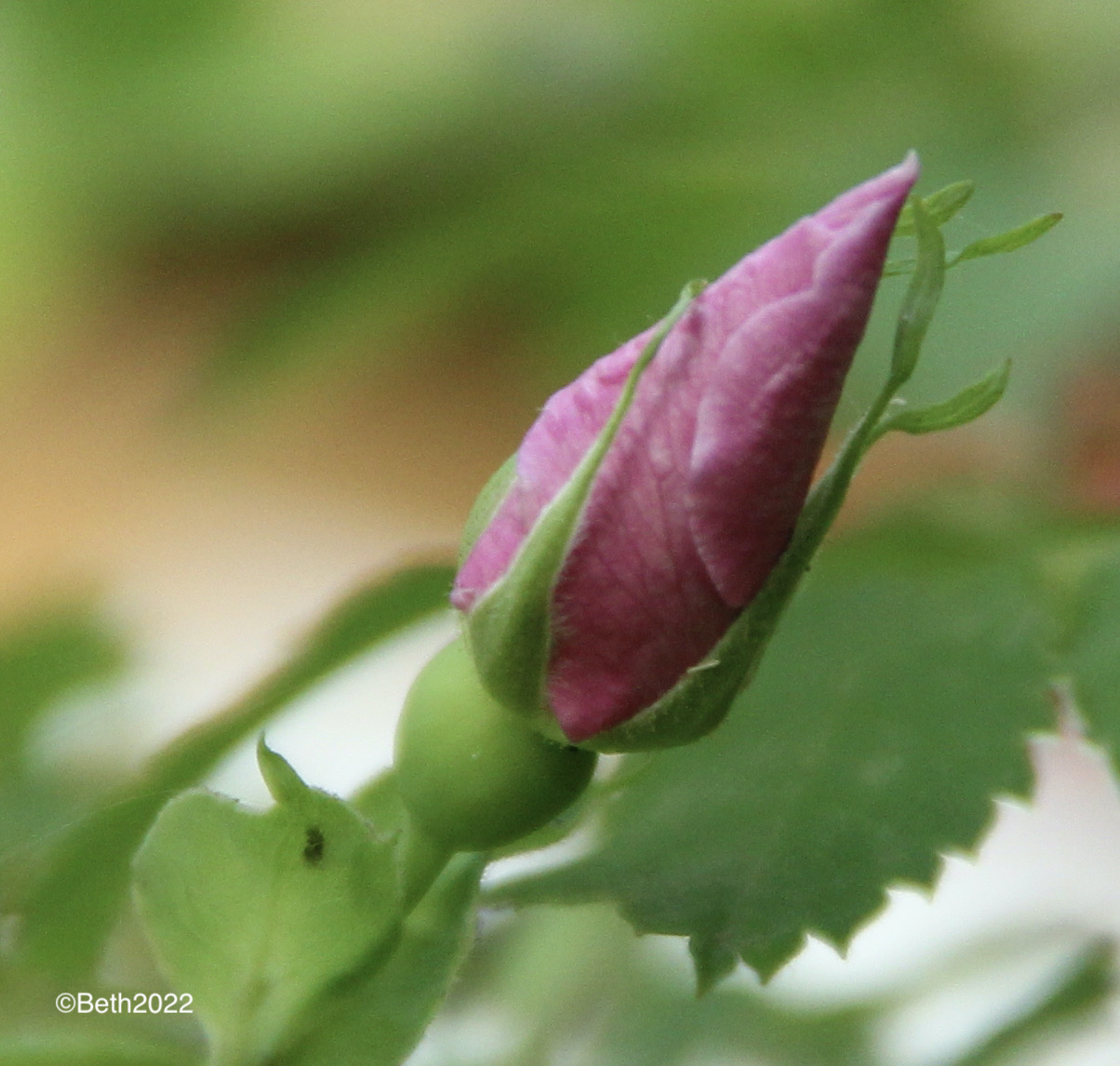
Wild rose buds (Rosa blanda) usually open in June in Minnesota.

Wild roses bloom across the oak savanna in early June. Their petals blush the delicate color of a northern spring sunrise. To my mind they are classic blooms: simple petals, sun-gold centers, and a delicate aroma. They dot woodland edges, roadsides and trail borders. Like the majority of springtime wildflowers, they vanish quickly. However, they are soon succeeded by a riot of red rose hips — fruit that will decorate the plants until next spring, or until eaten by wintering birds and mammals. Besides providing rose hips later in the season, the blooms are attractive to many types of bees, butterflies, tiny wasps and other native insects that seek nectar and pollen in the small, plentiful blossoms.

Metallic green bees (Agapostemon) are among the many native pollinators that visit wild roses.

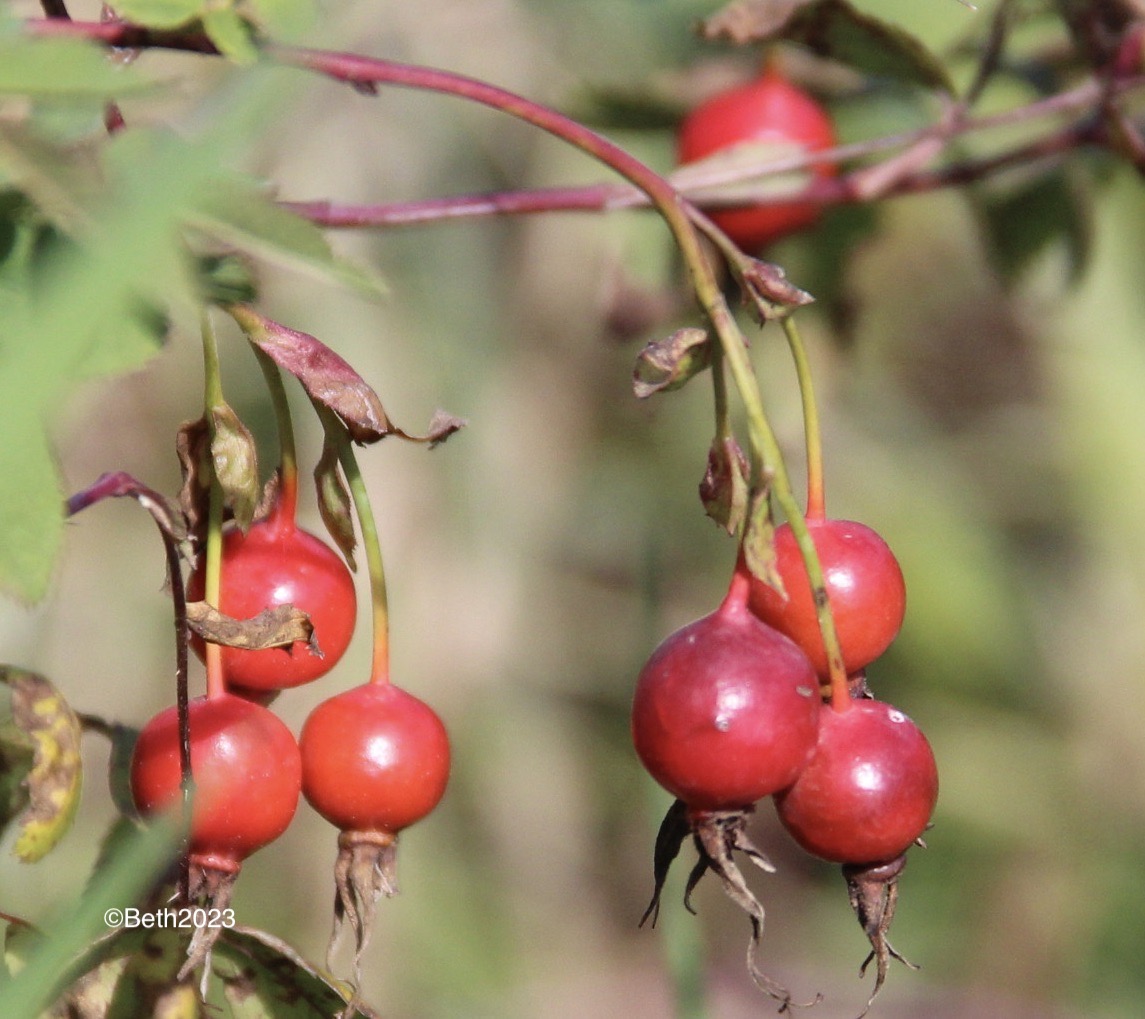
Bright red rose hips decorate each plant until the following spring, or until eaten by wildlife, such as birds, squirrels, rabbits and bears. Each hip contains several seeds.

Rime Ice, New Year’s Eve

Rime ice etches the evergreen leaves of boxwood shrubs.

On the last morning of the year, soft gray clouds insulate the city. The air is still and quiet except for a few American robins and goldfinches calling. In the silence of the night, fog crept in and dressed every tree branch and plant with beautiful needle-like ice crystals.

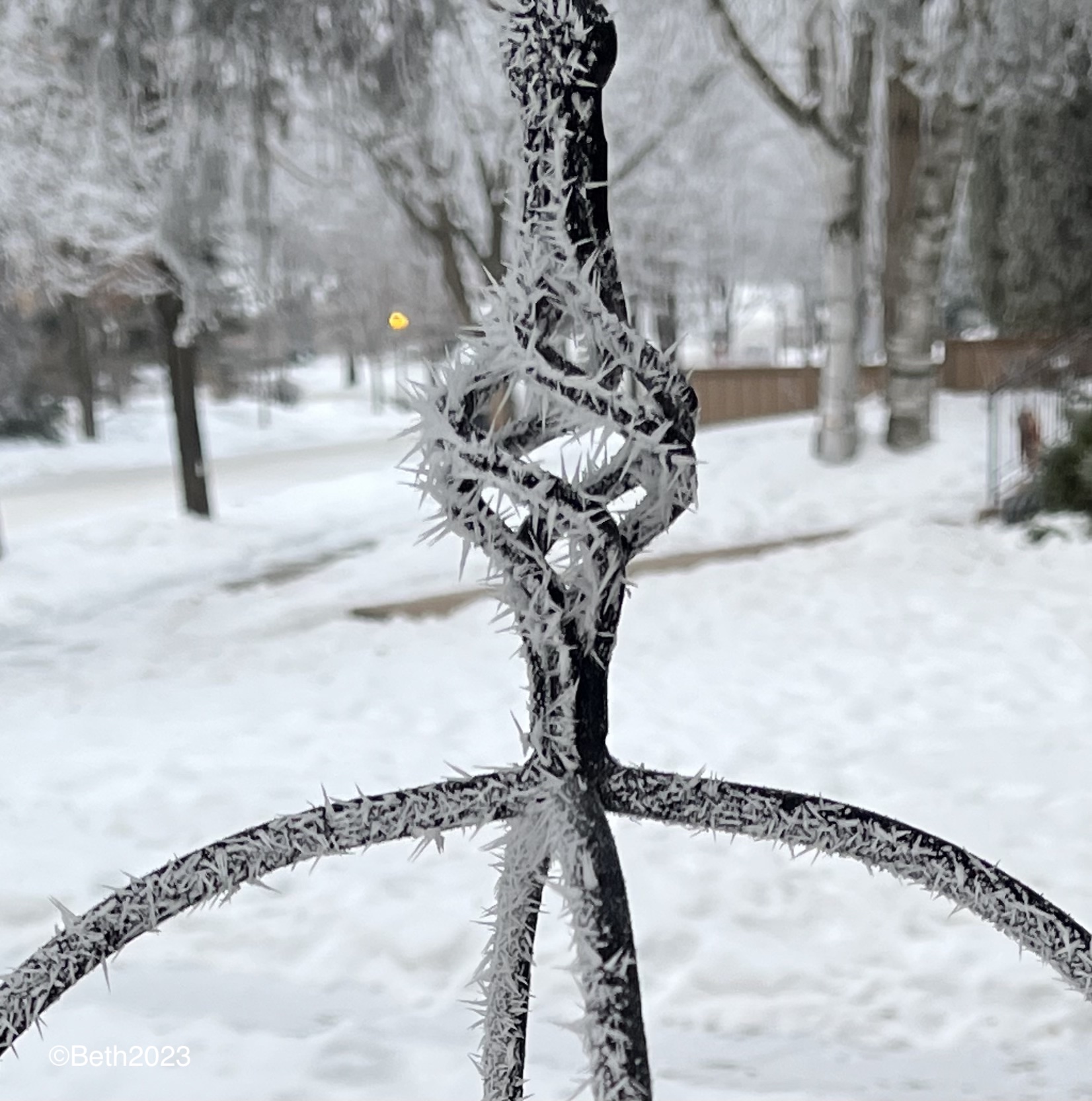
When fog or mist droplets freeze instantly on contact with the wind-facing side of a cold surface, rime ice is formed. The milky white color of rime is caused by the air pockets between the ice particles. 

How is rime ice different from hoar frost? First, they differ in appearance: Hoar frost often looks feathered and lacy, in contrast with the sharp needles of rime. They also form by different processes. Hoar frost typically forms on cold, clear nights rather than during cloudy conditions. Water vapor freezes and crystallizes on surfaces without becoming water droplets first. Both rime ice and hoar frost add a magical beauty to the monochrome winter world.

Rime ice’s sharp needle-like crystals decorate a garden obelisk.

Sources:

Wisconsin State Farmer

National Weather Service, Aberdeen, SD

Winter’s Arrival

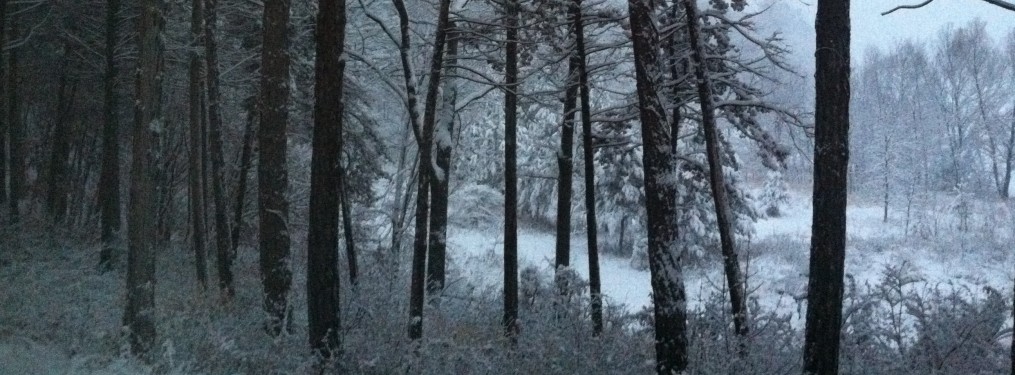
A quiet trail in Minneapolis, Minnesota, glows with fresh snow and late-afternoon sun.

The “keeper snow” came early this year. In late November, we walked in lightweight clothing and running shoes. Two days later a storm blew in ahead of a Canadian cold front and dropped eight inches of new snow. We’ve entered the stark season. Green is a memory buried under an ice-cold blanket. Gone from our yard are the bumblebees, painted lady butterflies and other pollinators. I’ve put the garden to bed for the winter.

Black-capped chickadees (Poecile atricapillus) are high-energy winter residents in our back yard.

Just ahead of the storm, a mixed flock of robins, dark-eyed juncos, black-capped chickadees and small woodpeckers—both downy and hairy—descended into our back yard. Robins tossed aside leaves to uncover stray insects, seeds and fruit. Juncos sought seeds on the garden wall. Chickadees and woodpeckers hunted for insect larvae and other delights in the bark of our old apple tree.

This afternoon at dusk, a female northern cardinal, softly colored and alone, delicately plucked crabapples one-by-one in our front yard. She was lucky to find any because the portly gray squirrels have stripped most of the tree bare. I am grateful for these winged winter residents that bring life to our garden on even the coldest winter days.

A female downy woodpecker (Dryobates pubescens) excavates for insect eggs and larvae in a dead portion of our apple tree.

October’s Painted Lady

A painted lady’s (Vanessa cardui) underwing sports four eyespots and pink patches. It is nectaring on asters (Symphyotrichum oblongifolium).

Mild October days bring butterflies to our garden. We commonly see red admirals, painted ladies, commas and tortoiseshells, but in 2022, I’ve seen fewer numbers of butterflies all season. The only painted lady (Vanessa cardui) that I’ve spotted appeared in late October on a mild, sunny day (77°F/25°C). 

It spent hours nectaring on late-blooming asters in the company of many bees, and flew energetically around the garden every few minutes. While most of the native bees perished in a hard frost (24°F/-4°C) more than two weeks ago, a few hearty bumblebees survived, as did the honey bee colonies. Bees and butterfly got along well and were simply focused on collecting nectar for energy. As I gardened nearby, the gentle humming of the bees was soothing and complemented the rustling of falling scarlet-red maple leaves.

A painted lady’s upper wings carry black and orange markings with a few white spots near the wingtips.

Two days later, the painted lady disappeared from our garden on a warm wind heading south. I miss them during the long northern winter. Also known as the “thistle butterfly,” (because thistles are a favorite food source for both caterpillars and adults), painted ladies migrate to wintering grounds in the southern United States and Mexico to return in late spring.

Further Reading:

Weber, Larry. (2006). Butterflies of the North Woods. Duluth, Minnesota: Kollath & Stensaas Publishing.

Painted Ladies – Nature, Garden, Life

Painted Lady Butterfly – Wisconsin Horticulture

Cherish the (Butterfly) Ladies – UW-Milwaukee Field Station

Exploring Nature with Young Children

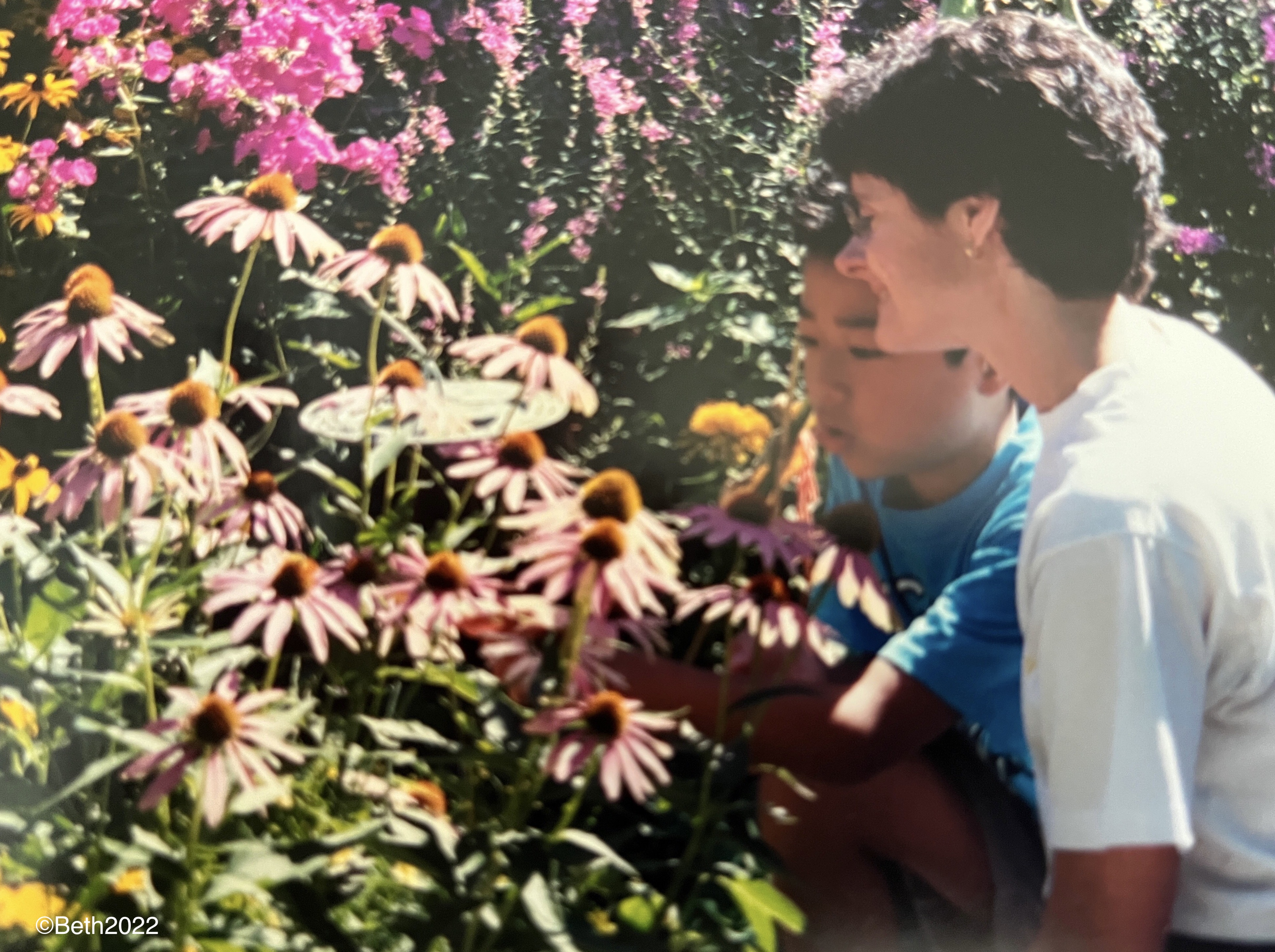
Two toddlers exploring rocks under their parents’ watchful eyes. (They both enjoy nature as young adults now!)


Love for the natural world begins when we are very young. Even the smallest of hands-on experiences ignites a child’s natural curiosity and sense of wonder, and these early encounters stay with us. I remember evenings with my mother…sitting on our front steps and listening to her stories about trees, stars, moths and whatever else presented itself. I know the wonder those times created deep inside of me; a reverence and joy I continue to nurture.

Recently, I watched a mom walk with her toddler, stop and lift him up to touch the leaves of a young maple tree, and pluck a leaf for him to carry. Then the little guy spied an ant hill on the sidewalk. He and his mom watched the bustling activity for a few minutes before moving on to explore a boulevard garden.

Colorful tree leaves are a simple way to introduce nature to young children.


Seeing them raised memories of giving our son leaves, pinecones, acorns and rocks to hold under our watchful eyes. He loved his “pet caterpillars.” He squeezed the first wooly bear I showed him too hard, but we worked on “gentle touch” and held other caterpillars, baby toads and small frogs. Butterflies also were an early delight, both in the garden and while out hiking.

Black swallowtails (Papilio polyxenes) and other butterflies are easy to show to children.


Each summer we watched American robins, cardinals, house wrens, blue jays and mourning doves nest in our urban yard. Using binoculars, we observed them raise their nestlings in our hedge and apple tree. At the cabin, we saw yellow warblers, American redstarts, Baltimore orioles, bluebirds, woodpeckers and many others. In both locations, bald eagles, red-tailed hawks and herons were common overhead.

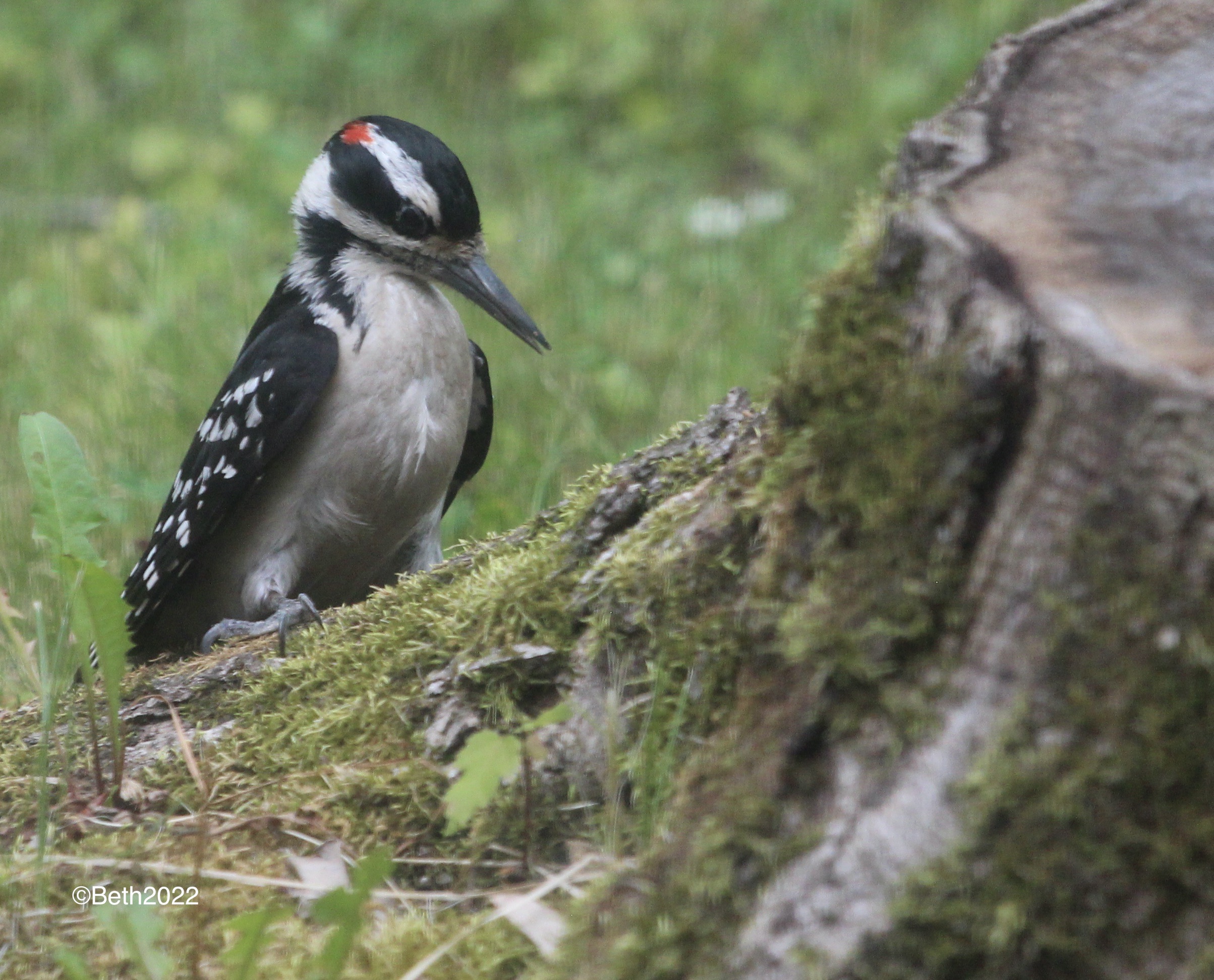
A hairy woodpecker (Dryobates villous) hunts for insects on an old American elm stump.


Something about those early, joyful experiences stuck with our son. Even now as he studies medicine and has little time outside, he’ll text us about a Cooper’s hawk perched on a fence, a barn swallow nest in a hospital parking ramp, a winter moonrise, or the ducklings and goslings paddling on the creek near his apartment.

If you have children in your life, show them the simple things in nature; there are so many easy activities to enjoy together. Finding rocks, leaves and large seeds is a great place to start. Talk about their shapes, colors and textures. Learn to identify a few of the common trees where you live.

Getting dirty in the garden is great fun for most kids and adults! Plant seeds and tend them together. Carrots, green beans, radishes and marigolds were the first seeds we planted. (We also grew a potted cherry tomato.) We checked for progress everyday, from the first sprout, to buds on beans and marigolds, to harvesting and eating the veggies.

“Watering the garden” was a favorite task at our house!


While gardening, watch for butterflies and moths. Large ones, such as monarchs and swallowtails are easy to point out and talk about. If you grow milkweed, dill or parsley in your garden, you may find caterpillars to show children; monarchs on the milkweed and swallowtails on dill, parsley and other plants in the carrot family.

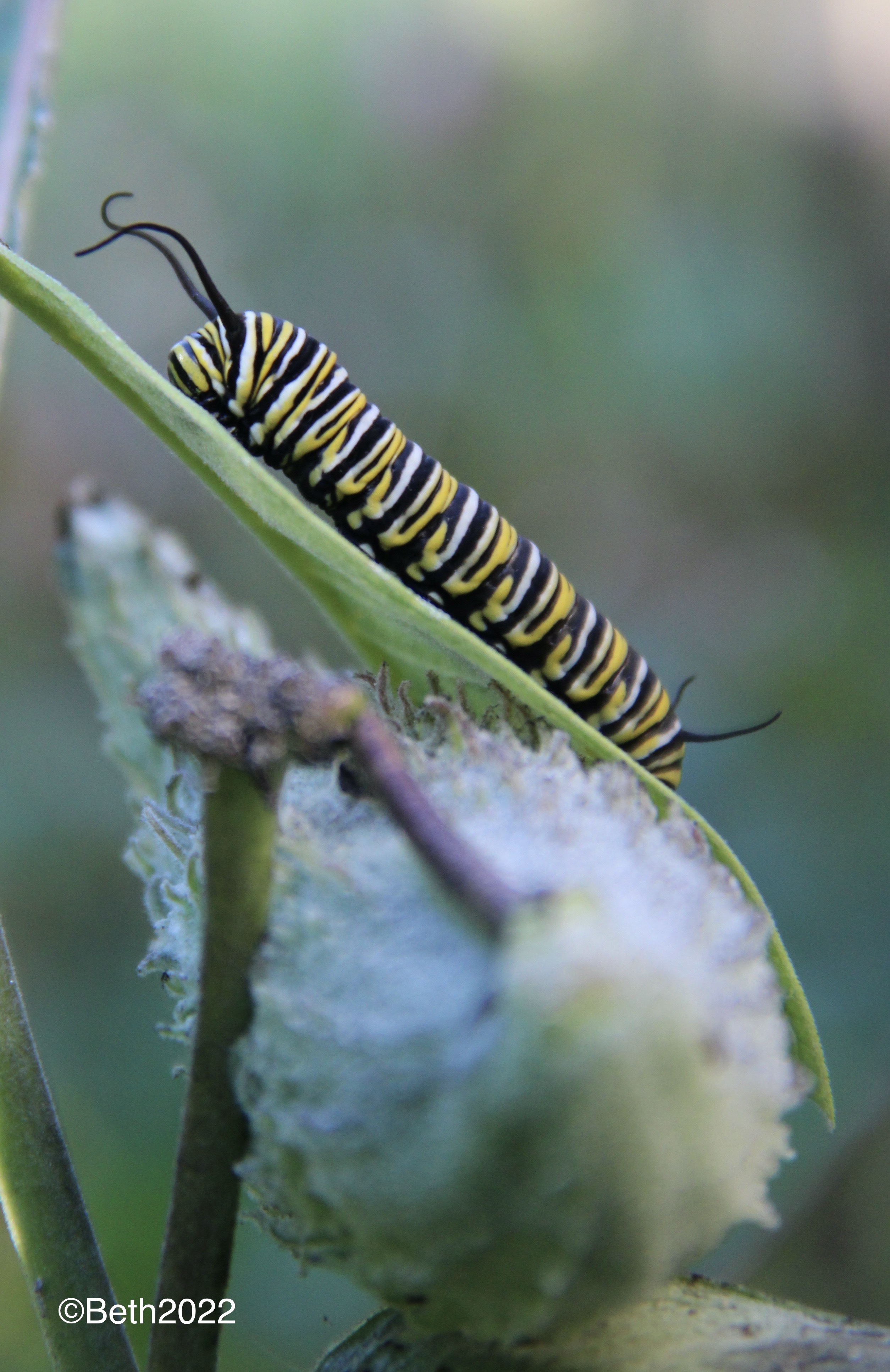
Monarch caterpillar (Danaus plexippus) on a common milkweed plant (Asclepias syriaca).


In autumn, take a “leaf walk” together and collect colorful leaves. Some kids enjoy pressing the leaves to make a book of the different types, shapes and colors. Most will enjoy piling up the leaves and jumping in them! While you’re out walking, watch for colorful birds and listen for their songs. Learn about the birds that inhabit your community.

Many children like to create nature journals. When our son was a preschooler, he made simple journals from scrap paper. He drew pictures of dragonflies, bees, birds, flowers, rocks and whatever else in nature caught his interest. He’d dictate a few sentences for me to write about each item until he was old enough to write his own. There are also simple journals that you can buy to record your observations together. We used both the “Bird Log” and “Nature Log” by Adventure Publications. These days there are many more options from which to choose. Here’s a link to a few other nature journals for children.

The early darkness of winter evenings makes it easier to view the night sky. Watch the moon wax and wane from a tiny crescent to a luminous globe and back to a sliver. Point out the brighter planets: Venus, Jupiter, Saturn and Mars. If you live away from urban lights, or can drive outside of the city, look at the beautiful Milky Way overhead and at a few of the easier-to-recognize constellations, such as Orion, Canis Major, Gemini and Ursa Major in the Northern Hemisphere. Many children, especially those living in cities, have few opportunities to marvel at a sky full of stars.

During a snowfall, walk together and notice the hush that settles over the land as falling snow muffles all sound. It feels magical, especially at dusk or in the evening. Catch snowflakes on your mittens and point out the variety of their beautiful shapes. A fresh, clean snow is also the perfect opportunity to look for animal tracks, and if the time is right, see the creature who made them! A walk in the woods on a mild winter day reveals the shapes of trees, native grasses and wildflower seed heads. Watch for woodpeckers that stay with us through the long winter and listen for the hooting of owls.

Winter walks are a good time to look for tracks and the creature who made them, like this red squirrel (Tamiasciurus hudsonicus).


As children grow and continue to learn, we can talk with them about endangered and extinct plants and animals, and what each of us might do, even in small ways, to prevent further loss. To that end, providing youngsters with fun experiences and happy memories of nature can help them connect meaning and joy with the natural environment — and that may create a deeper commitment to caring for our beautiful world.

 Our summer days included checking the flowers and watching bees, butterflies and other garden insects.

Green Darner Migration

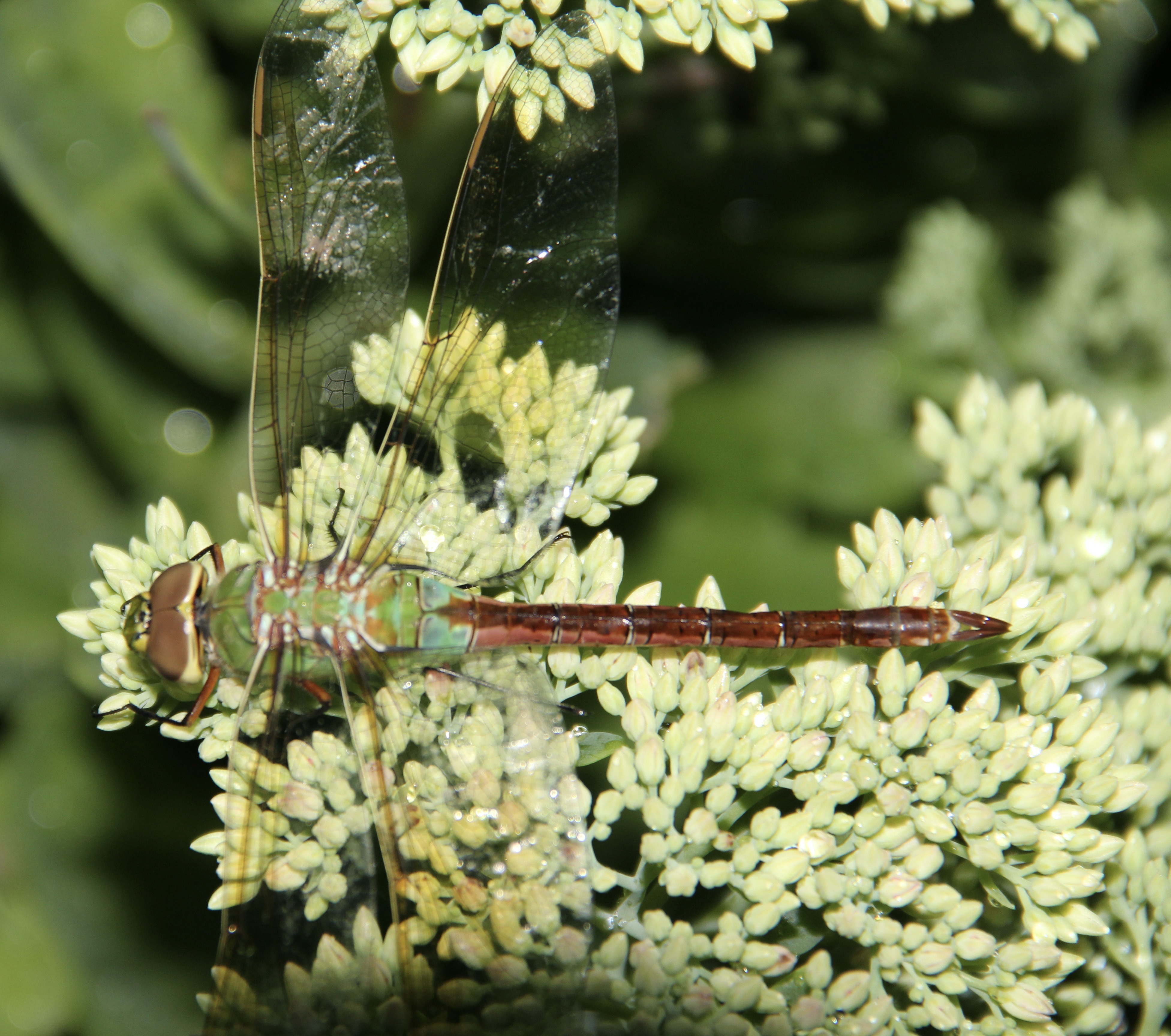
Common green darner female (Anax junius)

On a windy, warm September evening, the sun has set; the air is soft and dusky. Migration is underway, but not the avian sort. A few large common green darner dragonflies zigzag beneath the trees hawking insects. I look skyward and far above me, a river of swarming green darners surges — hundreds of them — straight south ahead of a cold front.

Born in Minnesota, these green darners migrate to the Gulf Coast of the southern United States and Mexico. When they arrive, they’ll mate and lay eggs to produce the next generation, which will migrate north in April or May. When they arrive here, they will mate and give rise to a new generation before dying. These progeny will hatch by late August and continue the cycle of migration and reproduction. 

But that’s not the entire story! Common green darners are present in the north all summer — so where did they come from? There’s a resident population that doesn’t migrate. They’re active and deposit eggs throughout the summer and autumn. However, their young, called naiads, won’t mature until the following spring. They will wait out the winter on the bottom of a pond, marsh or slow-moving river or stream.

Averaging 3 inches in length, and with a wingspan of 3.5 inches, green darners are among our largest dragonflies. This one also is a female. Males’ abdomens are bright blue.

Green darner adults eat mosquitoes, midges and other flying insects. The aquatic naiads feast on mosquito larvae and other aquatic insects, tadpoles and tiny fish. Green darners are eaten by spiders, large robber flies and birds such as kestrels.

Further Reading

Mead, Kurt. (2009). Dragonflies of the North Woods. Duluth, Minnesota: Kollath & Stensaas Publishing.

Smithsonian Magazine

UW-Milwaukee Field Station

Hidden Music Maker

Katydids’ green bodies are easily mistaken for plant leaves. Can you spot one under the flower on the right?

Walk outside and listen on a late-summer or early autumn evening. Insect music has replaced the chorus of robins, mourning doves, northern cardinals and other birds. The new songsters might include tree and field crickets, cicadas, grasshoppers and katydids.

Unlike their more somber-colored cricket cousins, katydids are often bright green and are well camouflaged by plant leaves and stems. Very long antennae and wings held vertically over the body distinguish them from grasshoppers. Many could pass for a small leaf on a plant! I often hear katydids calling, but rarely see them.

Similar to their cricket kin, katydids create sound by rapidly moving the sharp edge of one wing against a ridge of bumps on the other wing — this is called stridulation. Each species creates a different sound. Most produce clicks, rattles or buzzes that differ in pitch, pattern and volume. Only one species, the common true katydid (Pterophylla camellifolia) “says” its name. (The link includes both group and individual recordings.)

Katydids’ ears are located below the knee joint. Zoom in to see the small, dark oval shapes called tympanum.

Katydids have narrow hearing organs located below each knee on their front legs. Though the location differs from mammalian ears, the ear structure is similar to our own. Simply put, sound waves cause a katydid’s eardrums to vibrate. The vibrations rock a small plate that transmits sound waves to the auditory vesicle, which contains fluid. The waves move through the fluid over tiny sensory cells that glean information and send electrical impulses to the katydid’s brain. Scientists theorize that locating a mate and avoiding predators are two key purposes of katydid hearing.

What eats katydids? Owls, kestrels, other birds, rodents, tree frogs, insects and spiders prey on them. Mainly vegetarians, katydids eat leaves and flowers of plants, but sometimes eat insects — including other katydids!

Next time you’re outside in the evening, listen for katydid calls. Crickets aren’t the only nighttime musicians!

Further Reading

Katydids – Wisconsin Horticulture

Katydids – Tettigoniidae

Songs of Insects

Only This Moment

White-tailed doe (Odocoileus virginianus)

The eyes of a white-tailed deer are liquid and deep. Walking at a nature preserve, I sense and then spot a doe’s motionless face gazing at me from a dry creek bed. We stand alert and silent. Though I don’t see them, a young fawn or two are probably hidden nearby waiting for their mother’s signal to move. Birdsong, the wind and children’s voices in the distance fade away behind the curtain of green foliage. There is only this place and moment.

Skimmer Dragonflies

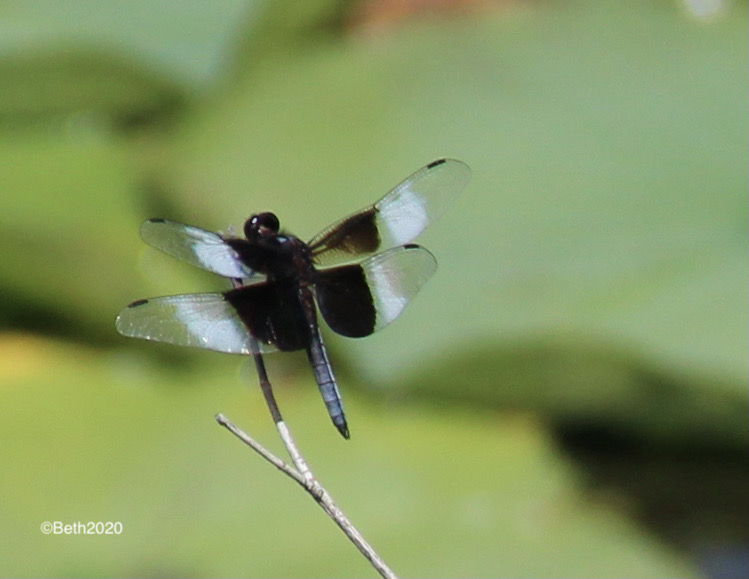
Male widow skimmers (Libellula luctuosa) are dark brown with a bluish frost called pruinose.

What do you think of when you hear the term skimmer? A shore bird, a kitchen utensil, or perhaps a type of shoe? Skimmer also refers to the earth’s largest family of dragonflies, Libellulidae

Skimmers might be the image that many envision when they “think dragonfly.” Skimmers’ wings are large and patterned with spots — usually black and a powdery grayish-white. Like all dragonflies, skimmers hold their wings spread out horizontally from the body when resting. The head is large with eyes that contact each other on top. Two inches is a common body length, but it can vary between one and three inches. Adult skimmers dine on many soft-bodied insects, especially mosquitoes, flies, small moths and winged ants. Nymphs, or immature dragonflies, develop underwater where they eat mosquito larvae, fly larvae and other aquatic organisms. Skimmers are preyed upon by raccoons, skunks, shrews, bats, turtles, snakes, frogs, fish, spiders, larger insects such as praying mantids, and many bird species.

A female twelve-spotted skimmer (Libellula pulchella) perches on a dead forb in an urban oak savanna.

The twelve-spotted skimmer (Libellula pulchella) and the widow skimmer (Libellula luctuosa) are two common skimmers of Minnesota. Though similar in appearance and size (about two inches long), the difference is in their wing spots. Male twelve-spots carry 12 black patches and eight white spots between the black ones. Male widow skimmers show a dark black wing patch from the wing’s base to about midwing. One large white spot extends outward from the black patch. Female and young juvenile males of both species only exhibit black patches. Males and females of both species are coppery brown, but adult males develop a whitish-blue dusty or frosted appearance, called pruinose, on the abdomen. Both species sport bright, neatly etched side stripes — yellow in twelve-spots and orangish in widow skimmers. In addition, the thoraxes of mature twelve-spotted skimmers display two yellow stripes. 

Why the name widow skimmer? One explanation is that most male dragonflies carefully guard their mates during egg-laying, but widow skimmer females deposit their eggs unguarded, and thus became commonly known as widows. Another is that the black wing patches were thought to be reminiscent of a widow’s shawl.

A female widow skimmer’s wings show the black pattern reminiscent of a widow’s shawl.

Both skimmer species may be found near ponds, lakes and marshes, but they also venture away from water into fields and meadows. I observed two twelve-spotted skimmers in a small area of oak savanna in Saint Paul, about three city blocks away from a pond. One perched on a dead tree limb, the other atop a dried up forb, wings spread horizontally and glistening in the sun. 

Though not the most eye-catching of dragonflies, I like them; they’re easy to observe because they often forage in open areas away from water and remain close to their conspicuous perches. Both species share a similar geographic area. Twelve-spots range throughout most of southern Canada, the continental United States and northern Mexico. Widow skimmers occur in southern Manitoba, Ontario, Quebec and Nova Scotia, across the United States, except for the Rocky Mountain region, and in a portion of northern Mexico. Both skimmer species are on the wing during the summer months and the twelve-spotted skimmer is active through September.

Further Reading

Minnesota Dragonfly: Twelve-spotted Skimmer

Minnesota Dragonfly: Widow Skimmer