Painted Ladies

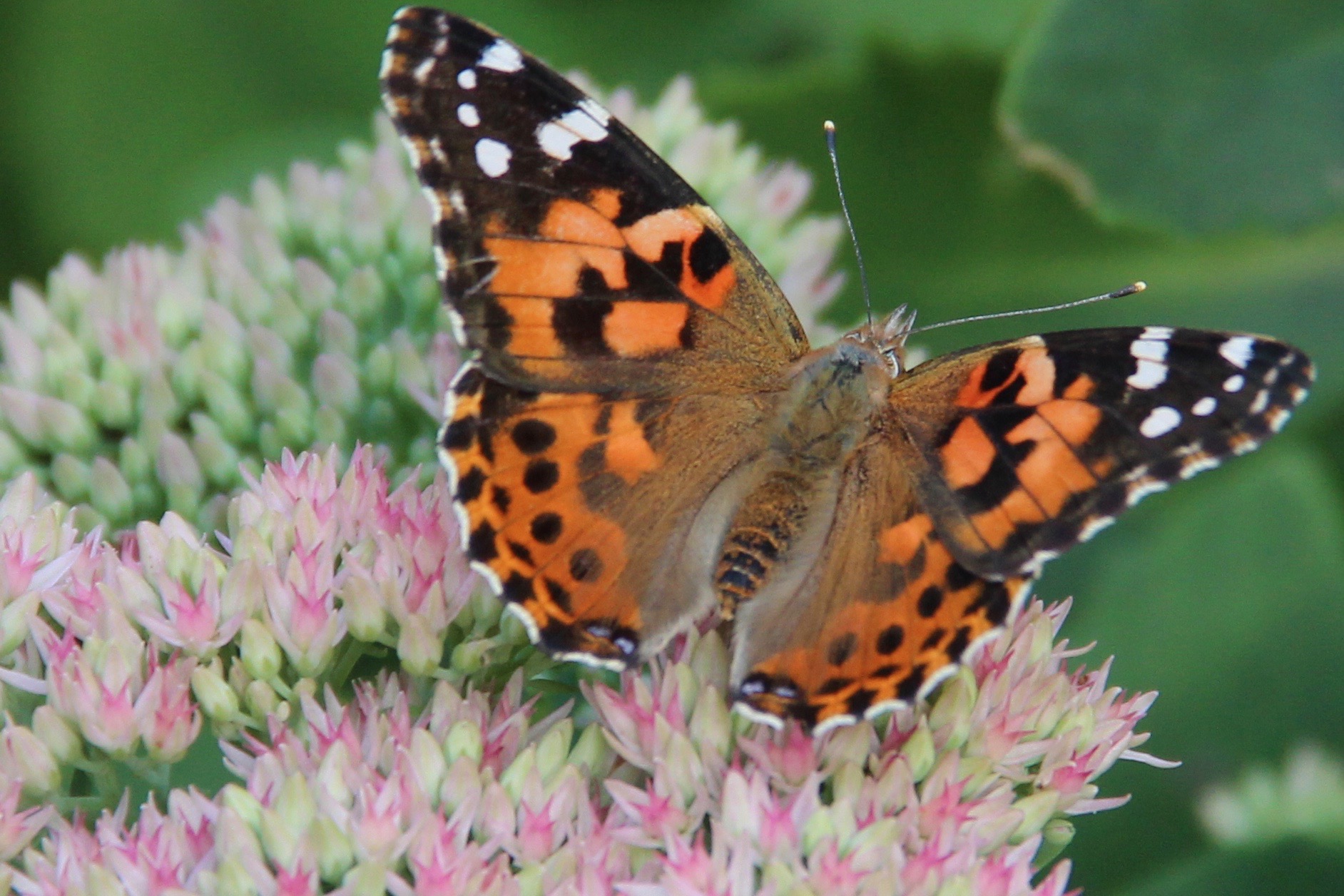
Black, white and shades of orange set off the upper wings of a painted lady.

Bright orange, black and white, a brush of pink underneath; these butterflies are too small and swift to be monarchs. Painted ladies (Vanessa cardui) are everywhere; perched on the roof, fence and sun-warmed sidewalk — and especially in the garden (15 to 20 most of the time) on asters, Joe-Pye, sedum and garlic chives. The last time I remember seeing so many was in 2001 or 2002. My neighbor’s sedum ‘autumn joy’ was covered with the butterflies. Our son was little and we sat together in a patch of warm September sun watching the bright creatures sipping nectar.

Why such large numbers? Painted lady populations have cyclic highs and lows. Numbers are high now, possibly linked to good weather in their wintering grounds. Unlike many butterflies in the north, the ‘ladies’ migrate, and that’s happening now. Scientists think that the painted lady has the widest range of any butterfly in the world, living on parts of five continents. In North America, adults overwinter in the southern United States and Mexico, but cannot survive the northern winter.
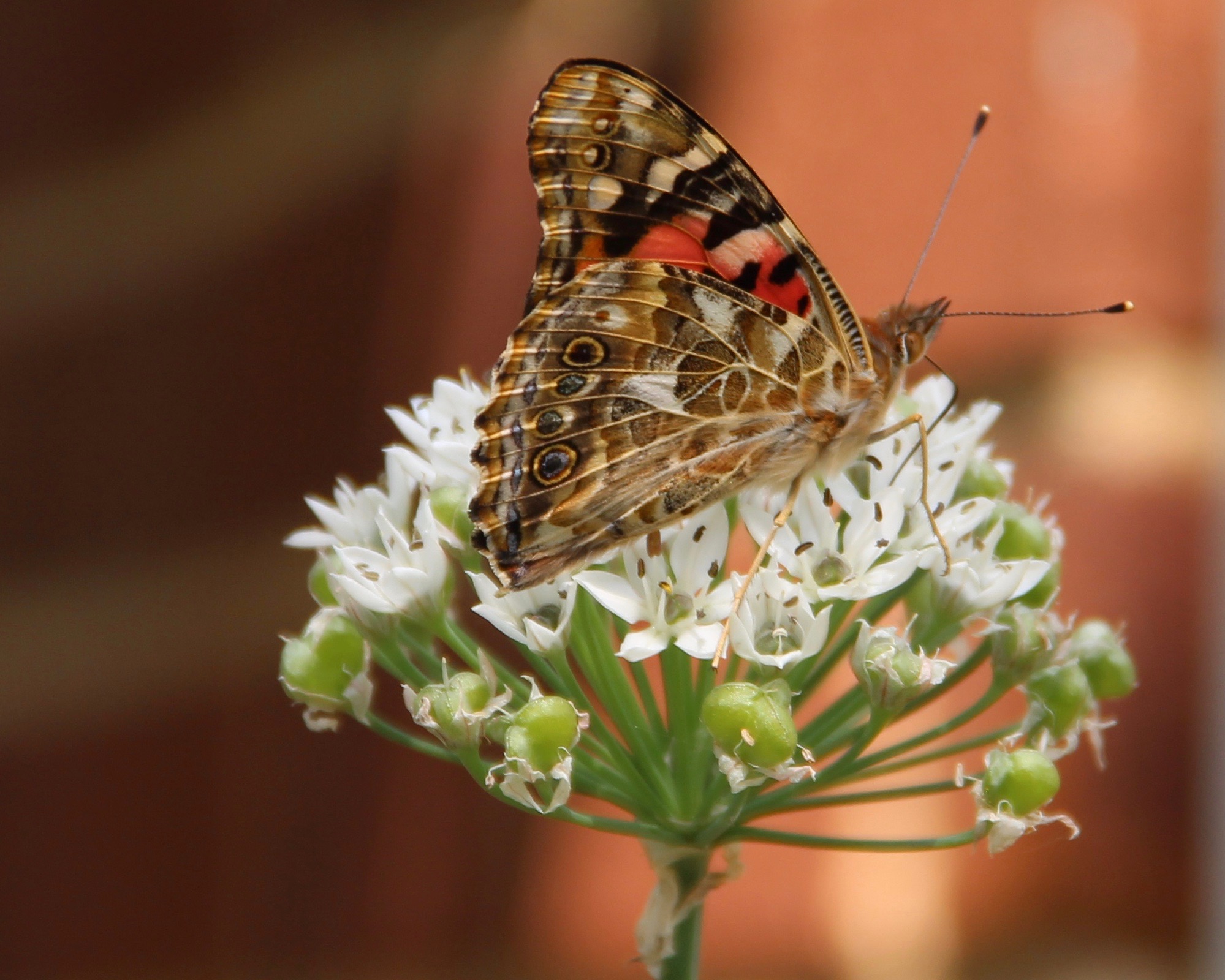
Four eyespots along the edge of the hind underwing help identify a painted lady.

An easy way to identify painted ladies is to look for four brown ‘eyespots’ along the edge of the hind underwing. The closely related American lady (Vanessa virginiensis) has two large spots in the same region. Another relative, the red admiral (Vanessa atalanta), doesn’t have any spots on the underwing.

A painted lady nectars on native Joe-Pye weed (Eutrochium maculatum).

I enjoy identifying and learning about all of the creatures that visit our garden. Perhaps, the most satisfying piece is sitting quietly next to the garden and the butterflies, hearing the slight sound of their flickering wings and the hum of bees, and watching the beautiful dance of color as the ladies move among the blooms. If you live in the Midwest, look at your garden, a field of flowers, or perhaps a roadside this weekend, and you might spot the painted ladies.
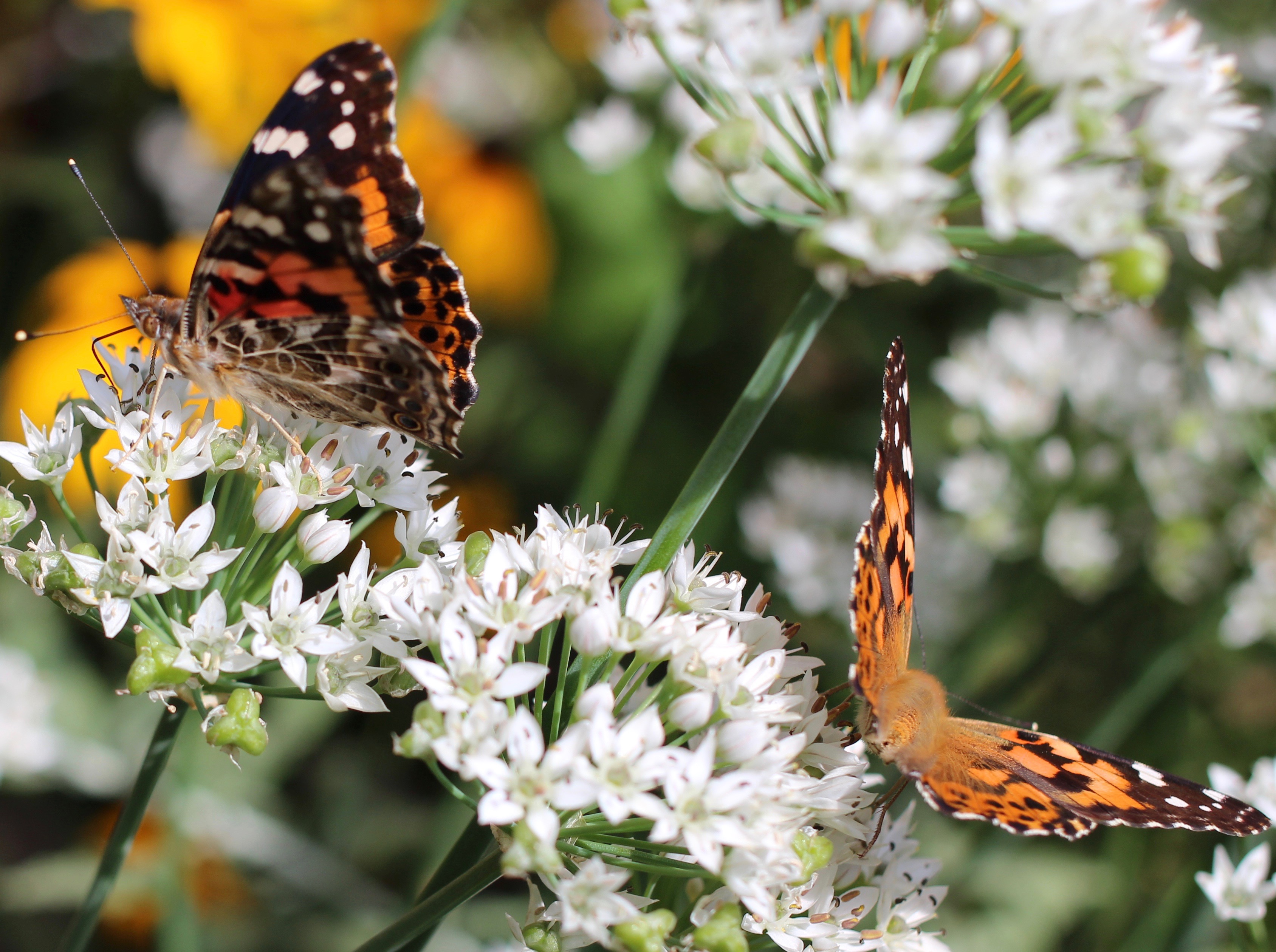
Garlic chives (Allium tuberosum) are very attractive to the painted ladies visiting our garden.


Eastern Tiger Swallowtail Butterflies

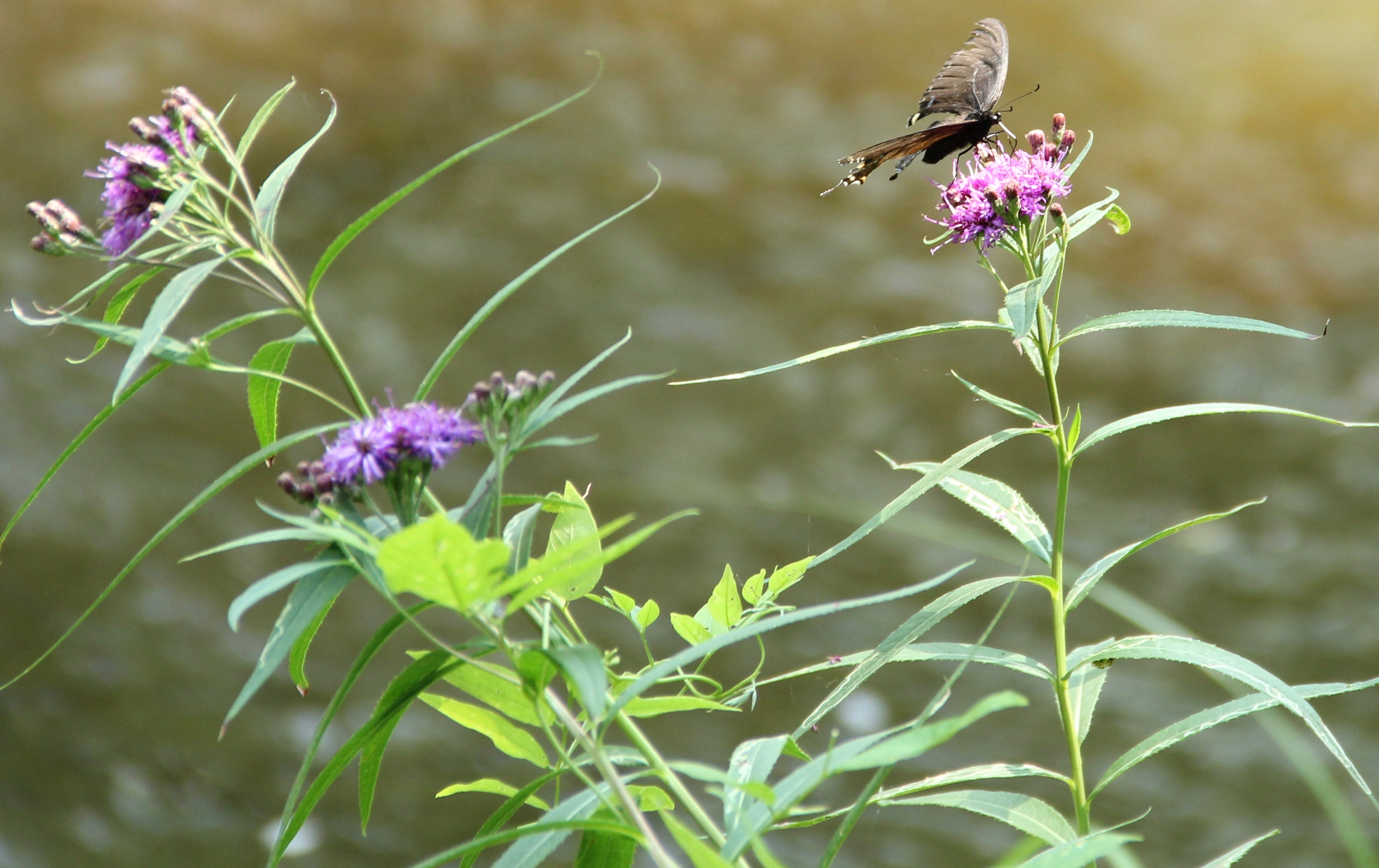
A female eastern tiger swallowtail – black form (Papilio glaucus) nectars on an ironweed flower.

It was an unexpected gift on an August afternoon: A black eastern tiger swallowtail butterfly, its wings faded and worn, even tattered in places, showing its age.  It settled in for a long drink of nectar from an ironweed flower on the banks of the Snake River in Pine County, MN. We’re more likely to see the yellow form of the tiger swallowtail in the North. The black form occurs much less frequently and only in females. The butterfly’s name refers to the long projections on its tail, which resemble a barn swallow’s tail.

An eastern tiger swallowtail – yellow form nectars on a monarda blossom.

In the northern United States, eastern tiger swallowtails typically fly from mid-May to late August or September. They usually have two broods per summer, and the young of the second group overwinter as chrysalids to emerge the following May. The caterpillars are bright green with two blue eye spots. (They turn brown when ready to form a chrysalis.) They mainly feed on the leaves of trees such as wild cherry, chokecherry, basswood, cottonwood, ash, willow and maple. Adults nectar on many types of flowers, but prefer wild cherry and lilac in spring, Joe-Pye weed and milkweed during the summer.

The name swallowtail comes from the long tail projections that resemble a barn swallow’s tail.

The ironweed on which I spotted it belongs to the Composite family, which also includes coneflowers, sunflowers, daisies, goldenrod, Joe-Pye weed, asters and others. Ironweed is a native perennial, prefers full sun and often grows near marshes, along riverbanks, edges of moist fields, and wet prairies. It’s typically 4-to-6 feet tall and its violet-colored flower clusters are often visited by bumblebees. The black tiger swallowtails seem attracted to ironweed and I’ve seen them on the blossoms in past years, too. I enjoy seeing both forms of the butterfly.

Ironweed (Vernonia fasciculata) grows on the banks of the Snake River in Pine County, Minnesota.


Lake Michigan Walk

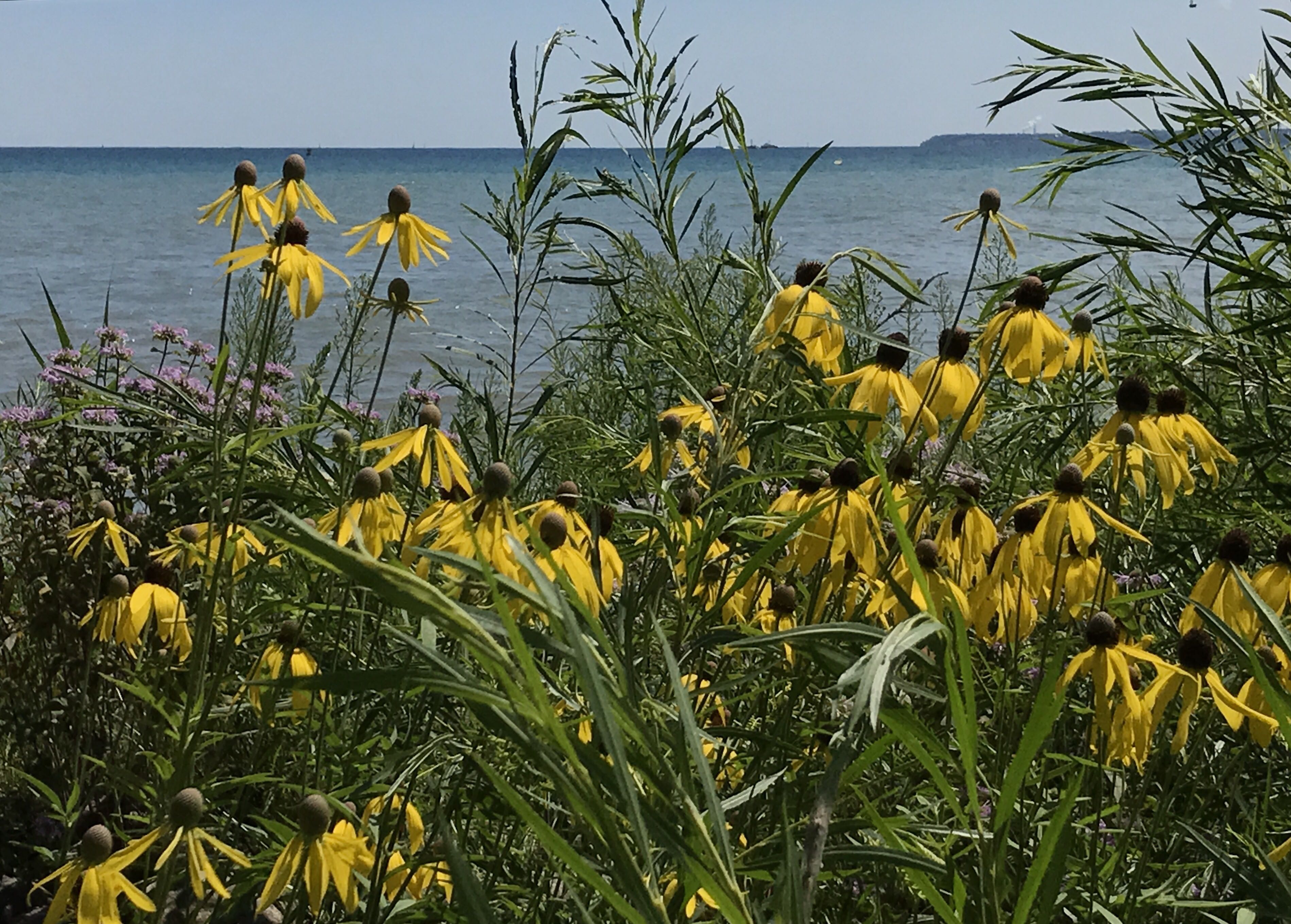
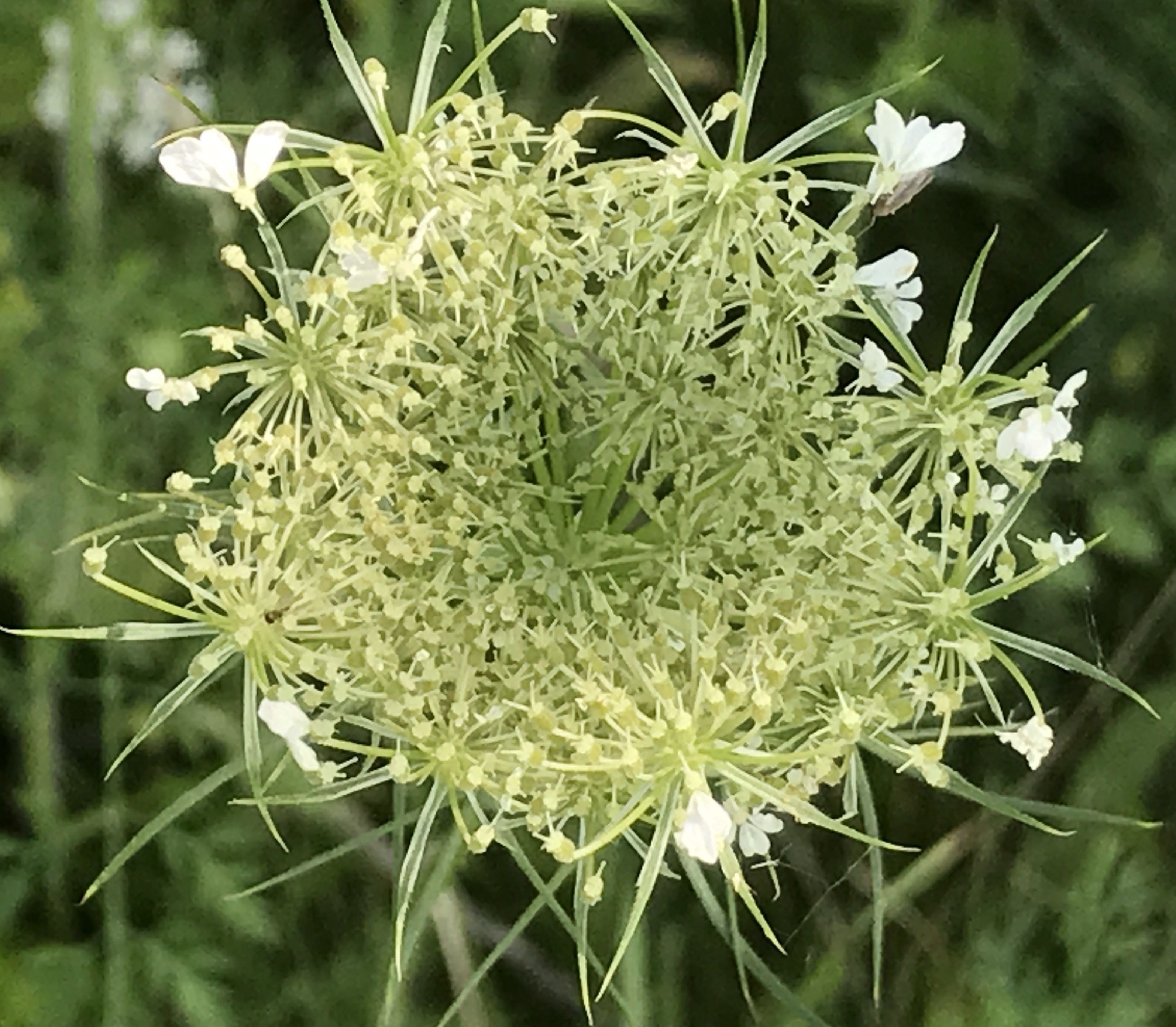
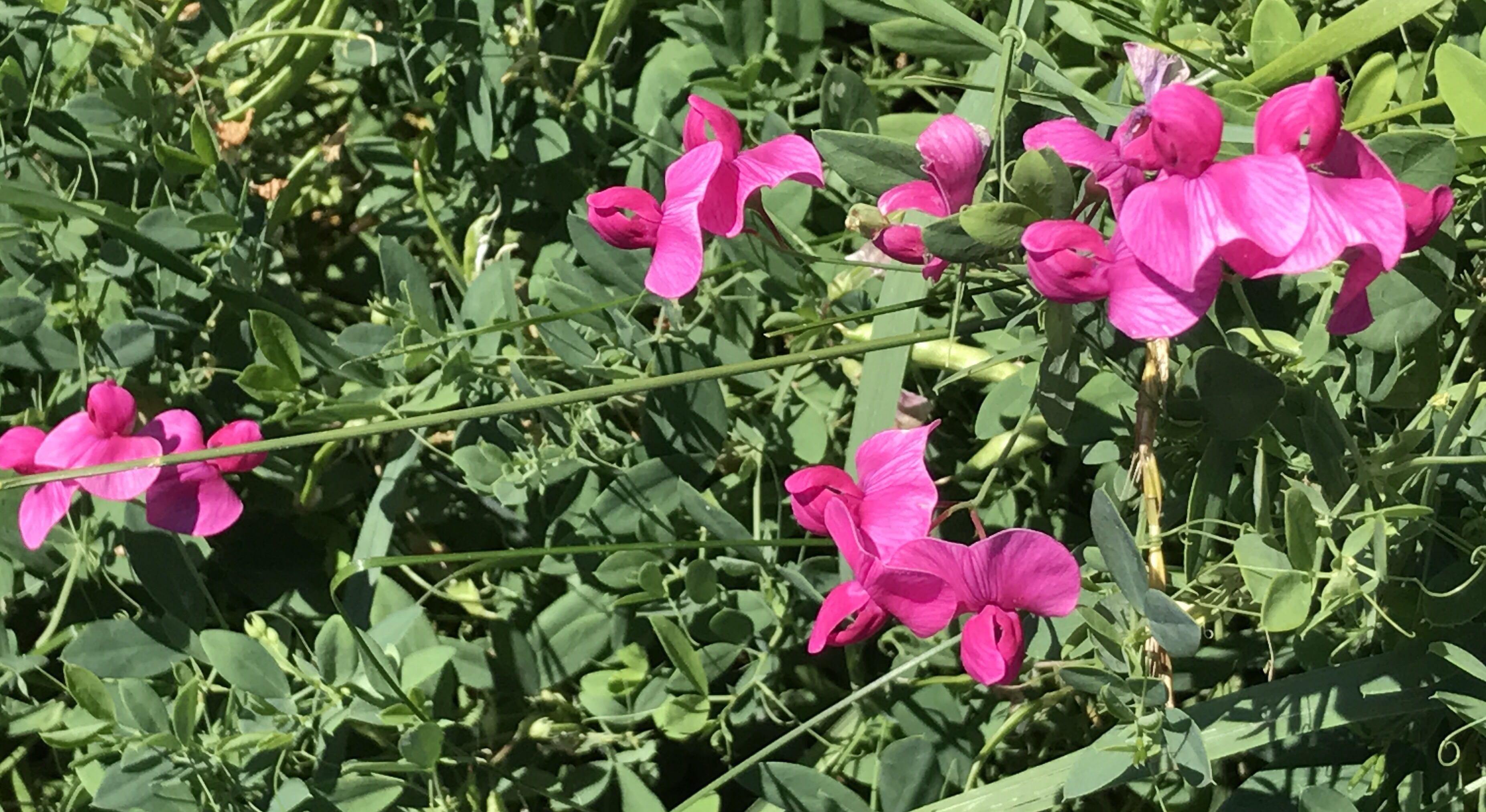
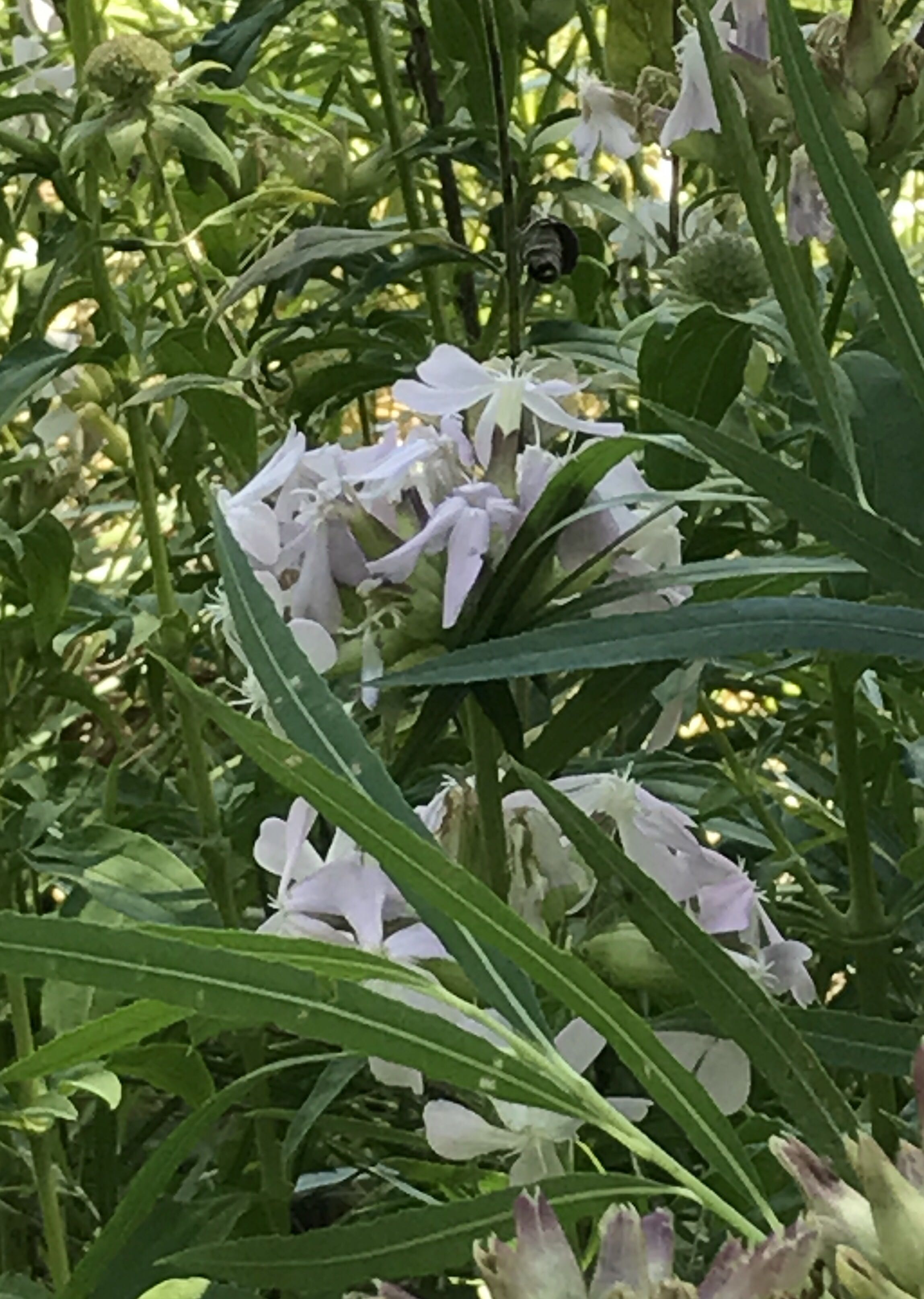
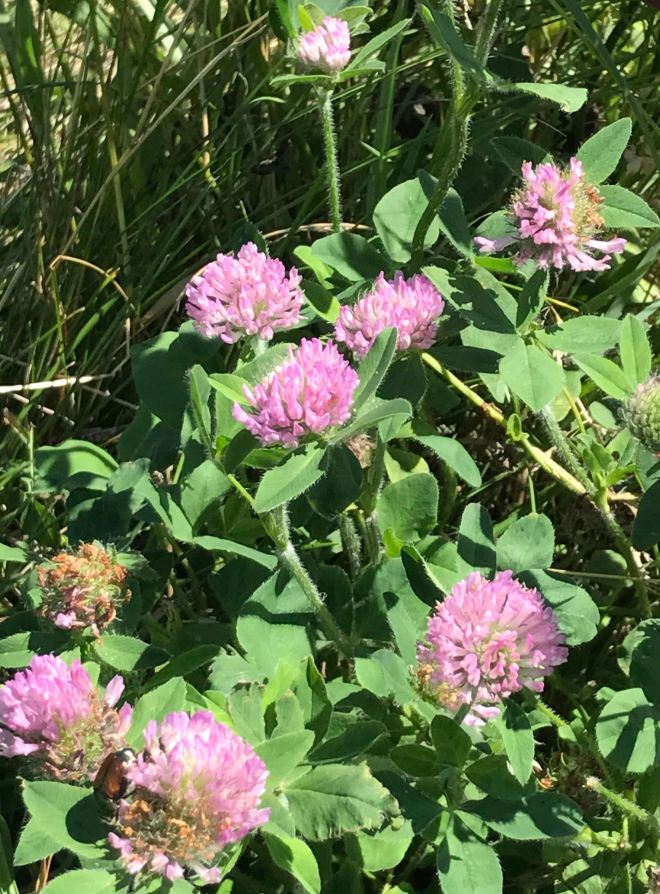
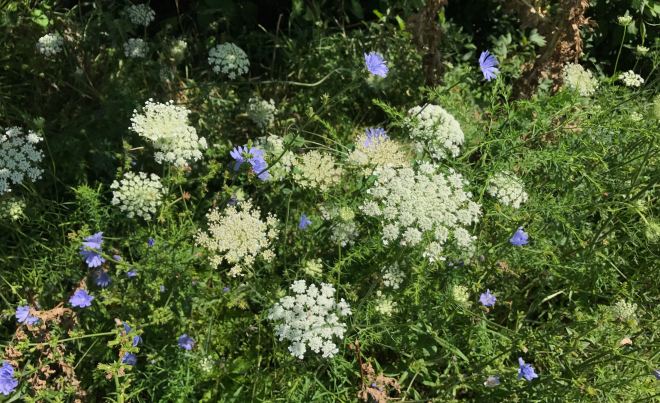
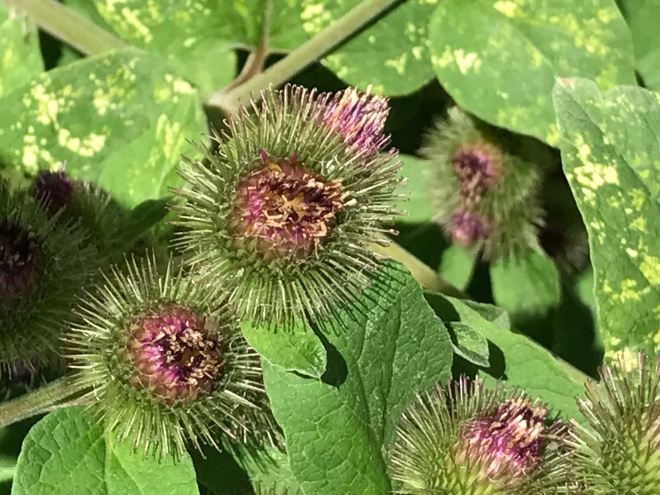
In August, many wildflowers begin to bloom in the Upper Midwest. Bees, wasps, moths and butterflies visit them for nectar and pollen. While in Milwaukee, Wisconsin, last weekend, we walked along Lake Michigan to enjoy the warm sun, gentle breeze and flowers both native and non-native that grace the shoreline. Among the blooms were chicory, Queen Anne’s lace, everlasting pea, goldenrod, sweet clover, gray-headed coneflower, bouncing Bet, red clover, Black-eyed Susan, monarda and lesser burdock. (If you look closely, you’ll spot a few pollinators, too.)

IMG_0276IMG_0316

IMG_0262

IMG_0318IMG_0325

IMG_0337


Thoughts on a Butterfly

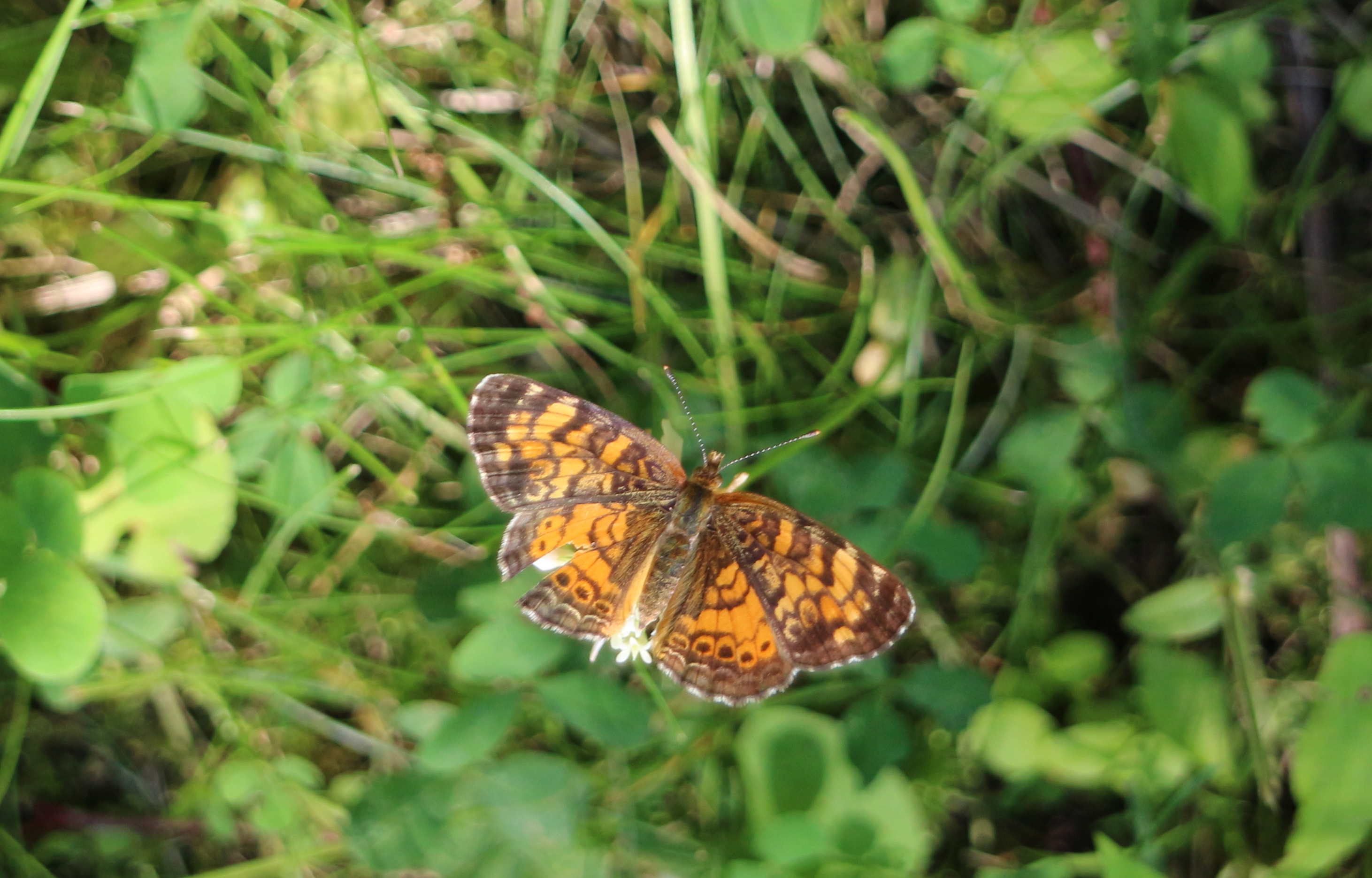
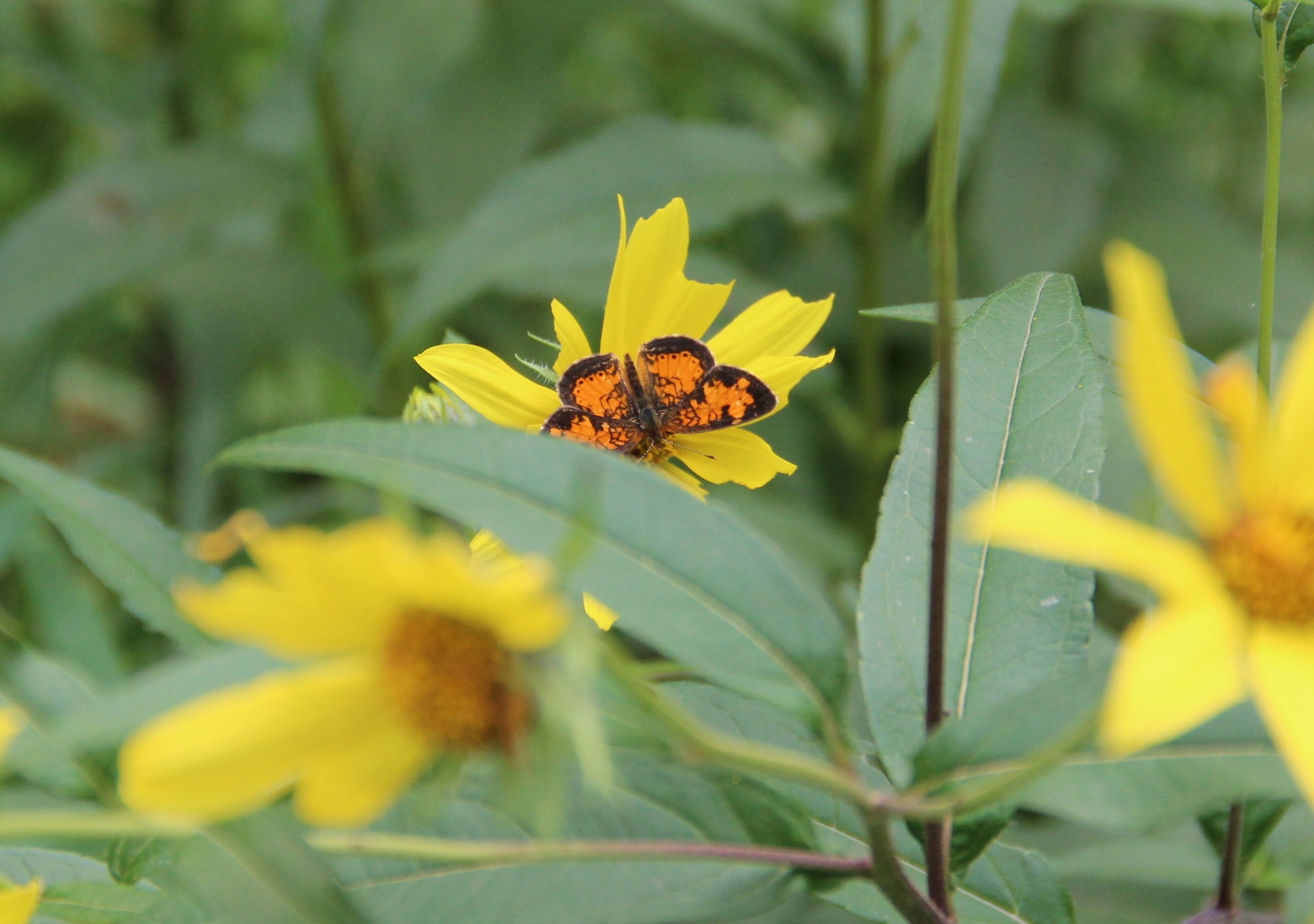
Sun glows on the wings of a crescent butterfly (Phyciodes).

Sun glows on the wings of a crescent butterfly (Phyciodes).

I spotted a small orange-and-black butterfly in a patch of white clover at our cabin in Pine County, MN. Most butterflies rarely sit for more than a few seconds; this one was an avid sunbather, fully opening its dark-spotted wings and resting on a clover bloom for several minutes. Its wing pattern indicated it was a type of crescent butterfly.

Because of their similar appearance and habitat, crescents challenge us to identify them correctly, and this could have been either a pearl or northern crescent. Adults of both species nectar on white clover, asters, thistles and dogbane. Their brown, spiky caterpillars feed primarily on the leaves of asters, and they overwinter to become next spring’s first generation to take flight.

Look closely at the photos and you’ll see the crescent’s worn, tattered wing — evidence that it’s no newbie, has seen some extended flight time, has already lived a good portion of its life. And still, though it shows some wear and tear, it remains beautiful even as it ages and lives out its brief days.

Tattered butterfly wings may indicate a close call with a predator, or advancing old age.

Tattered butterfly wings may indicate a close call with a predator or advancing age.

I think of the recent death of my mother-in-law, Mary, and of my friend, Cathy, last January. I watched them complete their lives, I held their hands, hoped they could hear my prayers and words of comfort. I wonder about them often, and deeply hope that, as the simple brown caterpillar morphed into a creature of light and air, they too have transformed into something lovely and eternal.

2015 Monarch Journey South

Coppery orange and black monarch butterflies glow against the warm, late summer sun.  Monarch migration to Mexico is underway in the northern United States.  According to monarchwatch.org’s peak migration chart, at 45° latitude the greatest number of monarchs will migrate between August 29 and September 10.  In St. Paul, Minnesota, I’ve primarily seen the butterflies floating beneath trees in backyards and along the streets.  A few rest in our garden and nectar on garden phlox, goldenrod, snakeroot, Japanese anemones, black-eyed Susan’s and Joe-Pye weed, which appears to be their favorite.

Monarch resting on white snakeroot (Ageratina altissima)

A male monarch suns itself on white snakeroot (Ageratina altissima)

Monarch resting on one of more than 40 species of goldenrod (Solidago) native to Minnesstota.

A monarch rests on one of more than 40 species of goldenrod (Solidago) native to Minnesota.

A monarch drinks nectar from sweet Joe-Pye weed.

A female monarch drinks nectar from sweet Joe-Pye weed (Eutrochium dubium).

Will this year’s migration numbers be higher or lower than 2014’s?  It’s easy to help scientists track the data by contributing your own monarch migration observations.  Visit learner.org’s Fall 2015 Migration Report Page and complete the short information form for monarchs.  Or, if you’re just interested in how 2015 fall migration is progressing, you can check out the latest information on their Fall 2015 Maps and Sightings page.

August’s Beauty

August’s warm, sunny days hum with insect activity.  Many kinds of bees and wasps, butterflies and grasshoppers inhabit the colorful swaths of wildflowers and grasses along country roads.  The buzzing of bees is soft against the louder trills and whirs of crickets, grasshoppers and gray tree frogs.  Scents of sweet clover and grass fill the air. Here is a sampling of the beauty my husband and I enjoyed when we walked along the road near our cabin on the Snake River in Pine County, MN, last weekend.

Great spangled frilillary on native monarda.

Great spangled frilillary (Speyeria cybele) on native monarda.

Woodland sunflowers grow in shadier patches along the road.

Woodland sunflowers (Helianthus divaricatus) grow in dappled sun along the road.

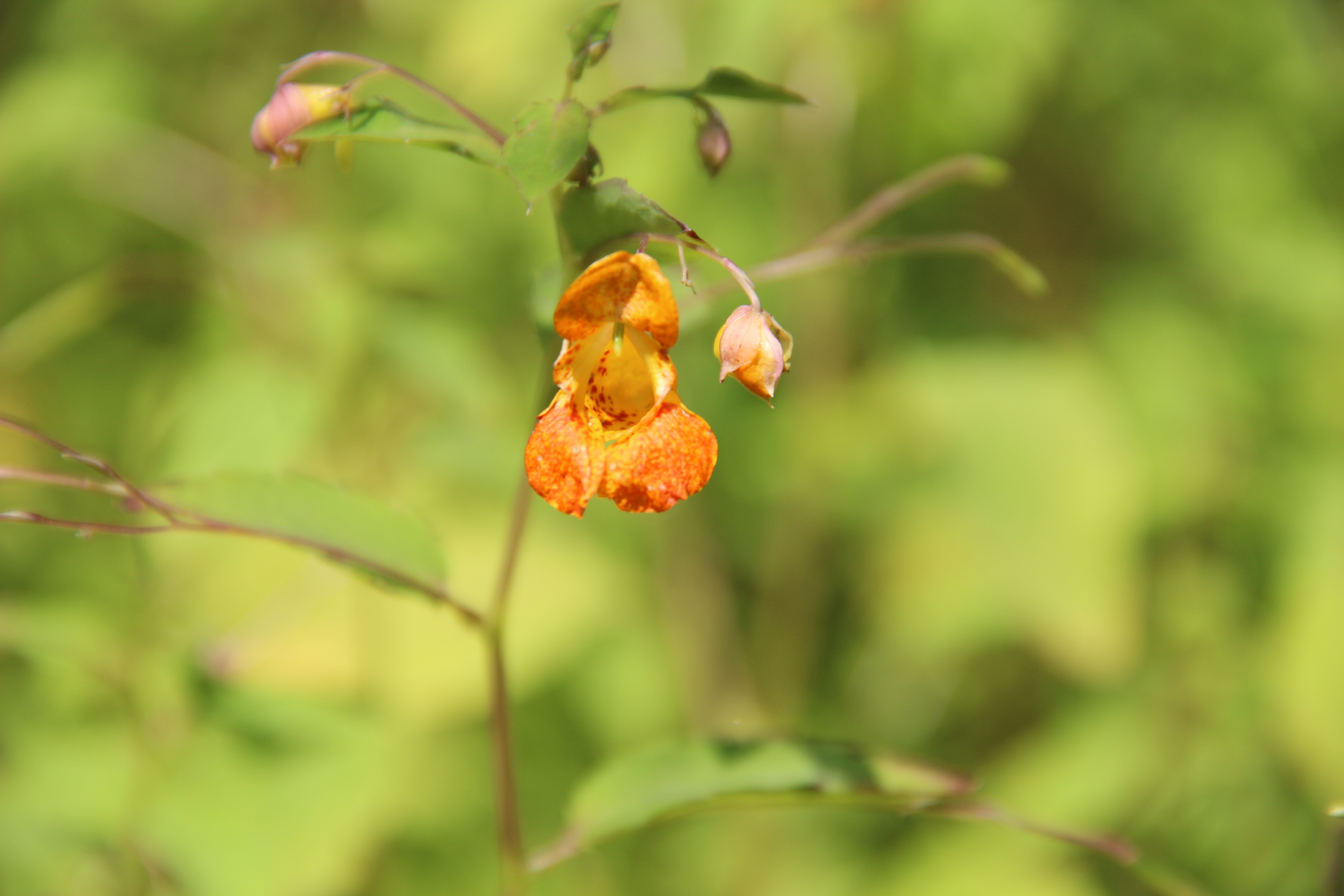
Jewelweed or spotted touch-me-not grows in moist, sunny spots.

Spotted jewelweed or spotted touch-me-not (Impatiens capensis).

Native big bluestem is also called turkey foot grass due to the shape of the seed heads.

Native big bluestem (Andropogon gerardi) is also called turkeyfoot grass due to the shape of its seed heads.

This common wood-nymph's bright eyespot caught my attention.

This common wood-nymph’s (Cercyonis pegala) bright eyespot caught my attention.

Non-native rabbit-clover is a low-growing plant that provides color along dusty country roads.

Non-native rabbit-clover (Trifolium arvense) is a low-growing plant that provides color along dusty country roads.


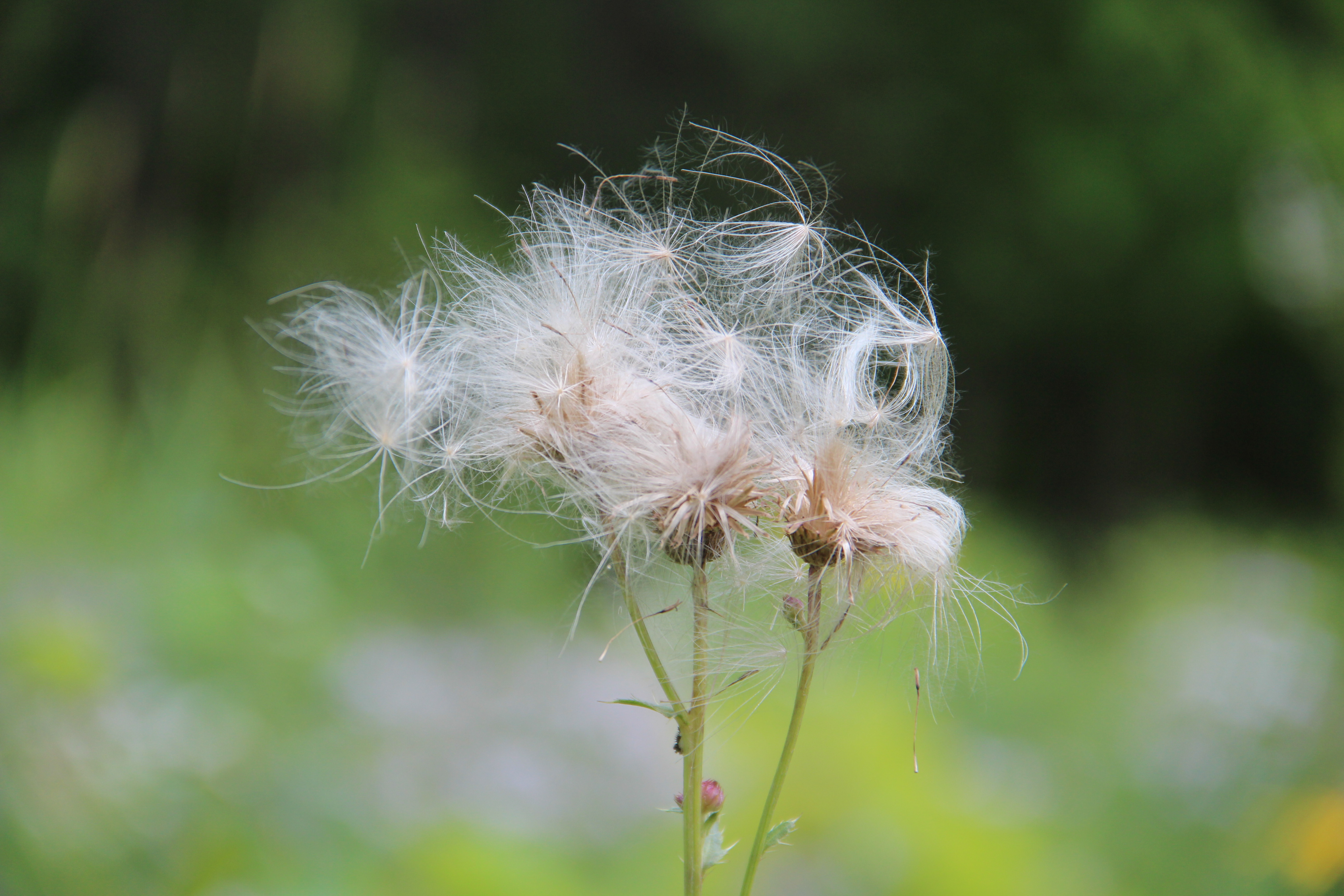
The native field thistle is a favorite of bees and butterflies.

The native field thistle (Cirsium discolor) is a favorite of bees and butterflies.

The field thistle's "down" is used by American goldfinches to line its nest and the seeds are a favorite goldfinch food.

Field thistle’s “down” is used by the American goldfinch to line its nest and the seeds are a favorite goldfinch food.

A white-faced meadowhawk watches for prey.

A white-faced meadowhawk (Sympetrum obtrusum) watches for prey.

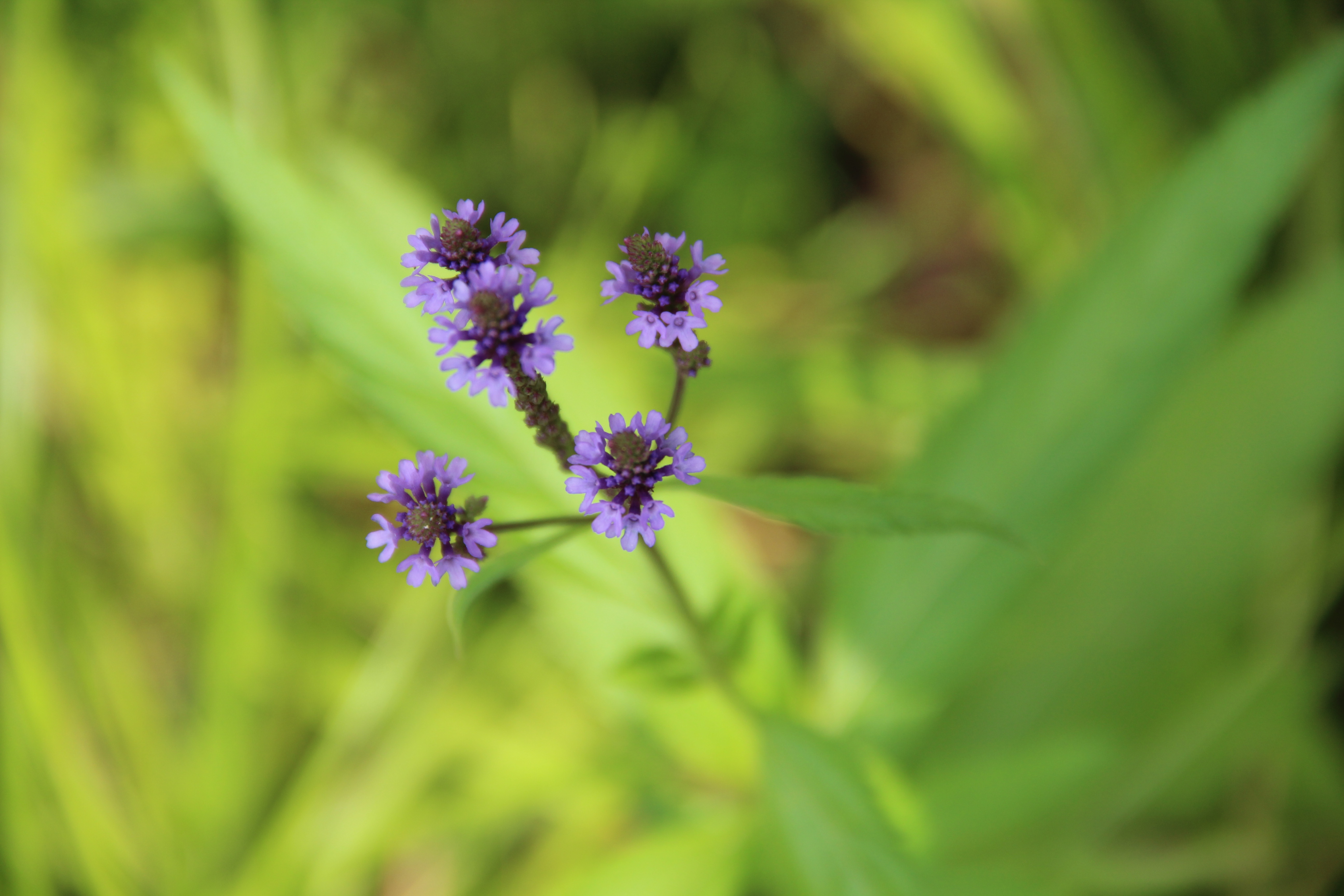
Swamp or blue vervain prefers moist, loamy soil and lots of sun.

Swamp or blue vervain (Verbena hastata) prefers moist, loamy soil and lots of sun.

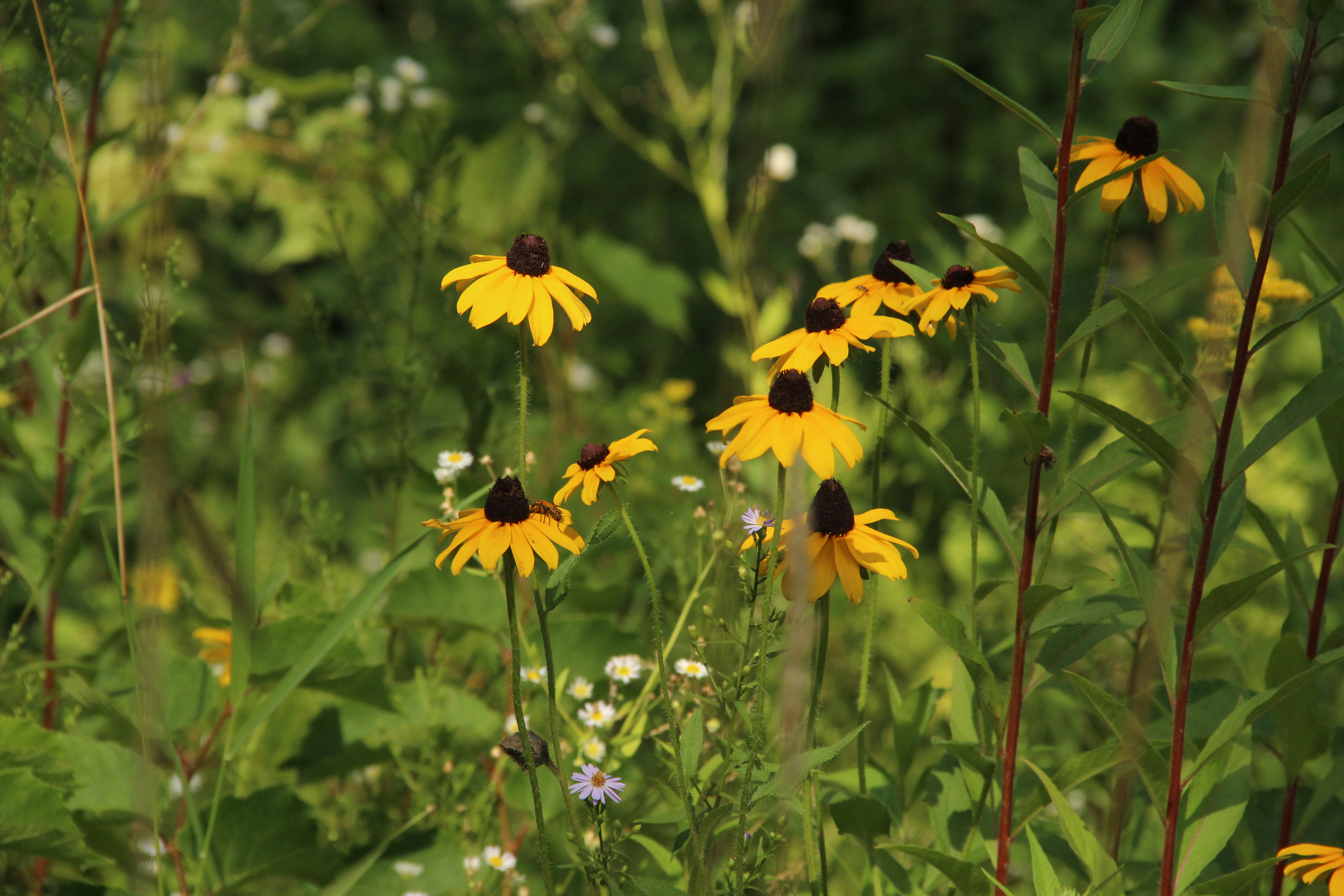
Brown-eyed Susan's and a few early-blooming asters.

Black-eyed Susan’s (Rudbeckia subtomentosa) or sweet coneflower and a few early-blooming asters.

Priarie or western ironweed (Vernonia fasiculata).

Priarie or western ironweed (Vernonia fasciculata).

Hog peanut is a member of the pea family. (More to come in a later post.)

Hog peanut (Amphicarpaea bracteata) is a member of the pea family.

Eastern-tailed blue (Cupido comyntas)

Eastern-tailed blue (Cupido comyntas).

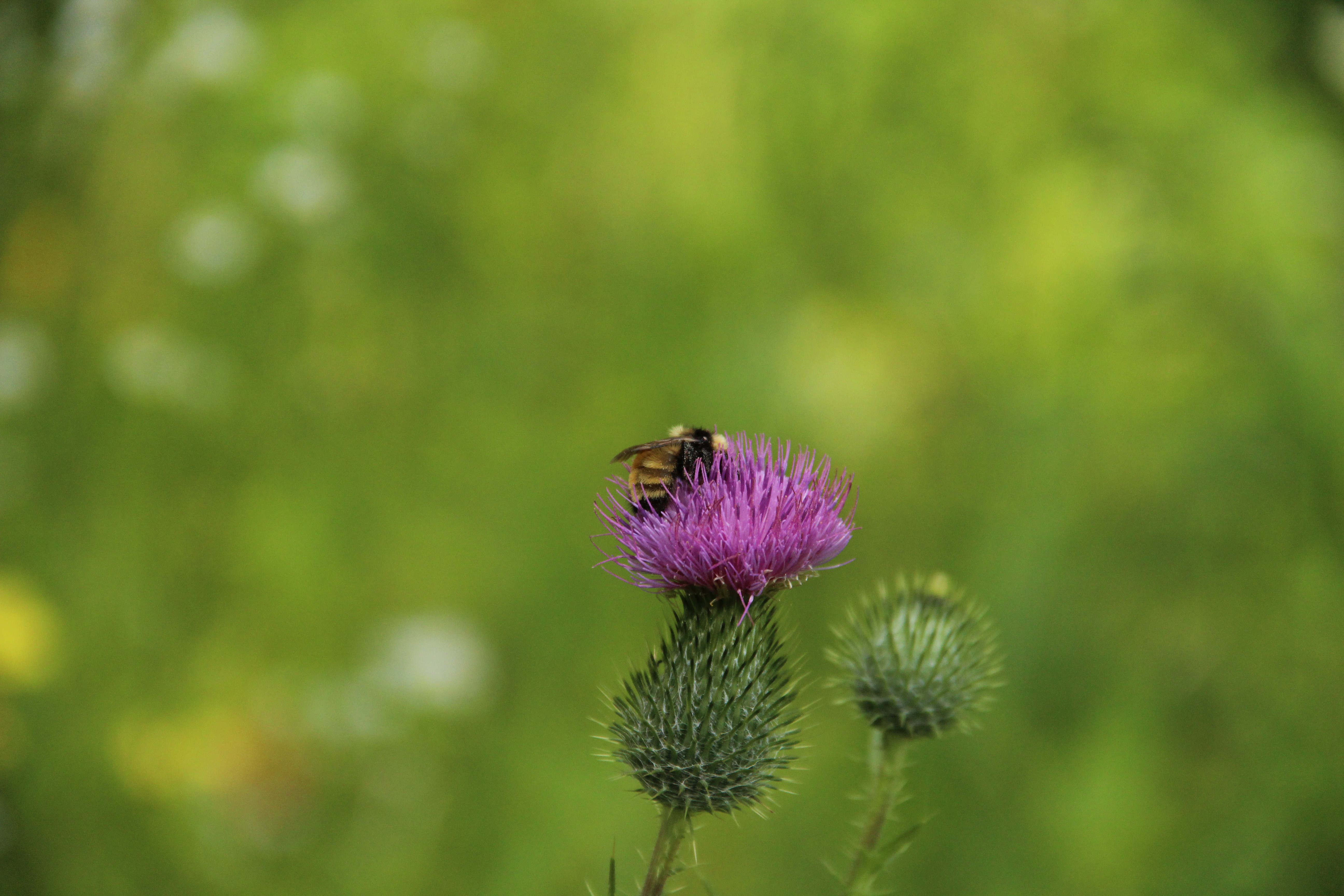
European bull thistle with bumble bee.

European bull thistle (Cirsium vulgare) with bumble bee.

First buds of sweet Joe-Pye begin to open.

First buds of sweet Joe-Pye (Eutrochium purpureum) begin to open.

Male American redstart warbler.

Male American redstart warbler (Setophaga ruticilla).

Orange Sulphur Butterfly

Today’s warm temperatures and south winds brought an orange sulphur butterfly to our garden.  Normally a common butterfly, this is the first one I’ve seen all year. The orange color on the upper wing, and dark black spots help to distinguish it from other sulphur butterflies.  Adults drink nectar from many species of garden flowers; this one visited garden phlox and asters.  The caterpillars prefer red clover, white clover, vetches and alfalfa.  Other insects seen in the garden today include a potter wasp, paper wasps, bumble bees, honey bees, metallic green bees, flower flies, cicadas and an autumn meadowhawk dragonfly.
An orange sulphur butterfly (Colias eurytheme) drinks nectar from garden phlox.

An orange sulphur butterfly (Colias eurytheme) drinks nectar from garden phlox.

Red Admiral Butterfly

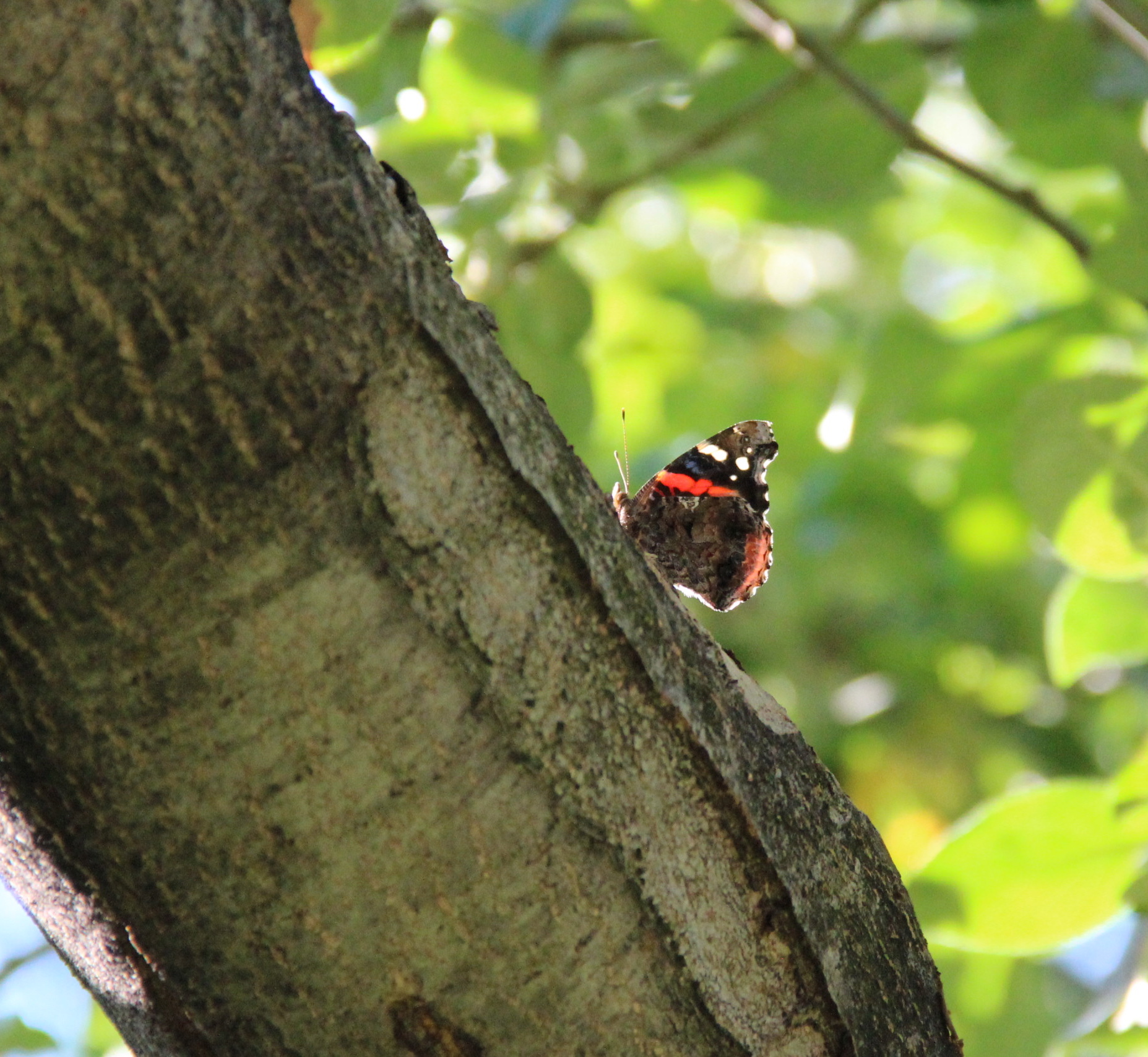
A splash of bright red flashed by as I counted monarch butterflies in our garden late Wednesday afternoon.  Perched in a sunny spot on the apple tree trunk, a red admiral (Vanessa atalanta) fanned its wings, flew around the backyard a couple of times and landed on a lower limb of the tree.

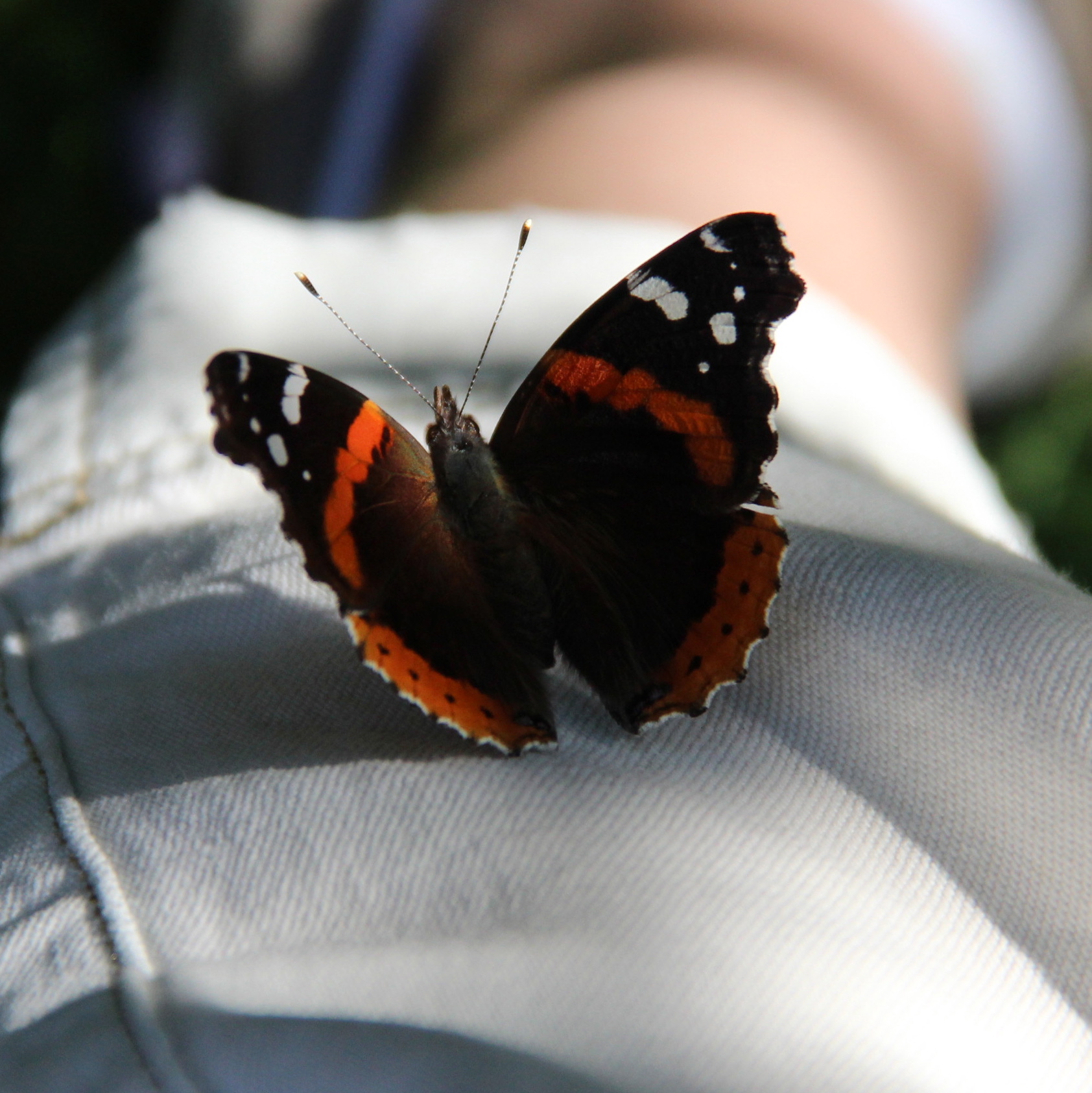
The red-barred upper wings of a red admiral that perched on my leg.

The red-barred upper wings of a red admiral that perched on my leg.

Named for the red-bar markings on their black upper wings, red admirals also sport white marks in the upper corners of the forewings.  The underside of the wings, which is often visible when the butterfly perches, is a mottled brown, tan and black, with a pink band and white spotting on the forewing.

The mottled underwings are marked with a pink bar and white spotting in the forewing.

The mottled underwings are marked with a pink bar and white spotting in the forewings.

Red admirals range from near the Arctic Circle to as far south as Guatemala.  (They also live in Europe, Asia and North Africa, and have been introduced in other parts of the world.)  They prefer moist areas such as fields, meadows, open woodlands, gardens and yards.  Red admiral caterpillars prefer to eat nettle leaves; adults eat overripe fruit, tree sap, and the nectar of many types of flowers, such as aster, blazing star, spotted Joe-Pye weed and red clover. In Minnesota, there are one-to-two broods each year.  The butterflies of the second brood are smaller and less colorful than the first brood.  Most migrate to the southern states in autumn, but a few successfully hibernate in the north during mild winters.  Many years, this butterfly remains active into October and I’ve seen them as early as mid-April in the spring.

For more information about the red admiral and other butterflies, visit:

http://minnesotaseasons.com

http://butterfliesandmoths.org

Biodiversity on a Sunflower

Late Sunday morning in early September.  I walk along our unpaved road next to the Snake River.  The sun is hot, grasshoppers whir and click, bees drone and American goldfinches call to each other in the aspen grove.  Small stands of native sunflowers (Helianthus tuberosus L.) dot the roadside.  In a single group of three plants, also known as Jerusalem artichokes, I spot four species of native bees, two species of wasps, several ladybird beetles, a goldenrod soldier beetle and a northern crescent butterfly.  Here’s a sampling:

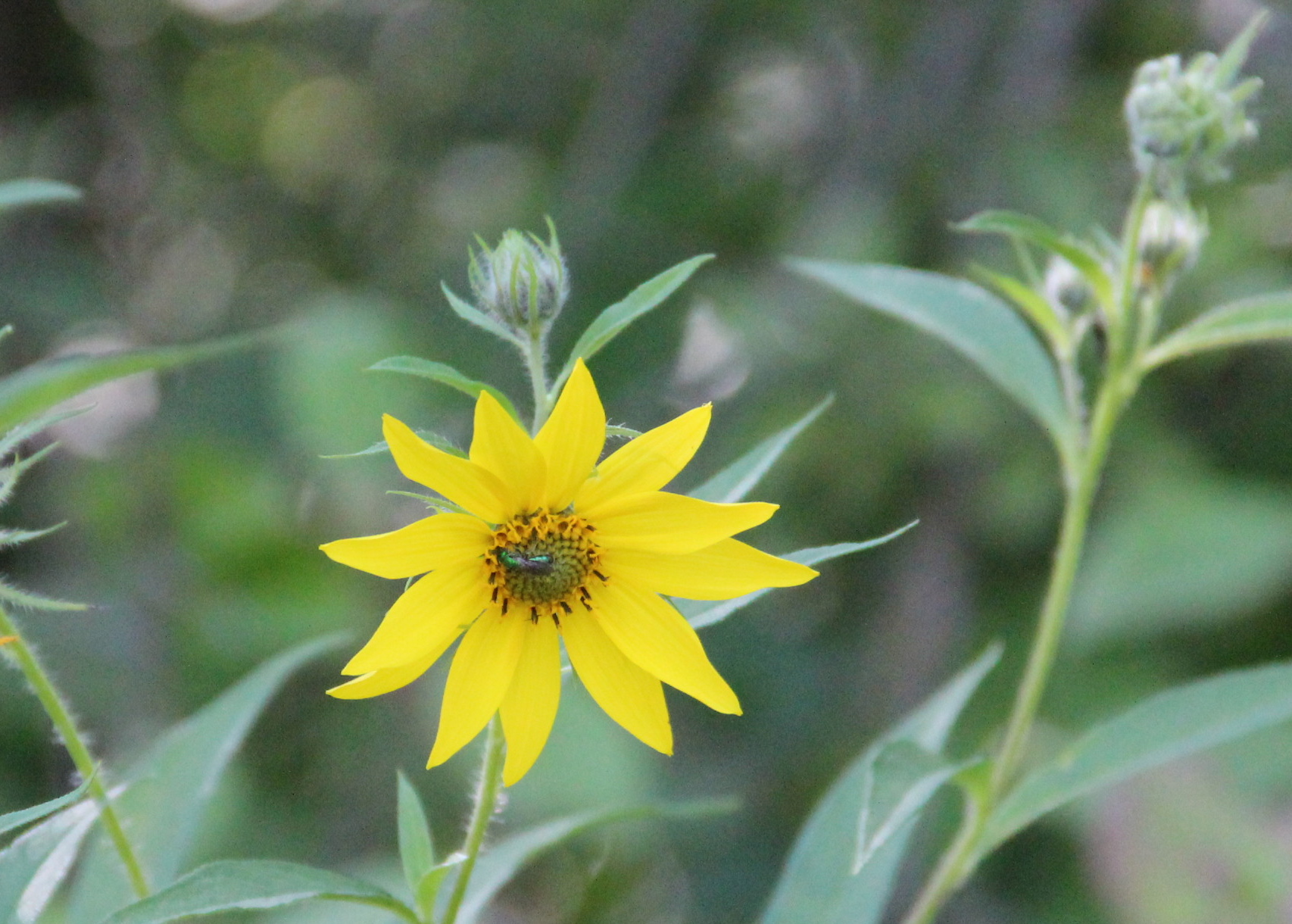
Green metallic bee.

Metallic green bee on a native sunflower known as Jerusalem artichoke.

Ladybug beetle on woodland sunflower.

Ladybird beetle on a native sunflower (Helianthus tuberosus L.).

Goldenrod soldier beetles are important pollinators of native sunflowers, goldenrod and tansy.

Goldenrod soldier beetles are important pollinators of native sunflowers, goldenrod and tansy.

A crescent butterfly, most likely a northern crescent, sips nectar.

A crescent butterfly, most likely a northern crescent, sips nectar.

Monarchs and Joe-Pye Weed

Monarch butterflies are rare visitors this summer.  In a typical year, they float through the backyard all day.  Over the past week, a solitary monarch visited our patch of spotted Joe-Pye weed (Eutrochium maculatum) each day between 7 and 8 a.m.  Sunlight glowed in its beautiful wings as it sipped the Joe-Pye nectar.

A monarch sips Joe-Pye weed nectar in early-morning sunlight.

A monarch sips Joe-Pye weed nectar in early-morning sunlight.

In the next two weeks, monarch migration through St. Paul, MN, should peak, according to MonarchWatch.org.  To check peak migration in your own area, visit  peak migration.  During the 2011 fall migration peak, 10-to-25 monarchs visited our Joe-Pye patch each afternoon, and often roosted in our apple tree for the night.  I’m interested in comparing this year’s numbers with the 2011 observations.  (Last year, the Joe-Pye blossomed two-to-three weeks earlier than usual, due to the early spring, and as a result, finished blooming ahead of monarch migration.

In addition to the low numbers of monarchs, I’ve only seen one each of black swallowtails, red admirals and mourning cloaks, and only two tiger swallowtails in our garden.  I haven’t found caterpillars of any of the five species.  Read more about the low number of butterflies this year, from the Star Tribune.