Baltimore Orioles

Baltimore orioles were named for the orange and black colors on the heraldic crest of the Baltimore family of England, for which the City of Baltimore, MD, is also named.

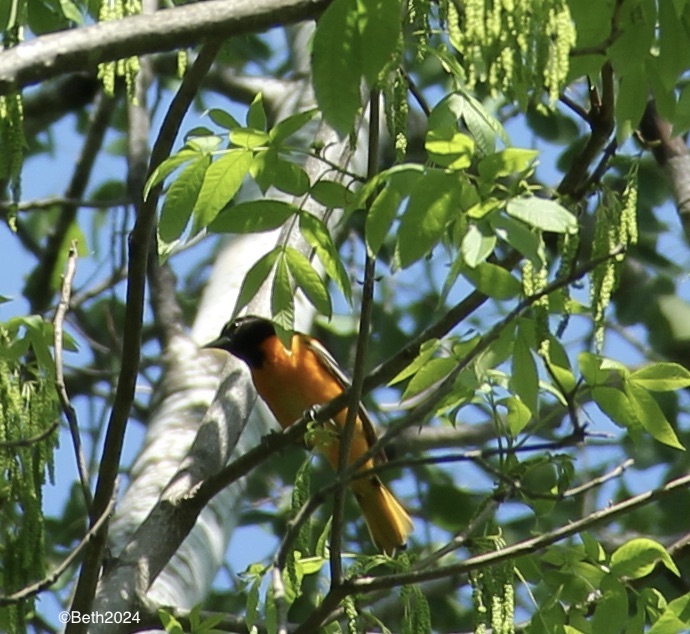
Like miniature suns, Baltimore orioles (Icterus galbula) light up early summer’s lush green foliage. About the size of a red-winged blackbird, these orioles are colorful members of the blackbird family. They are often recognized for their golden color and beautiful woven hanging-basket nests.¹

I saw my first Baltimore oriole in the Twin Cities when I was five or six. Graceful American elms lined every street then, and were the preferred nesting tree of orioles. Since the demise of the elms by Dutch elm disease, many of the orioles I see and hear are in the woods at our cabin. In the city, I find them most often when I walk next to the Mississippi River and around the Minneapolis lakes. Their call is described as paired, pure flutelike notes. They’re easy to listen to and their song contains fewer harsh notes than other oriole species.

Most years, they weave a nest in the outer branches of quaking aspens that overhang our cabin yard, but one year, they nested in a red oak tree next to the cabin. The female constructs the nest using a combination of plant fibers, such as long strips of bark from grape and other vines, grasses and hair. She often selects artificial fibers, too — yarn, fishing line and twine. The two outer layers of the nest provide the saclike structure. The third inner layer consists of soft hair, wool and downy fibers to protect the eggs and hatchlings.
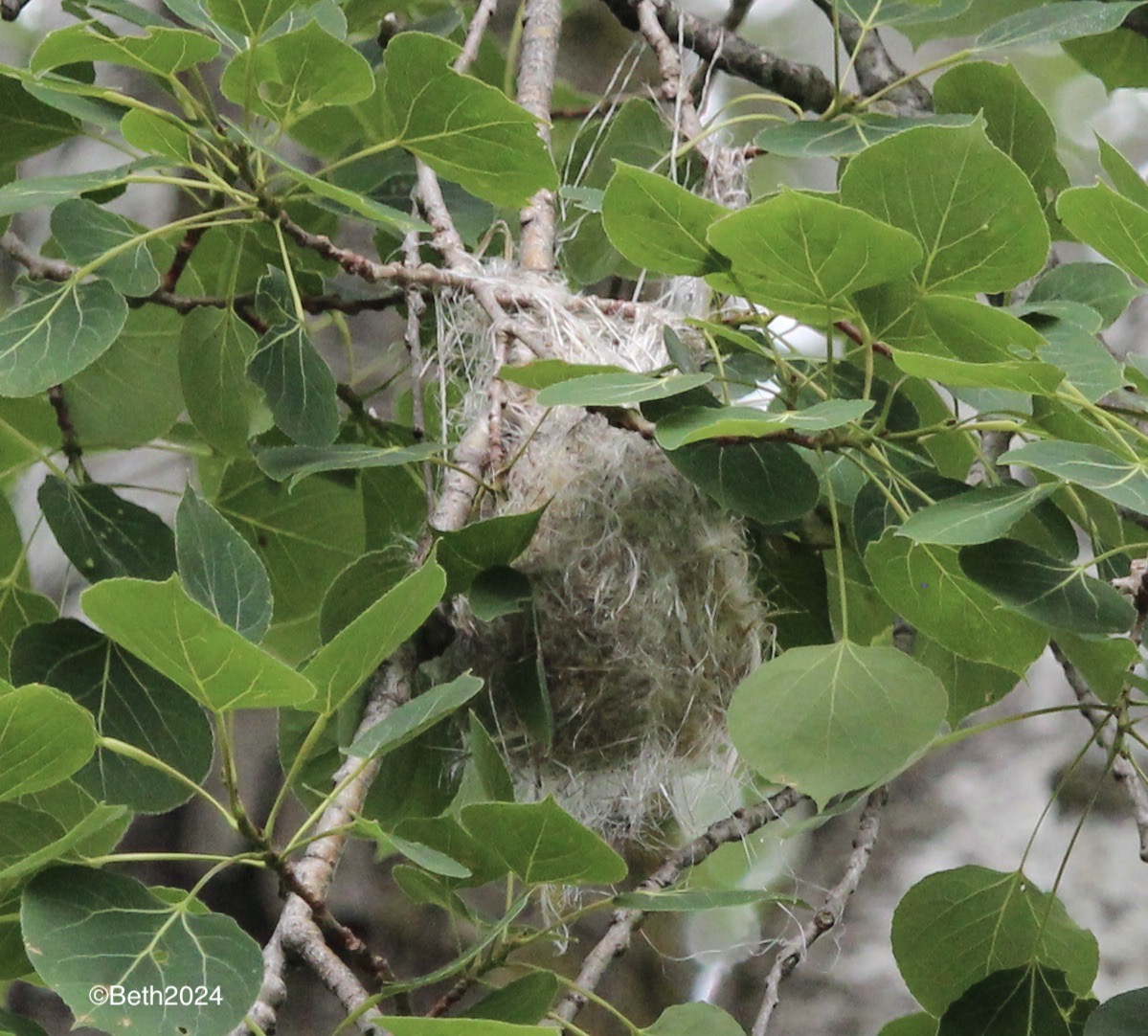
Female Baltimore orioles skillfully weave a hanging nest of natural and artificial materials, such as grapevine, hair, fishing line and twine. They may use wool, down from cottonwood trees or milkweed to line the nest.

When left to their own resources, Baltimore orioles typically eat caterpillars, moths and many other types of insects. Like warblers and flycatchers, they dart out and back from foliage to snatch flying insects. At other times, they remind me of chickadees as they perform acrobatics over and under tree branches in search of beetles, aphids and spiders. They also like flower nectar and fruit, and can sometimes damage fruit crops. During spring and fall migration, our neighbors, Ed and Melinda, keep a fresh dish of grape jelly on their deck railing for the orioles. My father-in-law always suspended fresh orange slices from the bird feeder pole for them. Both delights attracted lots of orioles (and hornets in autumn)!

An immature oriole feeds on grape jelly, one of their favorite foods.

Baltimore orioles spend most of the year on their wintering grounds in Central America, southern Mexico and Florida. They breed in eastern and northern North America as far west as the Central Great Plains and north into southern Canada. Their time in Minnesota is brief: I usually spot my first oriole in mid-May and see the last one in early September. In addition to Baltimore orioles, Minnesota is also the summer residence of orchard orioles and, occasionally, Bullock’s oriole.

Female and immature male Baltimore orioles are sometimes difficult to tell apart.

¹In the Great Plains states, the Baltimore and Bullock’s orioles frequently interbreed and produce hybrid offspring. Between 1983 and 1995, scientists believed that the birds were one species, which they named the northern oriole. Later, genetic testing proved they were two separate species and ornithologists returned to using “Baltimore” and “Bullock’s.”

Sources and Further Reading
All About Birds – Baltimore Oriole

Audubon Field Guide – Baltimore Oriole

Mining Bees

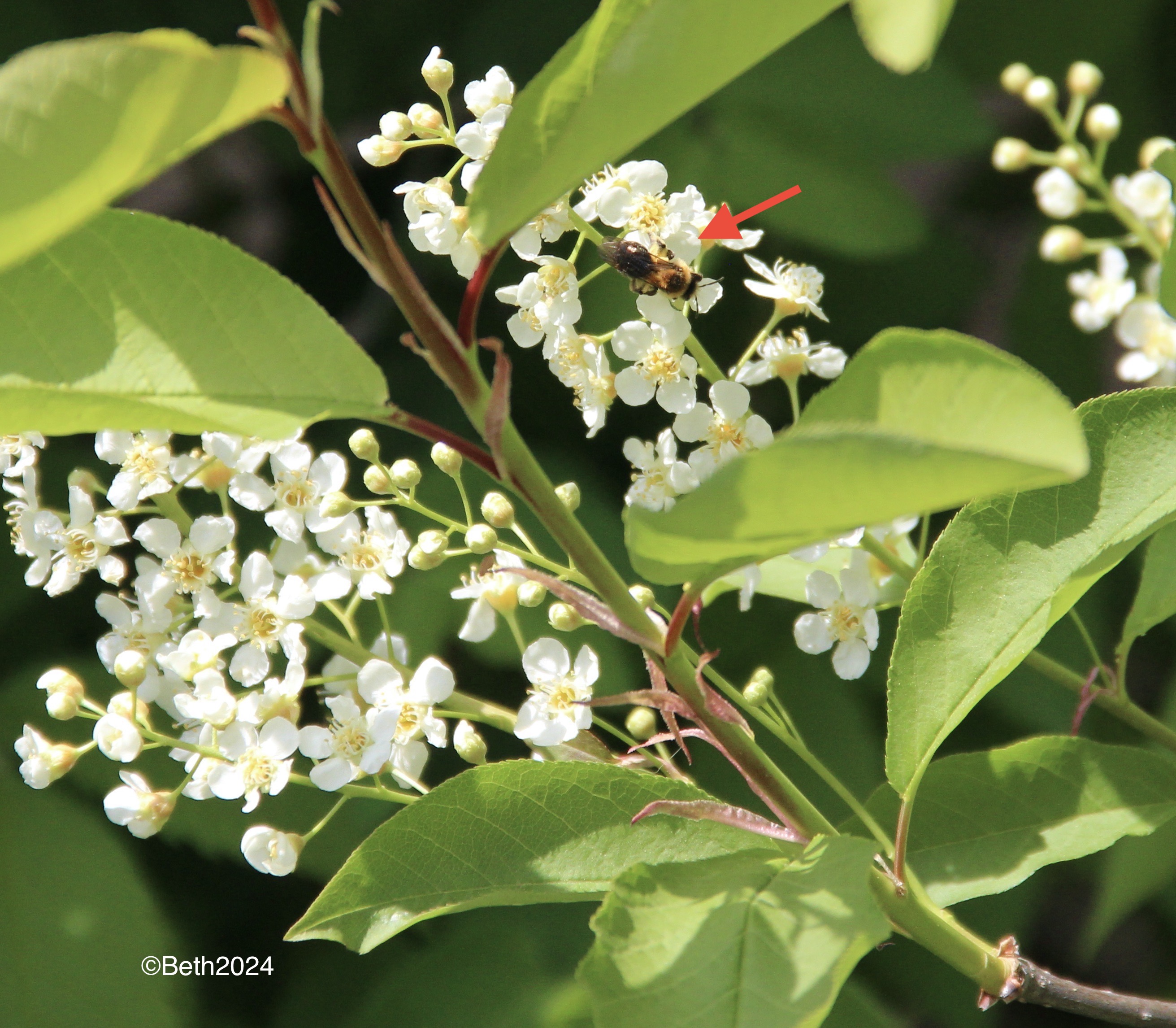
A mining bee (Andrena spp.) pollinates Canada cherry blossoms (Prunus virginiana, ‘Canada Red’).

Redbud, crabapple, dogwood, wild plum and cherry are just a few of the trees blooming in May. What’s pollinating all these beautiful blossoms? 

More than 500 species of native bees are responsible for pollinating many of Minnesota’s spring flowers and trees. Mining bees (Andrena spp.) are one of the earliest to emerge and get busy. Like bumblebees, they are wrapped in warm, fuzzy hair that helps insulate and equip them to be active when it’s still too cold for honey bees to work. 

Mining bees are solitary ground nesters. Unlike honey bees, bumblebees and others that nest in a colony, each mining bee digs her own individual spot, though they often nest near each other. Look for their small burrows, (about the diameter of an average pencil), in an exposed area of ground. I’ve seen them in soil along garden walls, in bare ground in the garden, or bordering sidewalks. The nests are only active for a very short time in spring and are interesting to watch. Female mining bees place small balls of pollen and nectar in their tunnels, lay an egg on top of each ball and then seal the chamber. Each larva will feed on the pollen and nectar during its development. The female dies soon after reproducing, while the larvae overwinter in their tunnels, typically leaving the following April or May to mate and continue the life cycle.

A mining bee (Andrena spp.) is dusted with pollen after working inside a Siberian squill (Scilla siberica) blossom.

Other species of mining bees reach adulthood in late summer and fall. Their life cycle is similar to their springtime cousins’, but they pollinate a range of different flowers, such as goldenrod and wild asters.

Sometimes people want to oust mining bees for fear of being stung, or they dislike the appearance of tiny tunnels in their garden or lawn. Unlike hornets and wasps, these small bees are quite docile and rarely sting unless handled roughly. They’re focused on producing the next generation and aren’t interested in sampling your supper or glass of wine! (In fact, most of the bees zipping around the nesting area are males, who don’t have stingers.) When I notice their nests, I just work around them and the bees ignore me. They’re more active when the sun warms their nesting area, so it’s easier to garden near them when it is shady and cool.

Besides pollinating flowers and fruit trees across North America, mining bees are prey for many songbirds, small rodents, jumping spiders, some species of ants and other insects.

Further Reading and Sources

Backyard Ecology

Bug of the Week (UW-Milwaukee)

Sharp-Eatman Nature Photography

November Sunset

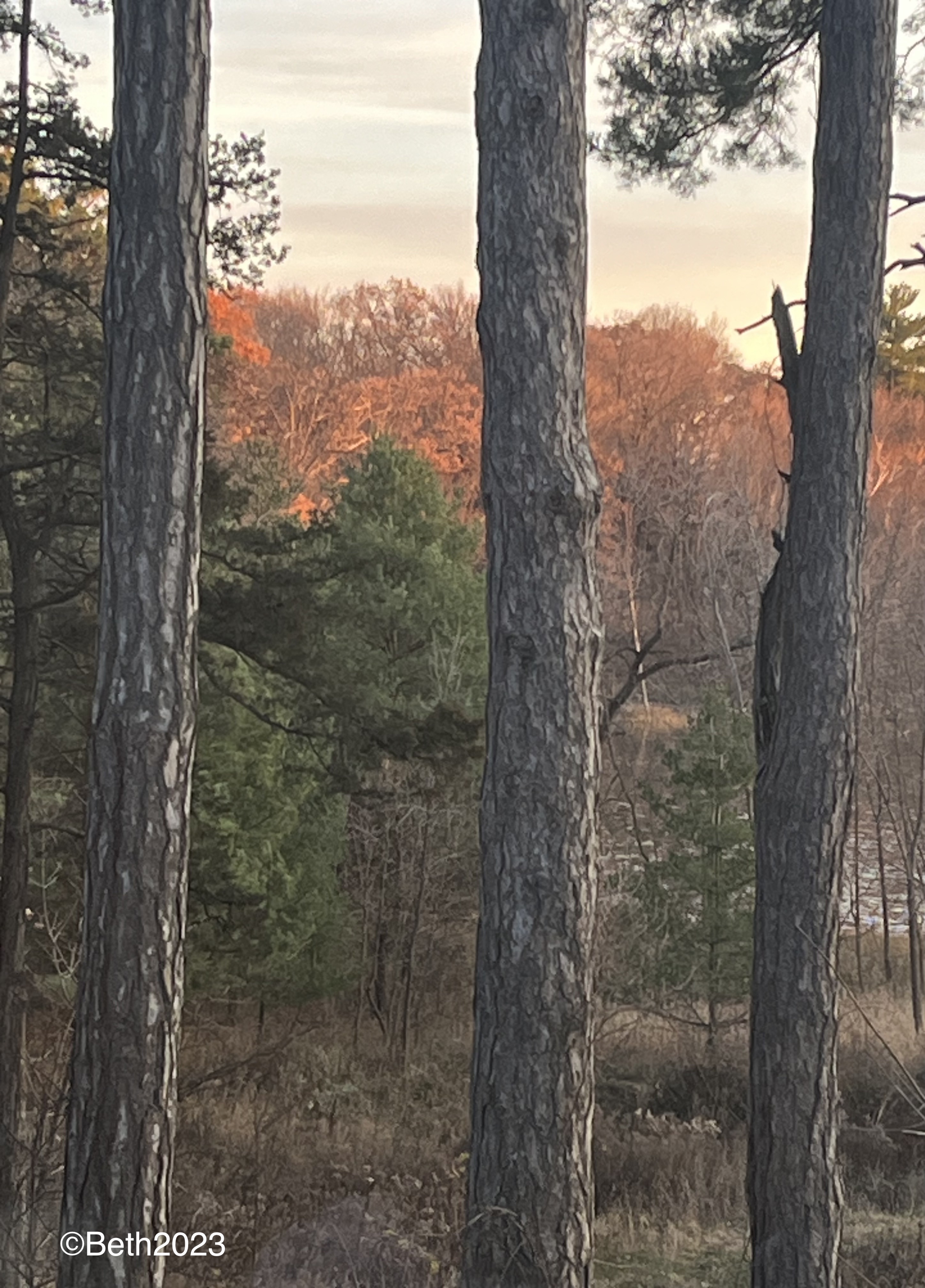
In November, the setting sun ignites red oak crowns and tints clouds with magenta, peach and rose. There’s neither summer’s long-lasting light, nor winter’s rapid descent into darkness. Dusk’s cool fingers seep in, chilling the air as the sun sinks in the southwest. In the tree tops, a group of robins roosts in a lingering sliver of sunlight. For a few moments they softly whistle their cheery song as though it were a spring evening. Time gently slips away in shadows of amethyst.

Signs of Autumn

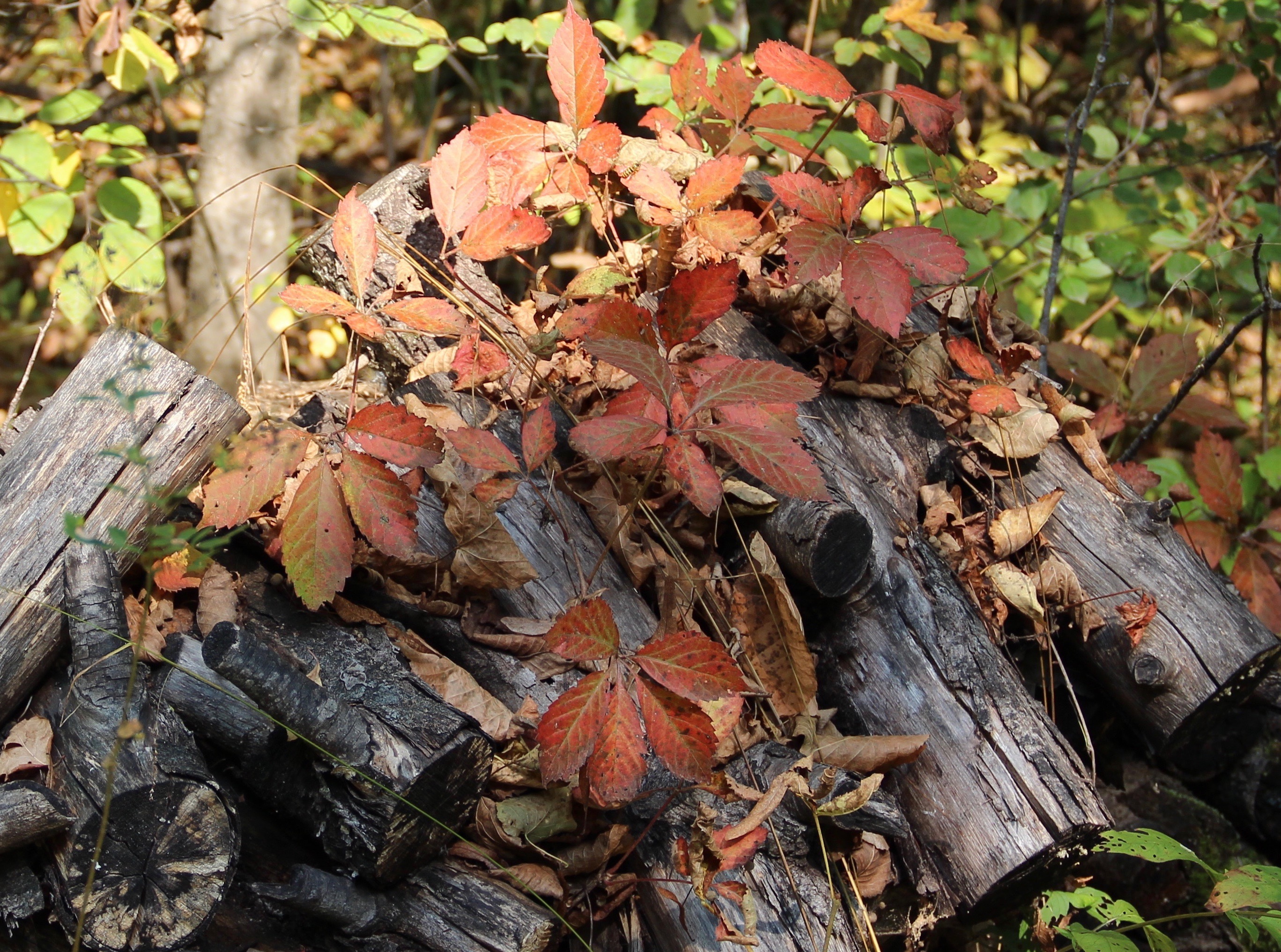
Woodbine vines (Parthenocissus inserta) weave color through an old wood pile.

The warm, windy afternoon feels summery, but there’s no denying the first signs of autumn present in the woods and fields of Pine County in East Central Minnesota. I smell the sharp, earthy scent of crisp, dry leaves. Many trees are still green, but basswoods are shedding their leaves, silver maples are going gold, and red oaks show splotches of bright color. The most colorful leaves belong to woodbine vines that climb over an old wood pile and thread scarlet up the trunks of many trees.

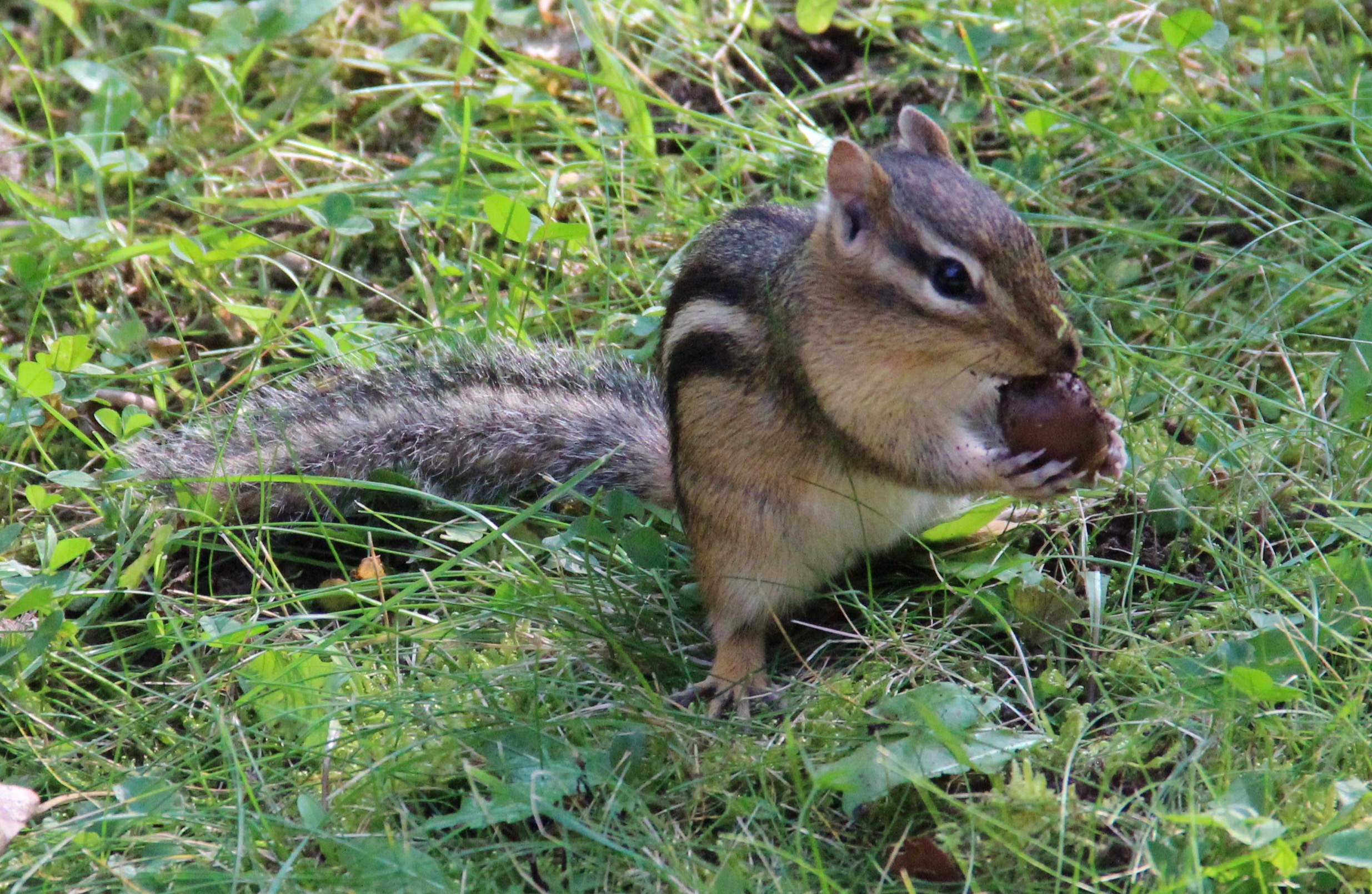
Ripe acorns drop, swishing through leaves as they fall. Some hit hard like a rock; some bounce and tumble down the cabin roof; others plunk and splash into the water of the Snake River. Blue jays, chipmunks and gray squirrels scramble to collect and store the nuts for winter. The turf is also littered with hickory nuts, walnut husks and basswood nutlets.

Woodbine and lichens light up the trunk of an old silver maple tree.

The large heart-shaped leaves of basswoods, or lindens (Tilia americana), are the first to be shed this year.

A mossycup or bur oak acorn (Quercus macrocarpa); the seed of a white oak that prefers rich, moist soil and grows along the riverbank.

Eastern chipmunks (Tamias striatus) gather acorns, hickory and other nuts to eat over the winter.

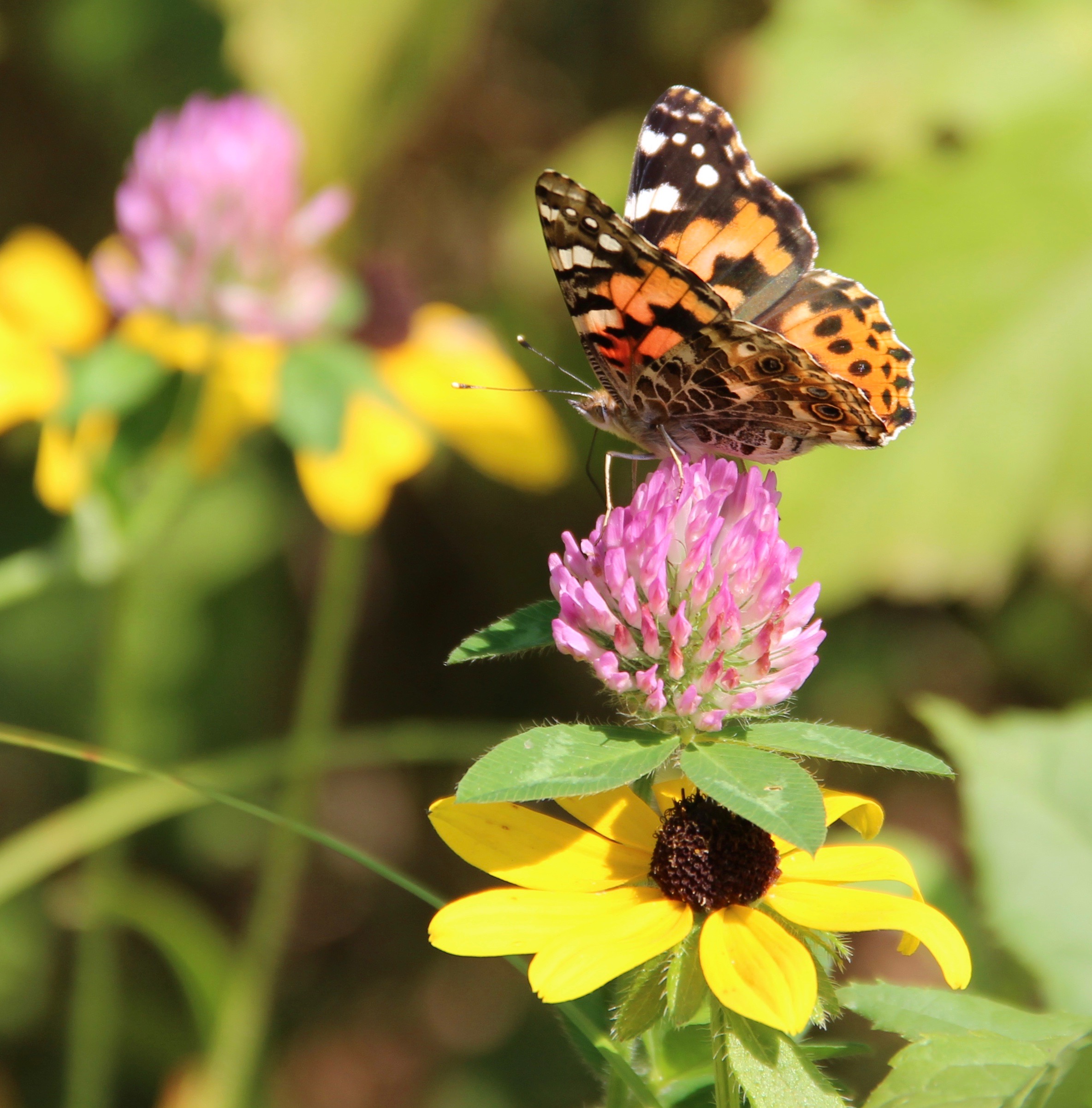
Roadsides and fields offer a bounty of autumn wildflowers — native asters, tall sunflowers, bottle gentians, Black-eyed Susan’s and a few others. Bees, wasps and painted lady butterflies hang like ornaments on the blossoms and the air is heavy with their busy drone.

Mixed groups of migrating warblers hunt for insects, swinging like tiny acrobats on tree branches. The pesky gnats, mosquitos and other tiny bugs that annoy us fuel the warblers’ journey to Central America.

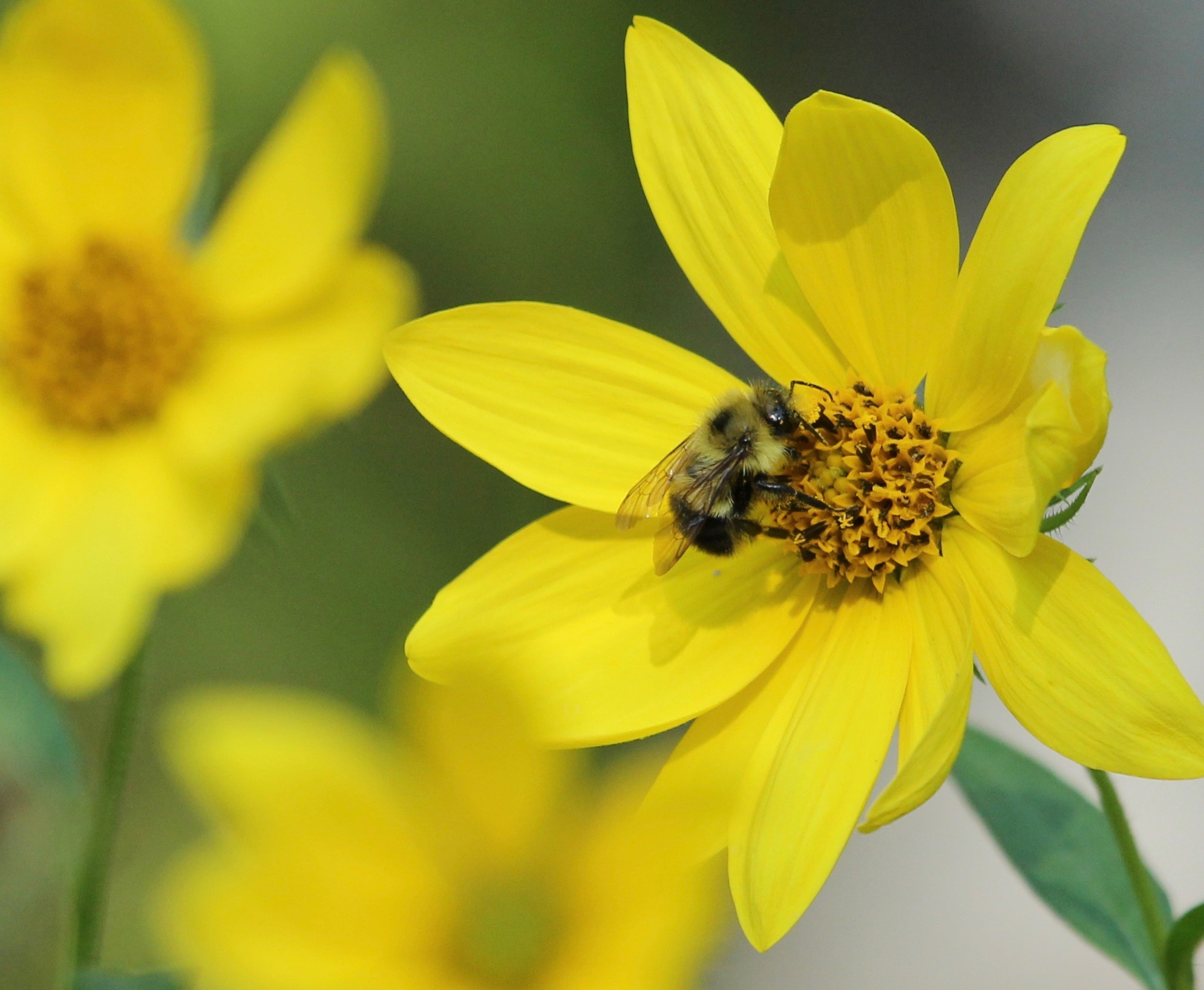
A bumble bee (Bombus spp.) pollinates tall sunflowers (Helianthus giganteus).

A bald-faced hornet (Dolichovespula maculate) drinks nectar from panicled asters (Symphyotrichum lanceolatum).

Painted lady butterflies (Vanessa cardui) are attracted to red clover, thistle and other autumn wildflowers.

A bladk-and-white warbler (Mniotilta varia) hunts insects in the river shallows.

In a few short weeks, all of this busy activity will disappear and the quiet of winter will descend. In the meantime, I hope for a long, warm autumn and will enjoy the changing beauty of trees, flowers, seeds and creatures. What signs of autumn do you notice?

Gray dogwoods (Cornus racemosa) develop white berries and maroon leaves in autumn. The berries are a favorite food of grouse and pheasant.