Michigan and Turk’s Cap Lily

Michigan lily (Lilium michiganense) growing near the Snake River in east central Minnesota.

Michigan lily (Lilium michiganense) growing near the Snake River in east central Minnesota.

They are a gift of wet years, often not blooming in summers of little rainfall. Native to eastern North America, the Michigan lily’s (Lilium michiganense) delicate tepals curve up and backward, setting it apart from most other native lilies. They range in color from light orange to red-orange and are speckled with purple. The closely related Turk’s cap lily (Lilium superbum) is almost identical in appearance. Turk’s caps can sometimes be distinguished by the presence of a green star in the flower’s throat, and anthers longer than 1/2 inch that are colored magenta or darker.  It is native to areas south of Minnesota, but has been widely introduced here. Both lilies grow from a bulb, reach a height of four to seven feet, and form thin, tiny seeds in a pod.

When our son was little, one of the first things he did when we arrived at our cabin was to check all of the damp spots where we’d found Michigan lilies in previous years. They like “wet feet” and grow in moist right-of-ways, near drainage ditches, and edges of woodlands along the Snake River in Pine County, MN, and other streams. He delighted in finding them, and I was excited to find many in bloom last week.
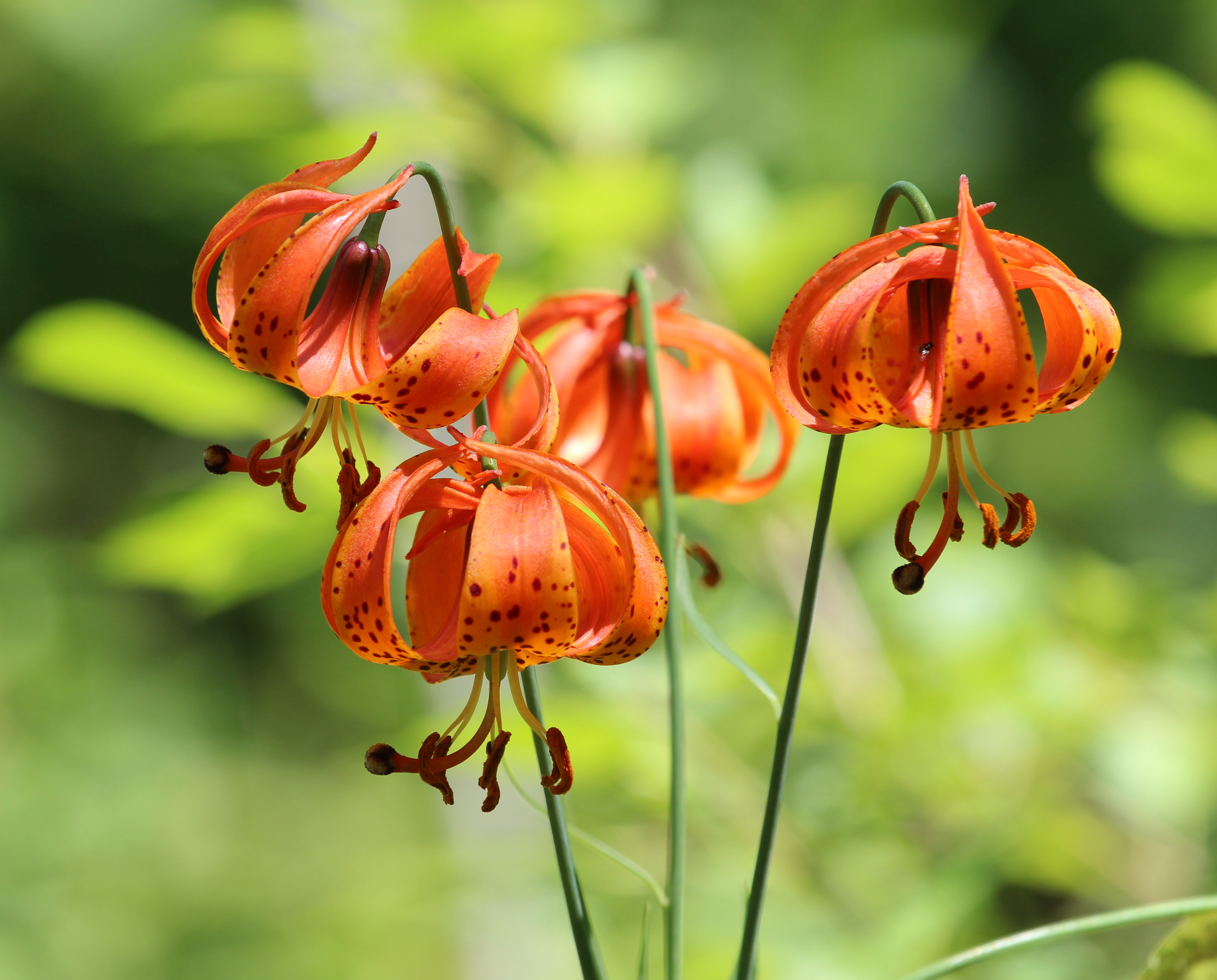
The tepals curve up and back toward the base of the flower.

The tepals curve up and back toward the base of the flower.

Hummingbirds, sphinx moths and butterflies, such as monarchs and fritillaries, are attracted to the reddish blooms.  I’m attracted to them for a different reason. I think of light, joy and life when I see them glow so deeply in the morning sun. Both types of lily are becoming more uncommon in the wild due to roadside mowing and cultivation. If you spot these lilies growing on your property, please let them stand undisturbed until the plants become dormant in the fall.
Thoughts on a Butterfly

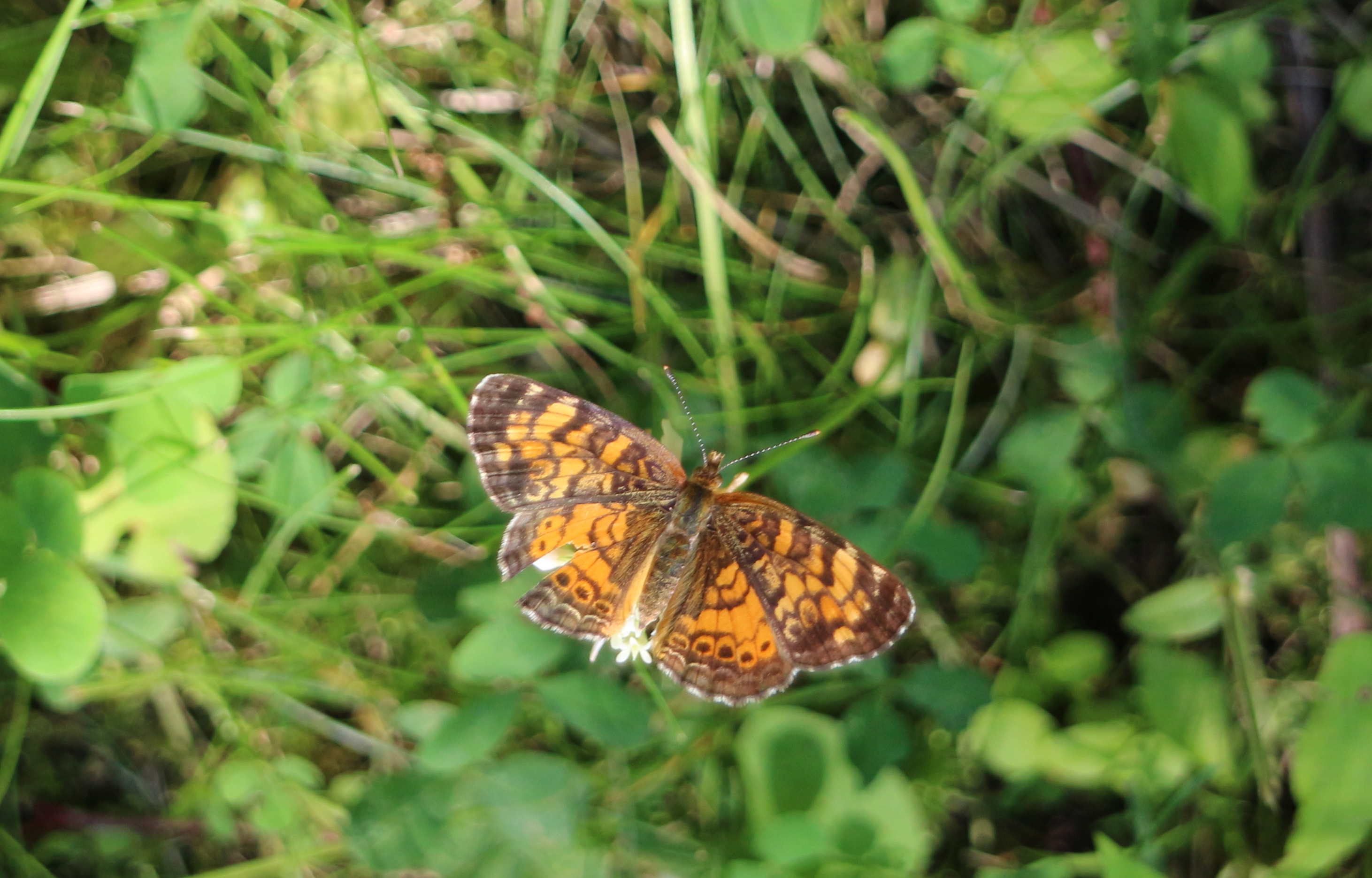
Sun glows on the wings of a crescent butterfly (Phyciodes).

Sun glows on the wings of a crescent butterfly (Phyciodes).

I spotted a small orange-and-black butterfly in a patch of white clover at our cabin in Pine County, MN. Most butterflies rarely sit for more than a few seconds; this one was an avid sunbather, fully opening its dark-spotted wings and resting on a clover bloom for several minutes. Its wing pattern indicated it was a type of crescent butterfly.

Because of their similar appearance and habitat, crescents challenge us to identify them correctly, and this could have been either a pearl or northern crescent. Adults of both species nectar on white clover, asters, thistles and dogbane. Their brown, spiky caterpillars feed primarily on the leaves of asters, and they overwinter to become next spring’s first generation to take flight.

Look closely at the photos and you’ll see the crescent’s worn, tattered wing — evidence that it’s no newbie, has seen some extended flight time, has already lived a good portion of its life. And still, though it shows some wear and tear, it remains beautiful even as it ages and lives out its brief days.

Tattered butterfly wings may indicate a close call with a predator, or advancing old age.

Tattered butterfly wings may indicate a close call with a predator or advancing age.

I think of the recent death of my mother-in-law, Mary, and of my friend, Cathy, last January. I watched them complete their lives, I held their hands, hoped they could hear my prayers and words of comfort. I wonder about them often, and deeply hope that, as the simple brown caterpillar morphed into a creature of light and air, they too have transformed into something lovely and eternal.

Prairie Smoke

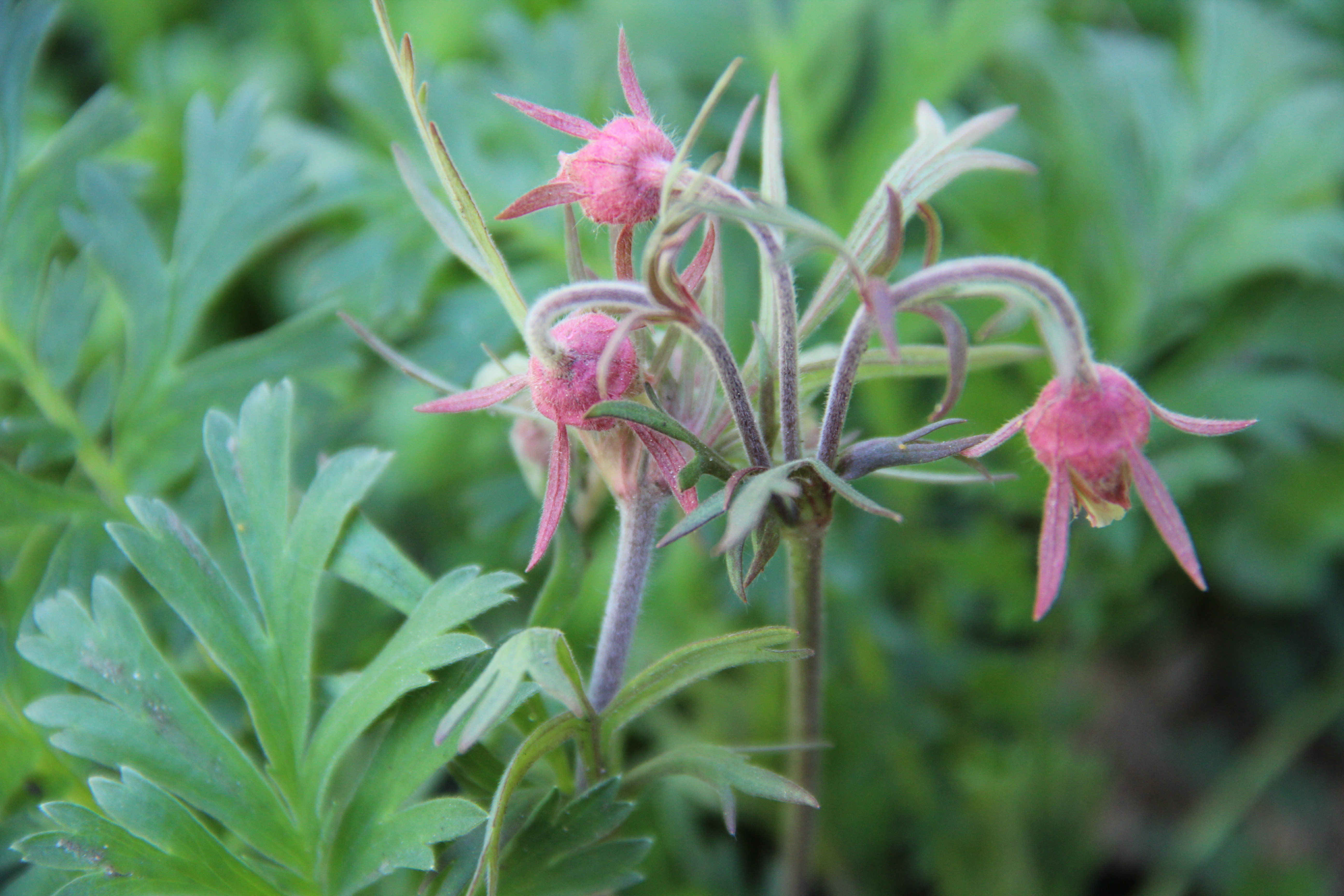
Prairie smoke (Geum triflorum) showing five dark pink outer petals covering five white inner ones.
Prairie smoke (Geum triflorum) sports five dark pink outer petals over five white inner ones.

The Midwestern prairies are famous for their large, showy flowering plants like purple coneflowers and black-eyed Susans. But, there are lovely smaller ones, too. Prairie smoke (Geum triflorum) is an interesting one that grows in early spring.

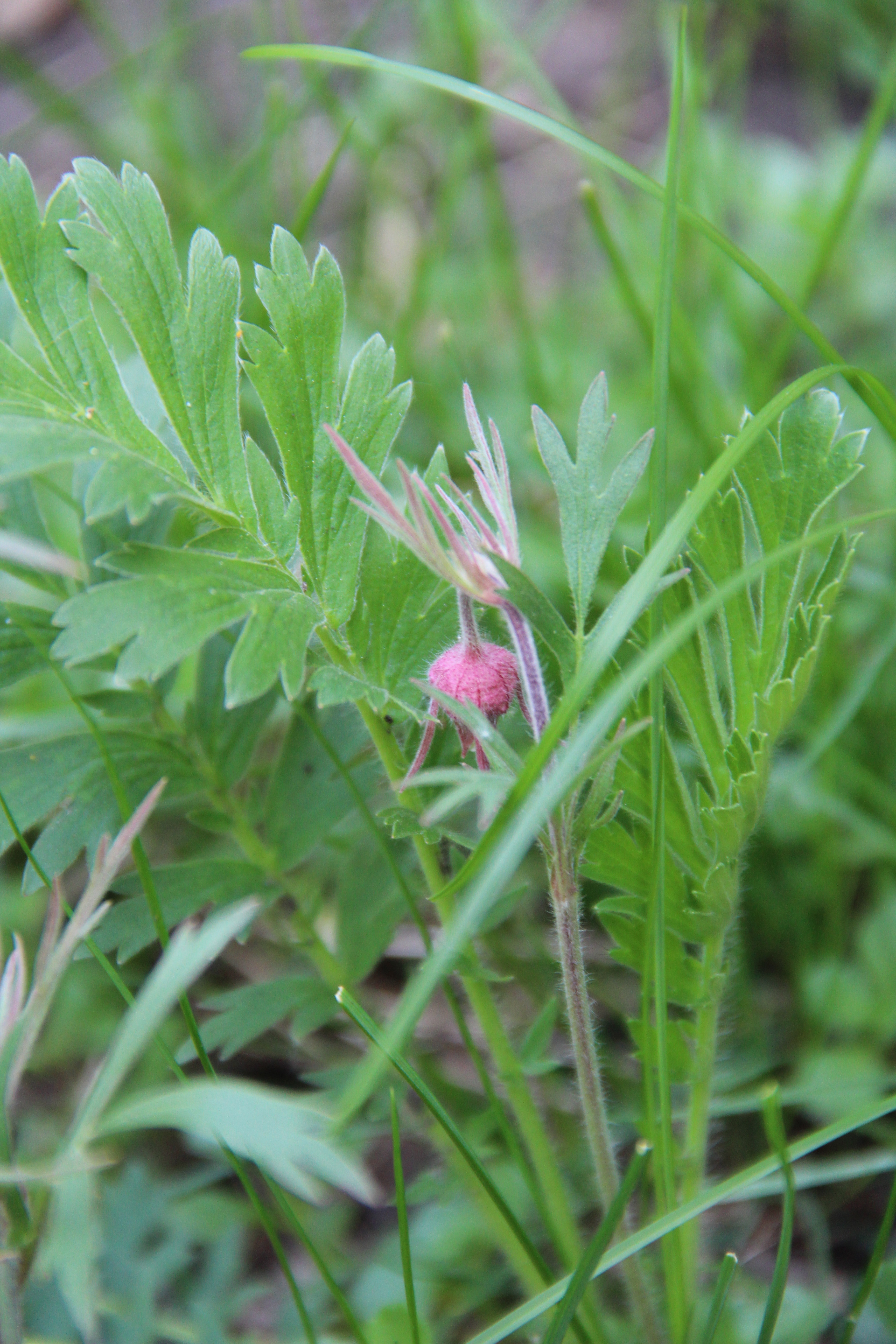
Fern-like, hairy foliage often stays green all winter and begins gowing in early spring.

Fern-like, hairy foliage often stays green all winter and begins growing in early spring.

Each spring, the melting snow uncovers a green rosette of hairy, fern-like leaves often tinged with burgundy. The rosette begins to grow, and a few weeks later, one or more stalks appear in the center of the rosette. Each carries a small group, or umbel, of three flowers. The five outer petals are pink-to-reddish colored and tightly cover five white petals forming a bell-like shape. Because the small flowers barely open, they are primarily pollinated by bumble bees, which are burly enough to push inside.

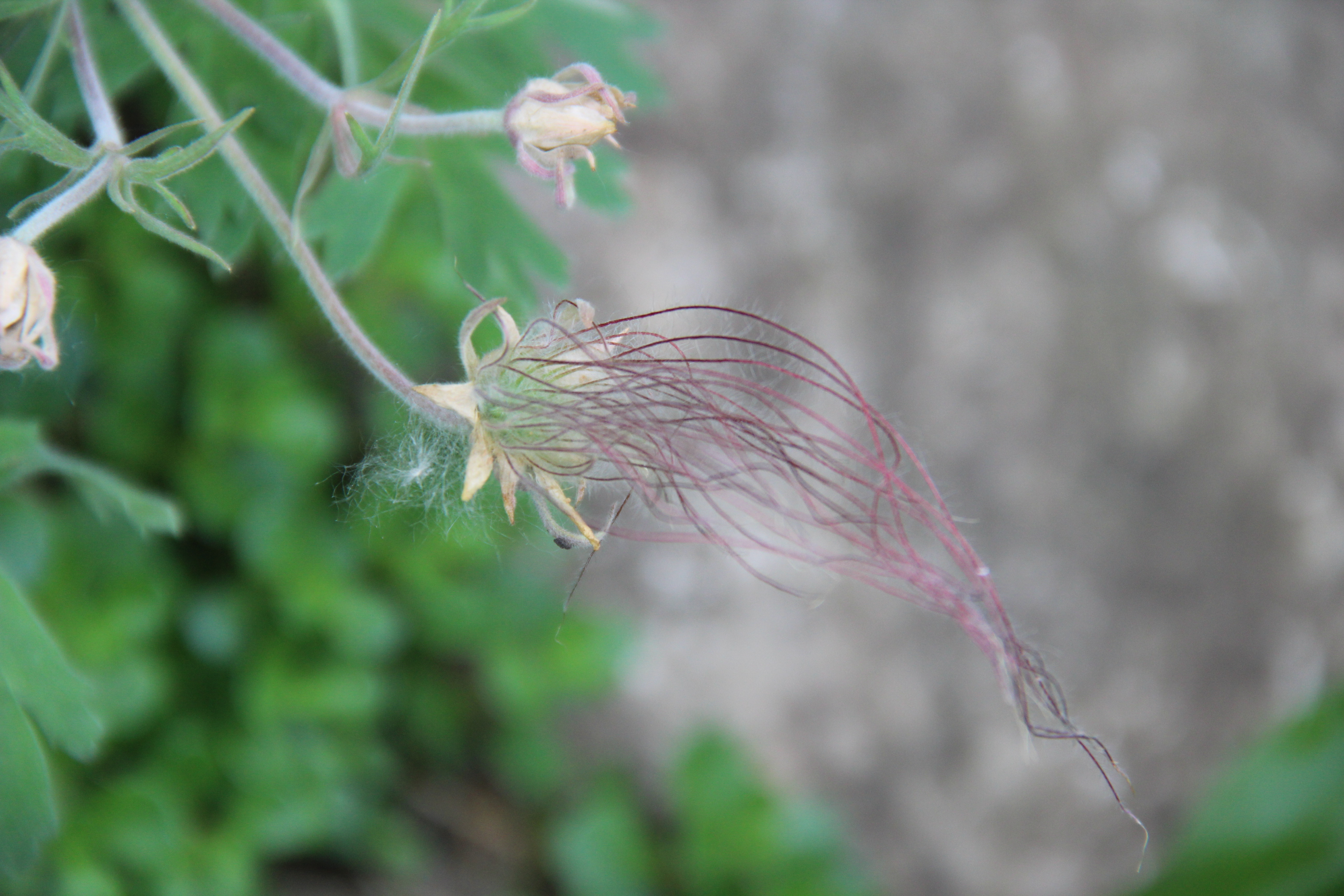
Prairie smoke seed plumes.

Prairie smoke seed plumes on last year’s plants.

After several weeks, the flowers turn upward and form small, one-seeded fruit that are attached to long styles covered with silky hair. The wispy appearance of the fruit led to the colorful names of prairie smoke and old man’s whiskers.

Another seed plume of prairie smoke or old man's whiskers.

Another seed plume of prairie smoke or old man’s whiskers.

In its native habitat, prairie smoke prefers sunny, dry soil that is rocky or sandy. In our garden, it’s happy growing near the top of a limestone wall where it receives direct sun and has good drainage.

Early Spring Serenade

A male northern cardinal (Cardinalis cardinalis) sings from his springtime perch .

A male northern cardinal (Cardinalis cardinalis) sings from his springtime perch.

I like the silence of frosty mornings, but I also miss the music of birds during the winter. Most mornings for the past three weeks, our resident cardinal has greeted the sunrise — cloudy or clear — with song. At first he sang one short burst of bright song. Over the next week, it grew to several minutes of song at dawn and another round later in the morning. Basking in Tuesday’s sunshine and 70°, he sang many times during the day. Later that same day, a mourning dove cooed in a spruce tree, chickadees added their lovely two-note calls, and an American robin joined the serenade with its caroling. However, all went silent when a Cooper’s hawk sailed across the backyard and into my neighbor’s silver maple!

Why do birds sing more frequently in the spring? There’s still much to learn, but the thinking is that the increase in daylight triggers a bird’s thyroid-stimulating hormone (TSH). TSH steps up the production of sex hormones to prepare birds for the mating season. A big part of successful reproduction is attracting a mate and maintaining a breeding territory — birdsong plays a major role in both activities.

The four songsters mentioned above were year-round residents in the Twin Cities this past winter.  Soon migrants, such as warblers, red-winged blackbirds, catbirds and others will return to add their harmony to the chorus. In fact, I saw my first red-winged blackbird of the season perched on a cattail in a small pond yesterday. Regardless of its purpose, the return of beautiful birdsong is one of spring’s finest gifts.

Late-Winter Beauty

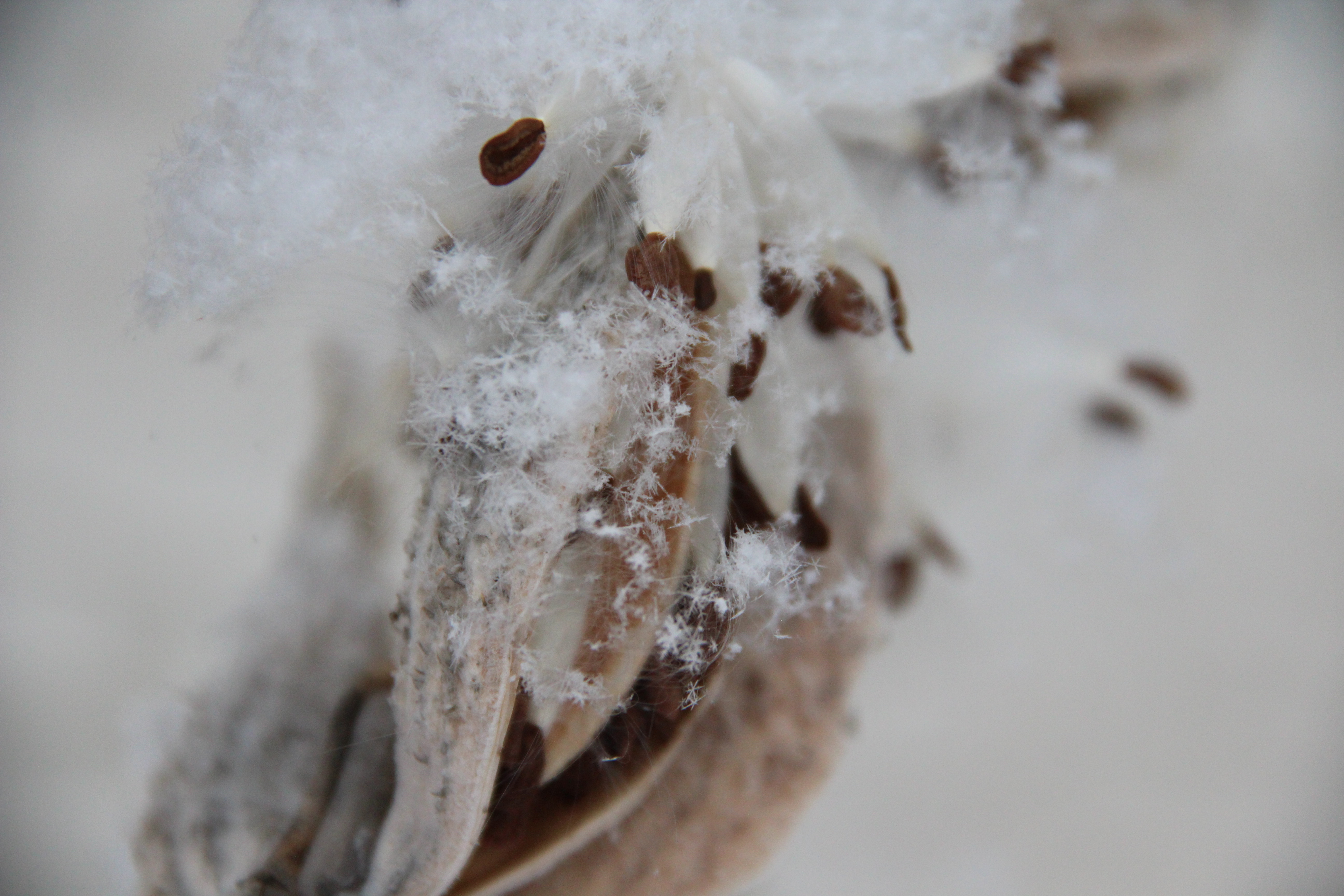
Star-like snow crystals add beauty to common milkweed (Asclepia syriaca) in early March

Star-like snow crystals add beauty to common milkweed (Asclepia syriaca).

Soft, wet snow falls in early March. White blankets the garden and lawn, outlines tree limbs in frosty ice, and meltwater gurgles in downspouts.  It’s a peaceful scene — and what’s most beautiful to my eye is the common milkweed in our garden.  All winter long, north winds shook the dead, dry stalks and tugged at the pods until the seeds ballooned into the wind on their silky parachutes. A few seeds float free each day, but most still ride the breeze tethered to their pods.  Minute feathery snow crystals etch the silken strands like starry sequins on nature’s beautiful gown.

milkweedwholeThough the stalks are tattered, rough and hollow, soon spring-green shoots will pop through the soil to grow new plants and nourish bees, butterflies and hummingbirds. But for today, I’ll enjoy the crystal-covered seeds and the snowy scene knowing it will soon give way to spring’s warmth.ballerinaseeds2

Late-Autumn Insects

Last week, the coming winter teased us with snow flurries mixed in with the rain. But, during the first week of November, the temperature rebounded to the 70s. The breeze is gentle, the afternoon sun is hot and a few insects are active in some sun-warmed patches of our backyard.

On the garden’s last purple coneflower, a yellow-green, spotted beetle, similar to a ladybug at first glance, nibbles on the coneflower’s center.  It is a spotted cucumber beetle (Diabrotica undecimpunctata).  And, though it’s a garden pest, it won’t survive the Minnesota winter, so I let it stay. It looks beautiful on the deep magenta bloom.

Spotted Cucumber Beetle

Spotted cucumber beetle (Diabrotica undecimpunctata) on a purple coneflower.

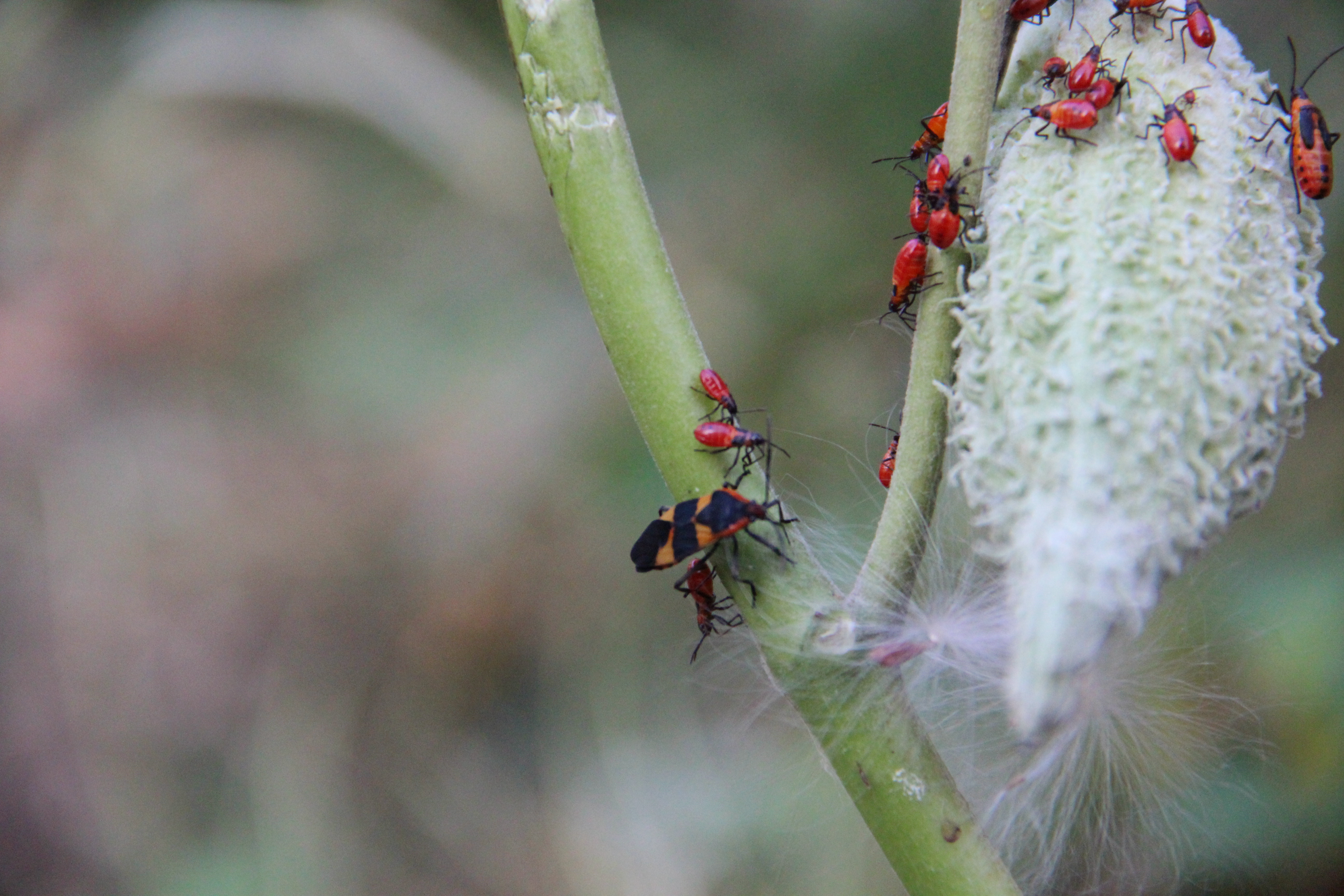
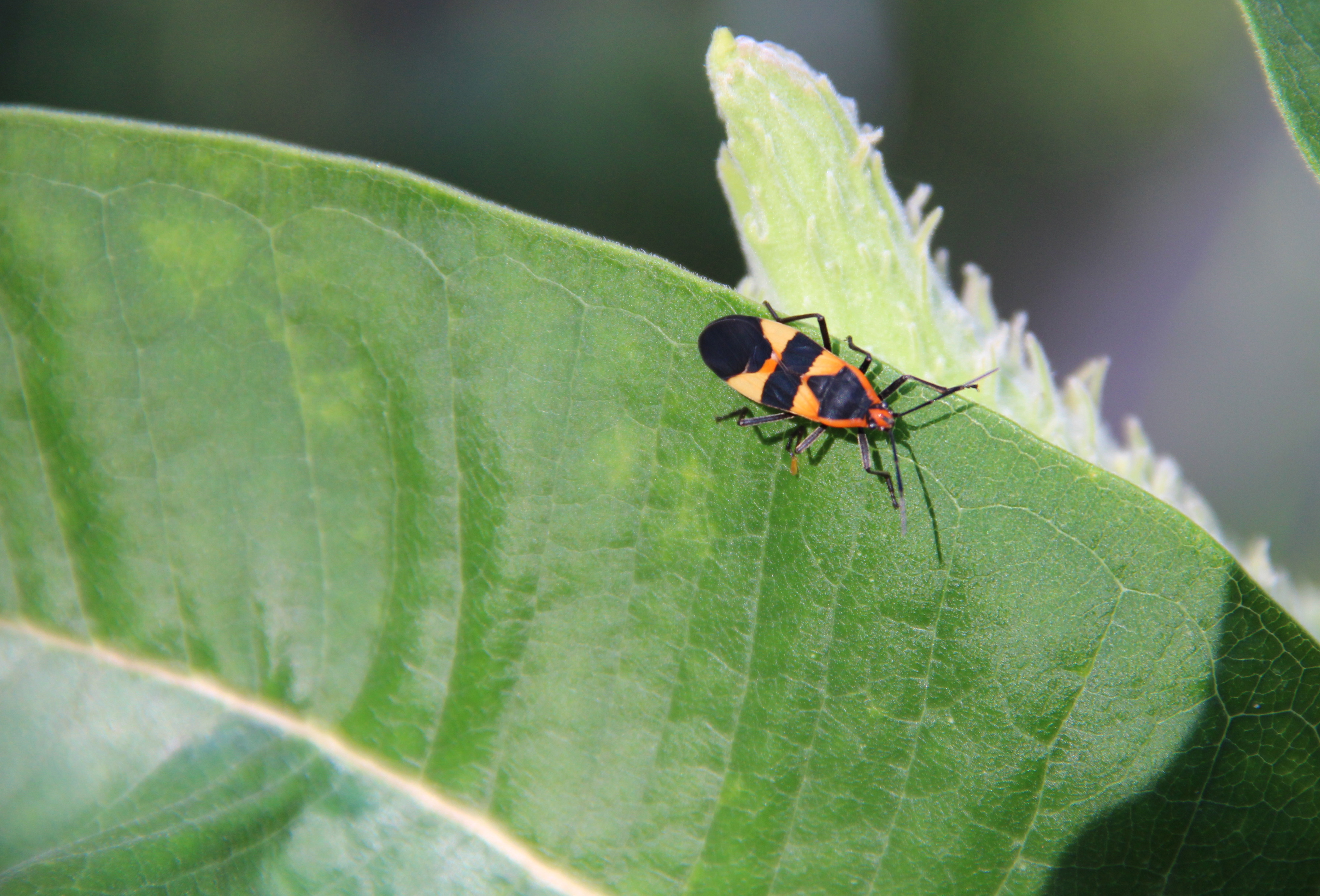
Across the yard in another sunny spot, bright red insects huddle together on a common milkweed pod. They include three different developmental stages, or instars, of the same insect, the large milkweed bug, (Oncopeltus fasciatus).  They use a tubelike mouth to inject digestive enzymes into the pod and then suck out the partially digested plant material.  Because they eat milkweed, they have the same toxicity found in monarchs and other insects that dine on the plant.  When I first noticed them a few weeks ago, I thought they were red aphids until I spotted an adult on the pod.  Over time, they began to grow larger, develop black markings, and become darker red.  Like the spotted cucumber beetle mentioned above, the large milkweed bug is migratory and those still here won’t survive our northern winter.

Early instars of Large Milkweed Bug

Early developmental instars of large milkweed bug (Oncopeltus fasciatus).

Large milkweed bug in developmental stages.

Large milkweed bug in several developmental stages on a common milkweed pod.

The orange shells of Asian lady beetles (Harmonia Axyridis) glow where they’ve settled on the sun-warmed brick of our house and on a few hardy garden plants.  Unlike the insects mentioned above, these beetles survive the Minnesota winter.  They were introduced into the southern United States in the mid-1900s to help control agricultural pests and first appeared in Minnesota in the 1990s, according to University of Minnesota records.  To some people they’re pests because the beetles often find a way inside in the autumn. But, they also eat aphids found on trees, in gardens and on agricultural crops.  The easiest way to distinguish Asian lady beetles from native species is by an “M” or “W” mark (depending on the viewing angle) on the thorax between the head and abdomen.  (More about Asian and native ladybird beetles in another post.)

Asian lady beetle on goldenrod.

Asian lady beetle (Harmonia Axyridis) on goldenrod.

Asian lady beetle on 'Henry Kelsey' rose.

Asian lady beetle on ‘Henry Kelsey’ rose.

Glimpses of a Mid-October Afternoon

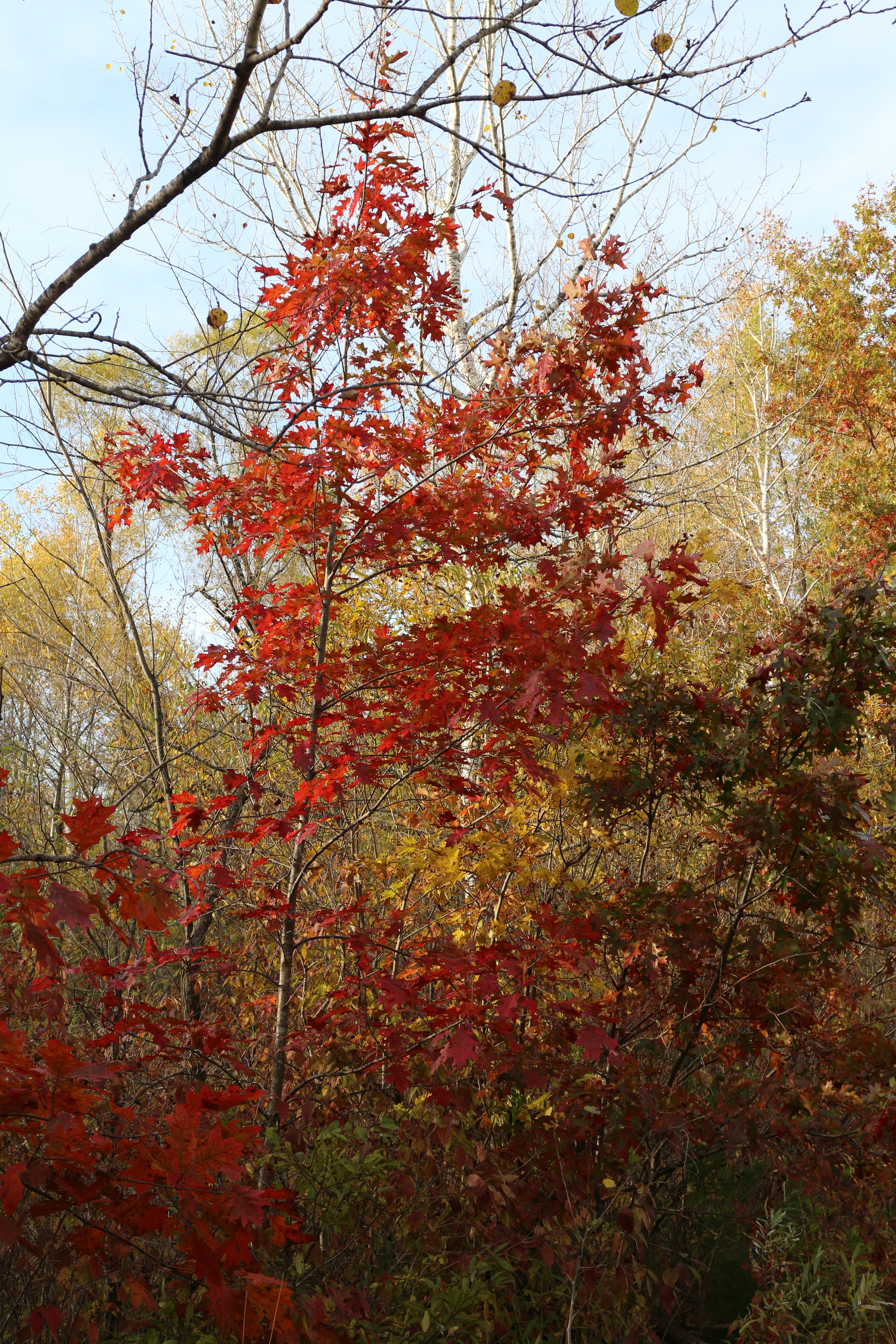
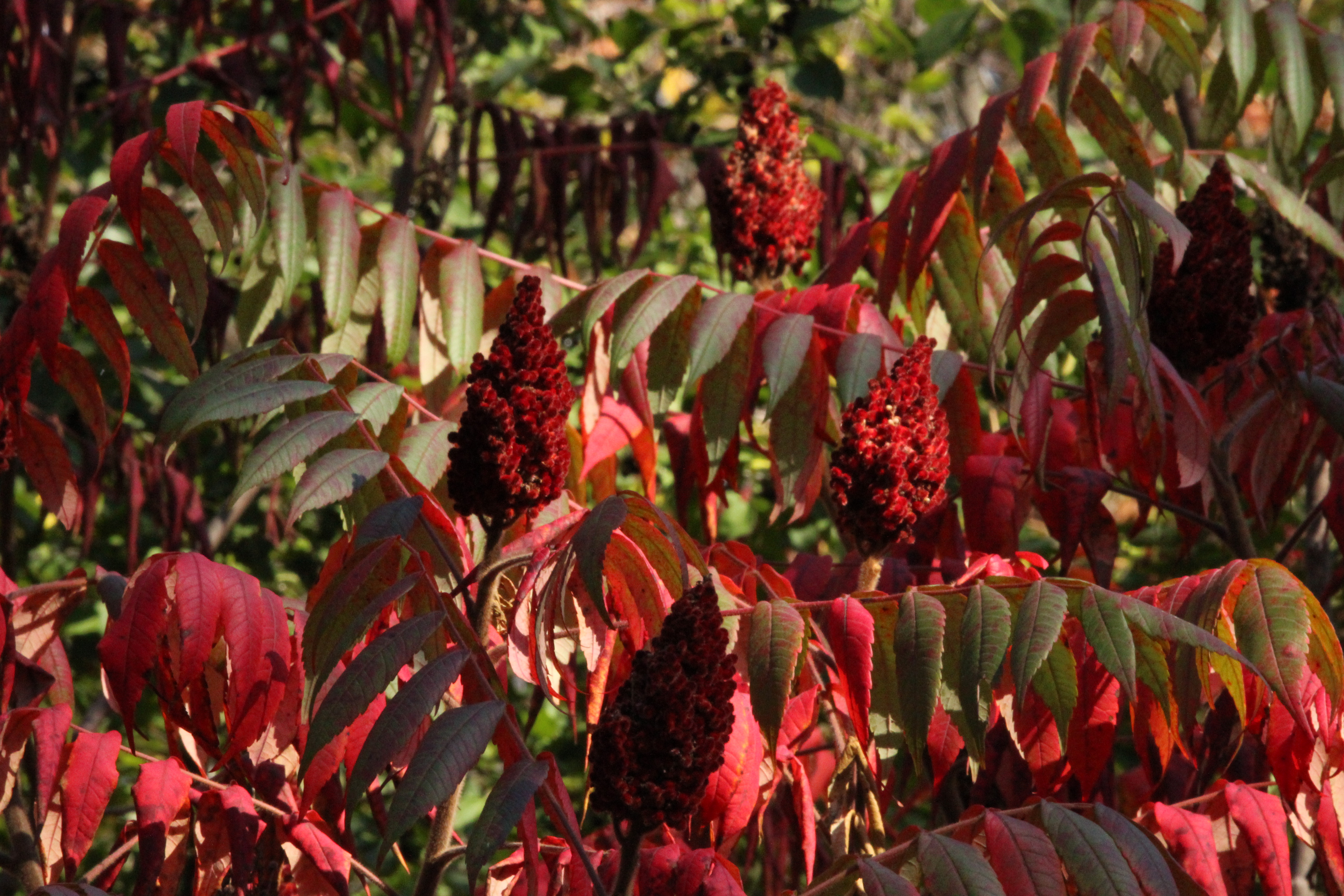
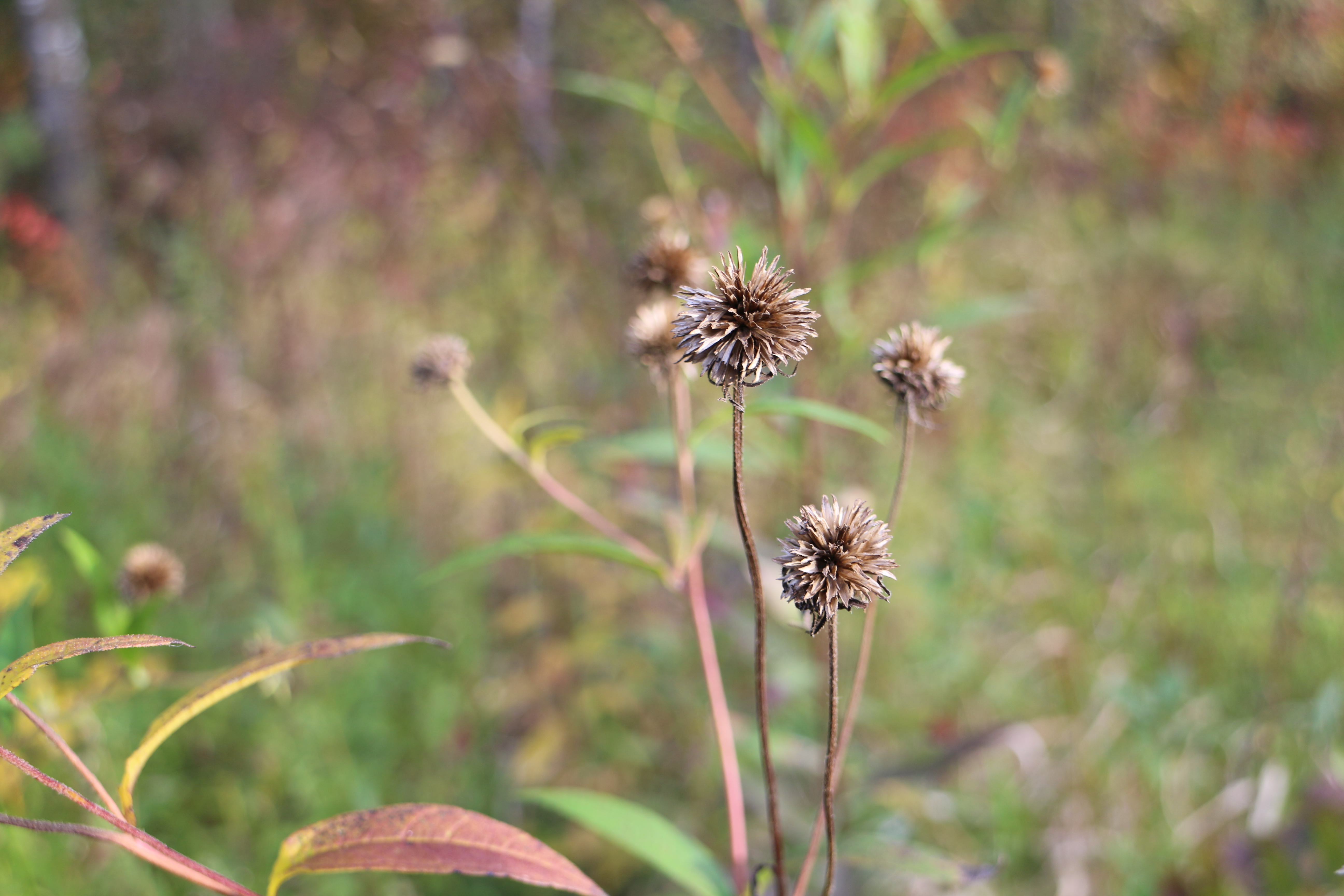
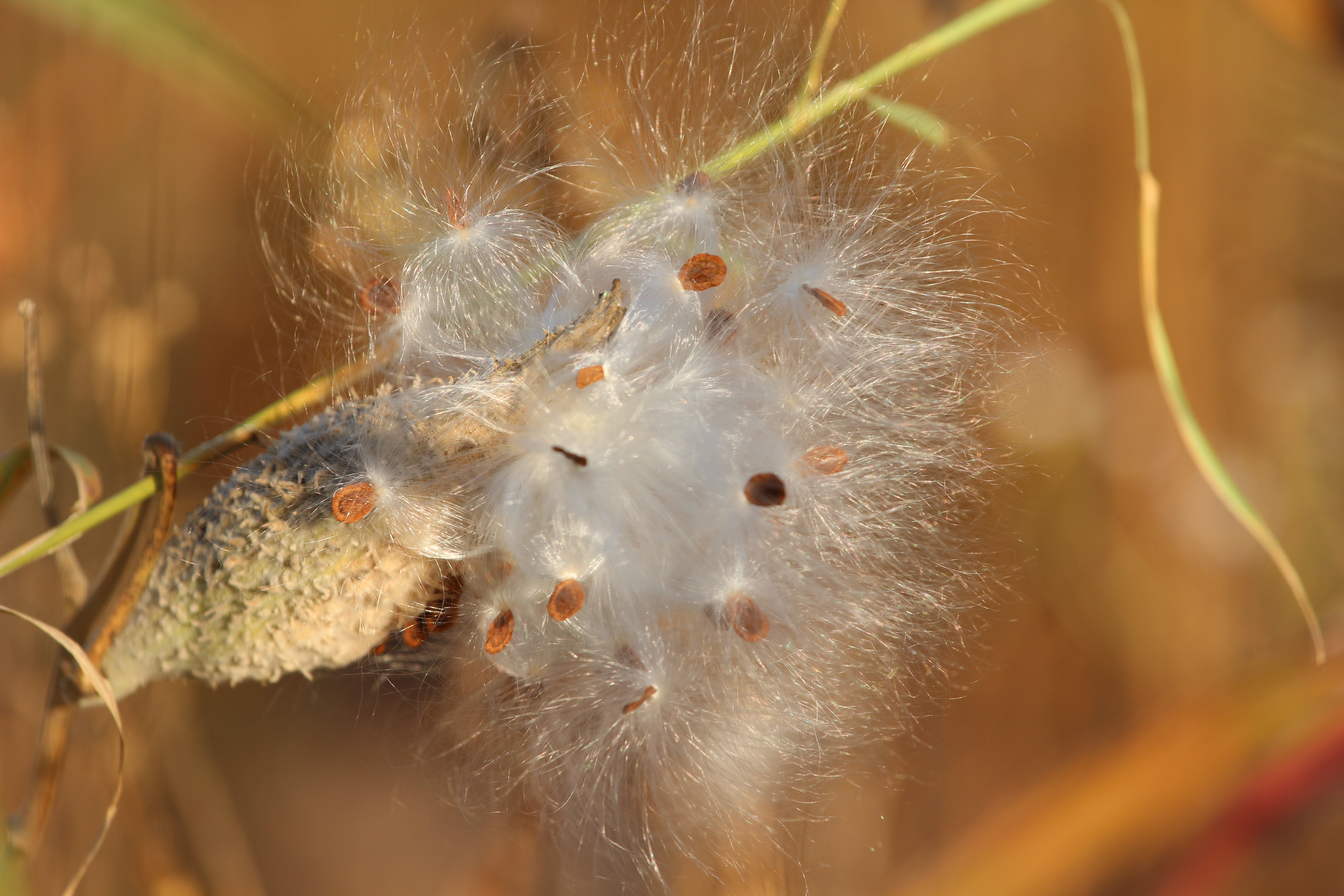
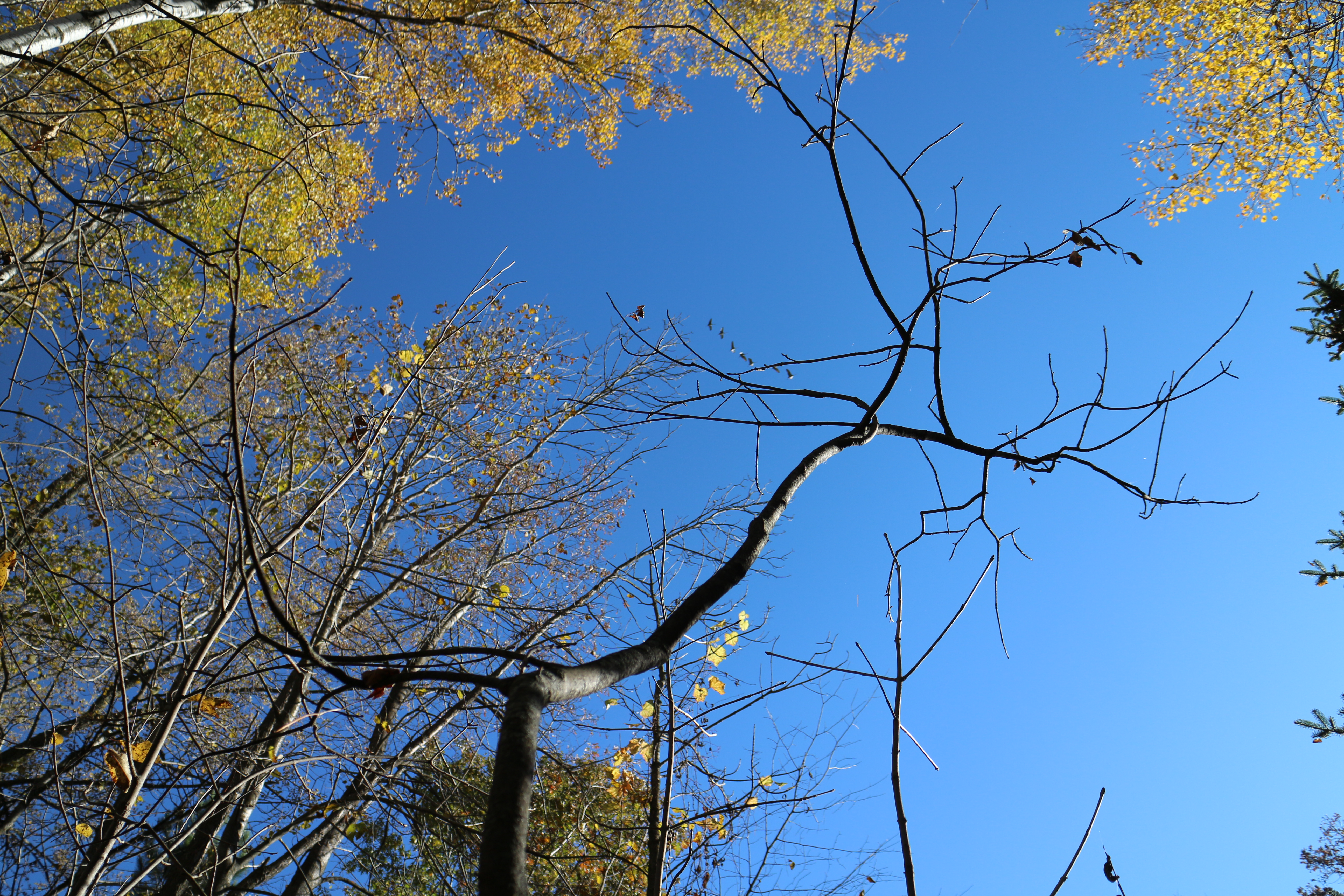
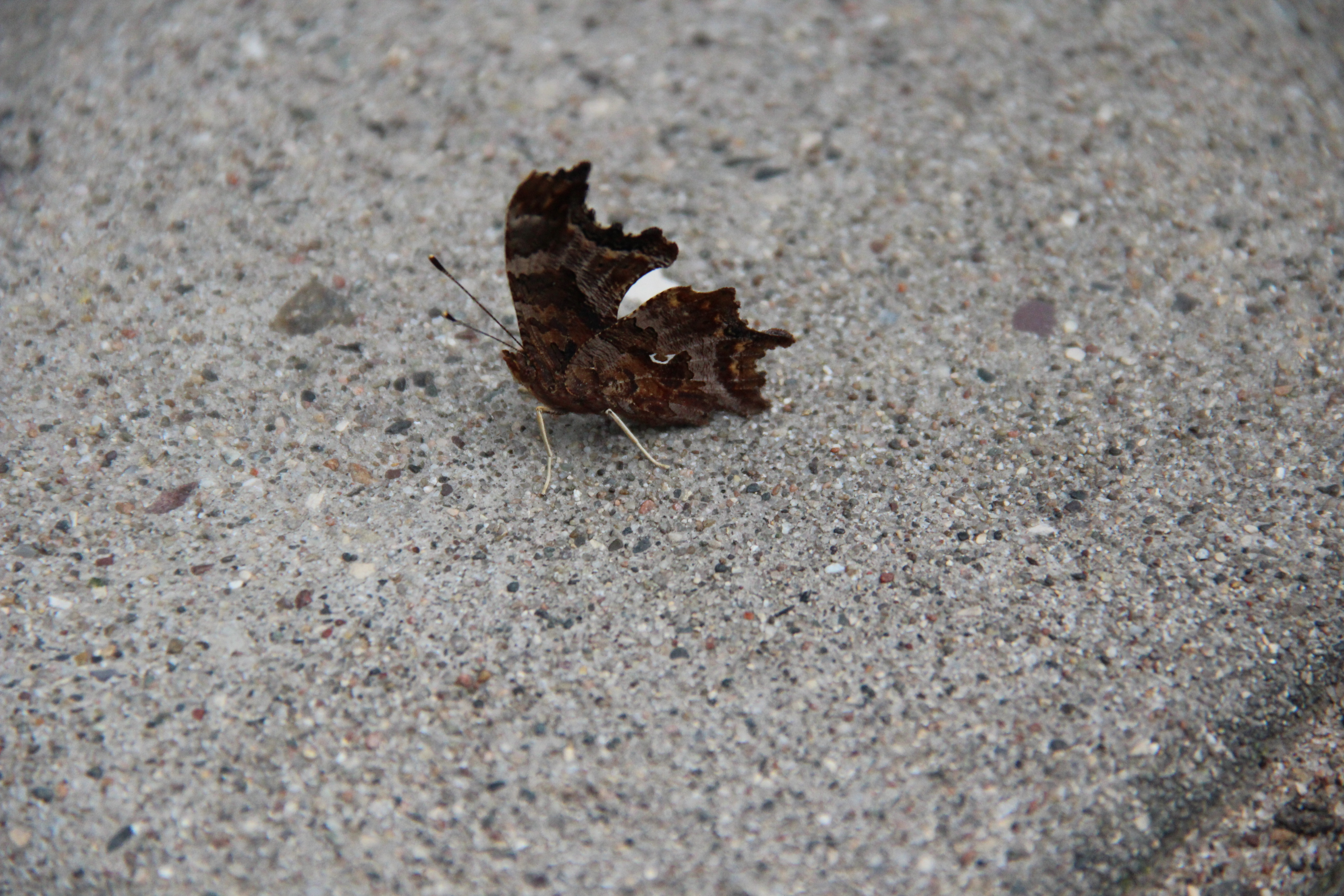
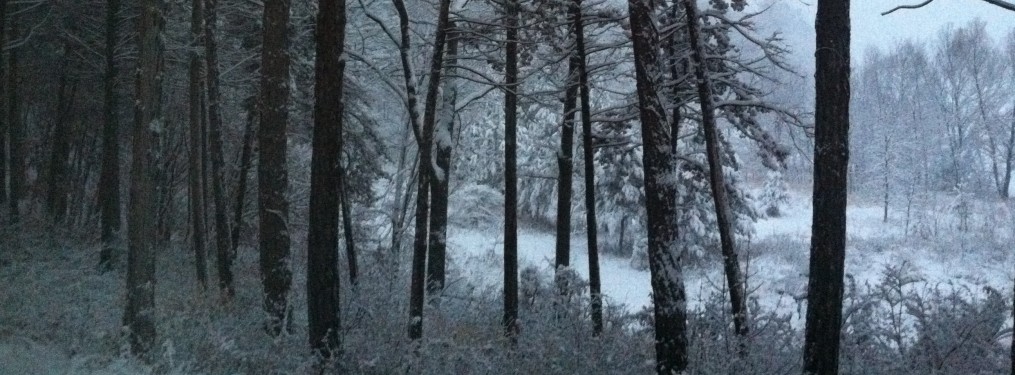
The breeze feels like August; warm, close, comforting. But the sun and the landscape reveal the day’s true identity: mid-October. Deep red, maroon, cranberry, orange and yellow leaves replace the myriad greens of summer. A few tattered wildflowers remain, but most have given way to sharp, sturdy seed heads in shades of brown and cream.  Thick, warty milkweed pods crack open and set free their silky seeds.  The woods are much quieter now without thrushes, warblers, orioles and so many other nesting birds to sing their courtship songs.  A few chickadees, kinglets, nuthatches and woodpeckers call in the trees and thickets, and small groups of Sandhill cranes bugle overhead as they fly between fields.  On the bank of the Snake River in Pine County, MN, a brown morph leopard frog rests in the long grass, and a few wood ducks splash and take flight as I approach.  Chipmunks scold each other as they scramble to collect and store red acorns for their winter stash. Most insects have disappeared for the season, but an eastern comma butterfly suns itself, ladybugs swarm looking for a place to wait out the winter, and hardy bumble bees seek the few remaining wildflowers. During the coming winter, I’ll hold close these memories of the sun’s gentle warmth and the glowing landscape.

American hazelnuts, October

golden october

Red oak, October

Sumac, October

Seedheads, October

American hornbeam seeds, October

Common milkweed seeds, October

chick oct2

Bugling cranes, October

Tattered bloom, October

Late bumbler on aster, October

Asian ladybird beetle, October

Eastern comma, October

Toadstool, October

Leopard Frog, October

chipfor tom

October road

2015 Monarch Journey South

Coppery orange and black monarch butterflies glow against the warm, late summer sun.  Monarch migration to Mexico is underway in the northern United States.  According to monarchwatch.org’s peak migration chart, at 45° latitude the greatest number of monarchs will migrate between August 29 and September 10.  In St. Paul, Minnesota, I’ve primarily seen the butterflies floating beneath trees in backyards and along the streets.  A few rest in our garden and nectar on garden phlox, goldenrod, snakeroot, Japanese anemones, black-eyed Susan’s and Joe-Pye weed, which appears to be their favorite.

Monarch resting on white snakeroot (Ageratina altissima)

A male monarch suns itself on white snakeroot (Ageratina altissima)

Monarch resting on one of more than 40 species of goldenrod (Solidago) native to Minnesstota.

A monarch rests on one of more than 40 species of goldenrod (Solidago) native to Minnesota.

A monarch drinks nectar from sweet Joe-Pye weed.

A female monarch drinks nectar from sweet Joe-Pye weed (Eutrochium dubium).

Will this year’s migration numbers be higher or lower than 2014’s?  It’s easy to help scientists track the data by contributing your own monarch migration observations.  Visit learner.org’s Fall 2015 Migration Report Page and complete the short information form for monarchs.  Or, if you’re just interested in how 2015 fall migration is progressing, you can check out the latest information on their Fall 2015 Maps and Sightings page.

Rainy Evening Gift

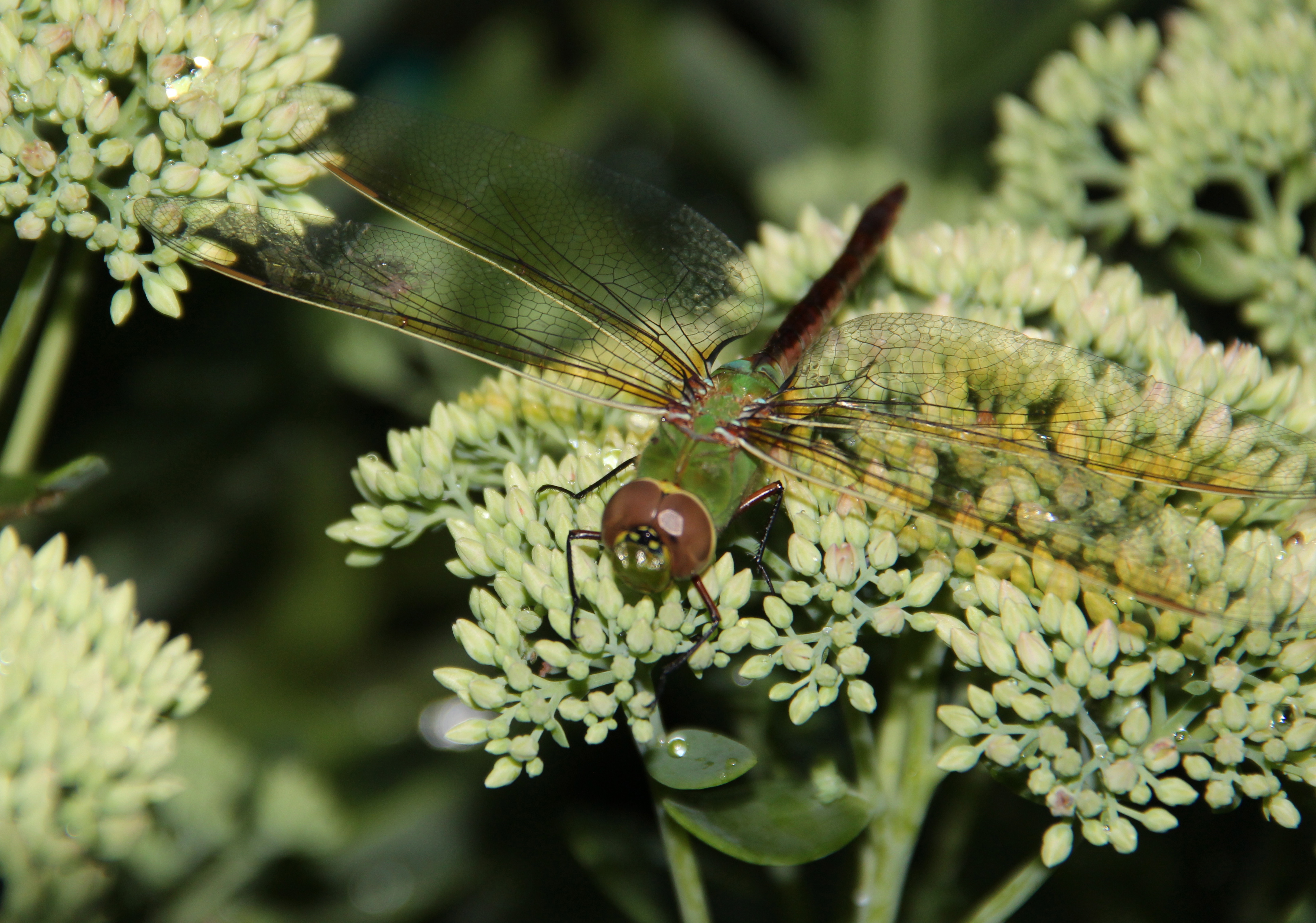
The backyard was lush and green after the week’s heavy rain. The air felt chilly and damp as I picked up windfalls from our beacon apple tree.  Soaked, bedraggled bumble bees and long-horned bees clung to Joe-Pye blossoms and the undersides of leaves.  Only a few crickets chirped in the unusually cool August evening air.  As I reached into the garden to pull some weeds, I felt a fluttering against my fingers and heard the slightest rustle of wings.  Barely grasping my fingertips was a beautiful green dragonfly —a common green darner.  Its aqua-green thorax and dark maroon abdomen hinted that it was probably a female or juvenile.  I thought it was injured, or perhaps dying. Gently, I held my hand next to some sedum plants.  The dragonfly struggled onto the flower buds and I left it for the night.

Common Green Darner (Anax Junius).

Common Green Darner (Anax junius).

greendarner2a

In the morning, the green darner was gone.  I found no scattered wings or chitin, no other remains in the garden to indicate that it had been eaten. I believe that the sun’s warmth revived it.  Since then, I’ve glimpsed a large dragonfly zooming over the garden on several different days; perhaps it is the same one. I hope that it lives to make the long migration flight south to the Gulf Cost in September.


Variety in an Urban Milkweed Patch

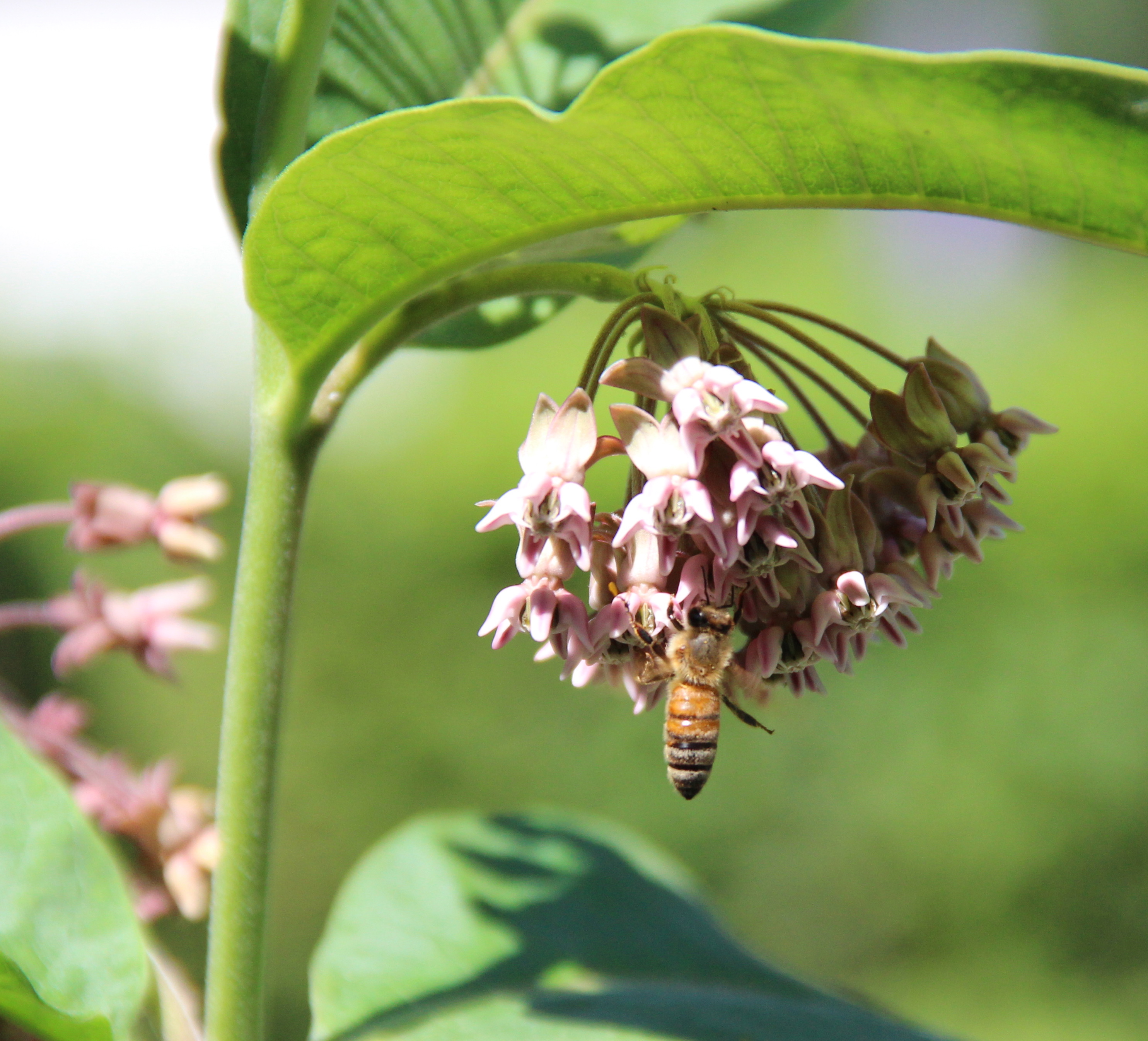
Most of us learned about the special relationship between monarch butterflies and milkweed plants when we were young children — and just about anytime I look in our garden, monarchs sail among the milkweed.  Females lay eggs on the underside of leaves and monarchs of both genders sip the plant’s sweet nectar.  But milkweed isn’t just for monarchs!  It also provides a place for many other creatures:  A few that are immune to its toxicity eat it; others drink its nectar, depend on it for reproduction, watch for a meal, or simply rest. Here’s a sampling of critters living in our backyard milkweed in early August.  What’s in your milkweed patch??

The adult red milkweed beetle (Tertaopes tetrophthalmus) eats milkweed leaves, buds and flowers.

The adult red milkweed beetle (Tetraopes tetrophthalmus) eats milkweed leaves, buds and flowers. Its larvae eat the plant’s roots.

The Large Milkweed Bug (Oncopeltus fasciatus) eats the seed pods, stems and leaves of milkweed.

The Large Milkweed Bug (Oncopeltus fasciatus) eats the seed pods, stems and leaves of milkweed.

A hover fly or flower fly (Syrphidae).

A hover fly or flower fly (Syrphidae).


An eastern yellowjacket (Vespula maculifrons).

An eastern yellowjacket (Vespula maculifrons) hunts for small insect pests to eat.

A honey bee (Apis millifera).

Honey bees (Apis millifera) favor the sweet milkweed nectar.

Bumble bees (Bombus) of several different species are attracted to milkweed blossoms.

Bumble bees (Bombus) of several different species are attracted to milkweed blossoms.

Red admiral butterflies (Vanessa atalanta) are attracted to the milkweed's nectar.

A red admiral butterfly (Vanessa atalanta) sips milkweed nectar.

I never tire of seeing monarchs (Danaus plexipus) nectar on milkweed blossoms.

I never tire of seeing monarchs (Danaus plexippus) nectar on milkweed blossoms.

Insects aren't the only critters to favor milkweed nectar. Ruby-throated hummingbirds (Archilochus colubris) frequently drink it, too. Insects aren't the only critters to favor milkweed nectar. Ruby-throated hummingbirds (Archilochus colubris) frequently drink it, too.

Insects aren’t the only critters to favor milkweed nectar. Ruby-throated hummingbirds (Archilochus colubris) frequently drink it, too.