May Snow

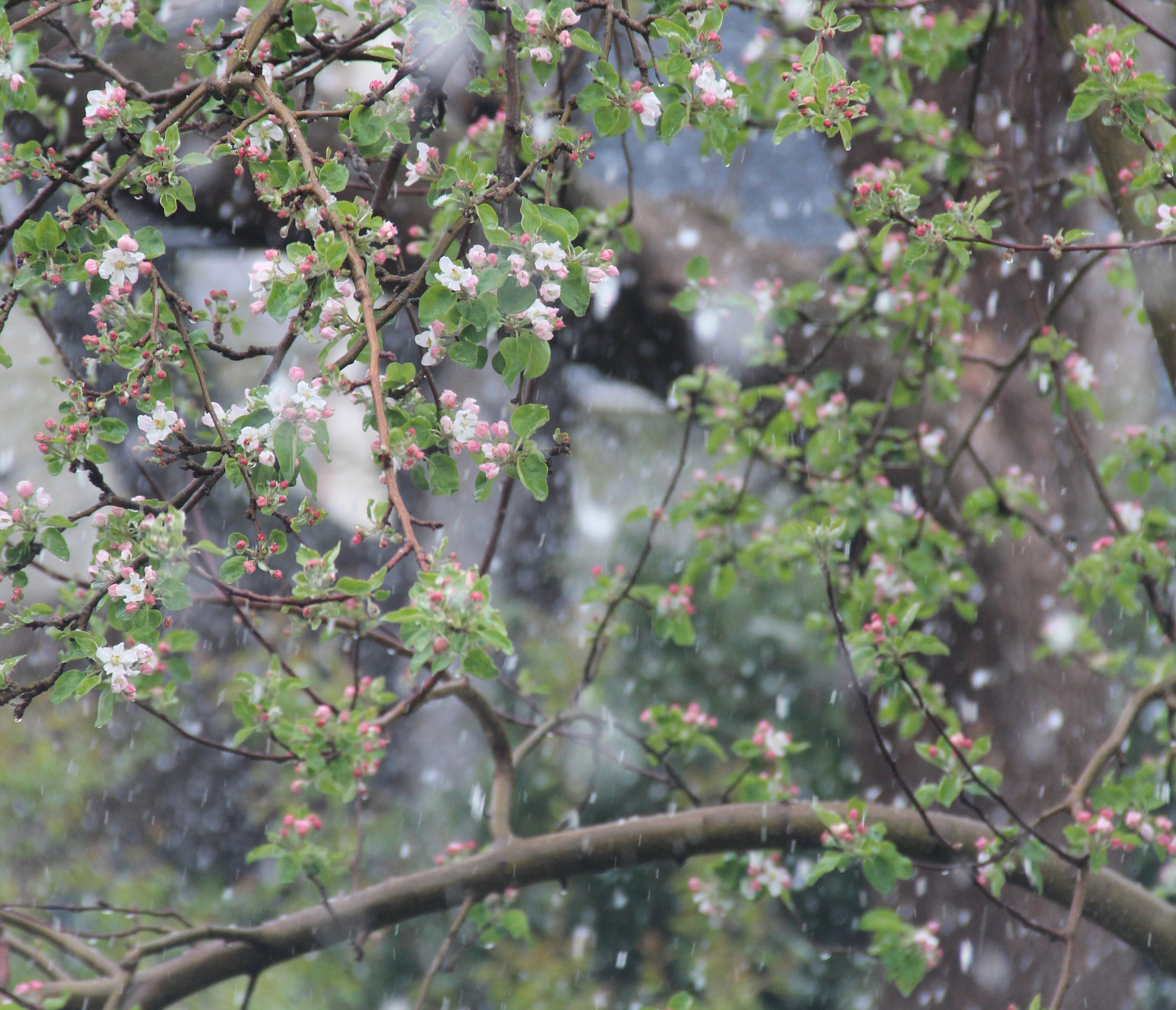
Heavy, wet snowflakes mix with apple blossoms on the first day of May in Saint Paul, MN.

It was a good rain, light-to-steady over several hours, the kind that soaks deeply into the soil and awakens late-sleeping perennials in the spring. Mid-afternoon, though the calendar showed May 1st, big, heavy snowflakes fell like icy polka dots. The blend of apple blossoms and sloppy, wet snow was a sly reminder that, in spite of increasing warmth and longer days, winter is never truly far away from those who live in the north!

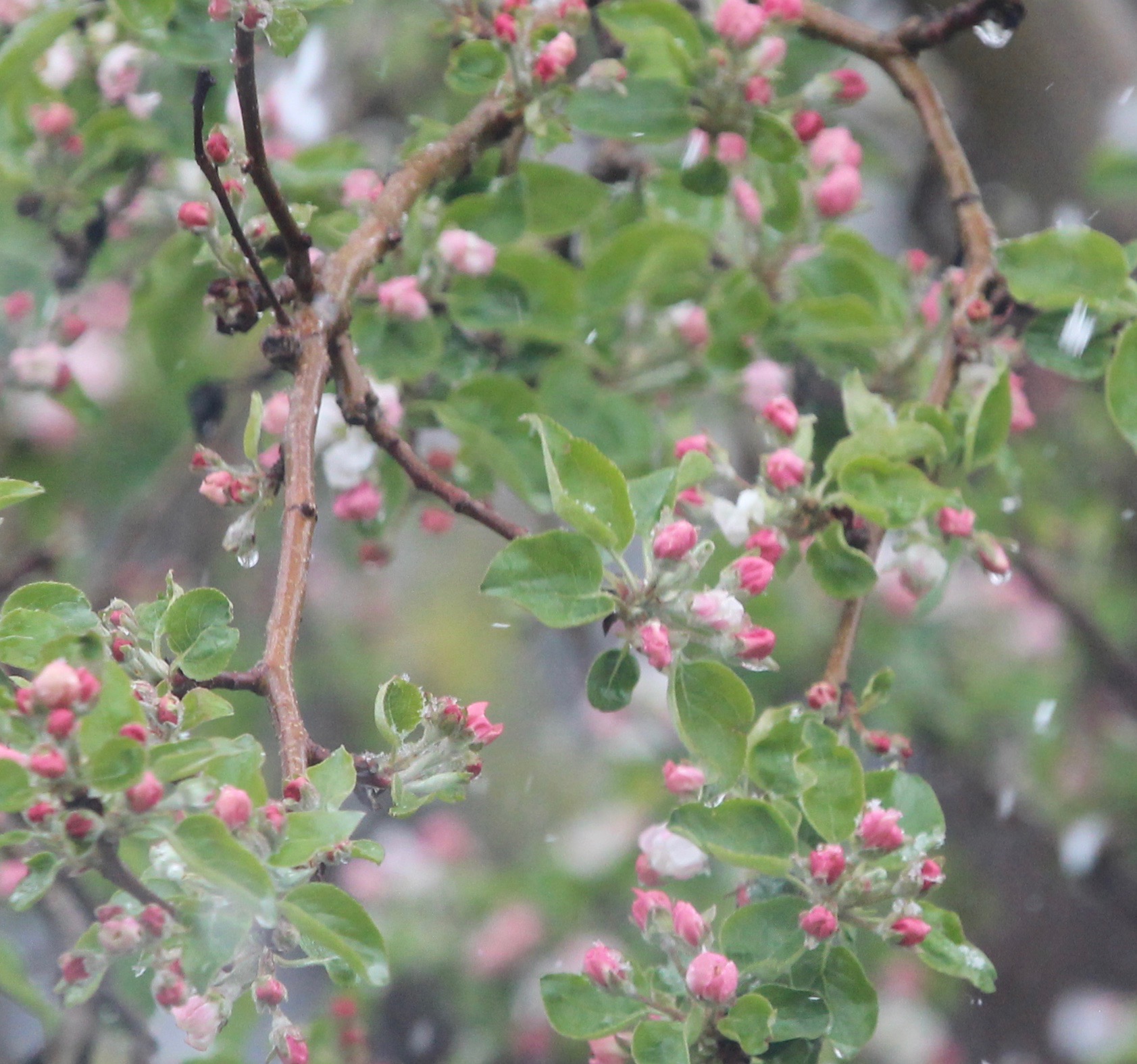
The snow didn’t injure the blossoms of this more than 70-year-old Beacon apple tree, a hardy tree bred for Minnesota springs.

Winter Trees

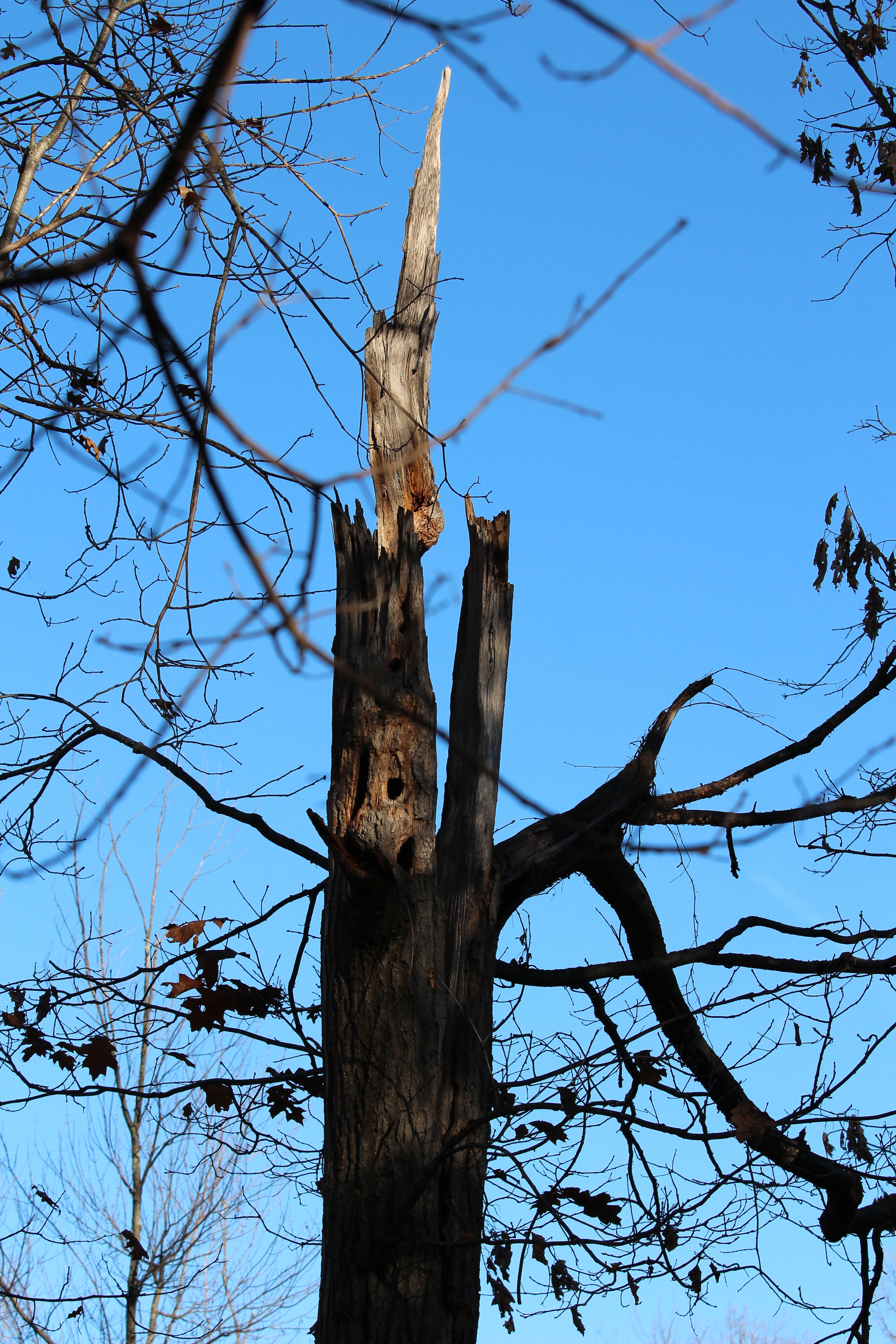
A weathered old northern red oak (still living) has been a home to many birds and other animals.

A weathered old northern red oak (Quercus rubra) is home to many species of birds and other animals.

A tree’s beauty is easily noticed in three seasons: Spring’s first green haze of buds; summer’s rustling crown of leaves; and autumn’s smoldering colors. Winter uncovers a different kind of beauty: that of bark, interesting shapes, animal shelters and open sky — the guts of things not often seen.

A small stand of northern red oak, at our cabin along the Snake River in Pine County, MN, includes a tree that was sheared off in a summer windstorm two decades ago. Neighboring branches hide the jagged top most of the year, but in winter the scarred wood’s polished grain and shape are revealed, along with hidden nesting cavities. Squirrels, great-crested flycatchers, red-bellied woodpeckers and most recently, pileated woodpeckers have nested and raised their young in this red oak.

Crabapple trees (Malus) provide food for many birds and add winter color.

Crabapple trees (Malus) provide food for many birds and add winter color.

Crabapple trees, especially those with long-lasting fruit, add warm crimson to the stark black and white landscape. Their small shapes and curving branches remind me of bonsai trees. By late spring, most of the plump fruit will be consumed by cedar waxwings and robins.
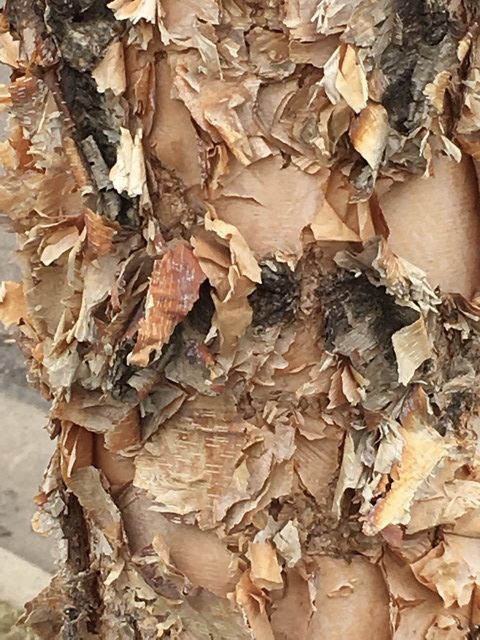
The bark of river birch (Betula nigra) is multicolored and has a shredded texture.

The bark of river birch (Betula nigra) is multicolored and has a shredded texture.

Bark patterns and colors are more pronounced in winter with fewer distractions from the rest of the plant world. One of my favorites is the papery bark of the river birch. The colors range from soft brown to salmon, pink and ivory. The bark shreds and flutters in the wind. Paper birch bark (Betula papyrifera) is pretty too, especially at sunrise and sunset when low rays add blush to the tips of twigs and branches.
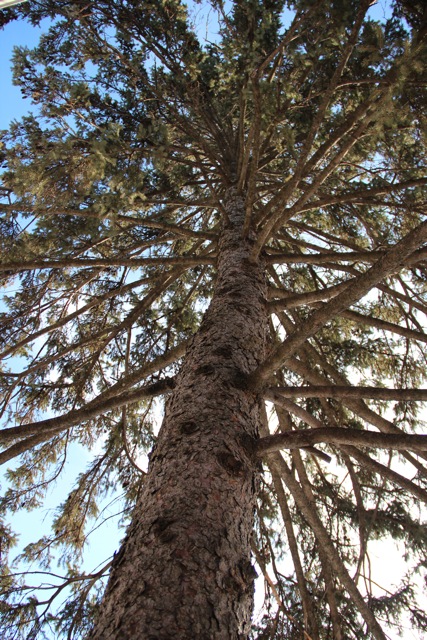
White spruce (Picea glauca) and other evergreens shelter many creatures.

White spruce (Picea glauca) and other evergreens shelter many creatures.

The white spruce has grayish-red bark with a rough mosaic-like texture. Its evergreen branches shelter cardinals, kinglets, juncos and chickadees. At the end of winter, new burgundy cones appear, like tiny ornaments, on the tips of branches.

New cones form on a white spruce.

New cones form on a white spruce.

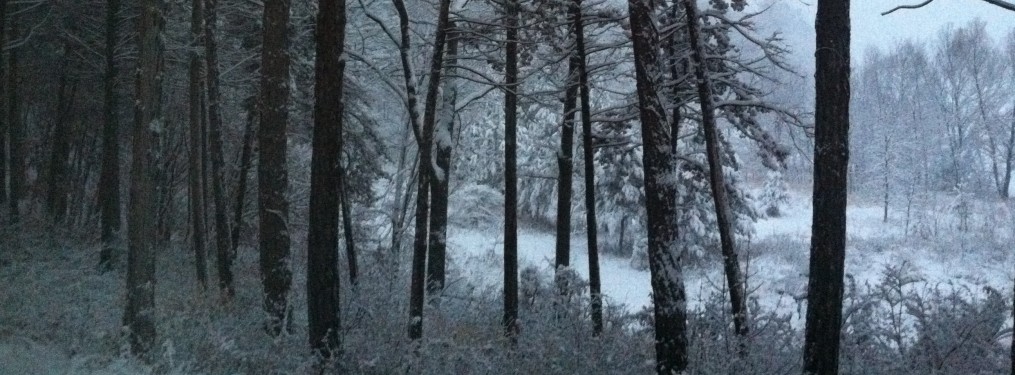
Winter trees reveal the hidden face of nature — textures, hues, patterns weathered and worn — and more open sky to view the moon, stars and urban sunsets; beauty to the eye that looks carefully. What do you see?
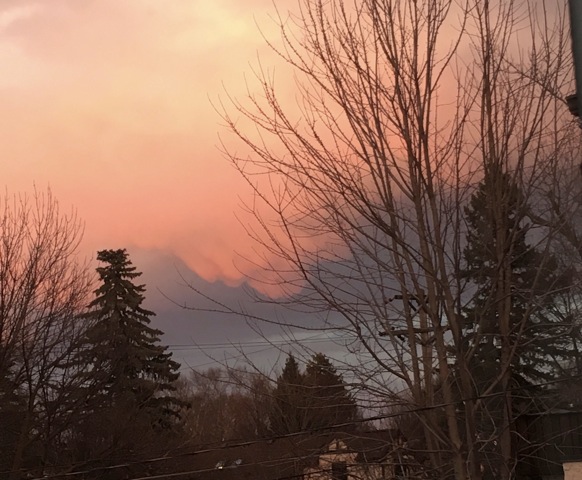
Winter sunset over Saint Paul, MN, on Feb. 22, 2017.
Winter sunset over Saint Paul, MN, on Feb. 22, 2017.
 

The Ancient Ginkgo Tree

Pollution and disease-resistant ginkgo trees are planted as boulevard trees in St. Paul, MN.

Pollution and disease-resistant ginkgo trees are planted as boulevard trees in St. Paul, MN.

In mid-November when most trees are bare, a ginkgo tree lit by the sun is a golden sight. Until last Friday’s heavy rain, wind and snow, the ginkgoes were beautiful this year. Ginkgoes (Ginkgo biloba) are also called maidenhair trees because their leaves resemble those of the maidenhair fern. The leaves remind me of delicate Asian fans — cool green in summer, and in autumn, bright yellow mellowing to a deep gold.

I saw my first ginkgo on a beautiful fall day in the late 1970s on the campus of St. Catherine University in St. Paul, Minn. I’d not heard of a ginkgo and never guessed that an ancient tree native to China would become a common boulevard tree in the Twin Cities. Ginkgoes do well in USDA plant hardiness zones 3-8, and many are planted in urban areas because they tolerate air pollution and the corrosive de-icing salt used on streets in northern winters.

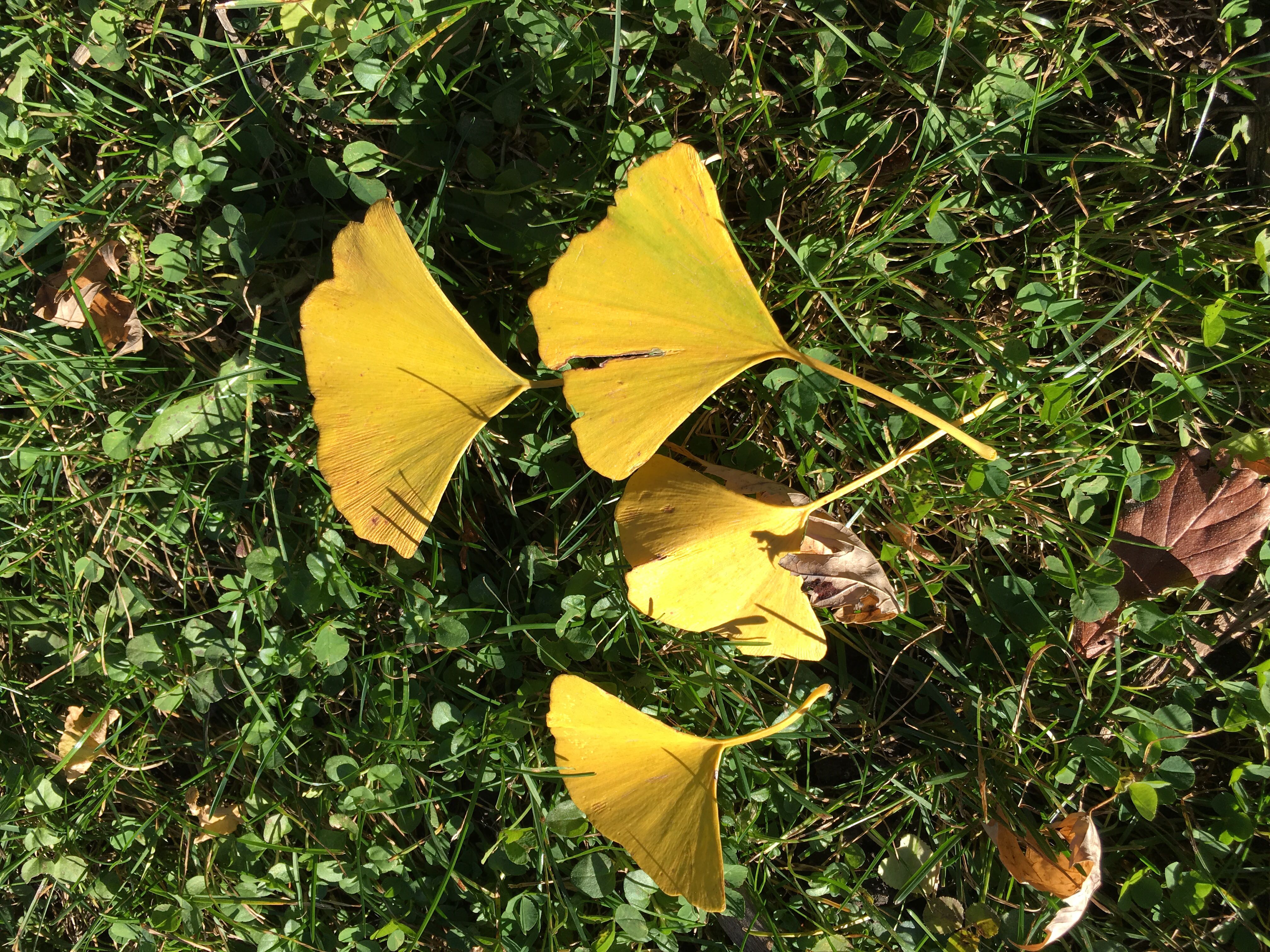
The ginkgoes' beautiful leaves remind me of Asian hand fans.

The ginkgo’s beautiful leaves remind me of Asian hand fans.

The word ginkgo means “silver fruit” or “silver apricot.” Fossils of ginkgo trees precede dinosaurs, dating back 270 million years to the Jurassic period. They lived with such creatures as dragonflies, trilobites, many types of reptiles, and such plants as mosses and conifers. In comparison, the oldest fossilized maples are about 100 million years old, and trees similar to modern oaks arose nearly 35 million years ago. Like other ancient plants, ginkgoes are non-flowering.  They reproduce similarly to ferns and algae. The male tree produces a pollen cone and the female tree a flowerless ovule. Each pollen grain contains two motile sperm. When the pollen grains reach the ovule, a tiny droplet of liquid must be present for the sperm to swim to and fertilize the ovule to produce the seed.

The oldest living ginkgo in China is thought to be more than 3,500 years old. A testament to the species’ resilience is its survival of Earth’s many climatic changes deadly to other organisms. In modern times, six ginkgoes survived the atomic bombing of Hiroshima, Japan. Temples and other buildings were destroyed. The ginkgoes were damaged and burned, but leafed out the following year and are still alive today about .6 miles from the impact site.

Ginkgo leaves change from bright yellow to deep gold as they age.

Ginkgo leaves change from bright yellow to deep gold as they age.

So, with their beauty, long life, strength and stamina, what’s not to like about ginkgoes? Unfortunately, the outer coat of the ginkgo seed reeks. When the seeds drop from the trees and are crushed on the sidewalk and street, they create a terrible stench – some compare it to the odor of rancid butter or vomit. Only the female tree produces seeds, so city planners and residents often plant male trees. However, if the male tree was grafted to female rootstock, the mature tree sometimes produces seeds. In China and Japan, the seeds are peeled and used in many types of cuisine. Enjoy the beautiful ginkgo, but don’t walk through the messy, malodorous seeds!

November Honey Bee

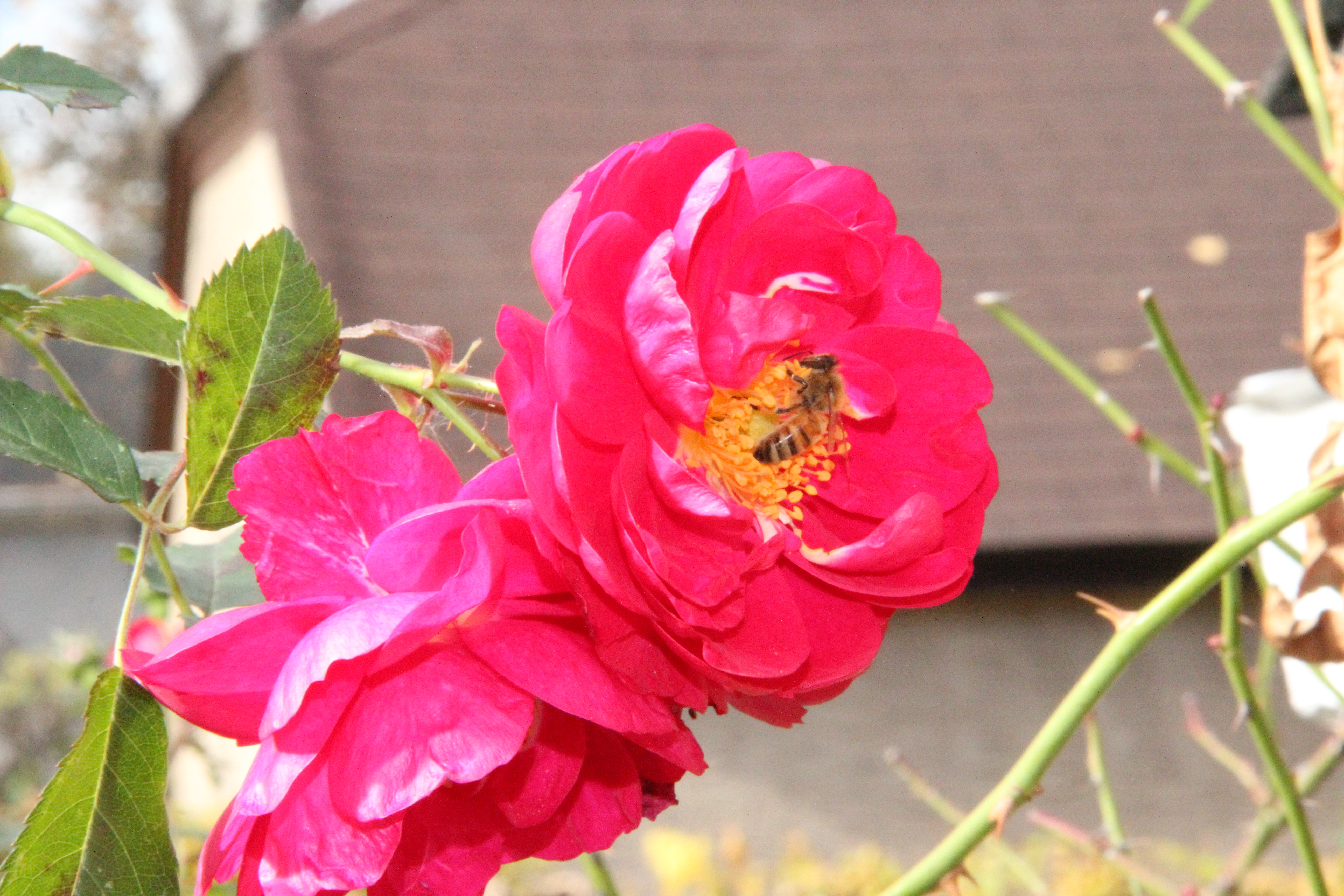
A honey bee visits a 'Henry Kelsey' rose in early November.

A honey bee visits a ‘Henry Kelsey’ rose in early November.

Under the gentle, midday sun, I walked through scads of scarlet maple, golden aspen and lemon-colored apple leaves that dot our cleaned up garden. I heard a steady buzzing and followed it to a group of buds and blossoms on the climbing rose that grows on our garage. Among the roses floated a single honey bee (Apis mellifera), as leisurely as if it had been a sultry August afternoon, instead of early November. The golden bee rolled in the pollen of each rose before heading skyward.

I miss my small garden so much during the winter. Seeing and hearing that tiny creature brought me great joy — the simple beauty of bee and blossom, the presence of life in the November garden, and a wonderful image to remember when winter inevitably arrives.

Most bees that inhabit Minnesota die in late autumn, but honey bee colonies overwinter. This year’s long, frost-free autumn gives them extra time to fortify their hives for winter. To find out more about how honey bees survive the long northern winter, visit:
What Happens to Honey Bees in the Winter?
Do Honey Bees Fly South for the Winter?

Metallic Green Bees

A metallic green bee (agapostemon) drinks nectar from a Helenium flower.

A metallic green bee (Agapostemon) drinks nectar from a Helenium flower.

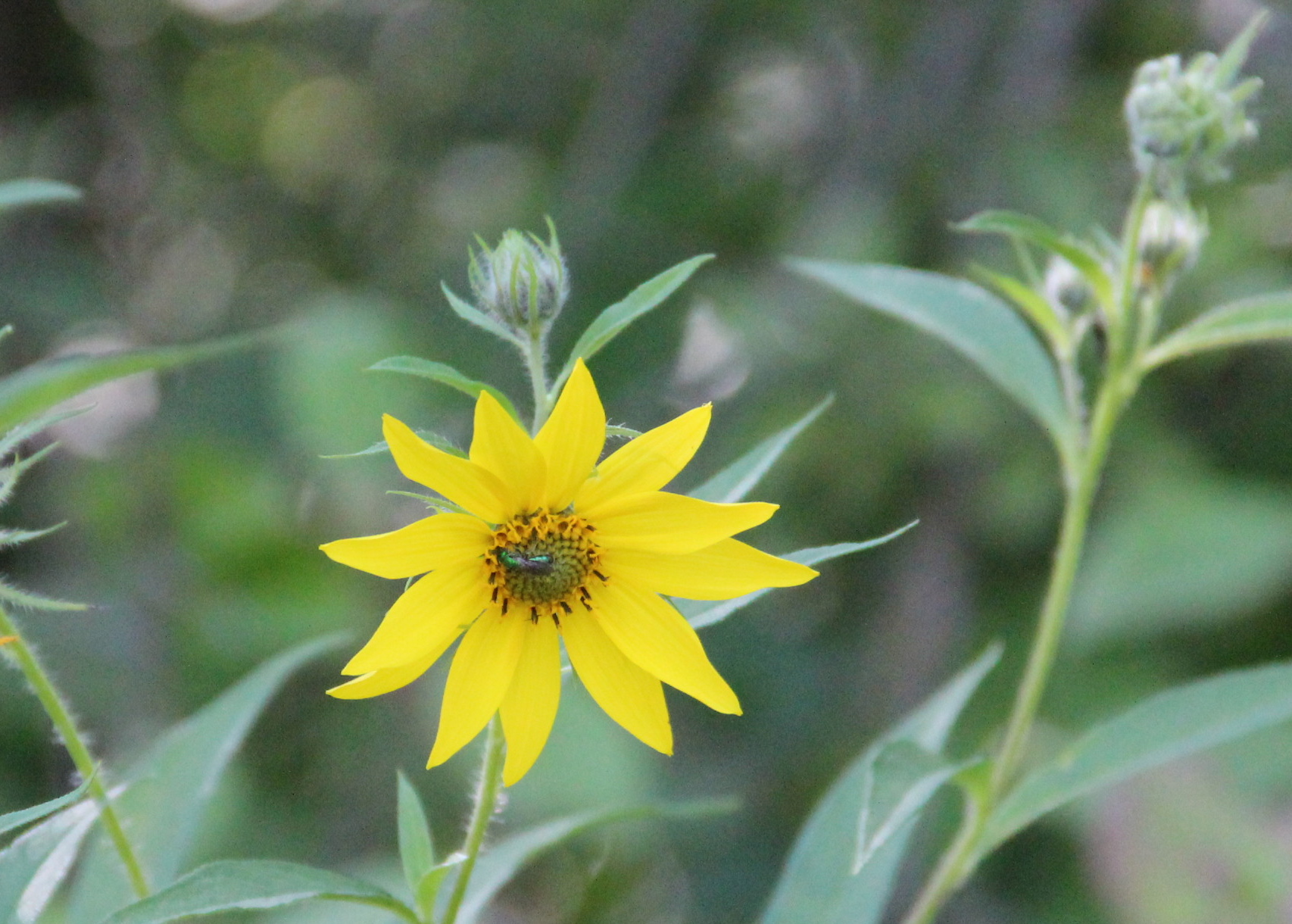
A female green metallic bee searches for nectar in a woodland sunflower.

A female metallic green bee searches for nectar in a Jerusalem Artichoke (Helianthus tuberosus L.).

Bees of many kinds visit our backyard garden on sunny autumn afternoons — and not all are black and yellow!  I think one of the prettiest is the metallic green bee, which is a type of tiny sweat bee in the (family Halictidae).  The female bee’s body is usually a beautiful iridescent green.  The male bee has a bright green head and thorax, but in contrast to the female, he sports a vibrantly striped abdomen — black with yellow or white stripes.

Native asters are a favorite of metallic green bees.

Native heath asters (Symphyotrichum ericoides) are a favorite of metallic green bees.

Metallic green bees, typically just a few eighths of an inch in size, are small in comparison to many backyard bees, such as bumble bees and honey bees.  They are short-tongued bees, so they prefer to drink nectar from flowers that have a more shallow, open structure. In our yard they prefer Helenium and asters.

Unlike colonial bees that live in hives, each adult female green bee creates her own underground nesting chamber in which she lays her eggs. Sometimes, several females construct individual nests near each other, but they remain solitary.

When cold weather arrives in late October, the male green bees die. Fertilized females survive because they form a layer of insulating fat and burrow into the ground to overwinter. Next spring, they will lay eggs in new underground nests and continue the life cycle. Most years, green bees should be visiting your garden by the end of April.

A green bee catches the warmth of the late afternoon sun.

A male green bee catches the warmth of the late afternoon sun on an aster (Symphyotrichum novi-belgii).


The Dove’s Call

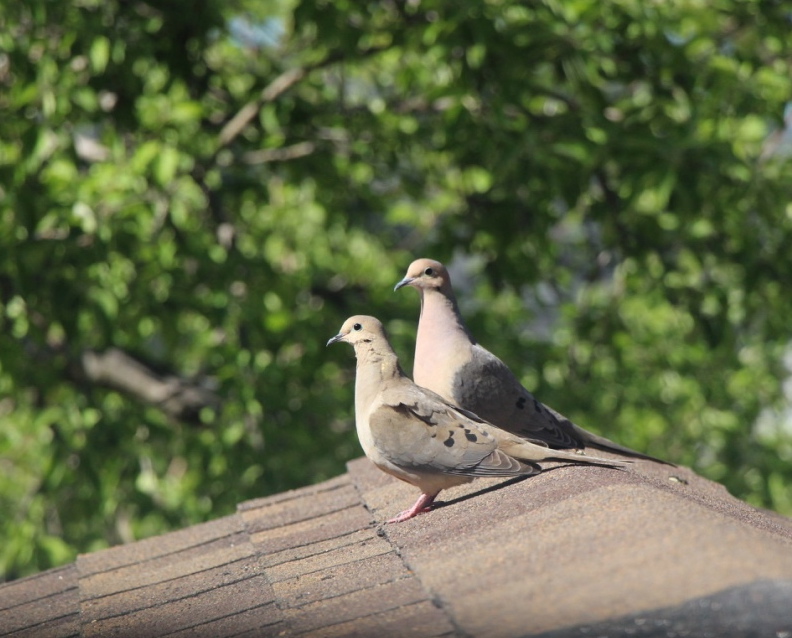
A mated pair of doves rest on the roof in the late afternoon sun.

A mated pair of mourning doves rests on a roof in the late afternoon sun.

The mourning dove’s (Zenaida macroura) call is a wild, haunting sound that complements the whistle of its wings. In mid-August, doves coo softly in the cool of early morning and in the sultry late-afternoon heat.

People react quite differently to the mourning dove’s call. A work colleague who grew up on a farm found the cooing to be so sad that her family removed any nests that were close to their farmhouse.

To our young son, who was born with a bilateral sensorineural hearing loss, discovering a dove’s sounds was a time of wonder. We returned home from work and daycare, one spring evening, and startled a dove in the backyard. The forceful whistle of its wings as it flew skyward was one of the first sounds he heard with his new hearing aids. He also loved their sweet call; if the doves quieted, he would spot one on the roof and say to it, “Don’t be shy little dove. Will you sing for me again, please?”

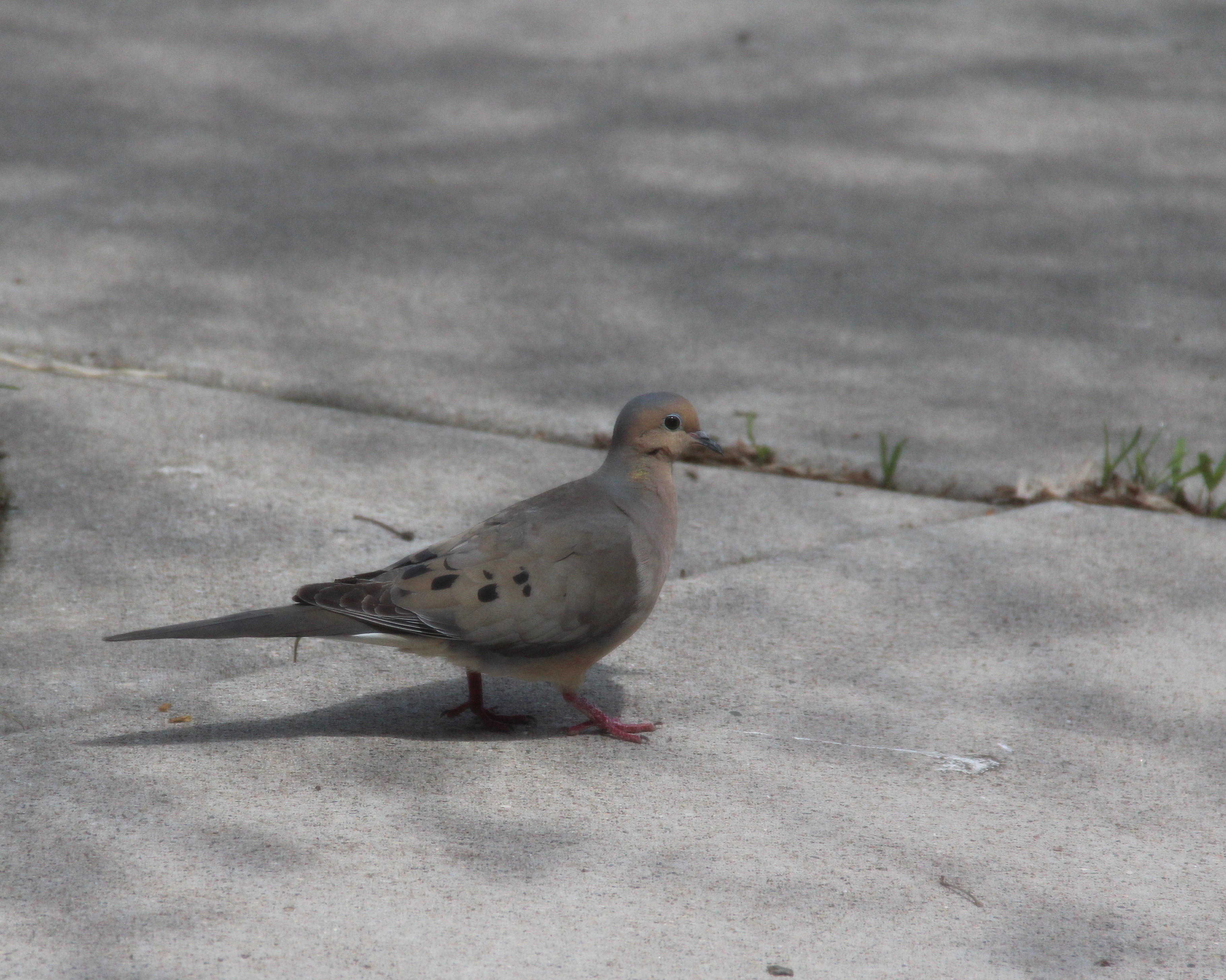
Mourning doves are warm buff to soft gray in color with black speckles on the wings.

Mourning doves are warm buff to soft gray in color with black speckles on their wings.

I love the mourning dove’s call; I find it soothing and relaxing. It brings memories of steamy summer afternoons when I was growing up. We’d imitate their calls and try to spot them in the majestic elms that shaded Saint Paul’s streets. To find a dove’s nest woven in the boughs of a small spruce tree was pure delight. How innocent they looked with their large, dark eyes and bespeckled wings, nestled on a clutch of bright white eggs. How excited we were to experience this tiny bit of nature so close to home.

Garden Damsels and Dragons

A thread-slender eastern forktail (Ishnura verticalis) damsel fly.

A thread-slender eastern forktail (Ischnura verticalis) damsel fly.

The early morning garden is a place of shadows and peace. Cardinals, goldfinches, mourning doves and house wrens ring out their song in neighborhood trees. Already, bumblebees work the flowers — bluebells, bee balm, hyssop and milkweed — buzzing softly.  Almost camouflaged in the deep green shadows, a tiny damselfly perches atop a milkweed leaf. An eastern forktail (Ischnura verticalis), its slender body, less than an inch long, is mint green, blue and black. The wings are folded over its back in damselfly style.

Across the backyard, a much larger dragonfly relative hangs from the edge of a hosta leaf, wings held away from its body horizontally. It is a green darner (Anax junius), one of the largest dragonflies in the world at three inches in length and with a wingspan of more than four inches. Its spring-green head and thorax hide it among the hosta. It “wing-whirs”, or rapidly vibrates its wings to warm up its flight muscles — and that movement catches my eye and reveals its presence.

A common green darner (Anax junius) is one of the largest dragonflies.

A common green darner (Anax junius) is one of the largest surviving dragonflies.

Damselflies and dragonflies are members of the order Odonata, which means “toothed ones”. Unlike the peaceable bumblebees, they are fierce predators, hunting for small insects in the garden and eating many pests. Odonata are descended from some of Earth’s most ancient creatures. Fossils of ancient dragonfly ancestors (Protodonata) date back 325 million years. Scientists believe that bees evolved more recently — about 120 million years ago; the oldest bee fossil discovered so far is about 100 million years old. Both insect families contribute to a healthy garden.


Common Snowdrops

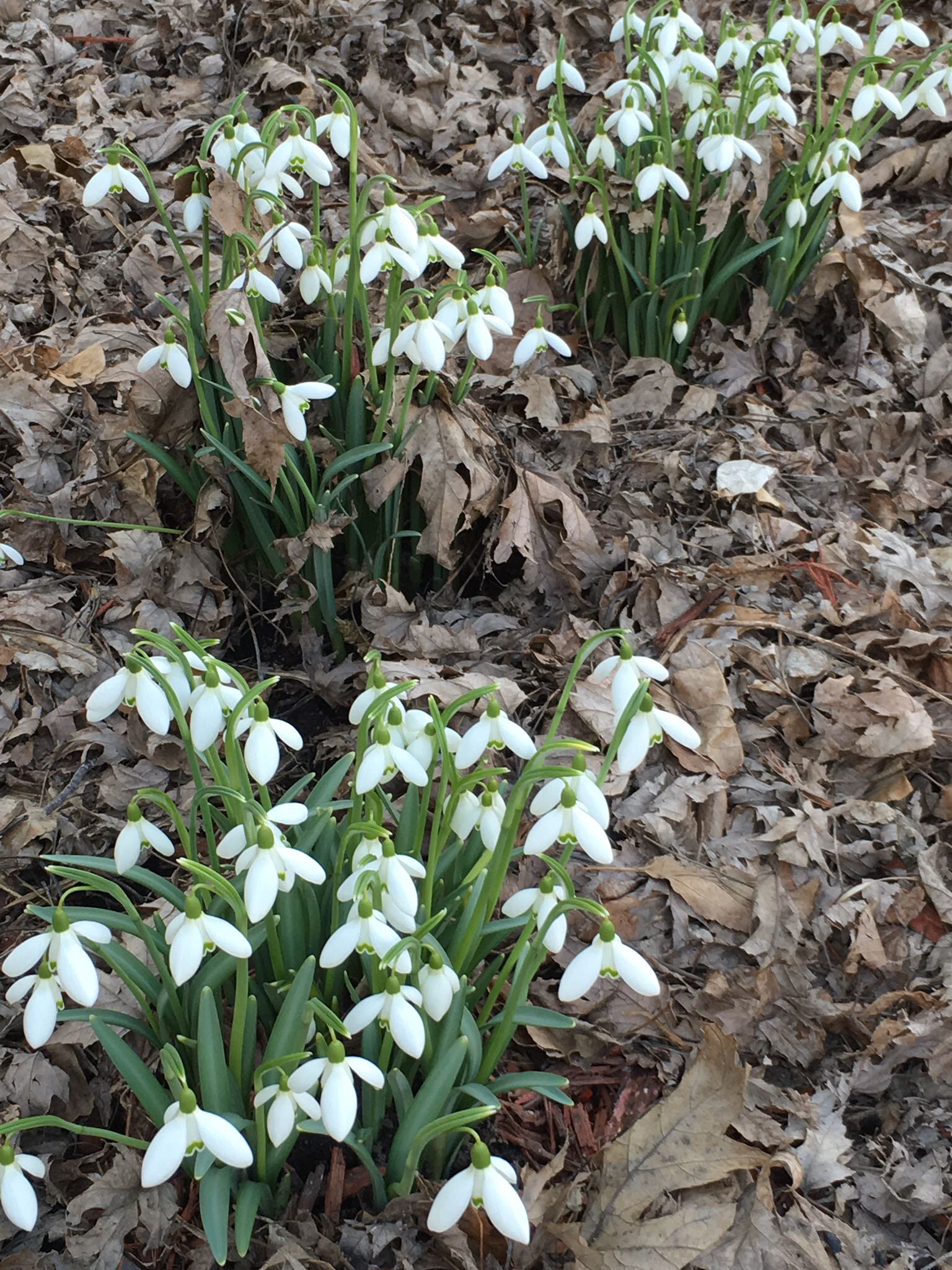
Snowdrops (Galanthus nivalis) often bloom in the snow, but this year the snow melted weeks ago.

Snowdrops (Galanthus nivalis) often bloom in the snow, but this year the snow melted weeks ago.

Every spring I hunt for some fresh green glowing against the snow-covered or brown landscape, depending on the year. Patches of moss, which often remain green under the snow, are refreshing, but the first snowdrops that push through the soil and bloom speak of the awakening earth.  Last Saturday, a sunny, warm afternoon when cardinals sang and a pair of great-horned owls hooted softly to each other, I found a lovely patch of snowdrops blooming in my sister, Theresa’s, shade garden.

Common snowdrops have three white outer tepals and three smaller inner tepals that are white and green.

Common snowdrop blossoms have three white outer tepals and three smaller inner tepals that are white and green.

Snowdrops are small bulbs that grow and bloom right through the snow.  This year’s early warmth melted the snow, so the tiny flowers stand out in contrast to autumn’s brown leaves that still cover the soil. The Latin name, Galanthus nivalis, roughly translates as “snowy milk flower.” Sources that I read say that the name refers to the blossoms looking like drops of snow or milk.  Snowdrops are native to Europe and will grow reliably in USDA zones 3 – 7.

Early Spring Serenade

A male northern cardinal (Cardinalis cardinalis) sings from his springtime perch .

A male northern cardinal (Cardinalis cardinalis) sings from his springtime perch.

I like the silence of frosty mornings, but I also miss the music of birds during the winter. Most mornings for the past three weeks, our resident cardinal has greeted the sunrise — cloudy or clear — with song. At first he sang one short burst of bright song. Over the next week, it grew to several minutes of song at dawn and another round later in the morning. Basking in Tuesday’s sunshine and 70°, he sang many times during the day. Later that same day, a mourning dove cooed in a spruce tree, chickadees added their lovely two-note calls, and an American robin joined the serenade with its caroling. However, all went silent when a Cooper’s hawk sailed across the backyard and into my neighbor’s silver maple!

Why do birds sing more frequently in the spring? There’s still much to learn, but the thinking is that the increase in daylight triggers a bird’s thyroid-stimulating hormone (TSH). TSH steps up the production of sex hormones to prepare birds for the mating season. A big part of successful reproduction is attracting a mate and maintaining a breeding territory — birdsong plays a major role in both activities.

The four songsters mentioned above were year-round residents in the Twin Cities this past winter.  Soon migrants, such as warblers, red-winged blackbirds, catbirds and others will return to add their harmony to the chorus. In fact, I saw my first red-winged blackbird of the season perched on a cattail in a small pond yesterday. Regardless of its purpose, the return of beautiful birdsong is one of spring’s finest gifts.

Late-Winter Beauty

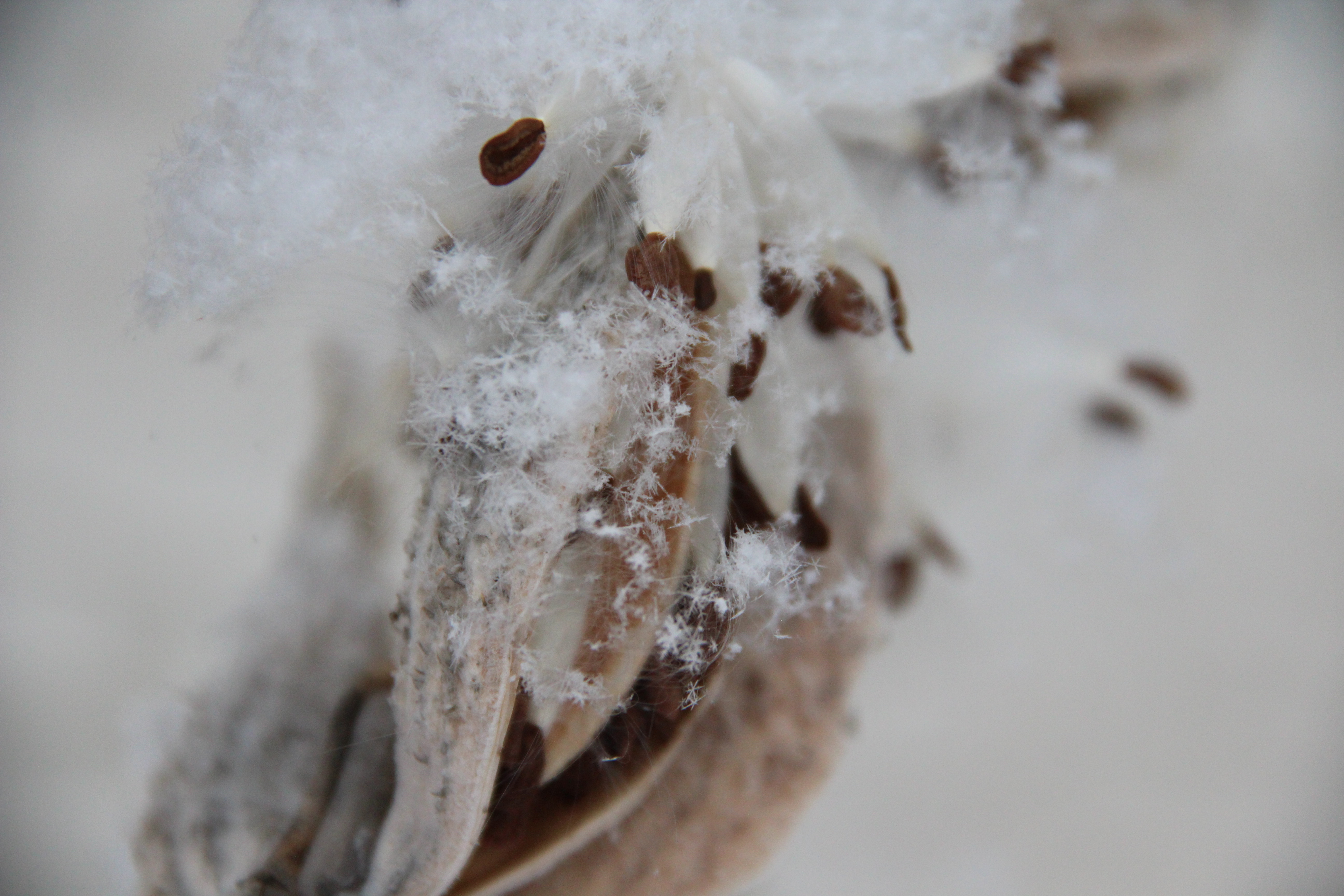
Star-like snow crystals add beauty to common milkweed (Asclepia syriaca) in early March

Star-like snow crystals add beauty to common milkweed (Asclepia syriaca).

Soft, wet snow falls in early March. White blankets the garden and lawn, outlines tree limbs in frosty ice, and meltwater gurgles in downspouts.  It’s a peaceful scene — and what’s most beautiful to my eye is the common milkweed in our garden.  All winter long, north winds shook the dead, dry stalks and tugged at the pods until the seeds ballooned into the wind on their silky parachutes. A few seeds float free each day, but most still ride the breeze tethered to their pods.  Minute feathery snow crystals etch the silken strands like starry sequins on nature’s beautiful gown.

milkweedwholeThough the stalks are tattered, rough and hollow, soon spring-green shoots will pop through the soil to grow new plants and nourish bees, butterflies and hummingbirds. But for today, I’ll enjoy the crystal-covered seeds and the snowy scene knowing it will soon give way to spring’s warmth.ballerinaseeds2