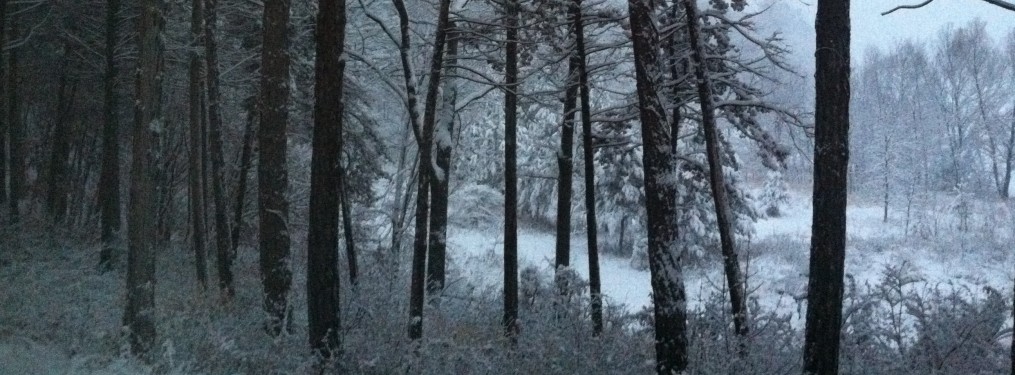
Winter Solstice

grayskies:geese

It hasn’t seemed like winter this December; more like a mild November with moody skies, soaking rains and even a few thunderstorms. What little snow fell, melted into the unfrozen ground. But the sun tells the truth as it rides low on the southern horizon. I always look at winter solstice (10:48 p.m. CST on December 21) as a milestone achieved: We’ve reached the time of peak darkness for the winter. And happily, though sunrise is still getting later, sunset began to lengthen on December 10th!  We celebrate solstice with extra candles on the dinner table, a glass of wine, and Celtic Christmas music.  

I look for the understated, sometimes harsh beauty of winter, and I like the extra hours of moon-watching. Yet, I impatiently wait for the seeds, bulbs, perennials and tiny creatures that rest in the dark earth to reawaken. In the meantime, I will try to appreciate the slate skies and spent plants that add their own stark loveliness to the winter months.

The mid-December moon is often visible during the day.
The mid-December moon is often visible during the day.

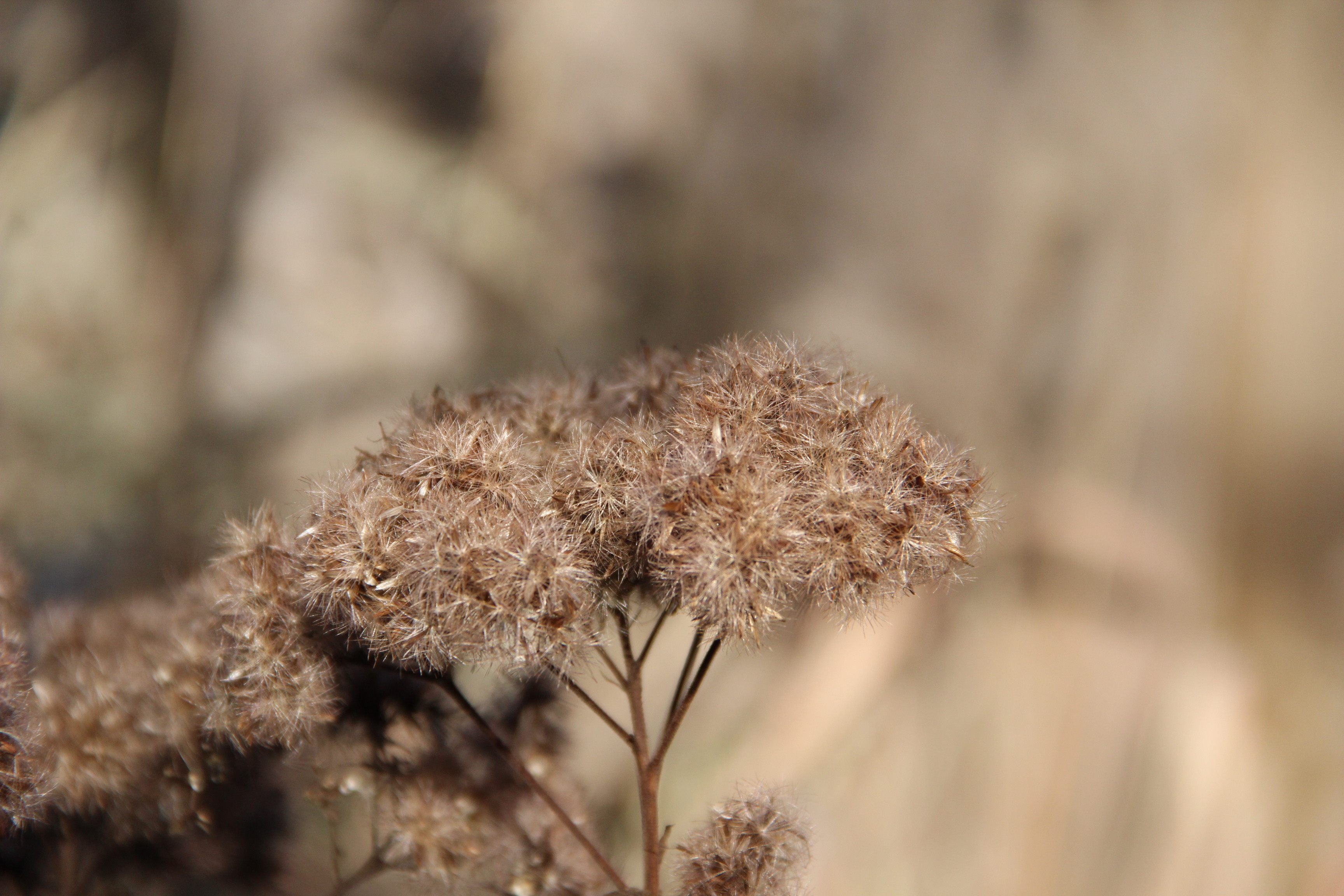
Joe-Pye seedheads.

Joe-Pye weed (Eutrochium dubium) seedheads.

Flame grass seed heads.

Flame grass (Miscanthus sinensis ‘purpurascens’) seed heads and leaves.

Fluffy goldenrod seeds.

Fluffy, soft goldenrod (Solidago) seeds.
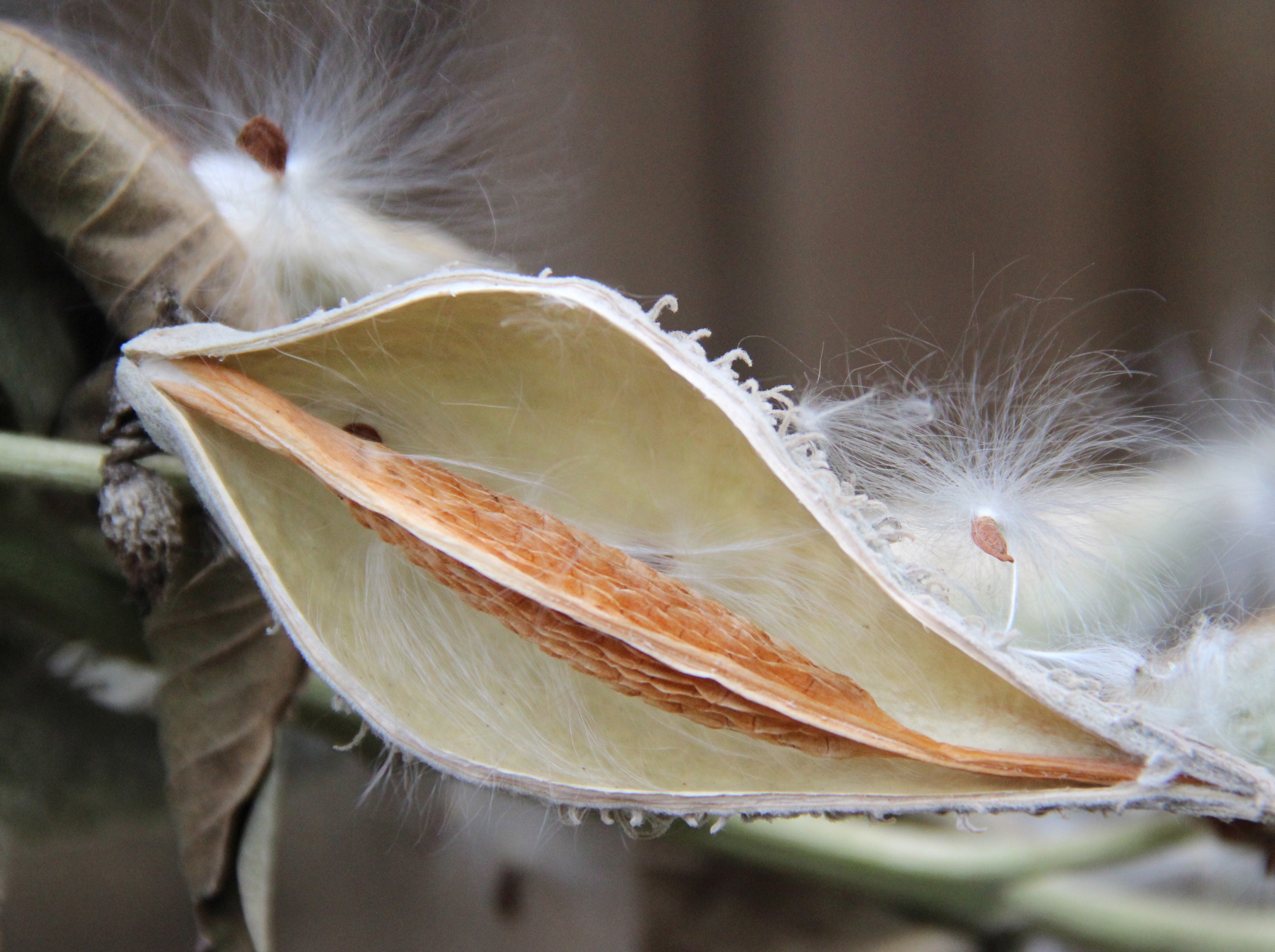
A few seeds still cling to the soft, empty cup of a milkweed pod.

A few seeds still cling to the soft, empty cup of a milkweed pod (Aesclepias syriaca).

Gray-Day Gratitude, Bright Autumn Colors

One morning last week, I walked in our garden between bouts of rain. I wanted to enjoy the warm, mild air before a cold front rolled in that evening. Chipmunks had retired to their underground dens, birds were quiet, and I saw no insects. The exposed wet earth in the gardens smelled almost as fresh and pungent as in spring. Oregano and sage still scented our little herb garden. (I miss the aroma of fresh herbs so much during the winter.) A few bright patches of color accented the beige, russet and brown of mid-November, tiny remnants of a beautiful summer and autumn. I am so grateful for gentle autumn days and memories of a lovely, bountiful growing season.  What nature and garden memories bring gratitude to your mind and heart?

Fan-shaped gingko leaves fell much later than the maple leaves.

Fan-shaped gingko (Gingko biloba) leaves drop much later than many other leaves.

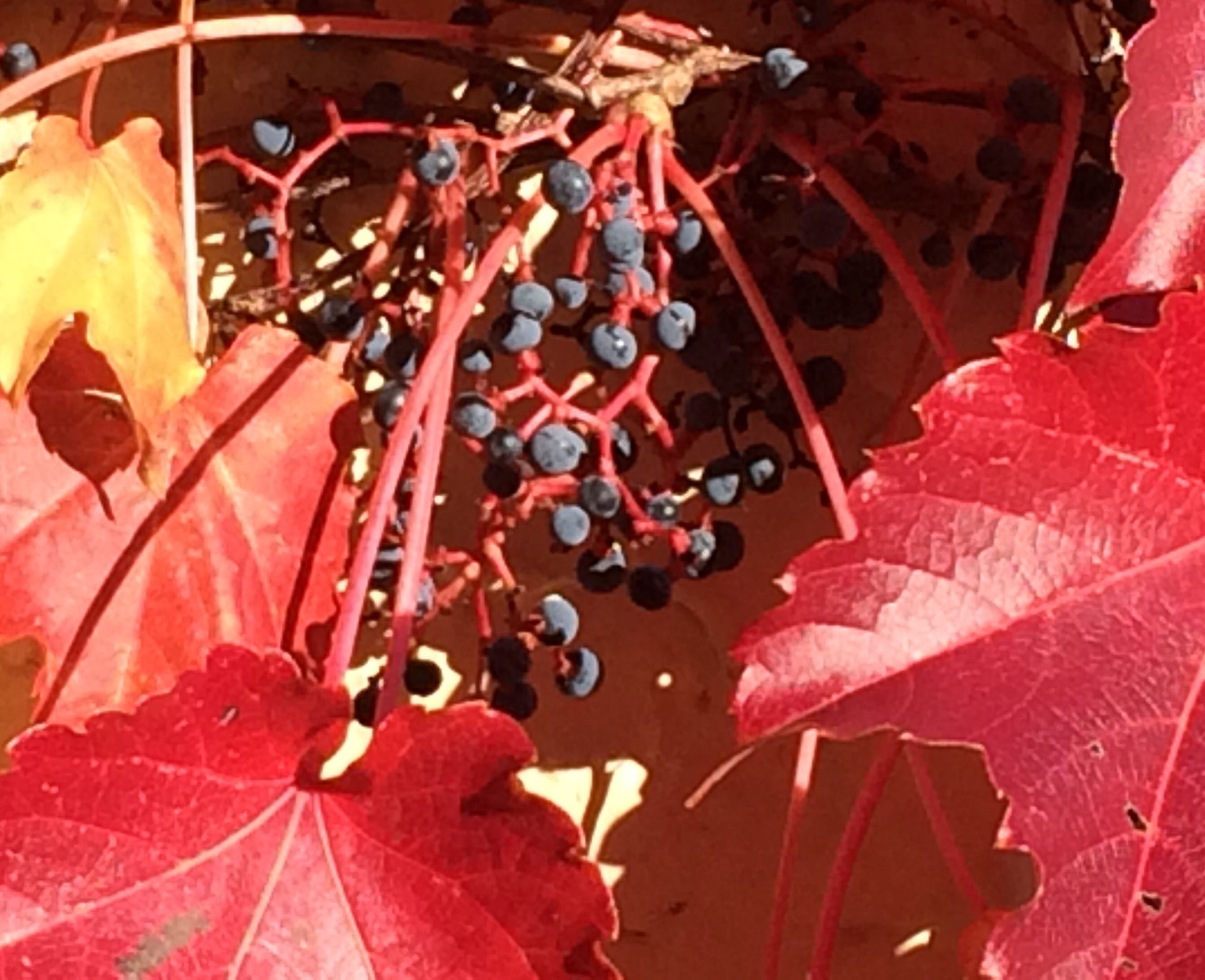
American woodbine (Parthenocissus inserta) fruit is a winter treat for some types of songbirds and small mammals.

Boston ivy (Parthenocissus tricuspidata) fruit and leaves.

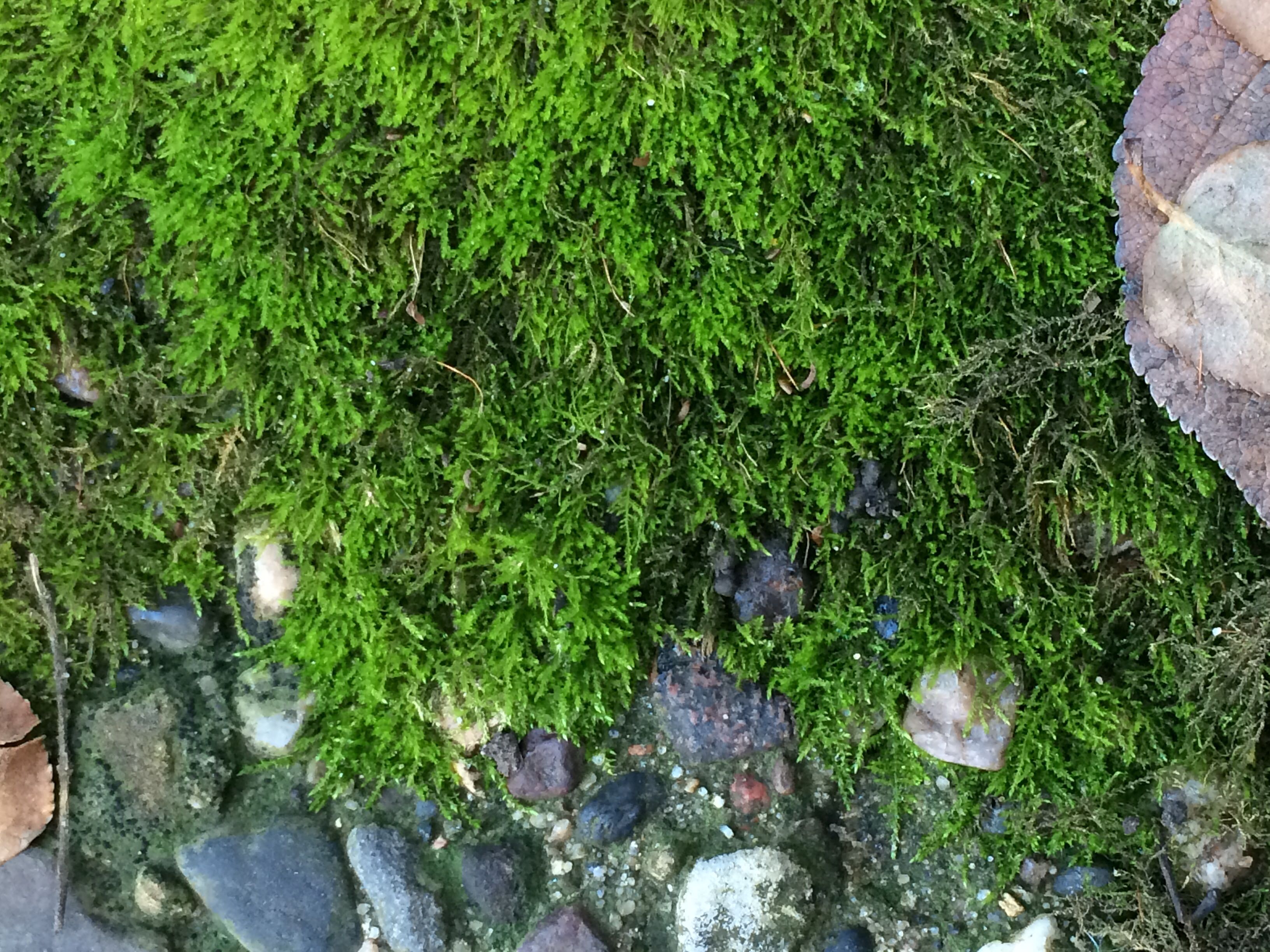
Moss in the north-facing garden of our backyard.

Moss in a north-facing garden of our backyard.

Common milkweed (Aesclepias syriaca) releases it silky seeds.

Common milkweed (Aesclepias syriaca) releases it silky seeds.

A tiny red maple seedling in the backyard.

A tiny red maple (Acer rubrum) seedling in the backyard.

Beads of rain adorn daylily fronds (Hemerocallis).

Beads of rain adorn daylily fronds (Hemerocallis).

Wild grape (Vitis riparia) leaves etched in maroon.

Wild grape (Vitis riparia) leaves etched in maroon.

Raindrops on crimson barberry (Berberis) fruit.

Raindrops on crimson barberry (Berberis) fruit.

The beauty of a single woodbine leaf in the empty garden.

The simple beauty of a single Boston ivy leaf in the empty garden.

An empty robin's nest and red maple leaf tucked into a dwarf blue spruce.

An empty robin’s nest and red maple leaf tucked into a dwarf blue spruce (Picea pungens).

Ornamental kale in a sunny spot.

Ornamental kale (Brassica oleracea) grows in a sunny spot.

Late-Autumn Insects

Last week, the coming winter teased us with snow flurries mixed in with the rain. But, during the first week of November, the temperature rebounded to the 70s. The breeze is gentle, the afternoon sun is hot and a few insects are active in some sun-warmed patches of our backyard.

On the garden’s last purple coneflower, a yellow-green, spotted beetle, similar to a ladybug at first glance, nibbles on the coneflower’s center.  It is a spotted cucumber beetle (Diabrotica undecimpunctata).  And, though it’s a garden pest, it won’t survive the Minnesota winter, so I let it stay. It looks beautiful on the deep magenta bloom.

Spotted Cucumber Beetle

Spotted cucumber beetle (Diabrotica undecimpunctata) on a purple coneflower.

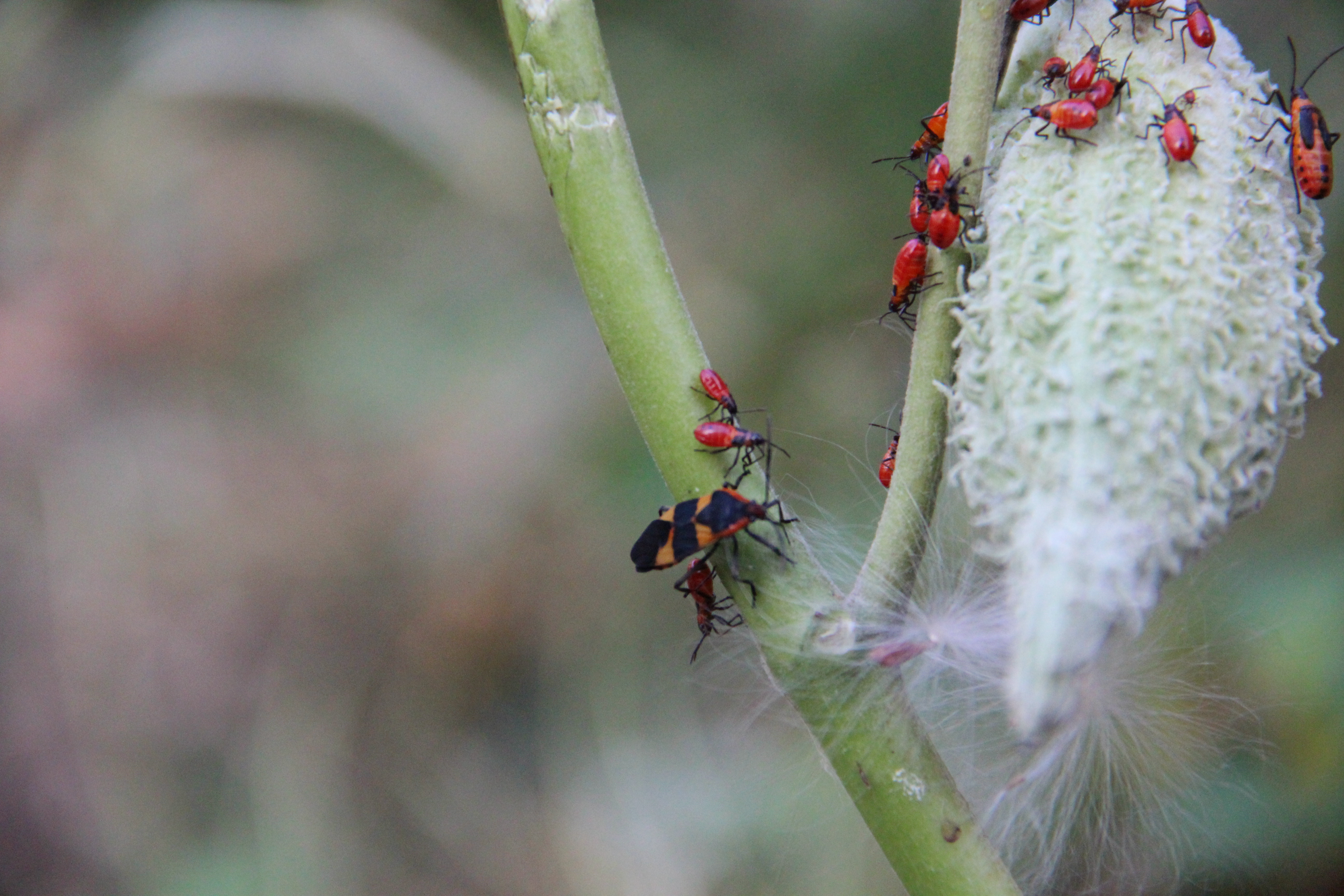
Across the yard in another sunny spot, bright red insects huddle together on a common milkweed pod. They include three different developmental stages, or instars, of the same insect, the large milkweed bug, (Oncopeltus fasciatus).  They use a tubelike mouth to inject digestive enzymes into the pod and then suck out the partially digested plant material.  Because they eat milkweed, they have the same toxicity found in monarchs and other insects that dine on the plant.  When I first noticed them a few weeks ago, I thought they were red aphids until I spotted an adult on the pod.  Over time, they began to grow larger, develop black markings, and become darker red.  Like the spotted cucumber beetle mentioned above, the large milkweed bug is migratory and those still here won’t survive our northern winter.
Early instars of Large Milkweed Bug

Early developmental instars of large milkweed bug (Oncopeltus fasciatus).

Large milkweed bug in developmental stages.

Large milkweed bug in several developmental stages on a common milkweed pod.

The orange shells of Asian lady beetles (Harmonia Axyridis) glow where they’ve settled on the sun-warmed brick of our house and on a few hardy garden plants.  Unlike the insects mentioned above, these beetles survive the Minnesota winter.  They were introduced into the southern United States in the mid-1900s to help control agricultural pests and first appeared in Minnesota in the 1990s, according to University of Minnesota records.  To some people they’re pests because the beetles often find a way inside in the autumn. But, they also eat aphids found on trees, in gardens and on agricultural crops.  The easiest way to distinguish Asian lady beetles from native species is by an “M” or “W” mark (depending on the viewing angle) on the thorax between the head and abdomen.  (More about Asian and native ladybird beetles in another post.)

Asian lady beetle on goldenrod.

Asian lady beetle (Harmonia Axyridis) on goldenrod.

Asian lady beetle on 'Henry Kelsey' rose.

Asian lady beetle on ‘Henry Kelsey’ rose.

2015 Monarch Journey South

Coppery orange and black monarch butterflies glow against the warm, late summer sun.  Monarch migration to Mexico is underway in the northern United States.  According to monarchwatch.org’s peak migration chart, at 45° latitude the greatest number of monarchs will migrate between August 29 and September 10.  In St. Paul, Minnesota, I’ve primarily seen the butterflies floating beneath trees in backyards and along the streets.  A few rest in our garden and nectar on garden phlox, goldenrod, snakeroot, Japanese anemones, black-eyed Susan’s and Joe-Pye weed, which appears to be their favorite.

Monarch resting on white snakeroot (Ageratina altissima)

A male monarch suns itself on white snakeroot (Ageratina altissima)

Monarch resting on one of more than 40 species of goldenrod (Solidago) native to Minnesstota.

A monarch rests on one of more than 40 species of goldenrod (Solidago) native to Minnesota.

A monarch drinks nectar from sweet Joe-Pye weed.

A female monarch drinks nectar from sweet Joe-Pye weed (Eutrochium dubium).

Will this year’s migration numbers be higher or lower than 2014’s?  It’s easy to help scientists track the data by contributing your own monarch migration observations.  Visit learner.org’s Fall 2015 Migration Report Page and complete the short information form for monarchs.  Or, if you’re just interested in how 2015 fall migration is progressing, you can check out the latest information on their Fall 2015 Maps and Sightings page.

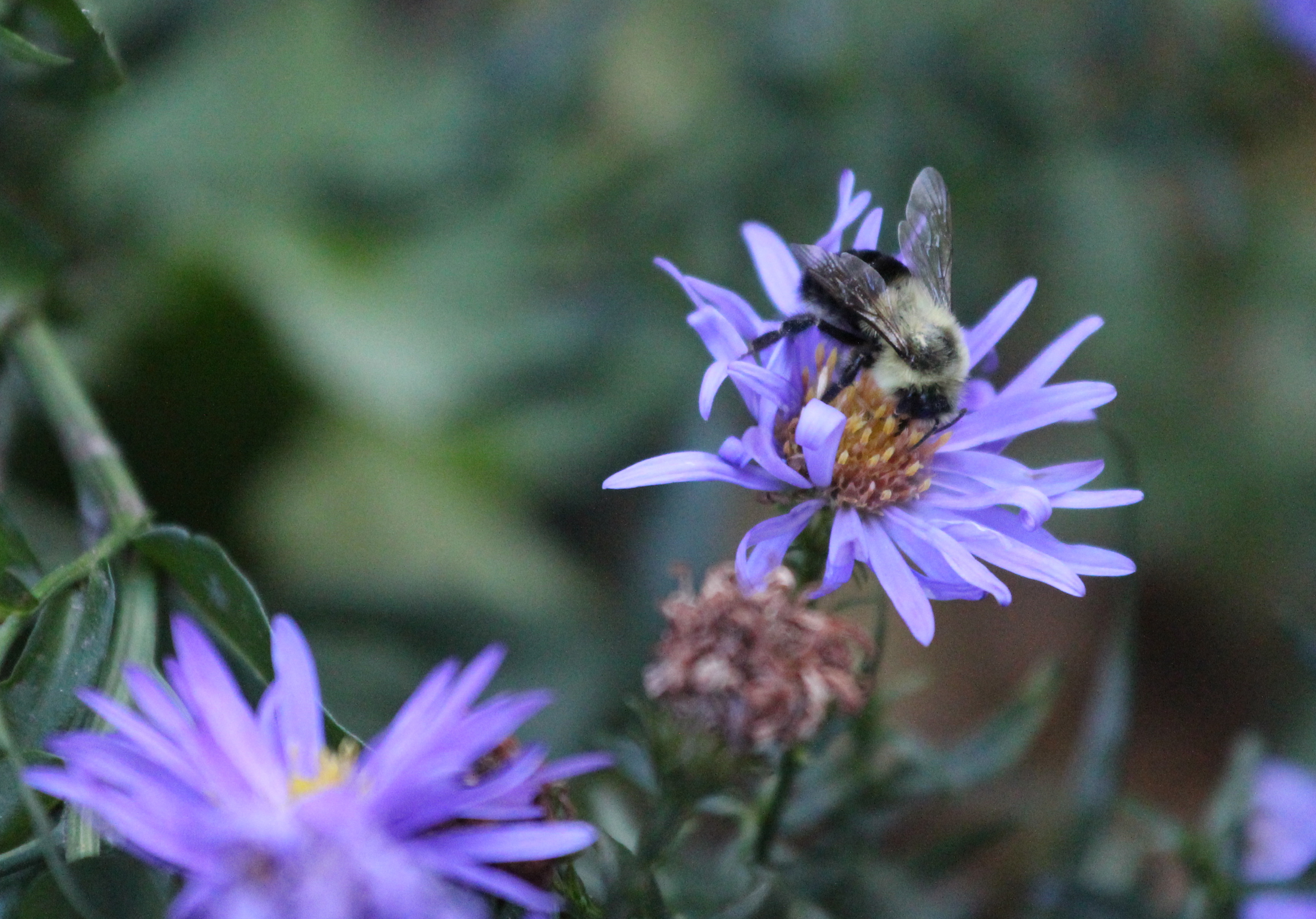
About Those Bumblers

My first encounter with a bee was not a happy one.  I was five years old and Mom was mowing the clover-filled front lawn.  I tried to step carefully in the clover, but my flipflop flipped up a honey bee that stung the side of my big toe.  I was hysterical when I felt the jolt of pain, looked down and saw the bee on my toe trying to pull its stinger out. According to Mom, I wailed loudly enough to bring the neighbors outside.  I didn’t care that the honey bee stung out of self-defense and that it would die.  I was petrified of bees and their kin for many years and always avoided them.

Honeybee (Apis melifera) collecting pollen from sedum "autumn joy".

Honeybee (Apis melifera) collecting nectar and pollen from sedum ‘autumn joy’.

It wasn’t until I was an adult and a gardener that I grew to like bees — especially bumble bees. Why bumble bees?  It comes down to temperament.  Bumble bees are large, round, fuzzy, noisy and very intent on collecting nectar.  Their sting packs a wallop, but bumble bees are even-tempered and rarely sting unless they feel threatened.  Many times I’ve accidentally knocked a bumbler out of a flower;  the bee ignored me, flew back into the flower and resumed pollination.  Once, a neighbor was cutting back old hosta stems, squeezed the faded blossoms in the process, and was stung by a bumble bee that was deep inside of a blossom. In decades of gardening, that is the only time she’s been stung by a bumble bee.

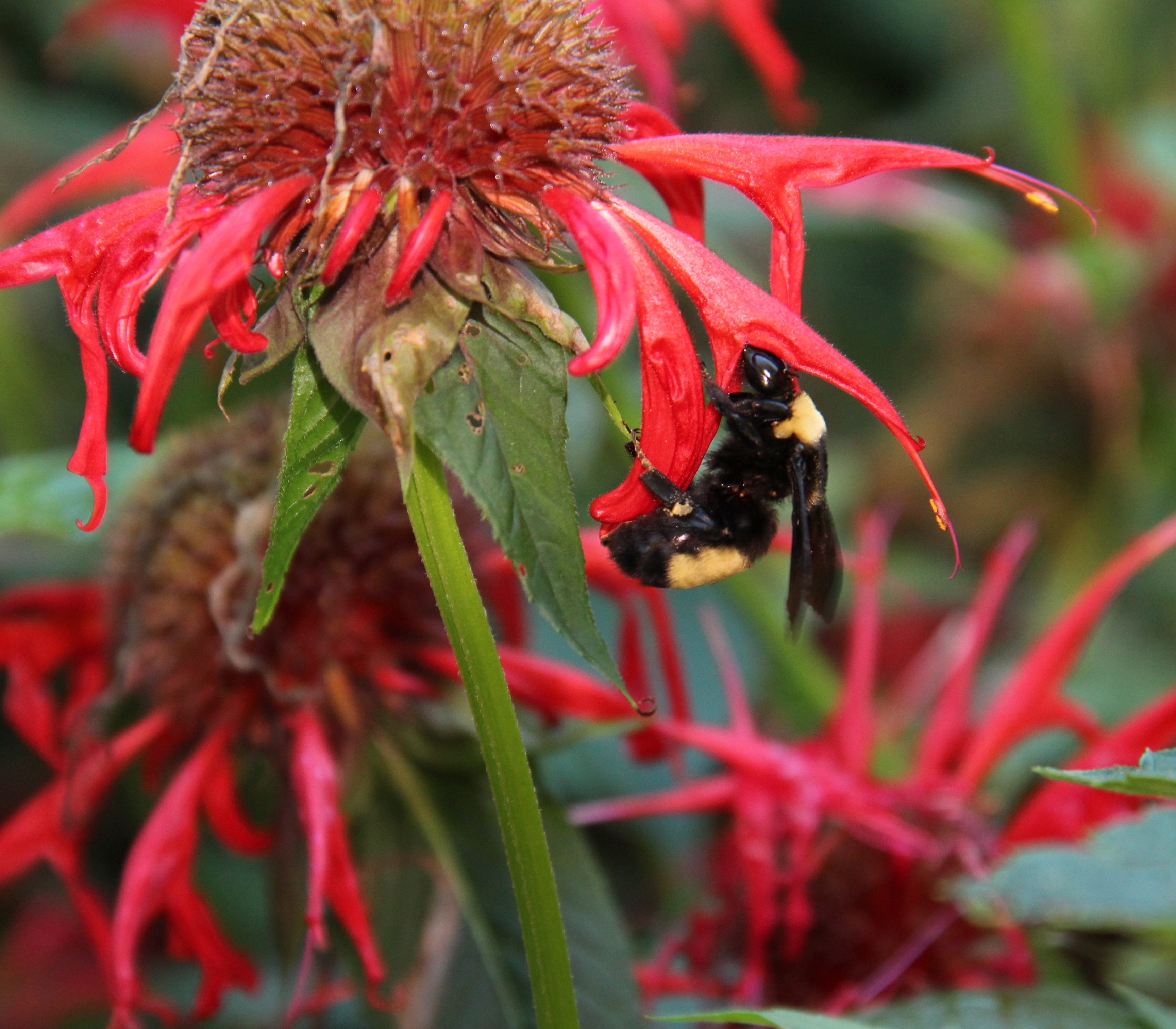
A bumble bee (Bombus ----) nectars in monarda "Jacob Kline".

A black-and-gold bumble bee (Bombus auricomus) nectars in monarda ‘Jacob Cline’.

A tricolored bumble bee (Bombus ternarius) rests on red clover.

A boreal bumble bee (Bombus borealis) rests on red clover (Trifolium pretense).

Common eastern bumble bee (Bombus impatiens) on Veronica.

Common eastern bumble bee (Bombus impatiens) on Veronica ‘Red Fox’.

Bumble bees are native to North America, unlike honey bees, which were brought to the United States from Europe.  Covered with thick, soft hair, bumble bees vibrate their strong flight muscles to raise their body temperature and fly at colder temperatures than other bees; as low as 41˚F (5˚C) in comparison to about 57˚F (14˚C) for honey bees.  They pollinate flowers and crops both earlier and later in the season than most species.  I love the sound of their buzzing in the autumn garden, which is much quieter now than the busy insect-filled garden of just two weeks ago. The bumble bees will fly until early November if the weather stays mild.  Then, only the young queen bees will overwinter to create new colonies next spring.  I miss all of the bee activity during the winter and look forward to seeing a queen bumble bee collect pollen and nectar in the first crocus next April.

Common eastern bumble bees are active in autumn, even on cloudy, cool days.

Common eastern bumble bees are active in autumn, even on cloudy, cool days.

Autumn Meadowhawk

The late afternoon September sun is warm and soothing.  Cicadas whine loudly and a monarch butterfly nectars in our patch of sweet Joe-Pye.  But another garden critter catches my eye this afternoon:  the yellow-legged meadowhawk dragonfly.

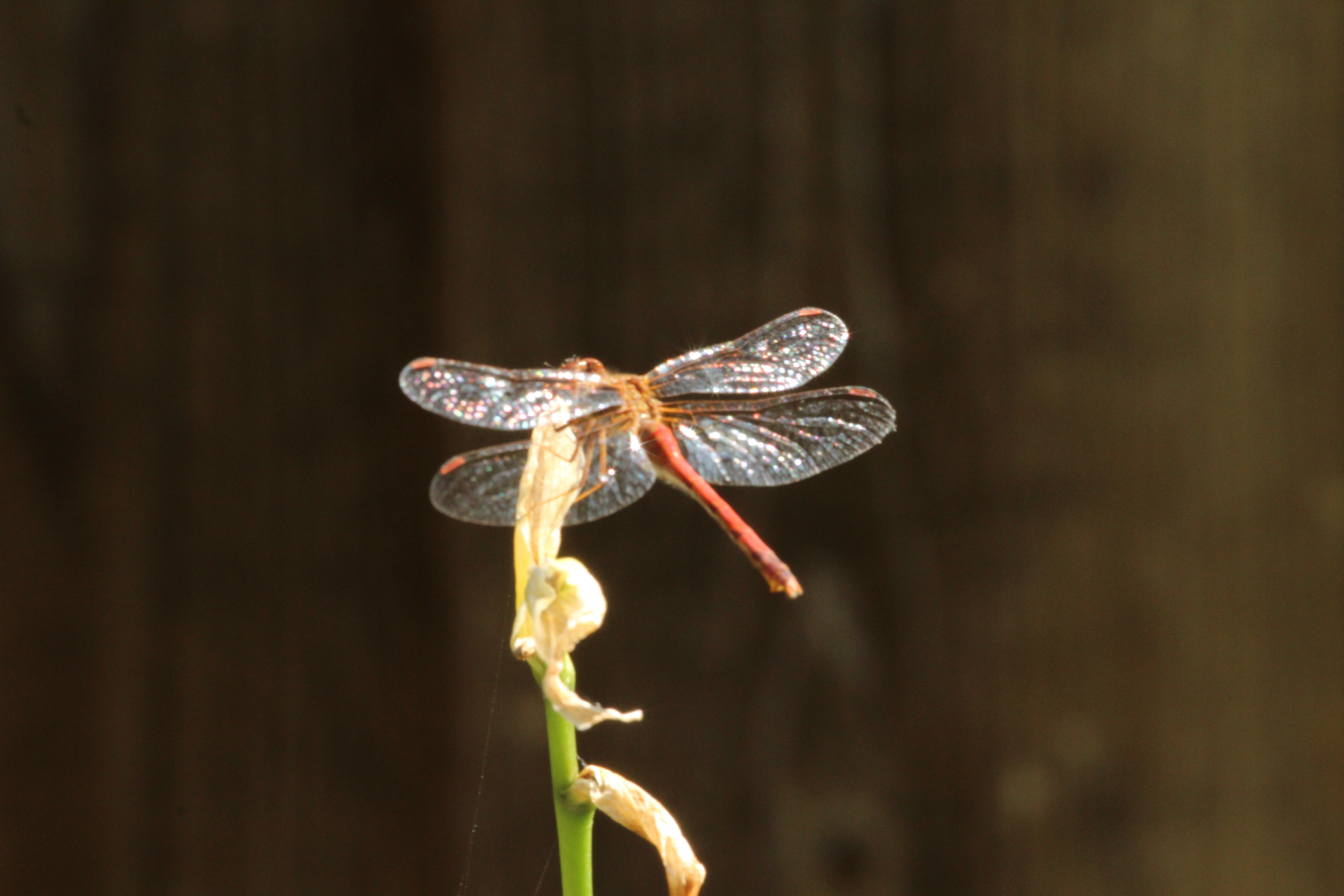
Adult male autumn meadowhawks are red with few or no markings on the abdomen.

Adult male autumn meadowhawks are red with few or no markings on the abdomen.

Also known as autumn meadowhawks (Sympetrum vicinum), their bodies flash gem-like red, orange and amber in the sun. Perched on daylily stalks, balloon flower seed pods and hosta stems, each dragonfly swivels its head watching for flies, small bees and wasps, and other soft-bodied insects.

Adult autumn meadowhawks are present from August into early November in Minnesota.  The species is common across much of the United States and southern Canada, and often is seen in yards and gardens. Their yellow or brownish legs set them apart from other types of meadowhawks, which have black or dark-striped legs. They also have minimal or no black marks on the abdomen.

Females are distinguished by the ovipositor visible near the end of the abdomen.

Females are distinguished by the ovipositor visible near the end of the abdomen.

When I see a meadowhawk flash in the garden, I think of the ancient history of these creatures. Scientists believe that early dragonflies (Protodonata) first inhabited Earth 300 million years ago.  They speculate that Earth’s warmer temperatures, and the atmosphere’s higher oxygen content, contributed to insects growing larger than today.  Fossils show that some ancient dragonflies had a wingspan of two feet. Today, most of the larger dragonflies have a wingspan of two to five inches, and meadowhawks are smaller yet at about one inch.  What they lack in size they make up for in the sparkle of sun on their transparent wings and the jeweled designs of their bodies.  And, after watching a meadowhawk grind up a small bee in its jaws, I’m glad they’ve evolved into smaller predators!

Sunlight captures the beauty of this meadowhawk's wings.  The ovipositor and the light red abdomen with faint black markings identifies it as a female autumn meadowhawk.

Sunlight captures the beauty of this meadowhawk’s wings. The ovipositor, yellowish legs and the light red abdomen with faint black markings identify it as a female.

Hummingbird Clearwing Moth

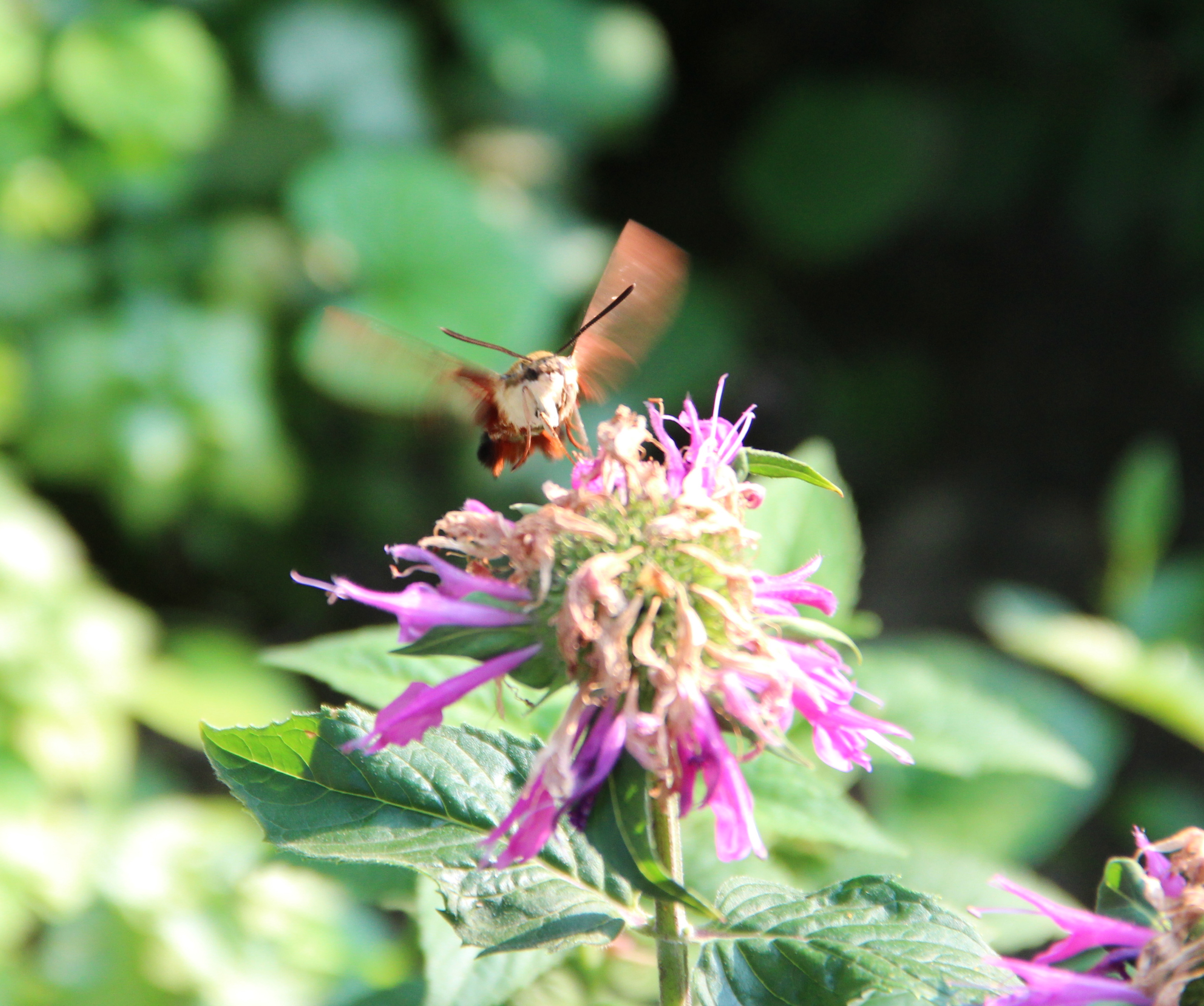
Clearwing hummingbird moths favor native monarda in our garden.

Hummingbird clearwing moths favor native monarda in our garden.

Next time you think you see a small hummingbird zip around your garden, take a closer look — it just might be a hummingbird clearwing moth.  People usually think of moths as nocturnal creatures attracted to lights.  But clearwing moths are colorful daytime visitors to flowers. Only about half the size of a hummingbird, this moth has a thick, heavy body in comparison to many moths, large, clear wings with reddish-brown borders, and a long proboscis for sipping nectar. In our garden, they seem to prefer monarda or bee balm, in particular the native variety (Monarda fistulosa).  I’ve also seen them sip nectar from garden phlox, petunias and common milkweed.

Clearwing hummingbird moths are white underneath and have pale-colored legs.

Hummingbird clearwing moths are white underneath and have pale-colored legs.

Two species of clearwing moth are common in the eastern half of North America: the snowberry clearwing (Hemaris diffinis) and the hummingbird clearwing (Hemaris thysbe).  The two species are easy to tell apart because (H. diffinis) mimics bumblebees with primarily yellow and black coloration and black legs.  (H. thysbe) is typically olive with maroon or rust, and the legs are yellowish or pale-colored. A third variety, (Hemaris thetis) lives primarily in western North America.

The caterpillars of both clearwing moths are green, although sometimes the hummingbird clearwing’s can be reddish.  Both species’ caterpillars have a horn on one end.  The hummingbird clearwing caterpillar is sprinkled with tiny white dots and the horn is bluish.  It feeds on honeysuckle, cherry, plum, snowberry and European viburnum plants. The snowberry clearwing caterpillar has black spots on its sides and the horn is black with a yellow base. Common host plants for this caterpillar are honeysuckle, snowberry and dogbane.  Cocoons of both species overwinter in leaf litter on the ground and become adult moths the following spring.

Wild Columbine

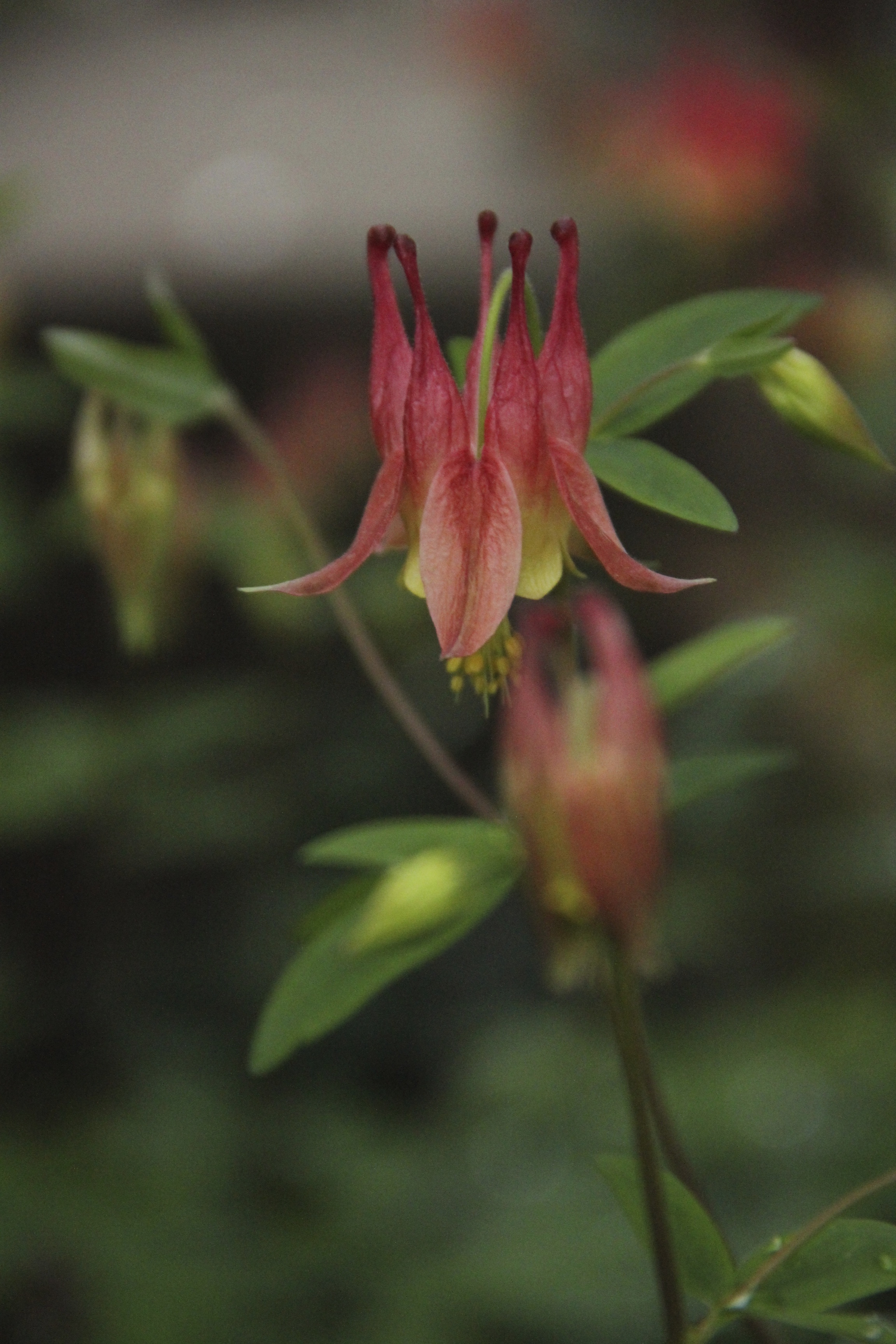
The first spring that we lived in our home, a large patch of wild columbine (Aquilegia canadensis) bloomed outside the back porch. The red-orange and yellow blooms of wild columbine dominate woodlands and rocky areas of Minnesota and eastern North America in early June.  Also called Canada columbine, or eastern red columbine, these native wild flowers are a favorite source of nectar for hummingbirds and bees.

Canada columbine (Aquilegia canadensis) is native to eastern North America.

Canada columbine (Aquilegia canadensis) is native to eastern North America.

The entire patch in our yard was native Canada columbine.  That summer, I planted a small area of blue and white Colorado blue columbine (Aquilegia caerula), native to the western United States, in a different section of the yard.

Over time, nature and the bees produced lovely hybrid flowers, ranging from dark purple, to violet, a cranberry color, and pale, lemony pink.  Individual columbine do not live a long time, so the colorful hybrids usually last three or four years.  However, Canada columbine produce dozens of shiny black seeds that keep the original native wildflower growing abundantly.  The seeds often take root in small cracks in our stone garden wall, similar to the rocky habitat they favor in nature.  But they also pop up in many different spots around the backyard in both sun and shade.

A cranberry-hued hybrid columbine thanks to the bees.

A cranberry-hued hybrid columbine — thanks to the bees.

A lavender hybrid of Canada columbine and Rocky Mountain columbine.

A violet hybrid of Canada columbine and Colorado blue columbine.

The scientific and common names for this plant reflect the blossom in two different ways.  Aquilegia, from the Latin term for eagle, represents the flower as the talons of an eagle.  I like the common name columbine, which is derived from Columba, the Latin for dove.  Each section of the flower looks like the outline of a dove — from its tiny head, down through the oblong body and pointed tail.  The entire blossom resembles a group of five doves.

The "five doves" form the blossom and give columbine its common name.

The “five doves” form the blossom and give columbine its common name.

Whether you see the eagle or the dove, columbine is a beautiful spring wild flower and an important source of nectar for insects and hummingbirds.  It also adapts well to gardens, especially rock and wall gardens.  The colorful flower, scalloped foliage and large seed pods make it an interesting plant for much of the spring and summer.

The sticky green seed pod will ripen an split open to reveal shiny black seeds.

The sticky green seed pod will ripen and split open to release shiny black seeds.

Quaking Aspen Buds

The season's first tiny catkin buds open on quaking aspens (Populus tremuloides).

The season’s first tiny catkin buds open on quaking aspens (Populus tremuloides).

Shiny, brown buds began to open on a neighbor’s quaking aspen trees today!  Each open bud held what looked like a tiny, soft, gray cat’s paw, similar to a pussy willow bud.  Aspens are members of the willow family, so it’s no coincidence that they bear soft, fuzzy catkins.  The buds will develop into long catkins, which are the aspen’s flowers. They are wind-pollinated and the male catkins will release large amounts of yellow pollen into the air later in the spring.  (According to pollen.com, poplars and junipers already are releasing low levels of pollen in the Twin Cities.)  The seeds will develop and be dispersed with tufts of soft, white “cotton” before the leaves open.

Ready for Spring

The sun rides higher in the sky and daylight lasts almost 11 hours, but those are just about the only signs of spring — and most of us long for a warm-up that stretches beyond a meager two days.  Last week brought “bookend” snowstorms:  6.4 inches of new snow on Monday and 9.9 inches on Thursday/Thursday night, for a total of 16.3 inches measured at nearby Minneapolis-St. Paul International Airport.

As we awaited the city plows, and dug out our sidewalks, driveways and garage aprons, the meteorologists promised an end to the snow and another plunge to below-zero temperatures for at least the next week.  (In St. Paul, the average daytime high is +31°F and the nighttime low is +15°F for late February.  Today’s predicted high is +8°F with a low of -13°F.)
Fresh snow blankets white cedars in our backyard.

Heavy snow blankets white cedars in our backyard.

Ice and snow cover black spruce and a red maple in our front yard.

Ice and snow cover a black spruce and a red maple in our front yard.

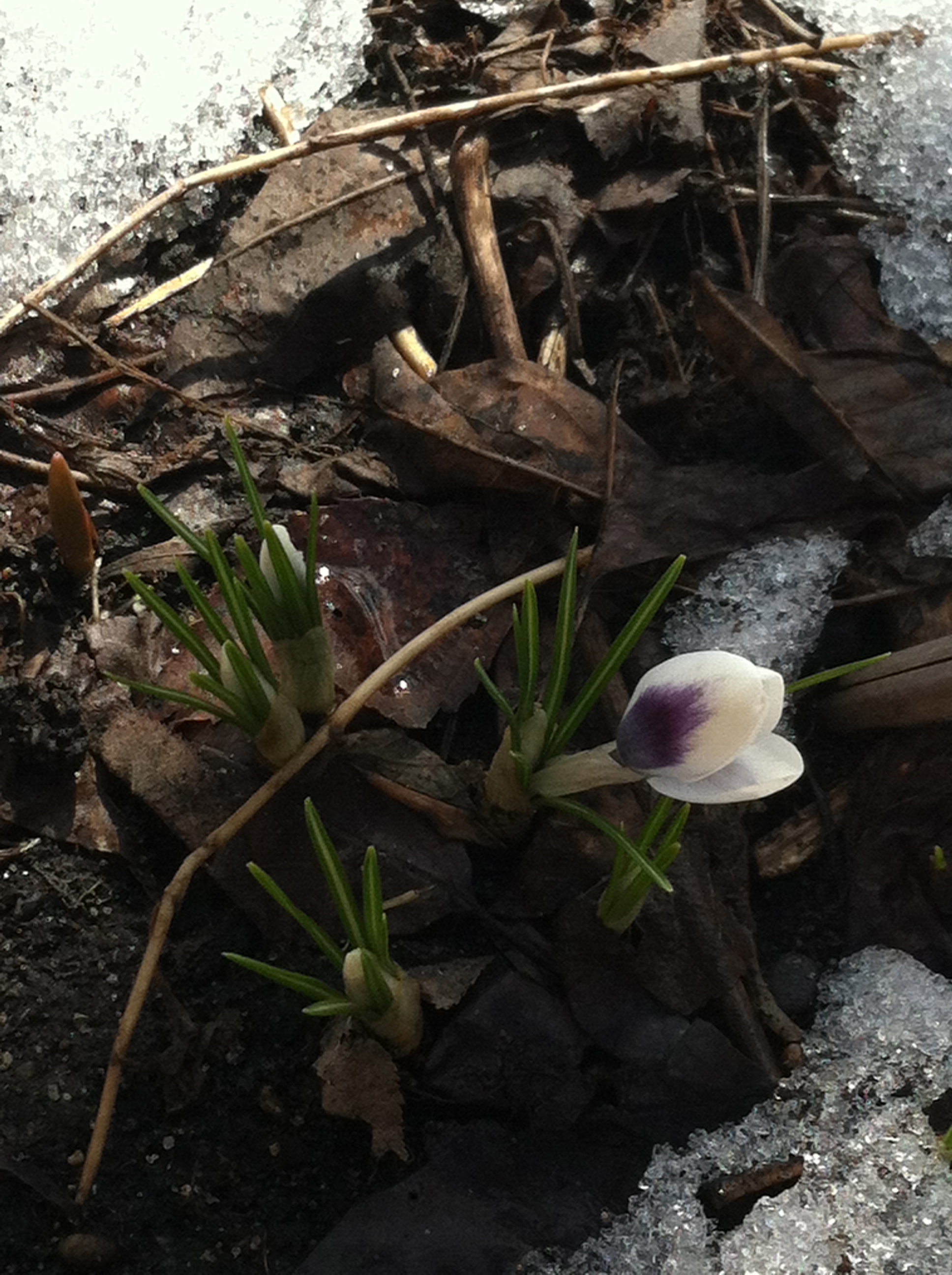
How I pine for the first crocus to poke through the soil and open its delicate cup-shaped flower to the early spring sun!  But, with at least two feet of snow, plus the snow from sidewalk shoveling heaped on top of the garden, it’s likely to be several weeks before the snow melts and sunlight warms the soil.  As soon as I spy the first patch of dirt, I’ll be out every afternoon peering at the muddy earth for the first tiny, reddish-green tip of a crocus to push through to the light and signal the reawakening of life.  What signals spring to you?

In 2013, our first crocus bloomed on April 20th in our north-facing garden).  It is

In 2013, the first crocus bloomed on April 20th in our north-facing garden. (iPhone 4)

© Beth and Nature, Garden, Life, 2013-2014.  All photographs and text are created by Beth unless specifically noted otherwise.  Excerpts and links may be used as long as full and clear credit is given to Beth and Nature, Garden, Life with specific direction to the original content.  Please do not use or duplicate material from Nature, Garden, Life without written permission from Beth.