Prairie Smoke

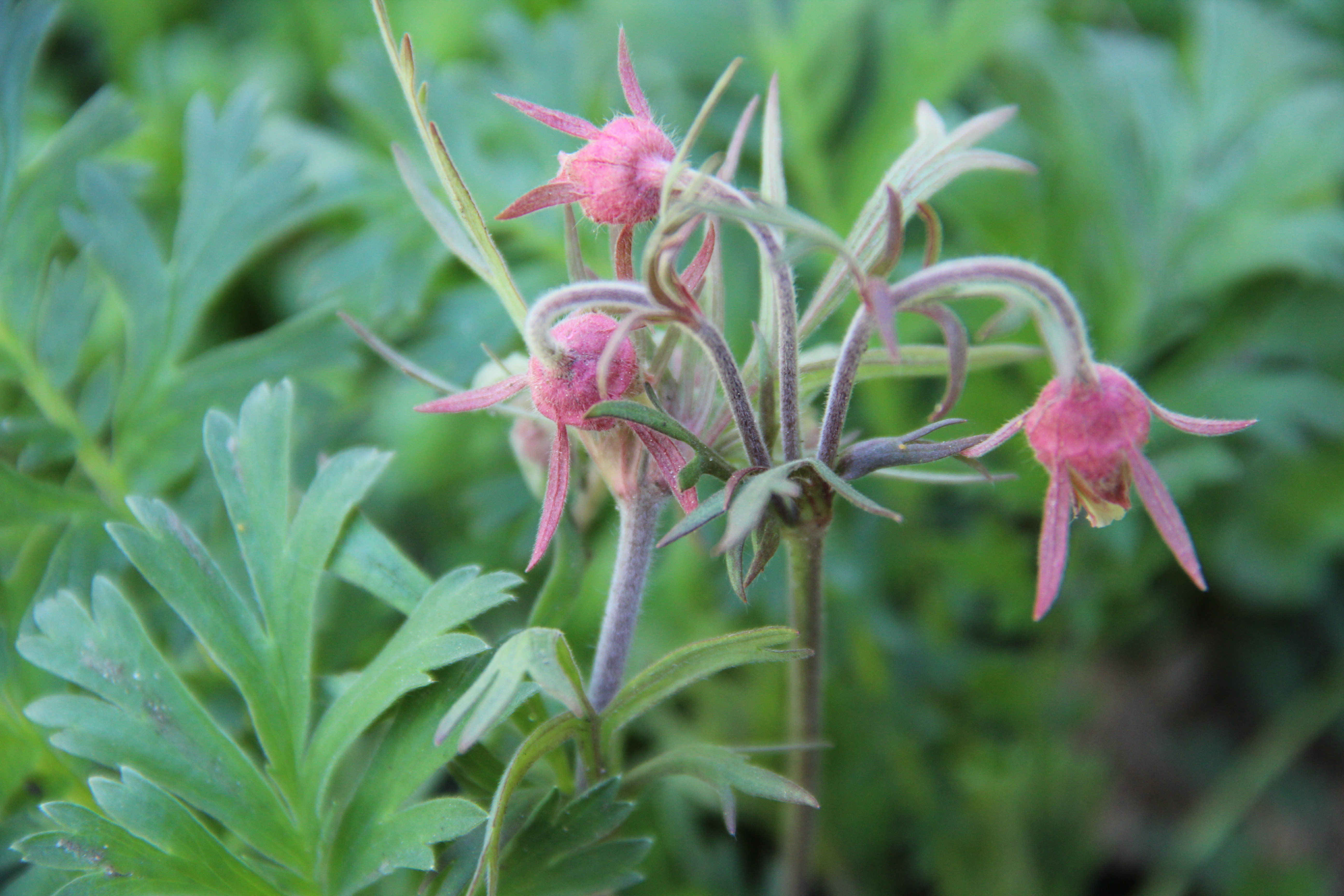
Prairie smoke (Geum triflorum) showing five dark pink outer petals covering five white inner ones.

Prairie smoke (Geum triflorum) sports five dark pink outer petals over five white inner ones.

The Midwestern prairies are famous for their large, showy flowering plants like purple coneflowers and black-eyed Susans. But, there are lovely smaller ones, too. Prairie smoke (Geum triflorum) is an interesting one that grows in early spring.
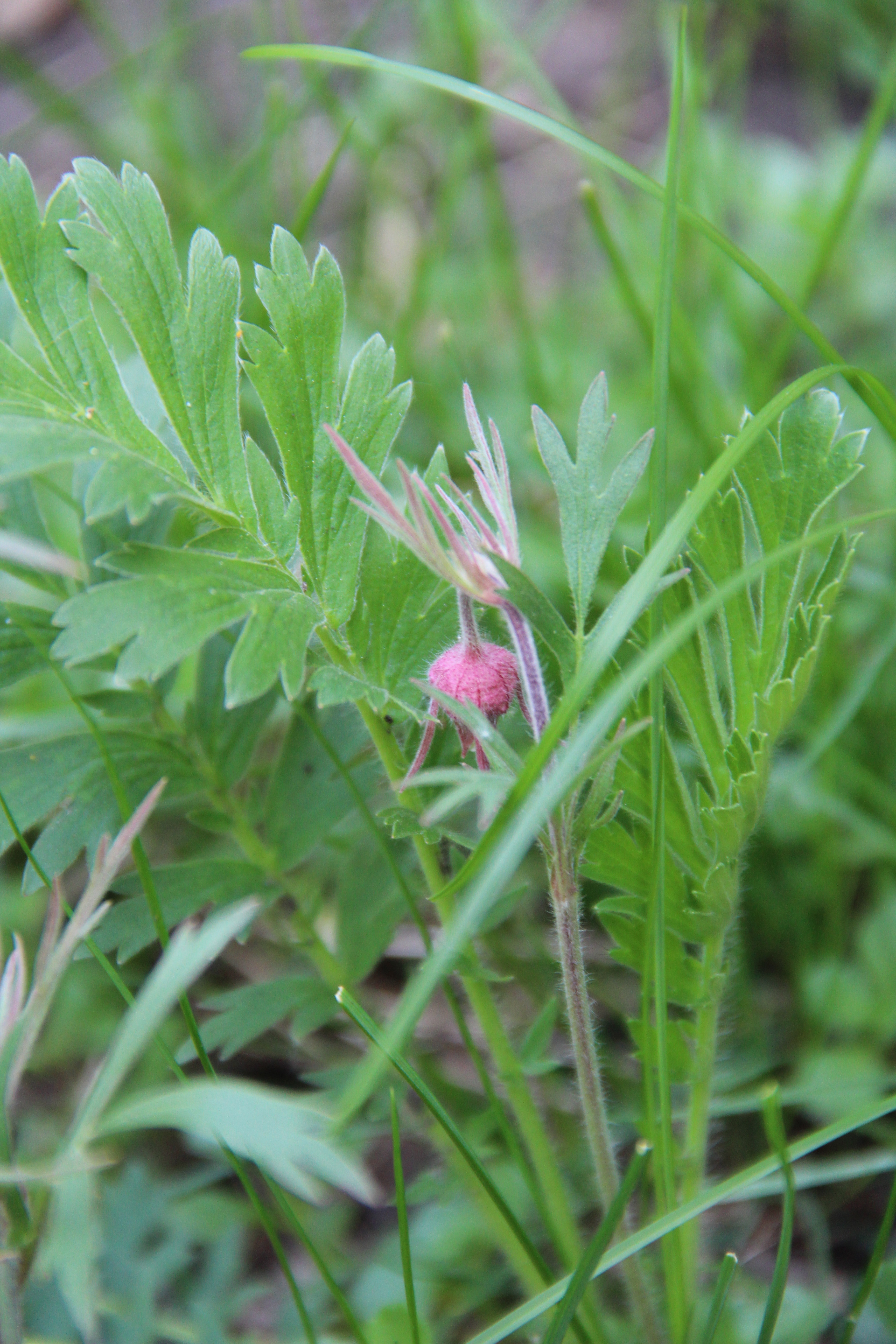
Fern-like, hairy foliage often stays green all winter and begins gowing in early spring.

Fern-like, hairy foliage often stays green all winter and begins growing in early spring.

Each spring, the melting snow uncovers a green rosette of hairy, fern-like leaves often tinged with burgundy. The rosette begins to grow, and a few weeks later, one or more stalks appear in the center of the rosette. Each carries a small group, or umbel, of three flowers. The five outer petals are pink-to-reddish colored and tightly cover five white petals forming a bell-like shape. Because the small flowers barely open, they are primarily pollinated by bumble bees, which are burly enough to push inside.

Prairie smoke seed plumes.

Prairie smoke seed plumes on last year’s plants.

After several weeks, the flowers turn upward and form small, one-seeded fruit that are attached to long styles covered with silky hair. The wispy appearance of the fruit led to the colorful names of prairie smoke and old man’s whiskers.
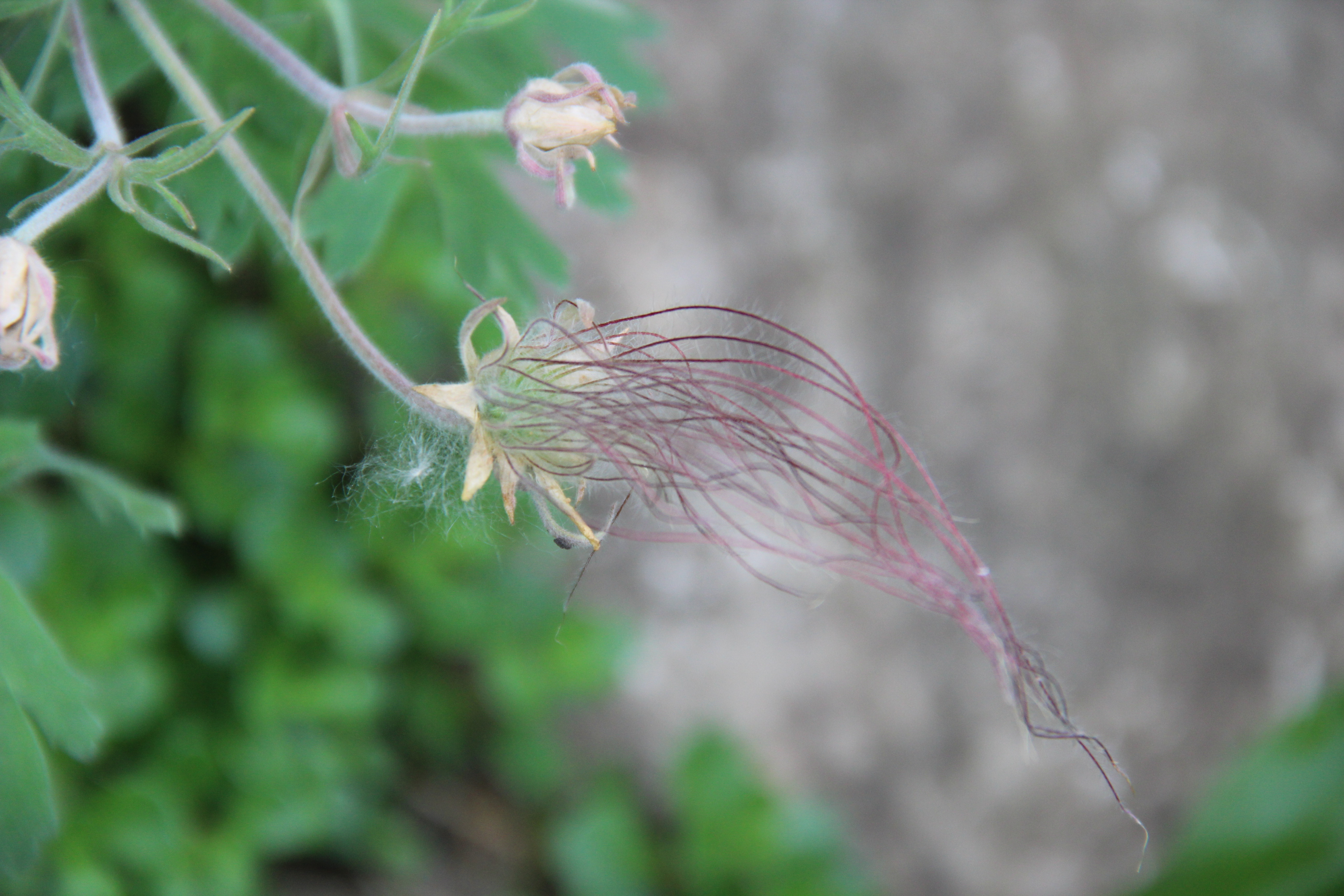
Another seed plume of prairie smoke or old man's whiskers.

Another seed plume of prairie smoke or old man’s whiskers.

In its native habitat, prairie smoke prefers sunny, dry soil that is rocky or sandy. In our garden, it’s happy growing near the top of a limestone wall where it receives direct sun and has good drainage.
Common Snowdrops

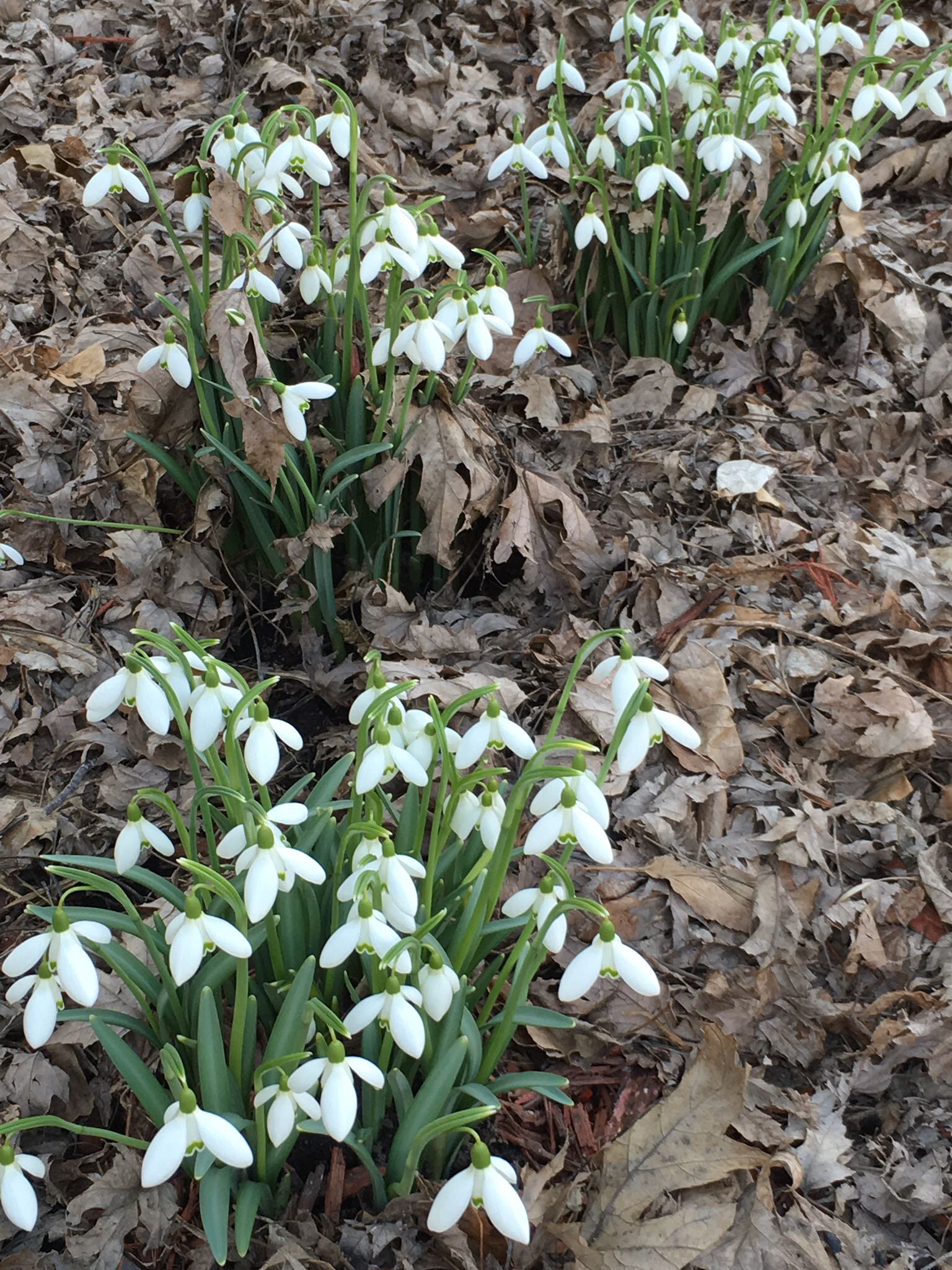
Snowdrops (Galanthus nivalis) often bloom in the snow, but this year the snow melted weeks ago.

Snowdrops (Galanthus nivalis) often bloom in the snow, but this year the snow melted weeks ago.

Every spring I hunt for some fresh green glowing against the snow-covered or brown landscape, depending on the year. Patches of moss, which often remain green under the snow, are refreshing, but the first snowdrops that push through the soil and bloom speak of the awakening earth.  Last Saturday, a sunny, warm afternoon when cardinals sang and a pair of great-horned owls hooted softly to each other, I found a lovely patch of snowdrops blooming in my sister, Theresa’s, shade garden.

Common snowdrops have three white outer tepals and three smaller inner tepals that are white and green.

Common snowdrop blossoms have three white outer tepals and three smaller inner tepals that are white and green.

Snowdrops are small bulbs that grow and bloom right through the snow.  This year’s early warmth melted the snow, so the tiny flowers stand out in contrast to autumn’s brown leaves that still cover the soil. The Latin name, Galanthus nivalis, roughly translates as “snowy milk flower.” Sources that I read say that the name refers to the blossoms looking like drops of snow or milk.  Snowdrops are native to Europe and will grow reliably in USDA zones 3 – 7.

Early Spring Serenade

A male northern cardinal (Cardinalis cardinalis) sings from his springtime perch .

A male northern cardinal (Cardinalis cardinalis) sings from his springtime perch.

I like the silence of frosty mornings, but I also miss the music of birds during the winter. Most mornings for the past three weeks, our resident cardinal has greeted the sunrise — cloudy or clear — with song. At first he sang one short burst of bright song. Over the next week, it grew to several minutes of song at dawn and another round later in the morning. Basking in Tuesday’s sunshine and 70°, he sang many times during the day. Later that same day, a mourning dove cooed in a spruce tree, chickadees added their lovely two-note calls, and an American robin joined the serenade with its caroling. However, all went silent when a Cooper’s hawk sailed across the backyard and into my neighbor’s silver maple!

Why do birds sing more frequently in the spring? There’s still much to learn, but the thinking is that the increase in daylight triggers a bird’s thyroid-stimulating hormone (TSH). TSH steps up the production of sex hormones to prepare birds for the mating season. A big part of successful reproduction is attracting a mate and maintaining a breeding territory — birdsong plays a major role in both activities.

The four songsters mentioned above were year-round residents in the Twin Cities this past winter.  Soon migrants, such as warblers, red-winged blackbirds, catbirds and others will return to add their harmony to the chorus. In fact, I saw my first red-winged blackbird of the season perched on a cattail in a small pond yesterday. Regardless of its purpose, the return of beautiful birdsong is one of spring’s finest gifts.

Wild Columbine

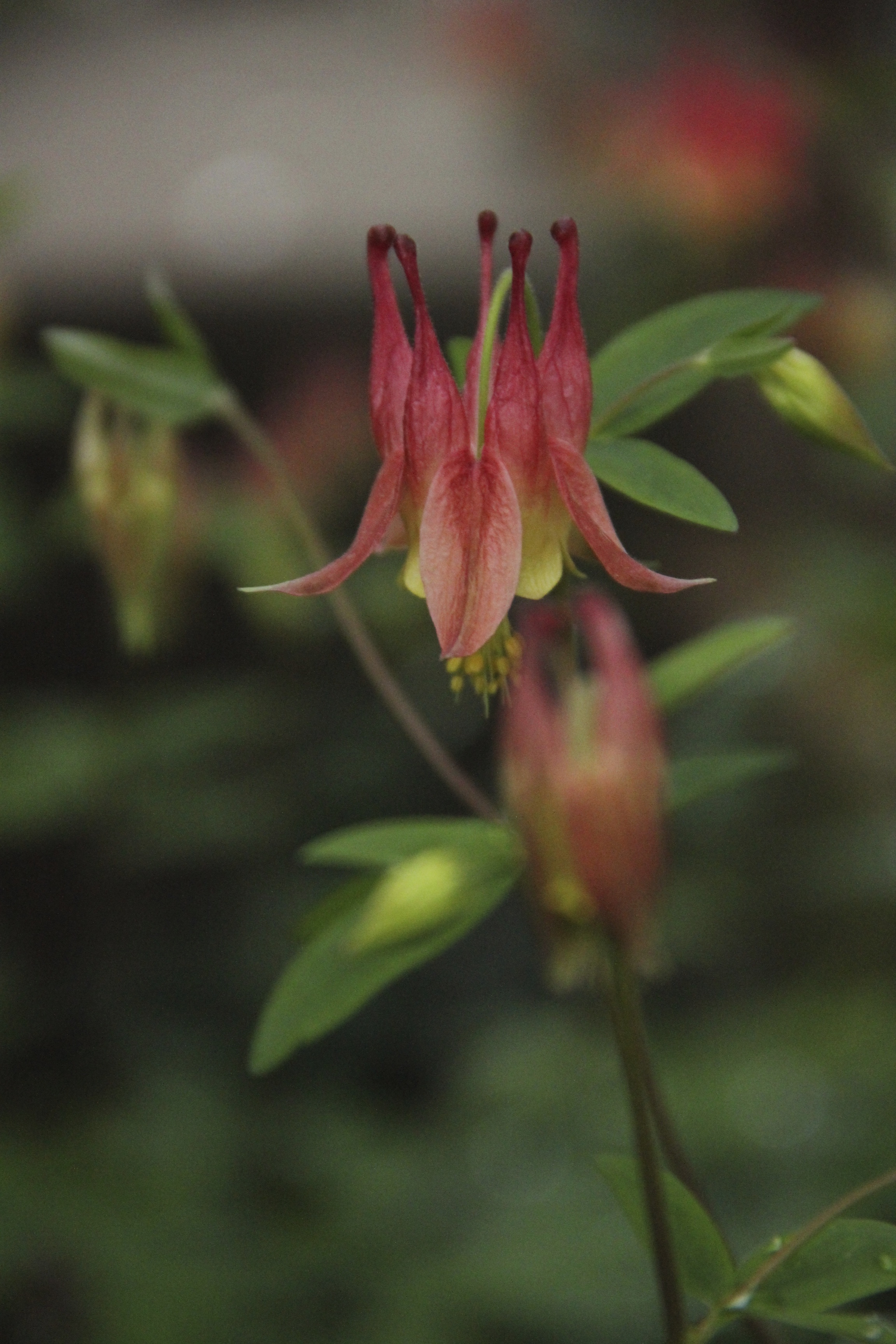
The first spring that we lived in our home, a large patch of wild columbine (Aquilegia canadensis) bloomed outside the back porch. The red-orange and yellow blooms of wild columbine dominate woodlands and rocky areas of Minnesota and eastern North America in early June.  Also called Canada columbine, or eastern red columbine, these native wild flowers are a favorite source of nectar for hummingbirds and bees.

Canada columbine (Aquilegia canadensis) is native to eastern North America.

Canada columbine (Aquilegia canadensis) is native to eastern North America.

The entire patch in our yard was native Canada columbine.  That summer, I planted a small area of blue and white Colorado blue columbine (Aquilegia caerula), native to the western United States, in a different section of the yard.

Over time, nature and the bees produced lovely hybrid flowers, ranging from dark purple, to violet, a cranberry color, and pale, lemony pink.  Individual columbine do not live a long time, so the colorful hybrids usually last three or four years.  However, Canada columbine produce dozens of shiny black seeds that keep the original native wildflower growing abundantly.  The seeds often take root in small cracks in our stone garden wall, similar to the rocky habitat they favor in nature.  But they also pop up in many different spots around the backyard in both sun and shade.

A cranberry-hued hybrid columbine thanks to the bees.

A cranberry-hued hybrid columbine — thanks to the bees.

A lavender hybrid of Canada columbine and Rocky Mountain columbine.

A violet hybrid of Canada columbine and Colorado blue columbine.

The scientific and common names for this plant reflect the blossom in two different ways.  Aquilegia, from the Latin term for eagle, represents the flower as the talons of an eagle.  I like the common name columbine, which is derived from Columba, the Latin for dove.  Each section of the flower looks like the outline of a dove — from its tiny head, down through the oblong body and pointed tail.  The entire blossom resembles a group of five doves.

The "five doves" form the blossom and give columbine its common name.

The “five doves” form the blossom and give columbine its common name.

Whether you see the eagle or the dove, columbine is a beautiful spring wild flower and an important source of nectar for insects and hummingbirds.  It also adapts well to gardens, especially rock and wall gardens.  The colorful flower, scalloped foliage and large seed pods make it an interesting plant for much of the spring and summer.

The sticky green seed pod will ripen an split open to reveal shiny black seeds.

The sticky green seed pod will ripen and split open to release shiny black seeds.

Our “Biodiverse” Lawn

Our “lawn” would be outlawed in most of the Twin Cities’ tonier suburbs.  But living in the city allows for a little more variety.  Twenty years ago we sodded our yard after building an addition.  The grass was perfect — pure, uniform blades of healthy green.  We kept it that way for a couple of years, then quit using chemicals when our son was old enough to play in the yard.

First a few common violets dotted the grass with their subtle, delicate blooms.  Then dandelions showed their bright heads —miniature globes of sunshine that blossomed into balls of fluff.  Our son loved to blow the fluff, watch the seeds dance on the breeze and settle into the grass (to grow the following spring).

Canada violets and common blue violets grow in our backyard.

White clover (Trifolium repens), Canada violets (Viola canadensis) and common blue violets (Viola sororia) grow in our backyard lawn.

Canada violets (Viola canadensis) and dandelions (Taraxacum officinale).

Canada violets (Viola canadensis) and dandelions (Taraxacum officinale).

Over the years, seeds from garden Siberian squill and striped squill spilled out into the lawn during heavy rains.  They popped up in all parts of the backyard along with three other species of violets.  These spring blooms are lovely and welcome, but the plantain, chickweed and crabgrass that appear later in the summer?  Not so much.

Siberian squill bloom in the grass in April, but quickly disappear for the rest of the growing season.

Siberian squill (Scilla siberica) bloom in the grass in April, but quickly disappear for the rest of the growing season.

One afternoon our neighbor, Steve, an environmental engineer, stopped to chat while I was digging out dandelions.  I bemoaned the state of our lawn.  Steve looked at it for a minute, then said that he thinks of it as a biodiverse lawn.  The variety of blooms, though they are “weeds” in the eyes of most people, provide a great source of nectar to native bees and other pollinators.  The insects and worms provide food for birds, chipmunks and many small critters.  In comparison, Steve said, our former uniform lawn was a “dead zone” with little life beyond the non-native grass.

I still miss our perfect lawn when I look at the lush, tidy, green grass on our block, and every summer I’m tempted to use chemicals to restore ours.  But, I ignore that urge and instead, we mow the “grass” down to a short patch of green turf that is alive with birds, insects and other creatures — and that also looks  acceptable to our neighbors!

Early Spring

Spring is slow in coming this year; but over the past two weeks, the awakening of life has softened the dingy, post-winter landscape.  Summer bird migrants add their songs to the morning chorus; maples, Canada cherries and other trees bud; chipmunks dart about in the yard; and the early spring bulbs begin to bloom — among them my favorite: the beautiful blue squill.

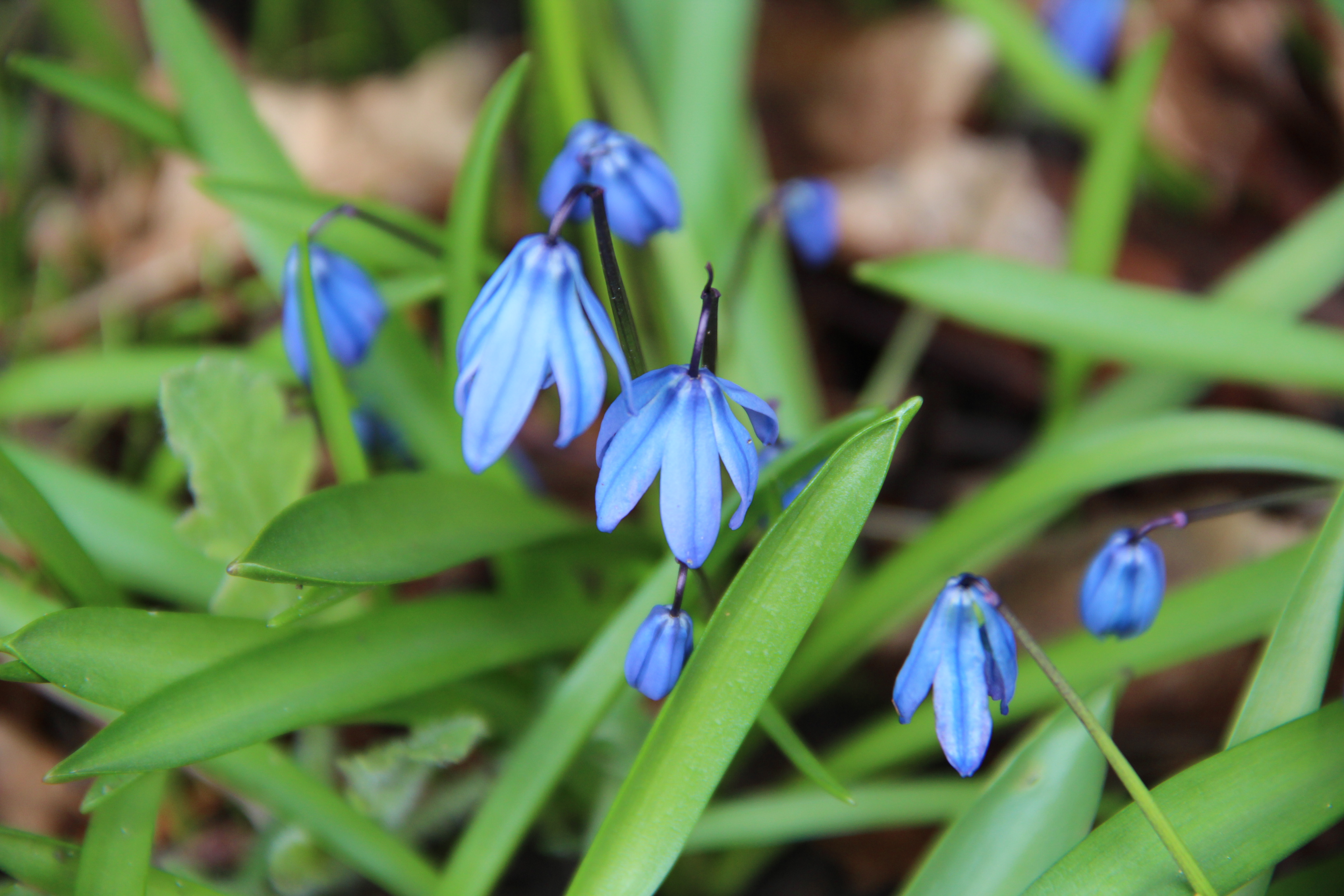
Siberian Squill (Scilla Siberica)

Siberian Squill (Scilla siberica).

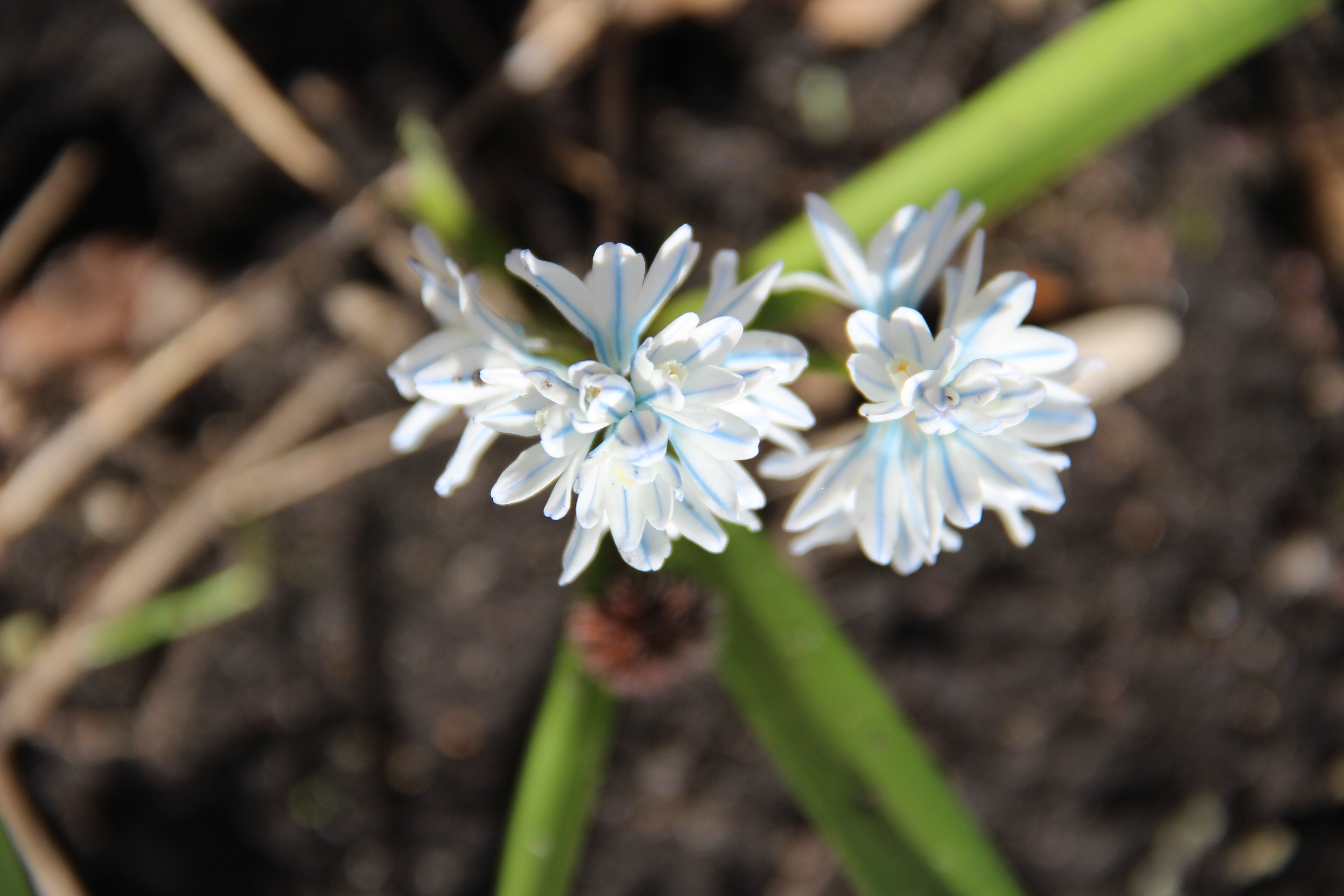
Striped Squill (Puschkinis scilloides).

Striped Squill (Puschkinis scilloides).

Crocus buds (Crocus spp 'ladykiller).

Crocus buds (Crocus species ‘Ladykiller’).

Crocus blossoms (Crocus spp 'ladykiller')

Crocus blossoms (Crocus species ‘Ladykiller’)

Red Maple Flowers (Acer rubra).

Red Maple flowers (Acer rubrum).

Canada cherry (Prunus virginiana 'Canada Red') leaves and flower buds

Canada Cherry (Prunus virginiana ‘Canada Red’) leaves and flower buds.

White-throated Sparrow (Zonotrichia albicollis) © T.M. Murray 2014; used with permission.

White-throated Sparrow (Zonotrichia albicollis) © T.M. Murray 2014; used with permission.

White-throated sparrows are migrating north and add a melodious, clear whistling to early spring mornings.  Once you’ve heard the song, it’s easy to remember.  Many people liken it to the phrase, “My Sweet Canada, Canada, Canada”.  This sparrow has a bright white throat, a black-and-white striped crown and a bright yellow spot between the eyes and bill.  Listen to and watch a white-throated sparrow whistle its lovely, plaintive song.


Eastern chipmunks (Tamias striatus) are out of their dens.

Eastern Chipmunks (Tamias striatus) are out of their winter dens.

American robins (Turdus migratorius) are building nests.

American Robins (Turdus migratorius) are building nests.

Newly opened Glory-of-the-Snow (Chinodoxa).

Newly opened Glory-of-the-Snow (Chinodoxa).

A patch of striped squill and Siberian squill in our garden.

A patch of Striped Squill and Siberian Squill in our garden.

Hermit Thrush Visitors

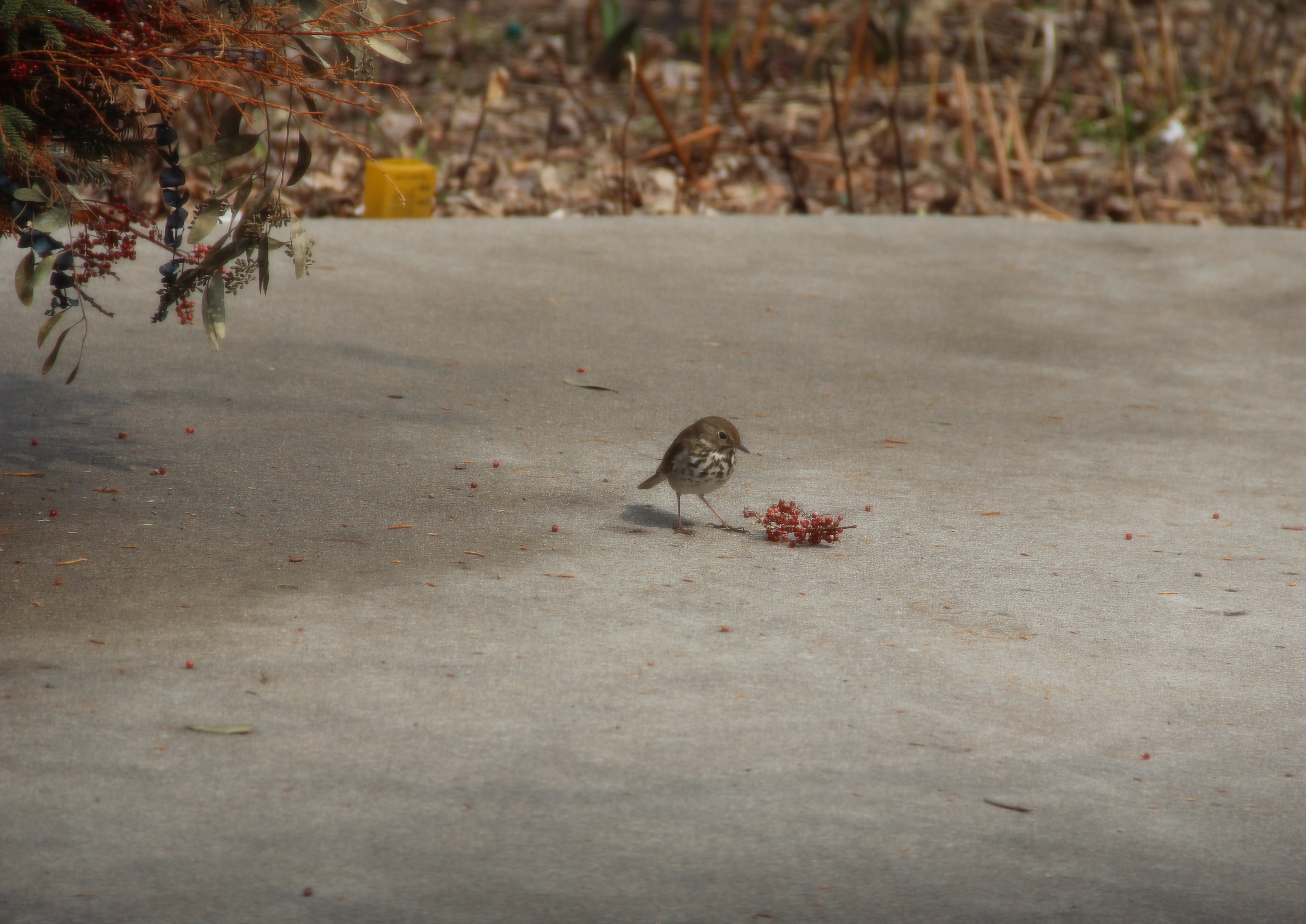
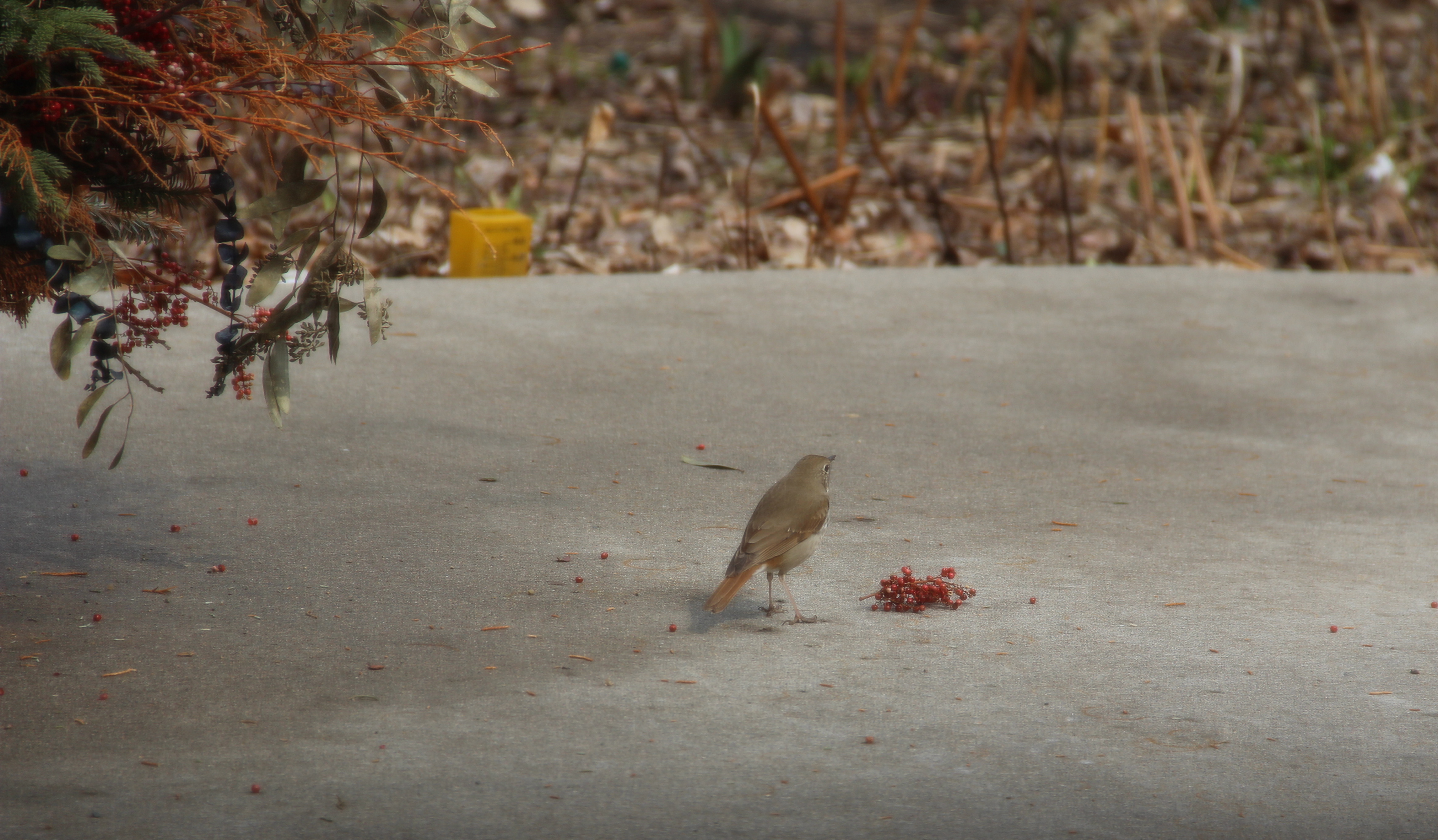
A hermit thrush eats berries from our patio planter.

A hermit thrush eats berries from our patio planter.

Recent strong winds brought a pair of migrating hermit thrushes to our backyard.  Their brown backs, spotted breasts and rust-colored tails camouflaged them well among the leaves littering the gardens and against our winter-weary lawn.  They plucked berries from a planter on the patio, picked in the grass under the suet and thistle feeders, and turned over leaves in the garden in search of food.

Cousins to American robins, eastern bluebirds and several other thrushes, hermit thrushes may be the best singers of the family. Their song is flute-like, liquid, melodious.  In Minnesota, these songsters spend the summer in the north-central and northeastern regions of the state.  It is rare to hear a hermit thrush sing during migration, and over the many years that migrants have rested in our yard, I’ve heard their ethereal singing only once  —  when a bird perched in a tall arbor vitae and sang on a sunny morning.  Watch and listen to a hermit thrush sing its haunting song.

hermit4

A rust-colored tail helps identify the hermit thrush.

Some thrush species can be tough to tell apart because of the spotted breast and brown coloring shared by many. But, if the bird has a rusty tail that it flicks up and down, you’ll know you’ve likely spotted a hermit thrush!


Spring’s First Green

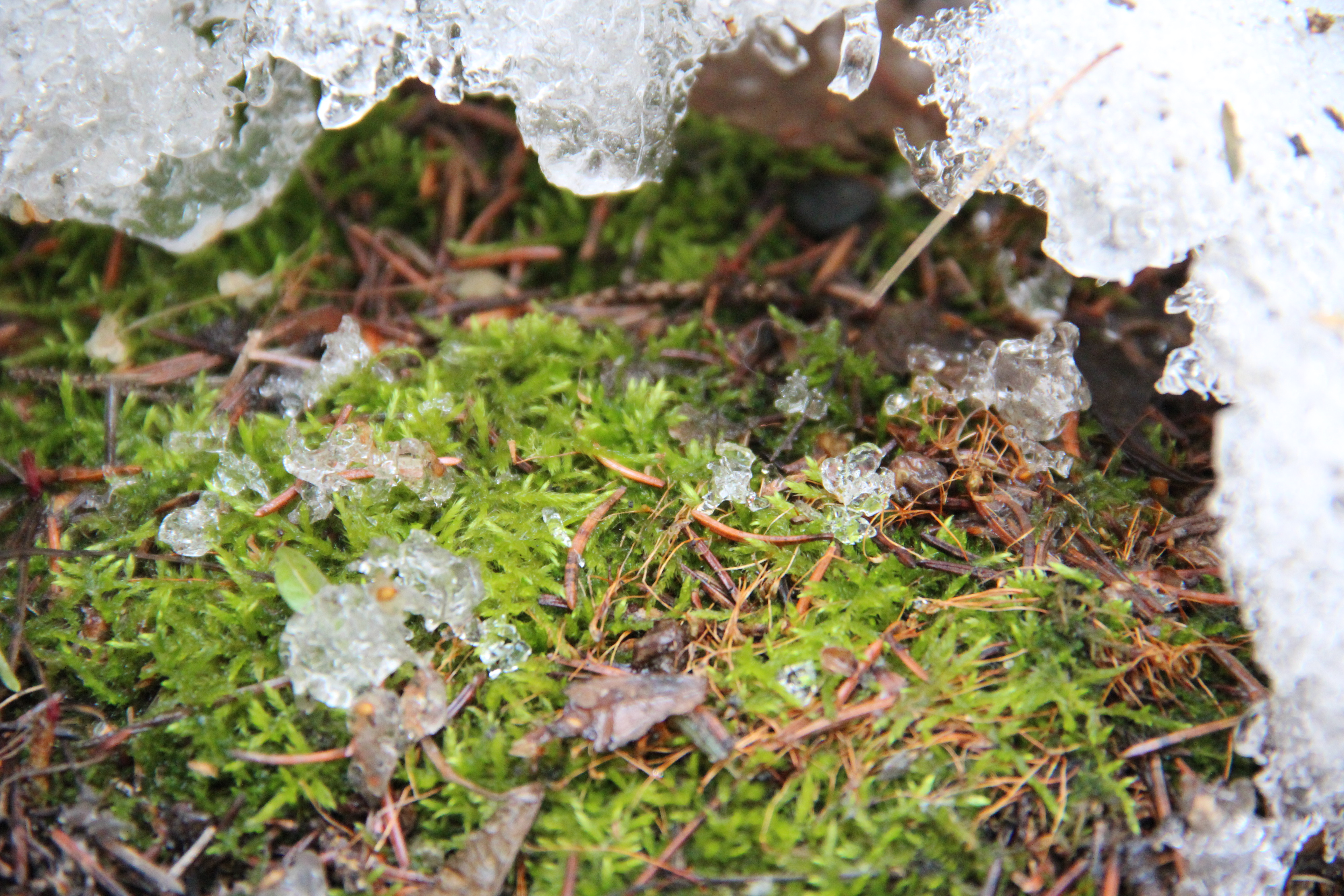
Melting snow waters and revives a tiny patch of moss.

Melting snow waters and revives a tiny patch of moss.

Early last week, I searched the few exposed patches of dirt for signs of bulbs pushing through the soil.  No sign of bulbs in the north-facing garden, yet.  Instead, I found the first bright green of the season:  An oasis of moss tucked beneath a little cavern of melting snow under our spruce tree.  Threaded with tiny seeds and spruce needles, the moss was the golden green of spring and droplets of melting snow refreshed it.  Lovely, restful green; a beautiful, hopeful color after months of black and white.

Morning Song

Each morning between 6:00 and 6:30, a male cardinal perches in the arbor vitae at the back of our yard and sings in the predawn darkness.  His melodious whistles serenade his mate, define his territory and bring cheer to the cold morning.

When the sun is higher, he whistles a more intricately patterned call.  Soon his mate comes to feed at the suet brick while he watches from the cedars, a red ornament decorating the green fronds. His lady is softly colored in olive and brown highlighted with pinkish red.  I haven’t heard her song yet this year, but female cardinals are able to sing as lovely as males, and soon she will join him — especially when they begin nesting, to communicate location and the need for food.

This cardinal pair has nested in our hedge for the past two summers.

This cardinal pair has nested in our hedge for the past two summers.

Why does the sight of a cardinal bring joy to so many people? Cardinals are common, year-round residents throughout most of Minnesota, the eastern United States and Mexico. Yet, spotting a flash of red in a tree top, at a feeder, or in a garden is always delightful.  For me, it is because cardinals sing when most other birds are silent — on frigid late-January mornings and sweltering late-summer afternoons; and because, most summers, they raise a family in the hardwood hedge in our backyard; and, simply for their red brilliance against the winter landscape or among the purple and gold in our September garden.  A common bird, perhaps; uncommonly beautiful, most certainly.

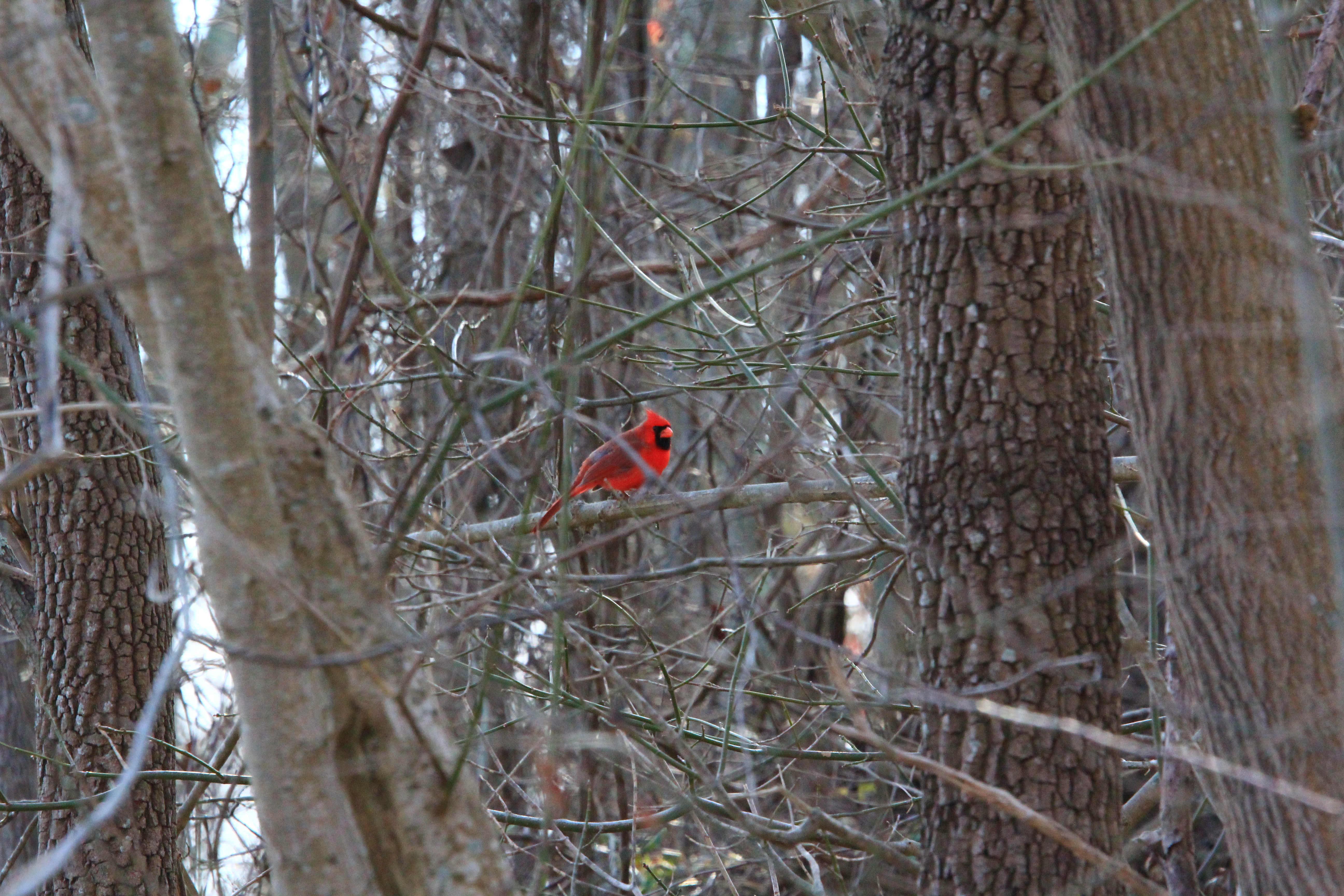
2014 TM Murray; used with permission.

A male cardinal glows in the stark winter woods.  © 2014 T. M. Murray; used with permission.

Quaking Aspen Buds

The season's first tiny catkin buds open on quaking aspens (Populus tremuloides).

The season’s first tiny catkin buds open on quaking aspens (Populus tremuloides).

Shiny, brown buds began to open on a neighbor’s quaking aspen trees today!  Each open bud held what looked like a tiny, soft, gray cat’s paw, similar to a pussy willow bud.  Aspens are members of the willow family, so it’s no coincidence that they bear soft, fuzzy catkins.  The buds will develop into long catkins, which are the aspen’s flowers. They are wind-pollinated and the male catkins will release large amounts of yellow pollen into the air later in the spring.  (According to pollen.com, poplars and junipers already are releasing low levels of pollen in the Twin Cities.)  The seeds will develop and be dispersed with tufts of soft, white “cotton” before the leaves open.