Early Spring Serenade

A male northern cardinal (Cardinalis cardinalis) sings from his springtime perch .

A male northern cardinal (Cardinalis cardinalis) sings from his springtime perch.

I like the silence of frosty mornings, but I also miss the music of birds during the winter. Most mornings for the past three weeks, our resident cardinal has greeted the sunrise — cloudy or clear — with song. At first he sang one short burst of bright song. Over the next week, it grew to several minutes of song at dawn and another round later in the morning. Basking in Tuesday’s sunshine and 70°, he sang many times during the day. Later that same day, a mourning dove cooed in a spruce tree, chickadees added their lovely two-note calls, and an American robin joined the serenade with its caroling. However, all went silent when a Cooper’s hawk sailed across the backyard and into my neighbor’s silver maple!

Why do birds sing more frequently in the spring? There’s still much to learn, but the thinking is that the increase in daylight triggers a bird’s thyroid-stimulating hormone (TSH). TSH steps up the production of sex hormones to prepare birds for the mating season. A big part of successful reproduction is attracting a mate and maintaining a breeding territory — birdsong plays a major role in both activities.

The four songsters mentioned above were year-round residents in the Twin Cities this past winter.  Soon migrants, such as warblers, red-winged blackbirds, catbirds and others will return to add their harmony to the chorus. In fact, I saw my first red-winged blackbird of the season perched on a cattail in a small pond yesterday. Regardless of its purpose, the return of beautiful birdsong is one of spring’s finest gifts.
Late-Winter Beauty

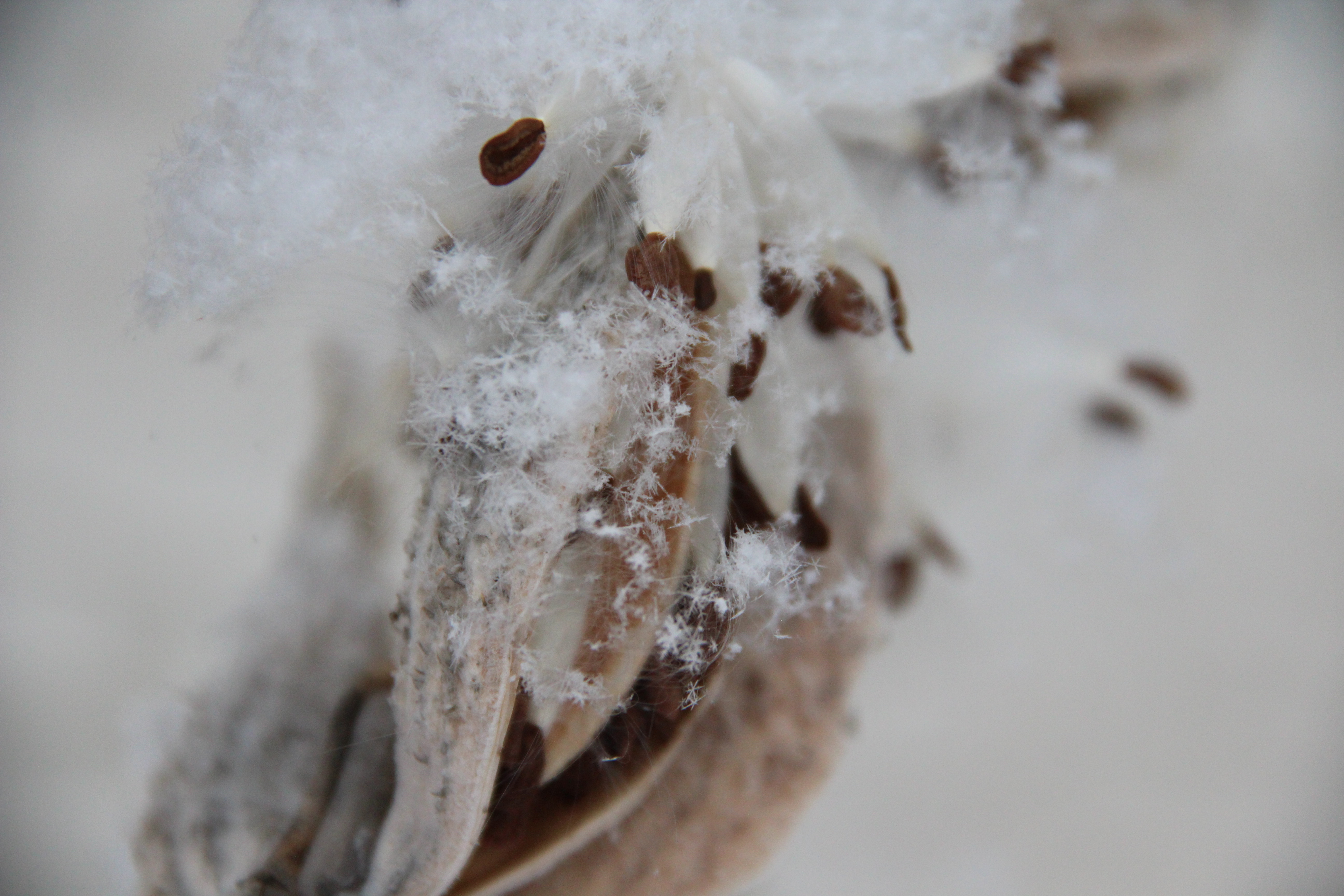
Star-like snow crystals add beauty to common milkweed (Asclepia syriaca) in early March

Star-like snow crystals add beauty to common milkweed (Asclepia syriaca).

Soft, wet snow falls in early March. White blankets the garden and lawn, outlines tree limbs in frosty ice, and meltwater gurgles in downspouts.  It’s a peaceful scene — and what’s most beautiful to my eye is the common milkweed in our garden.  All winter long, north winds shook the dead, dry stalks and tugged at the pods until the seeds ballooned into the wind on their silky parachutes. A few seeds float free each day, but most still ride the breeze tethered to their pods.  Minute feathery snow crystals etch the silken strands like starry sequins on nature’s beautiful gown.
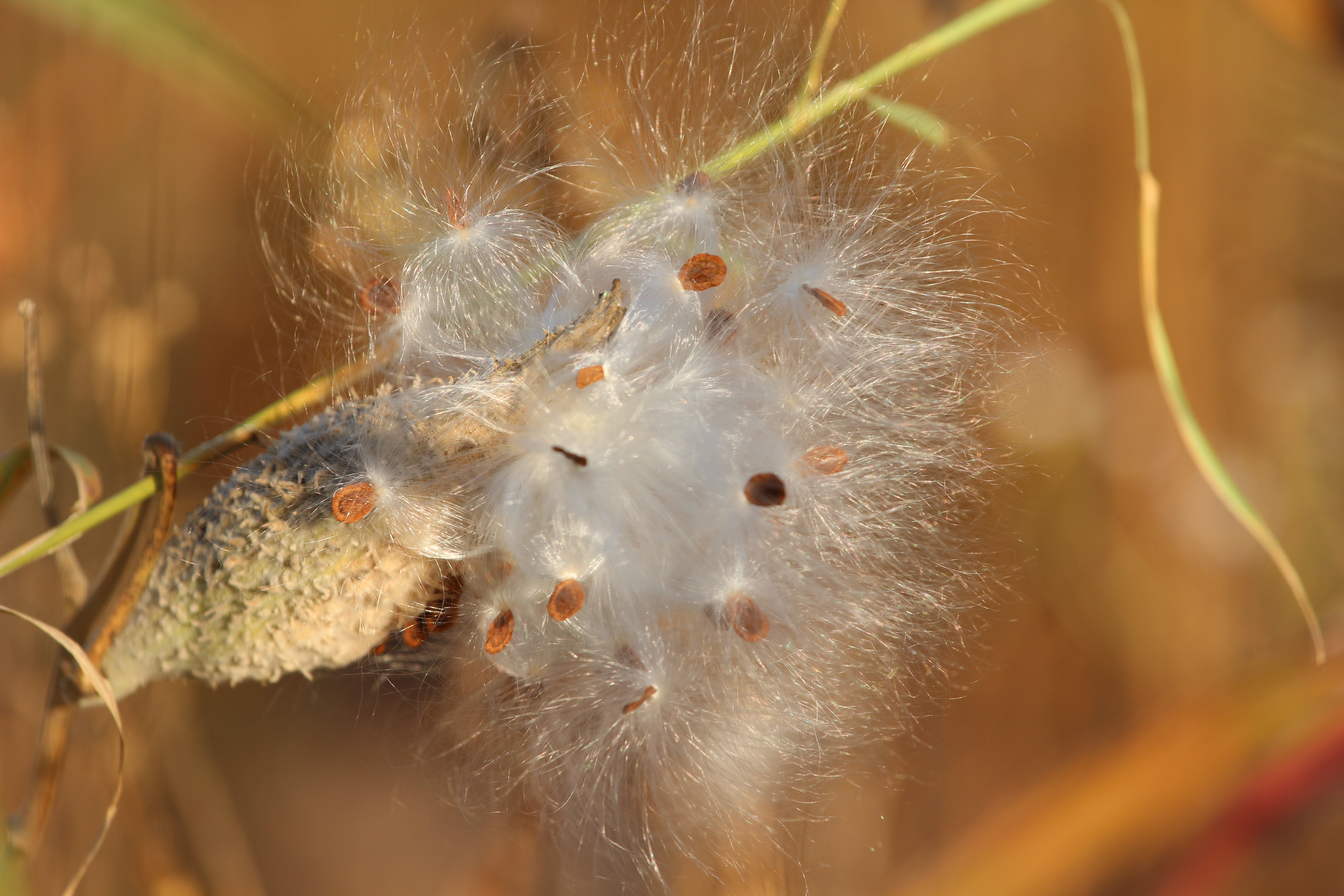
milkweedwholeThough the stalks are tattered, rough and hollow, soon spring-green shoots will pop through the soil to grow new plants and nourish bees, butterflies and hummingbirds. But for today, I’ll enjoy the crystal-covered seeds and the snowy scene knowing it will soon give way to spring’s warmth.ballerinaseeds2

Silent Snow

Pond Snowy Day

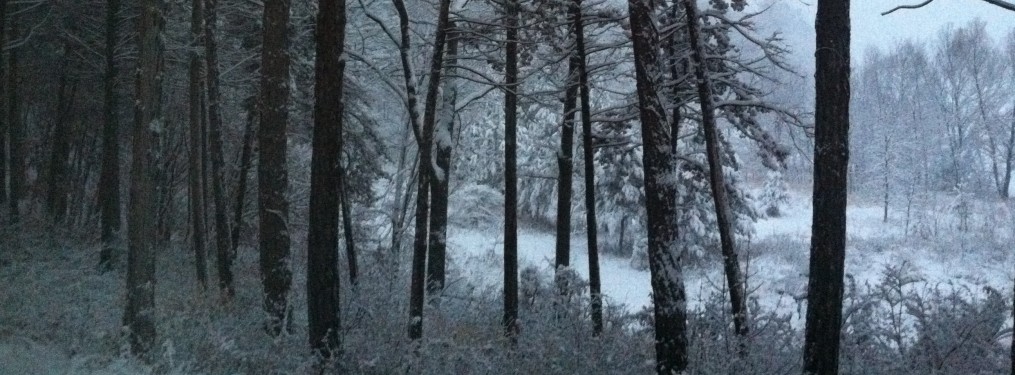
Low, heavy clouds lumber overhead, and the world narrows down to the bare-treed woods and pond.  Outside, I listen to the quiet  —  so still that I can feel the pressure of silence.  All traffic and aircraft noise is muffled and absorbed by feathery flakes.  I hear only the occasional ruffle of wind swishing snow crystals across open space in powdery swirls. A lone crow soars black against the sky not breaking the stillness.

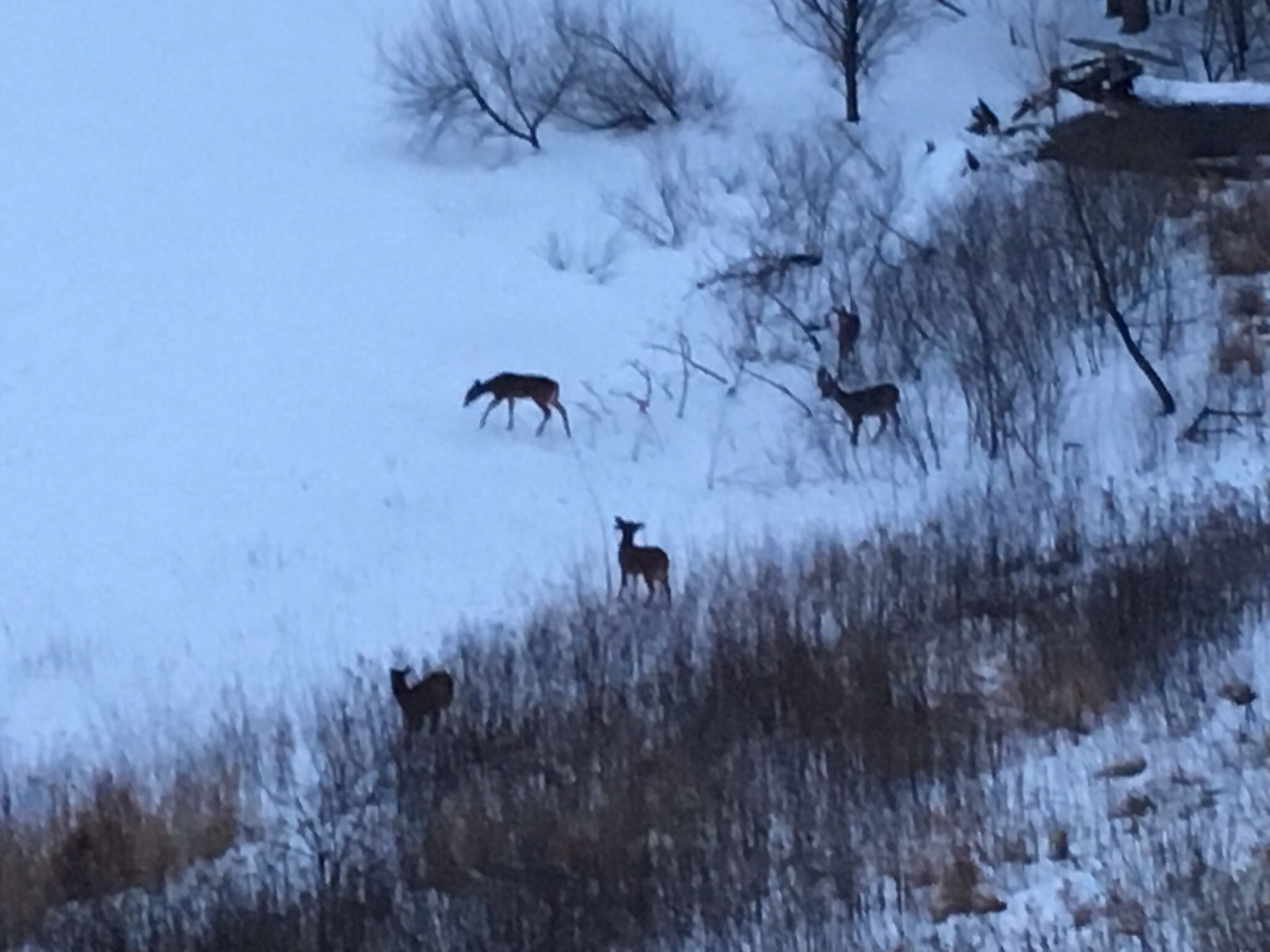
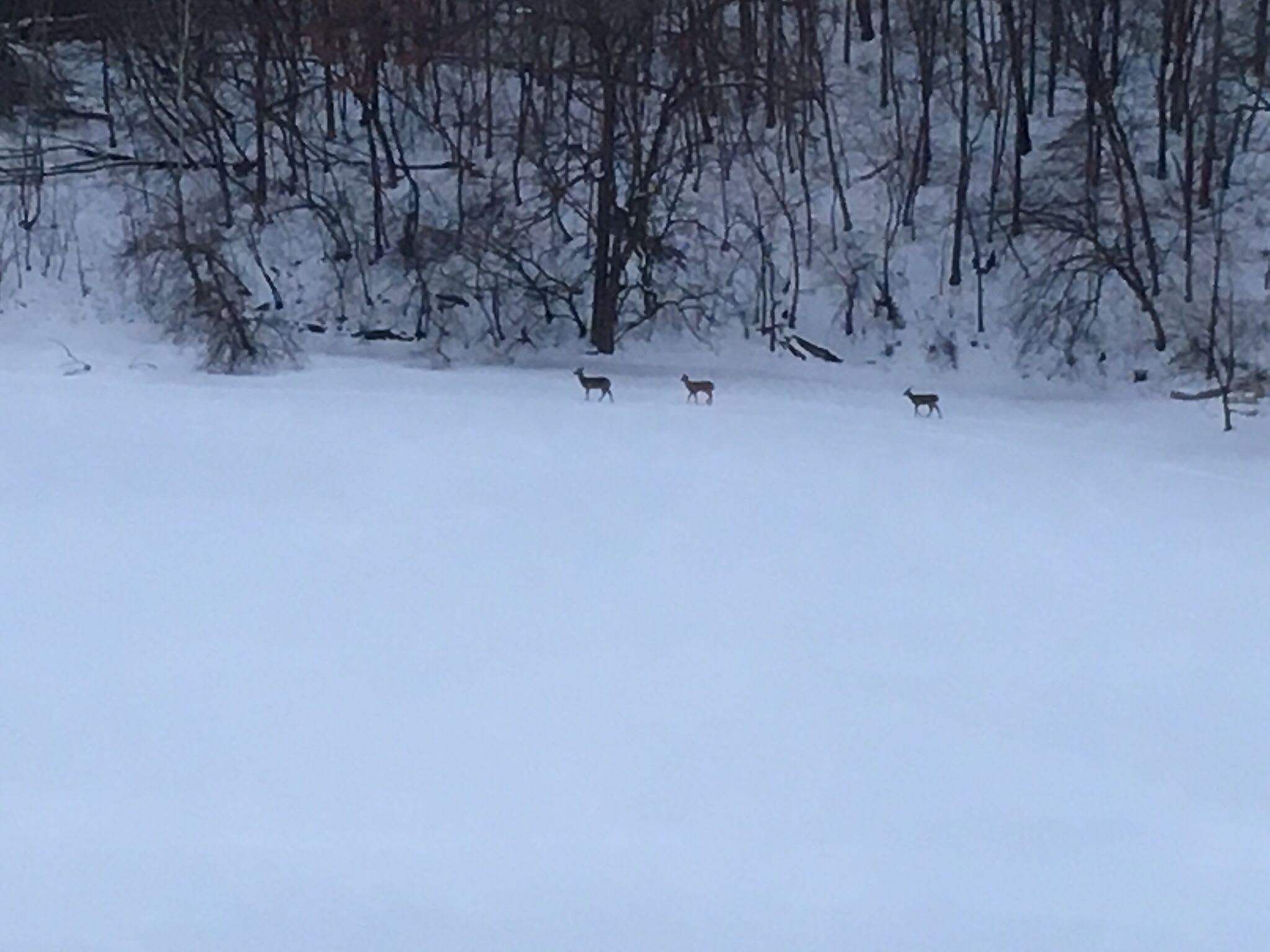
In the morning, the predawn darkness is tinted with the odd light that accompanies a new snowfall.  I am up early and watch as daylight slowly builds beneath slate clouds.  I hear no birds, but there’s a gentle huffing sound: the breathing of white-tailed deer.  Gradually, several appear on the shore of the pond.  They nibble the tips and buds of willow saplings and other tender plants that protrude from the ice-covered pond and its bank.

Pond Deer Feeding

A second group grazes along the pond’s far shore.  As I watch them, I daydream of seeing their spotted fawns in a spring world filled with green leaf buds, lush moss, wildflowers, glorious birdsong, and wood ducks and mergansers sailing on the pond.  But for now, the winter world remains black, white and still.

Pond Distant Deer

In Memory of Cathy Borden

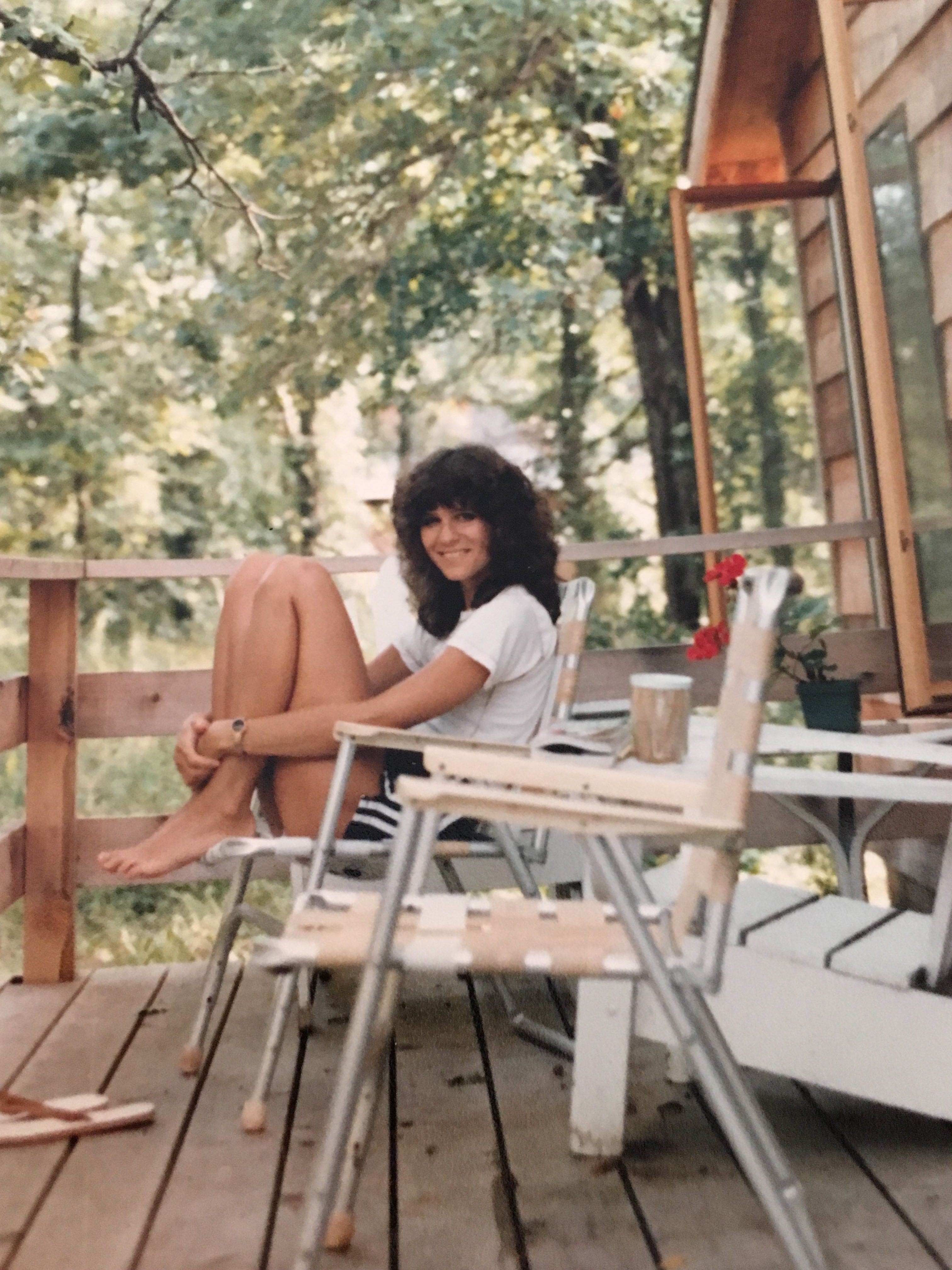
Cathy in 1982 during one of our birding trips.

Cathy in 1982 during one of our birding trips.

My friend, Cathy Borden, died this morning.  She was a teacher, writer, wife, mother, sister, friend, gardener and lover of nature.  She enjoyed watching birds and her favorites were black-capped chickadees and American goldfinches.  Cathy gave me my first birding field guide 35 years ago — and though I’ve purchased other books and apps, that fourth edition of Roger Tory Peterson’s “A Field Guide to the Birds East of the Rockies” is the one I carry on hikes, trips and weekends at the cabin.  It’s worn, wrinkled from hiking in the rain, and out of date.  In large part, it’s the memories of good times and the inscription written by Cathy on the front page that make it special:

“Beth — Here’s hoping you and I have many happy hours together with our books. I’ll pass on the wish that was given to me: ‘May you live long enough to identify every bird in this book!’                    — Cathy Borden, October 14, 1980”

Cathy didn’t live long enough to identify every bird in Peterson’s field guide, and it really wasn’t about the number of birds we identified anyway.  It was the time spent together walking, listening, thinking, discussing and laughing that mattered.  It was taking in the beauty of nature: the golden light of summer mornings in the marsh while warblers sang in willow thickets; autumn leaves burning with the sun’s fire and the silvery seeds of asters, goldenrod, sunflowers and milkweed; bundling up for winter walks in the fields and woods, where we’d flush ruffed grouse and laugh at being startled; and discovering spring’s first wildflowers and bird nests.

Over the years, career changes, raising families, caring for aging parents and other responsibilities became the focus — particularly for me.  I regret not making nearly enough time for nature walks, discussions over tea, or long phone calls with Cathy.

Cathy loved this simple nature blog.  She was a big supporter from the beginning and often chided me because she wanted me to write more frequently. During this past year, I blogged for Cathy, as one small way to bring her joy while she fought metastatic peritoneal cancer.  So it seems fitting to dedicate my blog to Cathy in gratitude for so many things—support and friendship beginning when I was a first-year science teacher; giving laughter that lightened times of tough challenge; sharing the beauty of nature through walks in every season; and the gift of holding her with one of her sons this morning.  No doubt Cathy’s exploring the celestial fields and woods, and working on her new bird list right now. 

Dedicated to Cathy Borden, October 11, 1951 – January 27, 2016, who loved chickadees, goldfinches, lilacs, lilies of the valley, bumblebees and the sound of crickets chirping in the night.

Winter Solstice

grayskies:geese

It hasn’t seemed like winter this December; more like a mild November with moody skies, soaking rains and even a few thunderstorms. What little snow fell, melted into the unfrozen ground. But the sun tells the truth as it rides low on the southern horizon. I always look at winter solstice (10:48 p.m. CST on December 21) as a milestone achieved: We’ve reached the time of peak darkness for the winter. And happily, though sunrise is still getting later, sunset began to lengthen on December 10th!  We celebrate solstice with extra candles on the dinner table, a glass of wine, and Celtic Christmas music.  

I look for the understated, sometimes harsh beauty of winter, and I like the extra hours of moon-watching. Yet, I impatiently wait for the seeds, bulbs, perennials and tiny creatures that rest in the dark earth to reawaken. In the meantime, I will try to appreciate the slate skies and spent plants that add their own stark loveliness to the winter months.

The mid-December moon is often visible during the day.

The mid-December moon is often visible during the day.

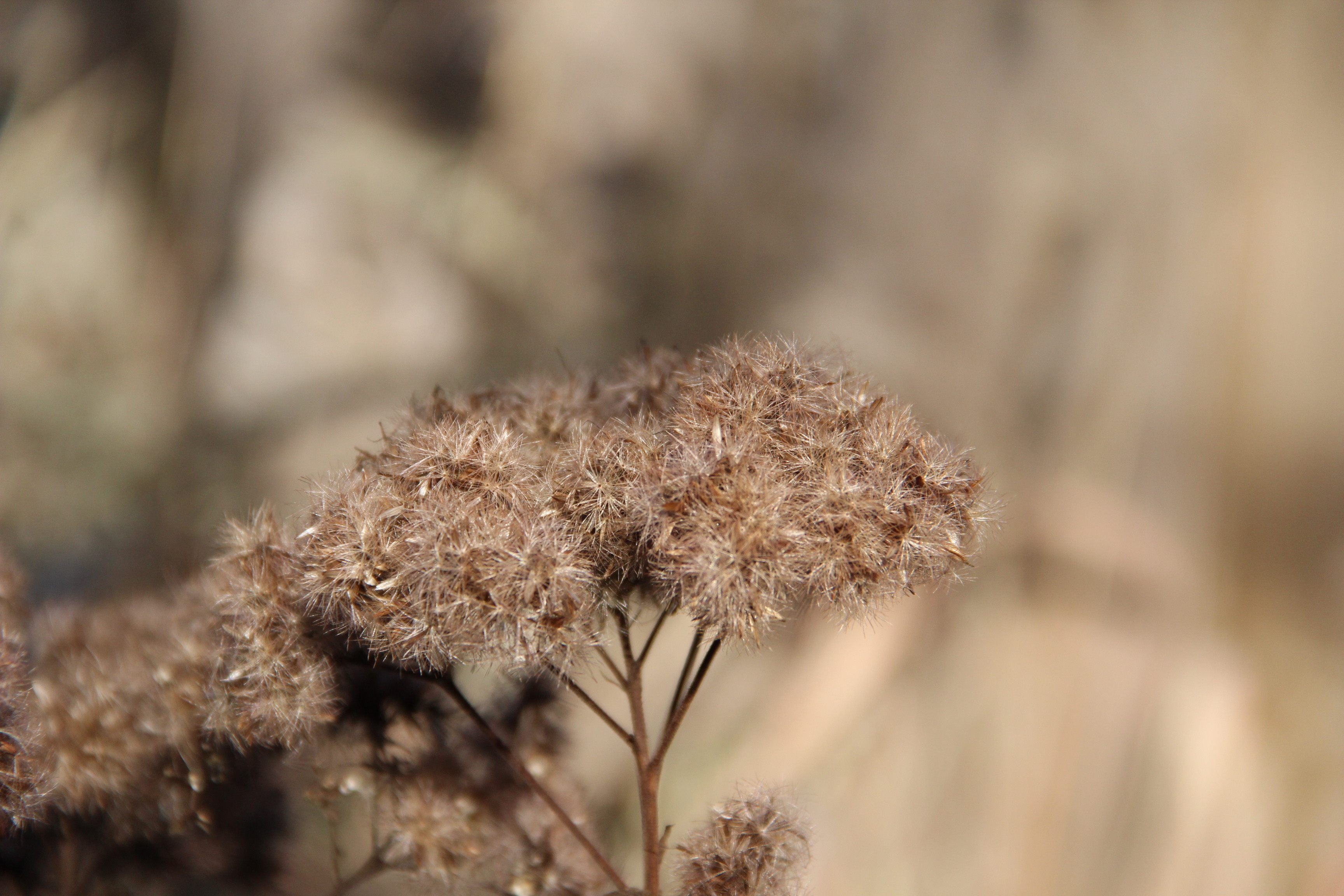
Joe-Pye seedheads.

Joe-Pye weed (Eutrochium dubium) seedheads.

Flame grass seed heads.

Flame grass (Miscanthus sinensis ‘purpurascens’) seed heads and leaves.

Fluffy goldenrod seeds.

Fluffy, soft goldenrod (Solidago) seeds.

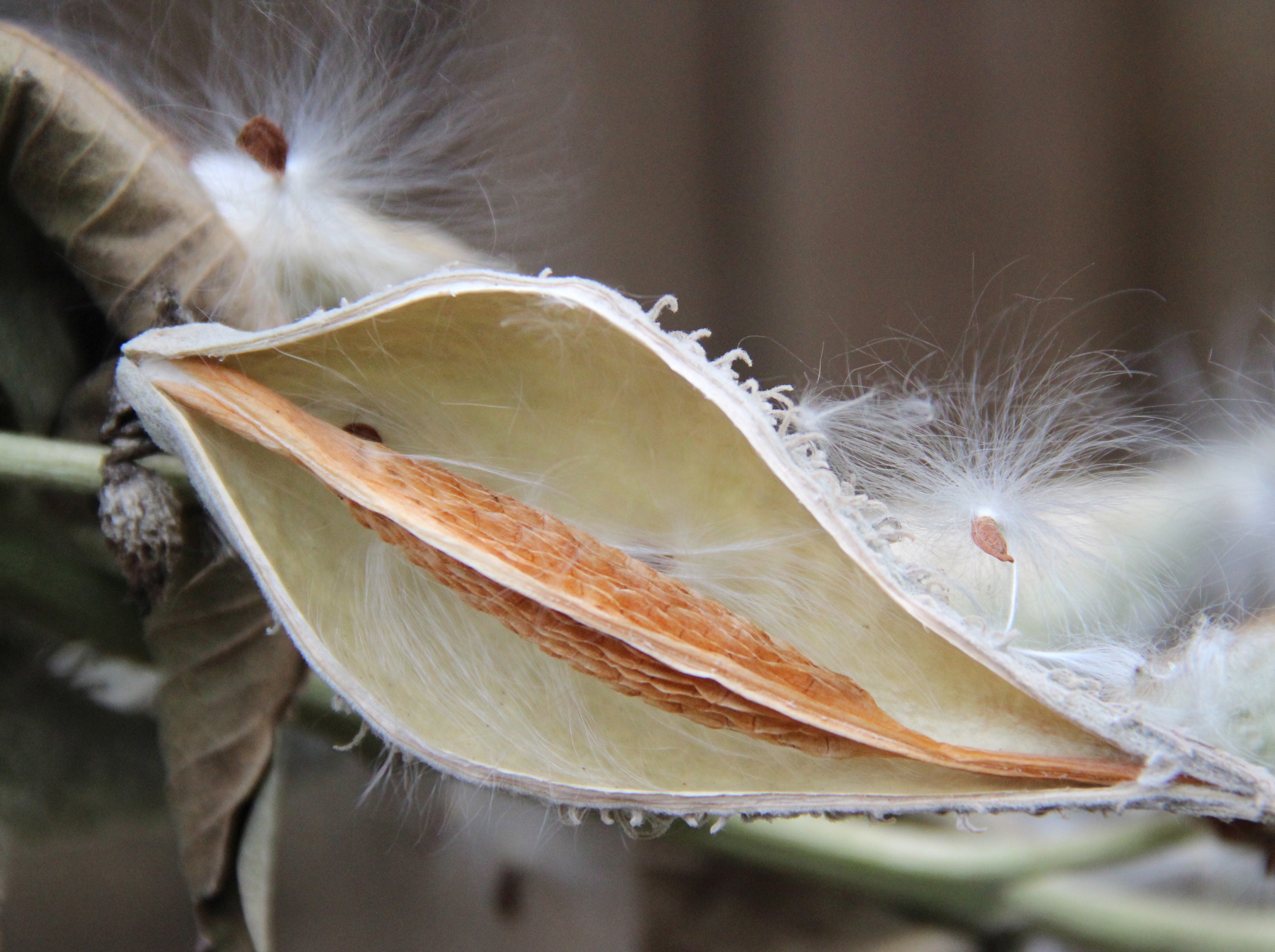
A few seeds still cling to the soft, empty cup of a milkweed pod.

A few seeds still cling to the soft, empty cup of a milkweed pod (Aesclepias syriaca).

Gray-Day Gratitude, Bright Autumn Colors

One morning last week, I walked in our garden between bouts of rain. I wanted to enjoy the warm, mild air before a cold front rolled in that evening. Chipmunks had retired to their underground dens, birds were quiet, and I saw no insects. The exposed wet earth in the gardens smelled almost as fresh and pungent as in spring. Oregano and sage still scented our little herb garden. (I miss the aroma of fresh herbs so much during the winter.) A few bright patches of color accented the beige, russet and brown of mid-November, tiny remnants of a beautiful summer and autumn. I am so grateful for gentle autumn days and memories of a lovely, bountiful growing season.  What nature and garden memories bring gratitude to your mind and heart?

Fan-shaped gingko leaves fell much later than the maple leaves.

Fan-shaped gingko (Gingko biloba) leaves drop much later than many other leaves.

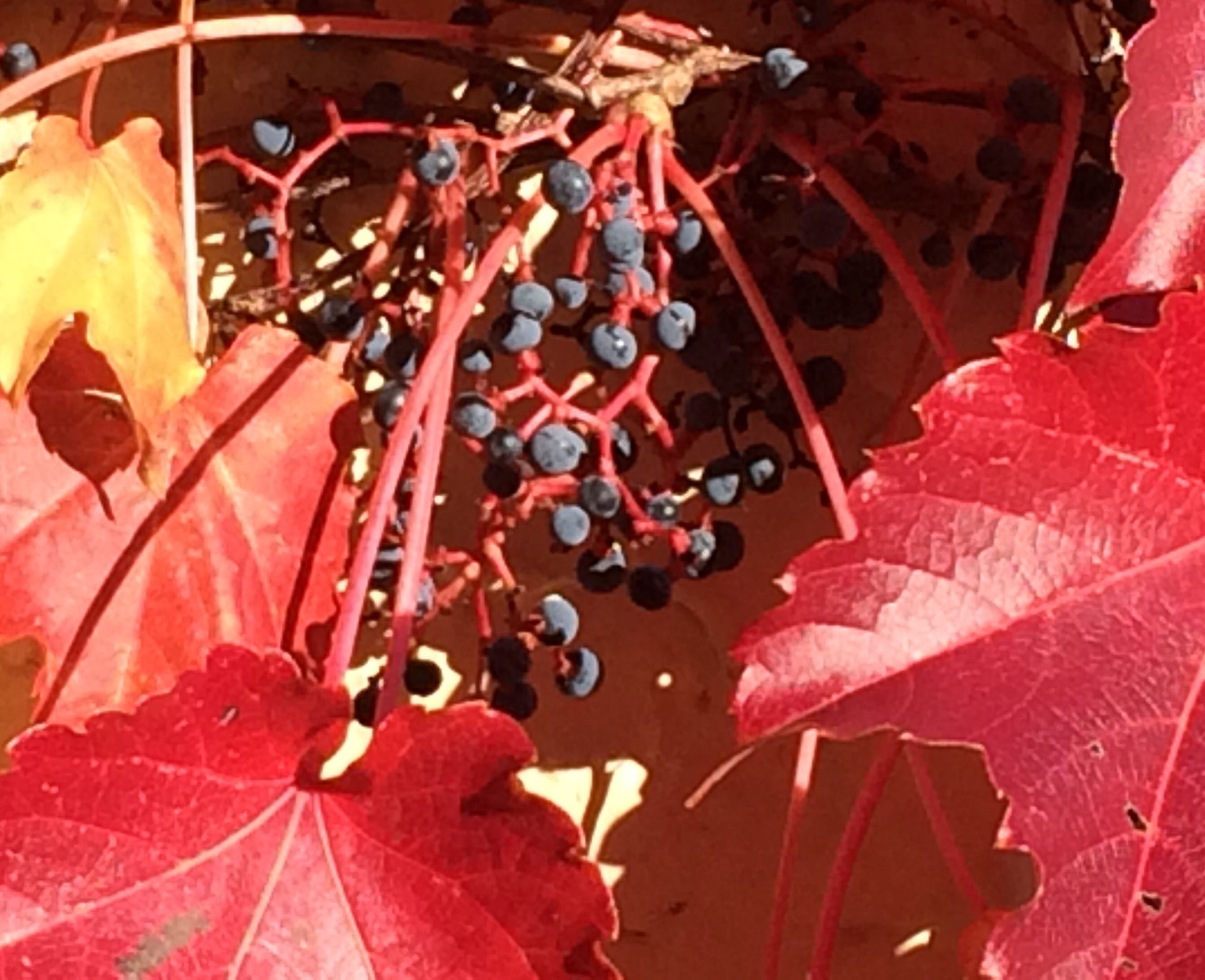
American woodbine (Parthenocissus inserta) fruit is a winter treat for some types of songbirds and small mammals.

Boston ivy (Parthenocissus tricuspidata) fruit and leaves.

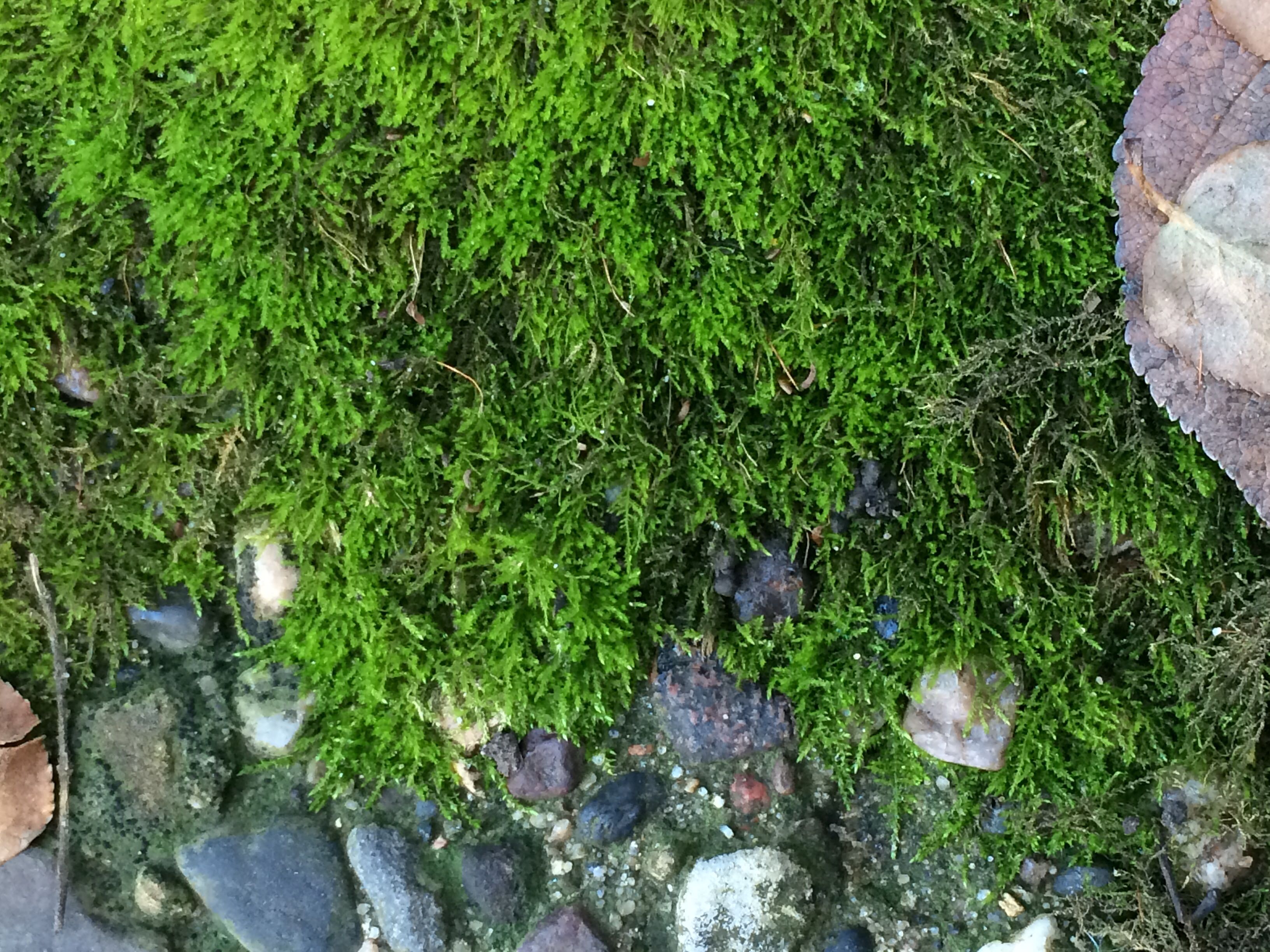
Moss in the north-facing garden of our backyard.

Moss in a north-facing garden of our backyard.

Common milkweed (Aesclepias syriaca) releases it silky seeds.

Common milkweed (Aesclepias syriaca) releases it silky seeds.

A tiny red maple seedling in the backyard.

A tiny red maple (Acer rubrum) seedling in the backyard.

Beads of rain adorn daylily fronds (Hemerocallis).

Beads of rain adorn daylily fronds (Hemerocallis).

Wild grape (Vitis riparia) leaves etched in maroon.

Wild grape (Vitis riparia) leaves etched in maroon.

Raindrops on crimson barberry (Berberis) fruit.

Raindrops on crimson barberry (Berberis) fruit.

The beauty of a single woodbine leaf in the empty garden.

The simple beauty of a single Boston ivy leaf in the empty garden.

An empty robin's nest and red maple leaf tucked into a dwarf blue spruce.

An empty robin’s nest and red maple leaf tucked into a dwarf blue spruce (Picea pungens).

Ornamental kale in a sunny spot.

Ornamental kale (Brassica oleracea) grows in a sunny spot.

Late-Autumn Insects

Last week, the coming winter teased us with snow flurries mixed in with the rain. But, during the first week of November, the temperature rebounded to the 70s. The breeze is gentle, the afternoon sun is hot and a few insects are active in some sun-warmed patches of our backyard.

On the garden’s last purple coneflower, a yellow-green, spotted beetle, similar to a ladybug at first glance, nibbles on the coneflower’s center.  It is a spotted cucumber beetle (Diabrotica undecimpunctata).  And, though it’s a garden pest, it won’t survive the Minnesota winter, so I let it stay. It looks beautiful on the deep magenta bloom.

Spotted Cucumber Beetle

Spotted cucumber beetle (Diabrotica undecimpunctata) on a purple coneflower.

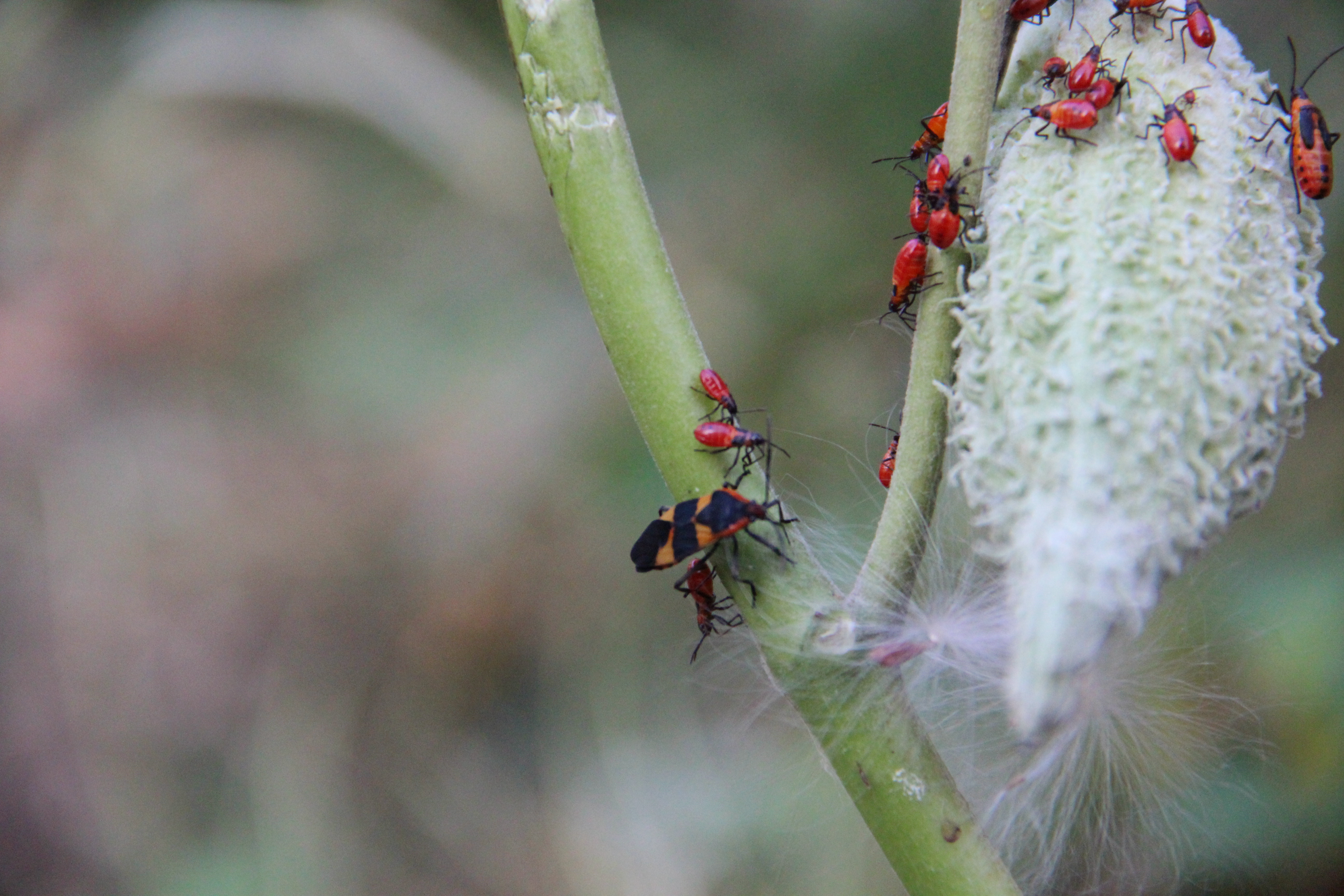
Across the yard in another sunny spot, bright red insects huddle together on a common milkweed pod. They include three different developmental stages, or instars, of the same insect, the large milkweed bug, (Oncopeltus fasciatus).  They use a tubelike mouth to inject digestive enzymes into the pod and then suck out the partially digested plant material.  Because they eat milkweed, they have the same toxicity found in monarchs and other insects that dine on the plant.  When I first noticed them a few weeks ago, I thought they were red aphids until I spotted an adult on the pod.  Over time, they began to grow larger, develop black markings, and become darker red.  Like the spotted cucumber beetle mentioned above, the large milkweed bug is migratory and those still here won’t survive our northern winter.

Early instars of Large Milkweed Bug

Early developmental instars of large milkweed bug (Oncopeltus fasciatus).

Large milkweed bug in developmental stages.

Large milkweed bug in several developmental stages on a common milkweed pod.

The orange shells of Asian lady beetles (Harmonia Axyridis) glow where they’ve settled on the sun-warmed brick of our house and on a few hardy garden plants.  Unlike the insects mentioned above, these beetles survive the Minnesota winter.  They were introduced into the southern United States in the mid-1900s to help control agricultural pests and first appeared in Minnesota in the 1990s, according to University of Minnesota records.  To some people they’re pests because the beetles often find a way inside in the autumn. But, they also eat aphids found on trees, in gardens and on agricultural crops.  The easiest way to distinguish Asian lady beetles from native species is by an “M” or “W” mark (depending on the viewing angle) on the thorax between the head and abdomen.  (More about Asian and native ladybird beetles in another post.)

Asian lady beetle on goldenrod.

Asian lady beetle (Harmonia Axyridis) on goldenrod.

Asian lady beetle on 'Henry Kelsey' rose.

Asian lady beetle on ‘Henry Kelsey’ rose.

Glimpses of a Mid-October Afternoon

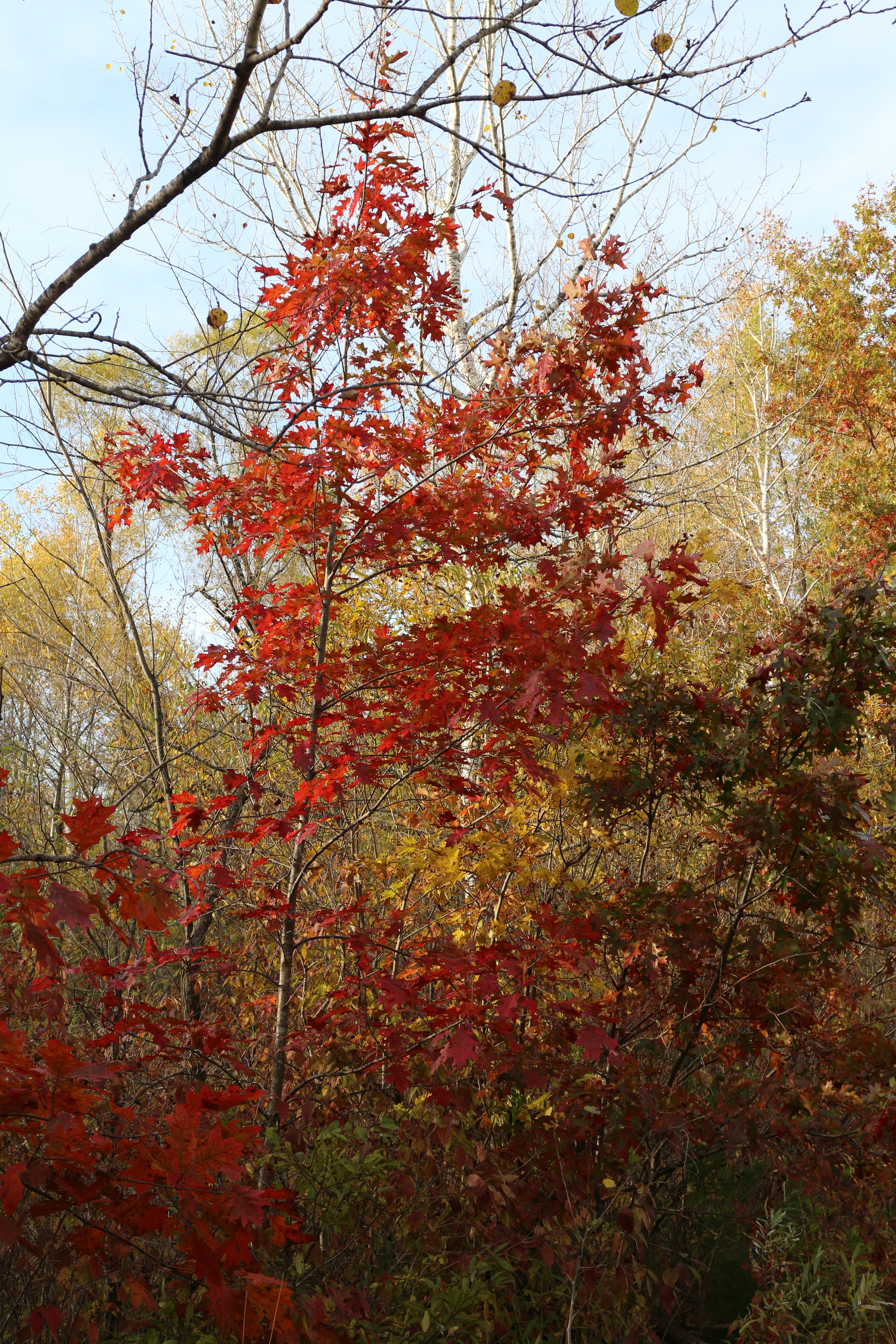
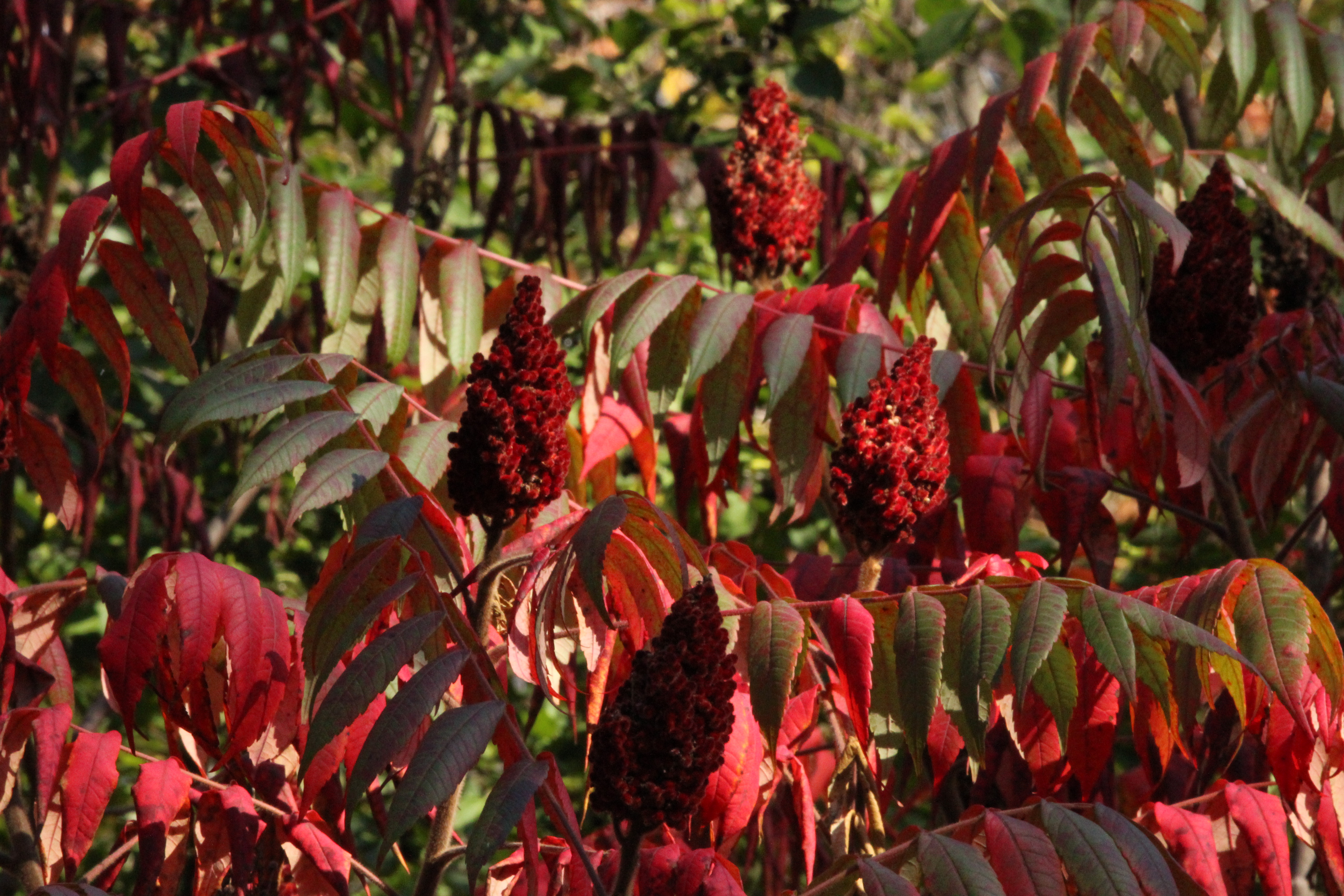
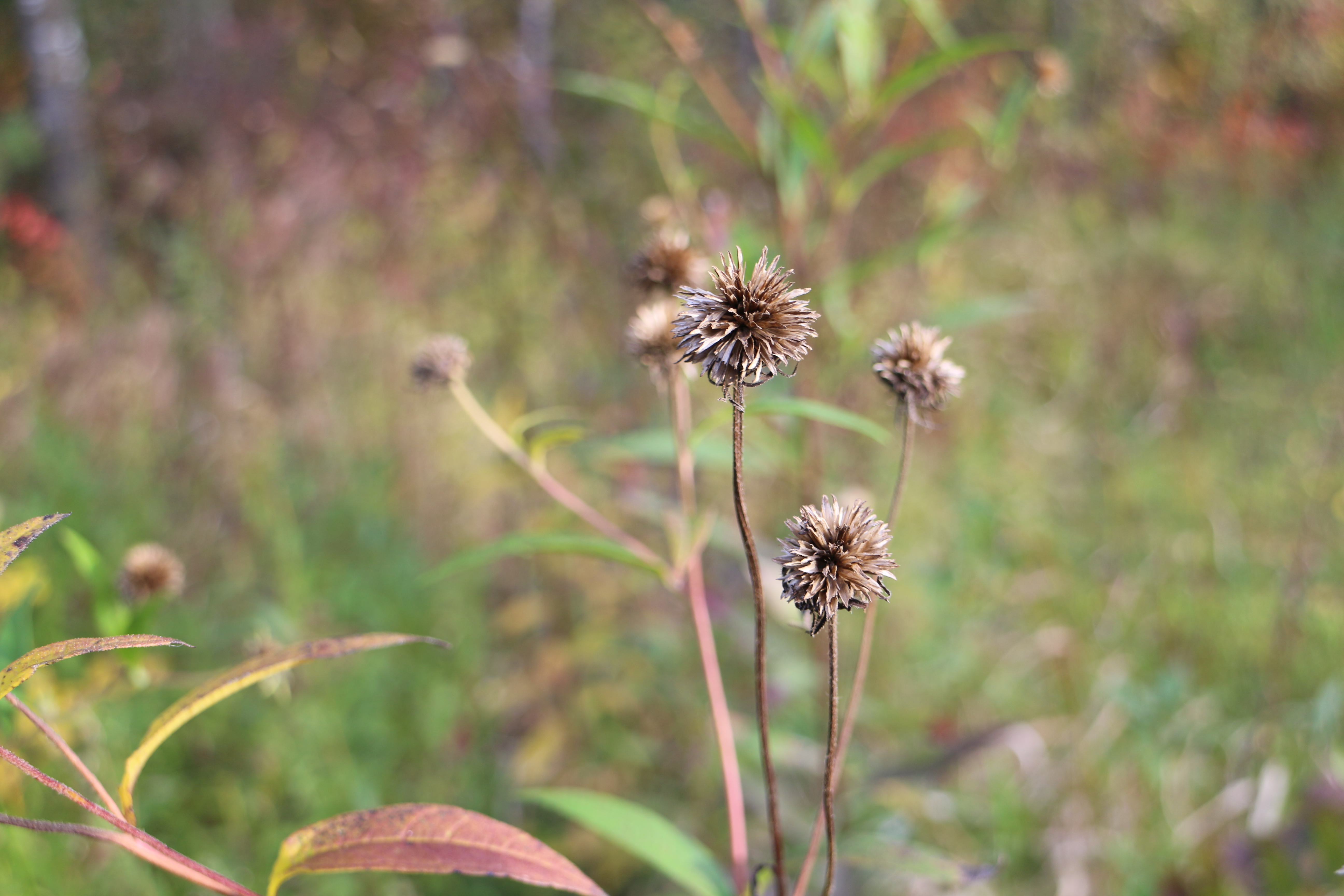
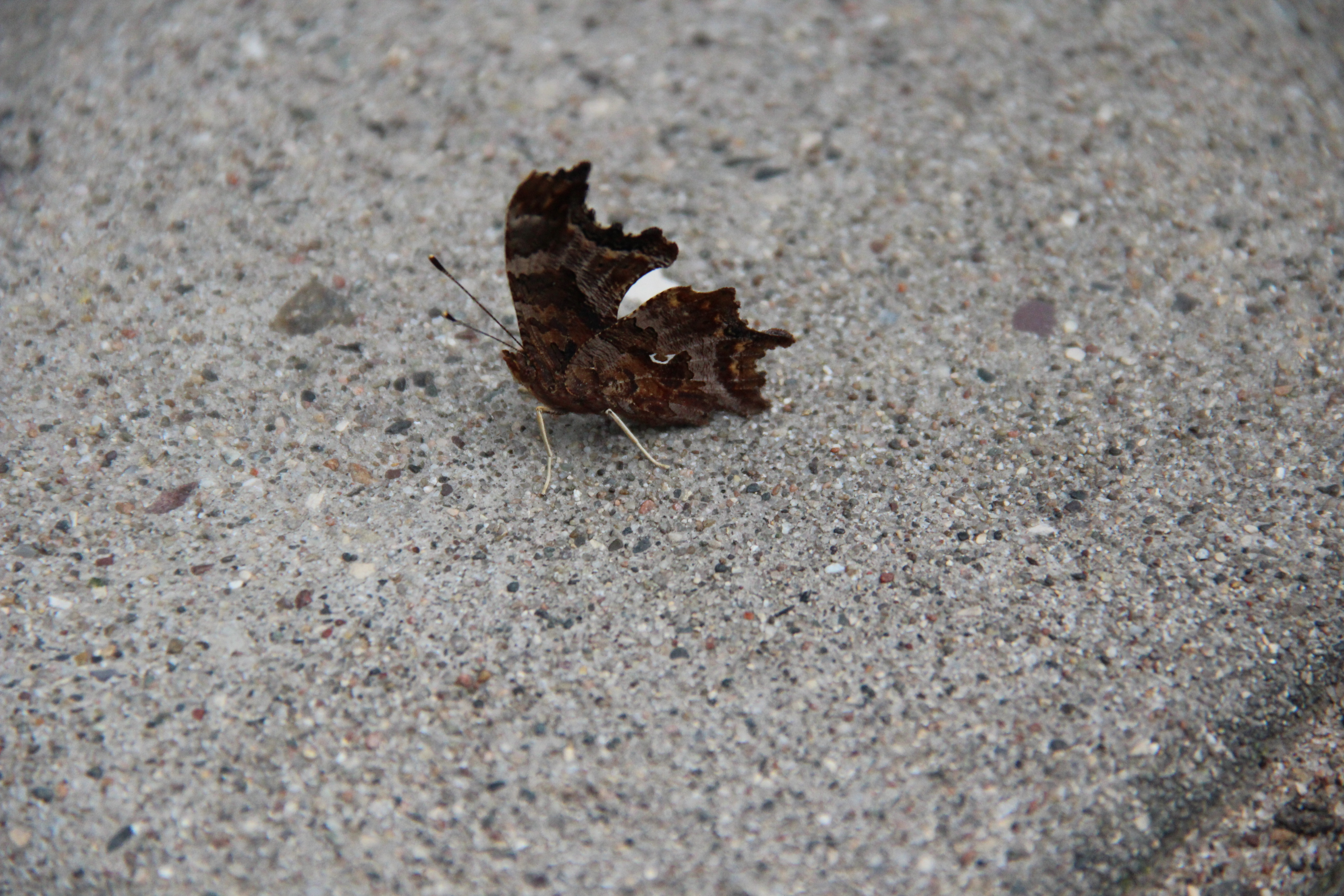
The breeze feels like August; warm, close, comforting. But the sun and the landscape reveal the day’s true identity: mid-October. Deep red, maroon, cranberry, orange and yellow leaves replace the myriad greens of summer. A few tattered wildflowers remain, but most have given way to sharp, sturdy seed heads in shades of brown and cream.  Thick, warty milkweed pods crack open and set free their silky seeds.  The woods are much quieter now without thrushes, warblers, orioles and so many other nesting birds to sing their courtship songs.  A few chickadees, kinglets, nuthatches and woodpeckers call in the trees and thickets, and small groups of Sandhill cranes bugle overhead as they fly between fields.  On the bank of the Snake River in Pine County, MN, a brown morph leopard frog rests in the long grass, and a few wood ducks splash and take flight as I approach.  Chipmunks scold each other as they scramble to collect and store red acorns for their winter stash. Most insects have disappeared for the season, but an eastern comma butterfly suns itself, ladybugs swarm looking for a place to wait out the winter, and hardy bumble bees seek the few remaining wildflowers. During the coming winter, I’ll hold close these memories of the sun’s gentle warmth and the glowing landscape.

American hazelnuts, October

golden october

Red oak, October

Sumac, October

Seedheads, October

American hornbeam seeds, October

Common milkweed seeds, October

chick oct2

Bugling cranes, October

Tattered bloom, October

Late bumbler on aster, October

Asian ladybird beetle, October

Eastern comma, October

Toadstool, October

Leopard Frog, October

chipfor tom

October road

2015 Monarch Journey South

Coppery orange and black monarch butterflies glow against the warm, late summer sun.  Monarch migration to Mexico is underway in the northern United States.  According to monarchwatch.org’s peak migration chart, at 45° latitude the greatest number of monarchs will migrate between August 29 and September 10.  In St. Paul, Minnesota, I’ve primarily seen the butterflies floating beneath trees in backyards and along the streets.  A few rest in our garden and nectar on garden phlox, goldenrod, snakeroot, Japanese anemones, black-eyed Susan’s and Joe-Pye weed, which appears to be their favorite.

Monarch resting on white snakeroot (Ageratina altissima)

A male monarch suns itself on white snakeroot (Ageratina altissima)

Monarch resting on one of more than 40 species of goldenrod (Solidago) native to Minnesstota.

A monarch rests on one of more than 40 species of goldenrod (Solidago) native to Minnesota.

A monarch drinks nectar from sweet Joe-Pye weed.

A female monarch drinks nectar from sweet Joe-Pye weed (Eutrochium dubium).

Will this year’s migration numbers be higher or lower than 2014’s?  It’s easy to help scientists track the data by contributing your own monarch migration observations.  Visit learner.org’s Fall 2015 Migration Report Page and complete the short information form for monarchs.  Or, if you’re just interested in how 2015 fall migration is progressing, you can check out the latest information on their Fall 2015 Maps and Sightings page.