Rainy Evening Gift

The backyard was lush and green after the week’s heavy rain. The air felt chilly and damp as I picked up windfalls from our beacon apple tree.  Soaked, bedraggled bumble bees and long-horned bees clung to Joe-Pye blossoms and the undersides of leaves.  Only a few crickets chirped in the unusually cool August evening air.  As I reached into the garden to pull some weeds, I felt a fluttering against my fingers and heard the slightest rustle of wings.  Barely grasping my fingertips was a beautiful green dragonfly —a common green darner.  Its aqua-green thorax and dark maroon abdomen hinted that it was probably a female or juvenile.  I thought it was injured, or perhaps dying. Gently, I held my hand next to some sedum plants.  The dragonfly struggled onto the flower buds and I left it for the night.
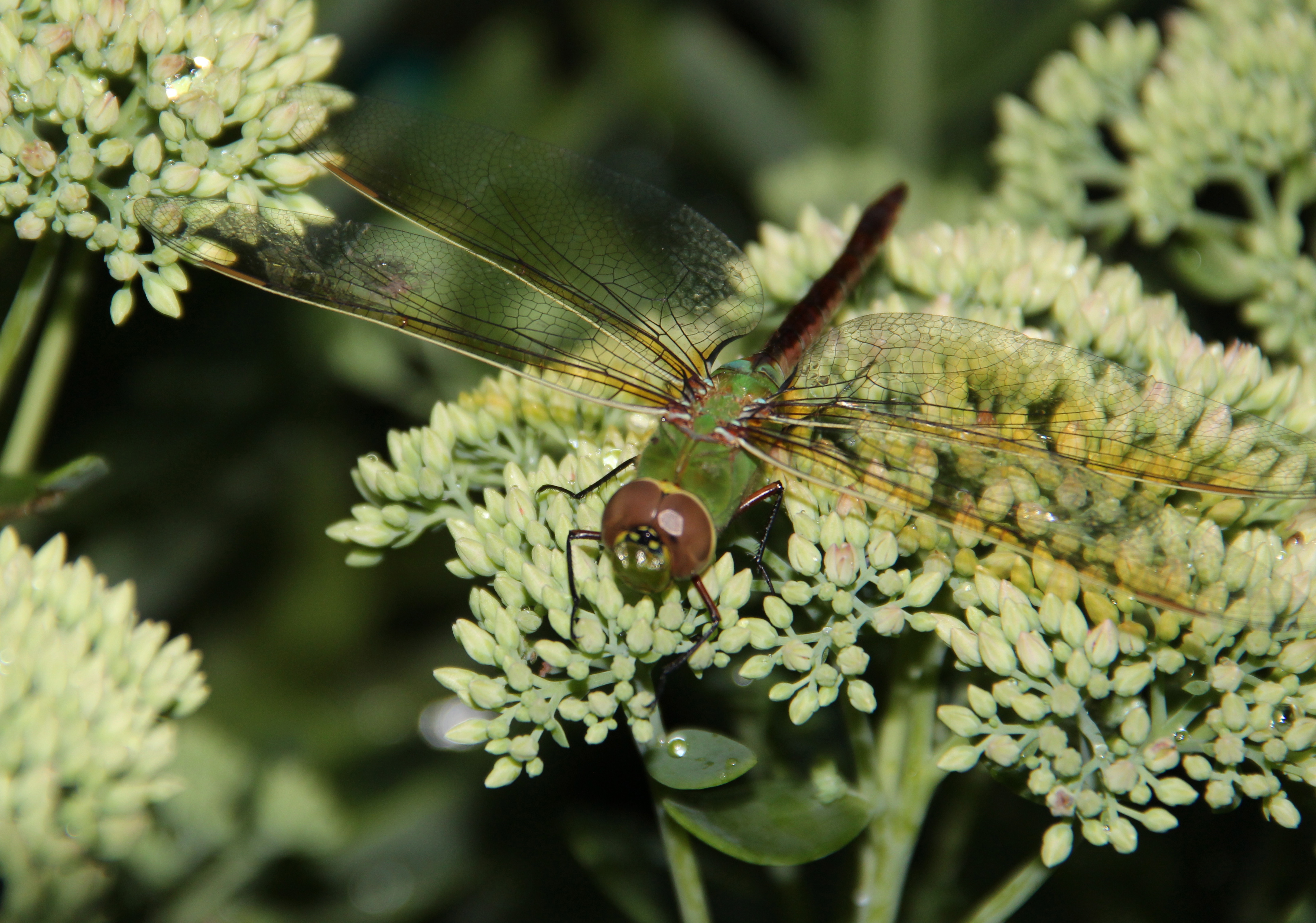
Common Green Darner (Anax Junius).

Common Green Darner (Anax junius).

greendarner2a

In the morning, the green darner was gone.  I found no scattered wings or chitin, no other remains in the garden to indicate that it had been eaten. I believe that the sun’s warmth revived it.  Since then, I’ve glimpsed a large dragonfly zooming over the garden on several different days; perhaps it is the same one. I hope that it lives to make the long migration flight south to the Gulf Cost in September.

 

Variety in an Urban Milkweed Patch

Most of us learned about the special relationship between monarch butterflies and milkweed plants when we were young children — and just about anytime I look in our garden, monarchs sail among the milkweed.  Females lay eggs on the underside of leaves and monarchs of both genders sip the plant’s sweet nectar.  But milkweed isn’t just for monarchs!  It also provides a place for many other creatures:  A few that are immune to its toxicity eat it; others drink its nectar, depend on it for reproduction, watch for a meal, or simply rest. Here’s a sampling of critters living in our backyard milkweed in early August.  What’s in your milkweed patch??

The adult red milkweed beetle (Tertaopes tetrophthalmus) eats milkweed leaves, buds and flowers.

The adult red milkweed beetle (Tetraopes tetrophthalmus) eats milkweed leaves, buds and flowers. Its larvae eat the plant’s roots.

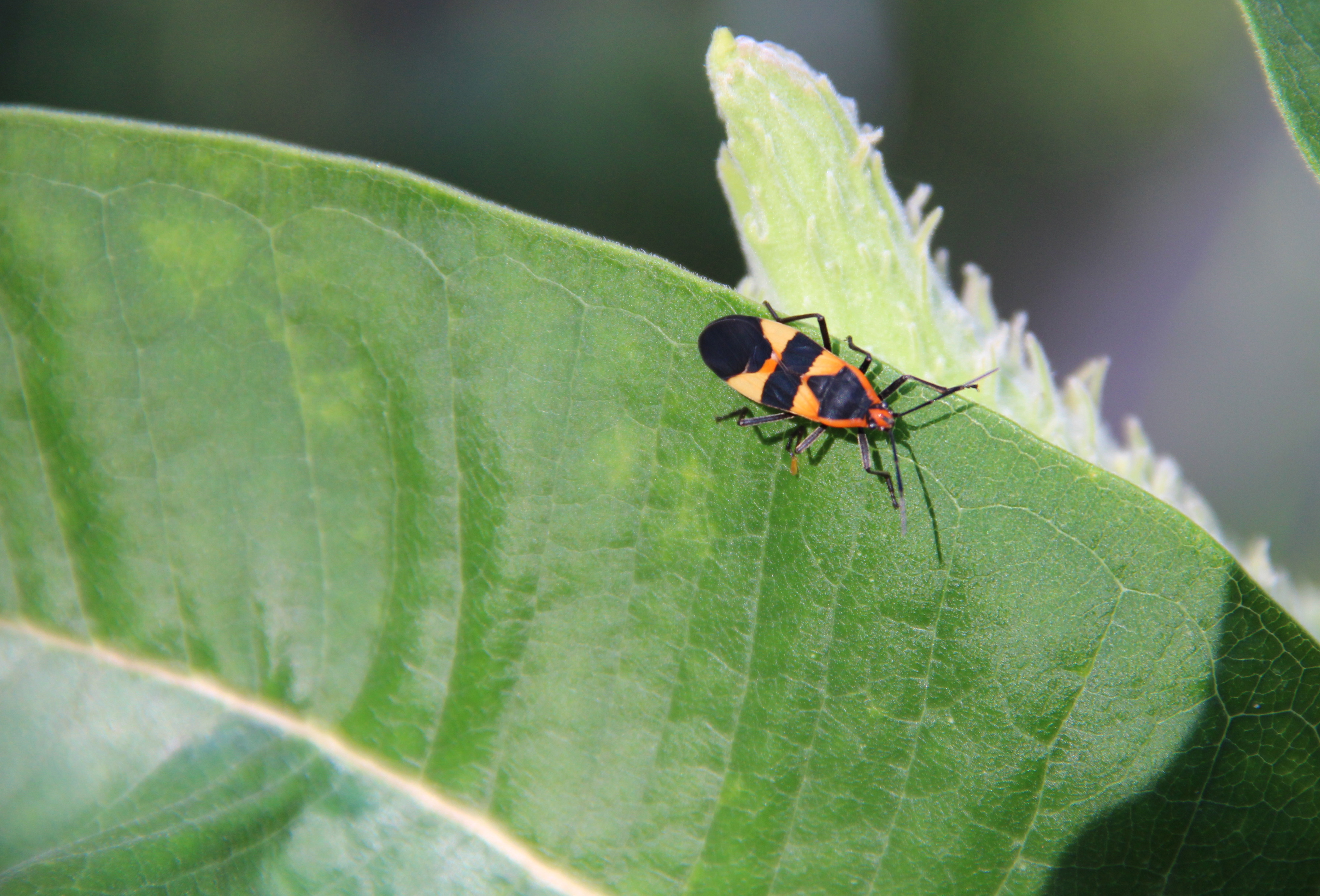
The Large Milkweed Bug (Oncopeltus fasciatus) eats the seed pods, stems and leaves of milkweed.

The Large Milkweed Bug (Oncopeltus fasciatus) eats the seed pods, stems and leaves of milkweed.

A hover fly or flower fly (Syrphidae).

A hover fly or flower fly (Syrphidae).


An eastern yellowjacket (Vespula maculifrons).

An eastern yellowjacket (Vespula maculifrons) hunts for small insect pests to eat.

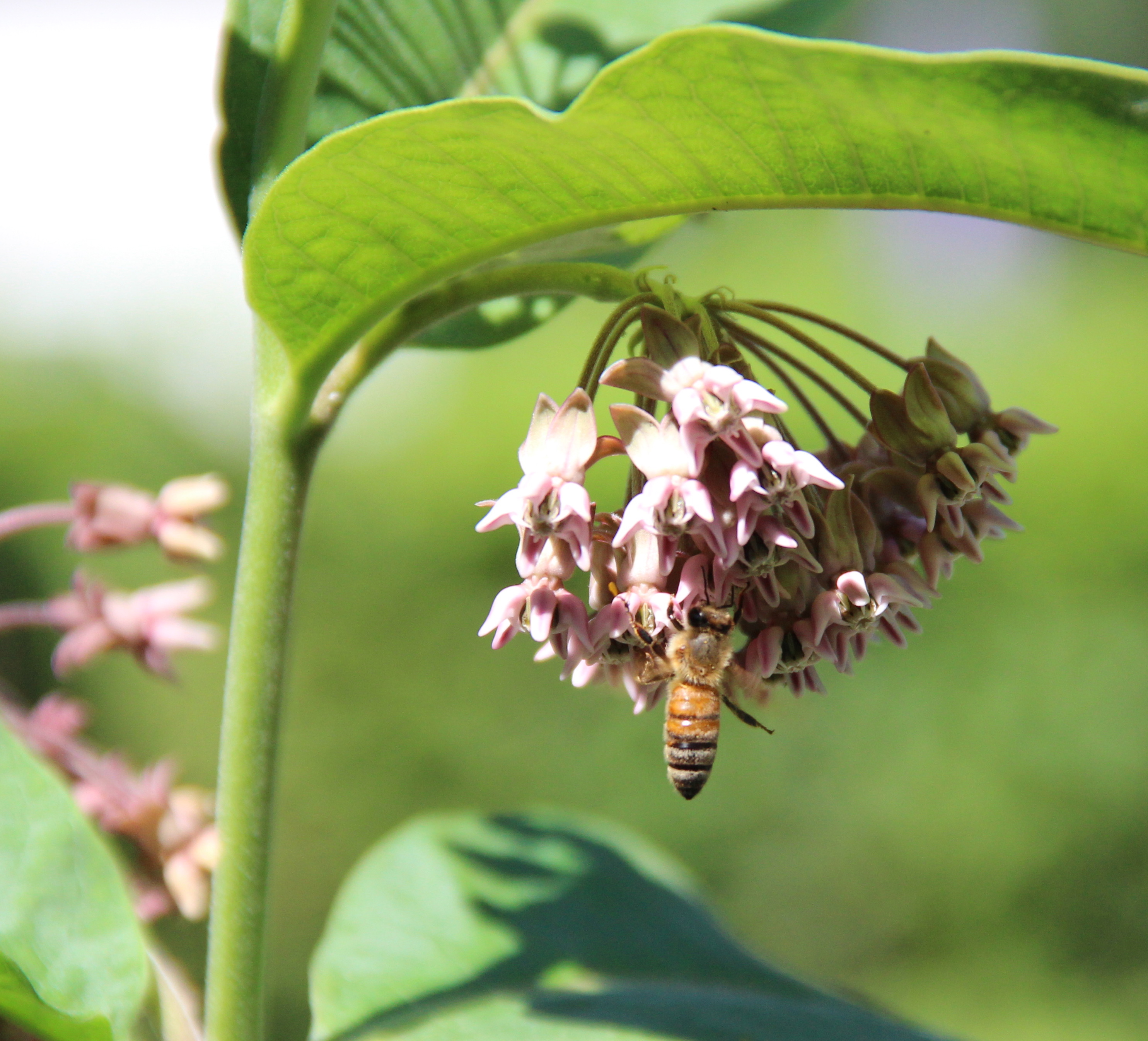
A honey bee (Apis millifera).

Honey bees (Apis millifera) favor the sweet milkweed nectar.

Bumble bees (Bombus) of several different species are attracted to milkweed blossoms.

Bumble bees (Bombus) of several different species are attracted to milkweed blossoms.

Red admiral butterflies (Vanessa atalanta) are attracted to the milkweed's nectar.

A red admiral butterfly (Vanessa atalanta) sips milkweed nectar.

I never tire of seeing monarchs (Danaus plexipus) nectar on milkweed blossoms.

I never tire of seeing monarchs (Danaus plexippus) nectar on milkweed blossoms.

Insects aren't the only critters to favor milkweed nectar. Ruby-throated hummingbirds (Archilochus colubris) frequently drink it, too. Insects aren't the only critters to favor milkweed nectar. Ruby-throated hummingbirds (Archilochus colubris) frequently drink it, too.

Insects aren’t the only critters to favor milkweed nectar. Ruby-throated hummingbirds (Archilochus colubris) frequently drink it, too.


About Those Bumblers

My first encounter with a bee was not a happy one.  I was five years old and Mom was mowing the clover-filled front lawn.  I tried to step carefully in the clover, but my flipflop flipped up a honey bee that stung the side of my big toe.  I was hysterical when I felt the jolt of pain, looked down and saw the bee on my toe trying to pull its stinger out. According to Mom, I wailed loudly enough to bring the neighbors outside.  I didn’t care that the honey bee stung out of self-defense and that it would die.  I was petrified of bees and their kin for many years and always avoided them.

Honeybee (Apis melifera) collecting pollen from sedum "autumn joy".

Honeybee (Apis melifera) collecting nectar and pollen from sedum ‘autumn joy’.

It wasn’t until I was an adult and a gardener that I grew to like bees — especially bumble bees. Why bumble bees?  It comes down to temperament.  Bumble bees are large, round, fuzzy, noisy and very intent on collecting nectar.  Their sting packs a wallop, but bumble bees are even-tempered and rarely sting unless they feel threatened.  Many times I’ve accidentally knocked a bumbler out of a flower;  the bee ignored me, flew back into the flower and resumed pollination.  Once, a neighbor was cutting back old hosta stems, squeezed the faded blossoms in the process, and was stung by a bumble bee that was deep inside of a blossom. In decades of gardening, that is the only time she’s been stung by a bumble bee.

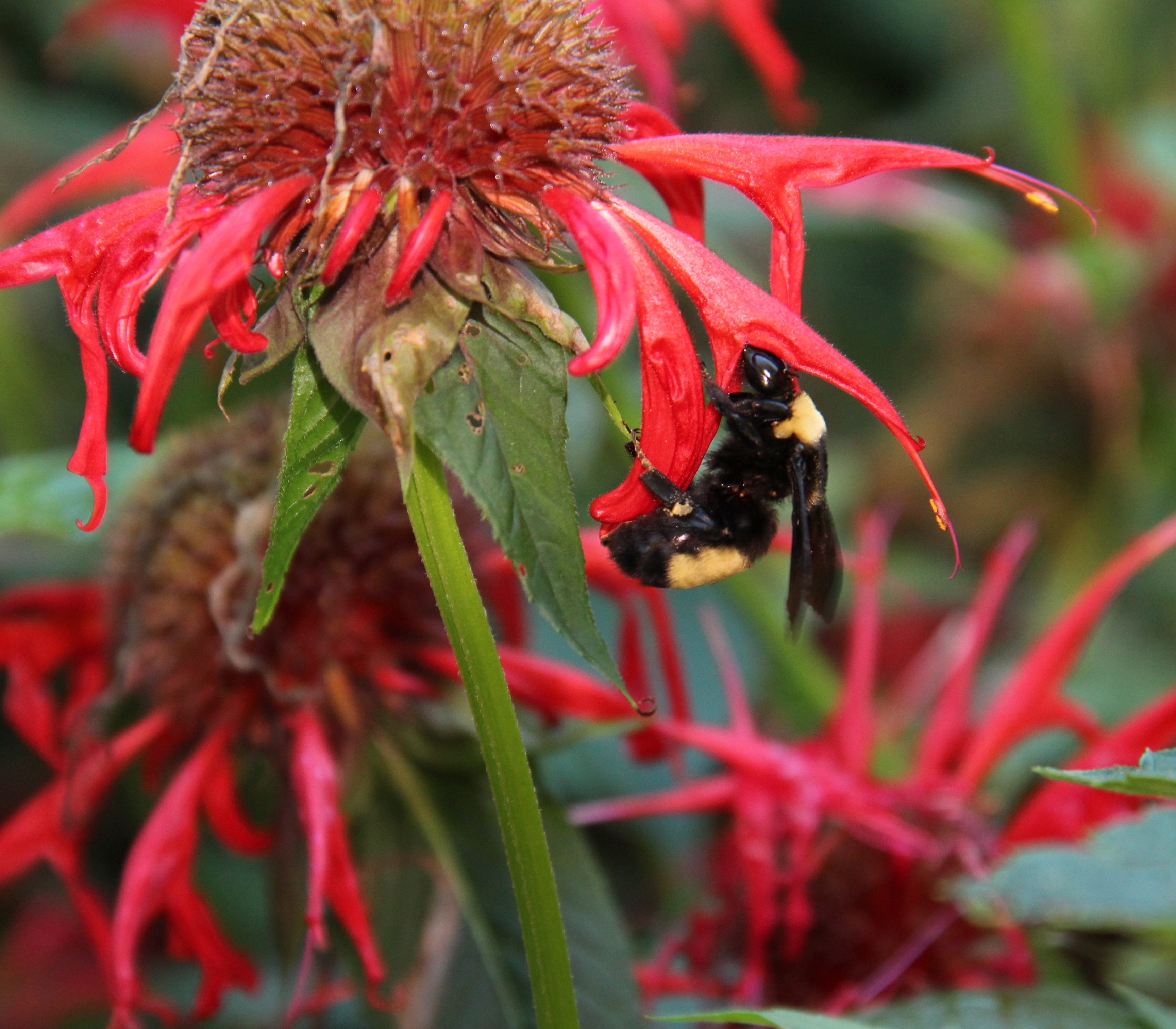
A bumble bee (Bombus ----) nectars in monarda "Jacob Kline".

A black-and-gold bumble bee (Bombus auricomus) nectars in monarda ‘Jacob Cline’.

A tricolored bumble bee (Bombus ternarius) rests on red clover.
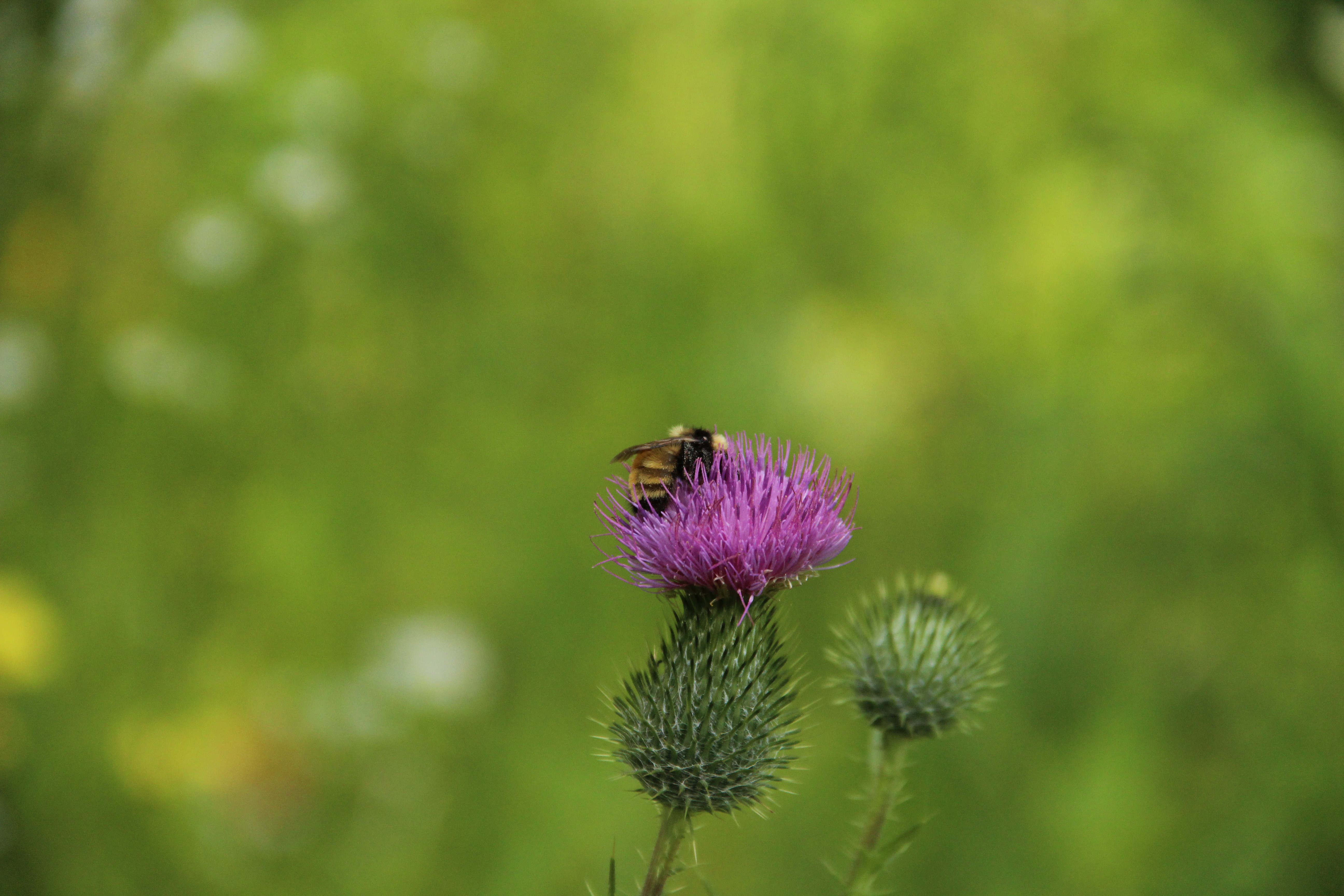
A boreal bumble bee (Bombus borealis) rests on red clover (Trifolium pretense).

Common eastern bumble bee (Bombus impatiens) on Veronica.

Common eastern bumble bee (Bombus impatiens) on Veronica ‘Red Fox’.

Bumble bees are native to North America, unlike honey bees, which were brought to the United States from Europe.  Covered with thick, soft hair, bumble bees vibrate their strong flight muscles to raise their body temperature and fly at colder temperatures than other bees; as low as 41˚F (5˚C) in comparison to about 57˚F (14˚C) for honey bees.  They pollinate flowers and crops both earlier and later in the season than most species.  I love the sound of their buzzing in the autumn garden, which is much quieter now than the busy insect-filled garden of just two weeks ago. The bumble bees will fly until early November if the weather stays mild.  Then, only the young queen bees will overwinter to create new colonies next spring.  I miss all of the bee activity during the winter and look forward to seeing a queen bumble bee collect pollen and nectar in the first crocus next April.

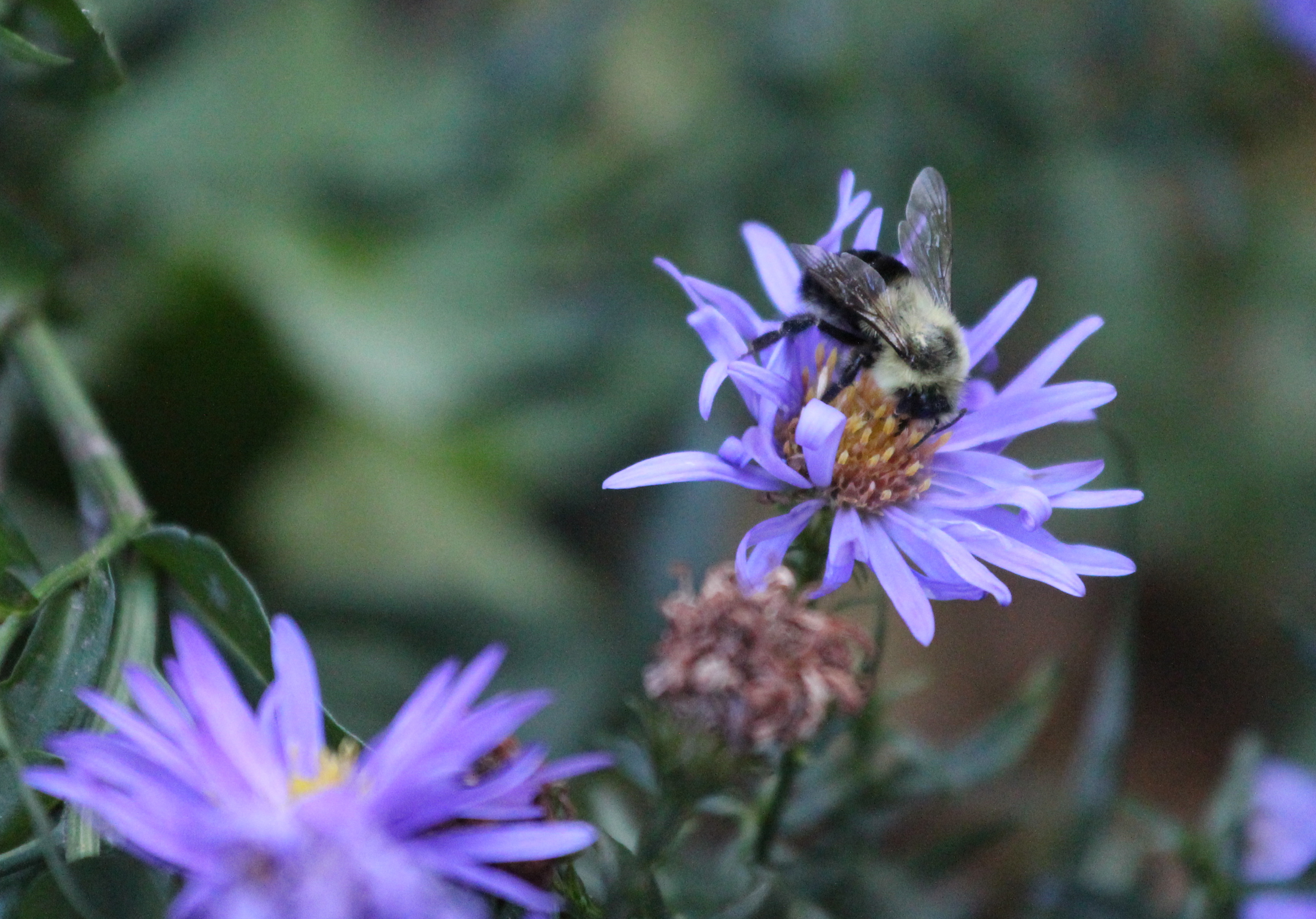
Common eastern bumble bees are active in autumn, even on cloudy, cool days.

Common eastern bumble bees are active in autumn, even on cloudy, cool days.

Autumn Meadowhawk

The late afternoon September sun is warm and soothing.  Cicadas whine loudly and a monarch butterfly nectars in our patch of sweet Joe-Pye.  But another garden critter catches my eye this afternoon:  the yellow-legged meadowhawk dragonfly.

Adult male autumn meadowhawks are red with few or no markings on the abdomen.

Adult male autumn meadowhawks are red with few or no markings on the abdomen.

Also known as autumn meadowhawks (Sympetrum vicinum), their bodies flash gem-like red, orange and amber in the sun. Perched on daylily stalks, balloon flower seed pods and hosta stems, each dragonfly swivels its head watching for flies, small bees and wasps, and other soft-bodied insects.

Adult autumn meadowhawks are present from August into early November in Minnesota.  The species is common across much of the United States and southern Canada, and often is seen in yards and gardens. Their yellow or brownish legs set them apart from other types of meadowhawks, which have black or dark-striped legs. They also have minimal or no black marks on the abdomen.

Females are distinguished by the ovipositor visible near the end of the abdomen.

Females are distinguished by the ovipositor visible near the end of the abdomen.

When I see a meadowhawk flash in the garden, I think of the ancient history of these creatures. Scientists believe that early dragonflies (Protodonata) first inhabited Earth 300 million years ago.  They speculate that Earth’s warmer temperatures, and the atmosphere’s higher oxygen content, contributed to insects growing larger than today.  Fossils show that some ancient dragonflies had a wingspan of two feet. Today, most of the larger dragonflies have a wingspan of two to five inches, and meadowhawks are smaller yet at about one inch.  What they lack in size they make up for in the sparkle of sun on their transparent wings and the jeweled designs of their bodies.  And, after watching a meadowhawk grind up a small bee in its jaws, I’m glad they’ve evolved into smaller predators!

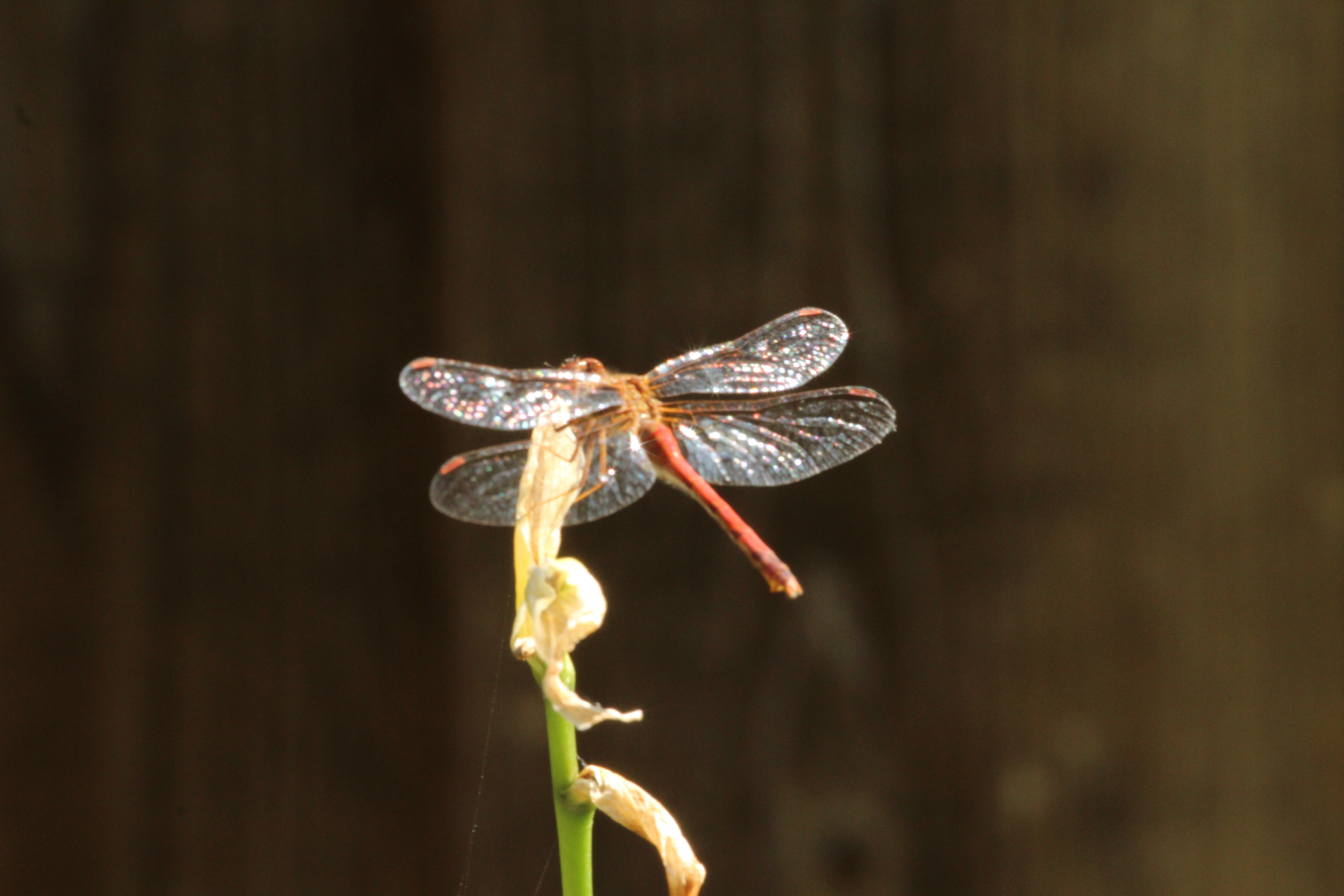
Sunlight captures the beauty of this meadowhawk's wings.  The ovipositor and the light red abdomen with faint black markings identifies it as a female autumn meadowhawk.

Sunlight captures the beauty of this meadowhawk’s wings. The ovipositor, yellowish legs and the light red abdomen with faint black markings identify it as a female.

Pileated Acrobatics

The bush seemed too weak to support the pileated woodpecker’s (Dryocopus pileatus) size and heft.  Catbirds, robins, chipmunks and squirrels easily picked the ruby and purple fruit from the spindly chokecherry branches.  But, the crow-sized woodpecker struggled to alight and balance in the bush.  Its black forehead and mustache stripe identified this pileated as being a female. First, she flew straight into the bush, but the branches bent and sank under her weight.  Next, the woodpecker landed in each of the bur oak trees that flank the chokecherry and then dropped into the bush; still unsuccessful.

pileated5

When we returned to our cabin on the Snake River the following weekend, she had solved the problem.  Sometimes the pileated used her wings and tail to brace herself — even hanging upside down.  At other times, she seemed to pluck the fruit from midair.  The beauty of her wings unfurled in waves of ivory and black that thwacked the air.  Her red crest glowed like a flame in the bush.

pileated1

pileated4

pileated3

Though pileated woodpeckers primarily eat insects such as carpenter ants and beetles found in bark, they also eat a variety of berries and fruit, and sometimes visit our backyard suet feeder in St. Paul, Minnesota.

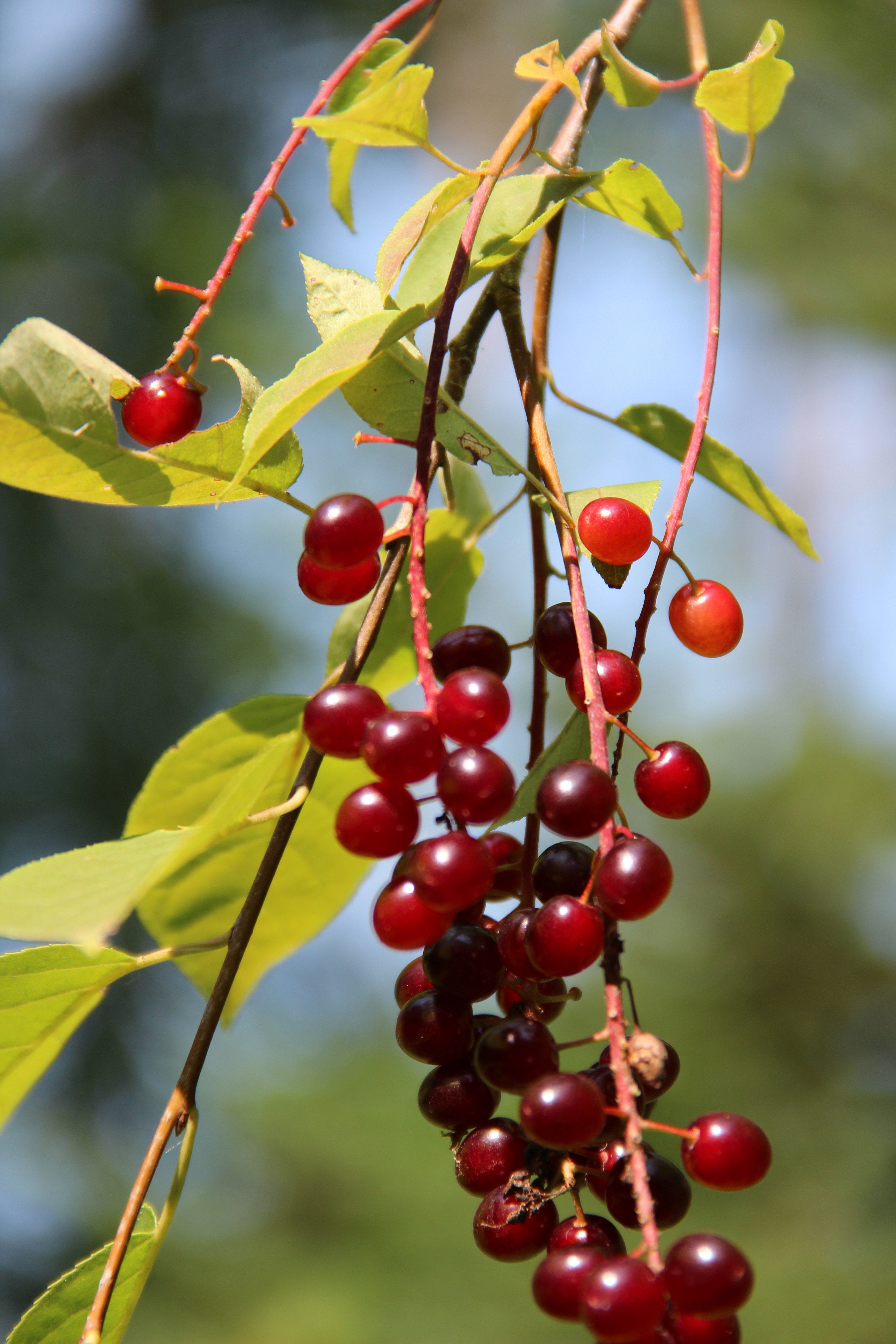
Chokecherry fruit (Prunus virginiana).

Chokecherry fruit (Prunus virginiana).

Our deck is just 6 feet from the bush, and if we were silent and still, the woodpecker payed no attention to us.  When I tried to photograph her she flew immediately.  As a result, I had to photograph her through the cabin windows, which reduced photo quality.

August’s Beauty

August’s warm, sunny days hum with insect activity.  Many kinds of bees and wasps, butterflies and grasshoppers inhabit the colorful swaths of wildflowers and grasses along country roads.  The buzzing of bees is soft against the louder trills and whirs of crickets, grasshoppers and gray tree frogs.  Scents of sweet clover and grass fill the air. Here is a sampling of the beauty my husband and I enjoyed when we walked along the road near our cabin on the Snake River in Pine County, MN, last weekend.

Great spangled frilillary on native monarda.

Great spangled frilillary (Speyeria cybele) on native monarda.

Woodland sunflowers grow in shadier patches along the road.

Woodland sunflowers (Helianthus divaricatus) grow in dappled sun along the road.

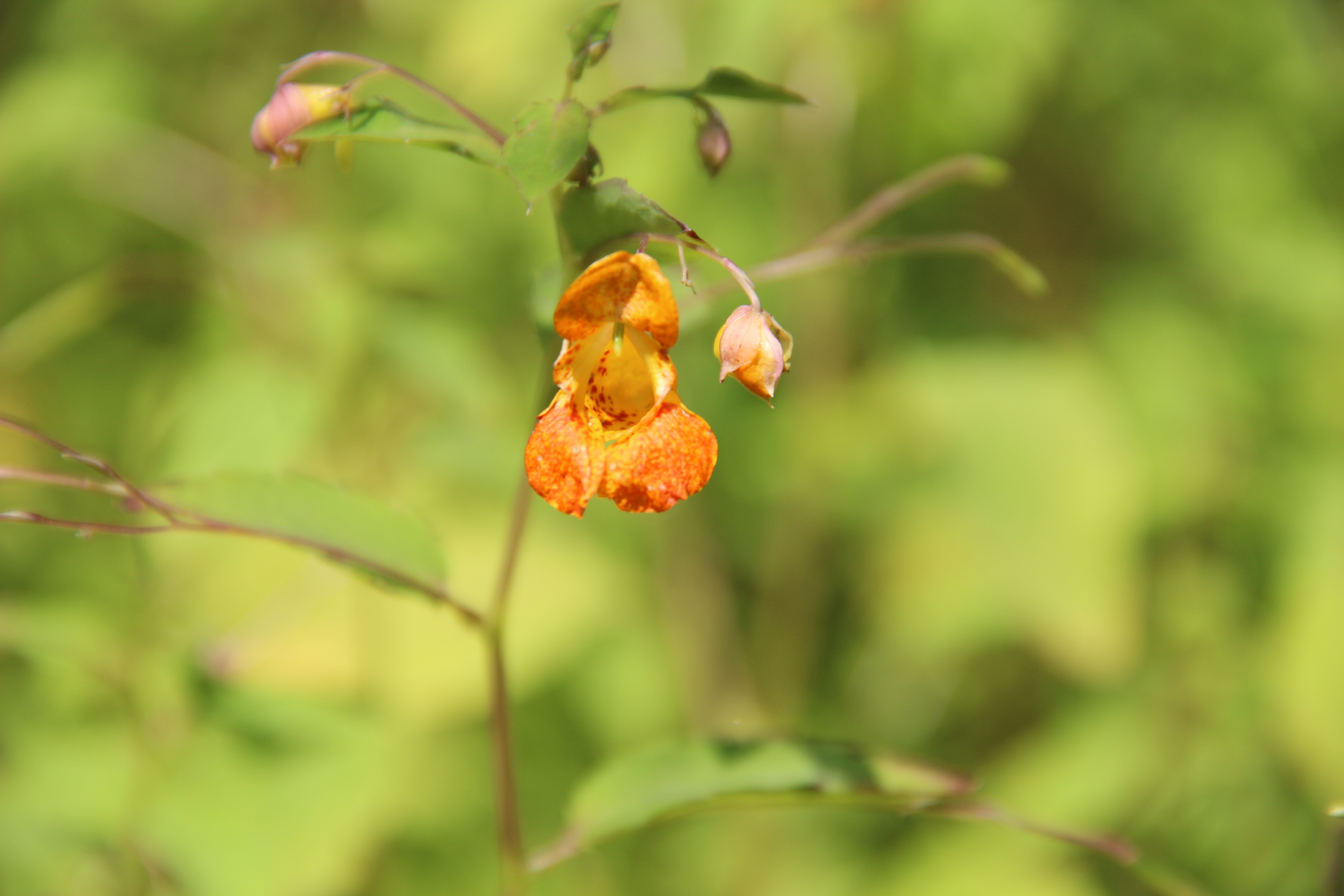
Jewelweed or spotted touch-me-not grows in moist, sunny spots.

Spotted jewelweed or spotted touch-me-not (Impatiens capensis).

Native big bluestem is also called turkey foot grass due to the shape of the seed heads.

Native big bluestem (Andropogon gerardi) is also called turkeyfoot grass due to the shape of its seed heads.

This common wood-nymph's bright eyespot caught my attention.

This common wood-nymph’s (Cercyonis pegala) bright eyespot caught my attention.

Non-native rabbit-clover is a low-growing plant that provides color along dusty country roads.

Non-native rabbit-clover (Trifolium arvense) is a low-growing plant that provides color along dusty country roads.


The native field thistle is a favorite of bees and butterflies.

The native field thistle (Cirsium discolor) is a favorite of bees and butterflies.

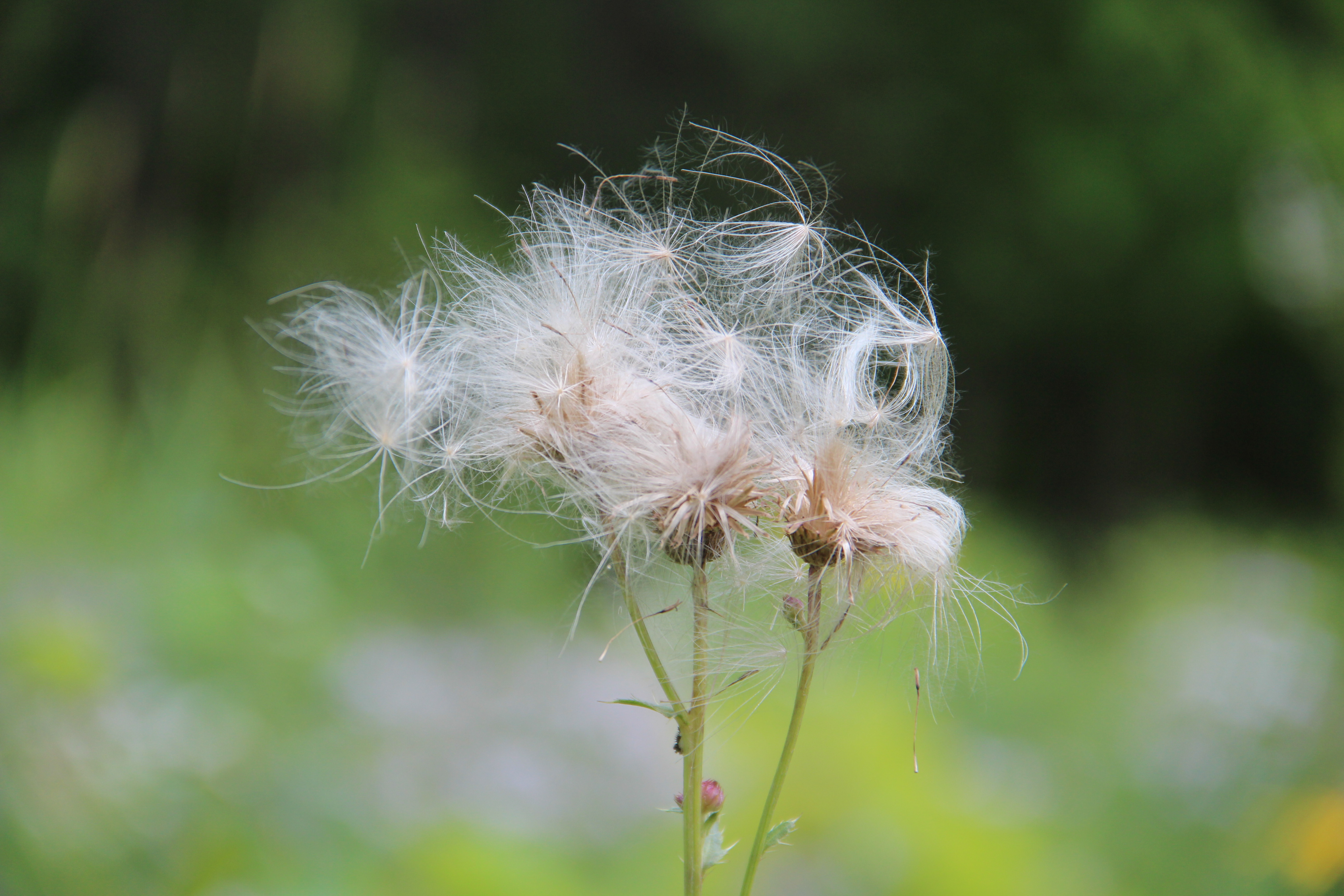
The field thistle's "down" is used by American goldfinches to line its nest and the seeds are a favorite goldfinch food.

Field thistle’s “down” is used by the American goldfinch to line its nest and the seeds are a favorite goldfinch food.

A white-faced meadowhawk watches for prey.

A white-faced meadowhawk (Sympetrum obtrusum) watches for prey.

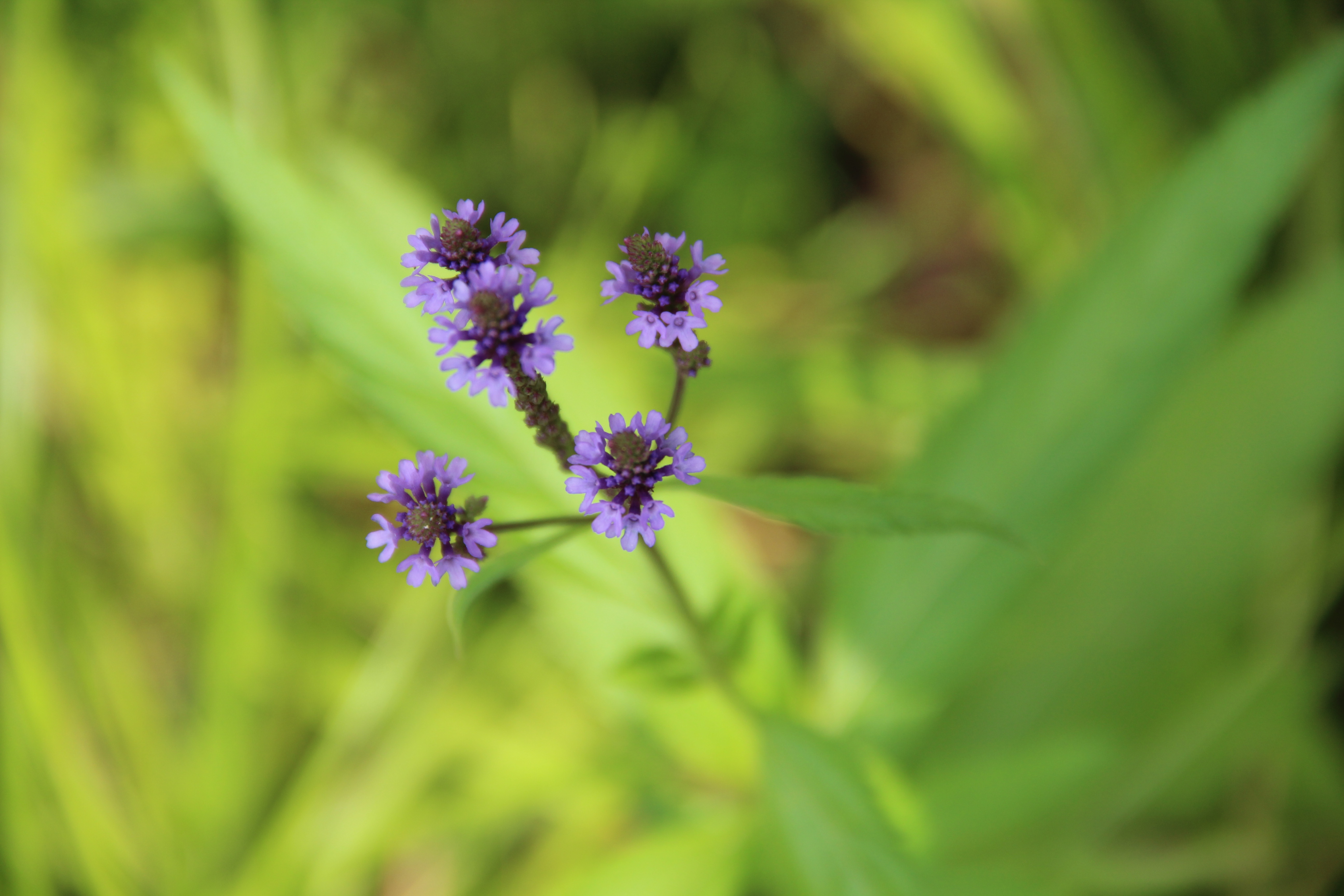
Swamp or blue vervain prefers moist, loamy soil and lots of sun.

Swamp or blue vervain (Verbena hastata) prefers moist, loamy soil and lots of sun.

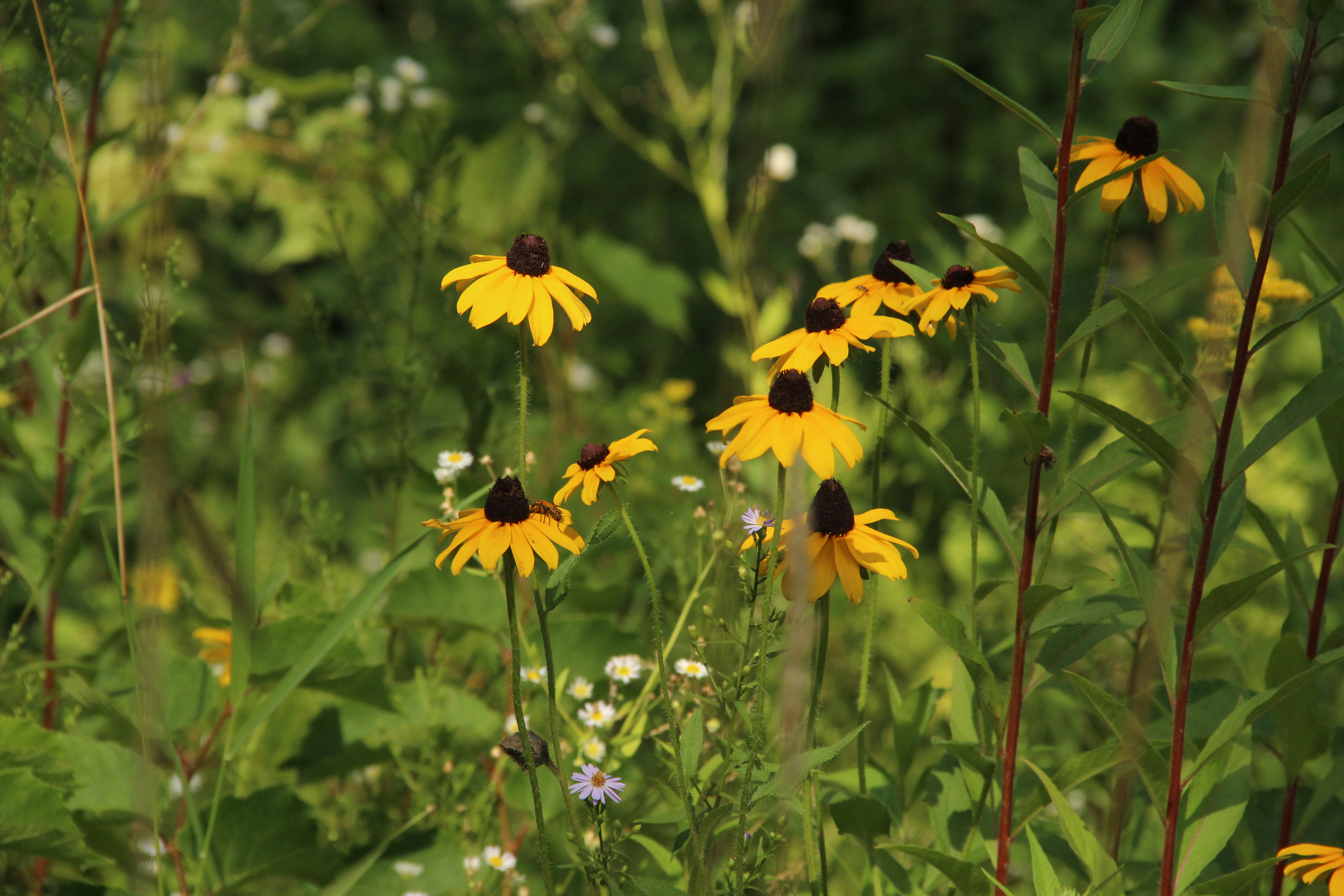
Brown-eyed Susan's and a few early-blooming asters.

Black-eyed Susan’s (Rudbeckia subtomentosa) or sweet coneflower and a few early-blooming asters.

Priarie or western ironweed (Vernonia fasiculata).

Priarie or western ironweed (Vernonia fasciculata).

Hog peanut is a member of the pea family. (More to come in a later post.)

Hog peanut (Amphicarpaea bracteata) is a member of the pea family.

Eastern-tailed blue (Cupido comyntas)

Eastern-tailed blue (Cupido comyntas).

European bull thistle with bumble bee.

European bull thistle (Cirsium vulgare) with bumble bee.

First buds of sweet Joe-Pye begin to open.

First buds of sweet Joe-Pye (Eutrochium purpureum) begin to open.

Male American redstart warbler.

Male American redstart warbler (Setophaga ruticilla).

Hummingbird Clearwing Moth

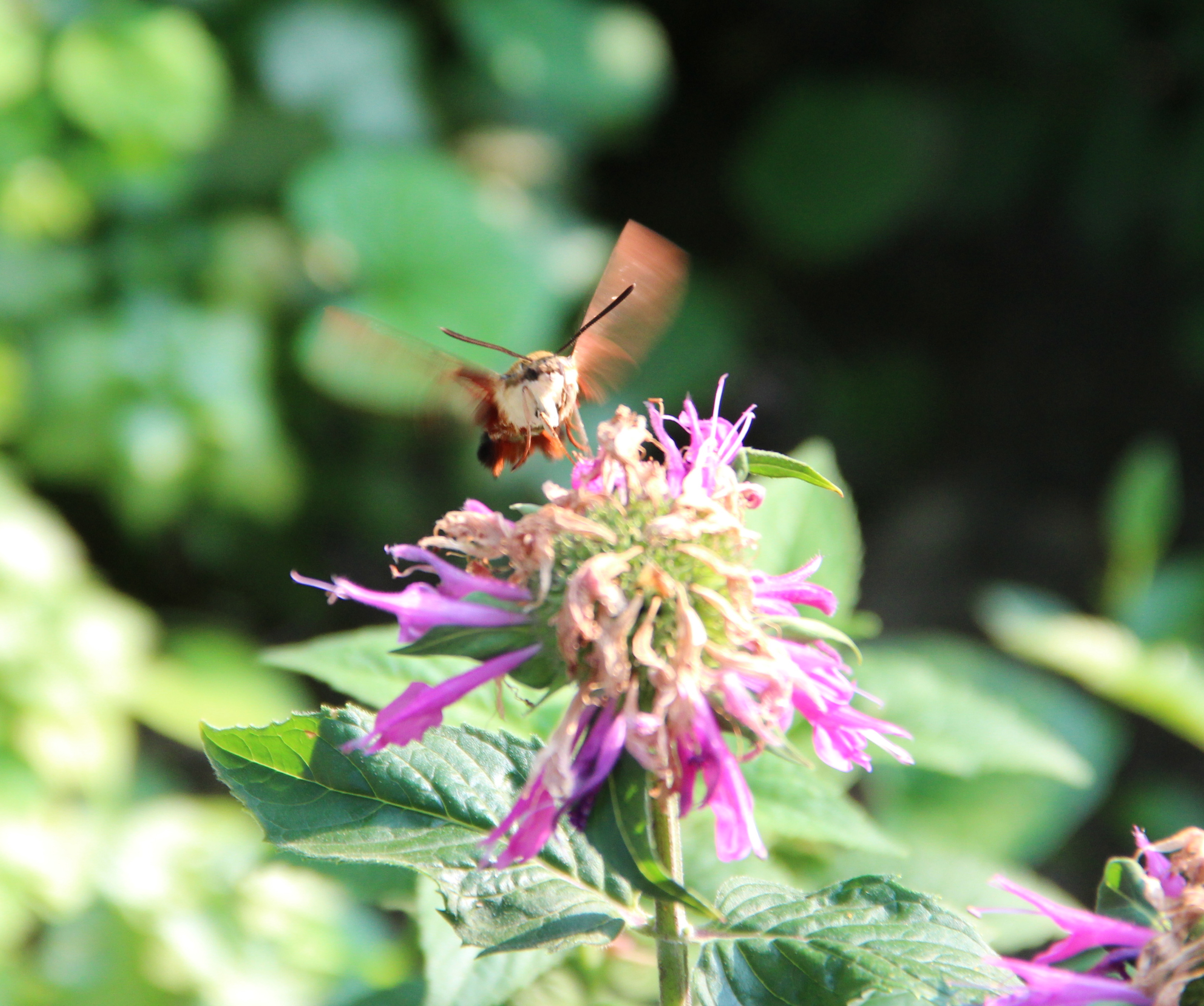
Clearwing hummingbird moths favor native monarda in our garden.

Hummingbird clearwing moths favor native monarda in our garden.

Next time you think you see a small hummingbird zip around your garden, take a closer look — it just might be a hummingbird clearwing moth.  People usually think of moths as nocturnal creatures attracted to lights.  But clearwing moths are colorful daytime visitors to flowers. Only about half the size of a hummingbird, this moth has a thick, heavy body in comparison to many moths, large, clear wings with reddish-brown borders, and a long proboscis for sipping nectar. In our garden, they seem to prefer monarda or bee balm, in particular the native variety (Monarda fistulosa).  I’ve also seen them sip nectar from garden phlox, petunias and common milkweed.

Clearwing hummingbird moths are white underneath and have pale-colored legs.

Hummingbird clearwing moths are white underneath and have pale-colored legs.

Two species of clearwing moth are common in the eastern half of North America: the snowberry clearwing (Hemaris diffinis) and the hummingbird clearwing (Hemaris thysbe).  The two species are easy to tell apart because (H. diffinis) mimics bumblebees with primarily yellow and black coloration and black legs.  (H. thysbe) is typically olive with maroon or rust, and the legs are yellowish or pale-colored. A third variety, (Hemaris thetis) lives primarily in western North America.

The caterpillars of both clearwing moths are green, although sometimes the hummingbird clearwing’s can be reddish.  Both species’ caterpillars have a horn on one end.  The hummingbird clearwing caterpillar is sprinkled with tiny white dots and the horn is bluish.  It feeds on honeysuckle, cherry, plum, snowberry and European viburnum plants. The snowberry clearwing caterpillar has black spots on its sides and the horn is black with a yellow base. Common host plants for this caterpillar are honeysuckle, snowberry and dogbane.  Cocoons of both species overwinter in leaf litter on the ground and become adult moths the following spring.

Harebells

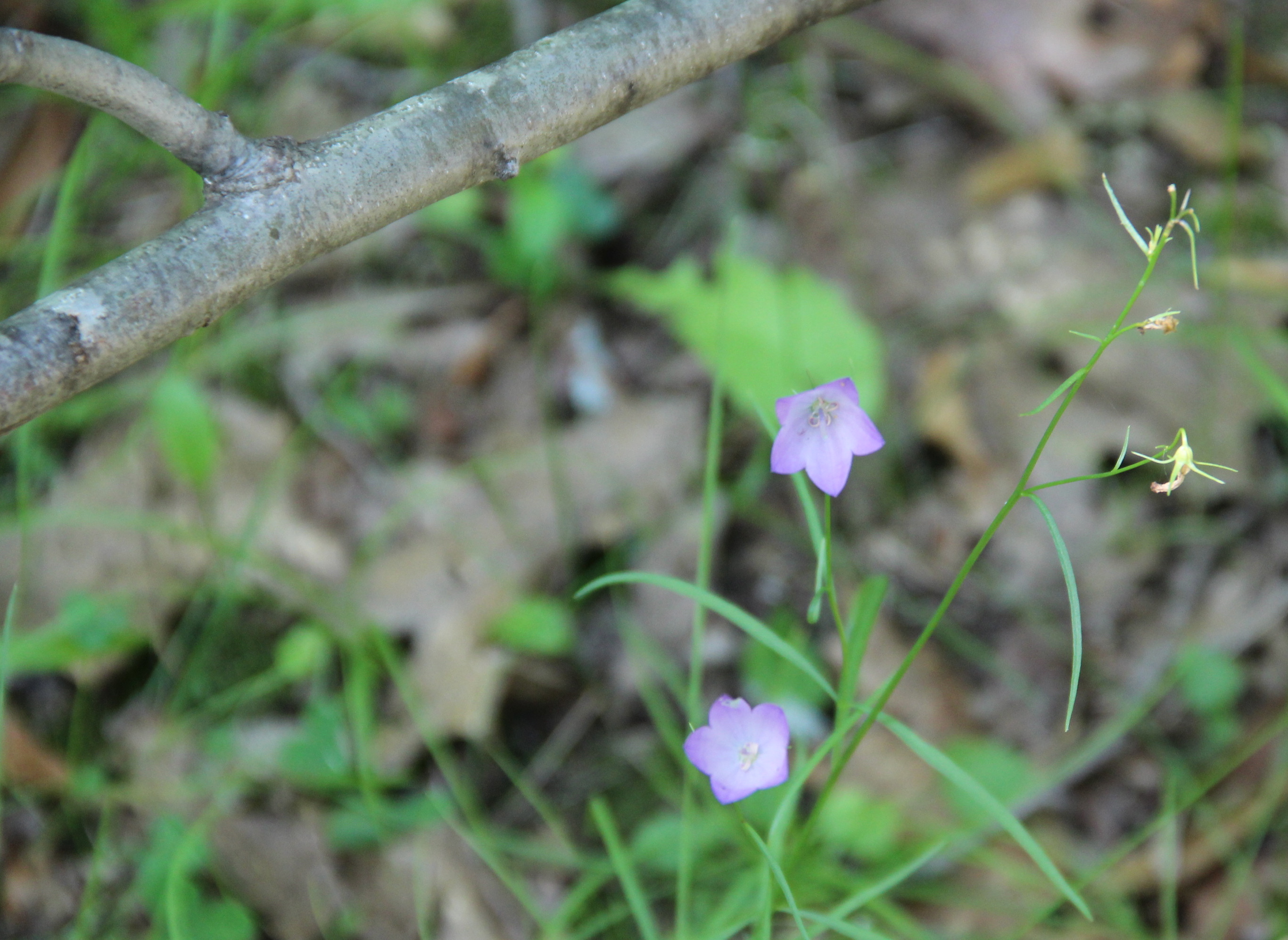
Harebells growing on the banks of the Snake River in east central Minnesota.

Harebells grow on the bank of the Snake River in east central Minnesota.

I first saw harebell flowers as a young teen hiking the north shore of Lake Superior in Minnesota.  They grew out of a tiny crevice in the lichen-covered basalt slabs along the lake, and the delicate blossoms mirrored the violet-blue water on that sunny midsummer day.  Next to them, in the shallow depressions in the rock, were pools of water in which tiny tadpoles swam.  I was enchanted by all of it.  Years later when my family built a cabin near the Snake River in Pine County, MN, I was delighted to find harebells growing on the riverbank and along the woodland edges.

Harebells are also known as thimbles, bluebells of Scotland, heath bells and bluebells.

Harebells are also known as thimbles, bluebells, bluebells of Scotland, wind bells and heath bells.

Harebells (Campanula rotundifolia) are native to the northern regions of the United States, Europe and Asia.  They grow on slender upright stalks ranging in height between 6 and 20 inches. Narrow grass-like leaves cover most of the stalk; round leaves at the base of the plant often die before the flowers bloom.  Milky sap in the stems is another identifying characteristic. The delicate bells begin blooming in June and continue through the summer.  We usually see a modest second bloom in the fall. Besides being beautiful, harebells are a source of nectar to many species of bees during the summer and I’ve noticed bumblebees frequenting them during the second bloom in autumn.  Other common names for harebells include:  thimbles, wind bells, heath bells, bluebells and bluebells of Scotland.

Harebells blossom from June through summer, and often bloom again in autumn.

Harebells blossom from June through summer, and often bloom again in autumn.

Gray Catbird: Mimic Extraordinaire

He’s the musical sort.  He sings with the robins and cardinals; not just his song, but theirs, too.  First he mimicked the robins’ morning song, then he imitated the cardinals and red-eyed vireos.  He blended their calls into his own unique arrangement of a song with many repeated phrases.  I suspected a gray catbird (Dumetella carolinensis) when I heard his “meow”-like call.  Catbirds skulk around in thickets and tangled hedges, so are often hard to see (I haven’t been able to photograph him).  Later, the cardinal pair that frequents our backyard chased him out of the arbor vitae hedge and I spotted him.

He’s a fine looking charcoal-gray bird, about the size of a small American robin, with a black cap and a rusty patch under his tail.  Like brown thrashers and mockingbirds, gray catbirds have the ability to imitate the songs and calls of other birds, creatures and even machines.  Female catbirds sing too, but more softly and infrequently than their mates.

After declaring his territory for three or four days, he began a nighttime serenade, which he continued nightly for three weeks.  At his most vocal, he started singing shortly past midnight.  His song alone filled the night air and varied from melodious bird calls, to squeaks, whistles and other sharp, clear sounds.  He sings to defend his territory and to attract a mate.  Most recently, he’s added part of the American goldfinch’s call to his repertoire. He may mimic fragments of other avian songs too, but I am only certain of the four I’ve mentioned.  He often returns to the hedge to sing at dawn, though no longer with the same intensity and frequency.

Does it matter that catbirds imitate other birds’ songs and calls?   The theory, according to Greg Budney, audio curator at Cornell’s Macauley Library, is that the greater intricacy of a male catbird’s song demonstrates his greater experience with life and survival — and therefore makes him a stronger candidate for a good mate.  There’s an interesting, short video that features a catbird mimicking several songs of other bird species and a chorus frog.  Budney identifies each imitated song and briefly explains his theory.

I’m sure our catbird’s a fine fellow and mate — but I just appreciate hearing his joyful noise in the garden.  Anyone else have catbirds in their yard, garden or woods?

Carrot Wasp

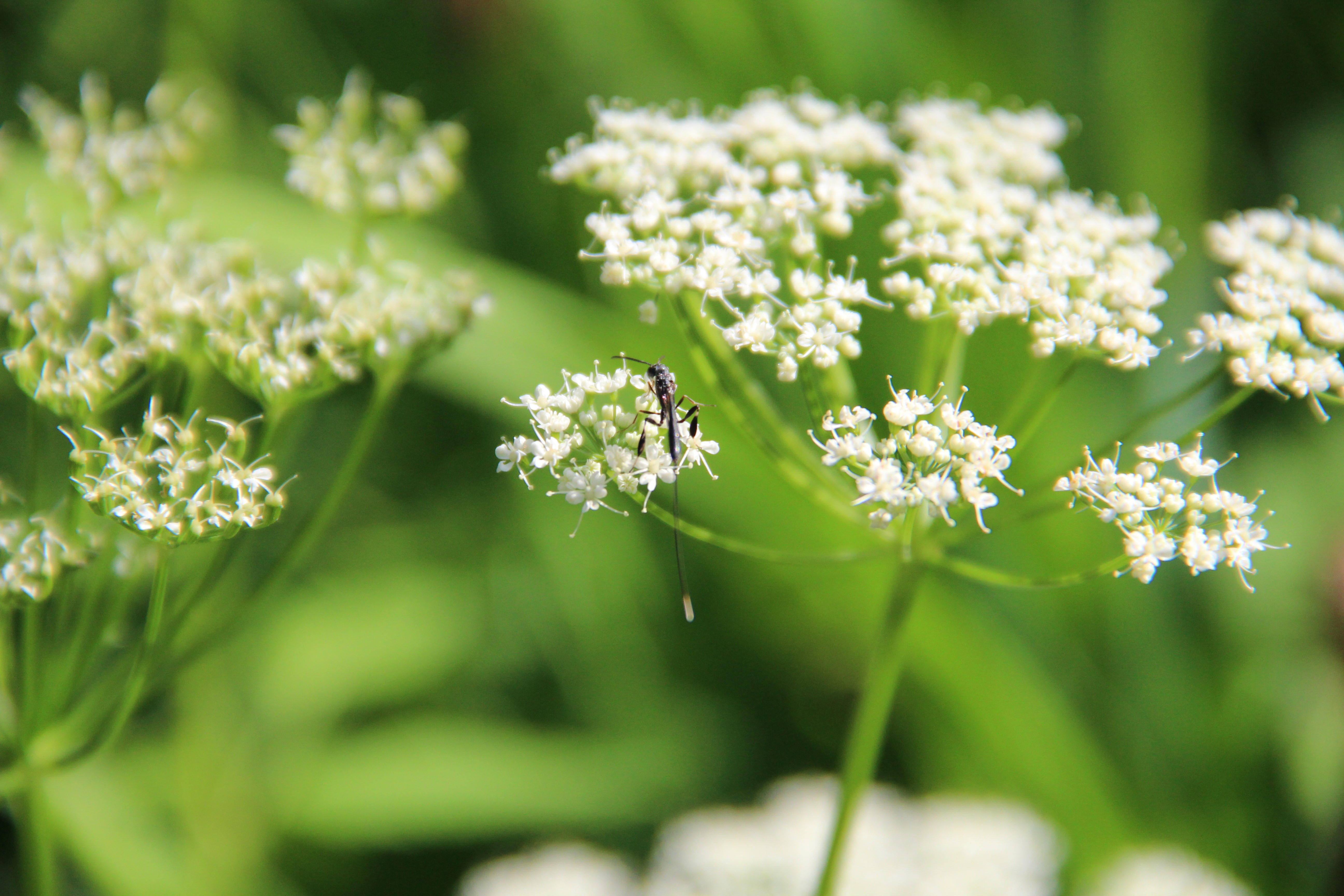
A slender carrot wasp nectars on agiopoda.

A slender female carrot wasp nectars in the early evening sun.

One recent evening, a thread-thin burst of movement caught my eye in our garden.  It was a wasp —  slender, agile and fast as it nectared in the early evening sun; and unlike most wasps, it held its abdomen at an unusual vertical angle.  It was too thin and small to fit into the familiar wasp categories.  After searching several resources, I identified it: a carrot wasp in the family Gasteruptiidae spp.  (There are 15 different species in North America.)  Adults feed on the nectar and pollen of plants in the carrot family, especially wild carrots and parsnips.

Carrot wasps have enlarged back legs and red-orange bands on the abdoment.

Carrot wasps have enlarged areas on the back legs and the female has a long ovipositor.

Carrot wasps are a type of parasitic wasp.  Rather than building a colony, or their own individual cells, they seek out the nests of other solitary bees and wasps, such as digger bees and mud daubers.  A female carrot wasp punctures a cell of the other bee or wasp’s nest, inserts her long ovipositor into the cell and lays her egg.  Depending on the type of carrot wasp, when its egg hatches, the larva will eat the host bee/wasp’s larva, eat the larva’s food, or do both!

Besides the abdomen being held vertically, other identifying characteristics include a visible, prominent neck, a black body with reddish-orange bands on the abdomen, and enlarged areas on the back legs.  These wasps are most common during June, July and August.