
Common Snowdrops

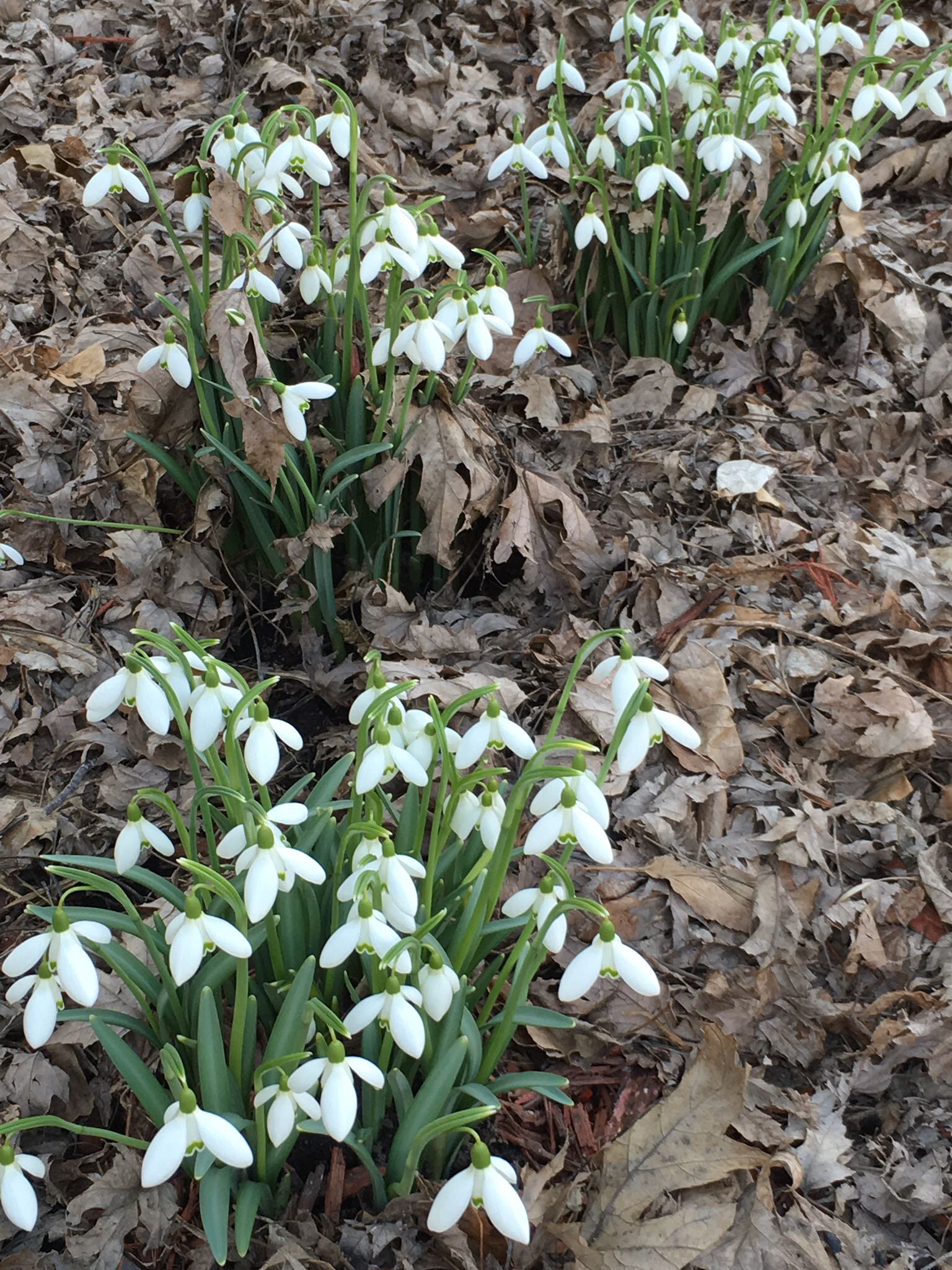
Common snowdrops (Galanthus nivalis) blossom early this winter.

Common snowdrops popped early this winter; the calendar said February, but the air felt like March. First, creamy teardrops dangled from blue-green stalks nestled in shredded hosta leaves and fallen spruce cones. The teardrops opened to pearly bells etched in spring green. They look fragile as they quiver in the wind, but these hardy bulbs, which are native to Northern Europe, parts of Asia and the Middle East, usually grow and bloom through snow cover and cold. Even with this year’s mild winter, these fresh blossoms are a joyful sight, a symbol of warming sun and soil.

Further Reading:
Wisconsin Horticulture

Common Snowdrops

Snowdrops (Galanthus nivalis) often bloom in the snow, but this year the snow melted weeks ago.

Snowdrops (Galanthus nivalis) often bloom in the snow, but this year the snow melted weeks ago.

Every spring I hunt for some fresh green glowing against the snow-covered or brown landscape, depending on the year. Patches of moss, which often remain green under the snow, are refreshing, but the first snowdrops that push through the soil and bloom speak of the awakening earth.  Last Saturday, a sunny, warm afternoon when cardinals sang and a pair of great-horned owls hooted softly to each other, I found a lovely patch of snowdrops blooming in my sister, Theresa’s, shade garden.

Common snowdrops have three white outer tepals and three smaller inner tepals that are white and green.

Common snowdrop blossoms have three white outer tepals and three smaller inner tepals that are white and green.

Snowdrops are small bulbs that grow and bloom right through the snow.  This year’s early warmth melted the snow, so the tiny flowers stand out in contrast to autumn’s brown leaves that still cover the soil. The Latin name, Galanthus nivalis, roughly translates as “snowy milk flower.” Sources that I read say that the name refers to the blossoms looking like drops of snow or milk.  Snowdrops are native to Europe and will grow reliably in USDA zones 3 – 7.