Beyond Monarchs and Viceroys

Great-spangled fritillaries sport a checkerboard pattern on their dorsal wings. A creamy yellow band separates silvery spots or “spangles” on the ventral surfaces.

In late summer, chances are good that you’ll notice lots of orange-and-black butterflies in gardens, meadows or roadside areas. But, not every one that you see is a monarch, or its look-alike, the viceroy. Fritillaries, another group of large orange-and-black butterflies, are on the wing into September in the Upper Midwest, favoring open sunny gardens, grasslands, and meadows.

Fritillary comes from the Latin word “fritillus,” which means checkerboard or dice — and most butterflies in this family sport a checkered design on their wings. Of Minnesota’s 12 fritillary species, the most widespread are the great-spangled, Aphrodite, Atlantic, silver-bordered, meadow and variegated.

I’ve spotted great-spangled fritillaries (Speyeria cybele) in our garden and along country roads where I’ve recently walked. The largest of Minnesota’s fritillaries, with a wingspan of 2.5-to-4.0 inches, great-spangled adults display an orange, brown and black pattern of stripes, dots and bars on their upper wings. The undersides of the hindwings shimmer with two rows of large silver spots (referred to as spangles) separated by a wide, creamy yellow band not seen in other fritillaries.

Faded colors and worn, jagged-edged wings indicate an elderly great-spangled fritillary nectaring on this thistle.

In June, great-spangled males appear first, followed by females about a month later. Females lay eggs in late summer and fall, placing them singly, on or near the base of common violet species (viola) — violets alone are the host plant for their larvae. The caterpillars hatch in the autumn, but stay hidden in leaf litter until the following spring when violets are freshly growing. Caterpillars are black with reddish-orange knobs that give rise to black spines. They are secretive and only feed at night.
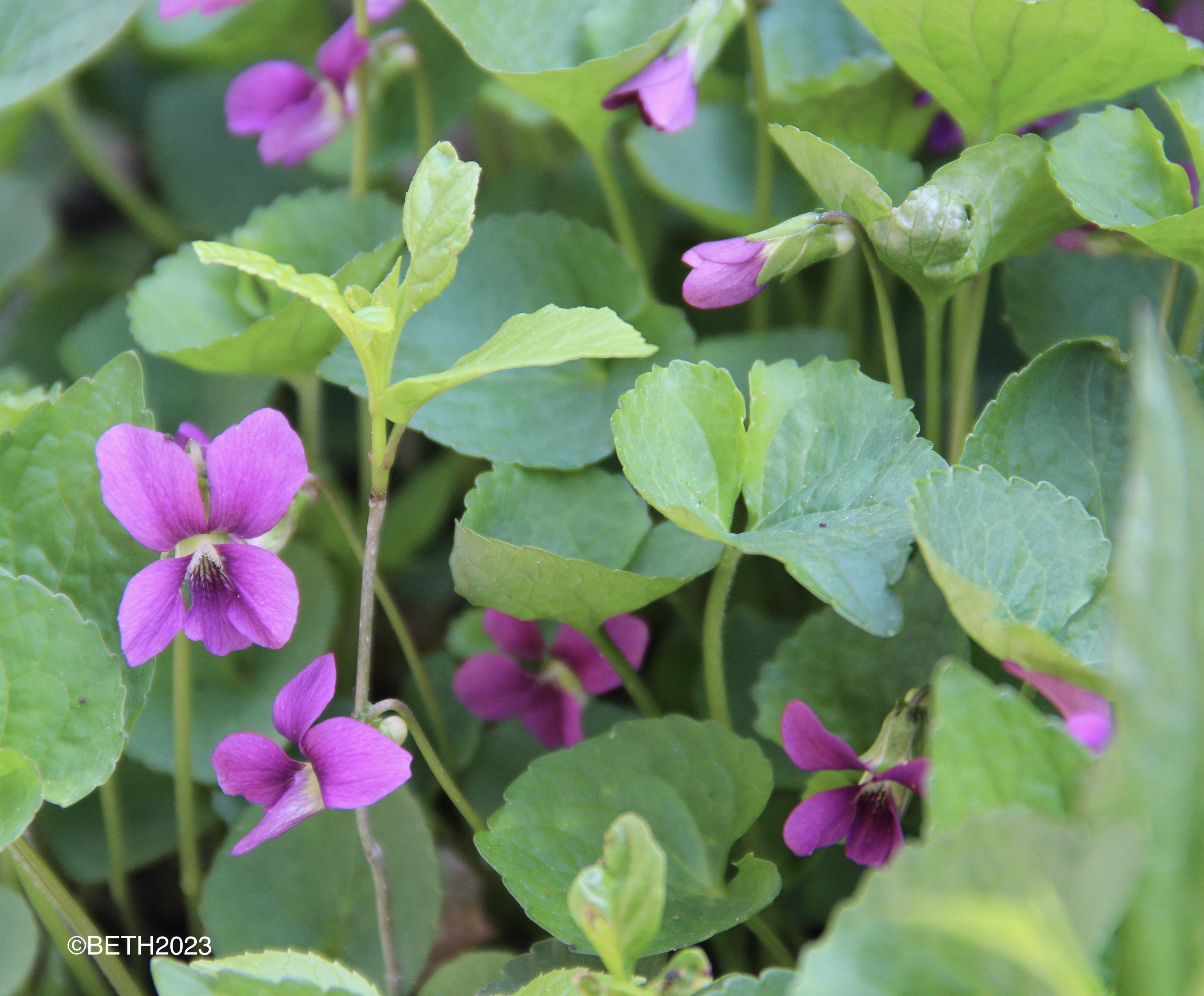
Great-spangled fritillary caterpillars, and many other fritillary larvae, feed only on violet (viola) species.

Unlike their violet-dependent larvae, adult fritillaries nectar on many different flower species, including milkweed, clover, black-eyed Susan’s, vetches, thistles, Joe-Pye, monarda, members of the mint family, dogbane and many types of coneflowers. Fritillaries are preyed upon (especially the caterpillars) by dragonflies, paper wasps and other large insects, spiders and birds.

What can you do to help these beautiful pollinators? If you have violets in your garden, don’t weed them all out. Without violets, there would be no fritillaries! Leave a few in your garden or yard year-round for great-spangled and other types of fritillary caterpillars to eat.

Most common in eastern North America, great-spangled fritillaries range from British Columbia across southern Canada and the northern United States to the Atlantic, south to central California, northern New Mexico and northern Georgia.                              

Leave a few violets tucked into your garden so that fritillaries can lay their eggs on them in the fall. Caterpillars will feed on them in the spring.

Sources and Further Reading

Butterflies and Moths of North America

North American Butterfly Association

University of Kentucky Entomology

Weber, Larry. (2006). Butterflies of the North Woods. Duluth, Minnesota: Kollath & Stensaas Publishing

Violets Aren’t Always Violet!

As a youngster, I thought violets should be just one color: the shade of Crayola violet in my crayon box. In fact, violet flowers aren’t always violet! Many are blue, shades of purple, white and even yellow. The native common violet, or wooly blue violet, grows in almost every Minnesota county and in most of the eastern United States and Canada. It’s what many of us picture when we think “violet” (excluding African violets, which are a different plant family altogether).

The common violet or wooly violet (Viola sororia) blooms from April to June in the eastern United States and Canada.

Violets are a sure sign of spring in Minnesota and bloom from April to June. You’ll often find them in woodlands, thickets, gardens, lawns, along roadsides and even growing in sidewalk cracks. Individual species of violets can be tricky to identify and botanists disagree on how to classify them. Many of the backyard and roadside violets are common violets (Viola sororia), which may be blue, purple or white. The downy yellow violet (Viola pubescens) is also common in most Minnesota counties. It differs from many violets in that the flower stem arises from the leaf axil instead of growing separately from the corm.

The white form of the common violet clearly shows the pollinator “honey guides” on the bottom petal.

This violet came from my mom’s garden. I’d never seen violets this shade and loved them.

The downy yellow violet’s (Viola pubescens) stems and undersides of leaves are covered in soft, downy hair.

A typical native violet has heart-shaped or circular leaves with rounded teeth. In most species, the flower stem grows directly from the corm, which is similar to a bulb. Each leafless stem holds a single five-petaled flower. The purple-veined area on the lower petal is a nectar guide for pollinators. Bees see ultraviolet light and scientists think that the enhanced pattern visible to their eyes helps lead them to the nectar. In early May, typical pollinators are mason bees, tiny sweat bees and skipper butterflies. But, because the early spring weather can be cold and pollinators may be inactive, violets produce a second type of flower called a cleistogamous flower that doesn’t open. It self-pollinates and forms a seed capsule that ripens, bursts and ejects small brown seeds away from the plant. These flowers don’t form until after the trees leaf out. Look for them underneath violet plants later in the summer.

The violet plant is an important host for the caterpillars of many species of fritillary butterflies. Just as monarch larvae feed solely on milkweed plants, most fritillary caterpillars feed only on violets. Humans can eat violet blossoms, but not the rest of the plant, which is toxic. The blossoms provide vitamins A and C. In earlier times, they were used to make a simple, sweet jelly that’s also beautiful. To learn how to make violet jelly, and about other ways the flowers were used, visit PBS Wisconsin’s “The Wisconsin Gardener” for a brief, interesting interview.

Many fritillary caterpillars feed only on violets. This adult great-spangled fritillary (Speyeria cybele)  nectars on pink bergamot.

Violets sometimes form patches, especially in a garden or lawn. They are a good ground cover in shady places where grass does’t grow well. If you have too many growing for your liking, they are easy to remove. Just make sure that you pull out the entire root — and please consider leaving a few for early pollinators and for fritillary caterpillars to eat!