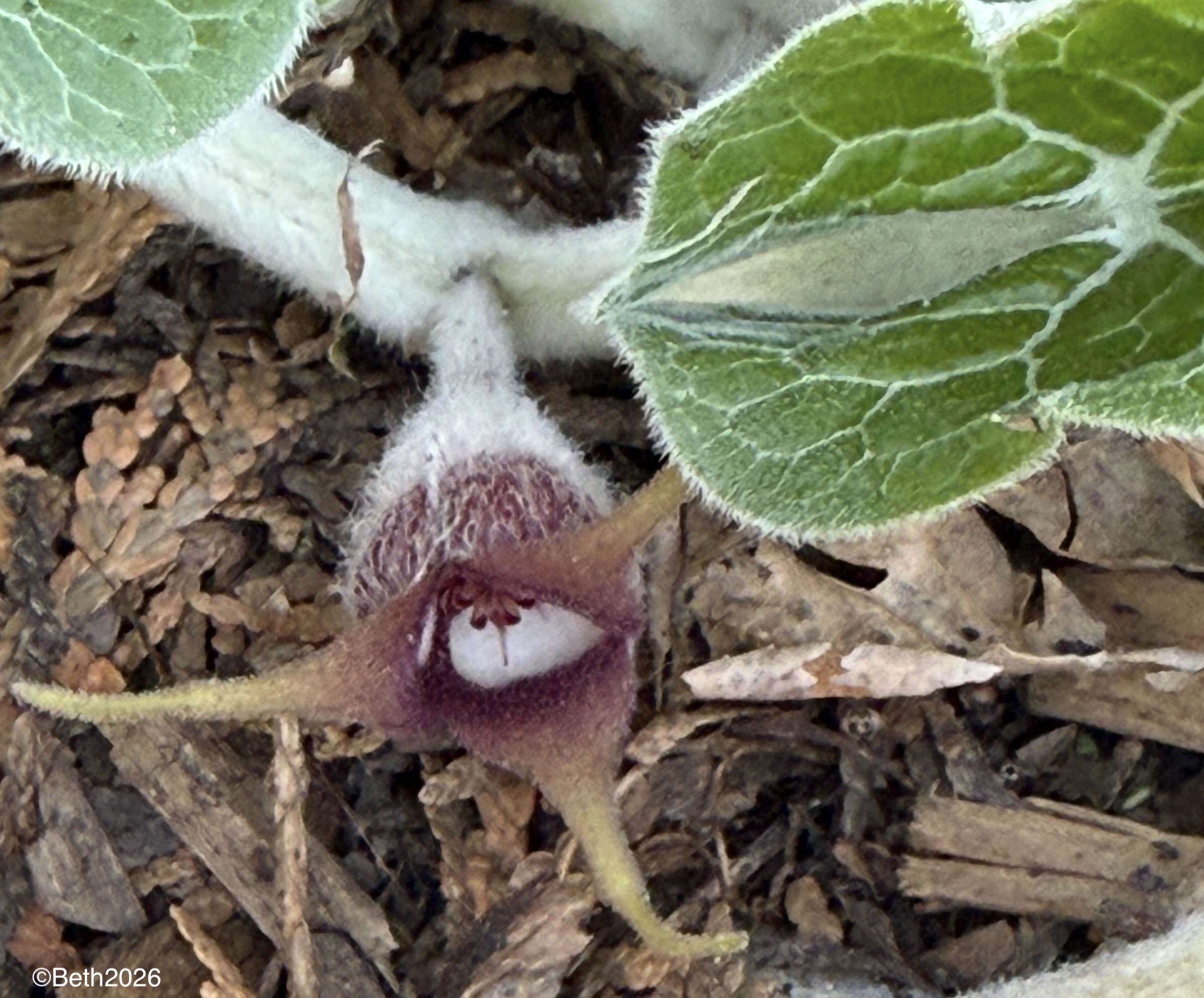
The unusual blossoms of Canada Wild Ginger (Asarum canadense) are tucked beneath the plant at the base of its heart-shaped leaves. They remind me of fuzzy, patterned winter hats.
It’s elfin, plain and hidden — Canada Wild Ginger isn’t a typical Minnesota spring wildflower. A few days ago, flecks of smoke green caught my eye in the shadows, perhaps remnants of last year’s foliage. I crawled under the arbor vitae for a better look and found new leaves of Canada wild ginger (Asarum canadense) pushing into the light.
Freshly emerged, they looked small and wrinkled, but they will unfurl into pairs of rounded, heart-shaped leaves that will turn deep green and cover that area of our small shade garden until late autumn.
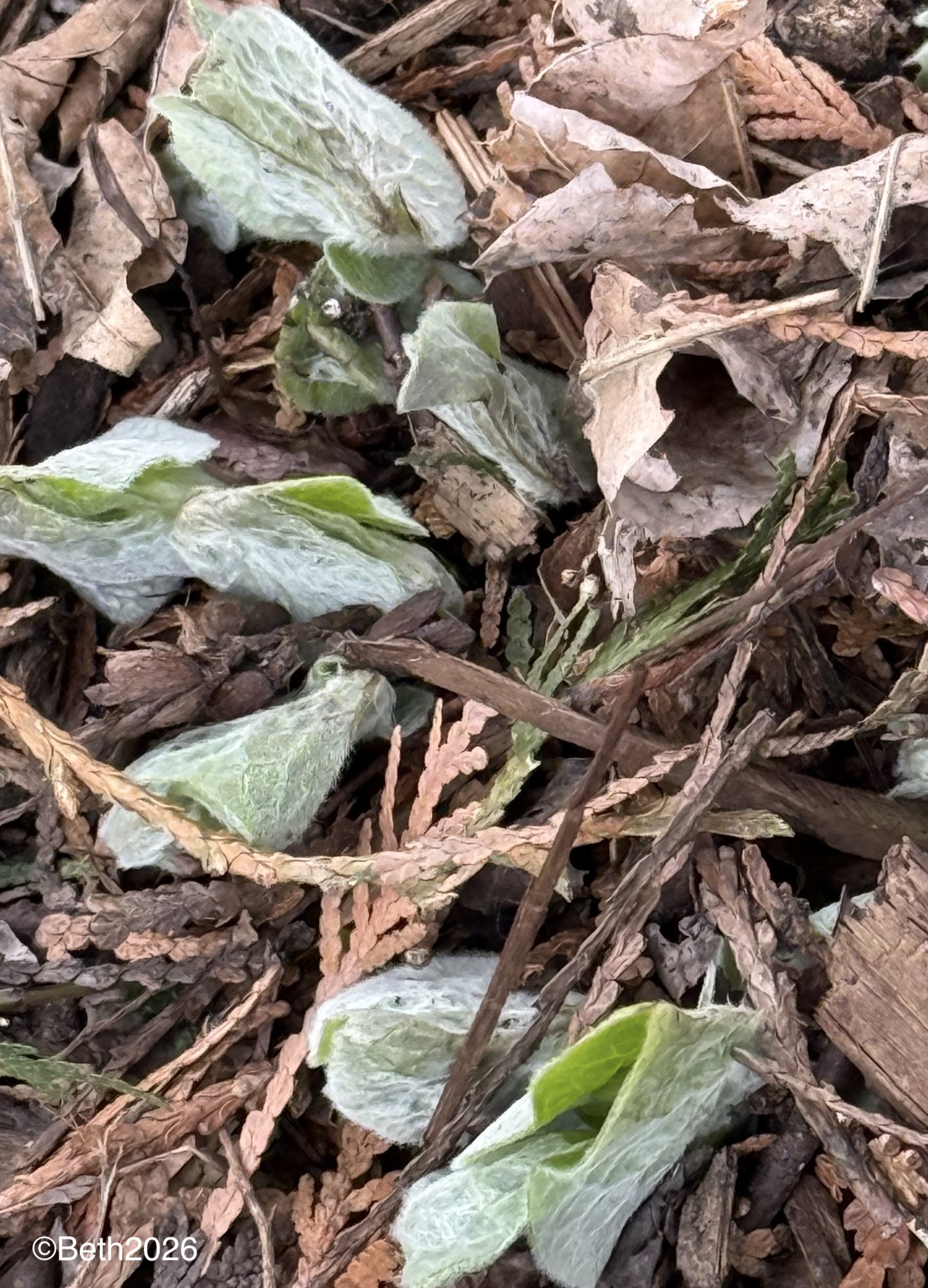
Newly emerged Canada wild ginger leaves don’t resemble typical springtime foliage!
Soon after the leaves assume their heart shape, round buds and then tiny maroon-and-cream flowers appear near the base of the plant. Often overlooked because of their small size, hidden location and earthy color, their unique pattern is worth seeing. Gently lift the leaves aside and look at their base for pinkish-green buds, or small flowers that remind me of fuzzy, knitted winter caps.
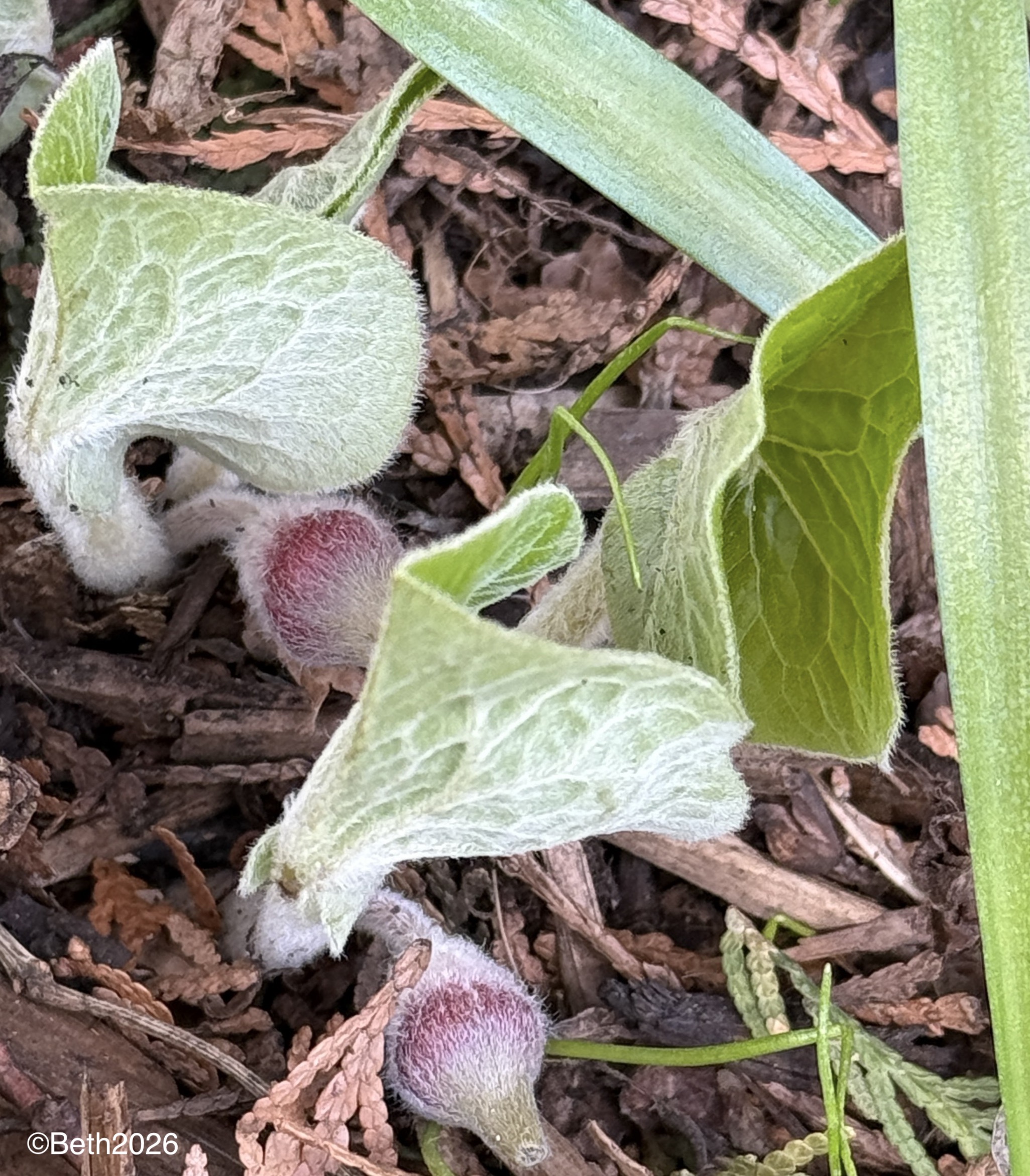
Round, pink buds appear tucked into the fork of two leaf stalks on the ground.
The flowers are a spring ephemeral¹ and last only a few days in April or early May. The beautiful leaves cover the ground through autumn, especially in shaded, moister areas of the garden and woods.
How are such early flowers pollinated, since most bees and other pollinators are inactive and the flowers are hidden? Current thinking is that the plant mainly relies on self-pollination. When the buds open, the anthers (male) are ready to receive pollen. A few days later, the plant’s stamens (female) will stretch upward toward the anthers carrying the pollen so that fertilization takes place within the plant. Other methods have been suggested, but there’s little proof to support them. These include: Ants, small beetles and tiny snails use the flowers as resting places at night and unintentionally move pollen around. Some researchers believed that tiny spring fungus gnats also pollinated the plants. However, there is little to substantiate this method for this species of wild ginger.
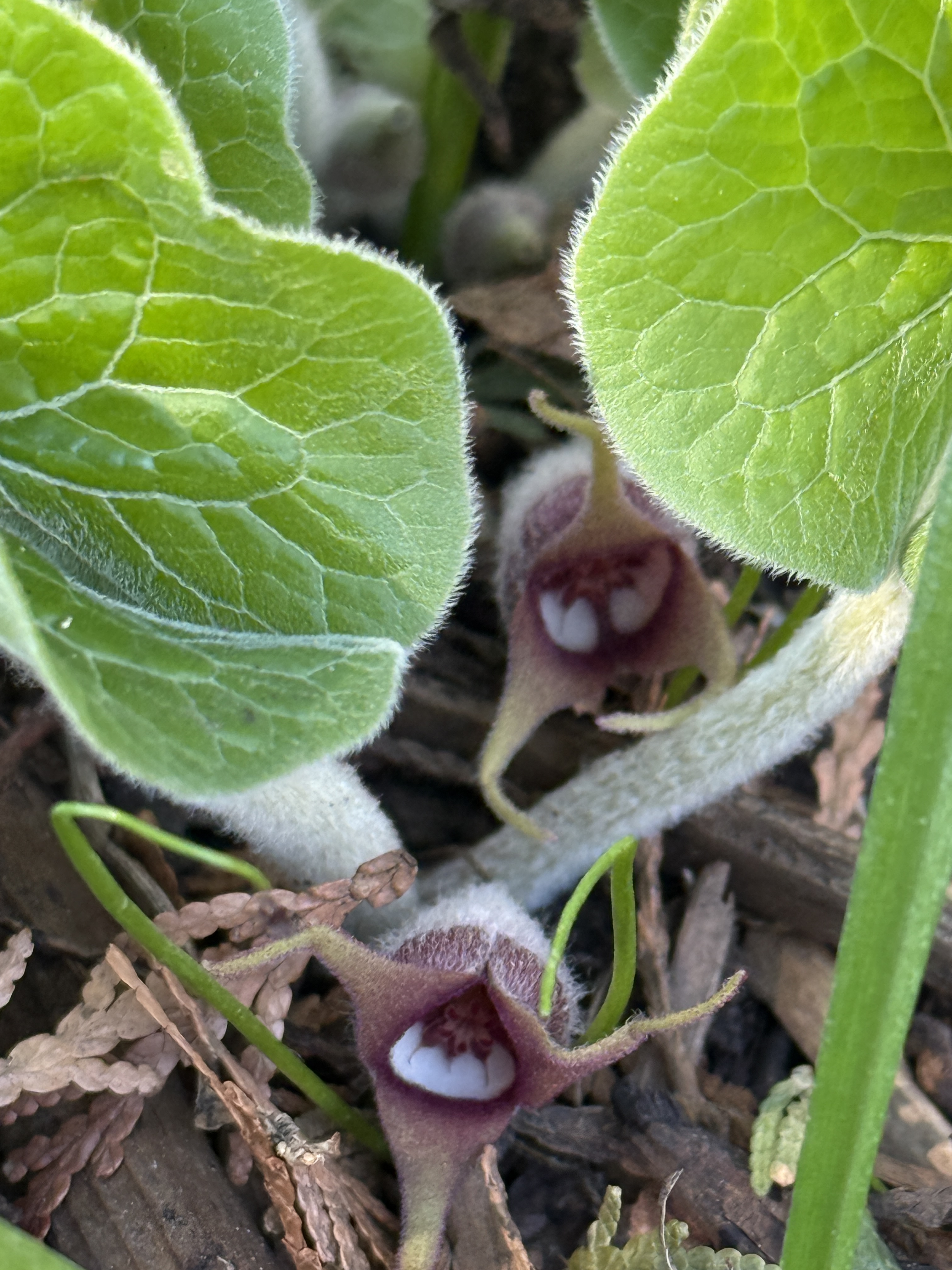
Current thinking is that the flowers of Asarum canadense are primarily self-pollinated, though some insects may accidentally pollinate the flower.
Pollination isn’t the only thing done differently by this plant. The seeds are dispersed primarily by ants and a few beetles in a process called myrmecochory. Like bloodroot, another early ephemeral, wild ginger’s seeds have a special piece called an elaiosome that is rich in nutrients. Ants carry the seeds home where they consume the elaiosome and toss the seed aside in the “garbage pile” of their underground nest. The ants benefit from the nutritious snack; the seeds benefit because they’ve been carried away from the parent plant to a new location. Being in the dirt of the ants’ nest also protects them from mice and other rodents who would dine on them above ground. It’s possible that seeds may also be transported by animals that brush against the plant.
Canada wild ginger slowly spreads into colonies in gardens and natural settings by means of plant rhizomes. Rhizomes are shoots that spread horizontally underground to establish new plants, such as in iris and asparagus. I first spotted Canada wild ginger growing at our cabin and was attracted by the leaves that hold their beauty all season. I love their heart shape and that they deepen in color as they age.
The colony in my home garden started with one plant from a local native plant nursery a dozen or more years ago. I planted it with other woodland species that do well in dappled sun and shade with slightly moist soil, including ghost ferns, painted ferns, sweet woodruff, Solomon’s seal, wild geranium, bloodroot and Virginia bluebells. Later in autumn, delicate and sparse zigzag goldenrod blooms around it. Asarum canadense is found throughout the eastern region of the U.S. and Canada. It grows in Canadian plant hardiness zones 2 through 8 and in USDA zones 2 through 8, although I’ve also seen it listed in zones 3 through 7 or 4 through 8.
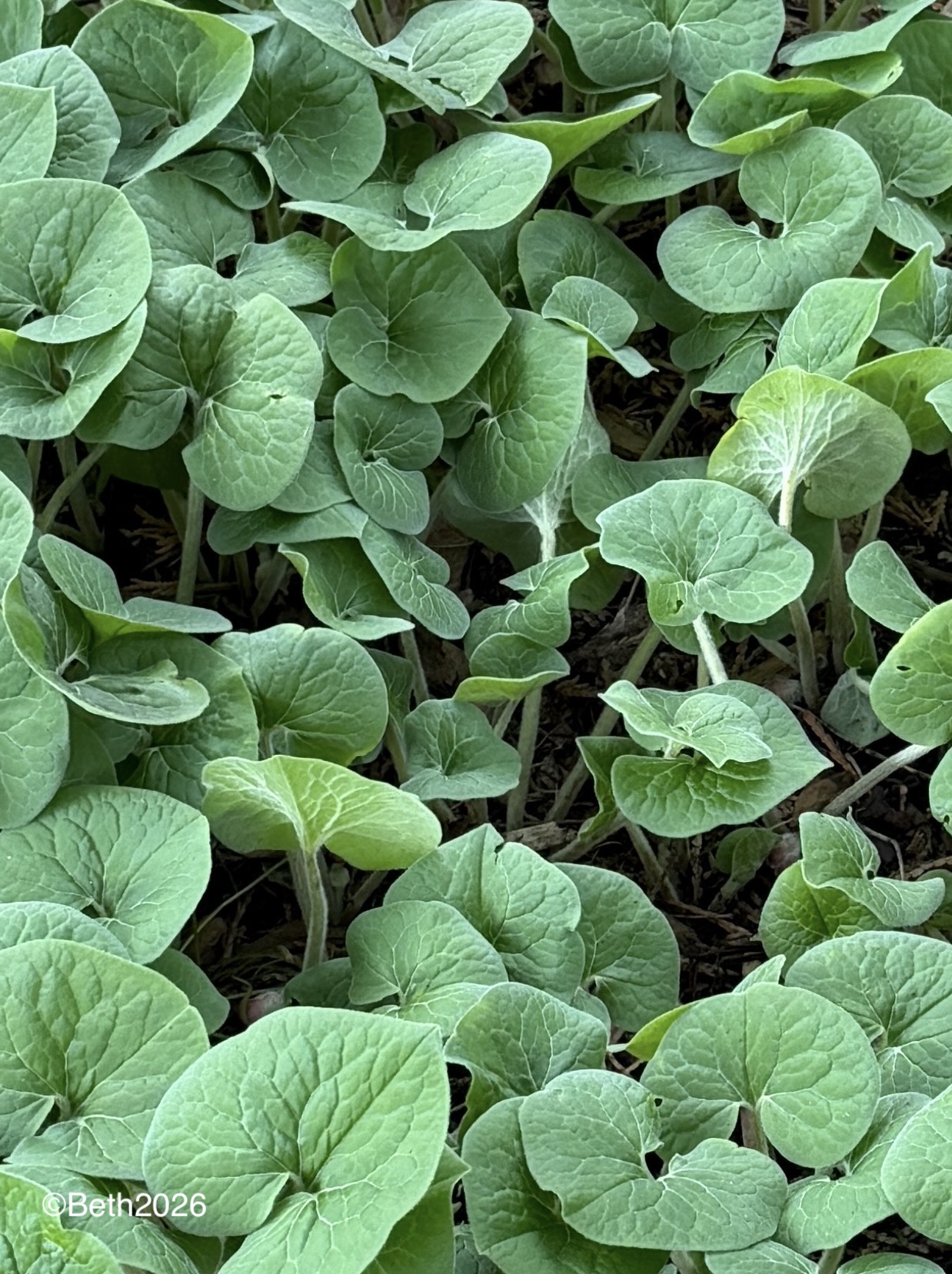
Dark green Canada wild ginger leaves provide a reliable ground cover in shadier gardens and woodlands.
This plant has a light scent similar to Asian ginger used in the kitchen, but it is not edible for humans and the two plants are unrelated. Some sources note that Native Americans used the plant as a poultice for wounds. (Two antibiotic substances have been found in the roots.) Others note that it may have been used to flavor some foods. However, because it contains carcinogens and other poisonous compounds, it isn’t widely used in culinary work today. Enjoy its lasting leaves and unusual flower in your shade or woodland garden.
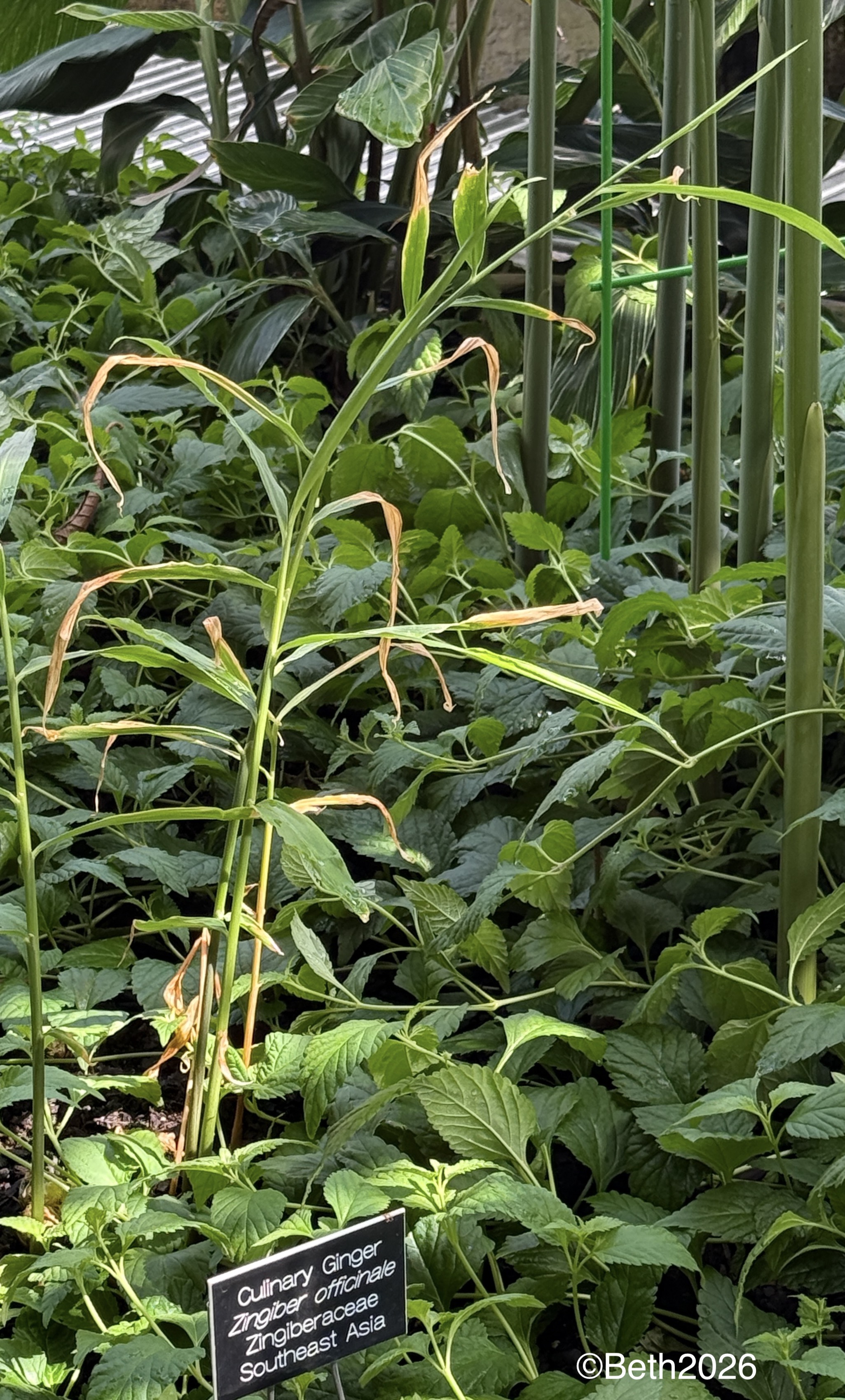
Zingiber officinale from Southeast Asia is a common ginger used in cooking, but there are many others in the Zingiberaceae family. It is unrelated to Canada wild ginger. Photographed at the Marjorie McNeely Conservatory, Saint Paul, MN.
¹Spring ephemerals are wildflowers that grow, bloom, produce seed and usually become dormant by early summer. They typically grow on the forest floor before the overhead canopy of leaves opens.
Resources and Further Reading
Forest Service U.S. Department of Agriculture
The Secrets of Wildflowers by Jack Sanders Pp. 83-85

