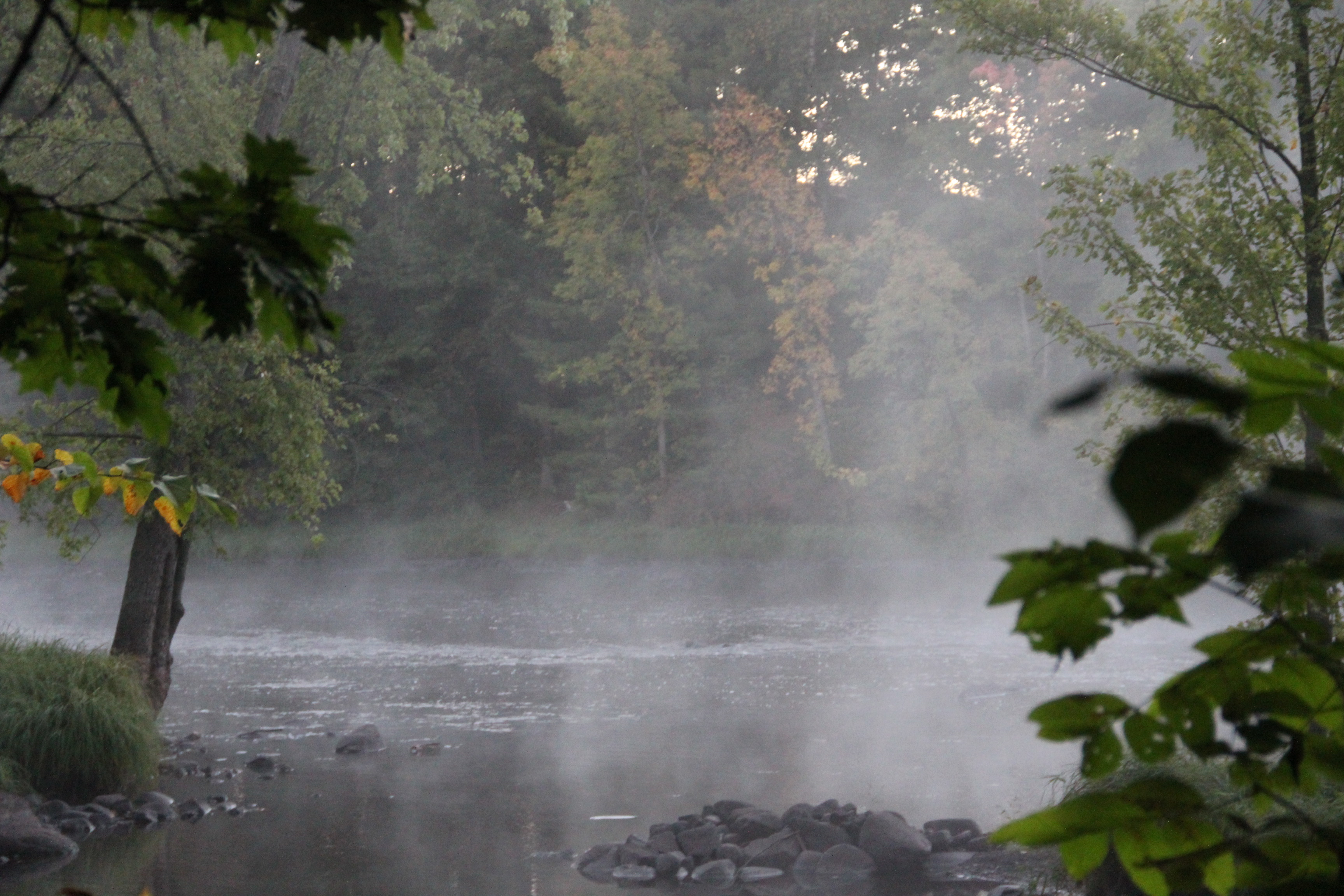
Mist curls, rises, swirls over the Snake River in the light of early dawn and a full moon. It is the morning of the autumnal equinox. The air is calm and chilly, about 42 degrees. A touch of autumn color tints a few trees. Pileated woodpeckers and a northern flicker sound their ringing calls in the woods. A small group of black-capped chickadees gurgle softly to each other as they hunt for insects in the hazelnut bushes on the riverbank. In a few minutes, the sun will rise, the mist will vanish and the day will gradually warm to 70 degrees. But for now, the river valley is hidden and serene.
Author: Beth
September Garden
Our garden reached its peak a few weeks ago, but it’s still full of color and life in mid-September. Butterflies, many species of bees, and dragonflies are present. A tiny charcoal-colored mouse slices off the black-eyed Susan flower heads leaving long, empty stalks. (One year I found a mouse’s stash of flower heads and seeds in my garden toolbox!) A family of cardinals eats red yew berries; chipmunks and squirrels munch on the last of the beacon apples. Here are a few of the flowers and insects in our garden on this warm, sunny afternoon in St. Paul, Minnesota:
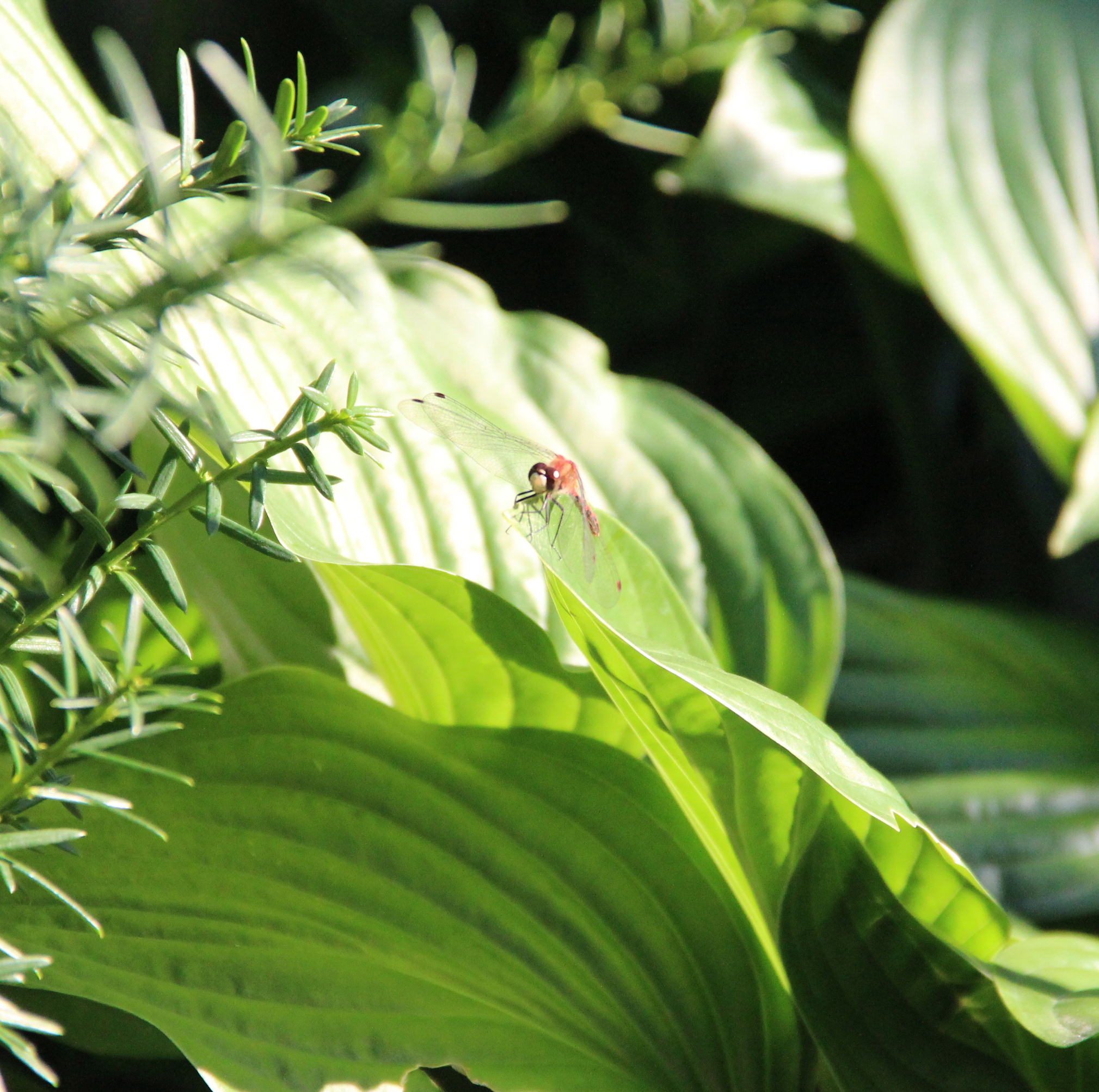
White-faced meadowhawk dragonflies patrol the garden for mosquitoes and other small, soft-bodied insects. Many years these dragonflies are active in our garden until mid-October.

Heath asters (Symphyotrichum ericoides) are native to the eastern and midwestern United States and Canada.
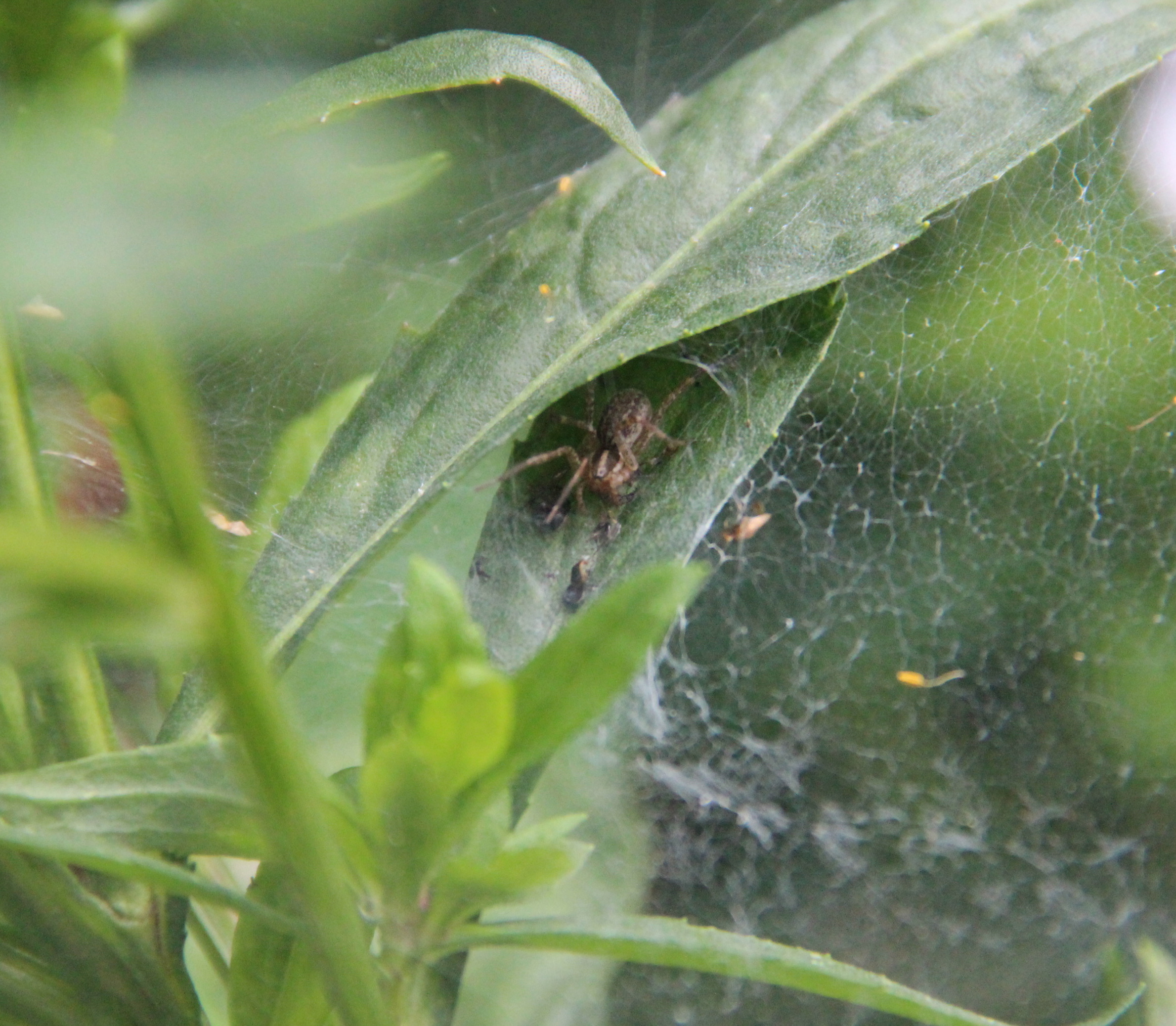
Grass funnel spiders (Agelenopsis) are shy spiders that build flat webs with a funnel or tube at the back of the web. The spider rests out of sight in the funnel. When an insect lands on the web, the spider quickly captures it, bites it and wraps it in silk.
After many days without monarchs, a straggler sipped nectar from several different flower species.
Red Admiral Butterfly
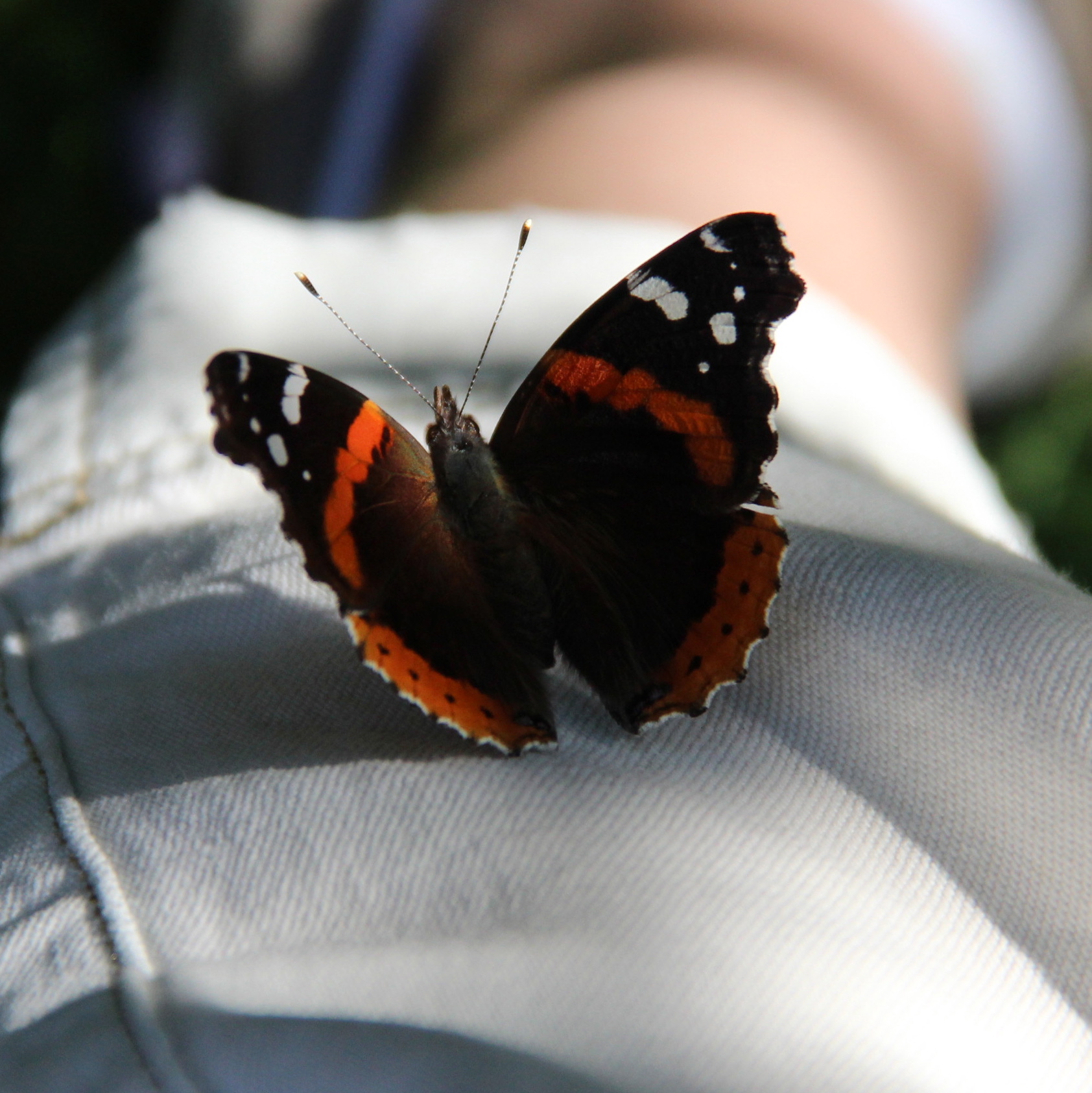
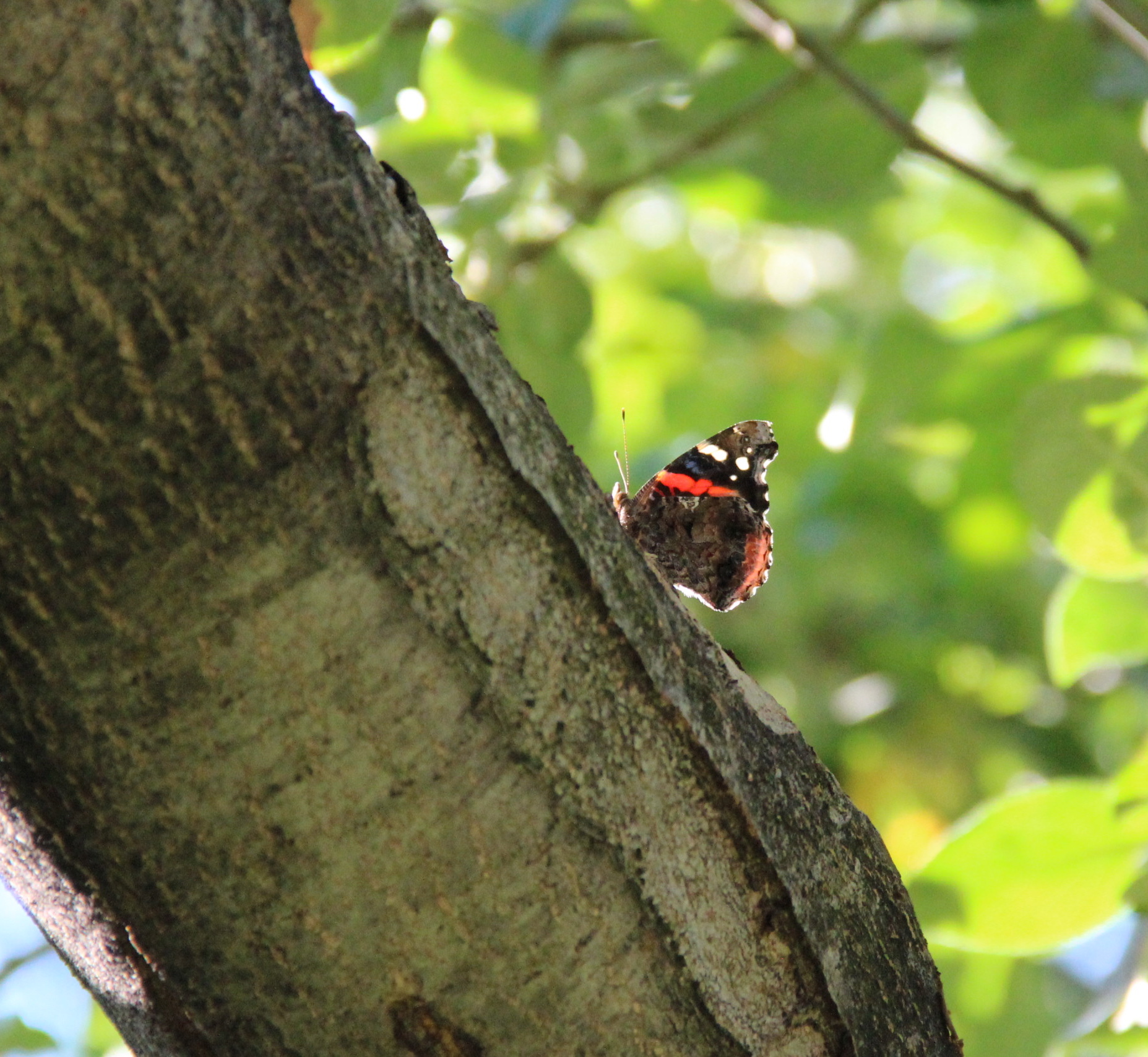
A splash of bright red flashed by as I counted monarch butterflies in our garden late Wednesday afternoon. Perched in a sunny spot on the apple tree trunk, a red admiral (Vanessa atalanta) fanned its wings, flew around the backyard a couple of times and landed on a lower limb of the tree.
Named for the red-bar markings on their black upper wings, red admirals also sport white marks in the upper corners of the forewings. The underside of the wings, which is often visible when the butterfly perches, is a mottled brown, tan and black, with a pink band and white spotting on the forewing.
Red admirals range from near the Arctic Circle to as far south as Guatemala. (They also live in Europe, Asia and North Africa, and have been introduced in other parts of the world.) They prefer moist areas such as fields, meadows, open woodlands, gardens and yards. Red admiral caterpillars prefer to eat nettle leaves; adults eat overripe fruit, tree sap, and the nectar of many types of flowers, such as aster, blazing star, spotted Joe-Pye weed and red clover. In Minnesota, there are one-to-two broods each year. The butterflies of the second brood are smaller and less colorful than the first brood. Most migrate to the southern states in autumn, but a few successfully hibernate in the north during mild winters. Many years, this butterfly remains active into October and I’ve seen them as early as mid-April in the spring.
For more information about the red admiral and other butterflies, visit:
Bumblebee “Buzz Pollination”
Last Sunday afternoon was quiet in the garden; too cool for the loud whining of cicadas, and no wind to swish and rattle the leaves. However, a persistent high-pitched buzzing in the anemones was driving my husband nuts. Turns out it was the sound of several bumblebees releasing pollen through sonication or “buzz pollination“. In sonication, bumblebees, and other native bees, hold onto a flower with their jaws or legs, press the upper portion of their body into the flower and rapidly vibrate their flight muscles to jar loose pollen. The freed pollen clings to the bee’s furry body. Some of it is collected in the bee’s pollen baskets to be brought back to the colony, and some fertilizes the next flower that the bee visits. (The pollen basket is located on the outside of the bee’s back leg. It’s easy to see when it contains pollen because it will be yellow, orange or red, depending on the type of pollen it contains.) Buzz pollination is essential to plants such as blueberries, cranberries and tomatoes, in which the pollen is firmly attached deep inside a tubular anther. However, bumblebees also use it to release pollen in other flowers, such as the Japanese anemones in our garden.
In addition to the buzz pollination video link in the text above, find out more about pollination and bumblebees from master naturalists Paul and Mary Meredith at VictoriaAdvocate.com.
Biodiversity on a Sunflower
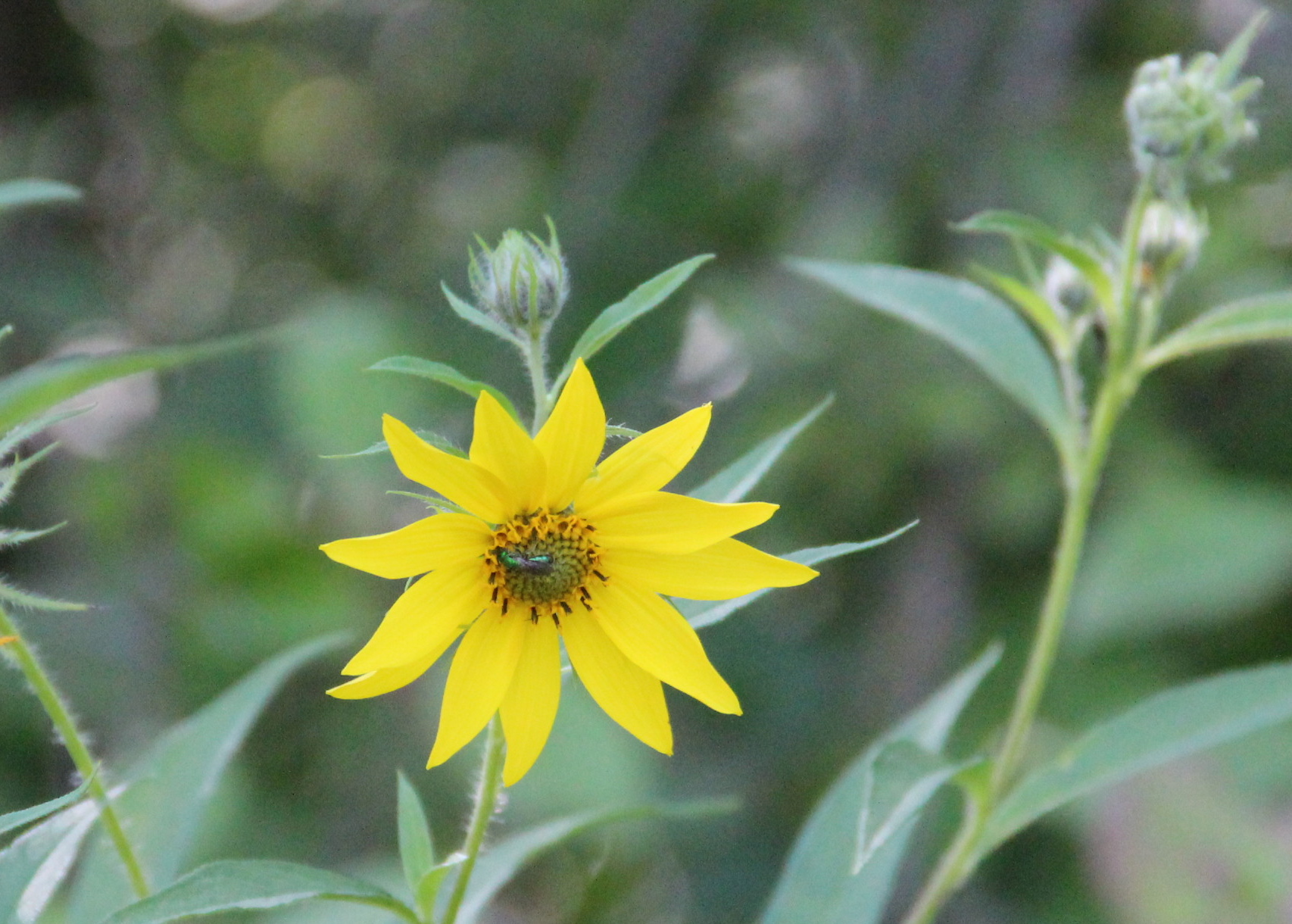
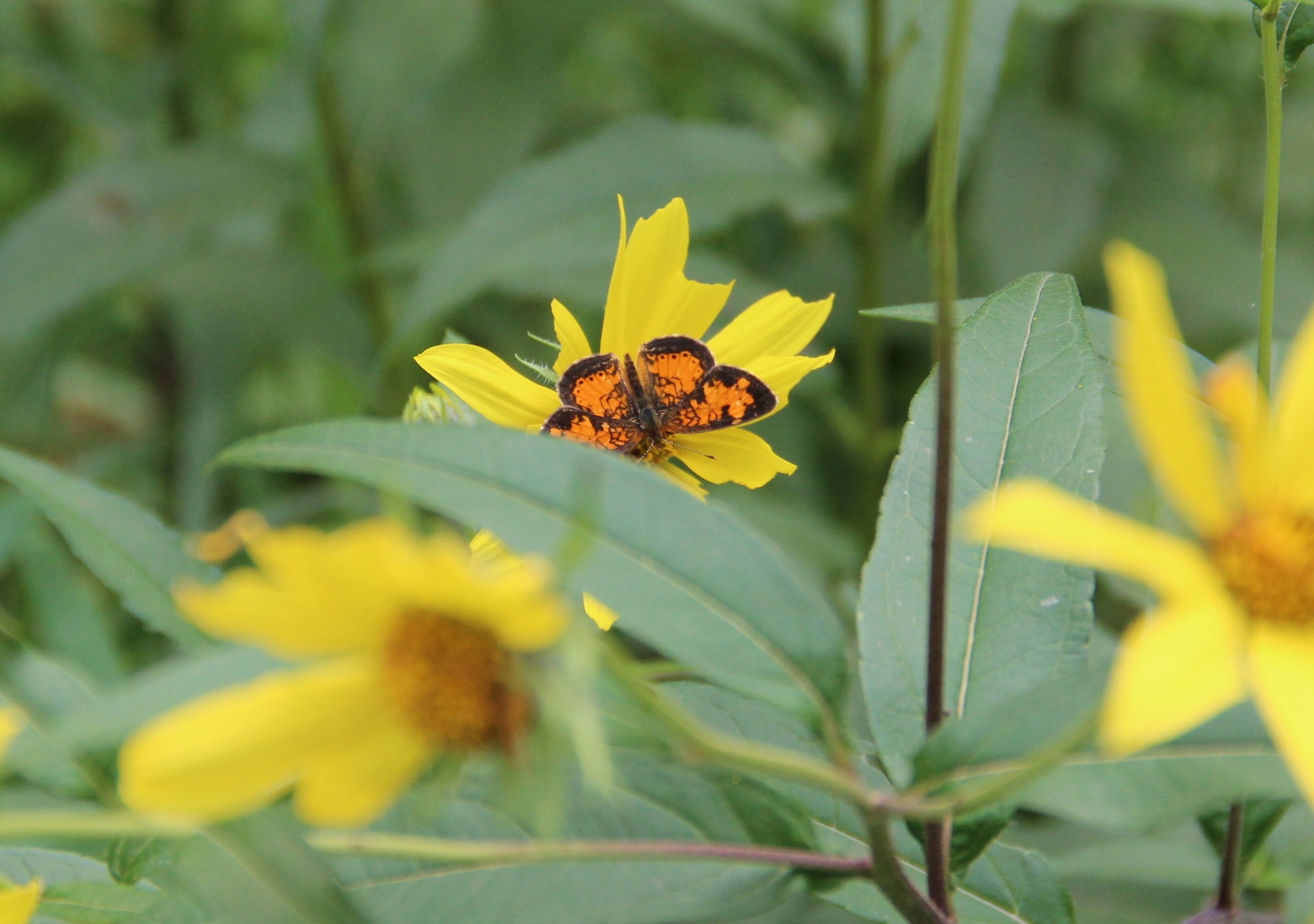
Late Sunday morning in early September. I walk along our unpaved road next to the Snake River. The sun is hot, grasshoppers whir and click, bees drone and American goldfinches call to each other in the aspen grove. Small stands of native sunflowers (Helianthus tuberosus L.) dot the roadside. In a single group of three plants, also known as Jerusalem artichokes, I spot four species of native bees, two species of wasps, several ladybird beetles, a goldenrod soldier beetle and a northern crescent butterfly. Here’s a sampling:
Bottle Gentians
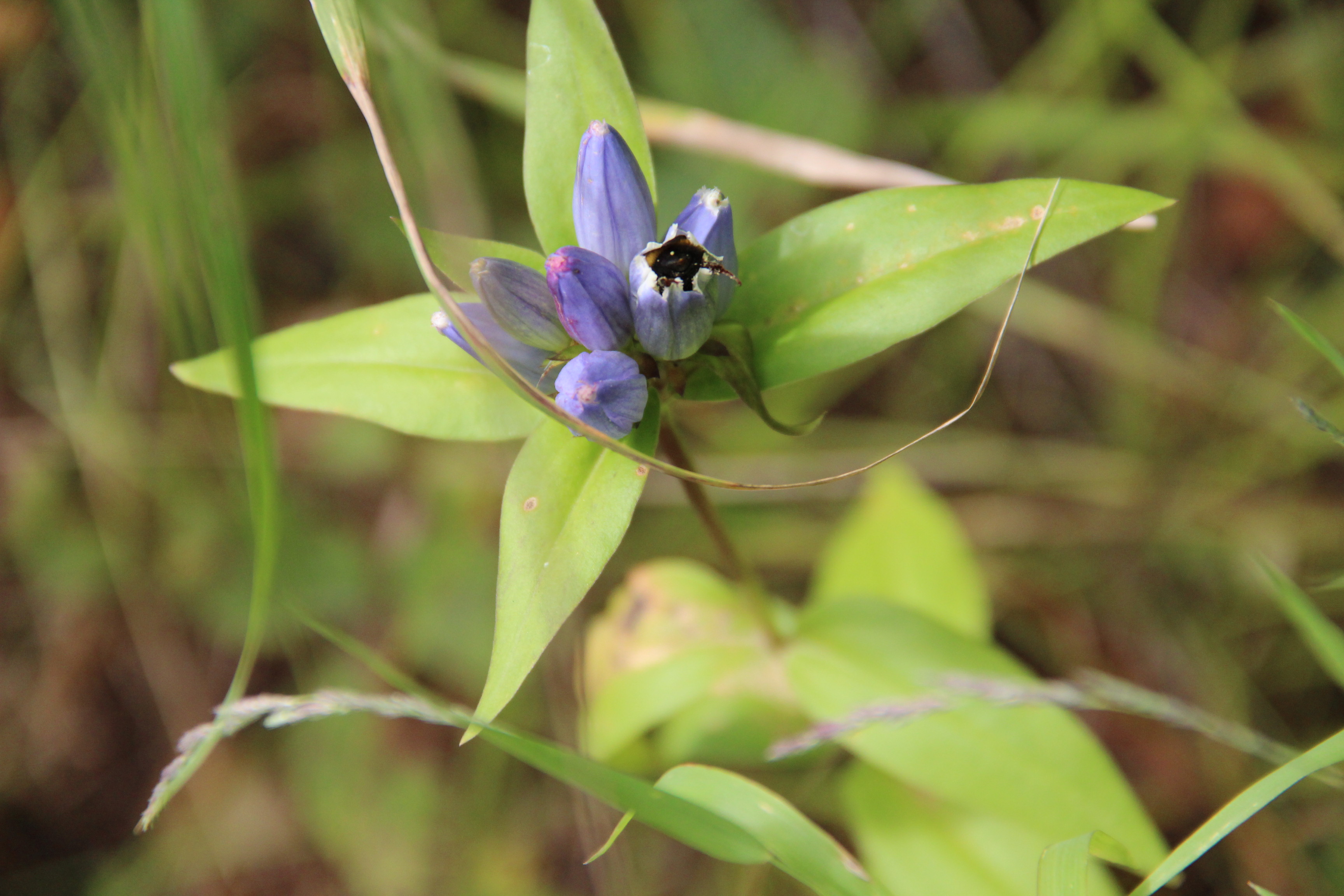
One of my favorite late-summer wildflowers is the bottle gentian (Gentiana andrewsii), which grows in sunny, moist patches along the dirt road next to our cabin. The tightly closed oval flowers, which never open into a blossom, are all deep blue so far this year, but in the past, I’ve also seen powder blue, pearly white, and light pink blooms. The plants are about 18 inches tall and the flowers are clustered together at the top.
Because the blooms are narrow and closed, they primarily are pollinated by bumble bees, which are strong enough to wiggle their way into the flower. A bumble bee pollinated several of the blooms on the bottle gentian that I was photographing.
Monarchs and Joe-Pye Weed
Monarch butterflies are rare visitors this summer. In a typical year, they float through the backyard all day. Over the past week, a solitary monarch visited our patch of spotted Joe-Pye weed (Eutrochium maculatum) each day between 7 and 8 a.m. Sunlight glowed in its beautiful wings as it sipped the Joe-Pye nectar.
In the next two weeks, monarch migration through St. Paul, MN, should peak, according to MonarchWatch.org. To check peak migration in your own area, visit peak migration. During the 2011 fall migration peak, 10-to-25 monarchs visited our Joe-Pye patch each afternoon, and often roosted in our apple tree for the night. I’m interested in comparing this year’s numbers with the 2011 observations. (Last year, the Joe-Pye blossomed two-to-three weeks earlier than usual, due to the early spring, and as a result, finished blooming ahead of monarch migration.
In addition to the low numbers of monarchs, I’ve only seen one each of black swallowtails, red admirals and mourning cloaks, and only two tiger swallowtails in our garden. I haven’t found caterpillars of any of the five species. Read more about the low number of butterflies this year, from the Star Tribune.
Annual Cicadas
The dog days of summer are here, and along with them, the annual cicadas. They’re brown and green, look a bit intimidating and punctuate the hot, heavy August air with loud, raspy buzzing. Usually present beginning in mid-July, annual cicadas were sparse in our garden until the heat and humidity arrived last weekend. Now the air vibrates with their whining buzzes, and in the late evening, is accented with cricket song and the weet-weet-weet call of a male cardinal. Cicadas “sing” from the branches of our apple, ash and spruce trees. In the sultry dusk, a large cicada takes off from the apple tree buzzing loudly; a small bat pursues it across the backyard and out of sight.
Between one and two inches long, the adult annual cicada (Tibicen canicularis) has a blunt, thick body and large wings tinged with apple-green. Cicadas live just a few days as adults singing in the trees, mating, and laying eggs for the next generation. Females cut a slit in a tree branch and deposit their eggs. When a nymph hatches, it burrows down into the soil beneath the tree where it spends 2-to-5 years sucking juices from the tree’s roots. When it is ready, the nymph leaves the soil and climbs up the tree, splits open its exoskeleton and emerges as an adult.

A molted exoskeleton, or hard outer casing of an annual cicada nymph, attached to the bark of our apple tree.
Only the male cicada calls. Males have two membranes called tymbals located underneath the abdomen. They contract and relax muscles attached to the tymbals to vibrate them and produce a loud, raspy whine. To listen to the songs of annual cicadas, follow this link to InsectSingers.com: cicadas/songs
The annual cicada is also called the dog-day cicada because it is most plentiful and vocal during the steamy days of late August. Sirius, the brightest star in the sky (excluding our sun), is the largest star in the constellation Canis Major, or Greater Dog, and so is known as the “dog star”. At this time of year, Sirius rises in the southeast just before dawn. The ancient Egyptians and Romans thought that the star added its heat to our sun’s, making late summer the hottest part of the year in the northern hemisphere, and called it “the dog days of summer”.
After the Shower
On the Banks of the Snake River (St. Croix Basin)
It’s a breezy, clear, mid-August morning at the Snake River in east central Minnesota. An old silver maple creeks in the wind and a pileated woodpecker’s call rings through the woods. Trees, thickets and river grasses show lush shades of green. I am so glad to see no hint of autumn in them yet. But, other plants tell a different story. The berries of false Solomon’s seal grow red, chokecherries and currants ripen to purple, and hawthorne fruit and wild rose hips begin to blush. Hickory and hazelnuts are plump and the fragrant basswood flowers of a few weeks ago are now little round nutlets.
Flowers are changing too. Turk’s-cap lilies, meadow rue and vetches have been replaced by woodland sunflowers and lesser purple fringed orchids. The first goldenrod buds are turning yellow, and harebells and heal-all continue to bloom.
The woods are much quieter than in July. Most birds have finished breeding and their babies have grown, putting an end to the feeding frenzy. I miss the morning and evening chorus — especially the ethereal vespers sung by the wood thrushes. Fortunately, the last few mornings, a family of five blue jays visited our hazelnut thicket. They call softly to each other as they pluck the nuts, hold them against a tree branch and peck open the husk. These jays are more elusive than the jays in our city yard. They retreat deeper into the woods when I sit outside and try to photograph them.
In the late afternoon, a lone cicada buzzes. Grasshoppers and crickets trill softly and are joined by snowy crickets and katydids in the evening. Their night music, though simpler than birdsong, complements the burble of river water over rocks and gently soothes as darkness falls.