Early October Wildflowers: Spotted Jewelweed

In early October, wildflowers in shades of orange-gold, yellow, purple and white light up Minnesota’s roadsides, fields, woods and riverbanks.  One of my favorites is spotted jewelweed (Impatiens capensis), or touch-me-not.  Its small flowers are bright orange with red spots and are shaped like tiny funnels or cornucopias.  The name jewelweed refers to the way that water droplets bead up like shiny jewels on the plant’s leaves, and also to the blossom’s jewel-like appearance.  Touch-me-not refers to the ripe seed pods, which burst open and expel the seeds if touched.  When our teenage son was little, we loved popping open the ripe pods and watching the seeds fly out.

Spotted jewelweed (Impatiens capensis)blossom and ripening seed pods.

Spotted jewelweed (Impatiens capensis) blossom and ripening seed pods.

Native to much of Canada and the United States, spotted jewelweed grows along streams, rivers, damp roadsides and other moist, shady spots.  The one I photographed was growing in a shady wet area about four feet from the edge of the cabin road.  Hummingbirds, which are attracted to the bright, red-spotted blooms, are the main pollinator of spotted jewelweed.  The nectar is contained within spurs that are easily reached by the hummer’s long beak.  A closely related plant is pale touch-me-not (Impatiens pallida) which is light yellow with just a few reddish-brown spots.

Related Video:  Spotted jewelweed pods popping open.

Orange Sulphur Butterfly

Today’s warm temperatures and south winds brought an orange sulphur butterfly to our garden.  Normally a common butterfly, this is the first one I’ve seen all year. The orange color on the upper wing, and dark black spots help to distinguish it from other sulphur butterflies.  Adults drink nectar from many species of garden flowers; this one visited garden phlox and asters.  The caterpillars prefer red clover, white clover, vetches and alfalfa.  Other insects seen in the garden today include a potter wasp, paper wasps, bumble bees, honey bees, metallic green bees, flower flies, cicadas and an autumn meadowhawk dragonfly.

An orange sulphur butterfly (Colias eurytheme) drinks nectar from garden phlox.

An orange sulphur butterfly (Colias eurytheme) drinks nectar from garden phlox.

Misty Autumn Morning

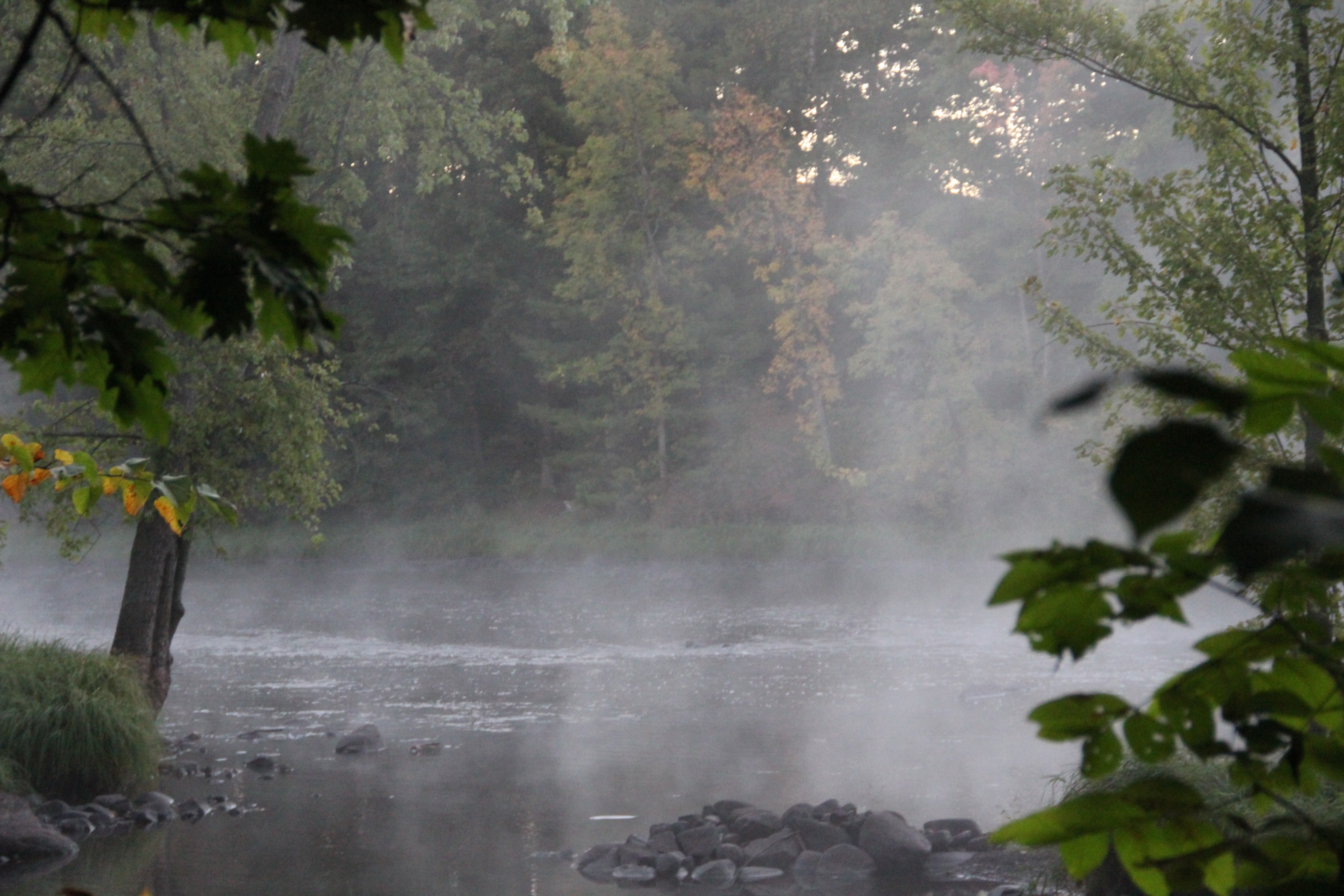
Mist curls, rises, swirls over the Snake River in the light of early dawn and a full moon.  It is the morning of the autumnal equinox.  The air is calm and chilly, about 42 degrees.  A touch of autumn color tints a few trees.  Pileated woodpeckers and a northern flicker sound their ringing calls in the woods.  A small group of black-capped chickadees gurgle softly to each other as they hunt for insects in the hazelnut bushes on the riverbank.  In a few minutes, the sun will rise, the mist will vanish and the day will gradually warm to 70 degrees.  But for now, the river valley is hidden and serene.

Early morning mist swirls over the Snake River in Pine County, Minnesota.

Early morning mist swirls over the Snake River in Pine County, Minnesota.

Autumnal equinox on the Snake River.

Autumnal equinox on the Snake River.