Autumn’s Bountiful Berries

Last May, blossoms delicate in form and scent ornamented woodlands and trails. Their luminous beauty lured early bees and butterflies to pollinate them. All summer the tiny ovaries slowly swelled. Fragile blossoms morphed into bright green beads, whose soft curves plumped and ripened to globes of rose, fiery red, purple, frosty blue and pearly white. Sun, heat, rain and pollinators concocted a gift lovely to look at and brimming with energy — a feast for birds and mammals throughout autumn and winter. Here’s a small sampling of nature’s autumn gifts:

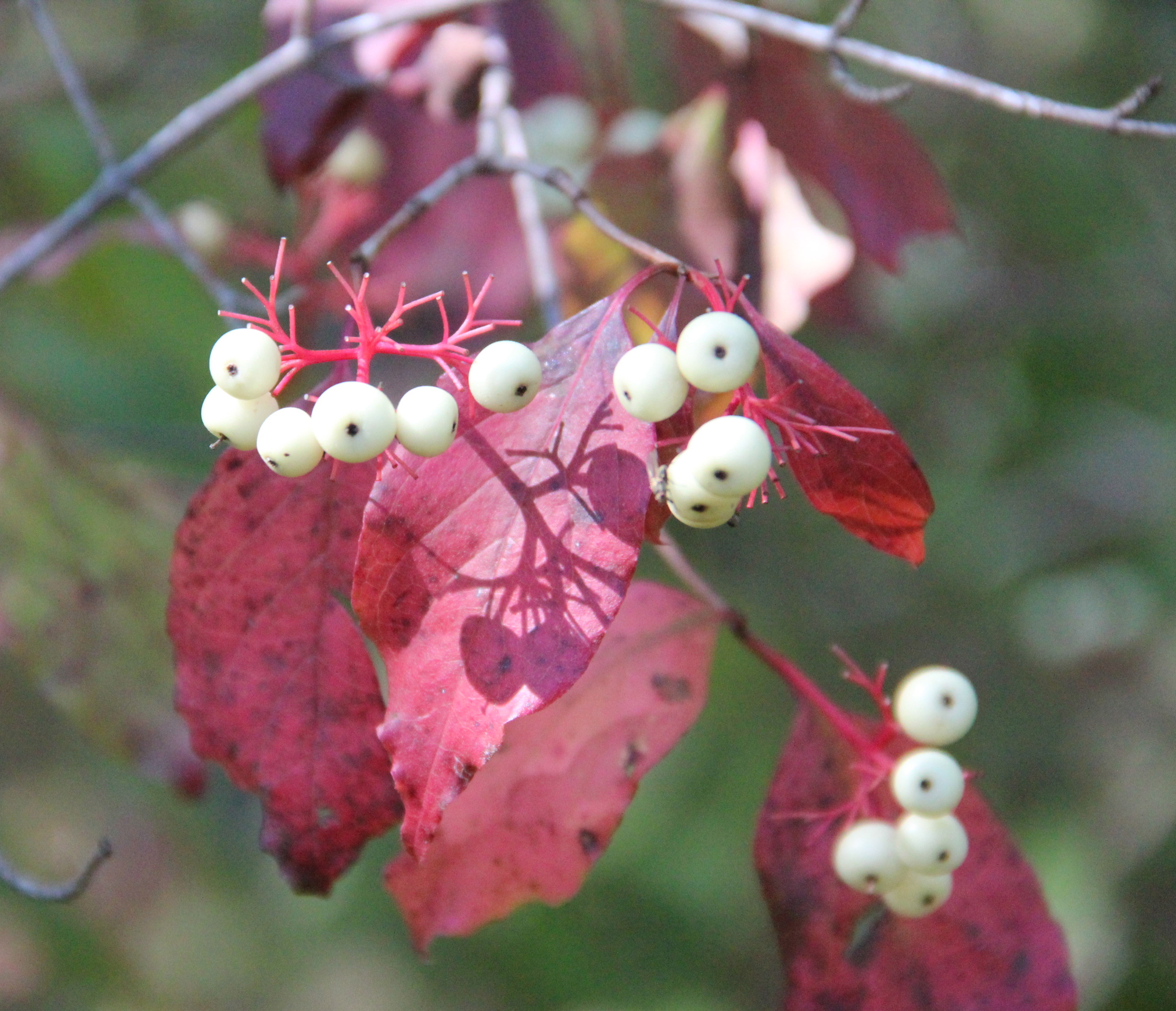
Migrating songbirds, as well as turkeys and grouse, favor the white berry-like drupes of gray dogwood (Cornus racemosa).
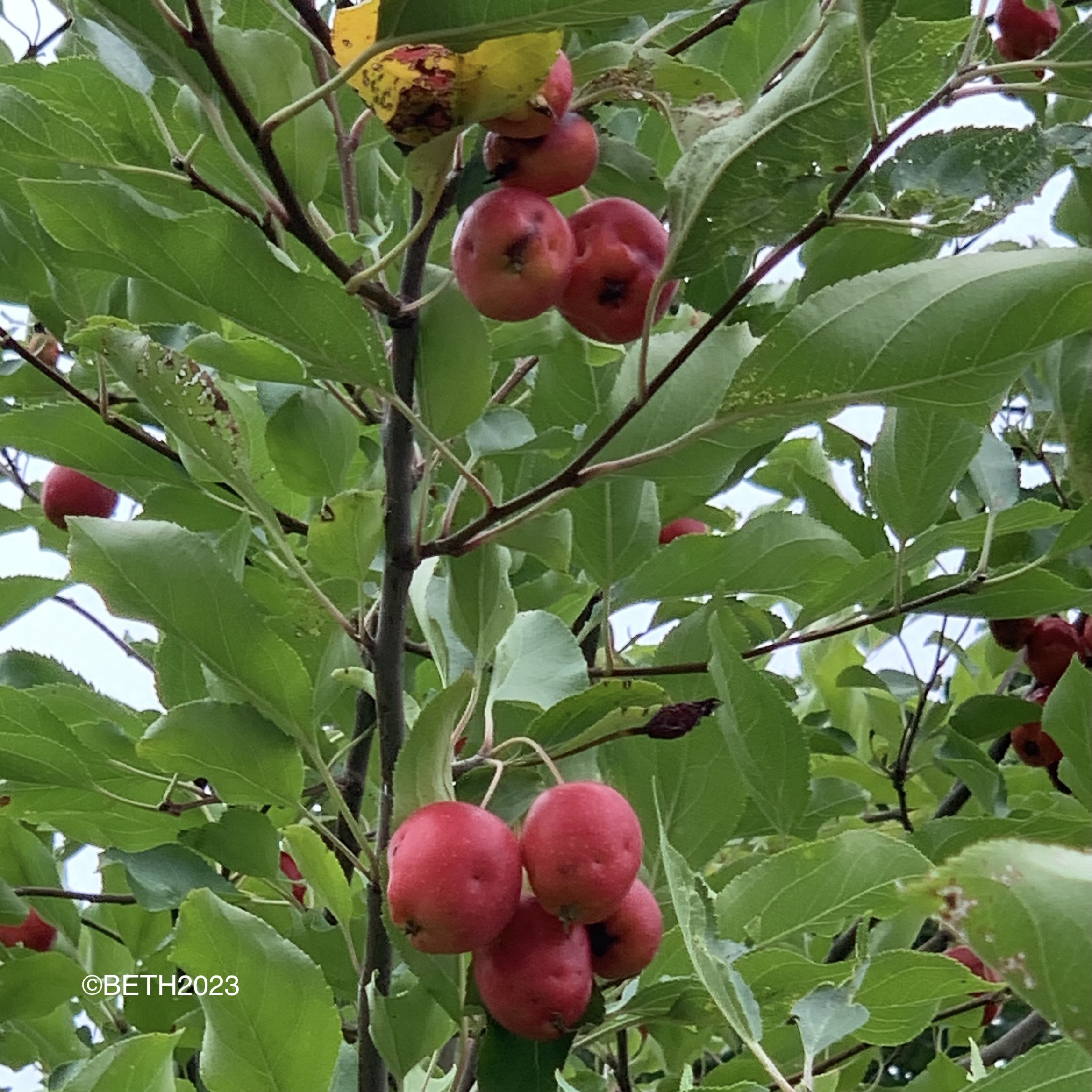
Wild plum trees (Prunus americana) provide food for mammals, such as deer, raccoons and foxes. Songbirds, turkeys and other birds will also eat them.

Pale dogwood berries (Cornus obliqua) are high in fat content and are eaten by songbirds and mammals, such as chipmunks, white-footed mice and squirrels.

Highbush cranberry (Viburnum opulus spp.) is not a true cranberry. According to the USDA’s plant guide, the fruit often isn’t eaten until late winter. Repeated thawing and freezing makes it more palatable.

Though carrion flowers (Smilax sp.) smell rotten, their berries do not, and are winter food for songbirds and a few mammals, such as Virginia opossum and raccoons.
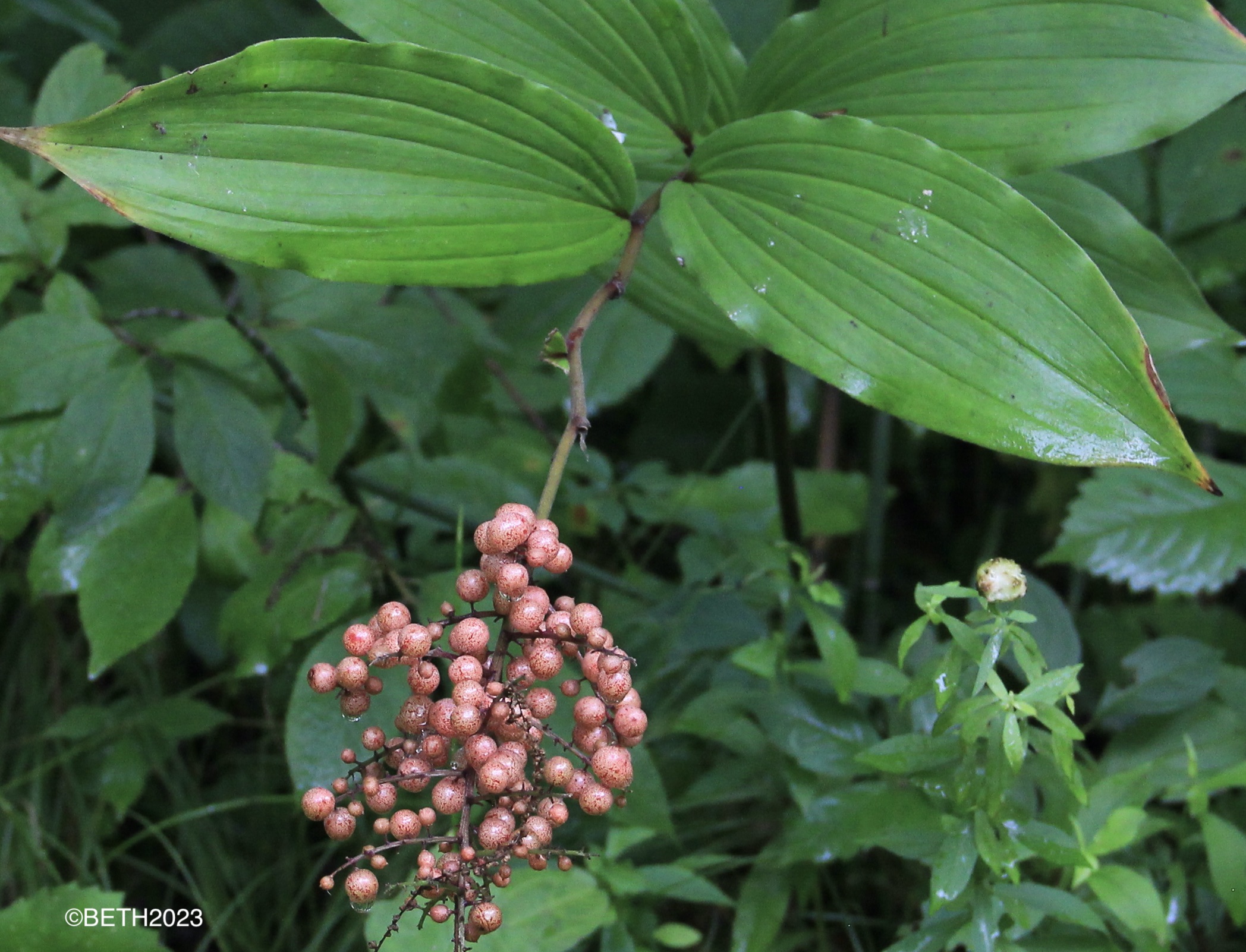
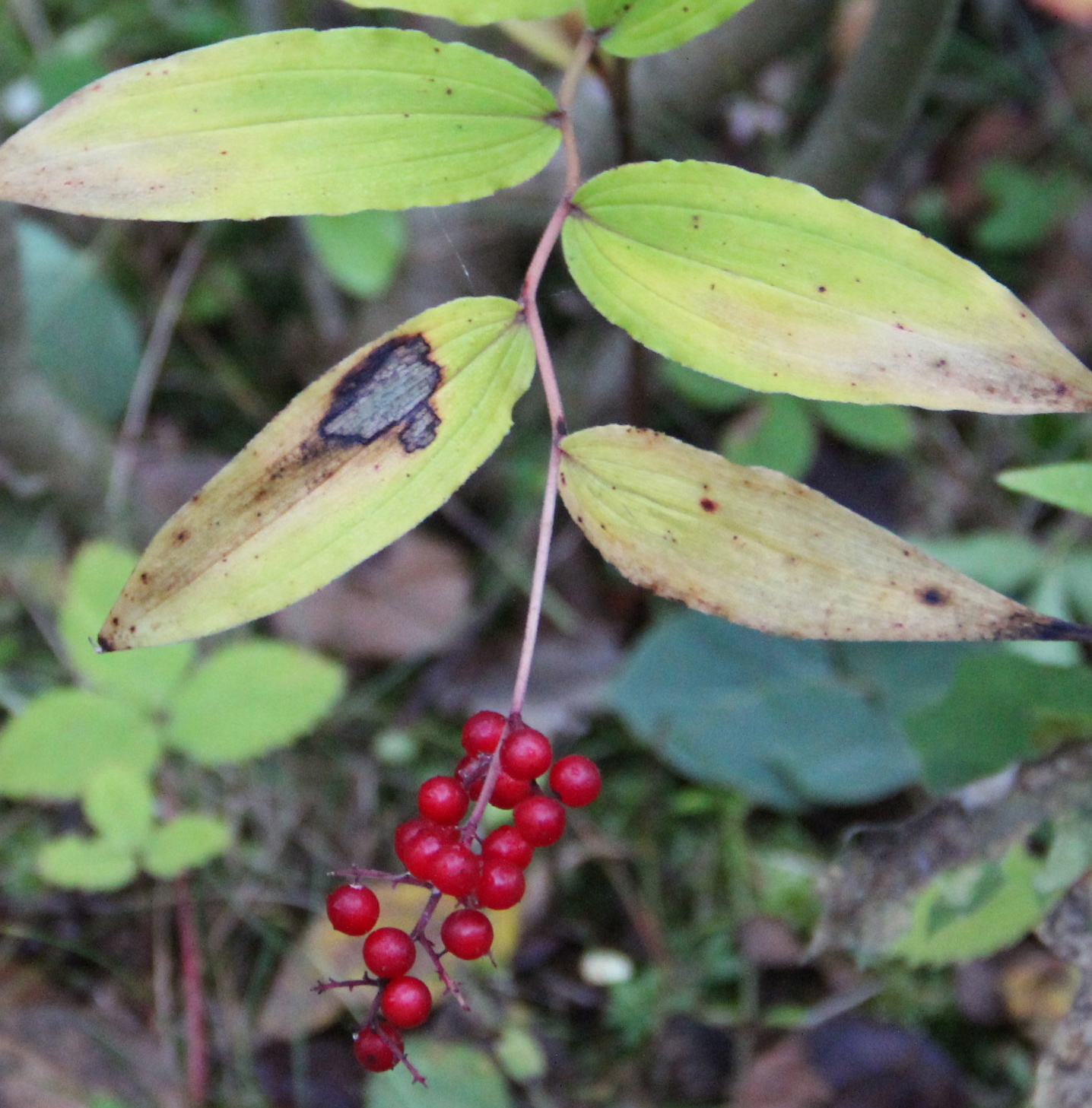
False Solomon’s seal (Maianthemum racemosa) fruit are often pink with red spots, but also can be solid red. They are eaten by woodland birds, such as the veery, and by white-footed mice.

Sources:
Eloise Butler Wildflower Garden Common Name Plant List

Illinois Wildflowers

Minnesota Wildflowers

Wild Roses

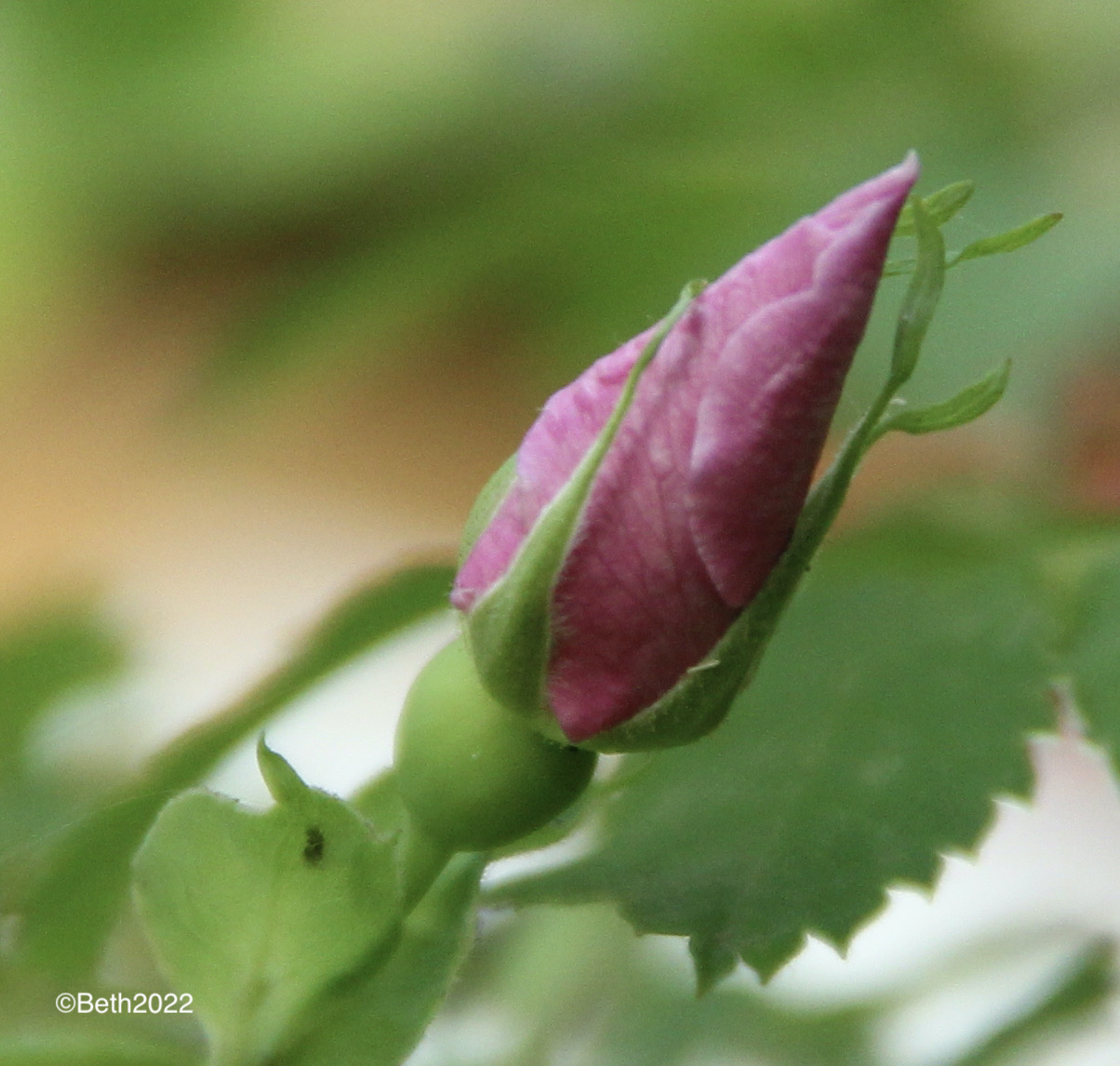
Wild rose buds (Rosa blanda) usually open in June in Minnesota.

Wild roses bloom across the oak savanna in early June. Their petals blush the delicate color of a northern spring sunrise. To my mind they are classic blooms: simple petals, sun-gold centers, and a delicate aroma. They dot woodland edges, roadsides and trail borders. Like the majority of springtime wildflowers, they vanish quickly. However, they are soon succeeded by a riot of red rose hips — fruit that will decorate the plants until next spring, or until eaten by wintering birds and mammals. Besides providing rose hips later in the season, the blooms are attractive to many types of bees, butterflies, tiny wasps and other native insects that seek nectar and pollen in the small, plentiful blossoms.

Metallic green bees (Agapostemon) are among the many native pollinators that visit wild roses.

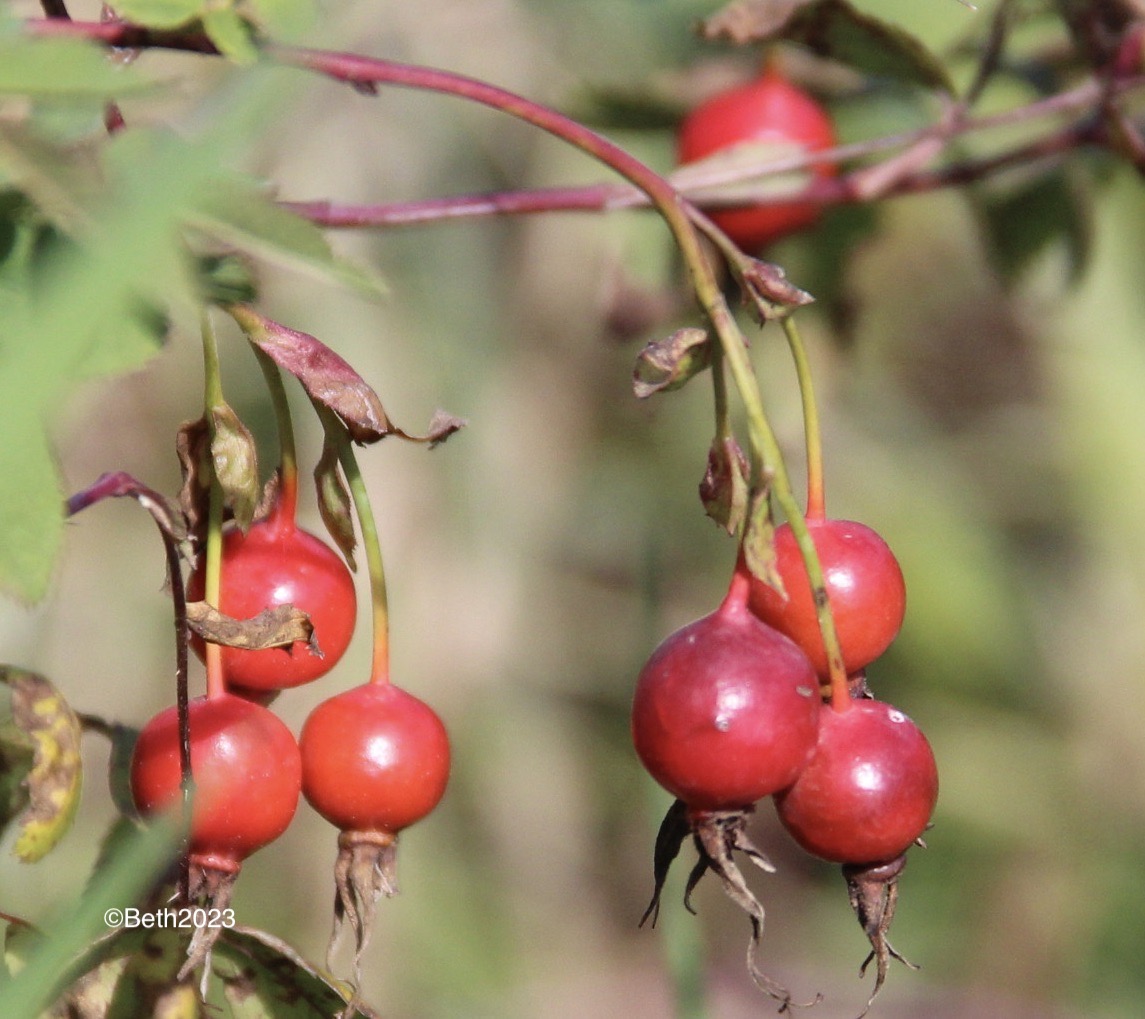
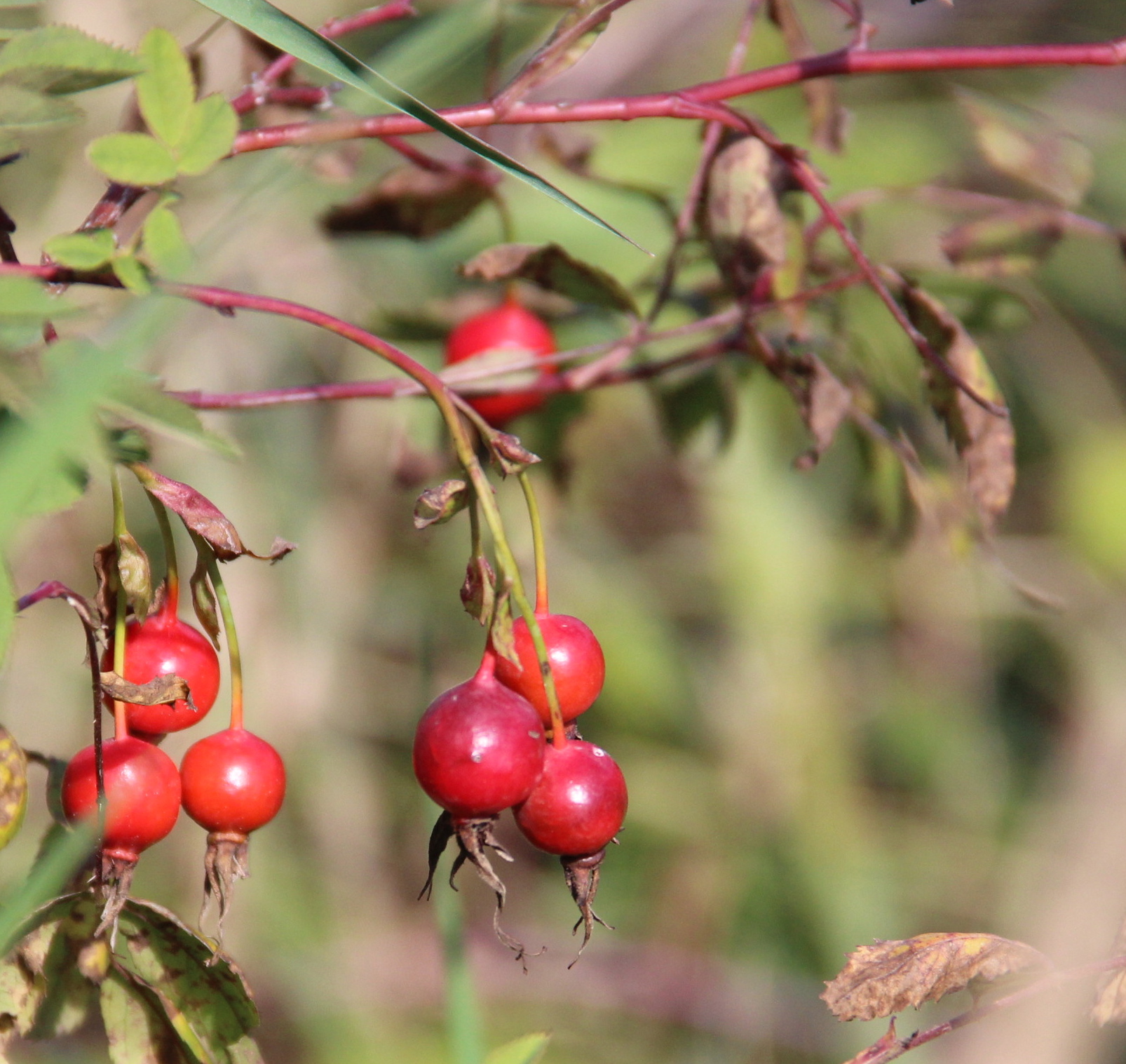
Bright red rose hips decorate each plant until the following spring, or until eaten by wildlife, such as birds, squirrels, rabbits and bears. Each hip contains several seeds.

Gray-Day Gratitude, Bright Autumn Colors

One morning last week, I walked in our garden between bouts of rain. I wanted to enjoy the warm, mild air before a cold front rolled in that evening. Chipmunks had retired to their underground dens, birds were quiet, and I saw no insects. The exposed wet earth in the gardens smelled almost as fresh and pungent as in spring. Oregano and sage still scented our little herb garden. (I miss the aroma of fresh herbs so much during the winter.) A few bright patches of color accented the beige, russet and brown of mid-November, tiny remnants of a beautiful summer and autumn. I am so grateful for gentle autumn days and memories of a lovely, bountiful growing season.  What nature and garden memories bring gratitude to your mind and heart?

Fan-shaped gingko leaves fell much later than the maple leaves.

Fan-shaped gingko (Gingko biloba) leaves drop much later than many other leaves.

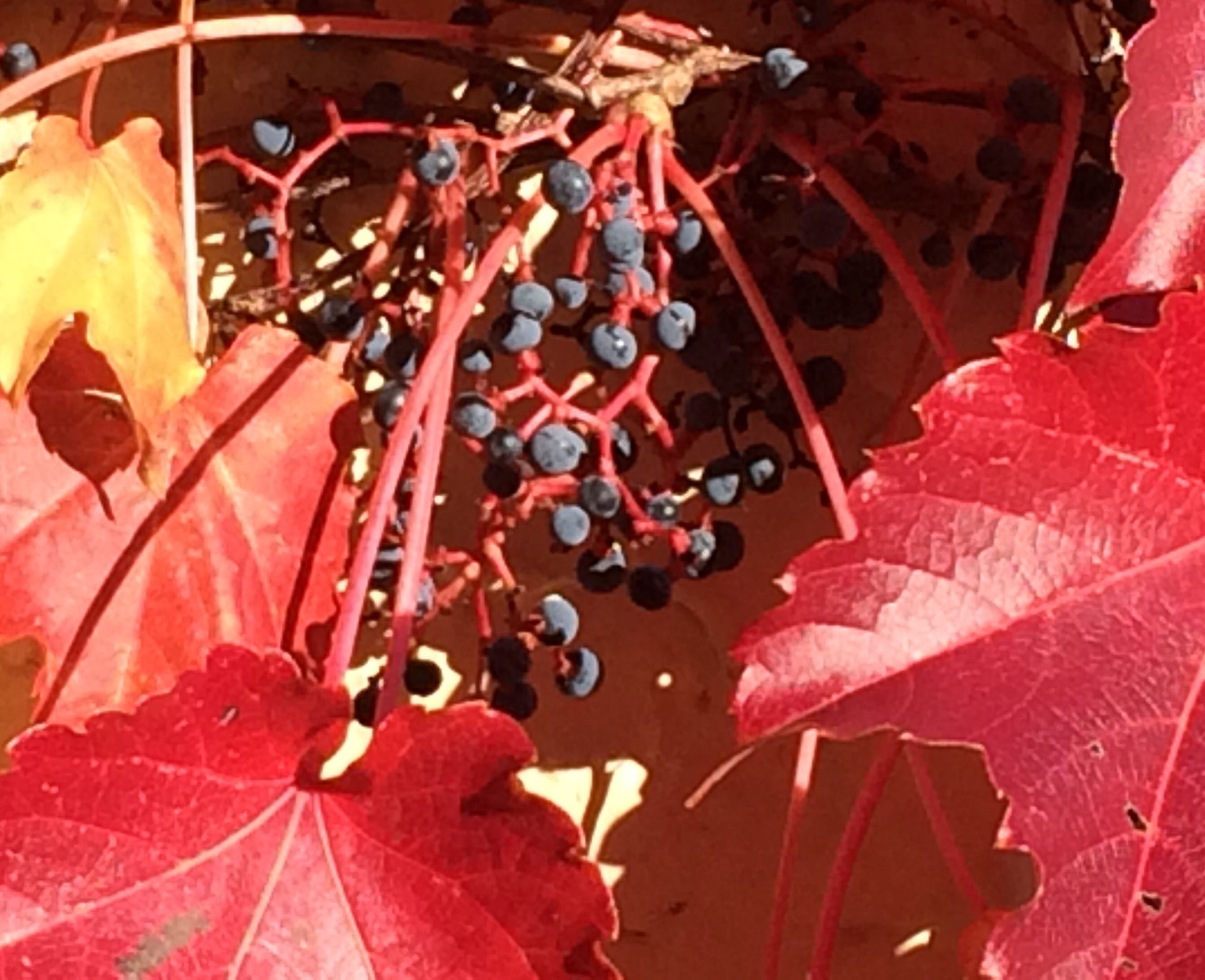
American woodbine (Parthenocissus inserta) fruit is a winter treat for some types of songbirds and small mammals.

Boston ivy (Parthenocissus tricuspidata) fruit and leaves.

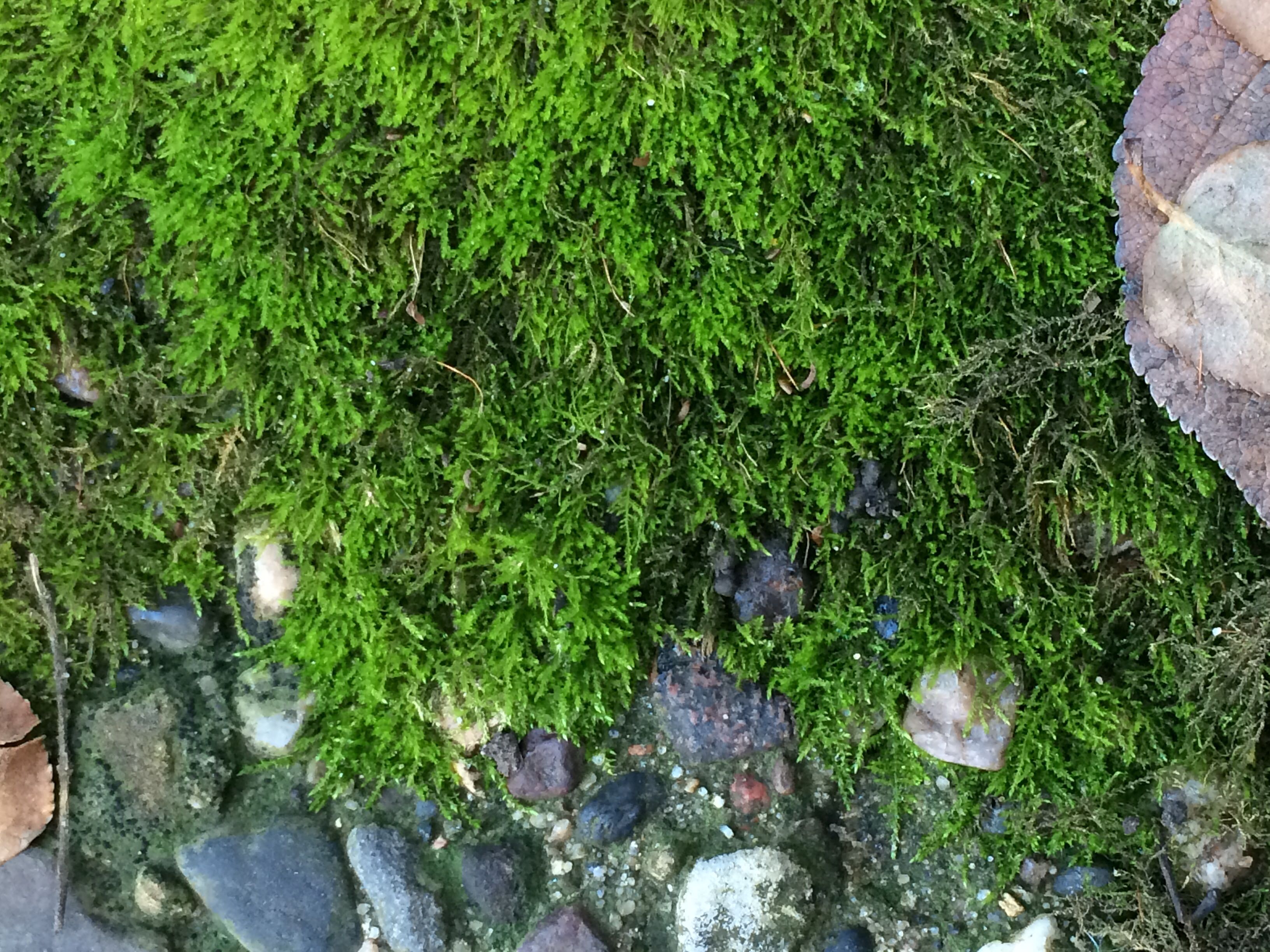
Moss in the north-facing garden of our backyard.

Moss in a north-facing garden of our backyard.

Common milkweed (Aesclepias syriaca) releases it silky seeds.

Common milkweed (Aesclepias syriaca) releases it silky seeds.

A tiny red maple seedling in the backyard.

A tiny red maple (Acer rubrum) seedling in the backyard.

Beads of rain adorn daylily fronds (Hemerocallis).

Beads of rain adorn daylily fronds (Hemerocallis).

Wild grape (Vitis riparia) leaves etched in maroon.

Wild grape (Vitis riparia) leaves etched in maroon.

Raindrops on crimson barberry (Berberis) fruit.

Raindrops on crimson barberry (Berberis) fruit.

The beauty of a single woodbine leaf in the empty garden.

The simple beauty of a single Boston ivy leaf in the empty garden.

An empty robin's nest and red maple leaf tucked into a dwarf blue spruce.

An empty robin’s nest and red maple leaf tucked into a dwarf blue spruce (Picea pungens).

Ornamental kale in a sunny spot.

Ornamental kale (Brassica oleracea) grows in a sunny spot.

A Harvest of Berries

In late November, most leaves have fallen to the ground, turned brown and tucked Earth’s northern regions in for the long winter.  But the bareness reveals new beauty in the form of a harvest of berries.  Many colorful berries decorate trees, shrubs and vines, both here in St. Paul and in the woods surrounding our cabin on the Snake River in Pine County, MN.  They also provide food for many birds and small mammals.  Here is a sample of this generous harvest:

Six species of dogwood are native to Minnesota.  Among the  most colorful are gray dogwood and swamp dogwood, also known as silky or blue dogwood.

gray dogwood

Gray dogwood (Cornus racemosa) leaves turn shades of maroon and purple. White berries or “drupes” grow on stalks that turn bright red in autumn.

Swamp or silky dogwood (Cornus amomum) berries ripen to dark blue. The shrubs form dense thickets that provide cover for snowshoe hare and other animals.

Swamp or silky dogwood (Cornus amomum) berries ripen to dark blue. The shrubs form dense thickets that provide cover for snowshoe hare and other animals.

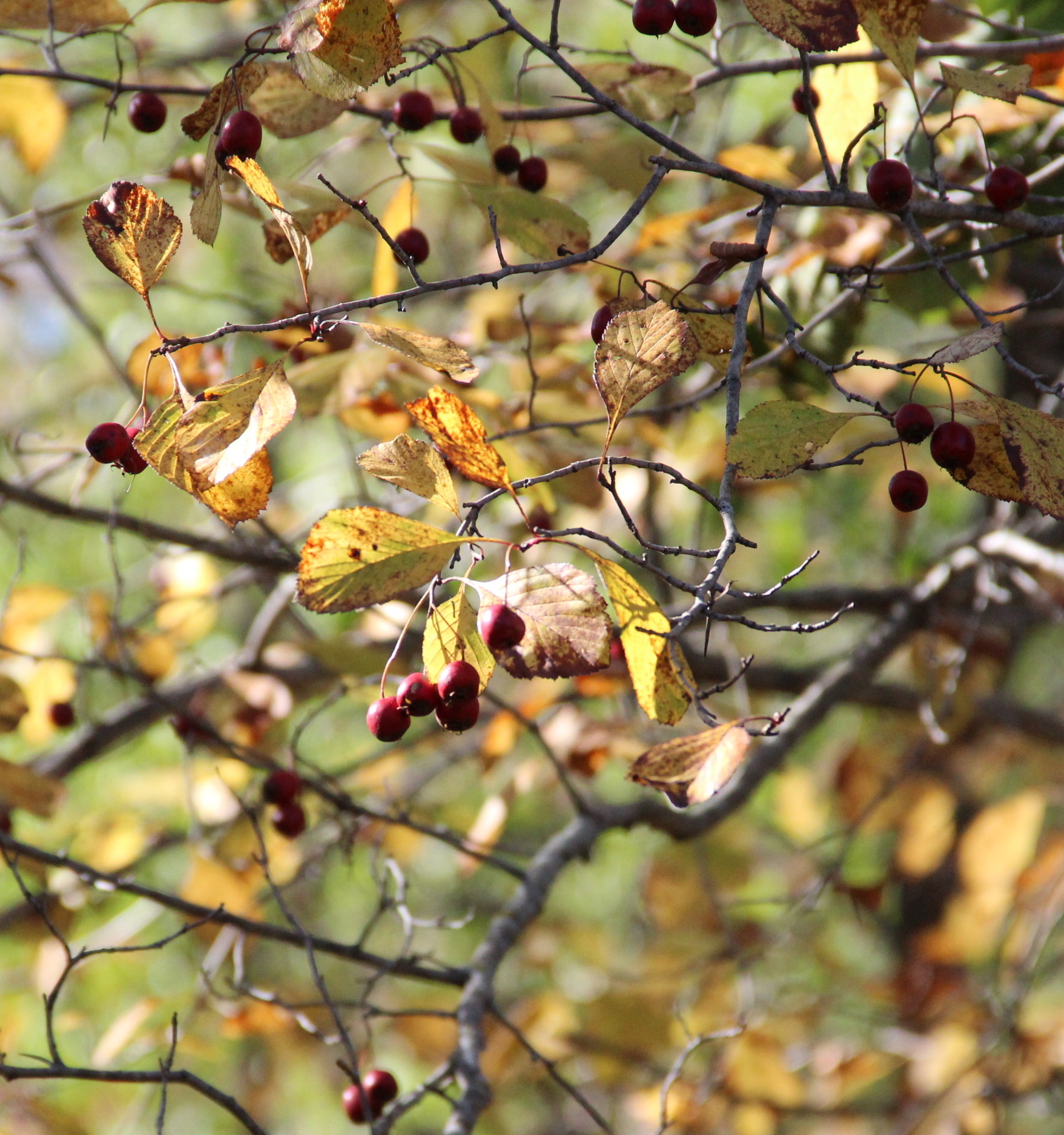
Native hawthorns (Crataegus) are small trees with long, sharp thorns that produce a beautiful red fruit eaten by many songbirds.

Native hawthorns (Crataegus) are small trees, with long, sharp thorns, that produce a beautiful red fruit or “pome” eaten by many songbirds.

American woodbine’s scarlet leaves have fallen to reveal deep-blue berries on fire-red stalks or pedicels.  Woodbine is a close relative of Virginia creeper, but prefers sunnier locations and lacks adhesive cups at the end of its tendrils.

American woodbine berries are a winter food source for some species of songbirds.

American woodbine (Parthenocissus inserta) berries are a winter food source for some species of songbirds.

Many species of rose, both native and cultivated, produce beautiful fruit known as “hips”.  Rose hips are rich in vitamin C and other nutrients.

Squirrels eat the fruit or "hips" of (Rosa 'Henry Kelsey') before they've even ripened.

Squirrels eat the fruit or “hips” of (Rosa ‘Henry Kelsey’) before the fruit has even ripened.

rosehips3

Smooth rose (Rosa blanda) produces nutritious hips favored by many mammals and birds.

The feathery white plumes of starry false Solomon’s seal have grown into plump berries that gradually changed from bright green to beige mottled with coppery red, and now are bright, translucent red.

Ripe berries of starry false Solomon's seal (Maianthemum racemosum) hang in plumes.

Ripe berries of starry false Solomon’s seal (Maianthemum racemosum) hang in plumes.