Baltimore Orioles

Baltimore orioles were named for the orange and black colors on the heraldic crest of the Baltimore family of England, for which the City of Baltimore, MD, is also named.

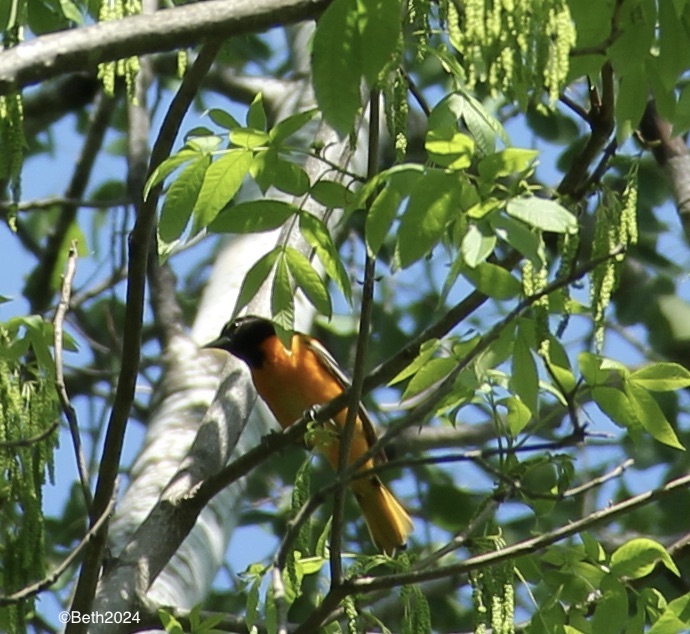
Like miniature suns, Baltimore orioles (Icterus galbula) light up early summer’s lush green foliage. About the size of a red-winged blackbird, these orioles are colorful members of the blackbird family. They are often recognized for their golden color and beautiful woven hanging-basket nests.¹

I saw my first Baltimore oriole in the Twin Cities when I was five or six. Graceful American elms lined every street then, and were the preferred nesting tree of orioles. Since the demise of the elms by Dutch elm disease, many of the orioles I see and hear are in the woods at our cabin. In the city, I find them most often when I walk next to the Mississippi River and around the Minneapolis lakes. Their call is described as paired, pure flutelike notes. They’re easy to listen to and their song contains fewer harsh notes than other oriole species.

Most years, they weave a nest in the outer branches of quaking aspens that overhang our cabin yard, but one year, they nested in a red oak tree next to the cabin. The female constructs the nest using a combination of plant fibers, such as long strips of bark from grape and other vines, grasses and hair. She often selects artificial fibers, too — yarn, fishing line and twine. The two outer layers of the nest provide the saclike structure. The third inner layer consists of soft hair, wool and downy fibers to protect the eggs and hatchlings.
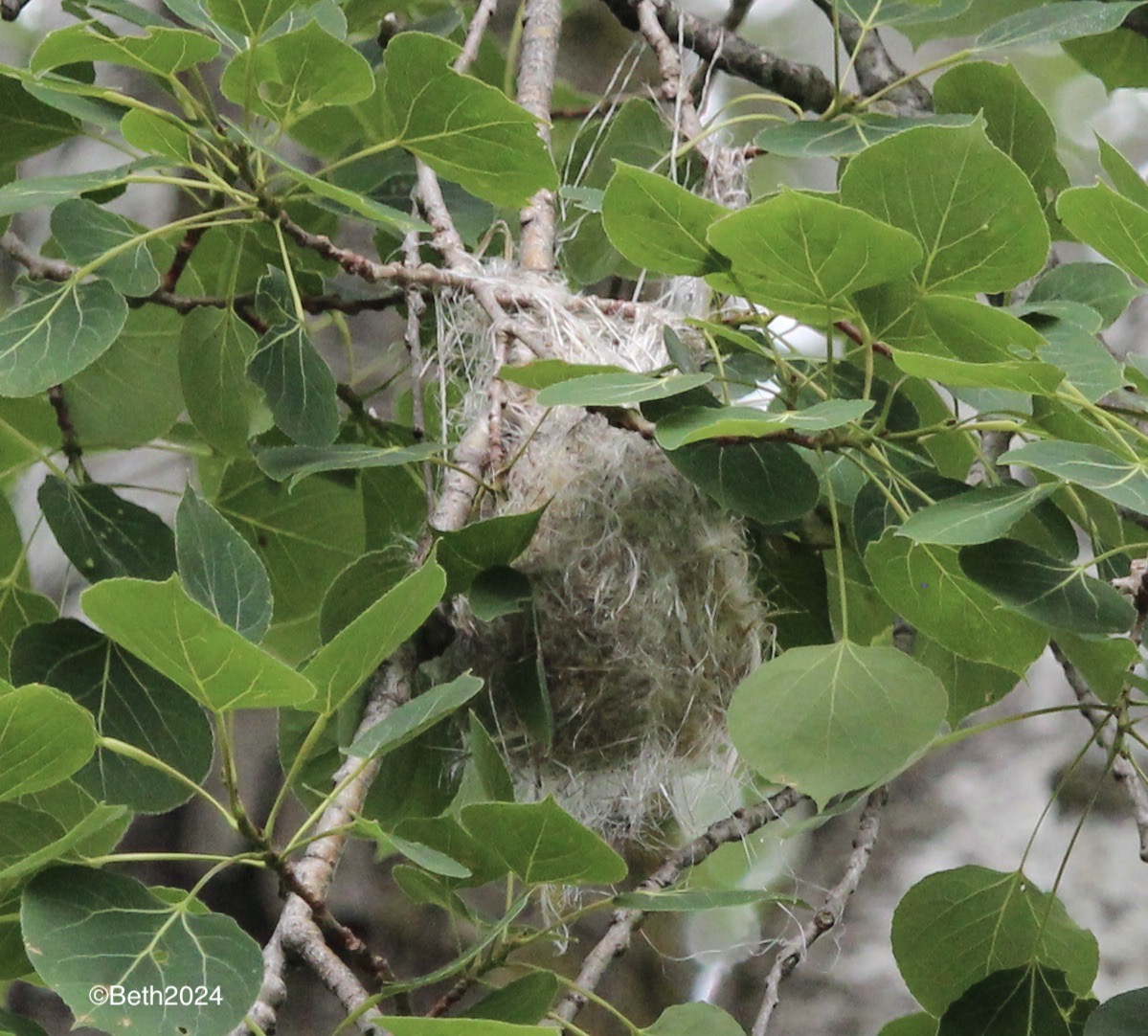
Female Baltimore orioles skillfully weave a hanging nest of natural and artificial materials, such as grapevine, hair, fishing line and twine. They may use wool, down from cottonwood trees or milkweed to line the nest.

When left to their own resources, Baltimore orioles typically eat caterpillars, moths and many other types of insects. Like warblers and flycatchers, they dart out and back from foliage to snatch flying insects. At other times, they remind me of chickadees as they perform acrobatics over and under tree branches in search of beetles, aphids and spiders. They also like flower nectar and fruit, and can sometimes damage fruit crops. During spring and fall migration, our neighbors, Ed and Melinda, keep a fresh dish of grape jelly on their deck railing for the orioles. My father-in-law always suspended fresh orange slices from the bird feeder pole for them. Both delights attracted lots of orioles (and hornets in autumn)!

An immature oriole feeds on grape jelly, one of their favorite foods.

Baltimore orioles spend most of the year on their wintering grounds in Central America, southern Mexico and Florida. They breed in eastern and northern North America as far west as the Central Great Plains and north into southern Canada. Their time in Minnesota is brief: I usually spot my first oriole in mid-May and see the last one in early September. In addition to Baltimore orioles, Minnesota is also the summer residence of orchard orioles and, occasionally, Bullock’s oriole.

Female and immature male Baltimore orioles are sometimes difficult to tell apart.

¹In the Great Plains states, the Baltimore and Bullock’s orioles frequently interbreed and produce hybrid offspring. Between 1983 and 1995, scientists believed that the birds were one species, which they named the northern oriole. Later, genetic testing proved they were two separate species and ornithologists returned to using “Baltimore” and “Bullock’s.”

Sources and Further Reading

All About Birds – Baltimore Oriole

Audubon Field Guide – Baltimore Oriole

Common Milkweed, Hidden Beauty

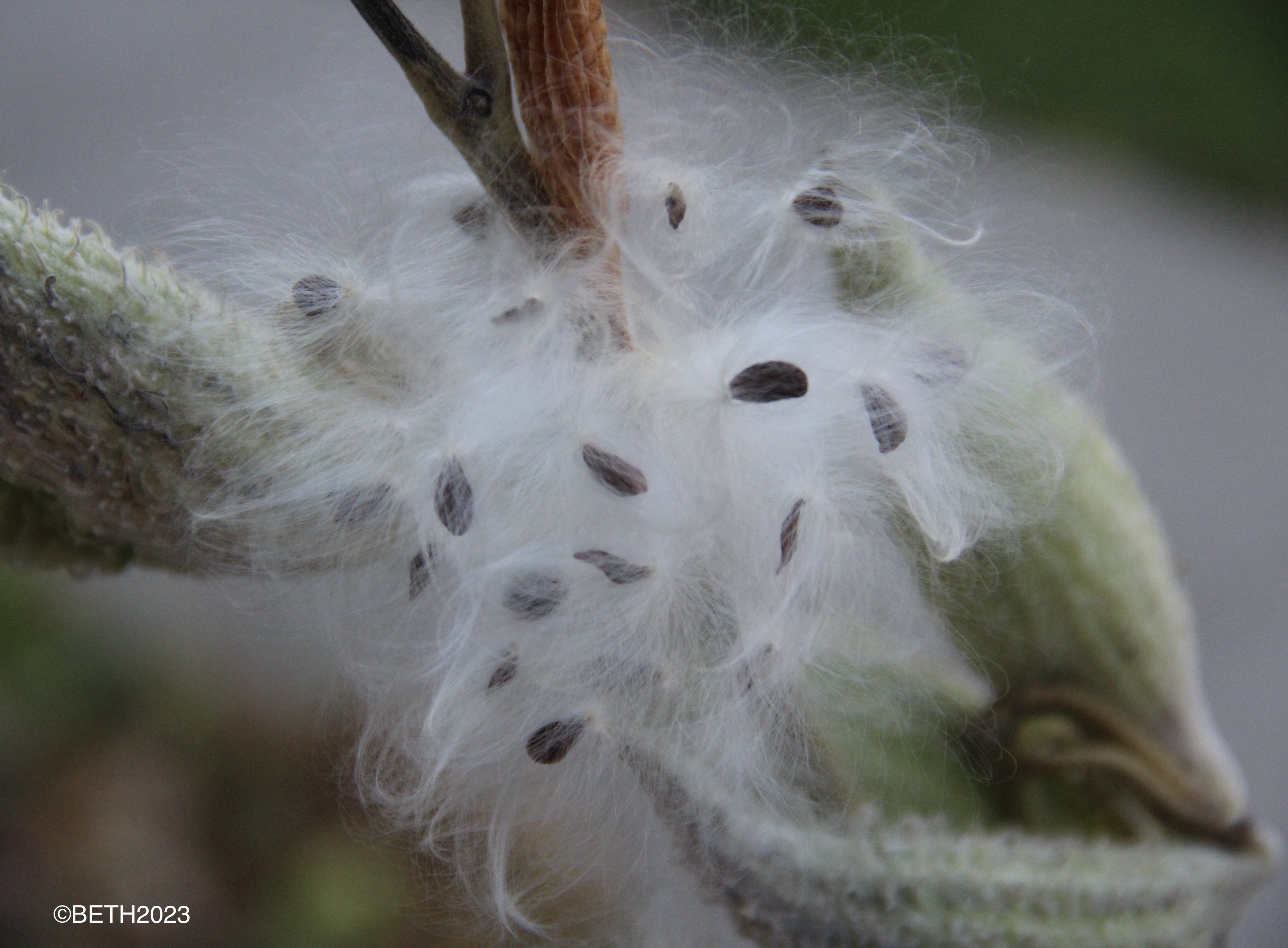
Gusty winds tease common milkweed seeds from their pods.

Its beauty isn’t on the outside. Common milkweed (Asclepias Syriaca), despite its attractiveness to monarch butterflies, isn’t the showiest of plants. Its large, smooth leaves and warty pods lack the delicacy of many native plants. Milkweed’s beauty is hidden within its pods.

Tiny green pods arise from fertilized pink, aromatic flowers.

Over the summer, small, perfumed pink flowers are fertilized and form tiny green pods or follicles. As they ripen, they grow to three-to-five inches in length. Inside, oval-shaped flat, brown seeds tethered to white, satiny strands designed for wind dispersal are arranged around a central column. Each is neatly tucked into a crevice on a membrane attached to the top and bottom of the pod.

Oval-shaped seeds attached to satiny strands are neatly arranged around a central column.

Wind fluffs the silky fibers into parachutes to disperse the seeds.

When the seeds mature, the pods dry and crack open. As wind enters the split pods, the silky strands unfurl and balloon into parachutes. One by one the seeds spin out of the pod like shimmering wind-borne dancers that glow in the autumn sunlight. I love to watch them sail — sometimes floating on a gentle breeze, sometimes scurrying on gusty winds. The empty pod is pretty too: Cream-to-gold colored and smooth inside, except for the center membrane, which is grooved to anchor individual seeds.

The empty pod is satiny smooth except for the grooved central column where the seeds were attached.

These lovely seeds used to be rare in Twin Cities urban areas, but now many residents grow one or more of 14 native milkweed species in their yard and boulevard gardens to attract monarchs and other butterflies.¹

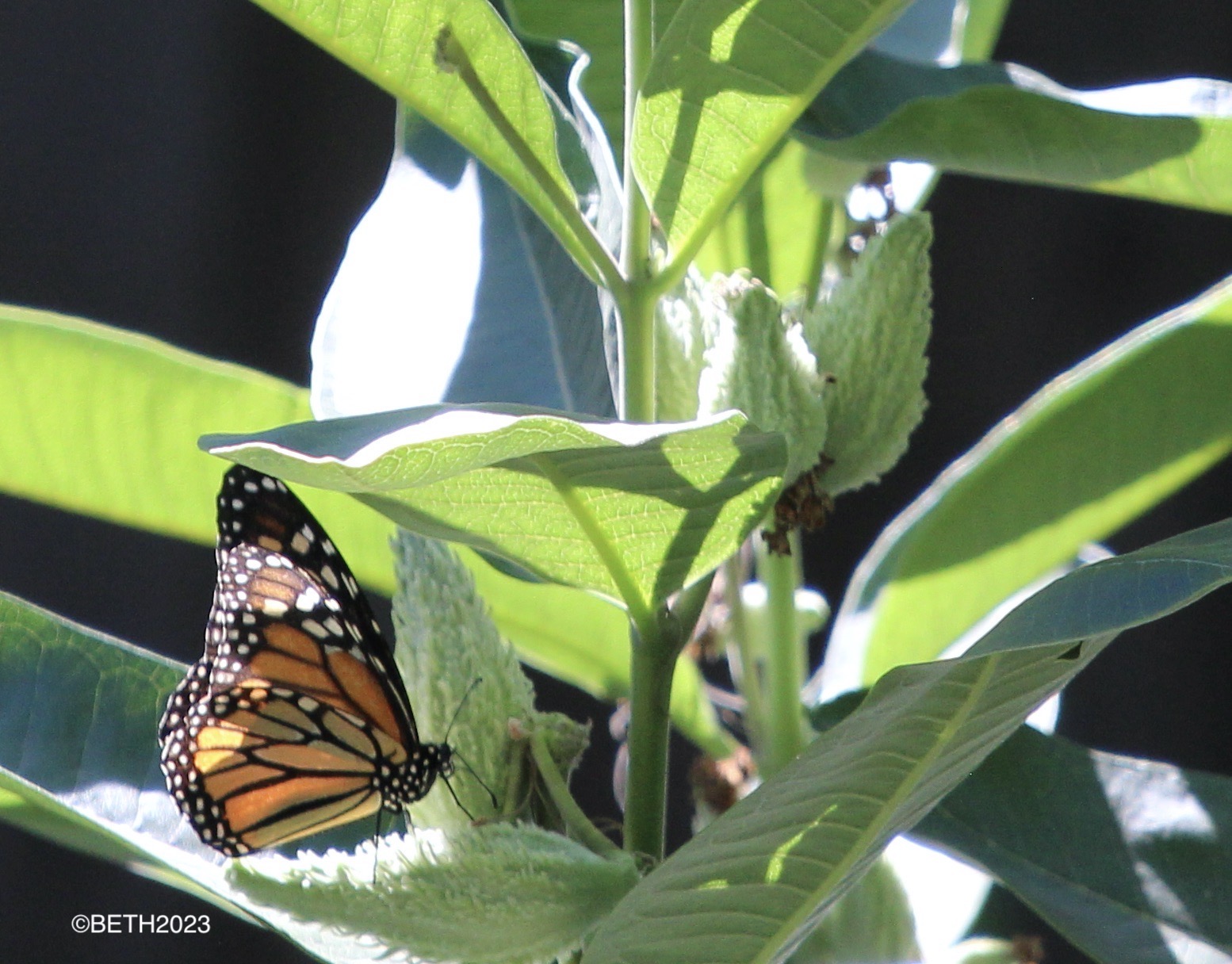
Milkweed plants are the sole host plant for monarch butterflies.

¹When handling milkweed, it’s best to wear gloves and eye protection. The plant’s milky latex sap can cause eye and skin irritation on contact. According to several sources, the sap is slightly toxic to humans if eaten in large amounts. Animals are also affected by it, but most avoid the plant. This substance helps to make monarch butterfly caterpillars unpalatable to birds.

Sources and Further Reading
Eloise Butler Wildflower Garden Common Name Plant List

Milkweeds of Iowa and Minnesota (Xerxes.org)

Minnesota Milkweeds for Monarchs

Monarch Joint Venture

Spreading Milkweed, not Myths


Autumn’s Bountiful Berries

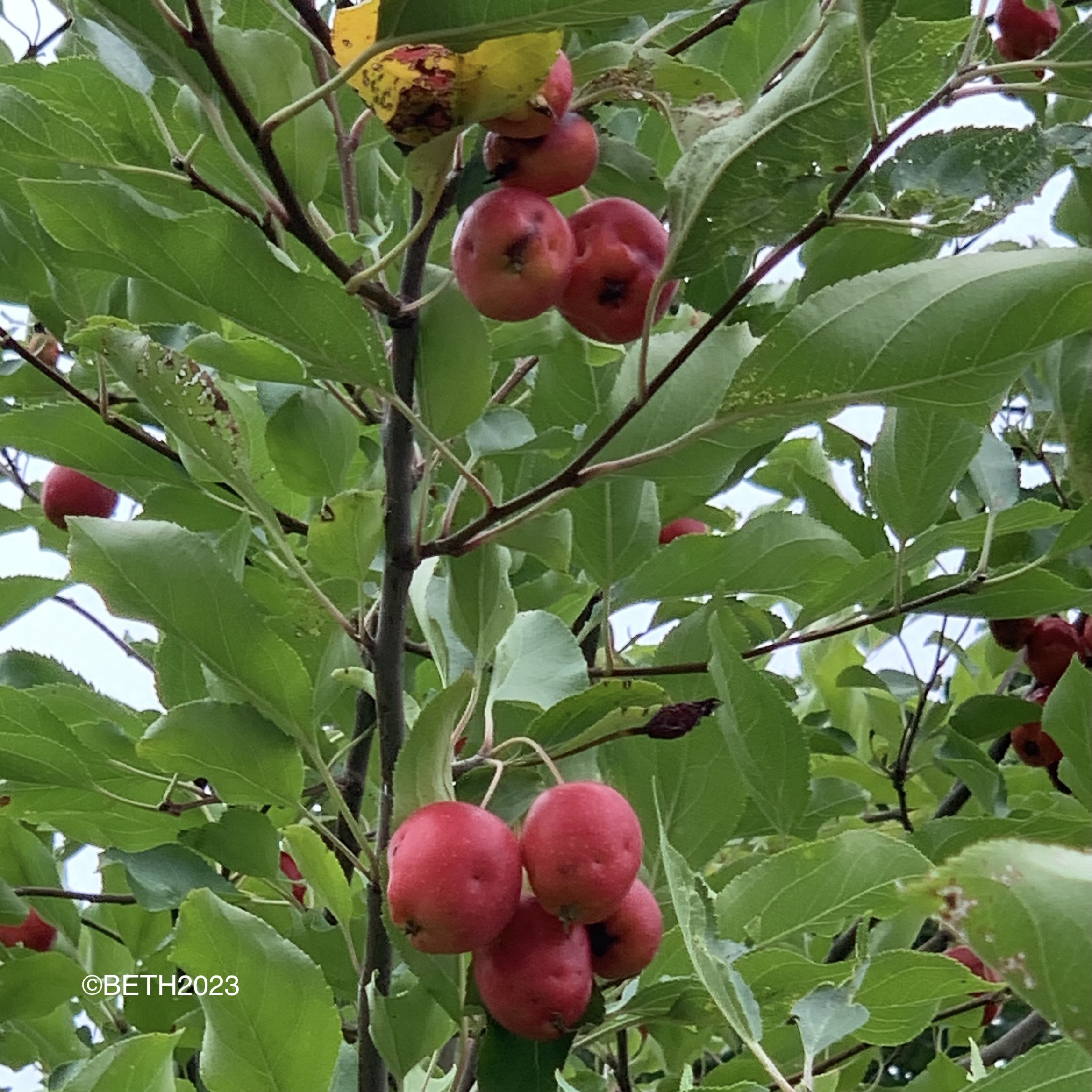
Last May, blossoms delicate in form and scent ornamented woodlands and trails. Their luminous beauty lured early bees and butterflies to pollinate them. All summer the tiny ovaries slowly swelled. Fragile blossoms morphed into bright green beads, whose soft curves plumped and ripened to globes of rose, fiery red, purple, frosty blue and pearly white. Sun, heat, rain and pollinators concocted a gift lovely to look at and brimming with energy — a feast for birds and mammals throughout autumn and winter. Here’s a small sampling of nature’s autumn gifts:

Migrating songbirds, as well as turkeys and grouse, favor the white berry-like drupes of gray dogwood (Cornus racemosa).

Wild plum trees (Prunus americana) provide food for mammals, such as deer, raccoons and foxes. Songbirds, turkeys and other birds will also eat them.

Pale dogwood berries (Cornus obliqua) are high in fat content and are eaten by songbirds and mammals, such as chipmunks, white-footed mice and squirrels.

Highbush cranberry (Viburnum opulus spp.) is not a true cranberry. According to the USDA’s plant guide, the fruit often isn’t eaten until late winter. Repeated thawing and freezing makes it more palatable.

Though carrion flowers (Smilax sp.) smell rotten, their berries do not, and are winter food for songbirds and a few mammals, such as Virginia opossum and raccoons.

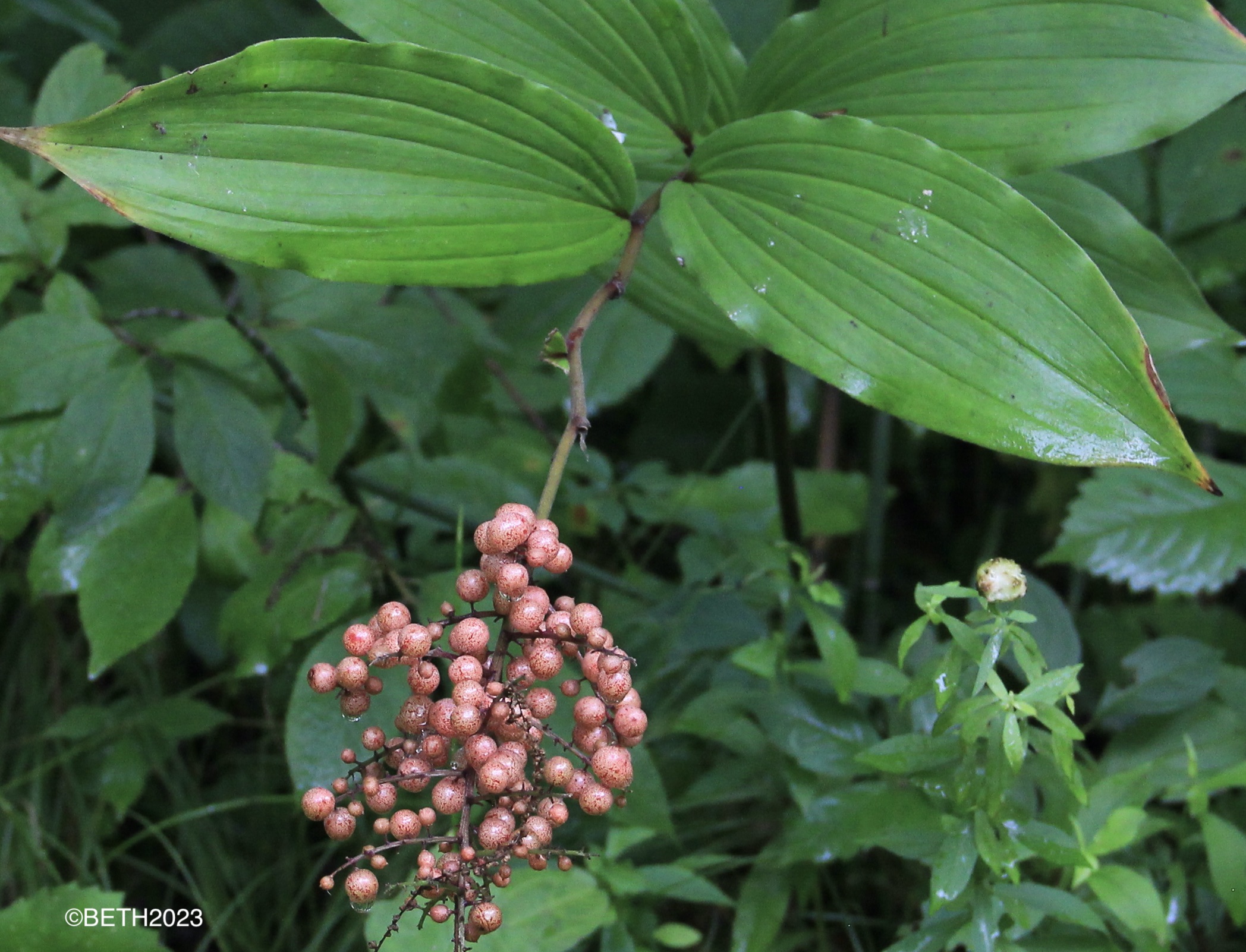
False Solomon’s seal (Maianthemum racemosa) fruit are often pink with red spots, but also can be solid red. They are eaten by woodland birds, such as the veery, and by white-footed mice.

Sources:

Eloise Butler Wildflower Garden Common Name Plant List

Illinois Wildflowers

Minnesota Wildflowers

More Than a Weed

I’ve battled bishop’s weed (Aegopodium podagraria) in my garden for 35 years.¹ As much as I detest it, (please don’t plant it), I’ve learned that what’s despised by one creature may mean survival to another. Bishop’s weed, a member of the parsley family, is one of a small number of host plants or “homes” for native black swallowtail butterfly caterpillars.²

A black swallowtail caterpillar (Papilio polyxenes) feasts on bishop’s weed, a member of the parsley family.

As I dug out the weeds a couple of weeks ago, I spotted a caterpillar with light blue-green and black stripes dotted with yellow. The clues to its identity were its location on a member of the parsley family, the only plant type that black swallowtails live on and eat, and the color and pattern of its stripes. (It looked similar to a monarch, but monarch caterpillars only eat milkweed and their stripes are yellow, black and white.) I searched through the rest of the bishop’s weed and found a second caterpillar. In May I’d seen an adult black swallowtail visiting the weed, where it must have deposited eggs.

Two rows of well-defined yellow spots help to distinguish the black swallowtail from other swallowtail species in our area.

Not a rare butterfly, but a handsome one, the black swallowtail (sometimes called the parsley swallowtail) is native to the eastern United States and Canada. Its body and wings are black with highlights of yellow, blue and orange. The tail ends in two narrow lobes that give it the common name of swallowtail. Two rows of bright yellow spots mark the wings. The hindwings are blue in the area between the yellow rows near the tail. Each hindwing ends in a circular reddish spot. The underside of each wing has rows of light yellow spots, with bands of orange separated by spatterings of blue. Females usually show more blue coloring and males usually have more yellow. The wing span is 3.5 – 4.5 inches, with the female generally larger than the male.

The undersides of the hindwings are marked with bright orange and a dusting of blue.

In the Upper Midwest, black swallowtails produce two generations of offspring between May and October. The second generation overwinters in a brown chrysalis until the following spring. The caterpillars in my garden probably hatched in May. Depending on weather conditions and host plant availability, the eggs hatch in three-to-nine days. The caterpillars eat and grow through five stages, or instars, as they increase in size and change in appearance, which may take up to 30 days. The mature caterpillar forms its chrysalis and molts one final time. The ones I saw will leave their chrysalises in two-to-three weeks as mature black swallowtails ready to produce the next generation. Adults nectar on clover, milkweed, thistle, bee balm and other perennials. Watch for them to be on the wing in July — and, consider growing one of the more well-behaved members of the parsley family, such as dill, carrot, parsley or sweet fennel, on which this lovely creature can live and dine!

1Also known as goutweed and ground elder, this non-native member of the parsley family was imported and marketed as a fast-growing ground cover that was frequently planted with European buckthorn (Rhombus cathartica) and creeping bellflower (Campanula rapunculoides). There’s also a variegated form called snow-on-the-mountain. Over the years, we’ve had it chemically treated, dug out and the soil replaced, but it returned each time. Now, I just try to prevent it from spreading.
²Other members of the parsley family include carrot, dill, sweet fennel, Queen Anne’s lace and, of course, parsley.

Further Reading:

Butterflies and Moths of North America

Wisconsin Horticulture – UW-Madison

Weber, Larry. (2006). Butterflies of the North Woods. Duluth, Minnesota: Kollath & Stensaas Publishing.

Wild Roses

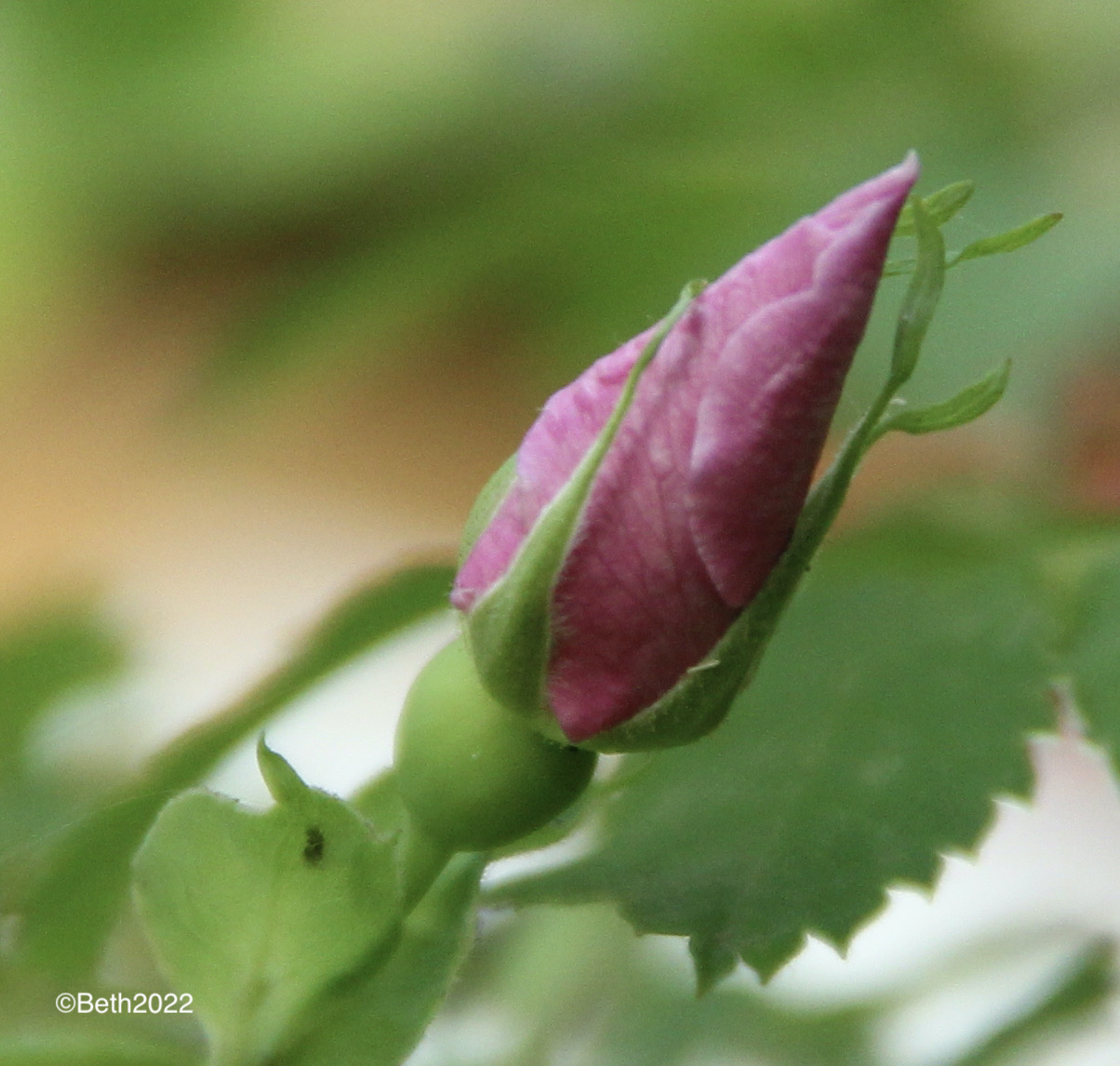
Wild rose buds (Rosa blanda) usually open in June in Minnesota.

Wild roses bloom across the oak savanna in early June. Their petals blush the delicate color of a northern spring sunrise. To my mind they are classic blooms: simple petals, sun-gold centers, and a delicate aroma. They dot woodland edges, roadsides and trail borders. Like the majority of springtime wildflowers, they vanish quickly. However, they are soon succeeded by a riot of red rose hips — fruit that will decorate the plants until next spring, or until eaten by wintering birds and mammals. Besides providing rose hips later in the season, the blooms are attractive to many types of bees, butterflies, tiny wasps and other native insects that seek nectar and pollen in the small, plentiful blossoms.

Metallic green bees (Agapostemon) are among the many native pollinators that visit wild roses.

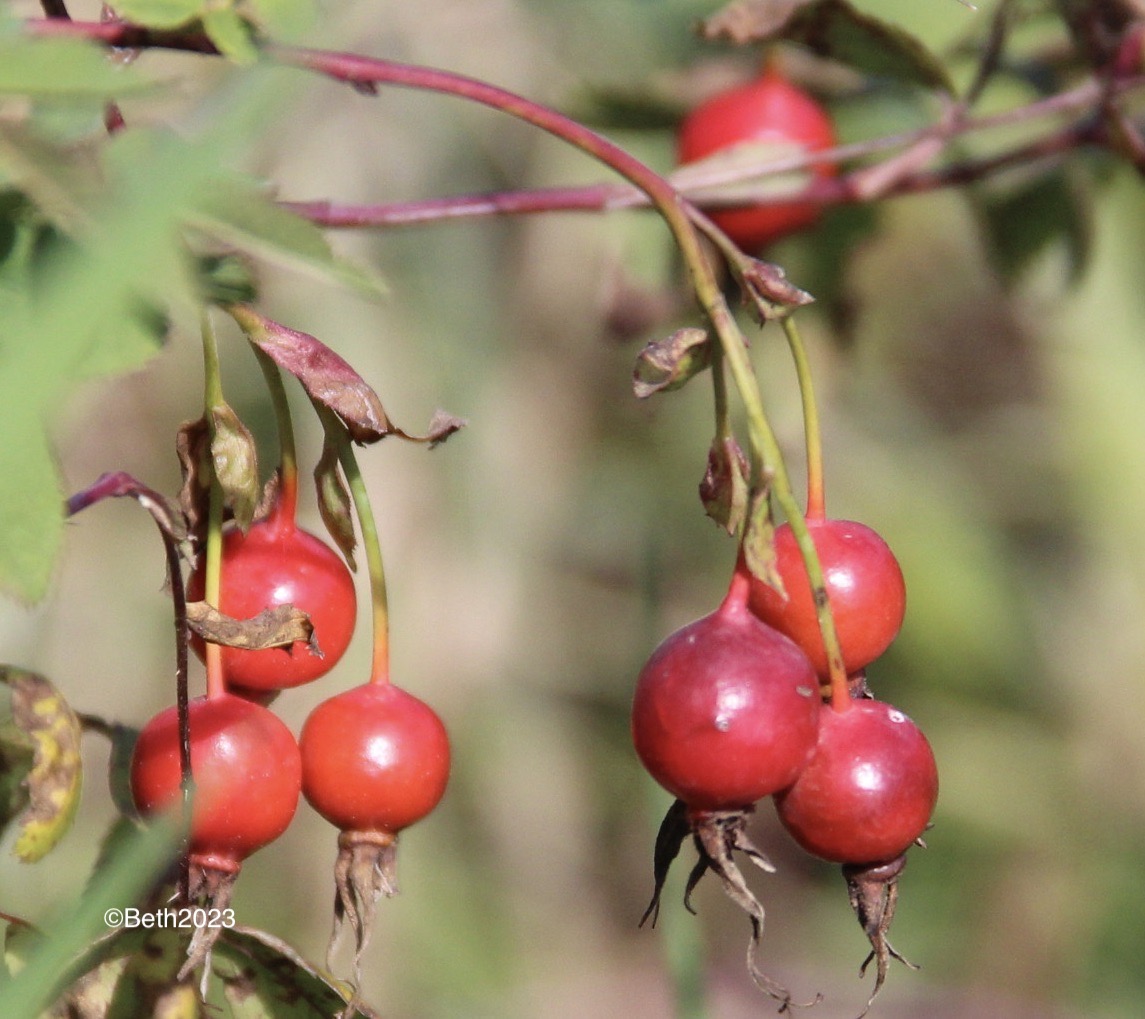
Bright red rose hips decorate each plant until the following spring, or until eaten by wildlife, such as birds, squirrels, rabbits and bears. Each hip contains several seeds.

October’s Painted Lady

A painted lady’s (Vanessa cardui) underwing sports four eyespots and pink patches. It is nectaring on asters (Symphyotrichum oblongifolium).

Mild October days bring butterflies to our garden. We commonly see red admirals, painted ladies, commas and tortoiseshells, but in 2022, I’ve seen fewer numbers of butterflies all season. The only painted lady (Vanessa cardui) that I’ve spotted appeared in late October on a mild, sunny day (77°F/25°C). 

It spent hours nectaring on late-blooming asters in the company of many bees, and flew energetically around the garden every few minutes. While most of the native bees perished in a hard frost (24°F/-4°C) more than two weeks ago, a few hearty bumblebees survived, as did the honey bee colonies. Bees and butterfly got along well and were simply focused on collecting nectar for energy. As I gardened nearby, the gentle humming of the bees was soothing and complemented the rustling of falling scarlet-red maple leaves.

A painted lady’s upper wings carry black and orange markings with a few white spots near the wingtips.

Two days later, the painted lady disappeared from our garden on a warm wind heading south. I miss them during the long northern winter. Also known as the “thistle butterfly,” (because thistles are a favorite food source for both caterpillars and adults), painted ladies migrate to wintering grounds in the southern United States and Mexico to return in late spring.

Further Reading:

Weber, Larry. (2006). Butterflies of the North Woods. Duluth, Minnesota: Kollath & Stensaas Publishing.

Painted Ladies – Nature, Garden, Life

Painted Lady Butterfly – Wisconsin Horticulture

Cherish the (Butterfly) Ladies – UW-Milwaukee Field Station

November Honey Bees and Asters

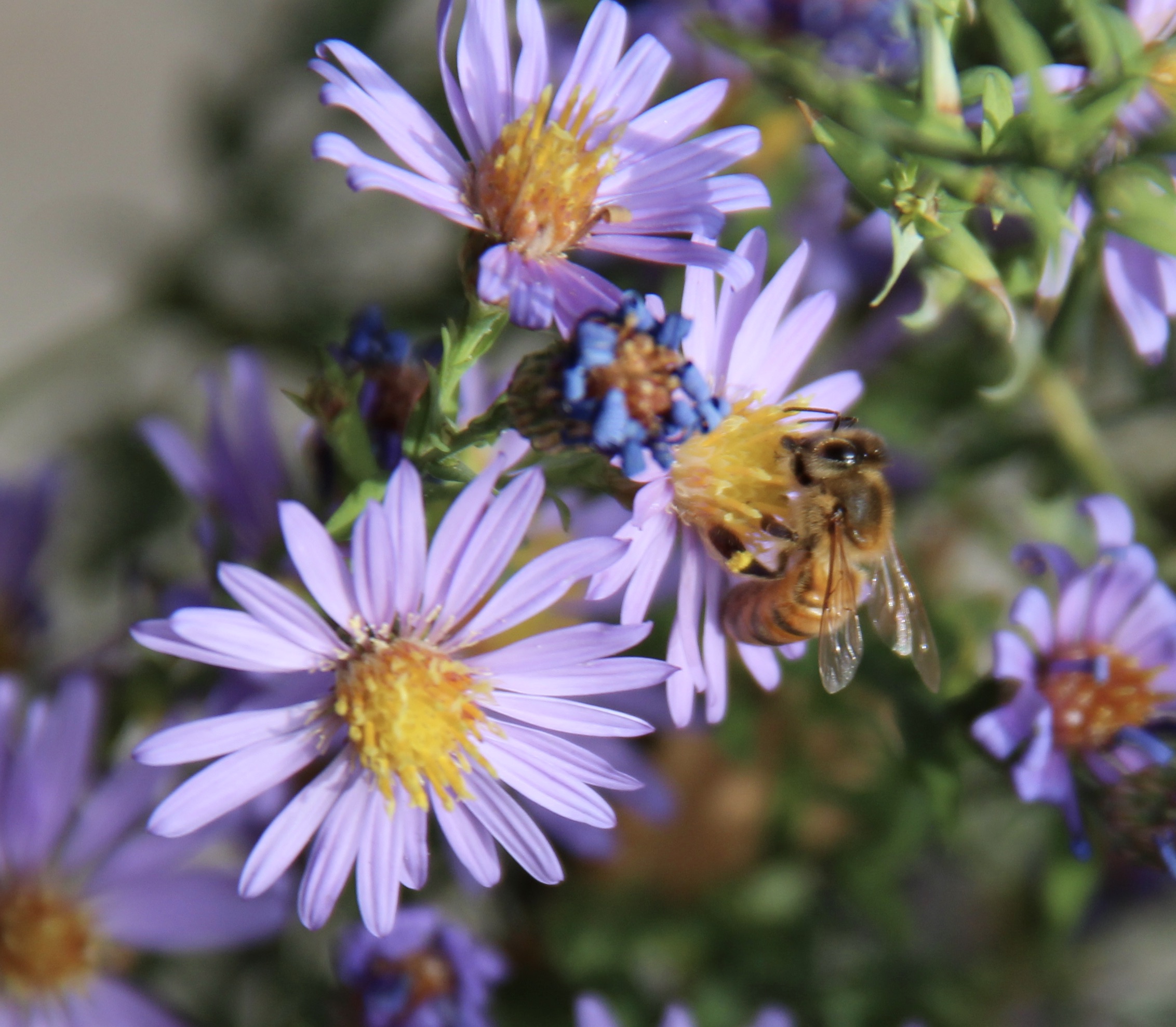
A honey bee (Apis mellifera) nectars in asters (Aster novi-belgii) on a summer-like November day.

Two weeks ago, temperatures bottomed out at 15°F and a winter storm buried gardens, yards and colorful-leafed trees under almost 10 inches of snow. Now, sun and a week of daytime highs around 74°F have awakened chipmunks, spurred American robins to sing and enticed honey bees from their hives. The bees found our last asters of the season. In a sunny location, and protected by an overhanging arbor vitae hedge on the north side, the pastel blossoms continue to open despite the early snow and frigid cold. What a gift — a sweet treat for the honey bees and an unexpected return to autumn beauty for us.

Butterfly Sampler

A painted lady (Vanessa cardui) basks in the sun on a roadside rock to warm its flight muscles.

Like miniature floating tapestries —  stippled, spotted and striped — they decorate gardens, yards and roadsides. Butterflies are plentiful this summer. Alongside the bumblebees, they pollinate many flower species and aid with seed production. But honestly, I love them more for their color, grace and elusiveness; for the joy they evoke in the eyes of children and the hearts of people of all ages. I delight in the first and last of every season — often a mourning cloak or red admiral in late April and a tortoise shell or red admiral in October.

Here are a few of the butterflies I’ve seen recently:

Eastern-tailed blues (Everes comyntas) are active May – September in the Upper Midwest and southern Canada.

This hackberry emperor (Asterocampa celtis) was attracted by sweet apple juice in my pail of apple windfalls.

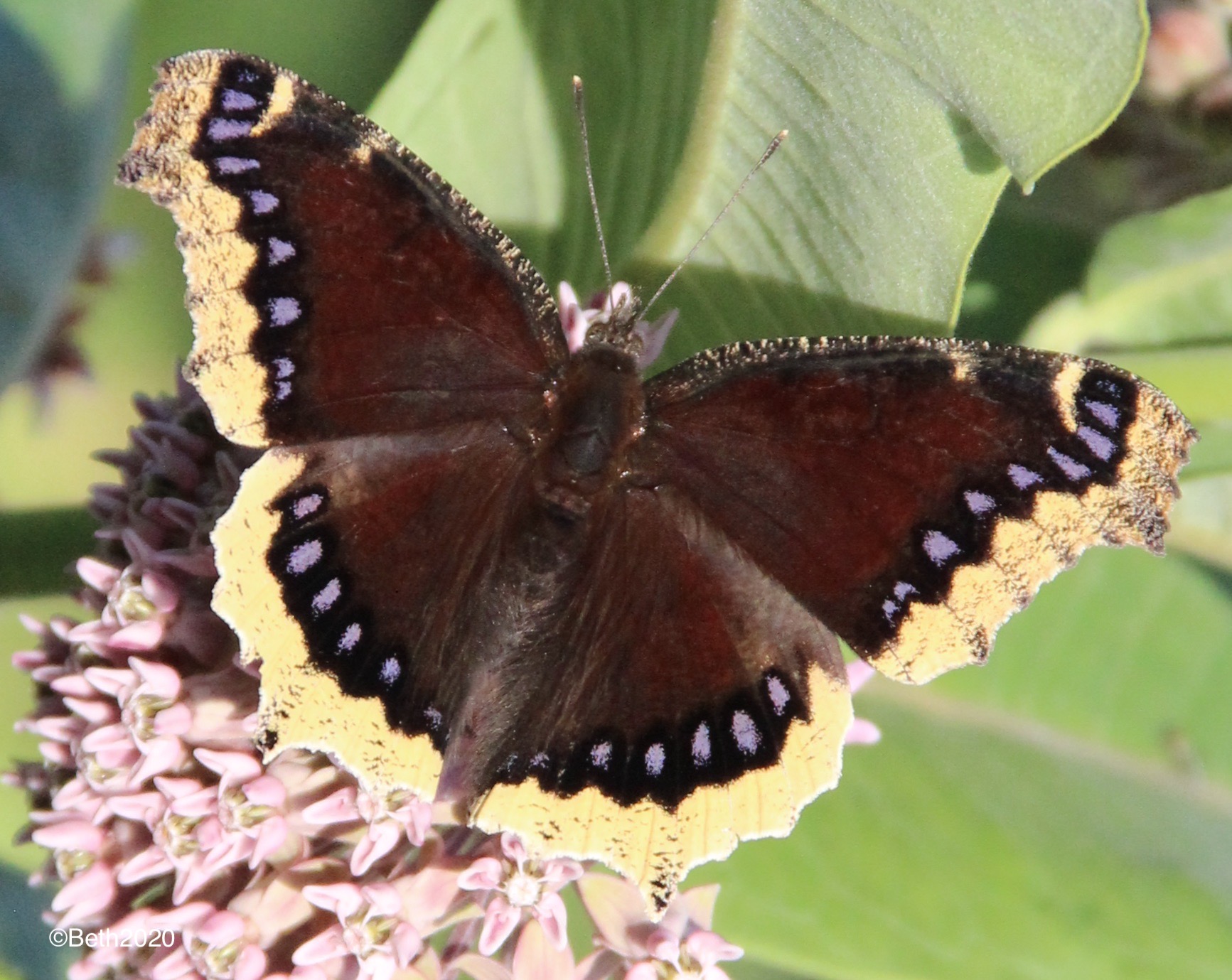
Mourning cloaks (Nymphalis antiopa) overwinter as adults and are often the first butterfly active in April. They favor oak and maple sap; watch for them at woodpecker drill holes.

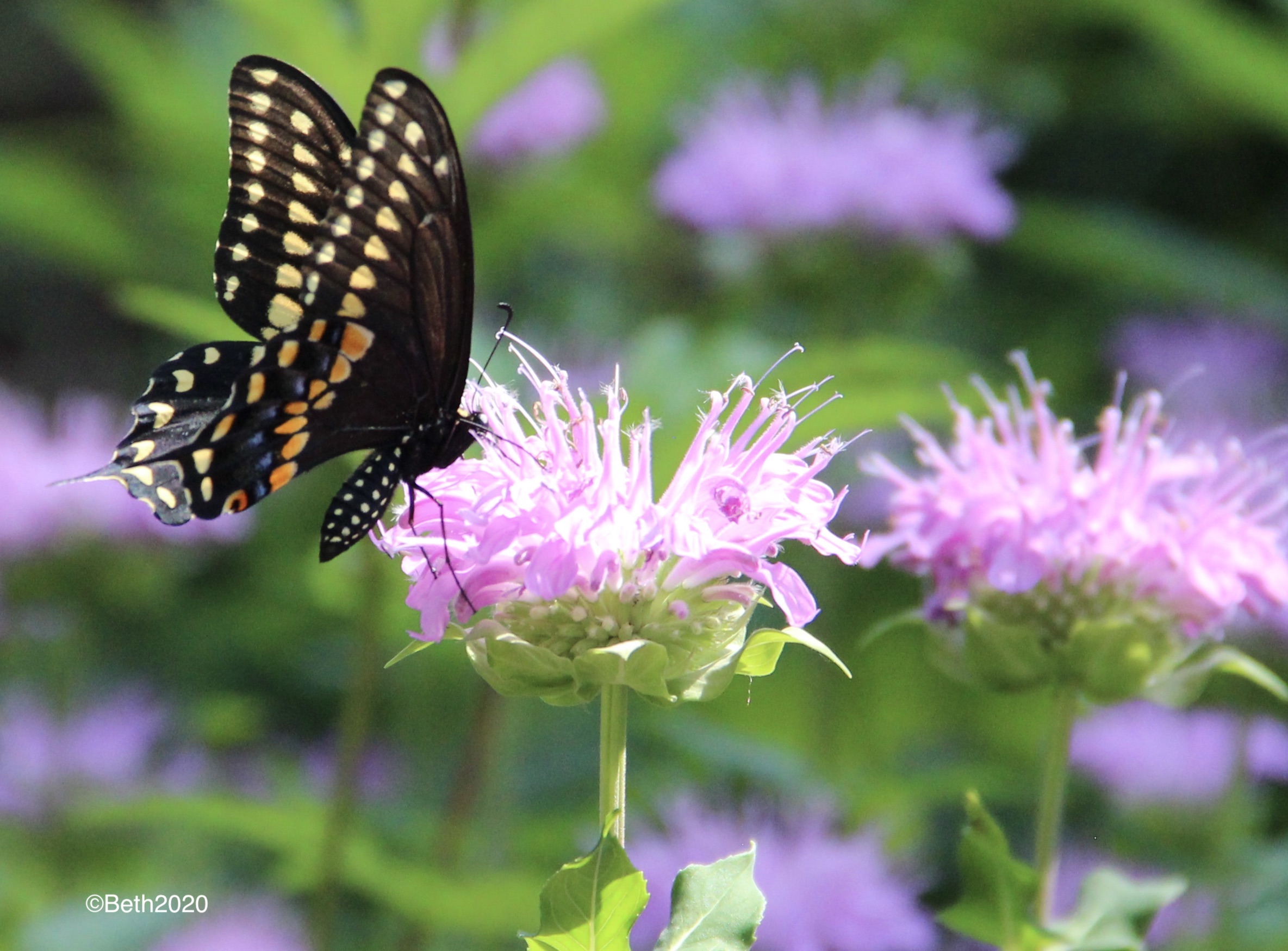
Two rows of yellow spots on the forewing distinguish the black swallowtail (Papilio polyxenes) from the eastern tiger swallowtail female dark form (Papilio glaucus).

This female monarch (Danaus plexippus) deposits an egg on the underside of a common milkweed leaf.

White admirals (Limenitis arthemis arthemis) are common in areas with aspen and birch. They prefer sap over flower nectar.

Red-spotted purples (Limenitis arthemis astyanax) are a southern subspecies of white admirals and the two often hybridize in the Upper Midwest. This one’s wings show that it has survived a bird attack.

Banded hairstreaks (Satyrium calanus) lay their eggs on oak trees. This adult rests on common milkweed in our garden.

Eastern tiger swallowtails (Papilio glaucus) favor nectar from Joe-Pye weed, blazing star and phlox.

Red admirals (Vanessa atalanta) migrate north in April and usually depart in October. Their caterpillars feed on nettles.

Ebony Jewelwing

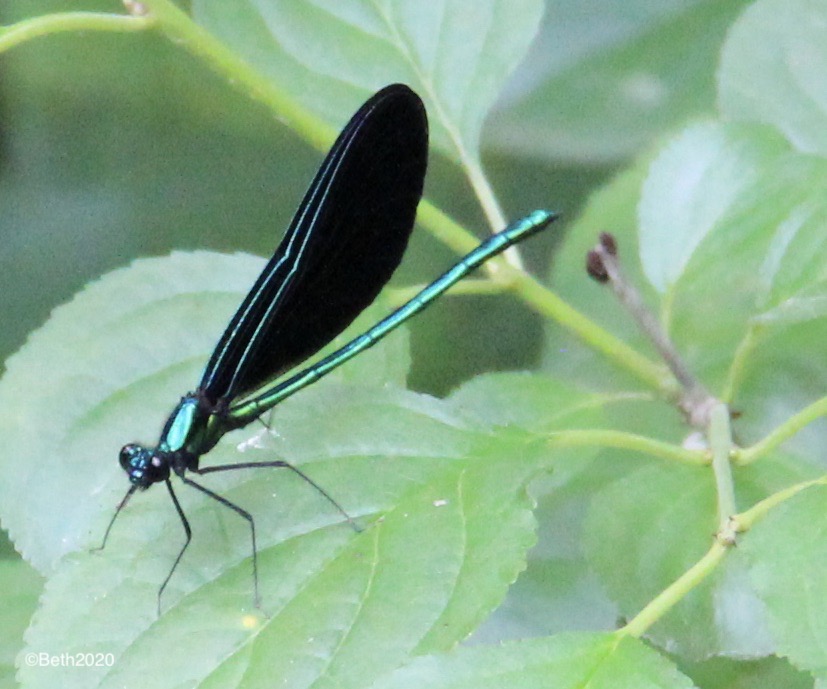
What do you associate with the words “winged beauties”? Many would answer birds and butterflies — and I’d add damselflies and dragonflies, too. On a sunny, warm morning, a pair of inky black wings flutter near the Snake River. At first I think it’s a butterfly, but a closer look reveals the electric-blue-green body of a male ebony jewelwing damselfly; he flashes cool and iridescent in the morning sun.

Inky black wings and a blue-green abdomen identify this male ebony jewelwing (Calopteryx maculata).

A member of the broad-winged damselflies, ebony jewelwings fly more like a butterfly than like their dragonfly relatives. Their wings are 1-to-1½ inches long and their body length is up to 2¼ inches. The male’s colorful abdomen — green, teal, blue, even a hint of purple — shimmers in the sunlight. A female ebony jewelwing is similar in appearance, but not as showy as a male. Her body is brown with little bits of blue or green. Her wings are more transparent black and display a distinct white spot near each tip. (See a female at Wisconsin Odonata Survey.)

In the eastern United States and southeastern Canada, look for ebony jewelwings perched along shady banks of shallow streams and slow-moving rivers from late May until September. Adults live for about 20 days. A mating pair will often fly attached in the heart-shaped “wheel formation” and remain connected for several hours. Females deposit eggs inside of submerged water plant stems in quiet sections of streams or rivers. The larvae or naiads live in the water for about a year and eat other aquatic larvae, such as mosquitos and mayflies. Adults eat most soft-bodied insects, for example small moths, mosquitos, mayflies, gnats, flying ants and termites.

The Snake River in east-central Minnesota provides the habitat needed by ebony jewelwings.

Even though jewelwings are voracious predators, they serve as supper to other creatures — turtles, frogs, fish, bats and birds, such as red-winged blackbirds, blue jays, flycatchers, purple martins and kingfishers.

How does one distinguish between a damselfly and a dragonfly? A few simple differences make it easy to tell them apart. Generally, damsels hold their wings folded vertically above their body, while dragons spread them horizontally when resting. Damselfly abdomens are more slender than the stout dragonflies’. Damselfly eyes are set far apart on the sides of the head, but dragonfly eyes wrap around and touch on top of the head.

A green darner dragonfly (Anax junius) exhibits the horizontal wings, stout body and wrap-around eyes characteristic of dragonflies.

Vertically folded wings, a slender body and eyes set far apart on each side of the head are characteristic of the ebony jewelwing and other damselflies.

Damselflies and dragonflies belong to the order Odonata, which means “toothed ones.” Many come in beautiful, iridescent color combinations. Fossil records indicate that Protodonata, the ancient ancestors of both dragons and damsels, arose about 325 million years ago. The first Odonata fossils are dated at a little older than 250 million years, which means they’ve inhabited Earth’s skies since before dinosaurs existed. I love to watch and think about these ancient, graceful creatures that add so much beauty to our woods and gardens.


Black Eastern Tiger Swallowtail

An eastern tiger swallowtail black form female nectars on nepeta ‘Walker’s low.’

It’s late spring with the entire summer ahead of us. Nature’s greens are deep and full. Tiger swallowtails (Papilio glaucous) are on the wing now, the first of two times during the Minnesota summer. The first flight is typically in May-June and the second in July-August. The offspring of the second flight overwinter in their chrysalides.

I watch a bright yellow male patrolling his territory, repeating the same route through the large silver maples across the alleyway, over our apple tree and under my neighbor’s birch tree. He is quick to give chase to other males that trespass.

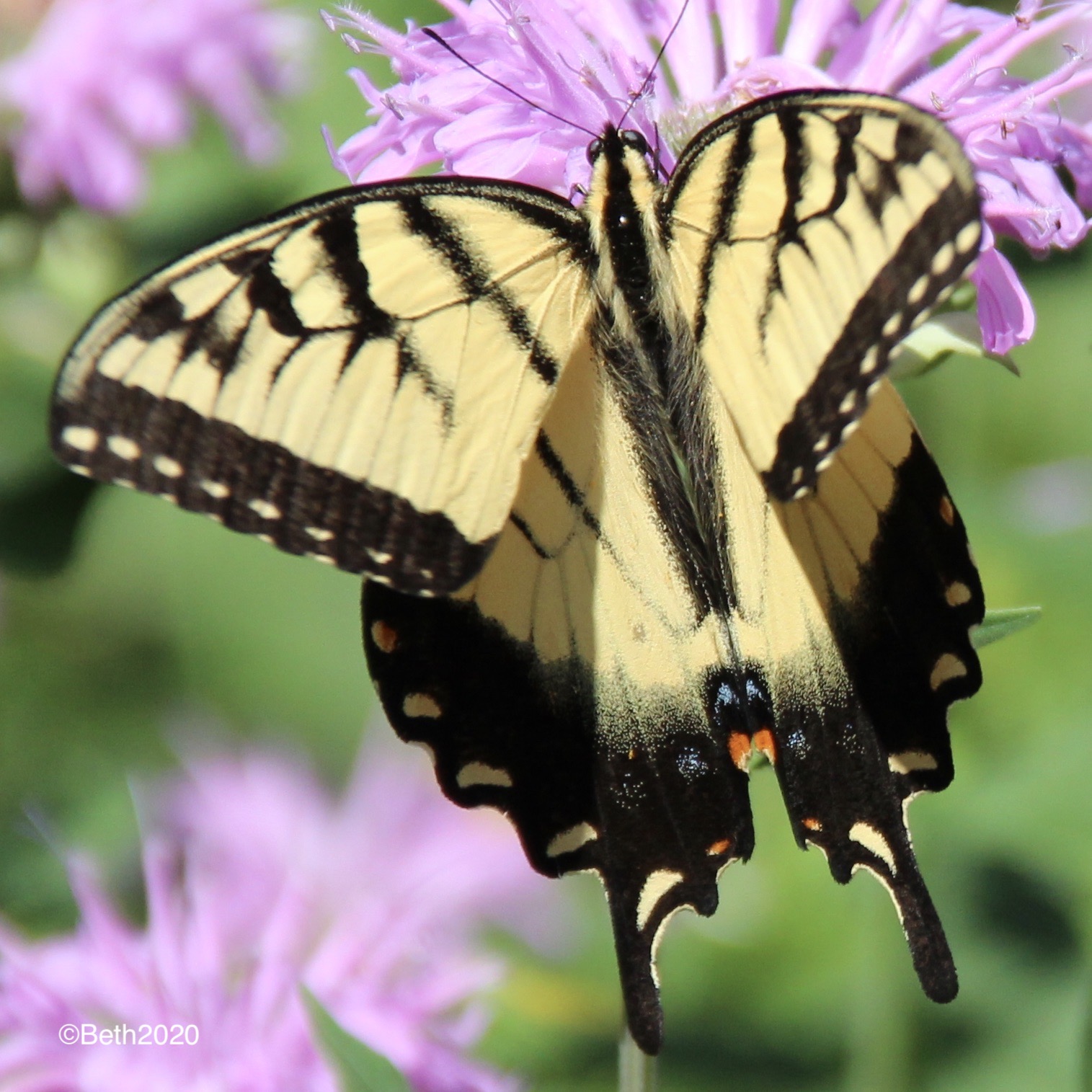
Eastern tiger swallowtail males are always yellow with black stripes and lack the wash of blue on the hind wings.

On this sunny, breezy morning, a black form female nectars in a sea of blue nepeta in our front garden. Her iridescent blue-on-black wings flutter repeatedly from one end of the garden to the other. She is full of energy and free of wing tatters and tears.

The female’s underwings are marked with bright orange spots and light blue scales.

Most eastern tiger swallowtails in Minnesota are yellow with black stripes. However, the female is dimorphic, or appears in two forms: the familiar black-striped yellow and a rarer black form washed with shimmering blue across its hind wings. Faint black stripes are often visible on the dark female.

Just a tiny percentage of females appear in the black form, especially this far north, but are  common in the southern United States. Why? Scientists think that the black form is a mimic of the pipevine swallowtail, which tastes horrible because the caterpillars feed solely on pipevine plants. (Think of monarchs and viceroys, another example of mimicry. Birds hate the taste of monarchs because they eat milkweed. Viceroys closely resemble monarchs, so birds often avoid them.) Pipevine swallowtails occasionally come as far north as Minnesota.

Interested in attracting eastern tiger swallowtails to your yard or garden? Favorite caterpillar foods include: chokecherry, ash, poplar, maple, apple and mountain ash. Adults nectar on many flower species including phlox, milkweed, Joe-Pye weed, blazing star, bee balm/bergamot and red clover.