Eastern Tiger Swallowtail Butterflies

A female eastern tiger swallowtail – black form (Papilio glaucus) nectars on an ironweed flower.

It was an unexpected gift on an August afternoon: A black eastern tiger swallowtail butterfly, its wings faded and worn, even tattered in places, showing its age.  It settled in for a long drink of nectar from an ironweed flower on the banks of the Snake River in Pine County, MN. We’re more likely to see the yellow form of the tiger swallowtail in the North. The black form occurs much less frequently and only in females. The butterfly’s name refers to the long projections on its tail, which resemble a barn swallow’s tail.

An eastern tiger swallowtail – yellow form nectars on a monarda blossom.

In the northern United States, eastern tiger swallowtails typically fly from mid-May to late August or September. They usually have two broods per summer, and the young of the second group overwinter as chrysalids to emerge the following May. The caterpillars are bright green with two blue eye spots. (They turn brown when ready to form a chrysalis.) They mainly feed on the leaves of trees such as wild cherry, chokecherry, basswood, cottonwood, ash, willow and maple. Adults nectar on many types of flowers, but prefer wild cherry and lilac in spring, Joe-Pye weed and milkweed during the summer.

The name swallowtail comes from the long tail projections that resemble a barn swallow’s tail.

The ironweed on which I spotted it belongs to the Composite family, which also includes coneflowers, sunflowers, daisies, goldenrod, Joe-Pye weed, asters and others. Ironweed is a native perennial, prefers full sun and often grows near marshes, along riverbanks, edges of moist fields, and wet prairies. It’s typically 4-to-6 feet tall and its violet-colored flower clusters are often visited by bumblebees. The black tiger swallowtails seem attracted to ironweed and I’ve seen them on the blossoms in past years, too. I enjoy seeing both forms of the butterfly.
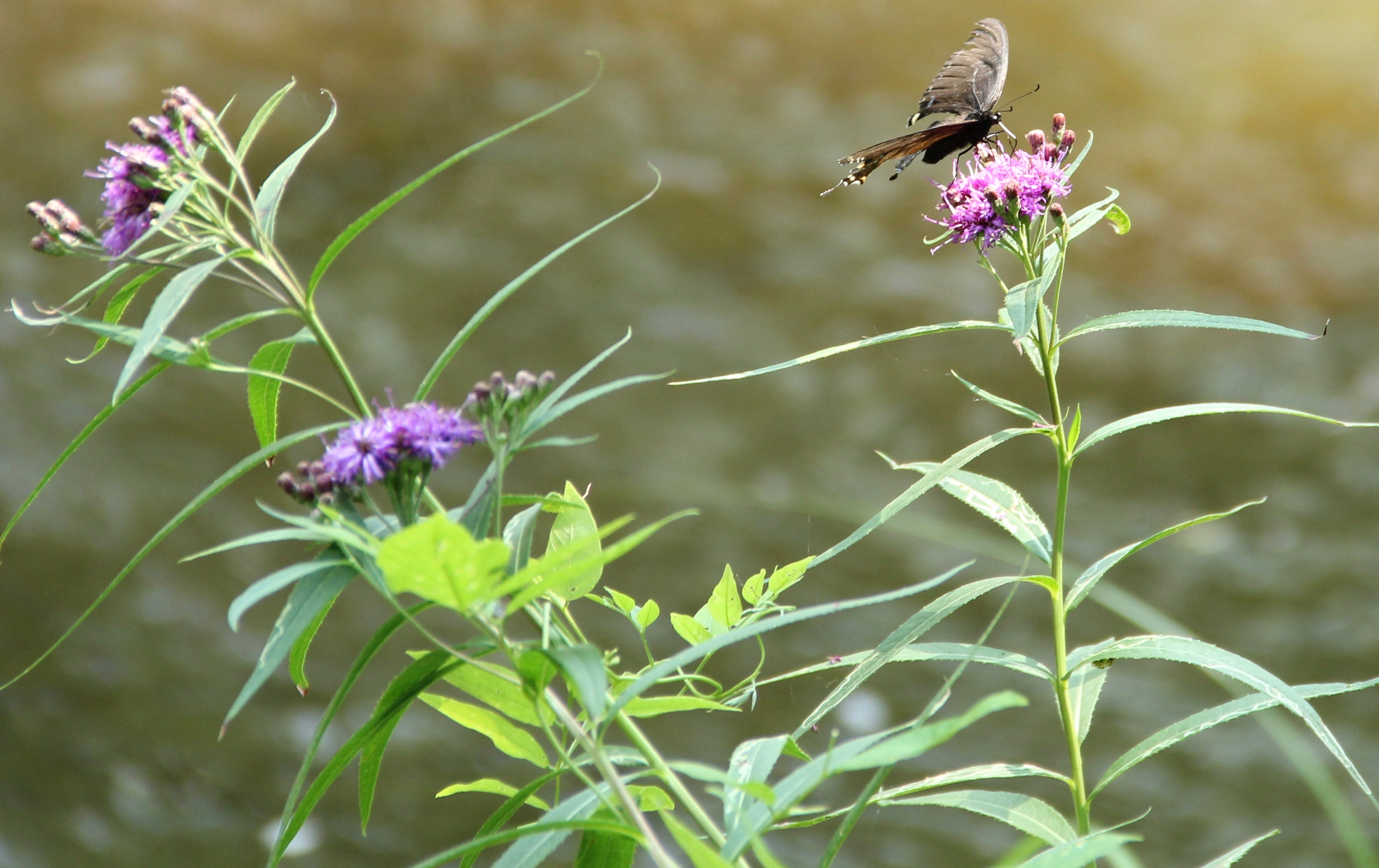
Ironweed (Vernonia fasciculata) grows on the banks of the Snake River in Pine County, Minnesota.


Lake Michigan Walk

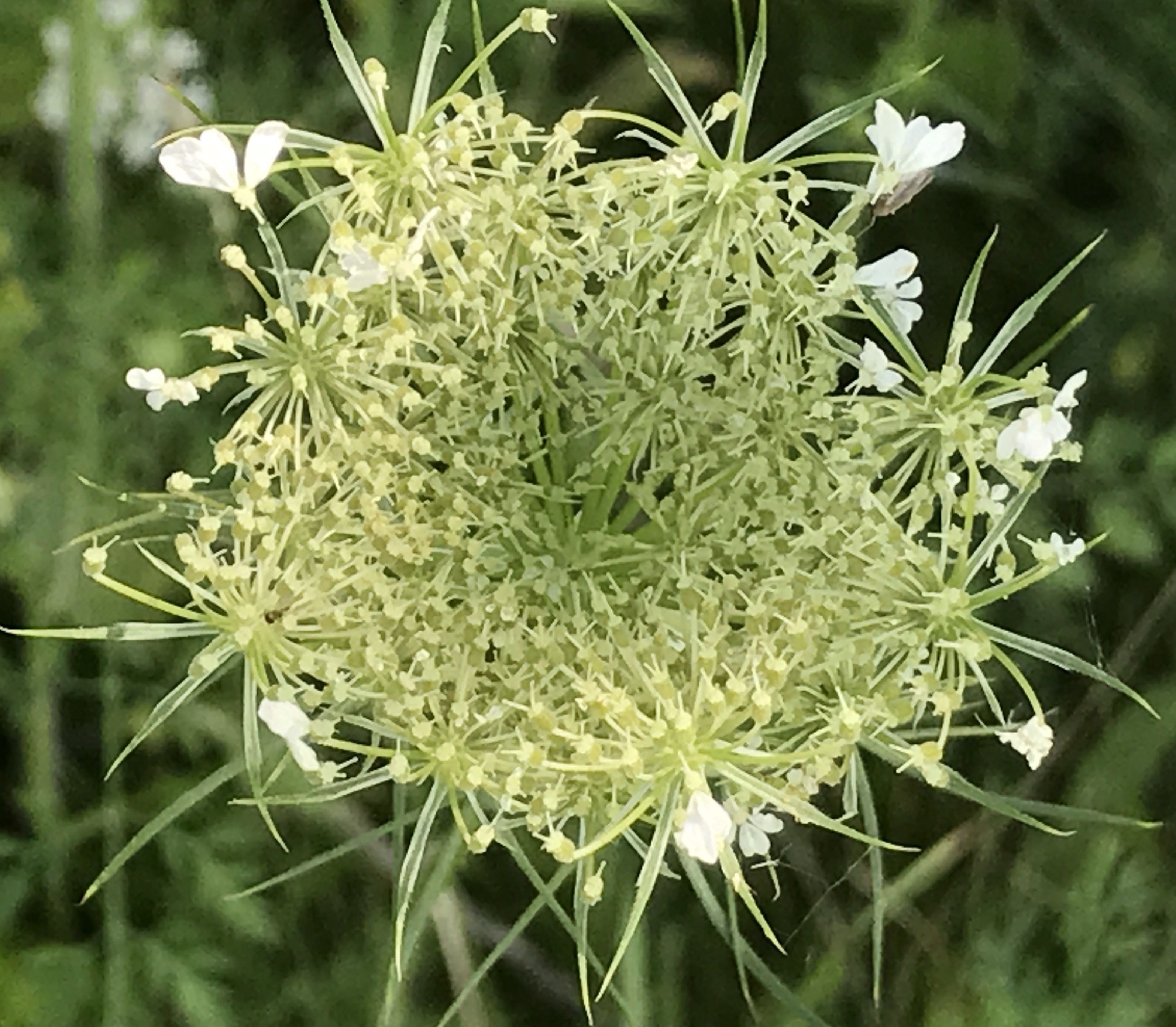
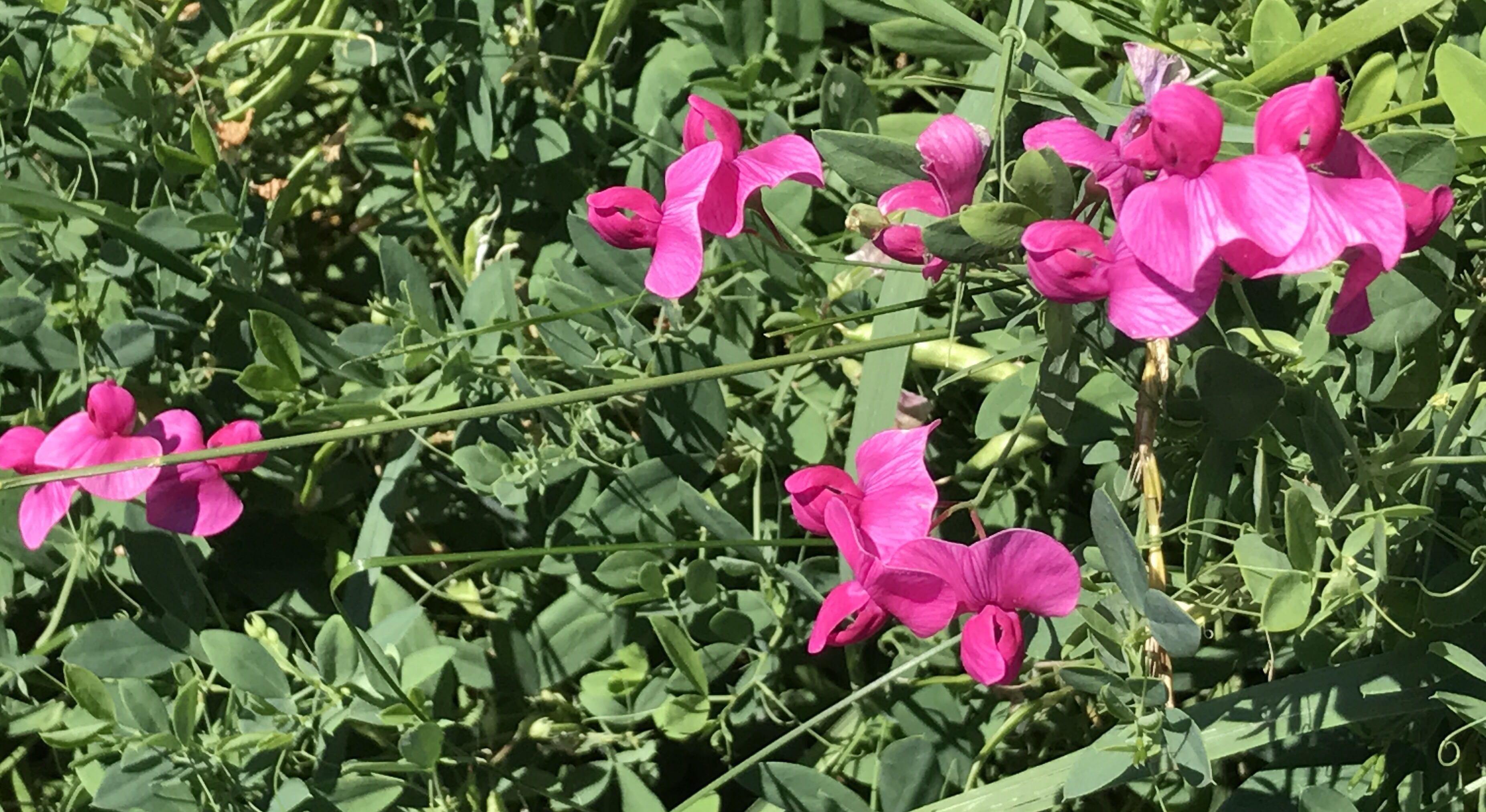
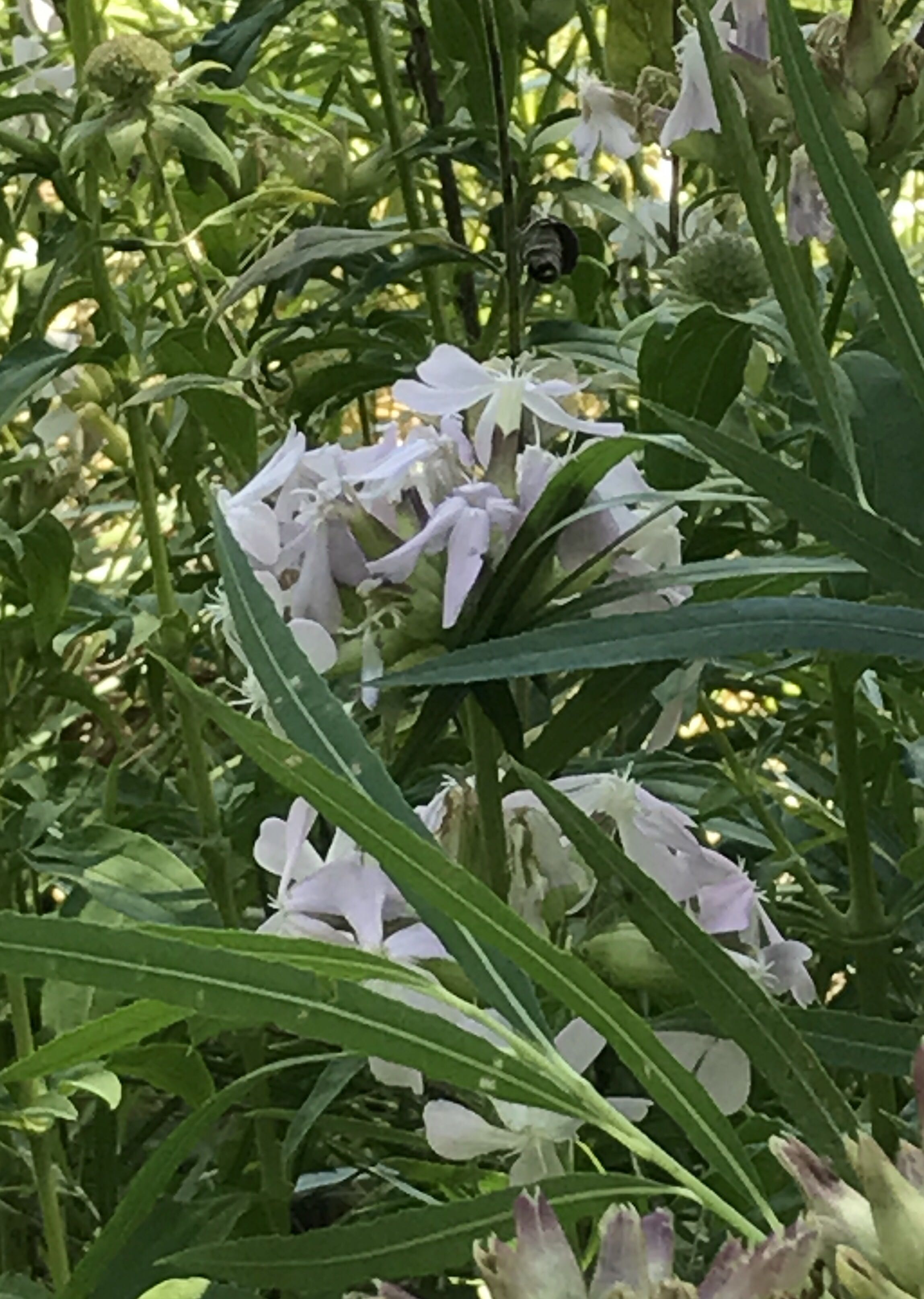
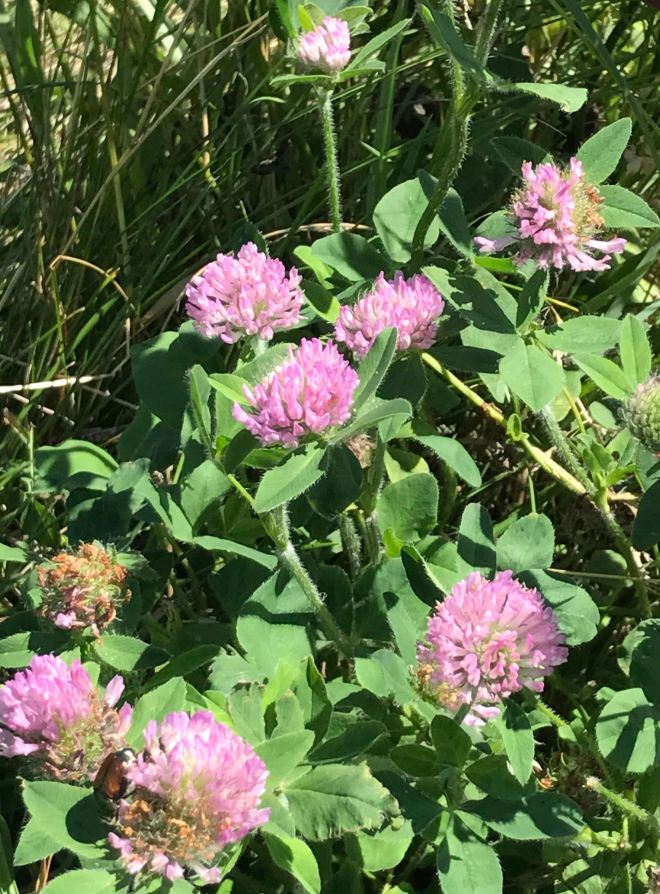
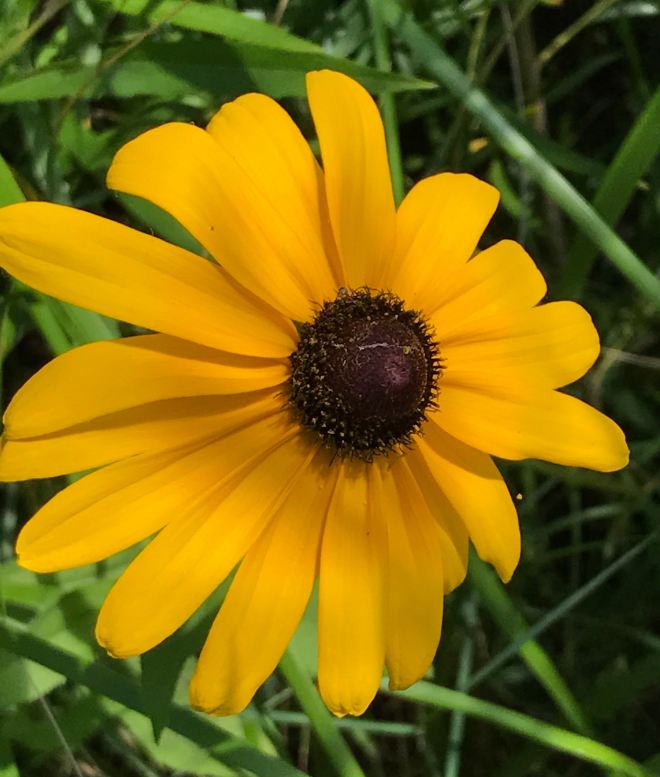
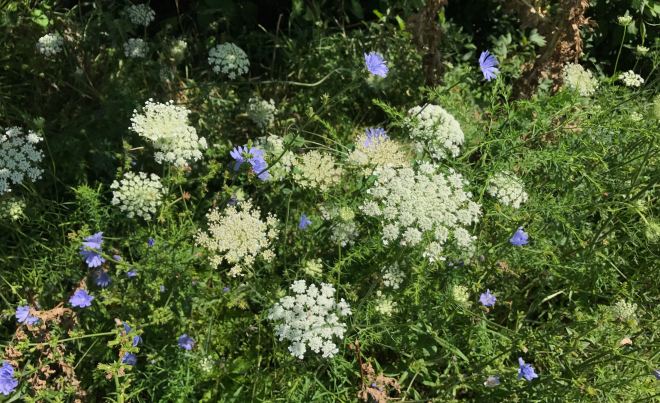
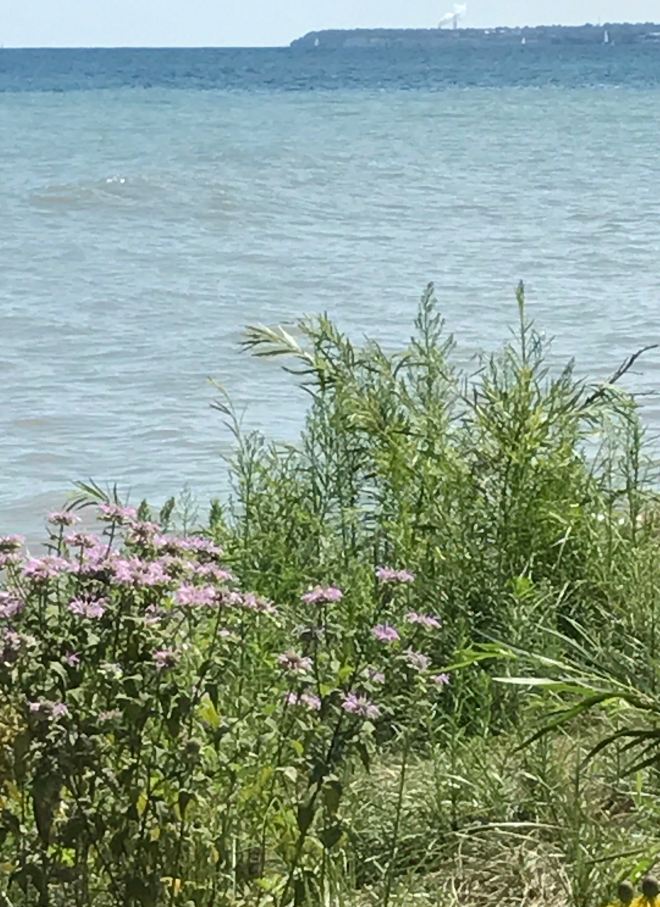
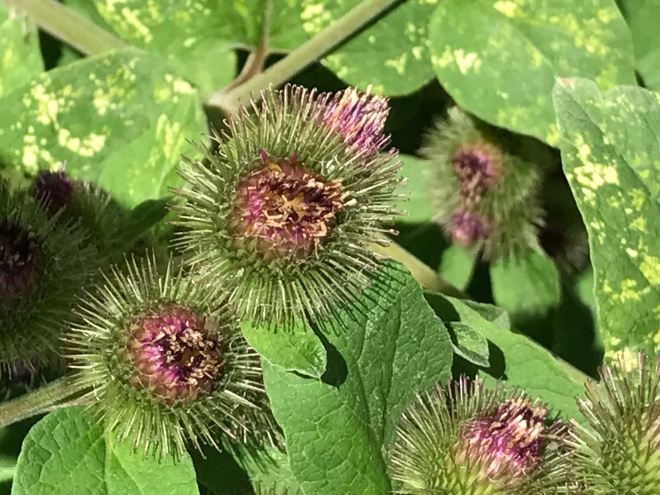
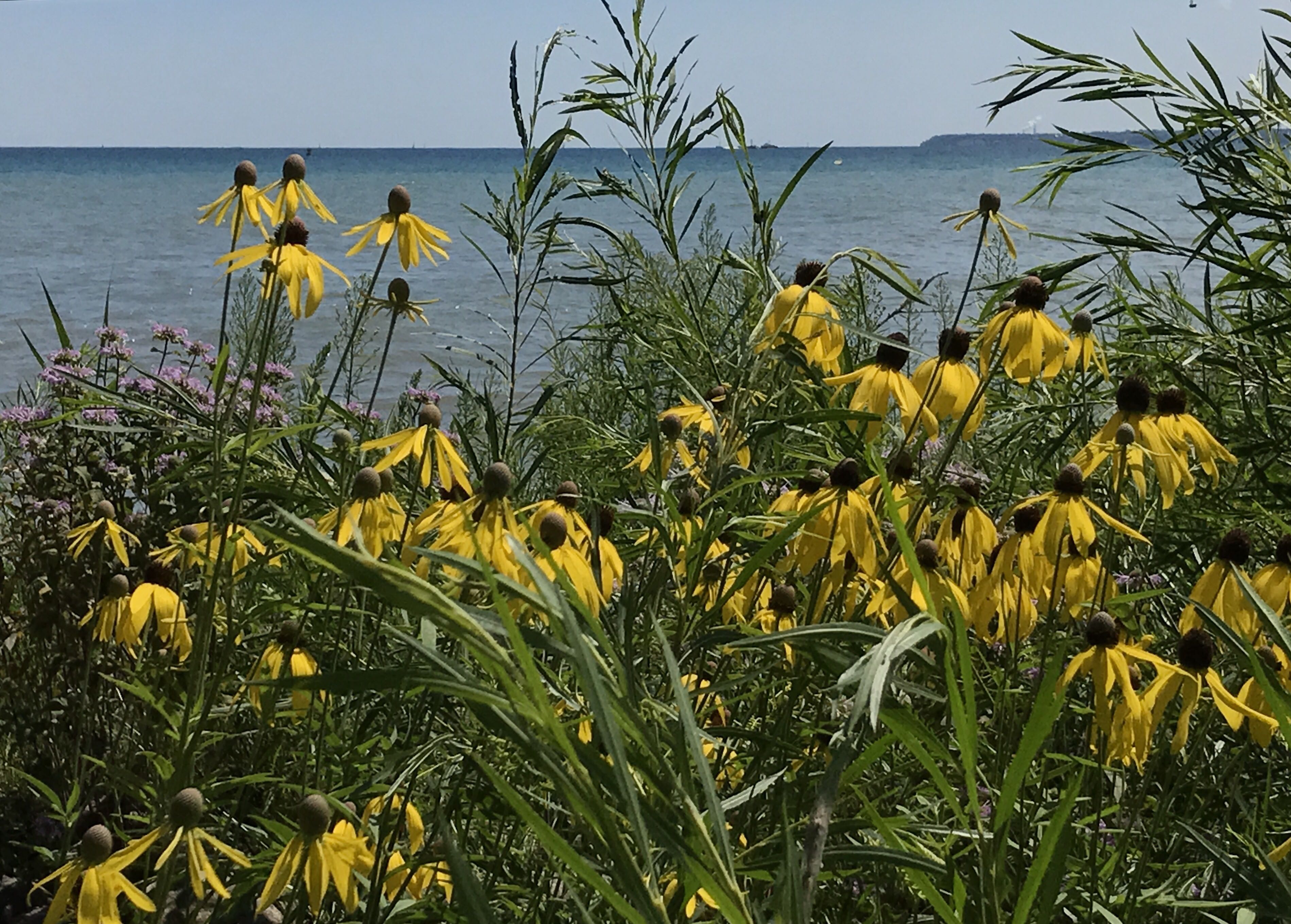
In August, many wildflowers begin to bloom in the Upper Midwest. Bees, wasps, moths and butterflies visit them for nectar and pollen. While in Milwaukee, Wisconsin, last weekend, we walked along Lake Michigan to enjoy the warm sun, gentle breeze and flowers both native and non-native that grace the shoreline. Among the blooms were chicory, Queen Anne’s lace, everlasting pea, goldenrod, sweet clover, gray-headed coneflower, bouncing Bet, red clover, Black-eyed Susan, monarda and lesser burdock. (If you look closely, you’ll spot a few pollinators, too.)

IMG_0276IMG_0316

IMG_0262

IMG_0318IMG_0325

IMG_0337


Monarda: A Balm for Bees and People

Monarda fistulosa and Monarda didyma are native to eastern Canada and the United States.

It’s late July, a high-summer evening in the garden. I close my eyes and listen to the gentle hum of bumble bees and honey bees. The heavy aroma of day lilies mixes with the lighter scent of phlox. I brush my hand on the foliage next to our patio, releasing a different scent: the tangy mint of monarda. Two kinds grow in our garden: fiery red Monarda didyma and lavender-pink Monarda fistulosa.  Also known as bergamot, both are native to Minnesota and to much of the eastern United States and Canada.

Ten or more years ago, I found lavender monarda growing next to our cabin driveway. That autumn, I brought home a small portion and planted it. A few years later, I purchased the red monarda at Leitner’s, a local garden center. Both flourish as long as late winter and spring aren’t too wet.

Bright red M. didyma smells more spicy than the pink M. fistulosa.

Monarda belongs to the mint family, but is much taller and better behaved than many of its minty cousins. Look closely and you’ll see mint characteristics: square rather than round stems, tubular flowers, opposite leaves and of course the wonderful minty scent when one brushes against the foliage.

Besides monarda, there are other names for the plants. Bergamot applies to both species. Oswego tea and bee balm apply to the red M. didyma, but the term bee balm is also loosely used for M. fistulosa. I thought it referred to how happy the bees are when they’re in the monarda, but according to a book about wildflower lore, a salve or balm was made from the leaves to treat bee stings. Monarda plants also were used by many Native American people to treat headaches, abdominal problems, colds and other bronchial issues. Both species were used as a tea substitute in the American colonies after the Patriot Sons of Liberty dumped 46 tons of British East India Tea into Boston Harbor in December 1773.

Bumble bees (Bombus spp.) prefer the lavender-pink monarda in our garden. Their long tongues can reach the nectar in the deep, tubular flowers.

A honey bee (Apis mellifera) flies in to drink the nectar of Monarda ‘Jacob Kline’. They favor red monarda.

Monarchs, fritillaries, red admiral butterflies and hummingbird clearwing moths nectar in both species of monarda. Goldfinches peck the seed heads of the lavender monarda and hummingbirds visit the red ones. I’ve noticed that honey bees nectar almost exclusively in the tubular flowers of red monarda. Bumble bees, though not as fussy as honey bees, seem to prefer the pink — and sometimes they’ll take a quick nap on a blossom! Bees lack a photoreceptor for the color red, but according to “The ABC’s of Bees,” some red flowers, including bee balm, have ultraviolet coloring mixed in, which makes them appear blue and inviting to bees. Also, like humans, bees are attracted to scent and perhaps honey bees prefer the spicier scent of the red monarda. As the sky darkens and the crickets begin chirping, I look again at the beauty of bee balm and, like the bees, enjoy the spicy mint aroma before I go inside for the night.

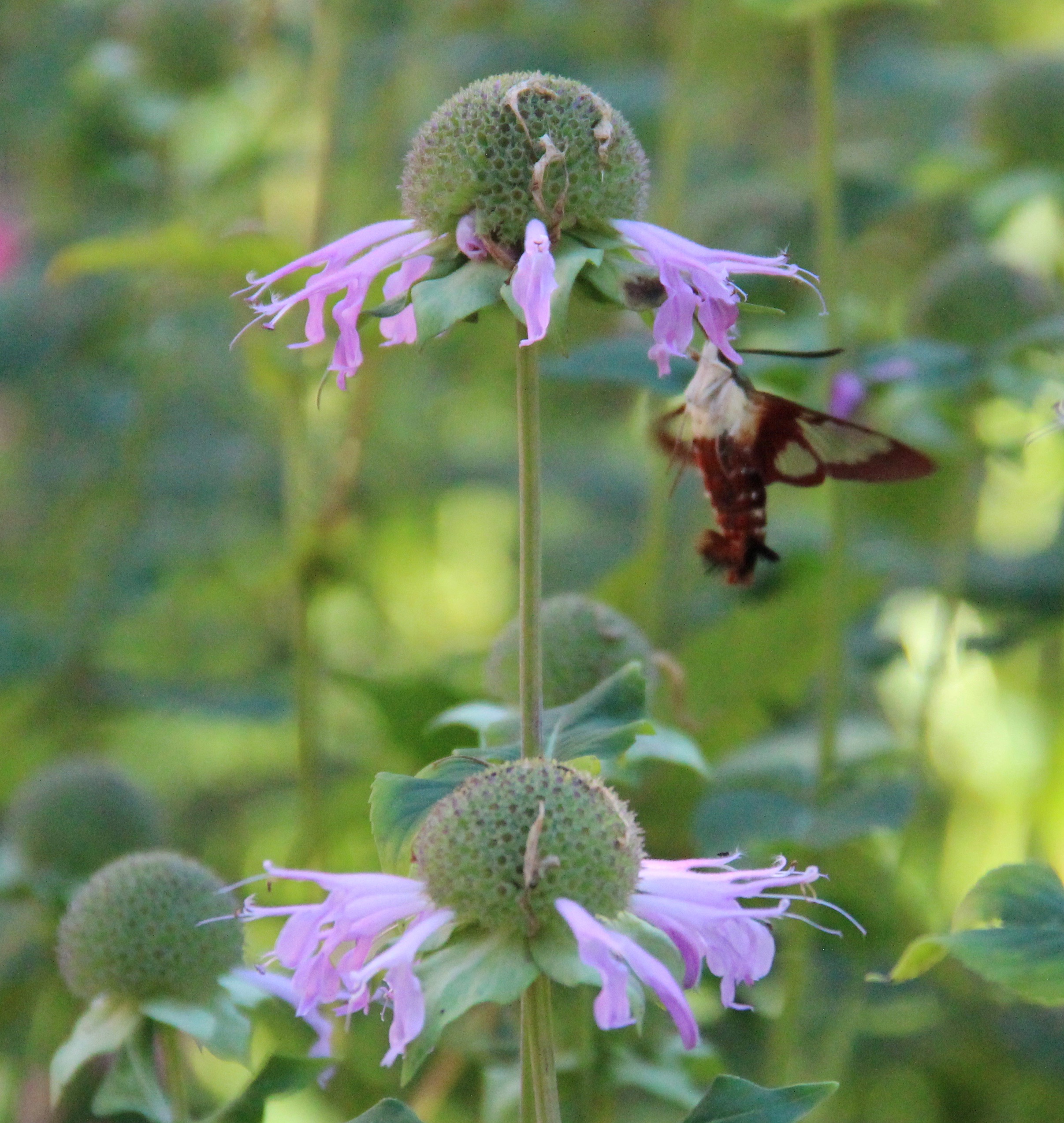
Hummingbird clearwing moths (Hemaris thysbe), like their namesake, nectar in monarda’s tubular flowers.

A great spangled fritillary (Speyeria cybele) nectars on pink bergamot.

Ruby-throated hummingbirds (Archilochus colubris) love the red bee balm and visit every evening.

A bumble bee settles in for an afternoon snooze on pink bergamot.

My Mother’s Peonies

In my mind’s eye, I see a cobalt blue glass vase holding three white peonies. It sits on a white linen runner that contrasts with the dark wood of an old mahogany table. The heavy scent of peonies fills the small dining room that is illuminated by a south-facing picture window. A few black ants crawl in and out of the many-layered petals, though we tried to shake them off outside.

Mom’s simple bouquet’s were perfect.  Whether peonies, or other flowers, she fashioned a simple, understated arrangement of whatever bloomed in our back yard. I wish that I had photos of them, but only the memories remain — and they are mine alone. Mom does not remember much of the past because she has dementia. So, I tell her about the white peony bushes that grew at just the right height for me to breathe in their heavy perfume and stroke their silky petals. I speak of warm afternoons when I was very young and how we lingered in our garden to watch bees in the flowering almond, and looked to see if new seedlings had popped through the soil. I speak of the giant basswood tree that shaded the back yard and scented the evening air. Most importantly, I tell Mom how much I loved being with her in the garden.

This week, the first peony opened in my own back yard — white blooms first, then royal red and finally pink. I still touch their soft petals and smell their perfume. I remember with joy the days when I taught my own young son about nature, and I think of Mom with gratitude for all that she has given to me.

Virginia Bluebells

Virginia bluebells (Mertensia virginica) blossom throughout May in Minnesota.

Spring’s native wildflowers are delicate and fleeting — that’s why botanists refer to them as “ephemerals.” The Virginia bluebell, Mertensia virginica, is one of my favorites. The mature flowers are spring sky blue and usually bloom throughout May in Minnesota. Native to southeastern Minnesota and portions of the eastern United States and Canada, they are a woodland flower that requires moisture and partial-to-full shade.
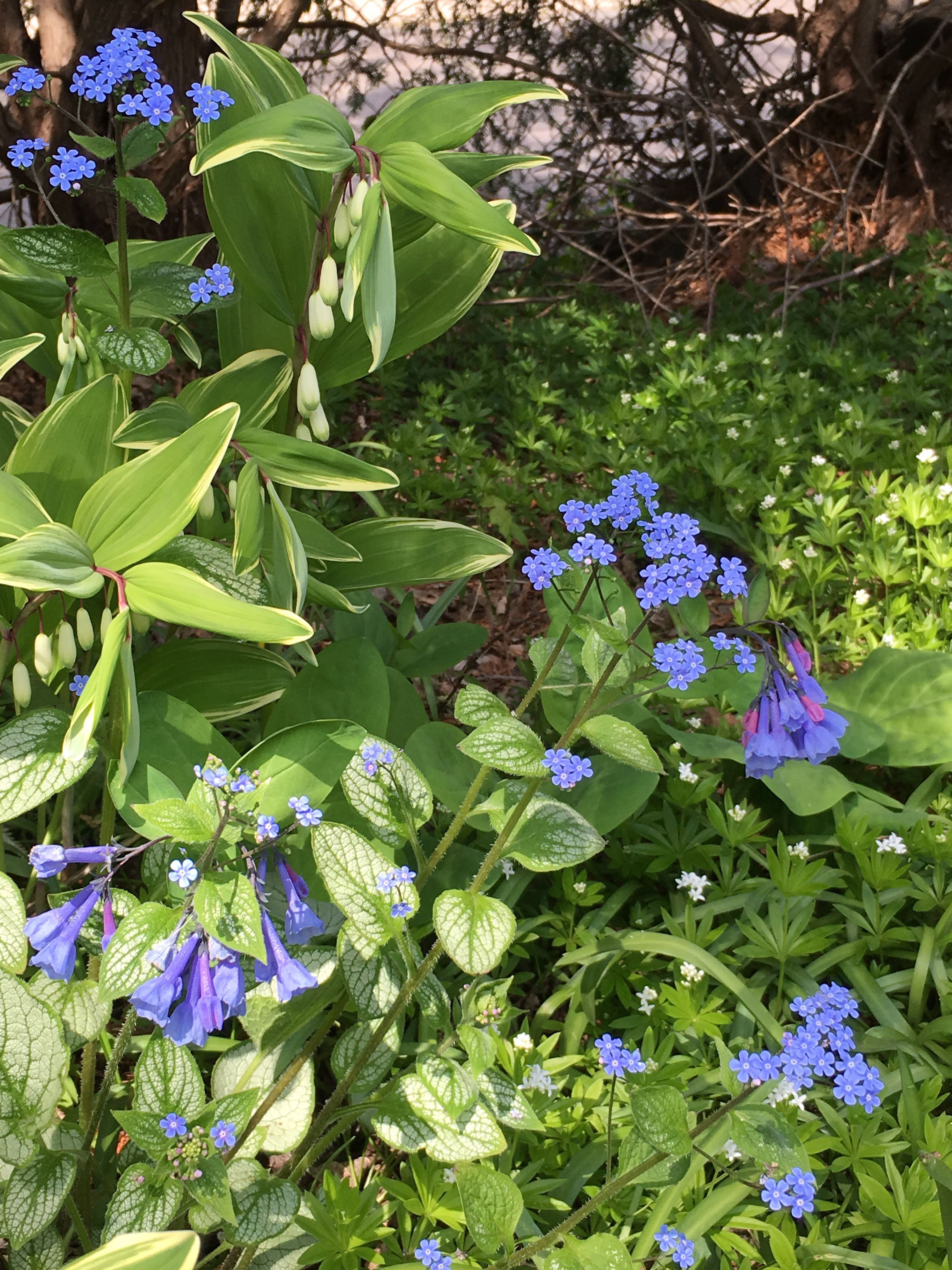
Virginia bluebell’s early leaves are purple-tinged and the flower buds are pink to purplish.

The leaves first appear with purple highlights and then turn light green. The flower buds also are pink to purple. As the bell or trumpet-shaped flowers enlarge, they become sky blue and fade as they age. About one month after blooming, each fertilized flower produces three or four seeds. In June, the leaves will die back and the plant becomes dormant until the next spring — a typical characteristic of spring ephemerals. I usually place markers by my plants to avoid digging them up if I plant during the summer.

Virginia bluebells grow with tiny blue-flowered Siberian bugloss (Brunnera macrophylla “Jack Frost”), variegated Solomon’s seal (Polygonatum odoratum “Variegatum”), and sweet woodruff (Galium odoratum) in my small woodland garden.

Virginia bluebells provide an early source of nectar to bumble bees, honey bees and other species of bees and butterflies that are equipped with a long enough tongue to reach deep into the flower tube.  Want to learn more? Here are a couple of websites to visit for photos and information:

Friends of the Wildflower Garden and Minnesota Wildflowers

Winter Trees

A weathered old northern red oak (still living) has been a home to many birds and other animals.

A weathered old northern red oak (Quercus rubra) is home to many species of birds and other animals.

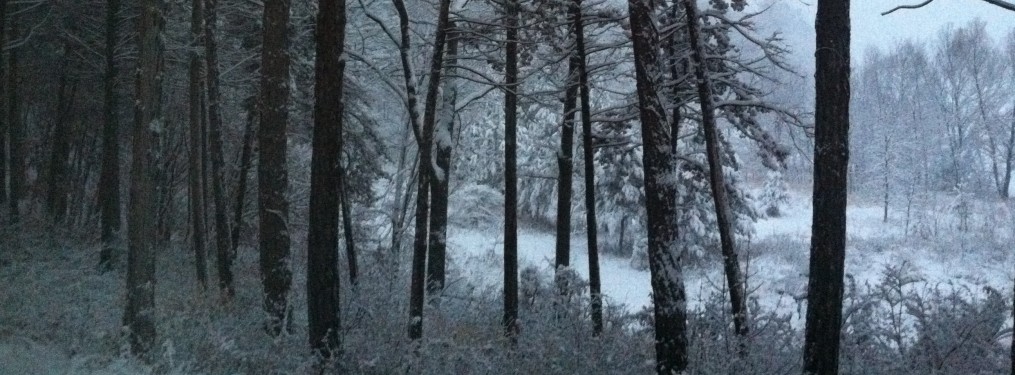
A tree’s beauty is easily noticed in three seasons: Spring’s first green haze of buds; summer’s rustling crown of leaves; and autumn’s smoldering colors. Winter uncovers a different kind of beauty: that of bark, interesting shapes, animal shelters and open sky — the guts of things not often seen.

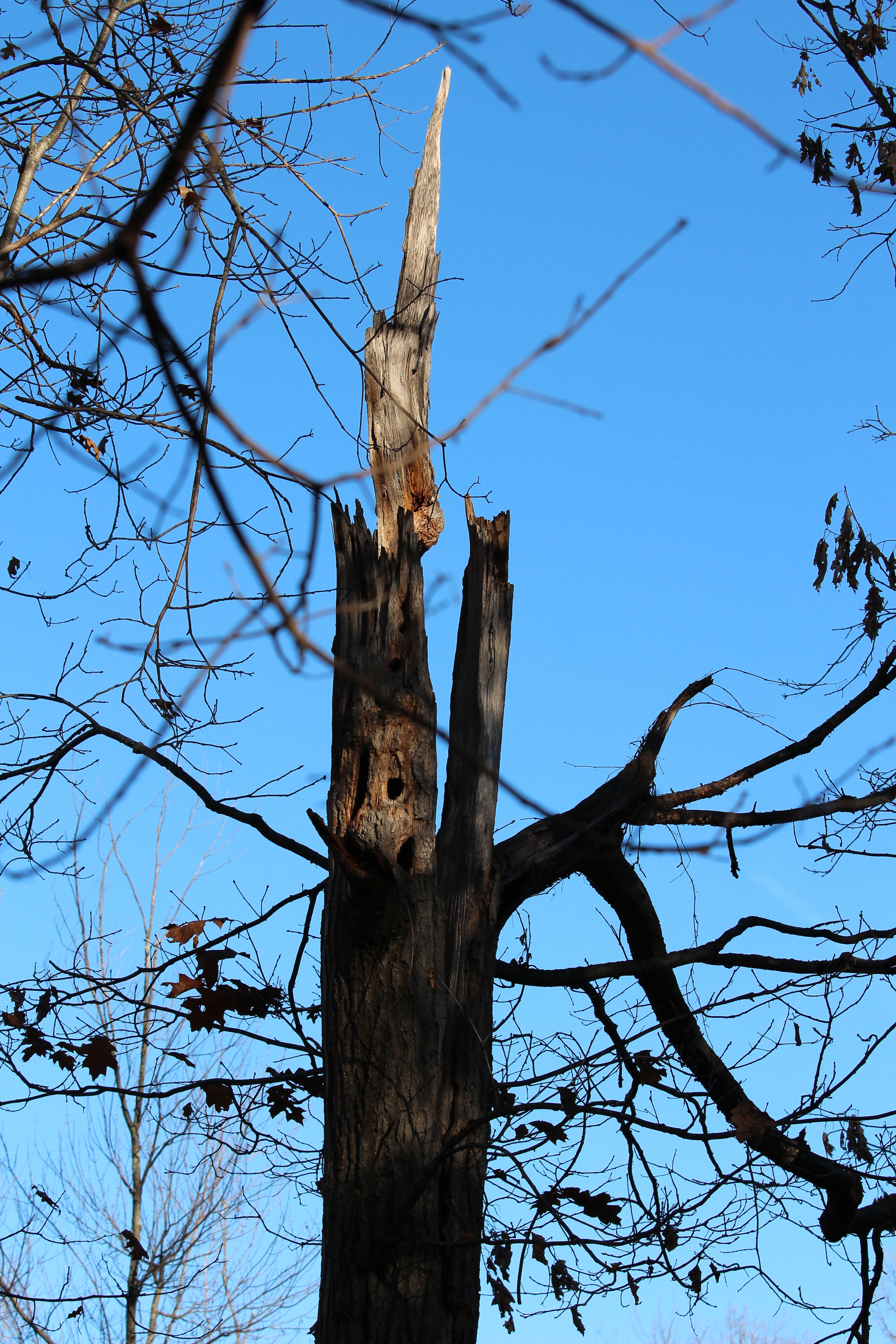
A small stand of northern red oak, at our cabin along the Snake River in Pine County, MN, includes a tree that was sheared off in a summer windstorm two decades ago. Neighboring branches hide the jagged top most of the year, but in winter the scarred wood’s polished grain and shape are revealed, along with hidden nesting cavities. Squirrels, great-crested flycatchers, red-bellied woodpeckers and most recently, pileated woodpeckers have nested and raised their young in this red oak.

Crabapple trees (Malus) provide food for many birds and add winter color.

Crabapple trees (Malus) provide food for many birds and add winter color.

Crabapple trees, especially those with long-lasting fruit, add warm crimson to the stark black and white landscape. Their small shapes and curving branches remind me of bonsai trees. By late spring, most of the plump fruit will be consumed by cedar waxwings and robins.

The bark of river birch (Betula nigra) is multicolored and has a shredded texture.

The bark of river birch (Betula nigra) is multicolored and has a shredded texture.

Bark patterns and colors are more pronounced in winter with fewer distractions from the rest of the plant world. One of my favorites is the papery bark of the river birch. The colors range from soft brown to salmon, pink and ivory. The bark shreds and flutters in the wind. Paper birch bark (Betula papyrifera) is pretty too, especially at sunrise and sunset when low rays add blush to the tips of twigs and branches.

White spruce (Picea glauca) and other evergreens shelter many creatures.

White spruce (Picea glauca) and other evergreens shelter many creatures.

The white spruce has grayish-red bark with a rough mosaic-like texture. Its evergreen branches shelter cardinals, kinglets, juncos and chickadees. At the end of winter, new burgundy cones appear, like tiny ornaments, on the tips of branches.

New cones form on a white spruce.

New cones form on a white spruce.

Winter trees reveal the hidden face of nature — textures, hues, patterns weathered and worn — and more open sky to view the moon, stars and urban sunsets; beauty to the eye that looks carefully. What do you see?

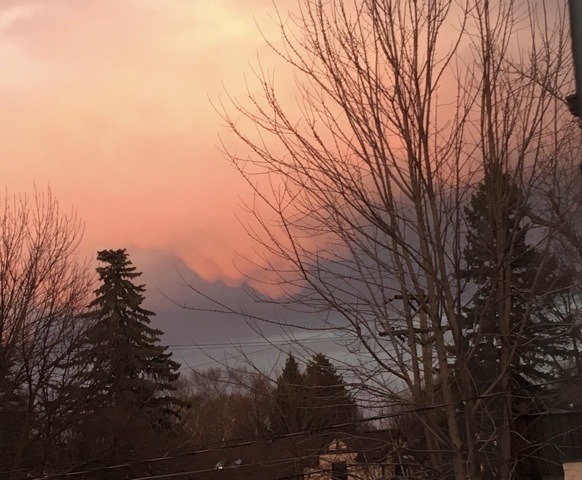
Winter sunset over Saint Paul, MN, on Feb. 22, 2017.

Winter sunset over Saint Paul, MN, on Feb. 22, 2017.


October Gold and Blue

White oaks shine against a cloudless October sky.

Bur oaks (Quercus macrocarpa) shine against a cloudless October sky.

The fleeting season of gold and blue arrived in central Minnesota last week. The golden hues of bitternut hickory, bur oak, aspen and ash glow against a sky the color of a newly opened morning glory — a shade unique to autumn. Along the Snake River in Pine County, MN, the steely blue-gray wings of a great blue heron swoop over the sparkling water.

A great blue heron (Ardea herodias) swoops over the Snake River in east central Minnesota.
A great blue heron (Ardea herodias) swoops over the Snake River in east central Minnesota.

Sky blue morning glories continue to bloom in October.

Heavenly blue (Ipomea purpurea) morning glories continue to bloom in October.

Closer to the ground, the last of the powder-blue bottle gentians and asters — some with center disks as bold as the sun — bloom among the grasses. Fallen aspen leaves accent walkways, and the heart-shaped leaves of the carrion flower vine wind their tendrils skyward. In a few days, this lovely combination will dampen down to more muted tones, the gentle softness that insulates the earth for winter’s palette of black and white.

Bottle gentian blooms (Gentiana andrewsii) turn dark and dry out as their seeds mature.

Bottle gentian blooms (Gentiana andrewsii) turn dark and dry out as their seeds mature.

Asters (Symphyotrichum novi-begii) provide nectar to these hoverflies and many other autumn insects.

Asters (Symphyotrichum novi-belgii) provide nectar to these hoverflies, or syrphids, and many other autumn insects.

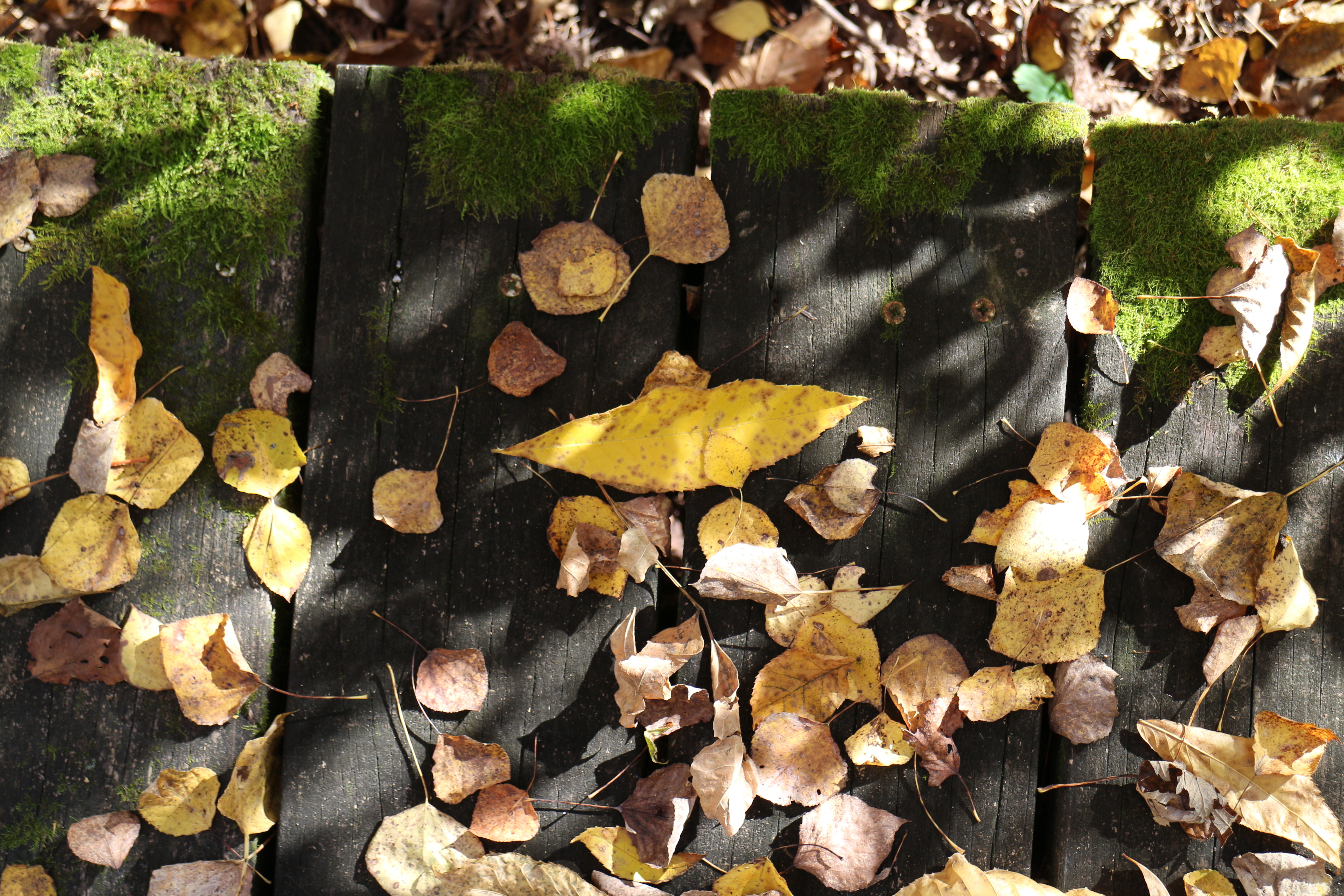
Aspen leaves and moss decorate a walkway at our cabin.

Quaking aspen leaves (Populus tremuloides) and moss decorate a walkway at our cabin.

The heart-shaped leaves of the carrion flower (Smilax herbacea) add light and color to the October woods.

The heart-shaped leaves of the carrion flower vine (Smilax herbacea) add light and color to the October woods.


Metallic Green Bees

A metallic green bee (agapostemon) drinks nectar from a Helenium flower.

A metallic green bee (Agapostemon) drinks nectar from a Helenium flower.

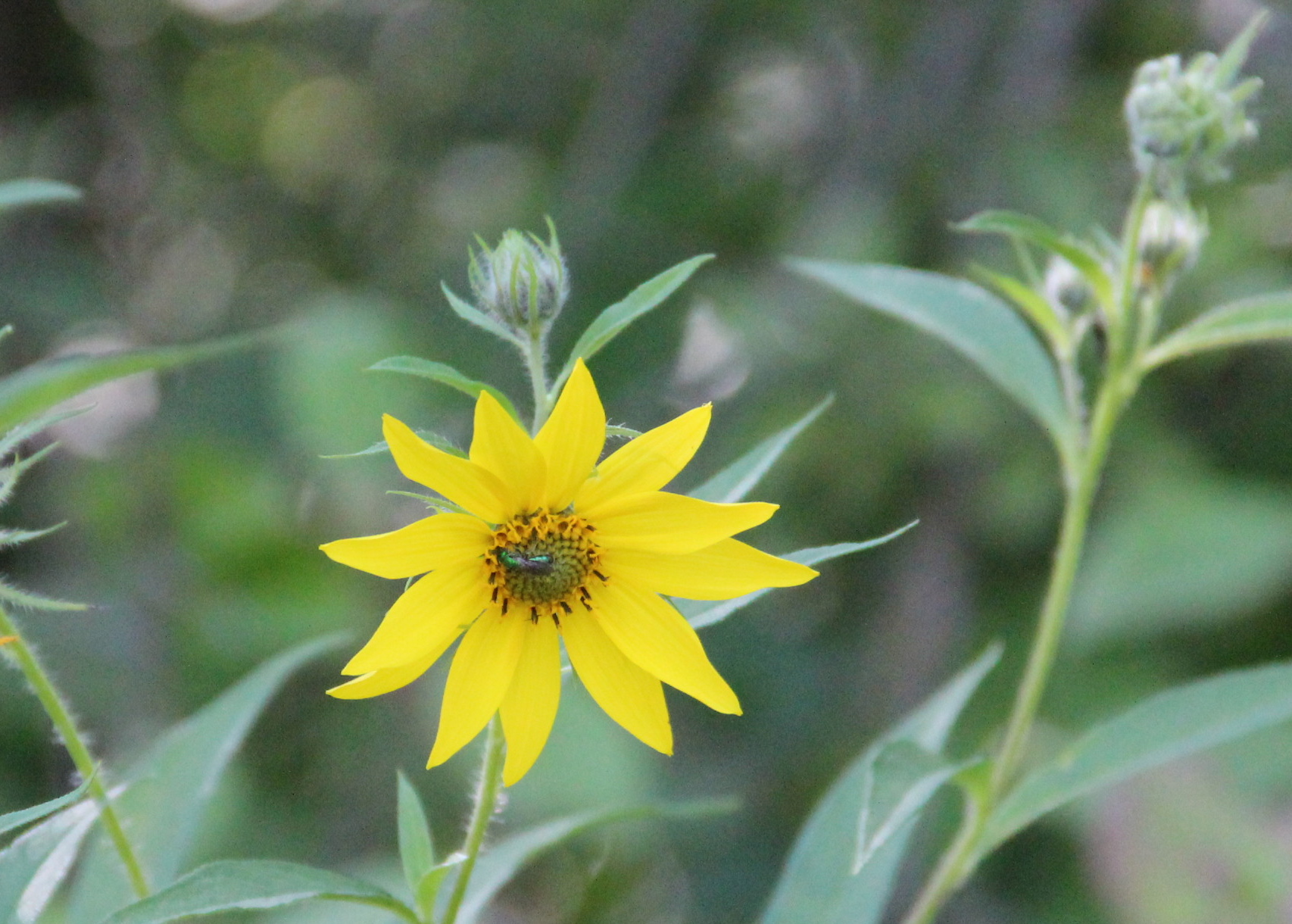
A female green metallic bee searches for nectar in a woodland sunflower.

A female metallic green bee searches for nectar in a Jerusalem Artichoke (Helianthus tuberosus L.).

Bees of many kinds visit our backyard garden on sunny autumn afternoons — and not all are black and yellow!  I think one of the prettiest is the metallic green bee, which is a type of tiny sweat bee in the (family Halictidae).  The female bee’s body is usually a beautiful iridescent green.  The male bee has a bright green head and thorax, but in contrast to the female, he sports a vibrantly striped abdomen — black with yellow or white stripes.

Native asters are a favorite of metallic green bees.

Native heath asters (Symphyotrichum ericoides) are a favorite of metallic green bees.

Metallic green bees, typically just a few eighths of an inch in size, are small in comparison to many backyard bees, such as bumble bees and honey bees.  They are short-tongued bees, so they prefer to drink nectar from flowers that have a more shallow, open structure. In our yard they prefer Helenium and asters.

Unlike colonial bees that live in hives, each adult female green bee creates her own underground nesting chamber in which she lays her eggs. Sometimes, several females construct individual nests near each other, but they remain solitary.

When cold weather arrives in late October, the male green bees die. Fertilized females survive because they form a layer of insulating fat and burrow into the ground to overwinter. Next spring, they will lay eggs in new underground nests and continue the life cycle. Most years, green bees should be visiting your garden by the end of April.

A green bee catches the warmth of the late afternoon sun.

A male green bee catches the warmth of the late afternoon sun on an aster (Symphyotrichum novi-belgii).


September Days

Woodland sunflowers (Helianthus divaricatus).

Woodland sunflowers (Helianthus divaricatus).

The morning’s first light dawns purple, builds to a soft pink, then strawberry red. Crickets and other night creatures punctuate the mild air; the birds are quiet. As the sun climbs the eastern horizon, its light flares and glows green in the tops of river birches, maples and cottonwoods. There is only a hint of autumn color in the trees, but the wildflowers are dominated by gold — the gold of woodland sunflowers, goldenrod, a few butter and eggs. The first asters, purple and white, softly accent the gold. In the coolness of the morning, voices of early walkers rise from the sidewalk. “A beautiful morning for a walk!” women call in greeting to each other.

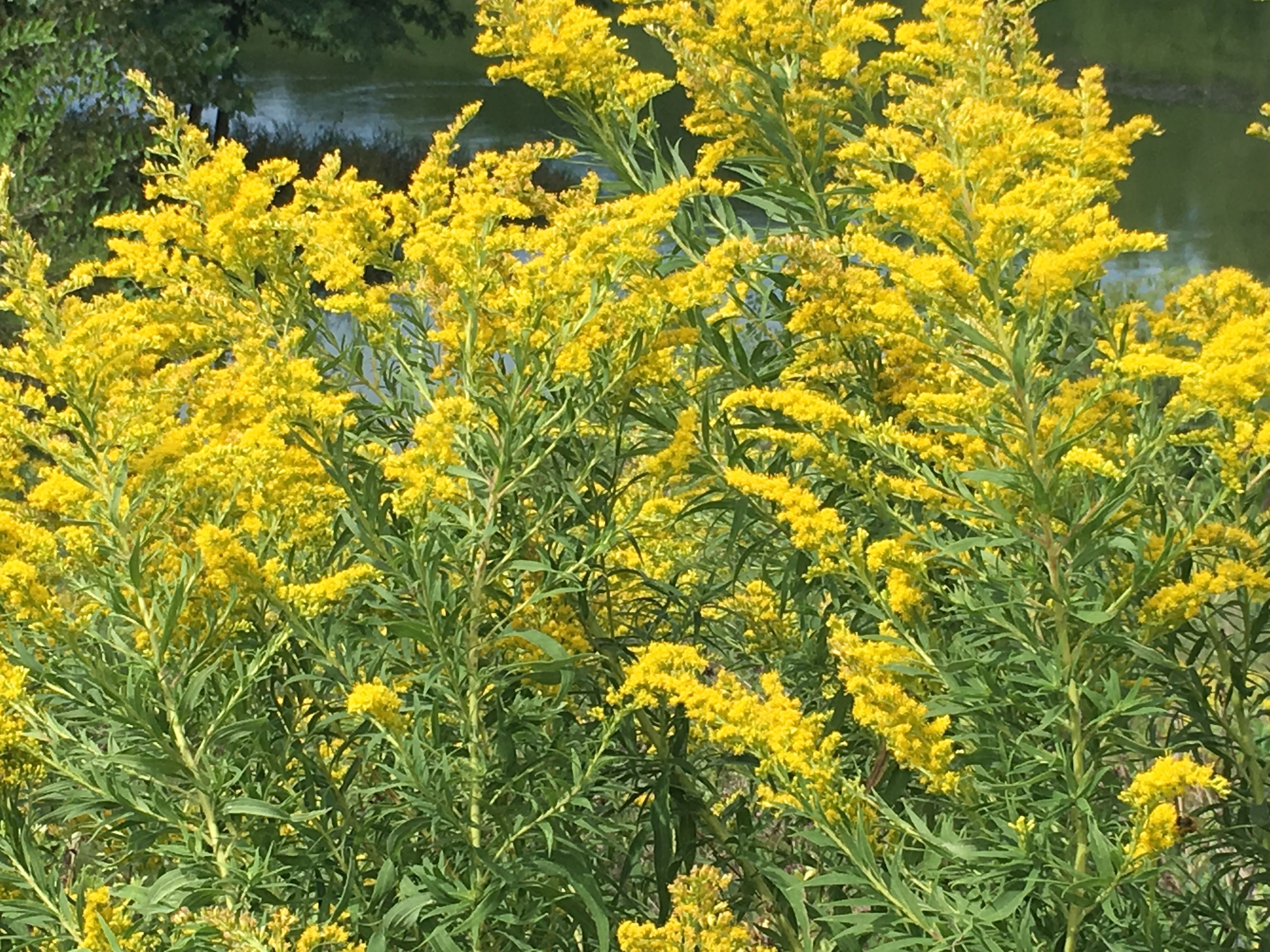
Plumes of Canada goldenrod (Solidago canadensis) surround a pond.

Plumes of Canada goldenrod (Solidago canadensis) surround a pond.

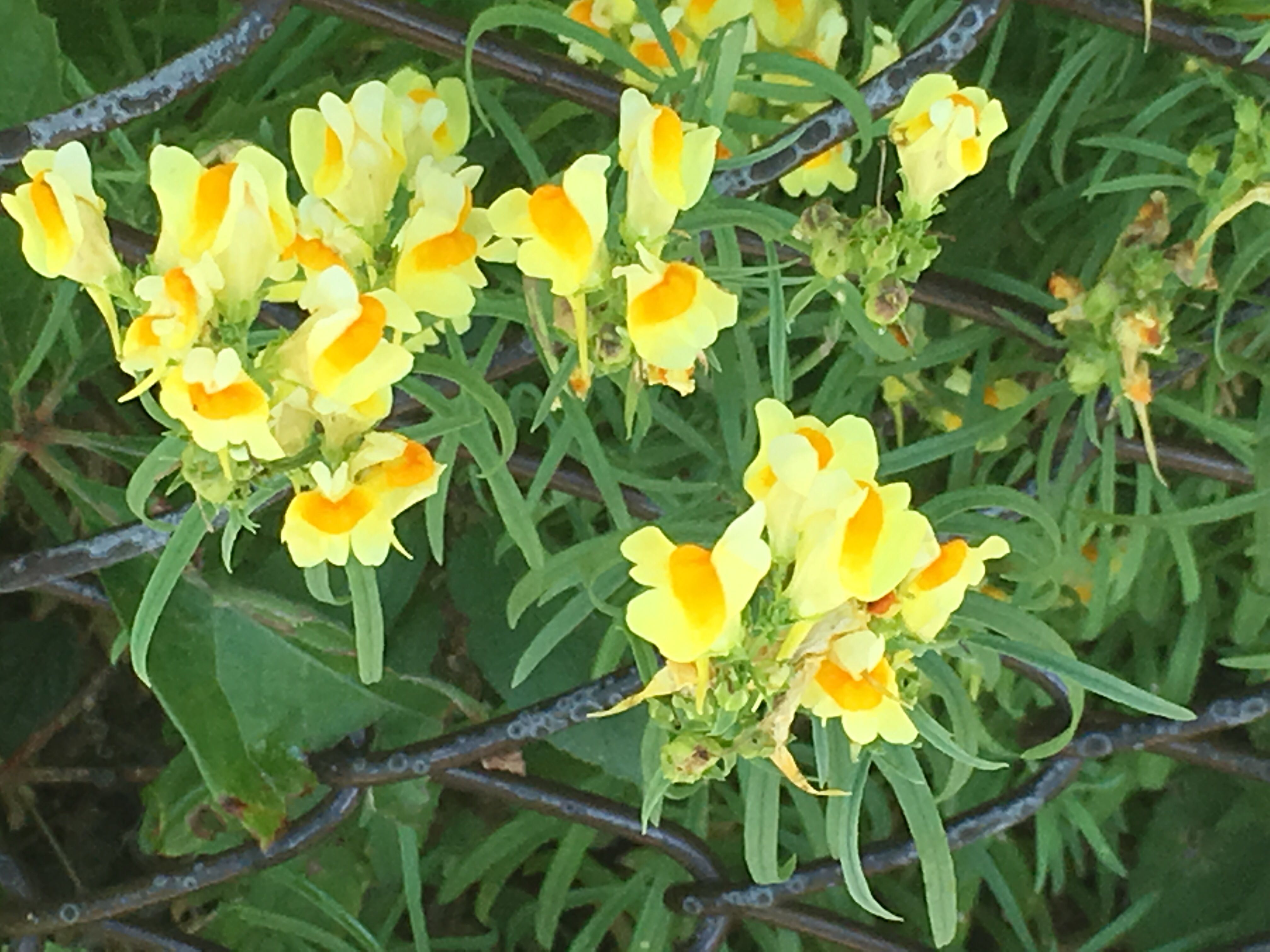
Butter and eggs, or common toadflax (Linaria vulgaris Mill) was introduced by European settlers in the 1800s. Unfortunately, its bright flowers are considered invasive.

Butter and eggs, (Linaria vulgaris Mill) was introduced by European settlers in the 1800s. Its bright flowers are now considered invasive.

Native heath asters (Symphotrichum ericoides) are at their peak bloom now.

Native heath asters (Symphotrichum ericoides) are at their peak bloom now.

Later, in the afternoon, I walk the hilly paths. The sun is warm, an easterly breeze is mild. Barn swallows twitter overhead, swooping and soaring in pursuit of small insects. At a nearby pond, a dozen Canada geese perch on a half-submerged snag and a green heron alights briefly at the tip top of a skeletal maple. Close to the ground, small butterflies flutter across the wildflowers bordering the pond.

A red admiral (Vanessa atalanta) sips nectar from New England asters (Symphotrichum novae-anglica).

A red admiral (Vanessa atalanta) sips nectar from New England asters (Symphotrichum novae-anglica).

I sit in the sun to breathe in the peaceful scene and soak up the sunlight. Its radiant heat soothes and relaxes. I miss it so much during the long winter. I wish these late-summer afternoons would never end. I am grateful to be outside surrounded by this abundance of life.

pondth2


Garden Damsels and Dragons

A thread-slender eastern forktail (Ishnura verticalis) damsel fly.

A thread-slender eastern forktail (Ischnura verticalis) damsel fly.

The early morning garden is a place of shadows and peace. Cardinals, goldfinches, mourning doves and house wrens ring out their song in neighborhood trees. Already, bumblebees work the flowers — bluebells, bee balm, hyssop and milkweed — buzzing softly.  Almost camouflaged in the deep green shadows, a tiny damselfly perches atop a milkweed leaf. An eastern forktail (Ischnura verticalis), its slender body, less than an inch long, is mint green, blue and black. The wings are folded over its back in damselfly style.

Across the backyard, a much larger dragonfly relative hangs from the edge of a hosta leaf, wings held away from its body horizontally. It is a green darner (Anax junius), one of the largest dragonflies in the world at three inches in length and with a wingspan of more than four inches. Its spring-green head and thorax hide it among the hosta. It “wing-whirs”, or rapidly vibrates its wings to warm up its flight muscles — and that movement catches my eye and reveals its presence.

A common green darner (Anax junius) is one of the largest dragonflies.

A common green darner (Anax junius) is one of the largest surviving dragonflies.

Damselflies and dragonflies are members of the order Odonata, which means “toothed ones”. Unlike the peaceable bumblebees, they are fierce predators, hunting for small insects in the garden and eating many pests. Odonata are descended from some of Earth’s most ancient creatures. Fossils of ancient dragonfly ancestors (Protodonata) date back 325 million years. Scientists believe that bees evolved more recently — about 120 million years ago; the oldest bee fossil discovered so far is about 100 million years old. Both insect families contribute to a healthy garden.