About Those Bumblers

My first encounter with a bee was not a happy one.  I was five years old and Mom was mowing the clover-filled front lawn.  I tried to step carefully in the clover, but my flipflop flipped up a honey bee that stung the side of my big toe.  I was hysterical when I felt the jolt of pain, looked down and saw the bee on my toe trying to pull its stinger out. According to Mom, I wailed loudly enough to bring the neighbors outside.  I didn’t care that the honey bee stung out of self-defense and that it would die.  I was petrified of bees and their kin for many years and always avoided them.

Honeybee (Apis melifera) collecting pollen from sedum "autumn joy".

Honeybee (Apis melifera) collecting nectar and pollen from sedum ‘autumn joy’.

It wasn’t until I was an adult and a gardener that I grew to like bees — especially bumble bees. Why bumble bees?  It comes down to temperament.  Bumble bees are large, round, fuzzy, noisy and very intent on collecting nectar.  Their sting packs a wallop, but bumble bees are even-tempered and rarely sting unless they feel threatened.  Many times I’ve accidentally knocked a bumbler out of a flower;  the bee ignored me, flew back into the flower and resumed pollination.  Once, a neighbor was cutting back old hosta stems, squeezed the faded blossoms in the process, and was stung by a bumble bee that was deep inside of a blossom. In decades of gardening, that is the only time she’s been stung by a bumble bee.
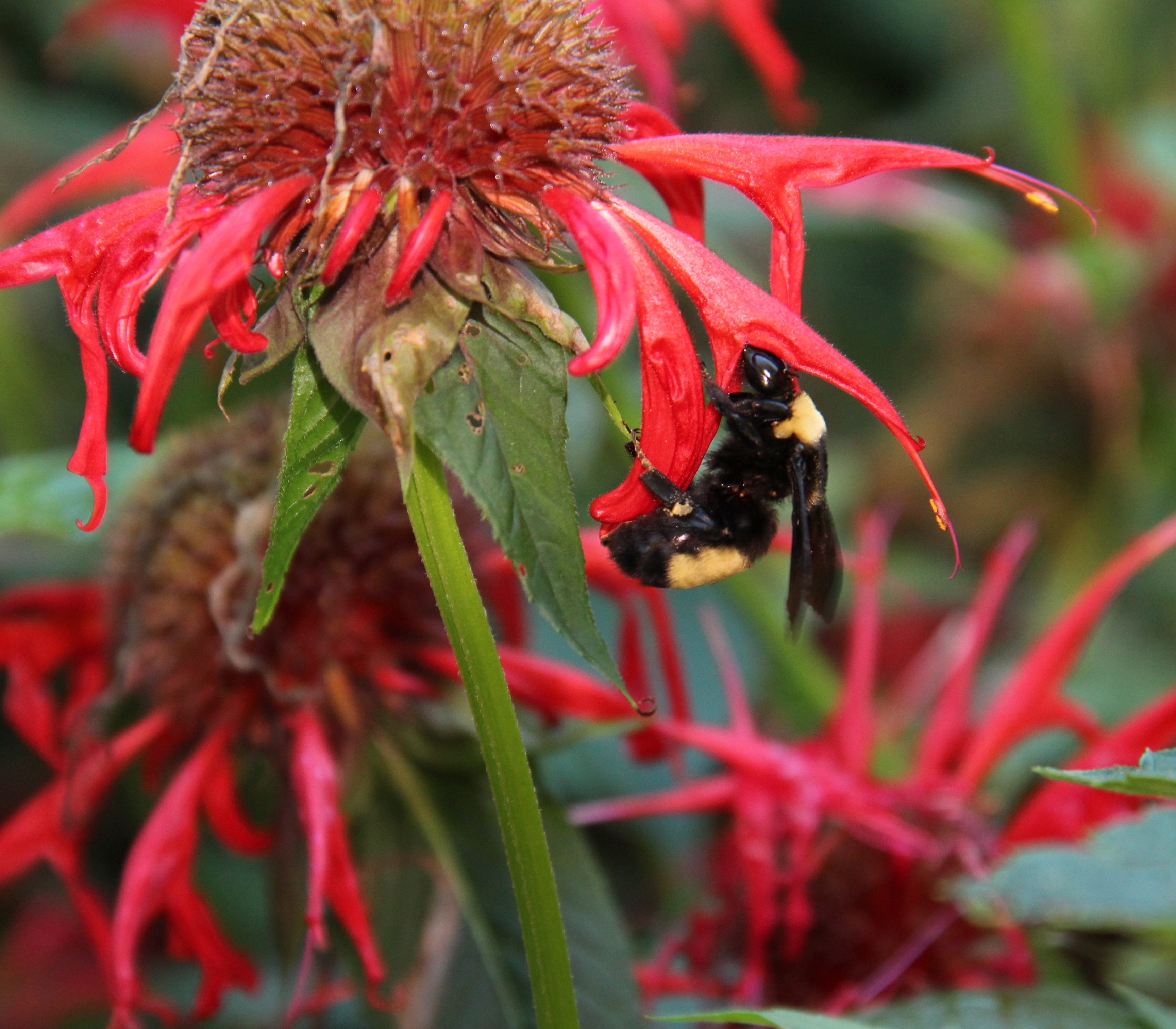
A bumble bee (Bombus ----) nectars in monarda "Jacob Kline".

A black-and-gold bumble bee (Bombus auricomus) nectars in monarda ‘Jacob Cline’.

A tricolored bumble bee (Bombus ternarius) rests on red clover.

A boreal bumble bee (Bombus borealis) rests on red clover (Trifolium pretense).

Common eastern bumble bee (Bombus impatiens) on Veronica.

Common eastern bumble bee (Bombus impatiens) on Veronica ‘Red Fox’.

Bumble bees are native to North America, unlike honey bees, which were brought to the United States from Europe.  Covered with thick, soft hair, bumble bees vibrate their strong flight muscles to raise their body temperature and fly at colder temperatures than other bees; as low as 41˚F (5˚C) in comparison to about 57˚F (14˚C) for honey bees.  They pollinate flowers and crops both earlier and later in the season than most species.  I love the sound of their buzzing in the autumn garden, which is much quieter now than the busy insect-filled garden of just two weeks ago. The bumble bees will fly until early November if the weather stays mild.  Then, only the young queen bees will overwinter to create new colonies next spring.  I miss all of the bee activity during the winter and look forward to seeing a queen bumble bee collect pollen and nectar in the first crocus next April.
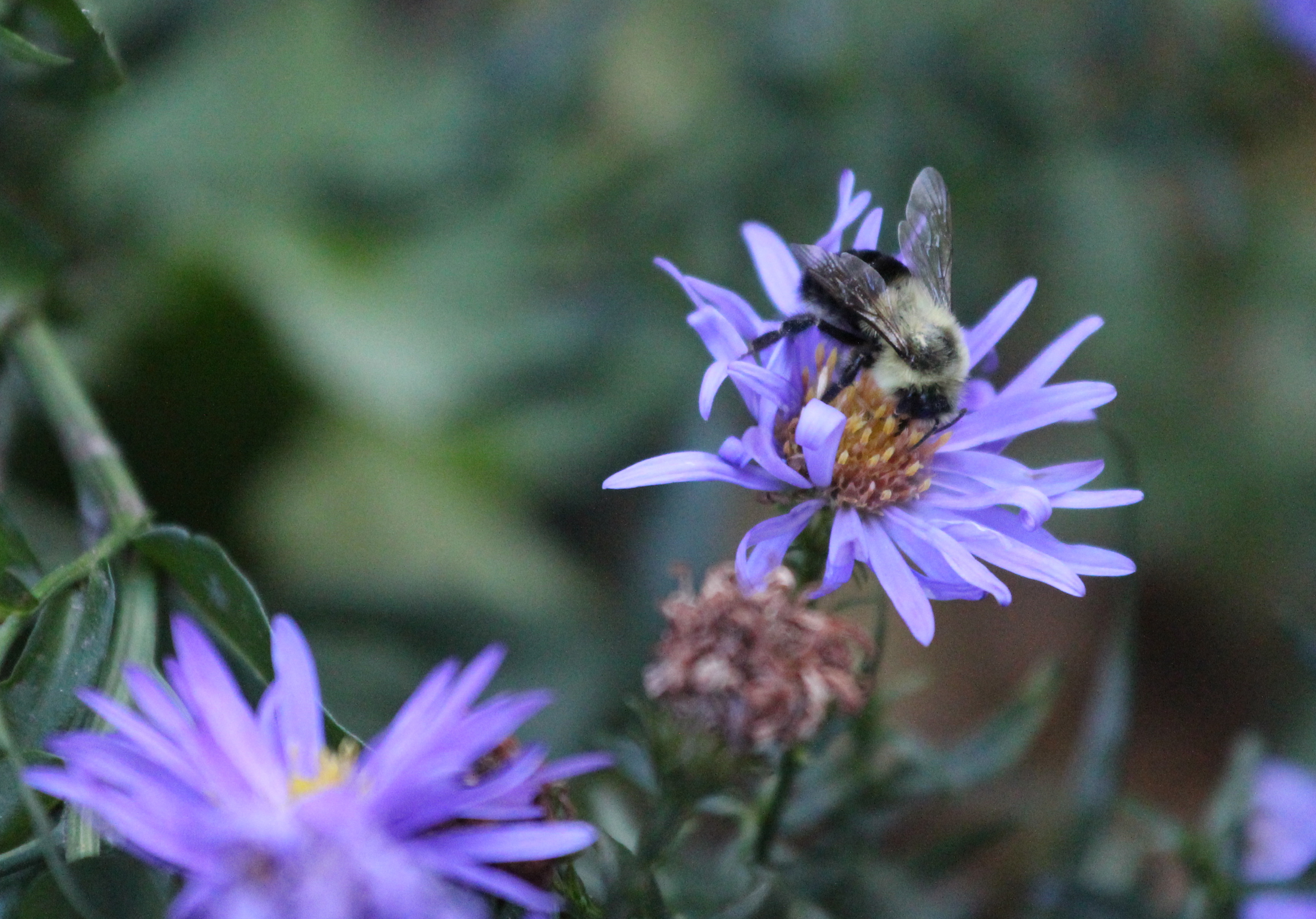
Common eastern bumble bees are active in autumn, even on cloudy, cool days.

Common eastern bumble bees are active in autumn, even on cloudy, cool days.
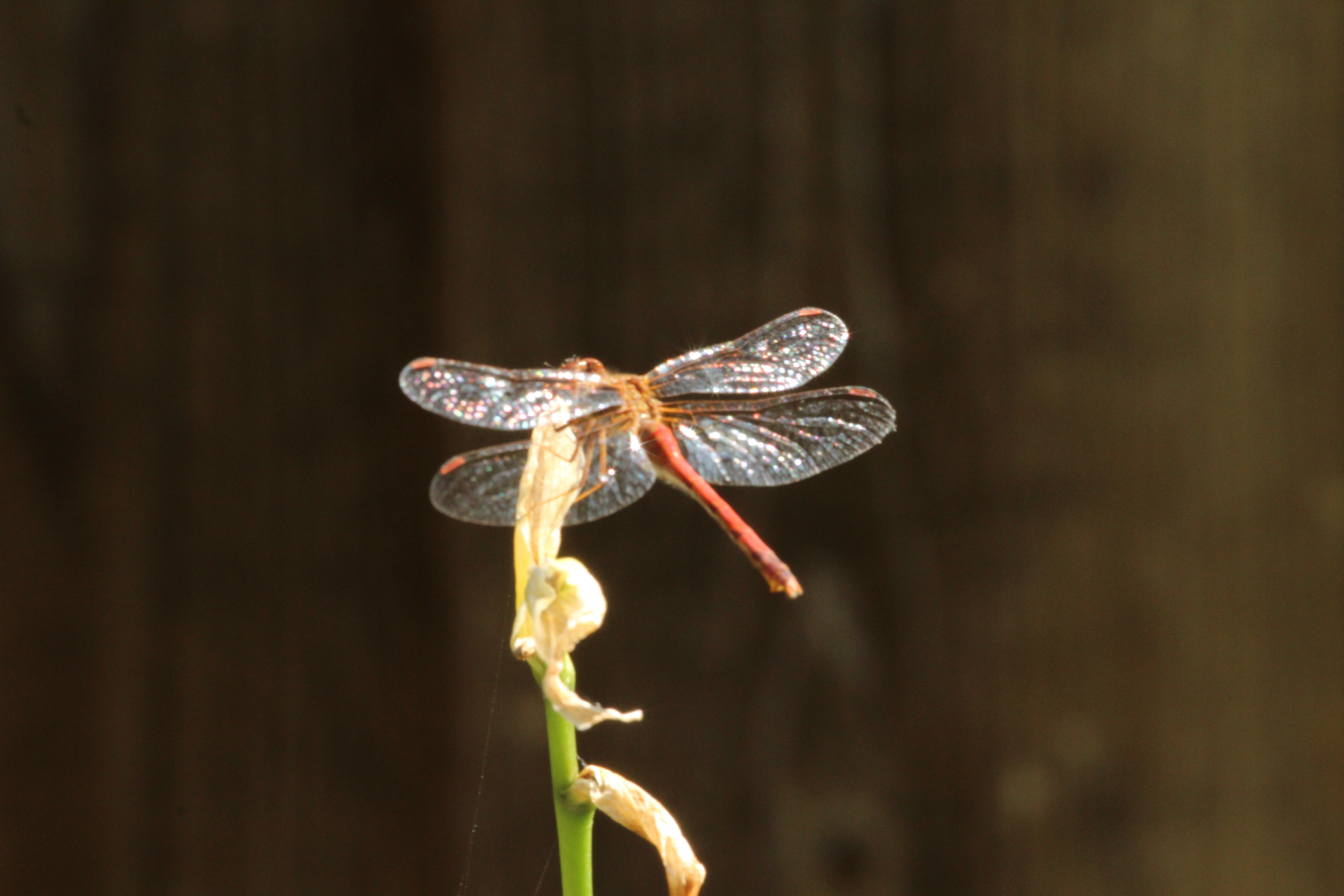
Autumn Meadowhawk

The late afternoon September sun is warm and soothing.  Cicadas whine loudly and a monarch butterfly nectars in our patch of sweet Joe-Pye.  But another garden critter catches my eye this afternoon:  the yellow-legged meadowhawk dragonfly.

Adult male autumn meadowhawks are red with few or no markings on the abdomen.

Adult male autumn meadowhawks are red with few or no markings on the abdomen.

Also known as autumn meadowhawks (Sympetrum vicinum), their bodies flash gem-like red, orange and amber in the sun. Perched on daylily stalks, balloon flower seed pods and hosta stems, each dragonfly swivels its head watching for flies, small bees and wasps, and other soft-bodied insects.

Adult autumn meadowhawks are present from August into early November in Minnesota.  The species is common across much of the United States and southern Canada, and often is seen in yards and gardens. Their yellow or brownish legs set them apart from other types of meadowhawks, which have black or dark-striped legs. They also have minimal or no black marks on the abdomen.

Females are distinguished by the ovipositor visible near the end of the abdomen.

Females are distinguished by the ovipositor visible near the end of the abdomen.

When I see a meadowhawk flash in the garden, I think of the ancient history of these creatures. Scientists believe that early dragonflies (Protodonata) first inhabited Earth 300 million years ago.  They speculate that Earth’s warmer temperatures, and the atmosphere’s higher oxygen content, contributed to insects growing larger than today.  Fossils show that some ancient dragonflies had a wingspan of two feet. Today, most of the larger dragonflies have a wingspan of two to five inches, and meadowhawks are smaller yet at about one inch.  What they lack in size they make up for in the sparkle of sun on their transparent wings and the jeweled designs of their bodies.  And, after watching a meadowhawk grind up a small bee in its jaws, I’m glad they’ve evolved into smaller predators!

Sunlight captures the beauty of this meadowhawk's wings.  The ovipositor and the light red abdomen with faint black markings identifies it as a female autumn meadowhawk.

Sunlight captures the beauty of this meadowhawk’s wings. The ovipositor, yellowish legs and the light red abdomen with faint black markings identify it as a female.

August’s Beauty

August’s warm, sunny days hum with insect activity.  Many kinds of bees and wasps, butterflies and grasshoppers inhabit the colorful swaths of wildflowers and grasses along country roads.  The buzzing of bees is soft against the louder trills and whirs of crickets, grasshoppers and gray tree frogs.  Scents of sweet clover and grass fill the air. Here is a sampling of the beauty my husband and I enjoyed when we walked along the road near our cabin on the Snake River in Pine County, MN, last weekend.

Great spangled frilillary on native monarda.

Great spangled frilillary (Speyeria cybele) on native monarda.

Woodland sunflowers grow in shadier patches along the road.

Woodland sunflowers (Helianthus divaricatus) grow in dappled sun along the road.

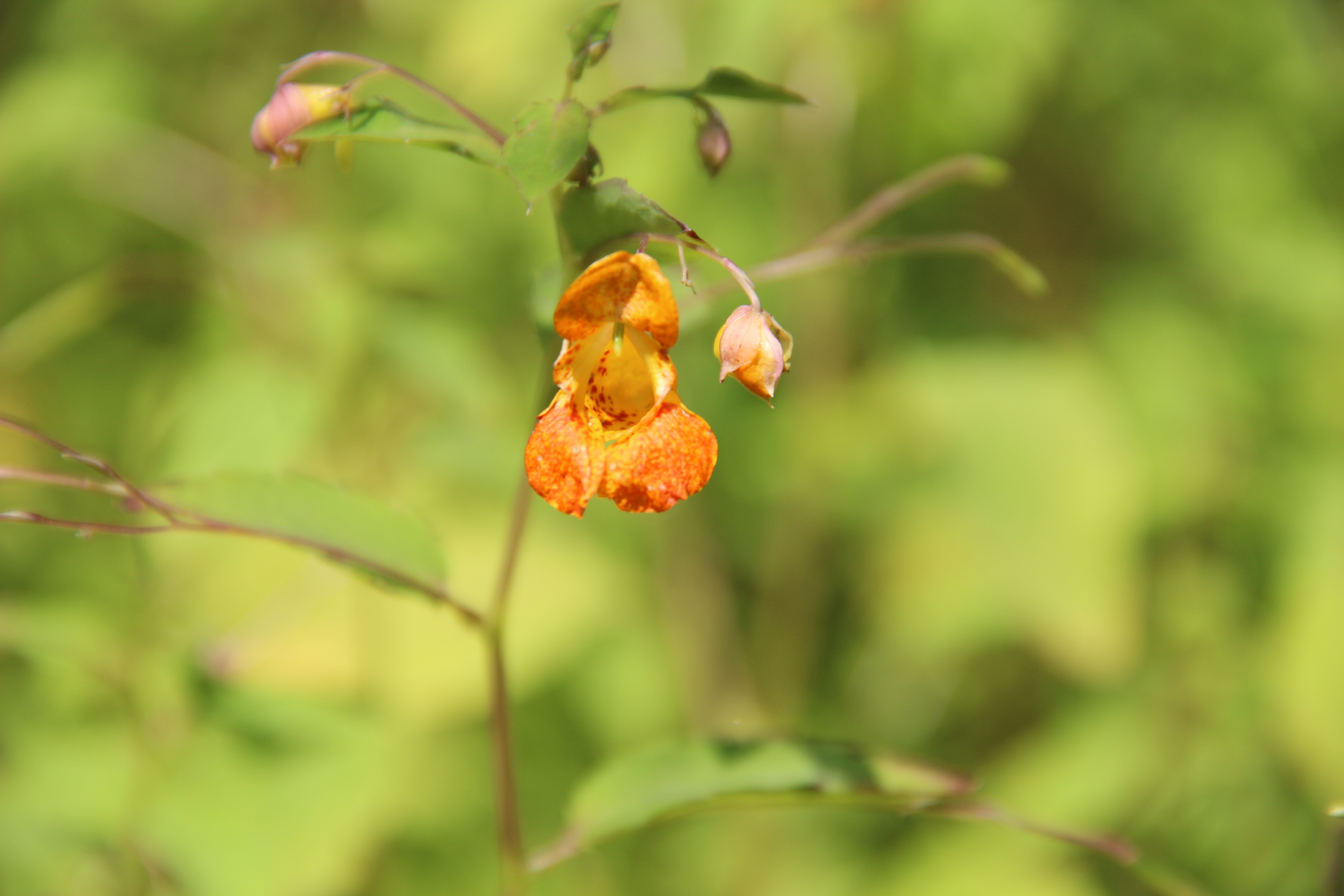
Jewelweed or spotted touch-me-not grows in moist, sunny spots.

Spotted jewelweed or spotted touch-me-not (Impatiens capensis).

Native big bluestem is also called turkey foot grass due to the shape of the seed heads.

Native big bluestem (Andropogon gerardi) is also called turkeyfoot grass due to the shape of its seed heads.

This common wood-nymph's bright eyespot caught my attention.

This common wood-nymph’s (Cercyonis pegala) bright eyespot caught my attention.

Non-native rabbit-clover is a low-growing plant that provides color along dusty country roads.

Non-native rabbit-clover (Trifolium arvense) is a low-growing plant that provides color along dusty country roads.


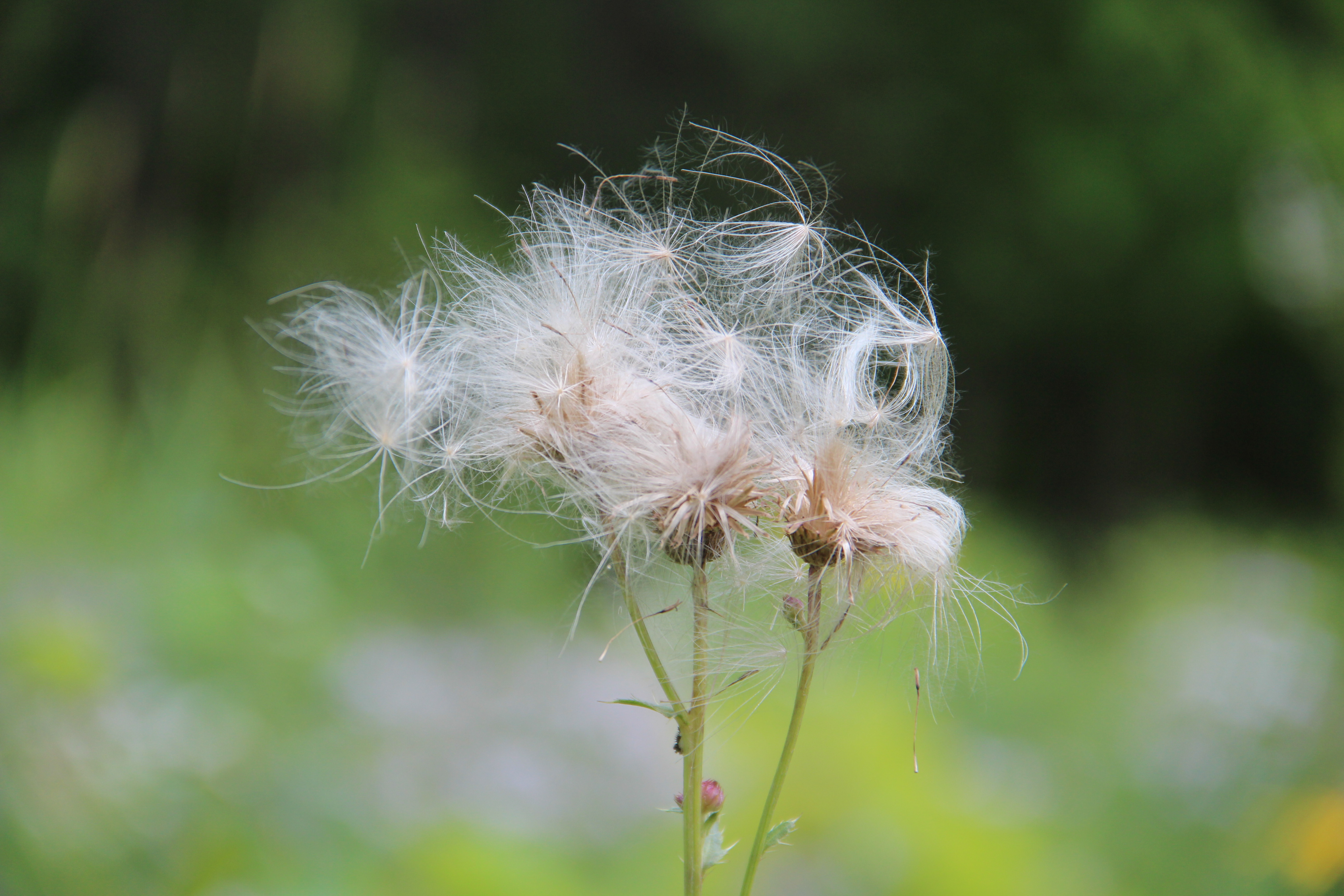
The native field thistle is a favorite of bees and butterflies.

The native field thistle (Cirsium discolor) is a favorite of bees and butterflies.

The field thistle's "down" is used by American goldfinches to line its nest and the seeds are a favorite goldfinch food.

Field thistle’s “down” is used by the American goldfinch to line its nest and the seeds are a favorite goldfinch food.

A white-faced meadowhawk watches for prey.

A white-faced meadowhawk (Sympetrum obtrusum) watches for prey.

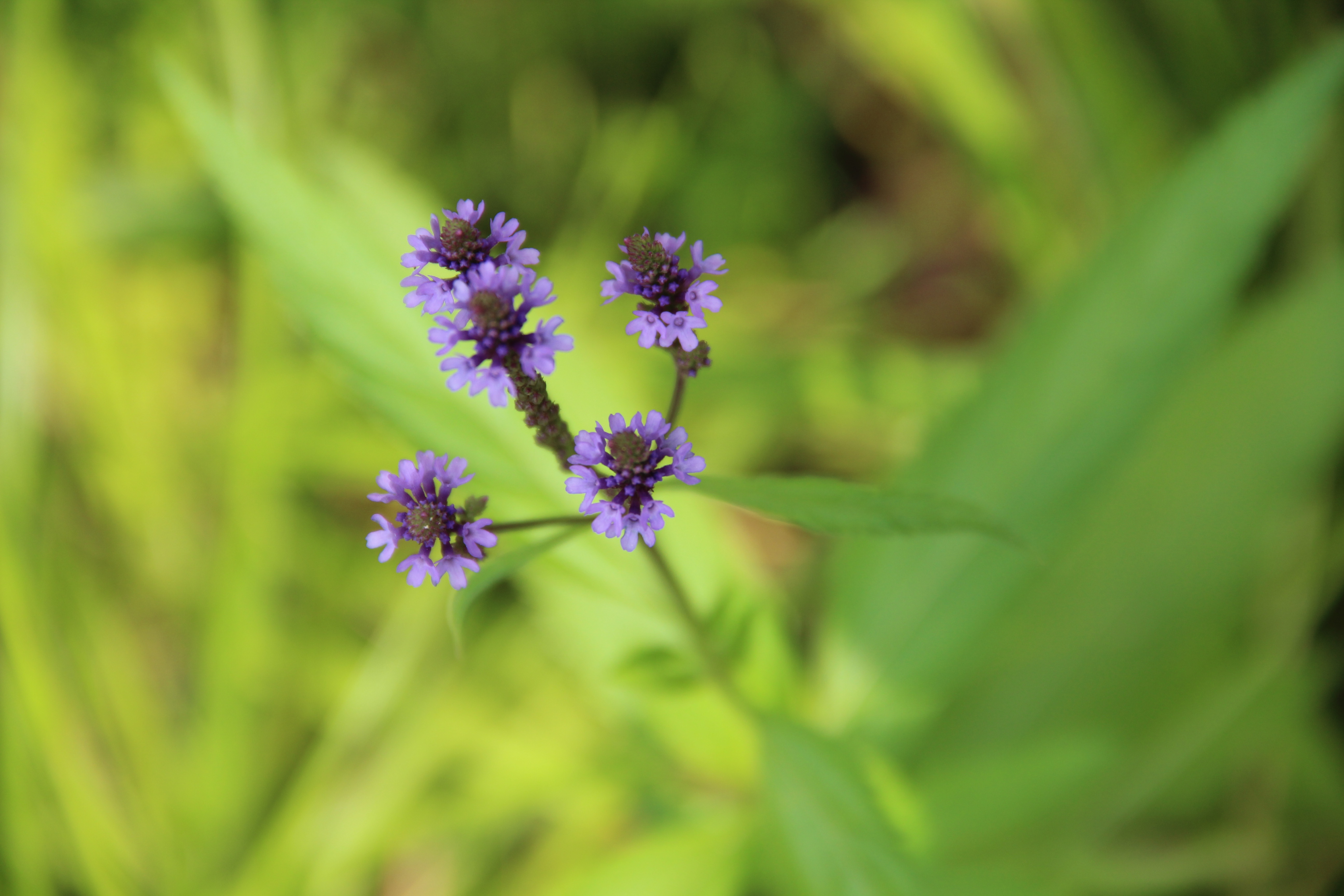
Swamp or blue vervain prefers moist, loamy soil and lots of sun.

Swamp or blue vervain (Verbena hastata) prefers moist, loamy soil and lots of sun.

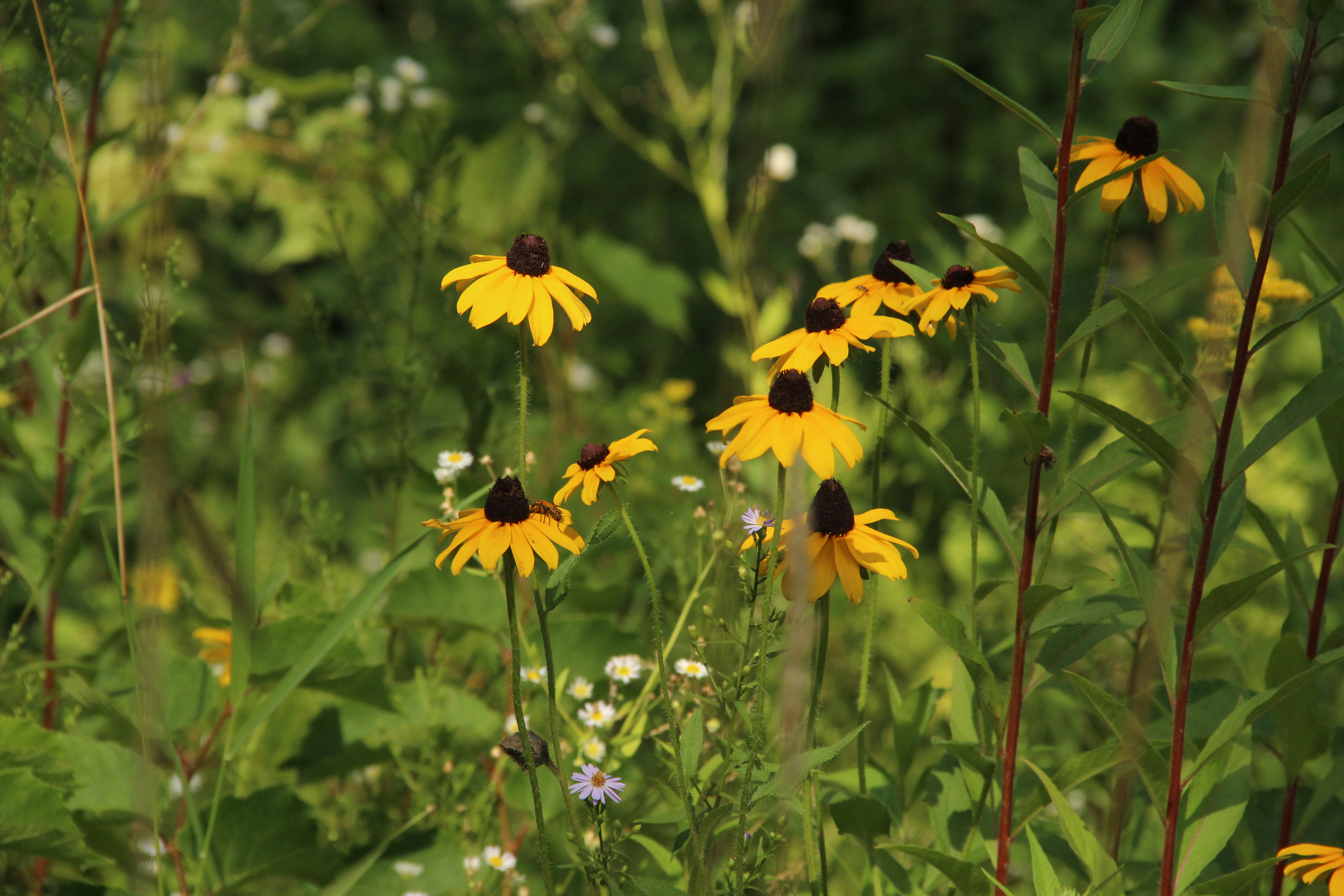
Brown-eyed Susan's and a few early-blooming asters.

Black-eyed Susan’s (Rudbeckia subtomentosa) or sweet coneflower and a few early-blooming asters.

Priarie or western ironweed (Vernonia fasiculata).

Priarie or western ironweed (Vernonia fasciculata).

Hog peanut is a member of the pea family. (More to come in a later post.)

Hog peanut (Amphicarpaea bracteata) is a member of the pea family.

Eastern-tailed blue (Cupido comyntas)

Eastern-tailed blue (Cupido comyntas).

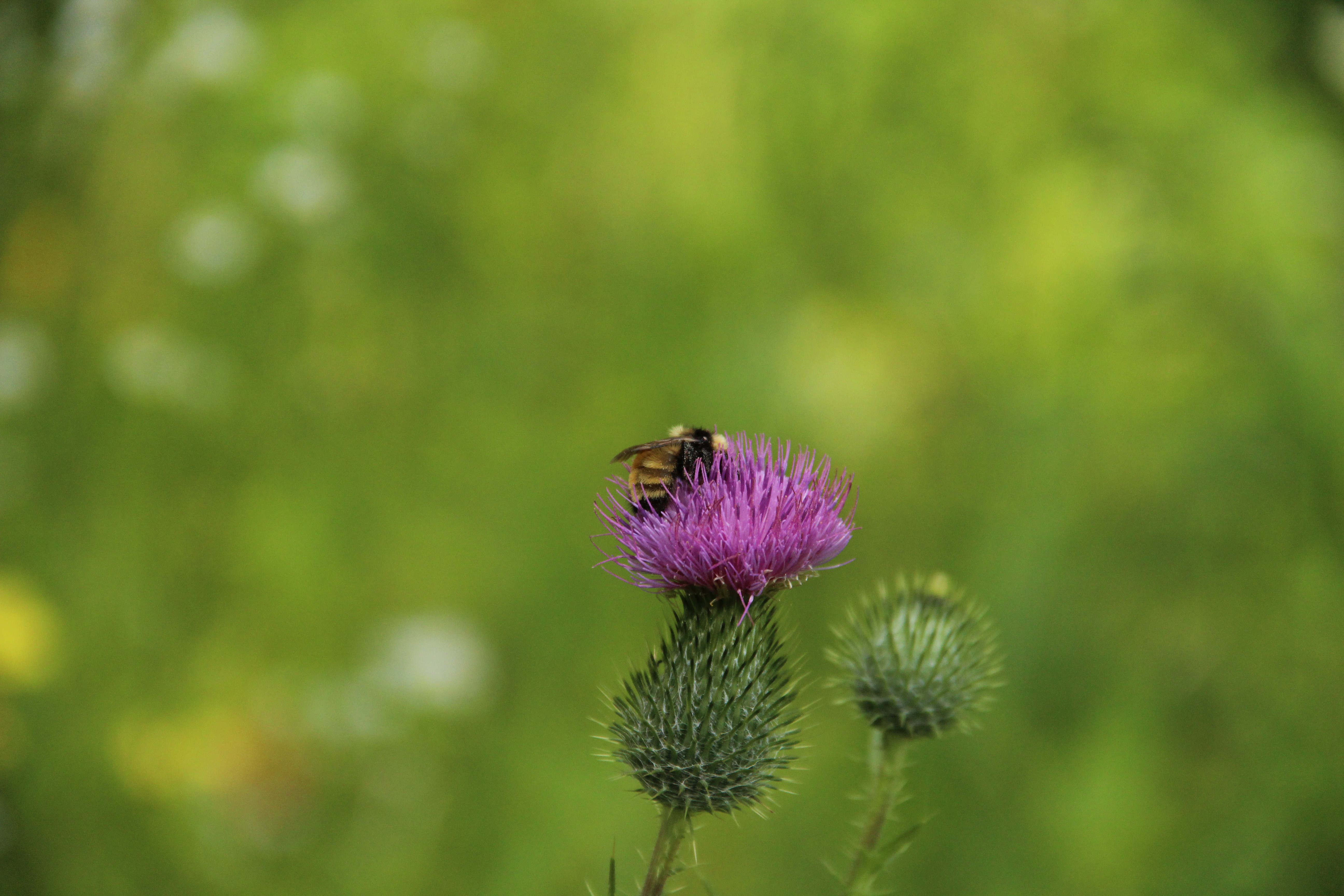
European bull thistle with bumble bee.

European bull thistle (Cirsium vulgare) with bumble bee.

First buds of sweet Joe-Pye begin to open.

First buds of sweet Joe-Pye (Eutrochium purpureum) begin to open.

Male American redstart warbler.

Male American redstart warbler (Setophaga ruticilla).

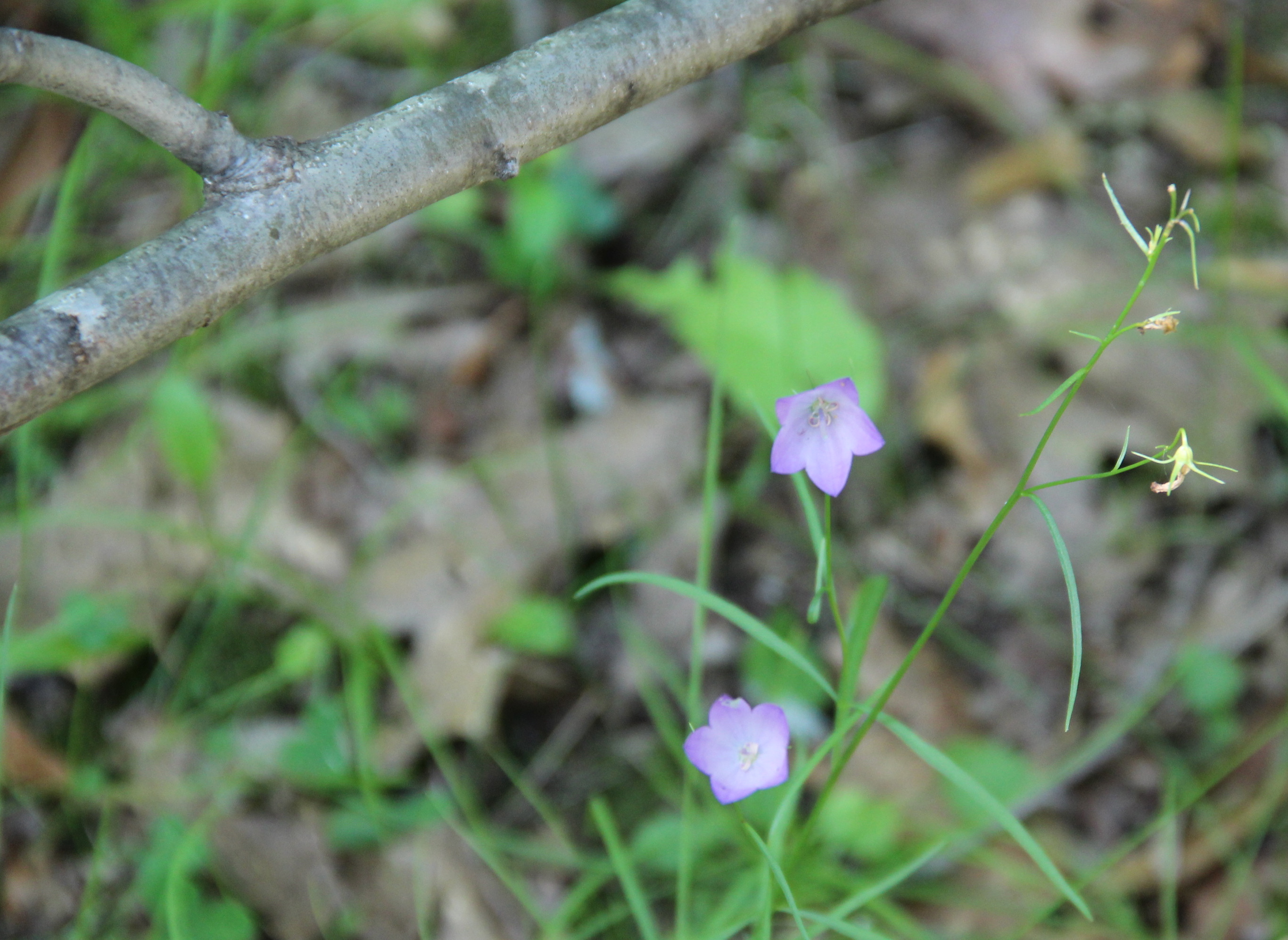
Harebells

Harebells growing on the banks of the Snake River in east central Minnesota.

Harebells grow on the bank of the Snake River in east central Minnesota.

I first saw harebell flowers as a young teen hiking the north shore of Lake Superior in Minnesota.  They grew out of a tiny crevice in the lichen-covered basalt slabs along the lake, and the delicate blossoms mirrored the violet-blue water on that sunny midsummer day.  Next to them, in the shallow depressions in the rock, were pools of water in which tiny tadpoles swam.  I was enchanted by all of it.  Years later when my family built a cabin near the Snake River in Pine County, MN, I was delighted to find harebells growing on the riverbank and along the woodland edges.

Harebells are also known as thimbles, bluebells of Scotland, heath bells and bluebells.

Harebells are also known as thimbles, bluebells, bluebells of Scotland, wind bells and heath bells.

Harebells (Campanula rotundifolia) are native to the northern regions of the United States, Europe and Asia.  They grow on slender upright stalks ranging in height between 6 and 20 inches. Narrow grass-like leaves cover most of the stalk; round leaves at the base of the plant often die before the flowers bloom.  Milky sap in the stems is another identifying characteristic. The delicate bells begin blooming in June and continue through the summer.  We usually see a modest second bloom in the fall. Besides being beautiful, harebells are a source of nectar to many species of bees during the summer and I’ve noticed bumblebees frequenting them during the second bloom in autumn.  Other common names for harebells include:  thimbles, wind bells, heath bells, bluebells and bluebells of Scotland.

Harebells blossom from June through summer, and often bloom again in autumn.

Harebells blossom from June through summer, and often bloom again in autumn.

Carrot Wasp

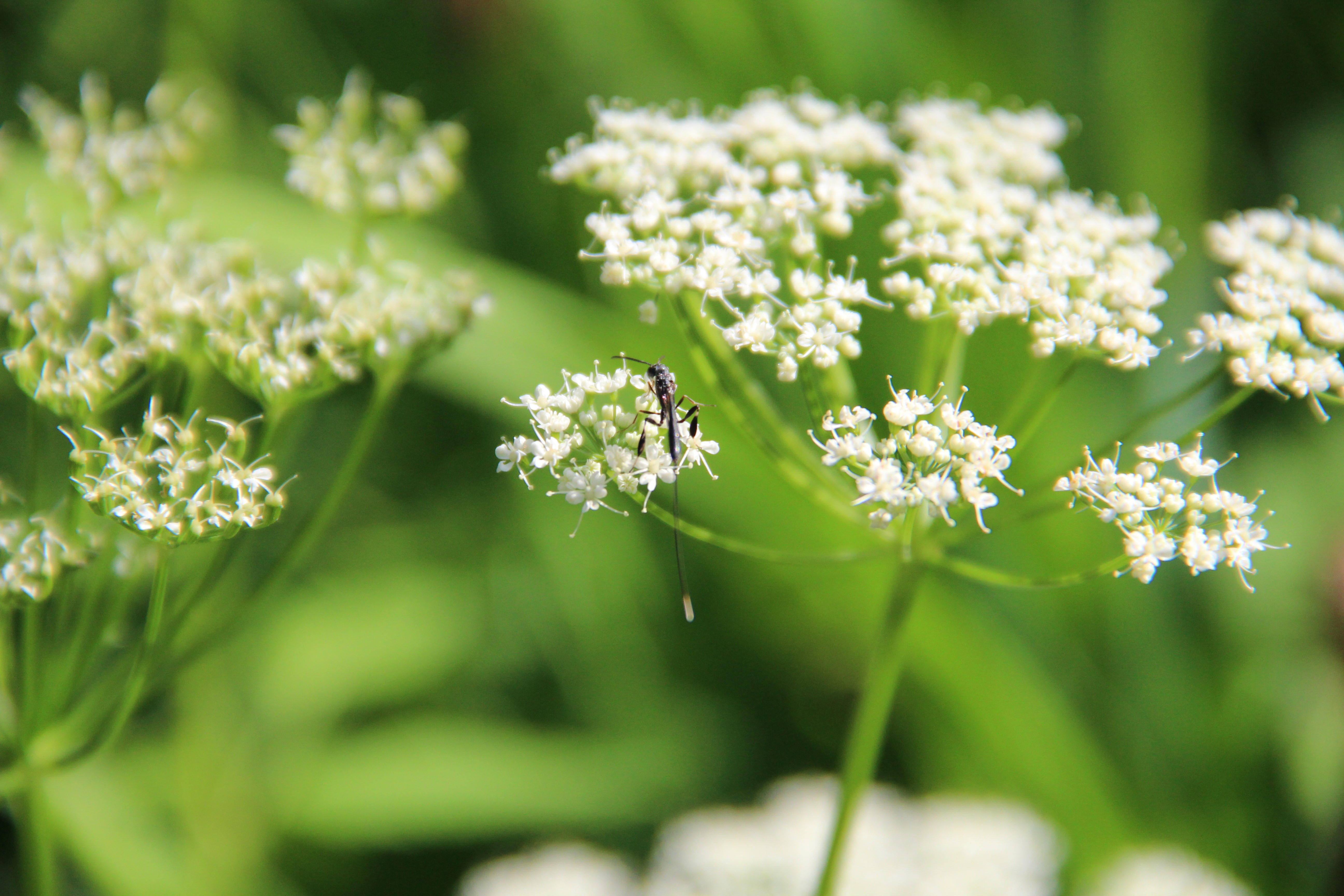
A slender carrot wasp nectars on agiopoda.

A slender female carrot wasp nectars in the early evening sun.

One recent evening, a thread-thin burst of movement caught my eye in our garden.  It was a wasp —  slender, agile and fast as it nectared in the early evening sun; and unlike most wasps, it held its abdomen at an unusual vertical angle.  It was too thin and small to fit into the familiar wasp categories.  After searching several resources, I identified it: a carrot wasp in the family Gasteruptiidae spp.  (There are 15 different species in North America.)  Adults feed on the nectar and pollen of plants in the carrot family, especially wild carrots and parsnips.

Carrot wasps have enlarged back legs and red-orange bands on the abdoment.

Carrot wasps have enlarged areas on the back legs and the female has a long ovipositor.

Carrot wasps are a type of parasitic wasp.  Rather than building a colony, or their own individual cells, they seek out the nests of other solitary bees and wasps, such as digger bees and mud daubers.  A female carrot wasp punctures a cell of the other bee or wasp’s nest, inserts her long ovipositor into the cell and lays her egg.  Depending on the type of carrot wasp, when its egg hatches, the larva will eat the host bee/wasp’s larva, eat the larva’s food, or do both!

Besides the abdomen being held vertically, other identifying characteristics include a visible, prominent neck, a black body with reddish-orange bands on the abdomen, and enlarged areas on the back legs.  These wasps are most common during June, July and August.

Wild Columbine

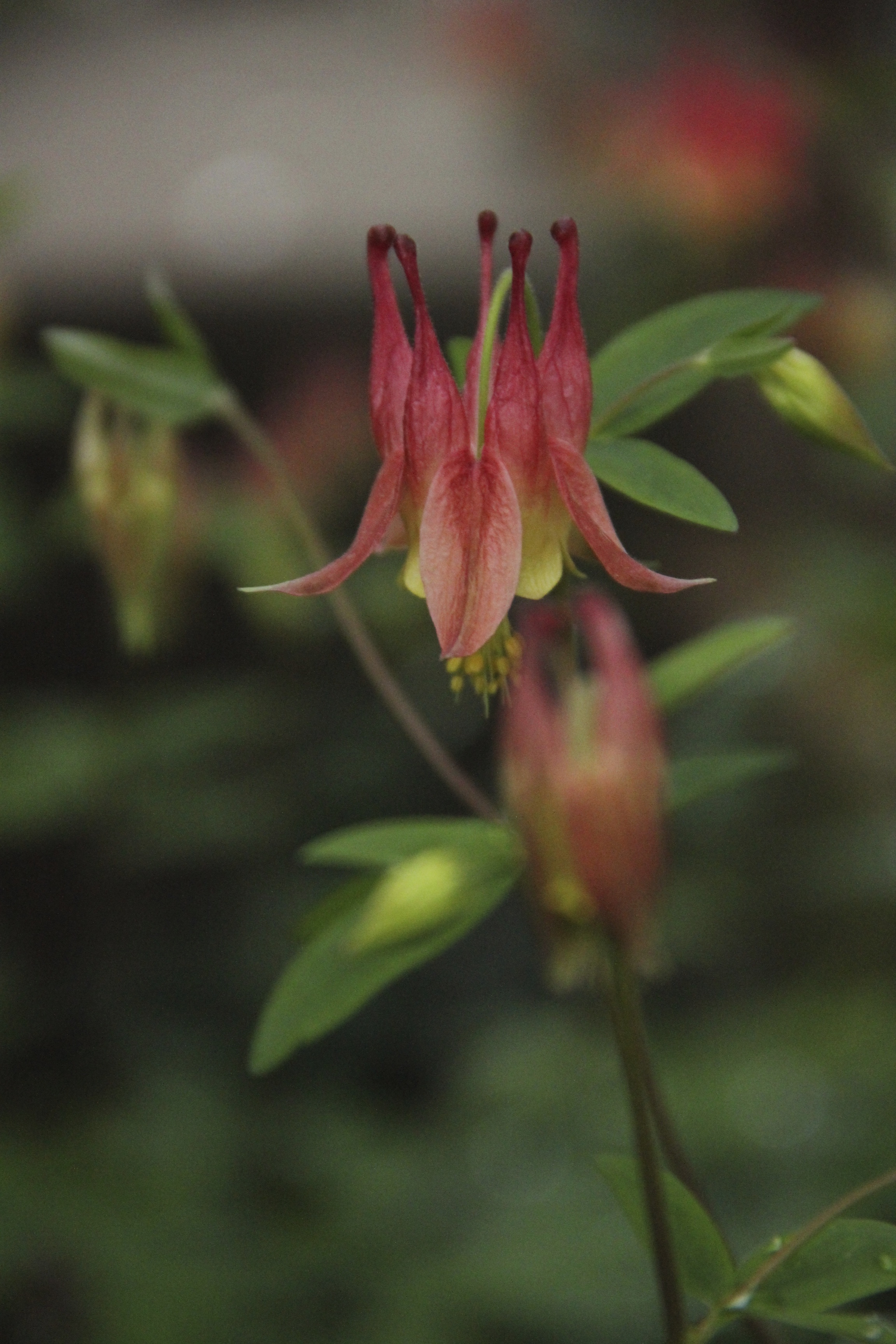
The first spring that we lived in our home, a large patch of wild columbine (Aquilegia canadensis) bloomed outside the back porch. The red-orange and yellow blooms of wild columbine dominate woodlands and rocky areas of Minnesota and eastern North America in early June.  Also called Canada columbine, or eastern red columbine, these native wild flowers are a favorite source of nectar for hummingbirds and bees.

Canada columbine (Aquilegia canadensis) is native to eastern North America.

Canada columbine (Aquilegia canadensis) is native to eastern North America.

The entire patch in our yard was native Canada columbine.  That summer, I planted a small area of blue and white Colorado blue columbine (Aquilegia caerula), native to the western United States, in a different section of the yard.

Over time, nature and the bees produced lovely hybrid flowers, ranging from dark purple, to violet, a cranberry color, and pale, lemony pink.  Individual columbine do not live a long time, so the colorful hybrids usually last three or four years.  However, Canada columbine produce dozens of shiny black seeds that keep the original native wildflower growing abundantly.  The seeds often take root in small cracks in our stone garden wall, similar to the rocky habitat they favor in nature.  But they also pop up in many different spots around the backyard in both sun and shade.

A cranberry-hued hybrid columbine thanks to the bees.

A cranberry-hued hybrid columbine — thanks to the bees.

A lavender hybrid of Canada columbine and Rocky Mountain columbine.

A violet hybrid of Canada columbine and Colorado blue columbine.

The scientific and common names for this plant reflect the blossom in two different ways.  Aquilegia, from the Latin term for eagle, represents the flower as the talons of an eagle.  I like the common name columbine, which is derived from Columba, the Latin for dove.  Each section of the flower looks like the outline of a dove — from its tiny head, down through the oblong body and pointed tail.  The entire blossom resembles a group of five doves.

The "five doves" form the blossom and give columbine its common name.

The “five doves” form the blossom and give columbine its common name.

Whether you see the eagle or the dove, columbine is a beautiful spring wild flower and an important source of nectar for insects and hummingbirds.  It also adapts well to gardens, especially rock and wall gardens.  The colorful flower, scalloped foliage and large seed pods make it an interesting plant for much of the spring and summer.

The sticky green seed pod will ripen an split open to reveal shiny black seeds.

The sticky green seed pod will ripen and split open to release shiny black seeds.

Frost Flowers — and a Few Wild Ones

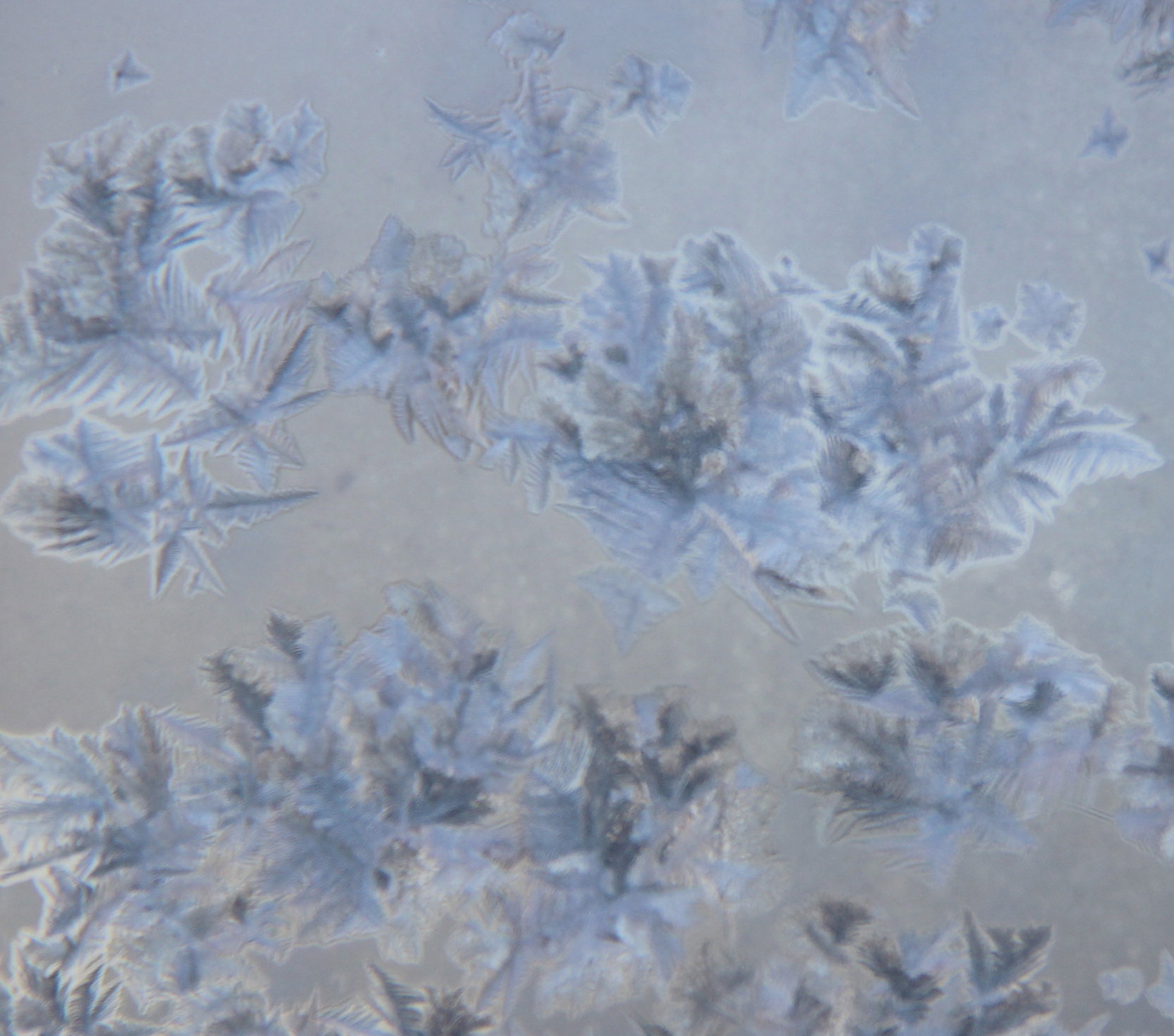
Crystalline flowers flow across the storm windows in our north-facing bathroom.  In this subzero weather, the moisture from our steamy morning showers seeps through the old, loose-fitting decorative windows and condenses as frost on the cold glass panes that cover the screens.  The patterns that take shape depend on the amount of dirt, scratches and residue on the glass, and the humidity level and temperature of the air.  These patterns are often called frost flowers, roses or ferns.

frost1

frost3

According to Halldor Svavarsson at the Icelandic Web of Science the most commonly formed pattern of crystallization is hexagonal because it requires the least amount of energy.  If the moisture settles and freezes quickly, the roses will be small and close together.  If not, the roses may be fewer in number, larger in size and may spread out on the glass.

frost4

frost5

frost2

Frost roses and ferns are delicate and lovely, but I prefer nature’s wildflowers.  Here are a few from last summer:

Monarda fistulosa also known as bergamot and beebalm.

Fragrant, spicy wild bergamot or bee balm (Monarda fistulosa).

Vernonia fasciculata also know as smooth ironweed and prairie ironweed.

Prairie or smooth ironweed (Vernonia fasciculata).

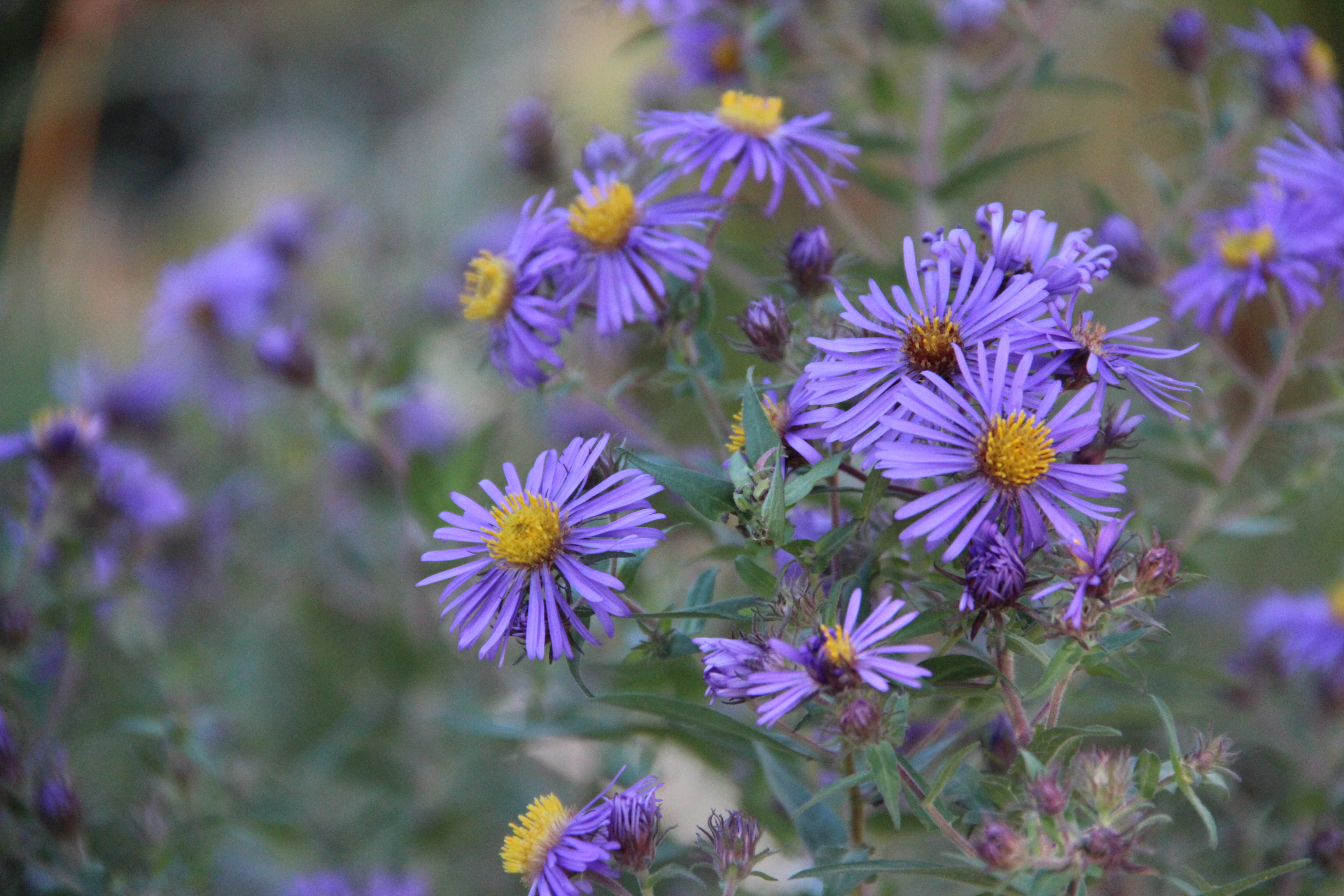
New England aster also known as Michaelmas Daisy (Symphyotrichum novae-angliae).

New England aster or Michaelmas Daisy (Symphyotrichum novae-angliae).

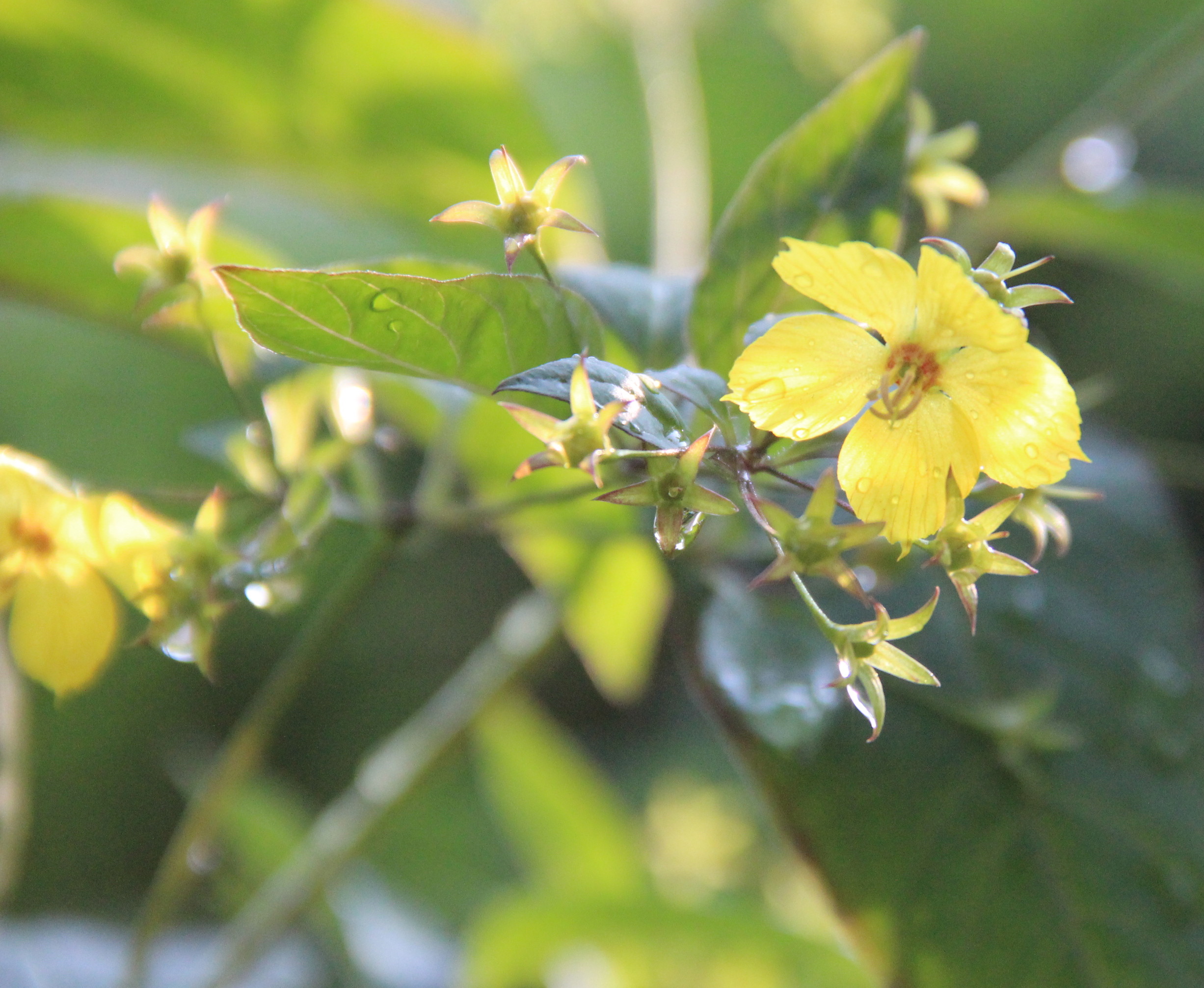
Fringed loosestrife (Lysimachia ciliata) a native perennial that is unrelated to the non-native, invasive purple loosestrife.

Native fringed loosestrife (Lysimachia ciliata) is unrelated to the non-native, invasive purple loosestrife.

© Beth and Nature, Garden, Life, 2013-2014.  All photographs and text are created by Beth unless specifically noted otherwise.  Excerpts and links may be used as long as full and clear credit is given to Beth and Nature, Garden, Life with specific direction to the original content.  Please do not use or duplicate material from Nature, Garden, Life without written permission from Beth.

Nature: Looking Back at 2013

Snow, ice and cold blanket Minnesota now, but last June through October the woodlands bustled with life.  From unfurling ferns, to hummingbirds and harebells, to the changing Snake River and autumn woods in Pine County, MN, here are a few of nature’s simple gifts in 2013 that I recall with gratitude — and look forward to seeing again in 2014.  Happy New Year!

Trillium grandiflorum blooms at the base of a burr oak.

Large-flowered trillium (Trillium grandiflorum) and early meadow rue (Thalictrum dioicum) bloom at the base of a burr oak.

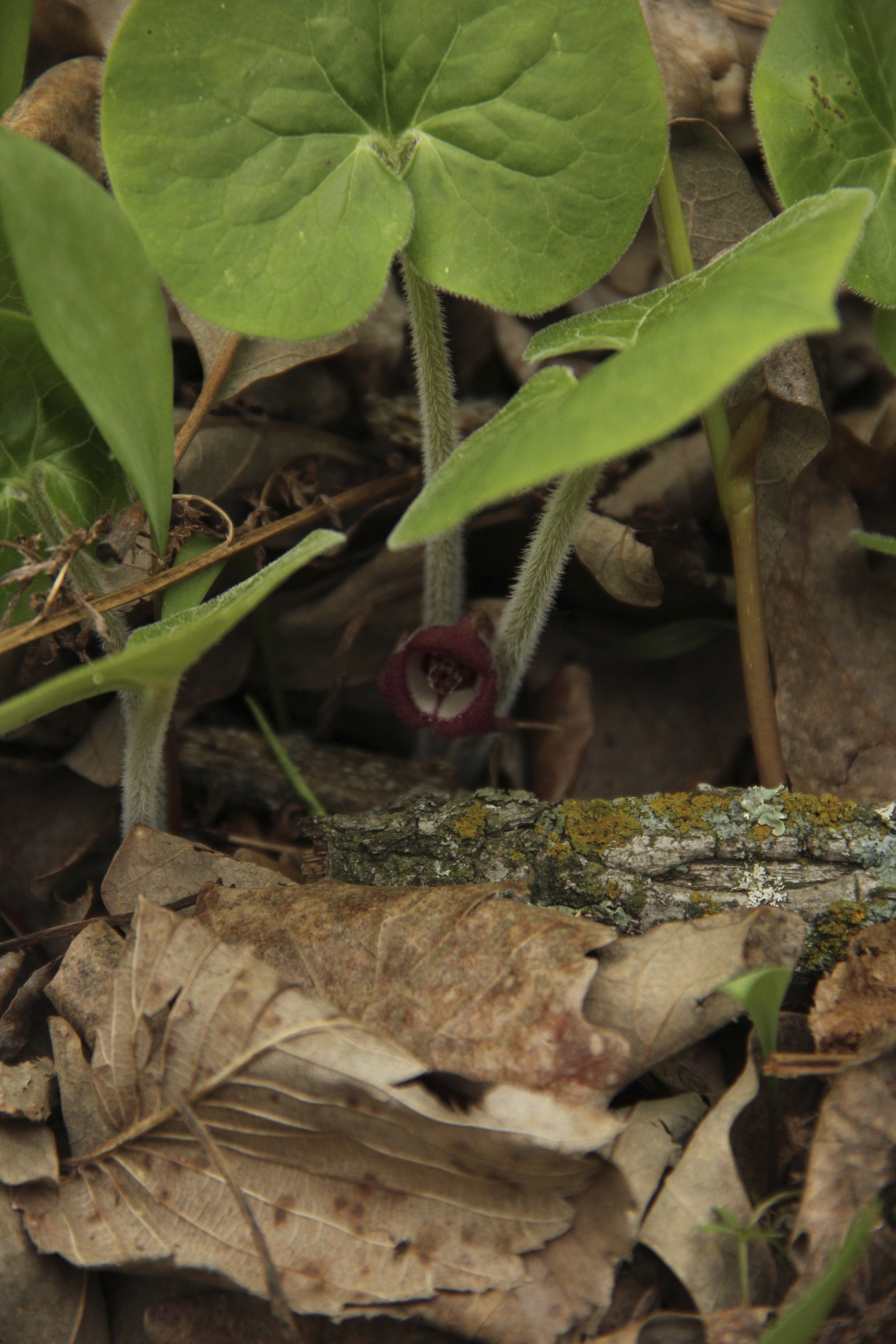
The maroon blossoms of Canadian wild ginger (Asarum canadense) lie hidden beneath its leaves.

The maroon blossom of Canadian wild ginger (Asarum canadense) lies hidden beneath its leaves.

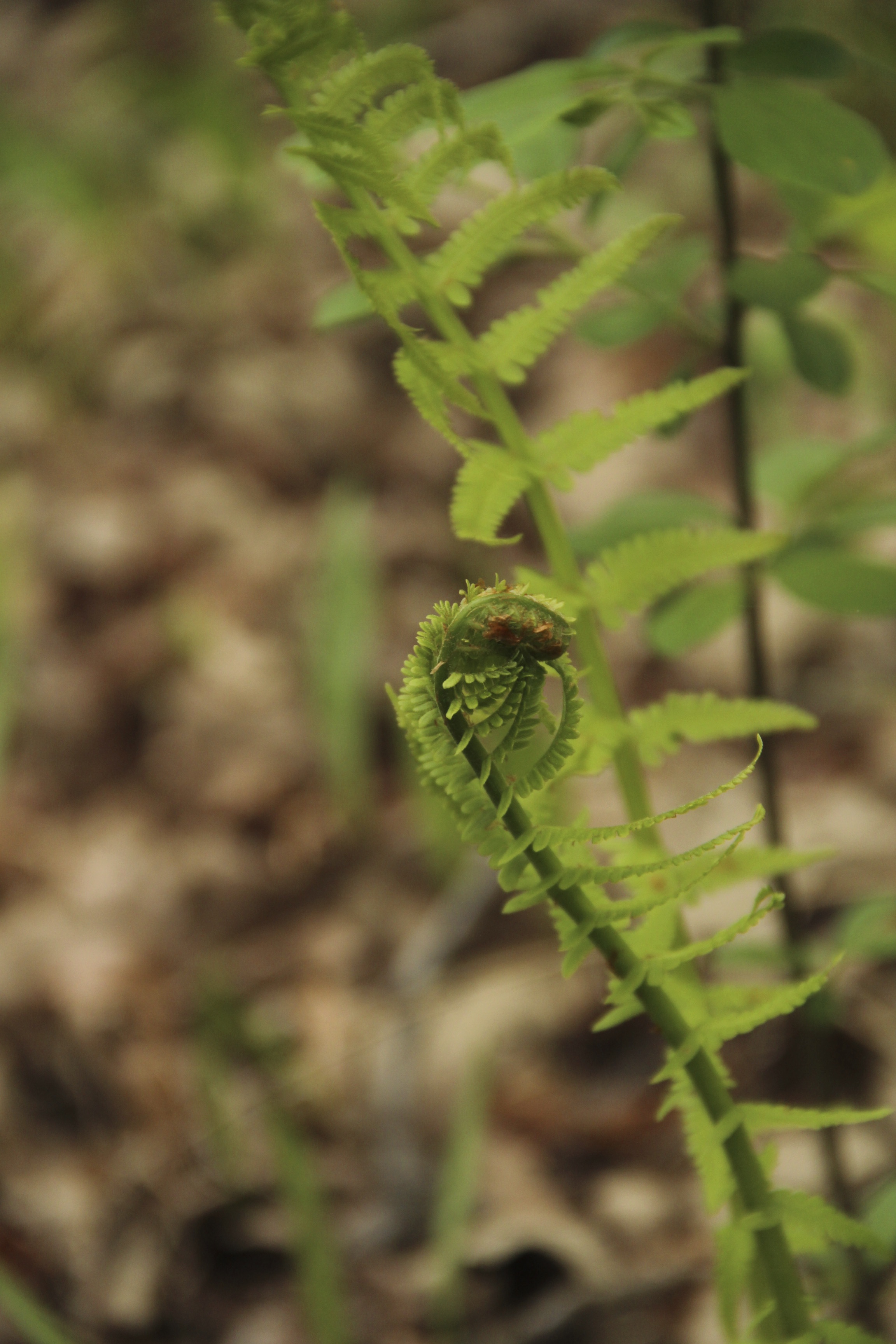
Furled fiddleheads of an ostrich fern began to open.

Furled fiddleheads of an ostrich fern (Matteuccia struthiopteris) begin to open.

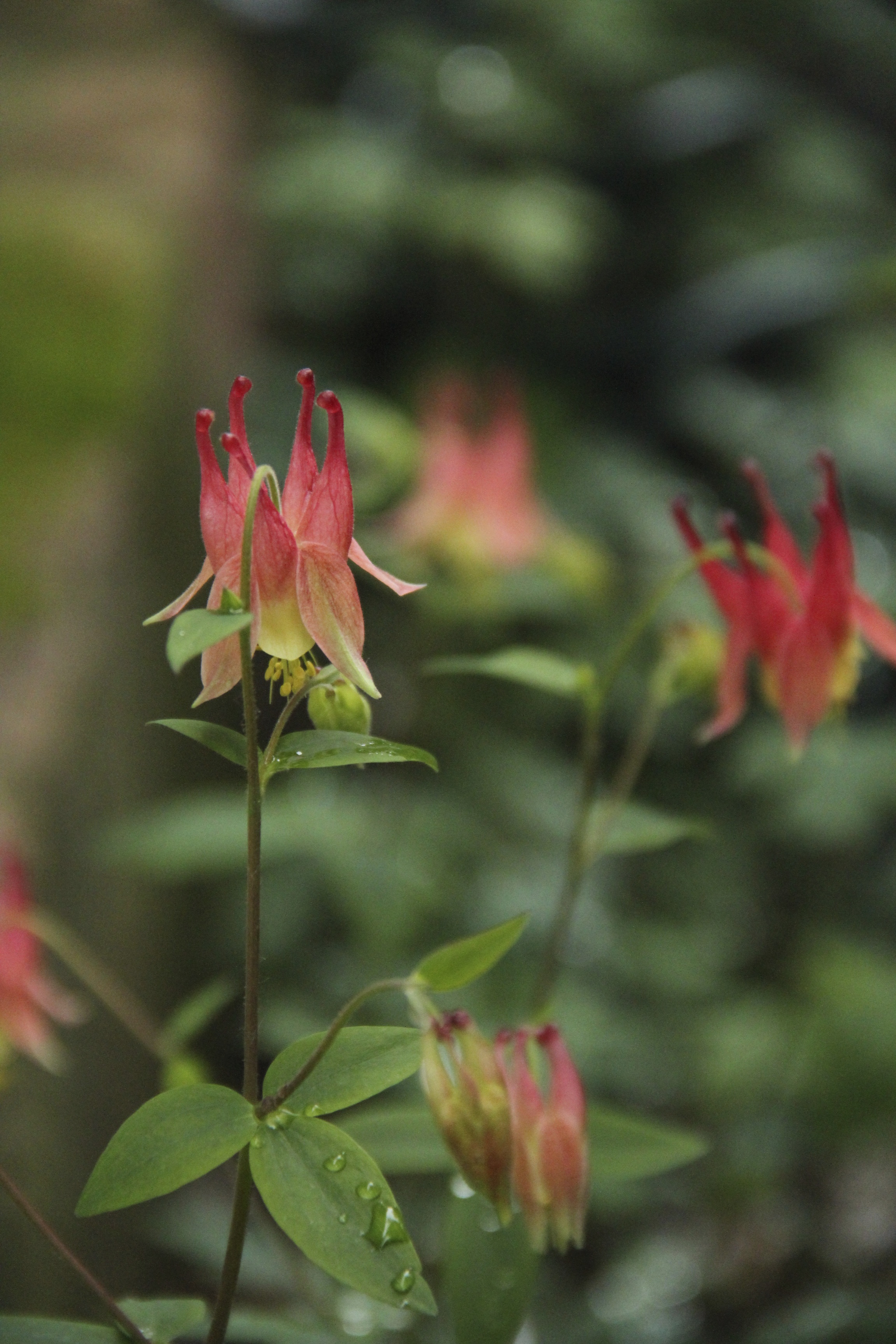
Canada columbine (Aquilegia canadensis) attracts hummingbirds in the spring.

Canada columbine (Aquilegia canadensis) attracts hummingbirds in the spring.

The Snake River flows high and fast through spring and early summer.

The Snake River in east central Minnesota flows high and fast through spring and early summer.

Yellow warblers are one of the most visible and vocal of our warbler species.

Yellow warblers (Dendroica petechia) are one of the most visible and vocal of our warbler species.

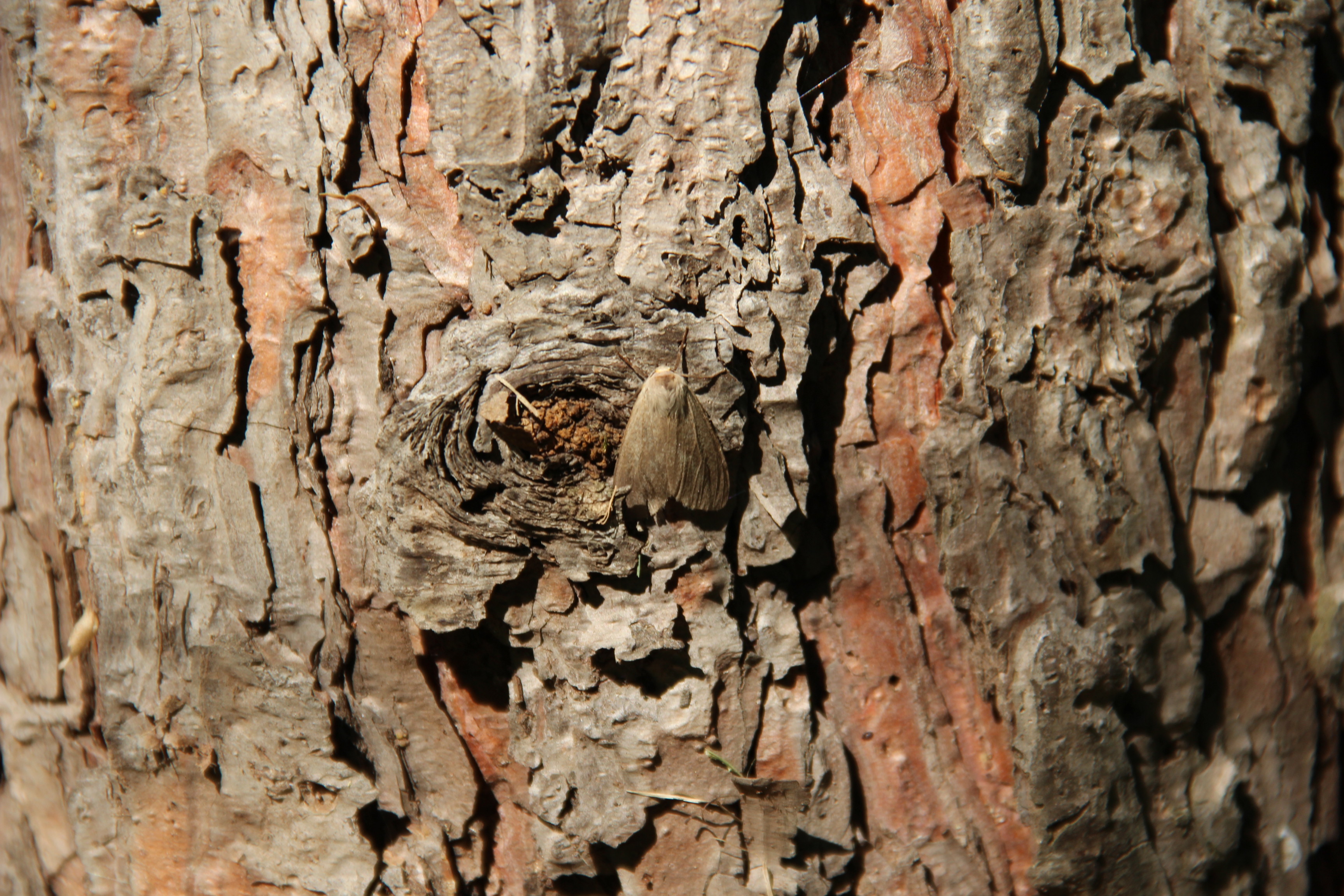
A web moth rests on the trunk of a red pine.

A woodland moth rests on the trunk of a red pine (Pinus resinosa), Minnesota’s state tree.

Ruby-throated hummingbirds are abundant through the summer and early autumn.

Ruby-throated hummingbirds (Archilochus colubris) are abundant throughout the summer and early autumn.

Bluets (Enallagma) are plentiful along the river in late summer.

Bluets (Enallagma) are plentiful along the river in late summer.

Delicate native harebells (Campanula rotundifolia) bloom into autumn and are loved by bumblebees.

Delicate native harebells (Campanula rotundifolia) are loved by bumblebees.

The Snake River runs slower in autumn.

The Snake River’s water level drops in late summer revealing basalt river rock.

Many different kinds of colorful fungi appear in autumn.

Many different kinds of colorful fungi appear in autumn.

 Eastern chipmunks gather nuts, seeds and fruit for the winter.

Eastern chipmunks (Tamias striatus) gather nuts, seeds and fruit for the winter.

Native bladdernut seeds ripen in papery husks.

Native bladdernut seeds (Staphylea trifolia) ripen in papery husks.

Falling leaves settle among pebbles and add color to the riverbed.

Falling leaves settle among pebbles and add color to the riverbed.

A basswood leaf glows in the late afternoon autumn sun.

A basswood leaf (Tilia americana) glows in the late afternoon sun.

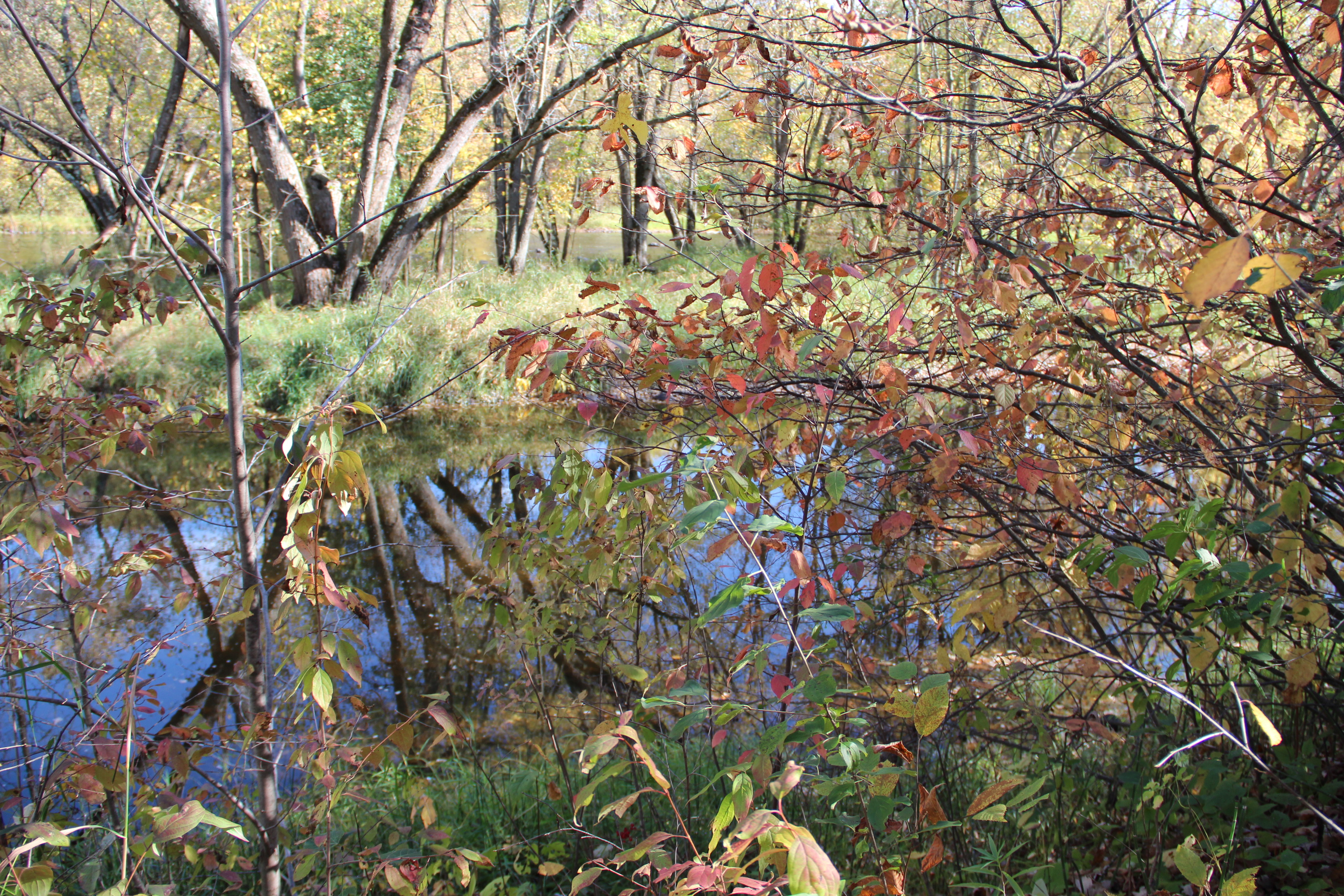
In late autumn, the river...

In mid-October, soft green, beige, maroon and brown color the riverbank.

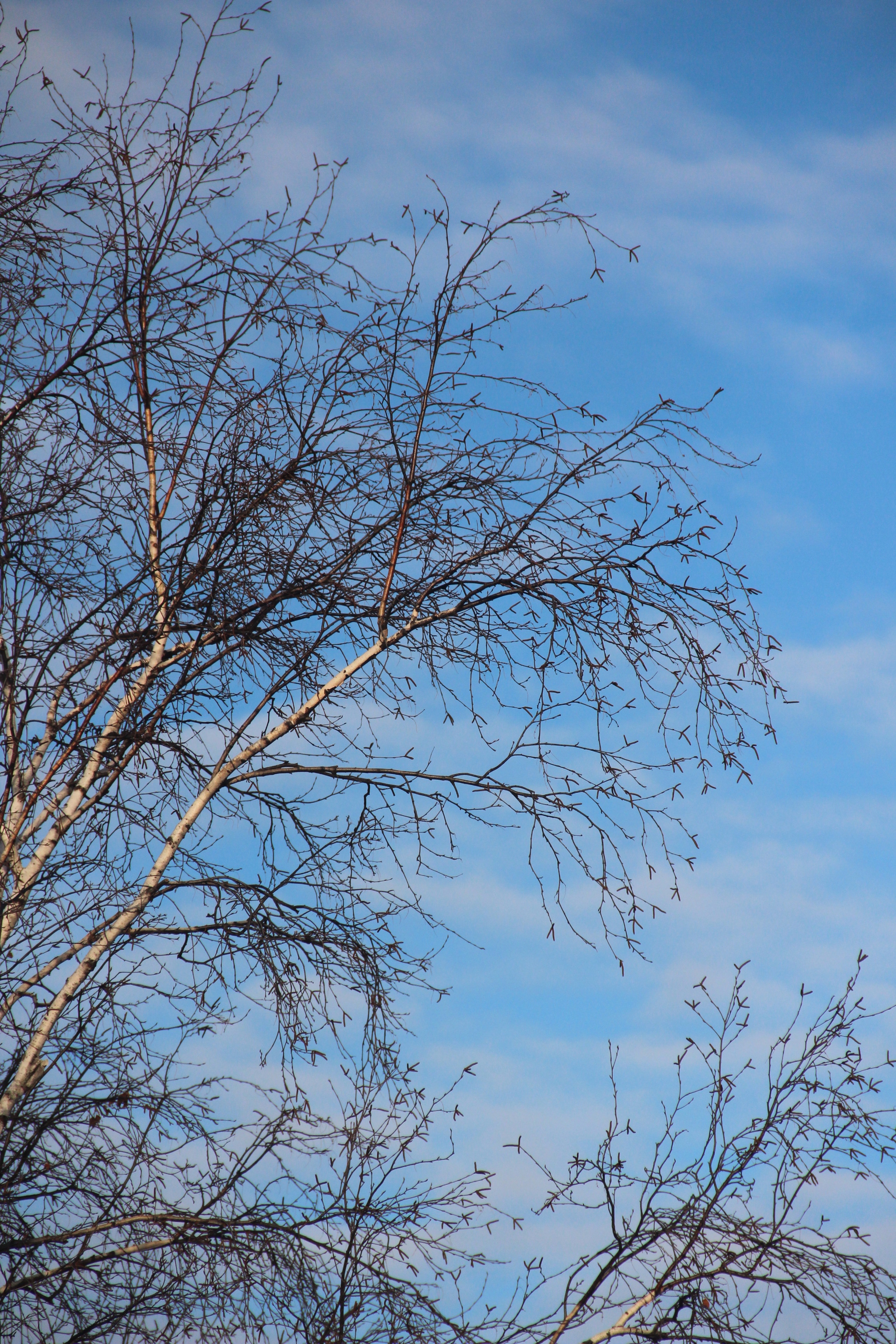
Birch branches, bare except for their catkins, ...

Male catkins on a paper birch (Betula papyrifera) stand starkly against an early-winter sky.

Winter Sky

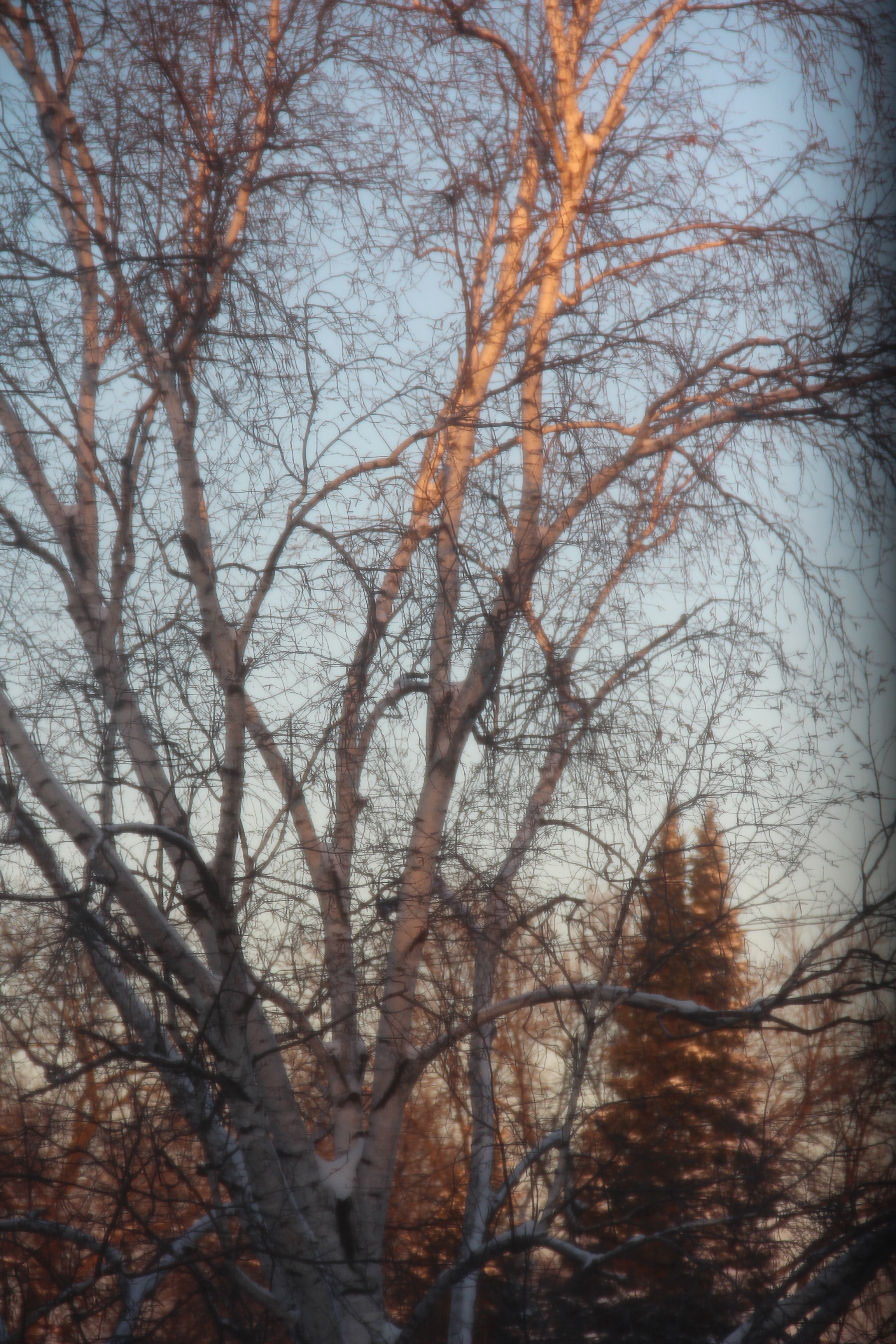
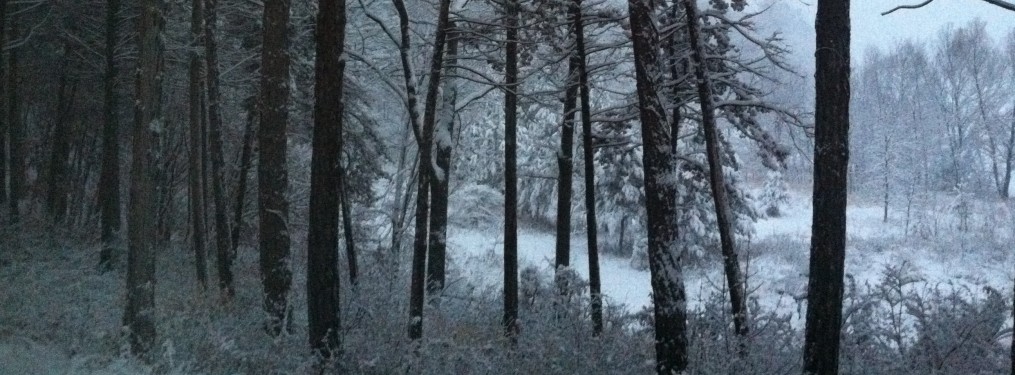
The winter sky is moody and ever-changing even in the city.  The rising sun glows a warm orange on trees and buildings that belies the steely cold air.

bircham2

The sky grows to a brilliant blue, then often softens to dove gray — especially in early winter when clouds quickly blanket the blue, sputter snowflakes, or spin a squall before moving out.

birch2am

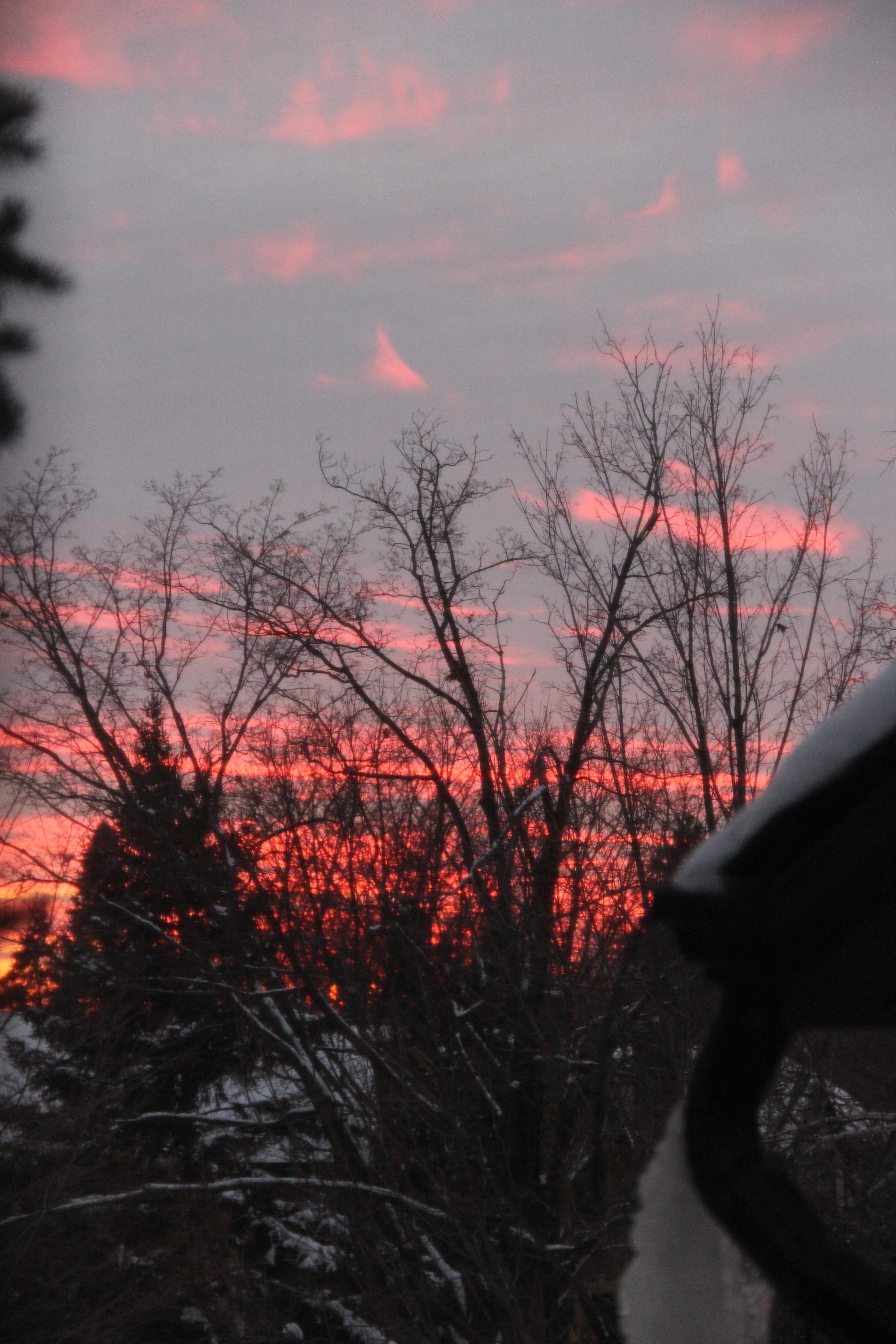
Winter sunsets fire the horizon unlike any other time of year.  As the sun sinks lower, light streams through our southwest windows flooding the rooms with deep golden rays.  I love that last burst of gentle, bright warmth and, for a few moments, I work in those rooms when possible — perhaps to write, catch up on paperwork, or even fold a basket of laundry.  Soon afterward, broad strokes of rose illuminate the west, then slowly die down to pink embers.
sunset1

sunset2

sunset3

Many evenings, in the final glow of twilight a silvery moon brightens against a pale, fading sky.
slivermoon

November Maples

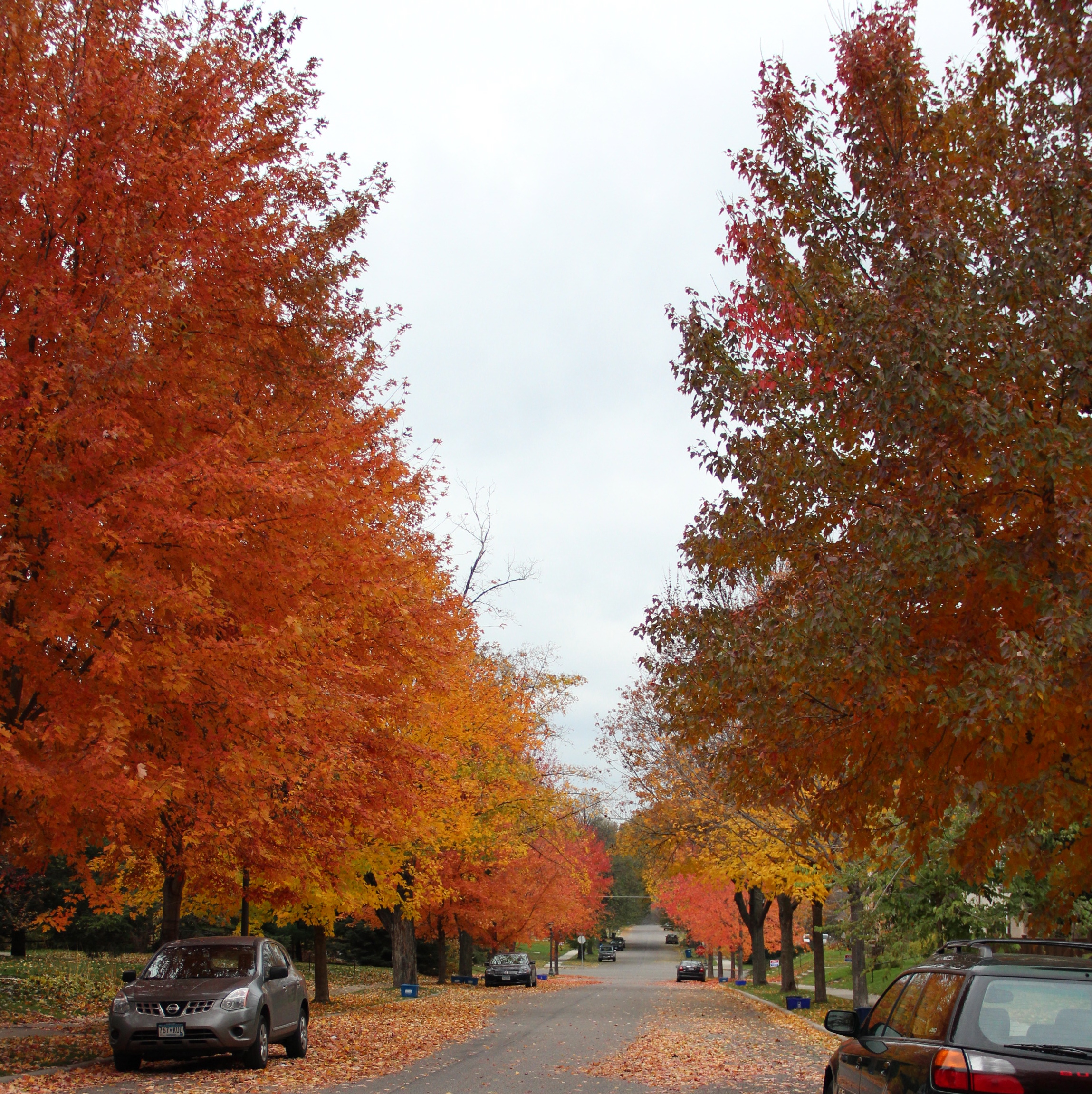
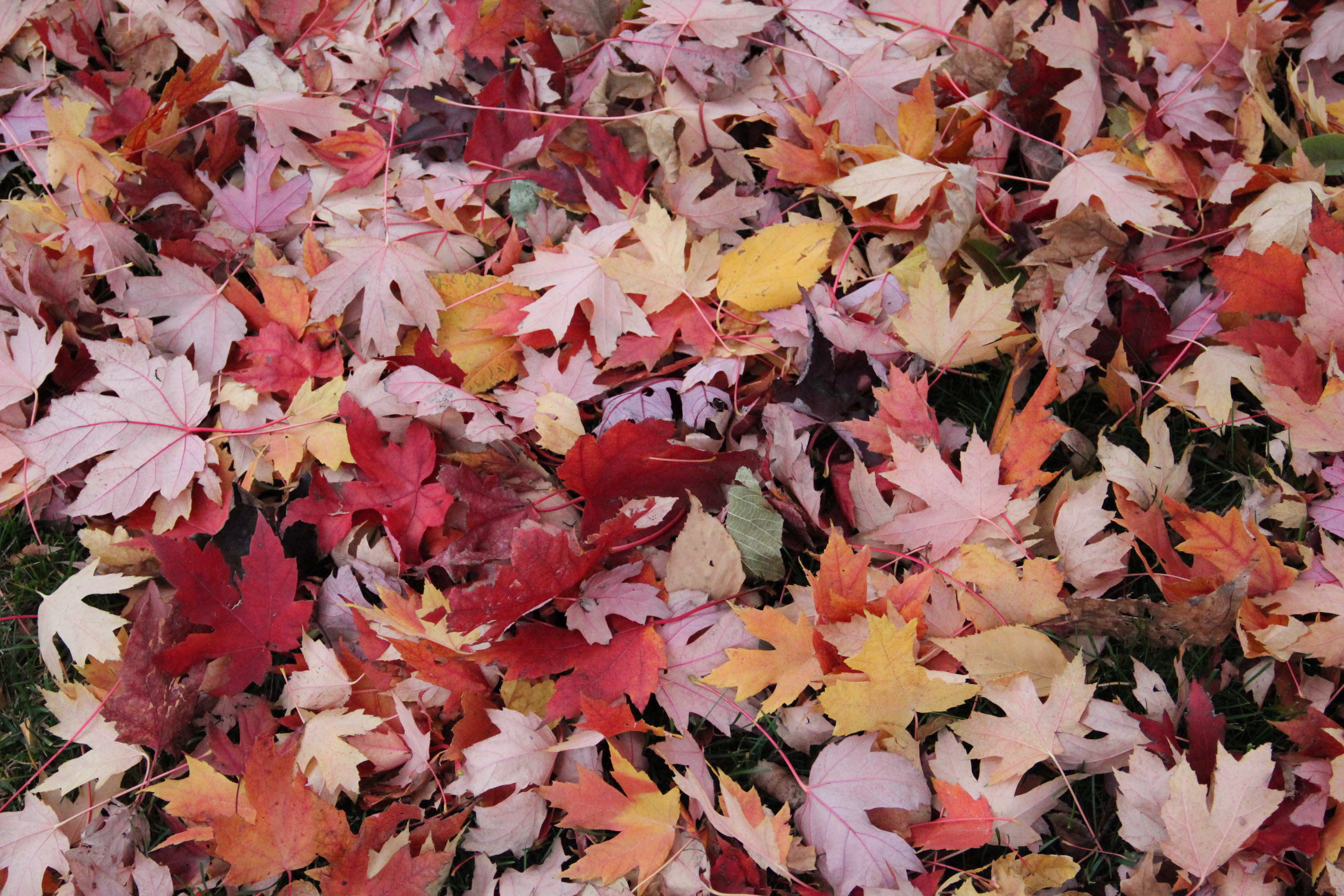
Ash trees are bare and golden birch leaves are falling rapidly.  Maple trees — red, silver and black species — smolder in shades of red, orange, gold and yellow on Saint Paul’s boulevards.  A mild, sunny day with strong, gusty southwest winds pulled many leaves from the trees, piling them in corners, catching them in bushes and long grass, and decorating all things still green with the fire of autumn.

Several species of maple show their colors on our St. Paul, MN, avenue.

Several species of maple display their colors on our St. Paul, MN, street.

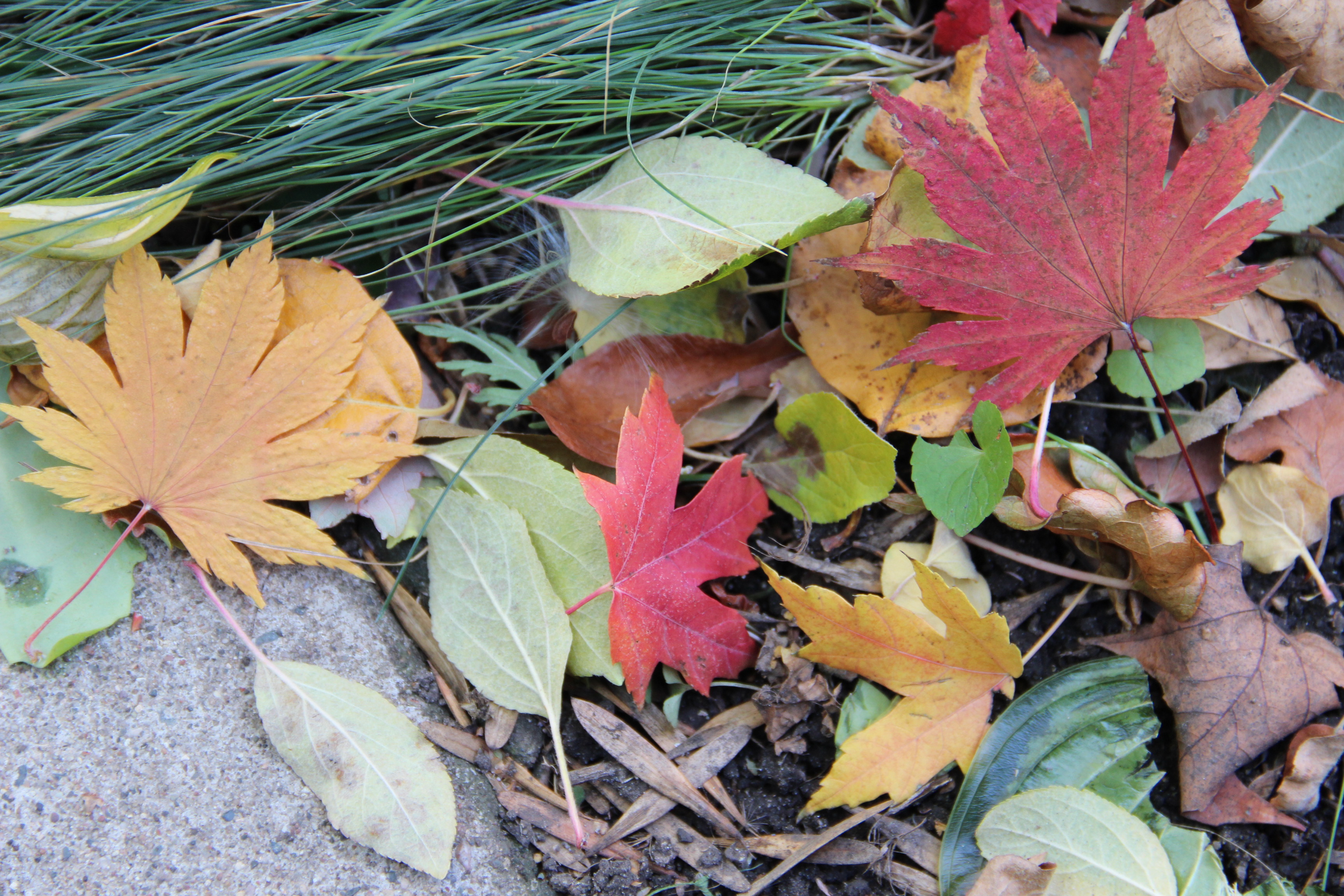
A southwest wind blew together a small pile of maple and apple leaves with ash keys nestled next to blue fescue 'Elijah blue'.

A southwest wind blew together a small pile of maple leaves, apple leaves and ash keys nestled next to blue fescue ‘Elijah blue’.

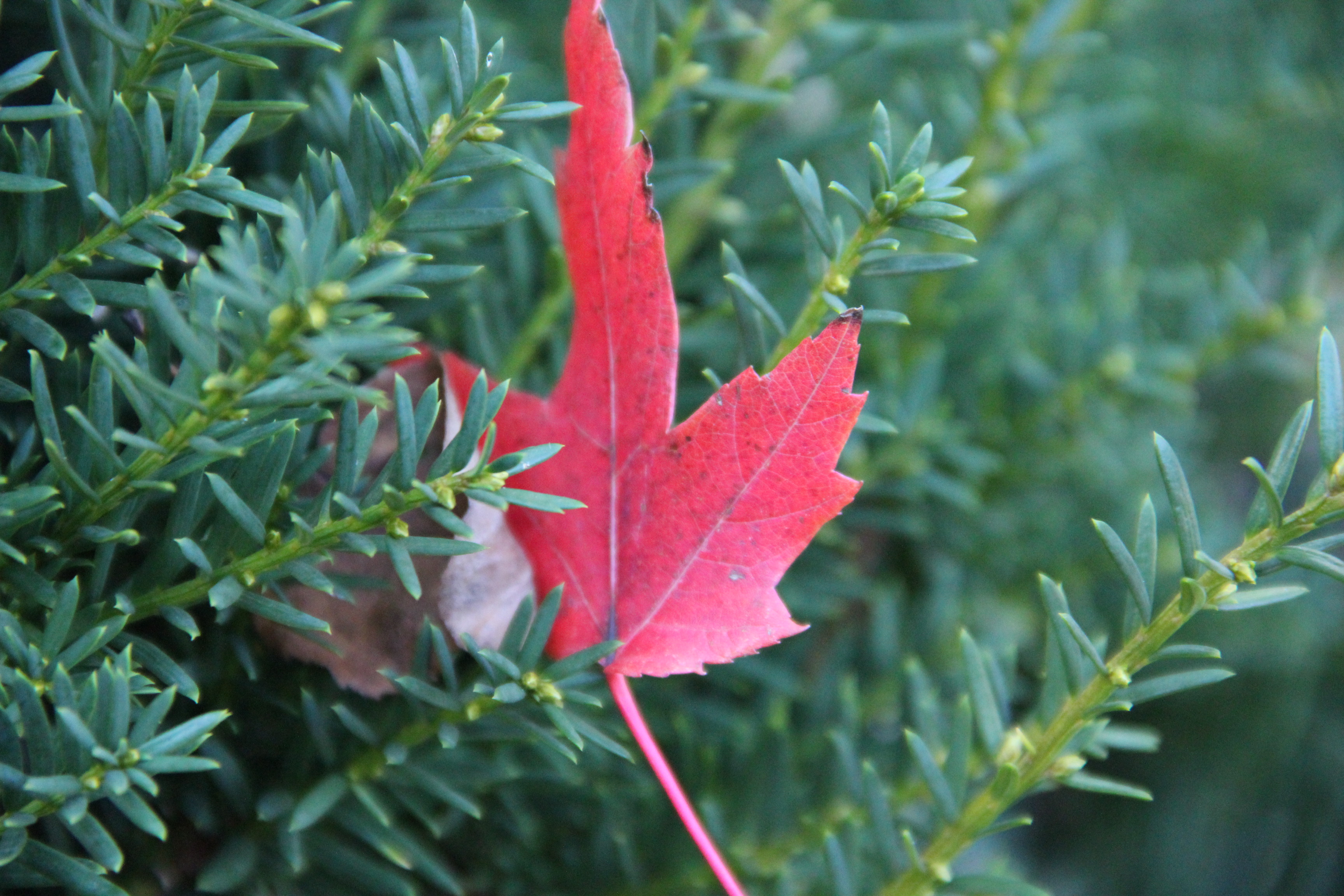
A maple leaf, 'autumn blaze', glows against the dark green of a yew where it was trapped by the wind.

An ‘autumn blaze’ maple leaf glows against a deep green yew where the wind trapped it.

A bright patchwork sewn of maple leaves decorates our front lawn.

A bright patchwork of maple leaves decorates our front lawn.