Baltimore Orioles

Baltimore orioles were named for the orange and black colors on the heraldic crest of the Baltimore family of England, for which the City of Baltimore, MD, is also named.

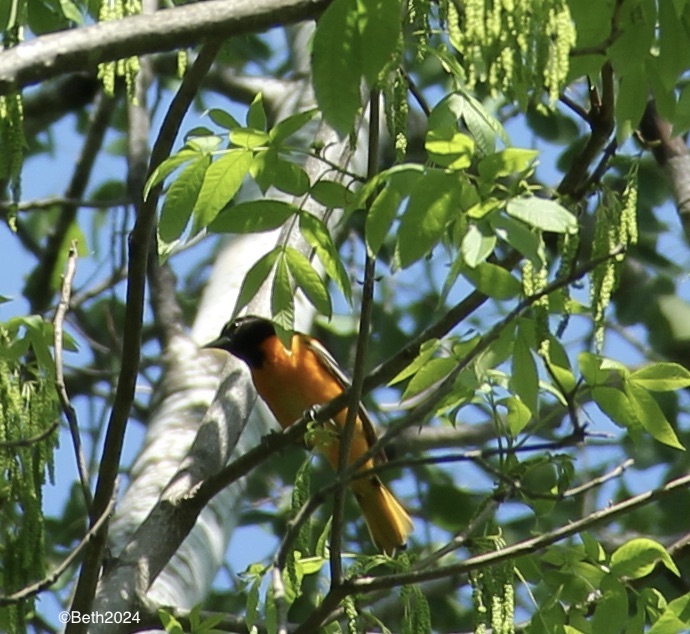
Like miniature suns, Baltimore orioles (Icterus galbula) light up early summer’s lush green foliage. About the size of a red-winged blackbird, these orioles are colorful members of the blackbird family. They are often recognized for their golden color and beautiful woven hanging-basket nests.¹

I saw my first Baltimore oriole in the Twin Cities when I was five or six. Graceful American elms lined every street then, and were the preferred nesting tree of orioles. Since the demise of the elms by Dutch elm disease, many of the orioles I see and hear are in the woods at our cabin. In the city, I find them most often when I walk next to the Mississippi River and around the Minneapolis lakes. Their call is described as paired, pure flutelike notes. They’re easy to listen to and their song contains fewer harsh notes than other oriole species.

Most years, they weave a nest in the outer branches of quaking aspens that overhang our cabin yard, but one year, they nested in a red oak tree next to the cabin. The female constructs the nest using a combination of plant fibers, such as long strips of bark from grape and other vines, grasses and hair. She often selects artificial fibers, too — yarn, fishing line and twine. The two outer layers of the nest provide the saclike structure. The third inner layer consists of soft hair, wool and downy fibers to protect the eggs and hatchlings.
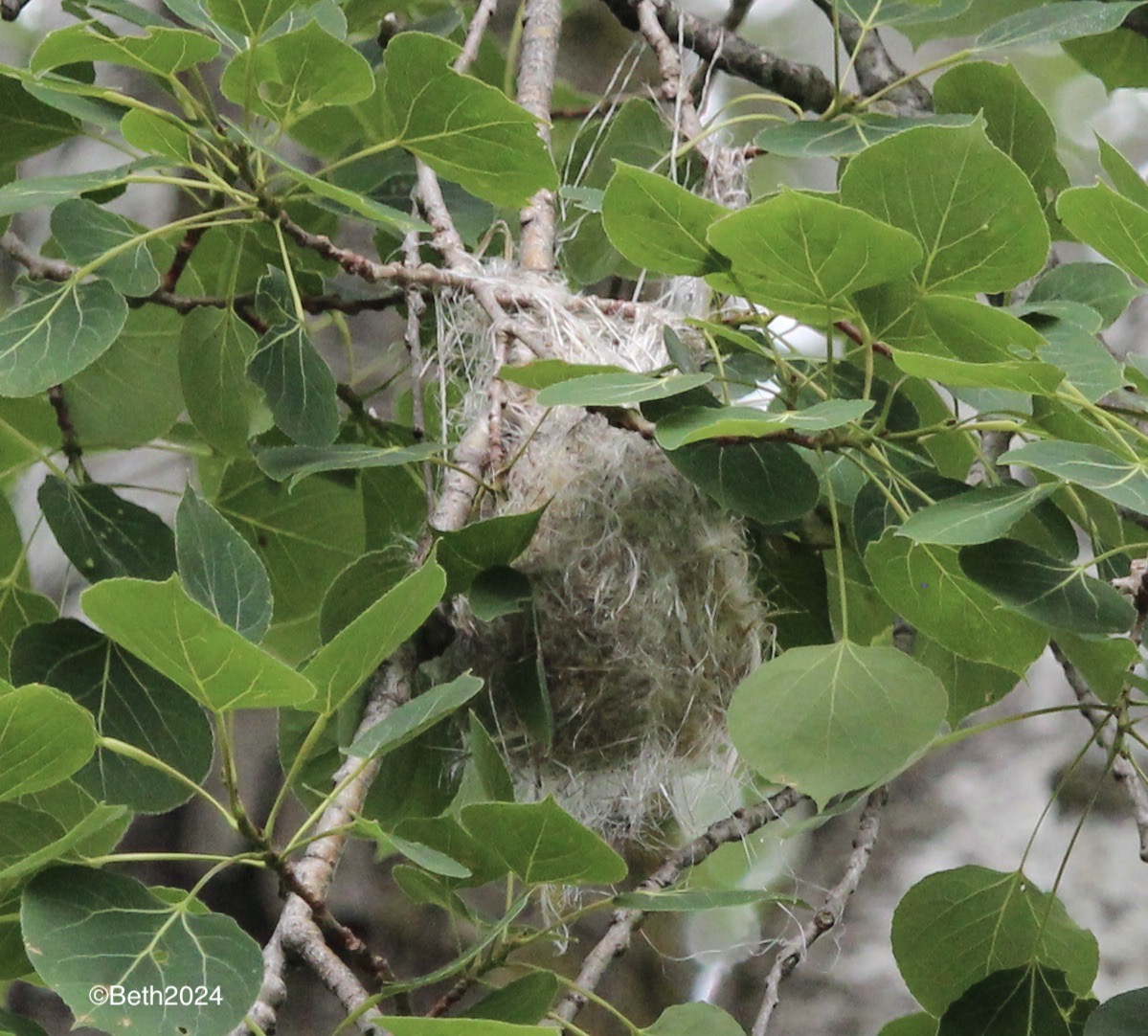
Female Baltimore orioles skillfully weave a hanging nest of natural and artificial materials, such as grapevine, hair, fishing line and twine. They may use wool, down from cottonwood trees or milkweed to line the nest.

When left to their own resources, Baltimore orioles typically eat caterpillars, moths and many other types of insects. Like warblers and flycatchers, they dart out and back from foliage to snatch flying insects. At other times, they remind me of chickadees as they perform acrobatics over and under tree branches in search of beetles, aphids and spiders. They also like flower nectar and fruit, and can sometimes damage fruit crops. During spring and fall migration, our neighbors, Ed and Melinda, keep a fresh dish of grape jelly on their deck railing for the orioles. My father-in-law always suspended fresh orange slices from the bird feeder pole for them. Both delights attracted lots of orioles (and hornets in autumn)!

An immature oriole feeds on grape jelly, one of their favorite foods.

Baltimore orioles spend most of the year on their wintering grounds in Central America, southern Mexico and Florida. They breed in eastern and northern North America as far west as the Central Great Plains and north into southern Canada. Their time in Minnesota is brief: I usually spot my first oriole in mid-May and see the last one in early September. In addition to Baltimore orioles, Minnesota is also the summer residence of orchard orioles and, occasionally, Bullock’s oriole.

Female and immature male Baltimore orioles are sometimes difficult to tell apart.

¹In the Great Plains states, the Baltimore and Bullock’s orioles frequently interbreed and produce hybrid offspring. Between 1983 and 1995, scientists believed that the birds were one species, which they named the northern oriole. Later, genetic testing proved they were two separate species and ornithologists returned to using “Baltimore” and “Bullock’s.”

Sources and Further Reading
All About Birds – Baltimore Oriole

Audubon Field Guide – Baltimore Oriole

Mining Bees

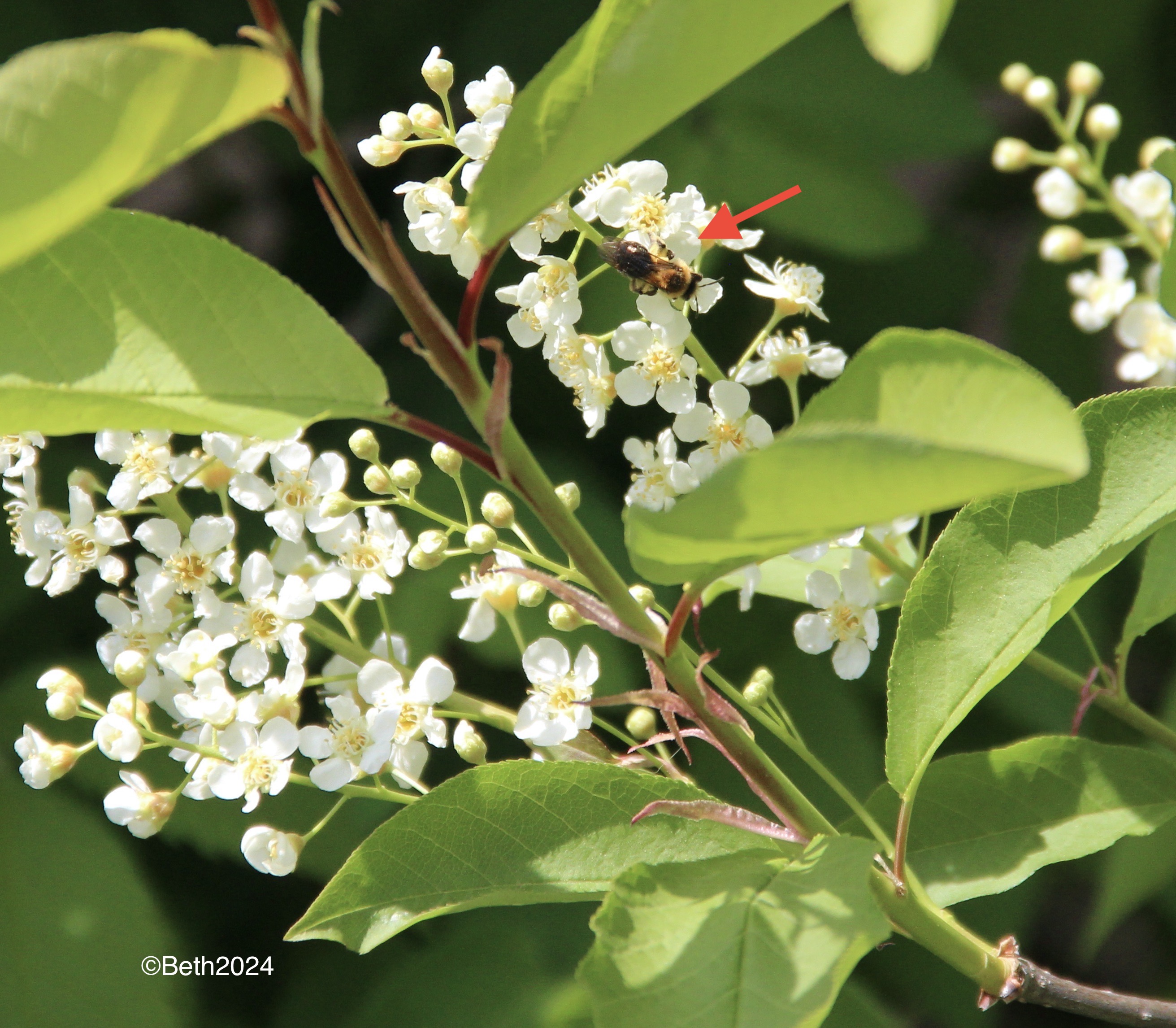
A mining bee (Andrena spp.) pollinates Canada cherry blossoms (Prunus virginiana, ‘Canada Red’).

Redbud, crabapple, dogwood, wild plum and cherry are just a few of the trees blooming in May. What’s pollinating all these beautiful blossoms? 

More than 500 species of native bees are responsible for pollinating many of Minnesota’s spring flowers and trees. Mining bees (Andrena spp.) are one of the earliest to emerge and get busy. Like bumblebees, they are wrapped in warm, fuzzy hair that helps insulate and equip them to be active when it’s still too cold for honey bees to work. 

Mining bees are solitary ground nesters. Unlike honey bees, bumblebees and others that nest in a colony, each mining bee digs her own individual spot, though they often nest near each other. Look for their small burrows, (about the diameter of an average pencil), in an exposed area of ground. I’ve seen them in soil along garden walls, in bare ground in the garden, or bordering sidewalks. The nests are only active for a very short time in spring and are interesting to watch. Female mining bees place small balls of pollen and nectar in their tunnels, lay an egg on top of each ball and then seal the chamber. Each larva will feed on the pollen and nectar during its development. The female dies soon after reproducing, while the larvae overwinter in their tunnels, typically leaving the following April or May to mate and continue the life cycle.

A mining bee (Andrena spp.) is dusted with pollen after working inside a Siberian squill (Scilla siberica) blossom.

Other species of mining bees reach adulthood in late summer and fall. Their life cycle is similar to their springtime cousins’, but they pollinate a range of different flowers, such as goldenrod and wild asters.

Sometimes people want to oust mining bees for fear of being stung, or they dislike the appearance of tiny tunnels in their garden or lawn. Unlike hornets and wasps, these small bees are quite docile and rarely sting unless handled roughly. They’re focused on producing the next generation and aren’t interested in sampling your supper or glass of wine! (In fact, most of the bees zipping around the nesting area are males, who don’t have stingers.) When I notice their nests, I just work around them and the bees ignore me. They’re more active when the sun warms their nesting area, so it’s easier to garden near them when it is shady and cool.

Besides pollinating flowers and fruit trees across North America, mining bees are prey for many songbirds, small rodents, jumping spiders, some species of ants and other insects.

Further Reading and Sources

Backyard Ecology

Bug of the Week (UW-Milwaukee)

Sharp-Eatman Nature Photography

Spring Blues

Siberian squill (Scilla siberica) grow under an ash tree in our backyard.

They appeared early this year. Fresh green tips of Siberian squill (Scilla siberica) pushed through bare, frost-free soil in February. When they began to bloom, a spring snowstorm buried them beneath a shimmering blanket. Though not a native wildflower, their Russian and Turkish origins outfit them well for the toughest of Minnesota winters. The melting snow watered them, spurring growth and bloom. I love their ultramarine blue radiance, a color infrequent among flowers. They attract many early native bees and honey bees to our urban garden when few other spring ephemerals are blooming.1 Our backyard hums with the gentle drone of bees — the first I’ve heard since last November. I’ve missed them.

1If you don’t have Siberian squill in your garden, it’s best not to plant them. A non-native, they can become invasive, especially near woodlands and other natural areas.

Wild Roses

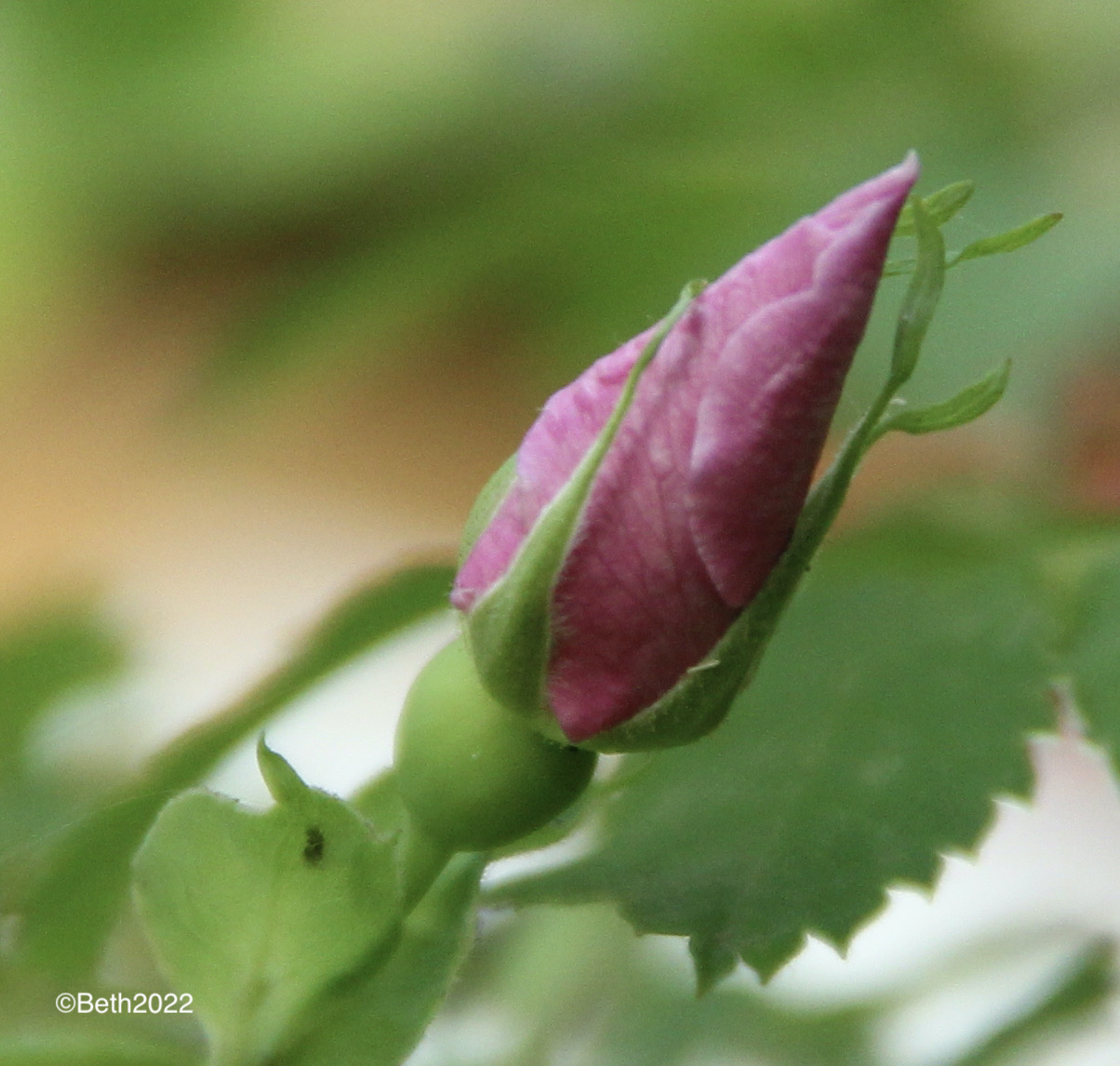
Wild rose buds (Rosa blanda) usually open in June in Minnesota.

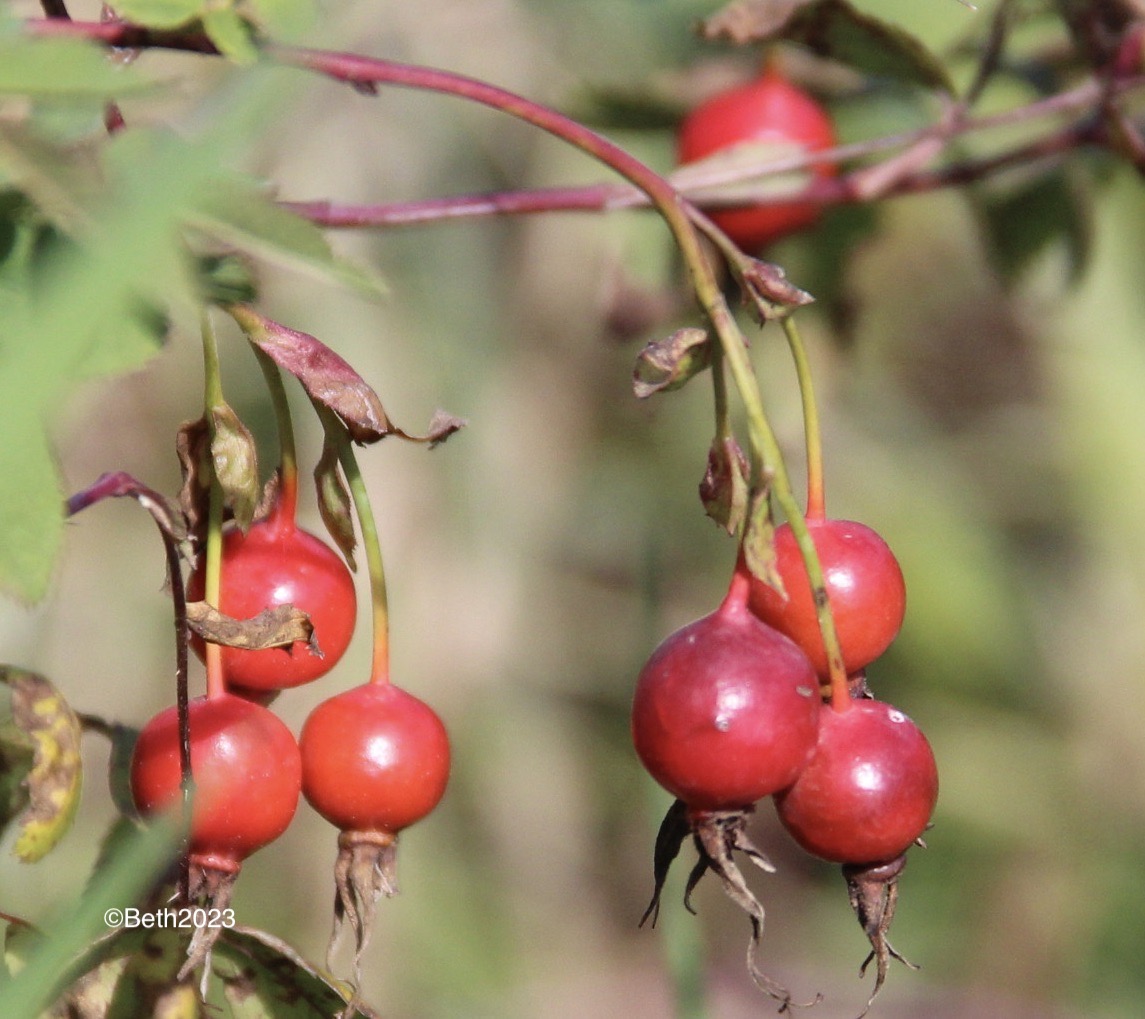
Wild roses bloom across the oak savanna in early June. Their petals blush the delicate color of a northern spring sunrise. To my mind they are classic blooms: simple petals, sun-gold centers, and a delicate aroma. They dot woodland edges, roadsides and trail borders. Like the majority of springtime wildflowers, they vanish quickly. However, they are soon succeeded by a riot of red rose hips — fruit that will decorate the plants until next spring, or until eaten by wintering birds and mammals. Besides providing rose hips later in the season, the blooms are attractive to many types of bees, butterflies, tiny wasps and other native insects that seek nectar and pollen in the small, plentiful blossoms.

Metallic green bees (Agapostemon) are among the many native pollinators that visit wild roses.

Bright red rose hips decorate each plant until the following spring, or until eaten by wildlife, such as birds, squirrels, rabbits and bears. Each hip contains several seeds.

Seashore Early Morning

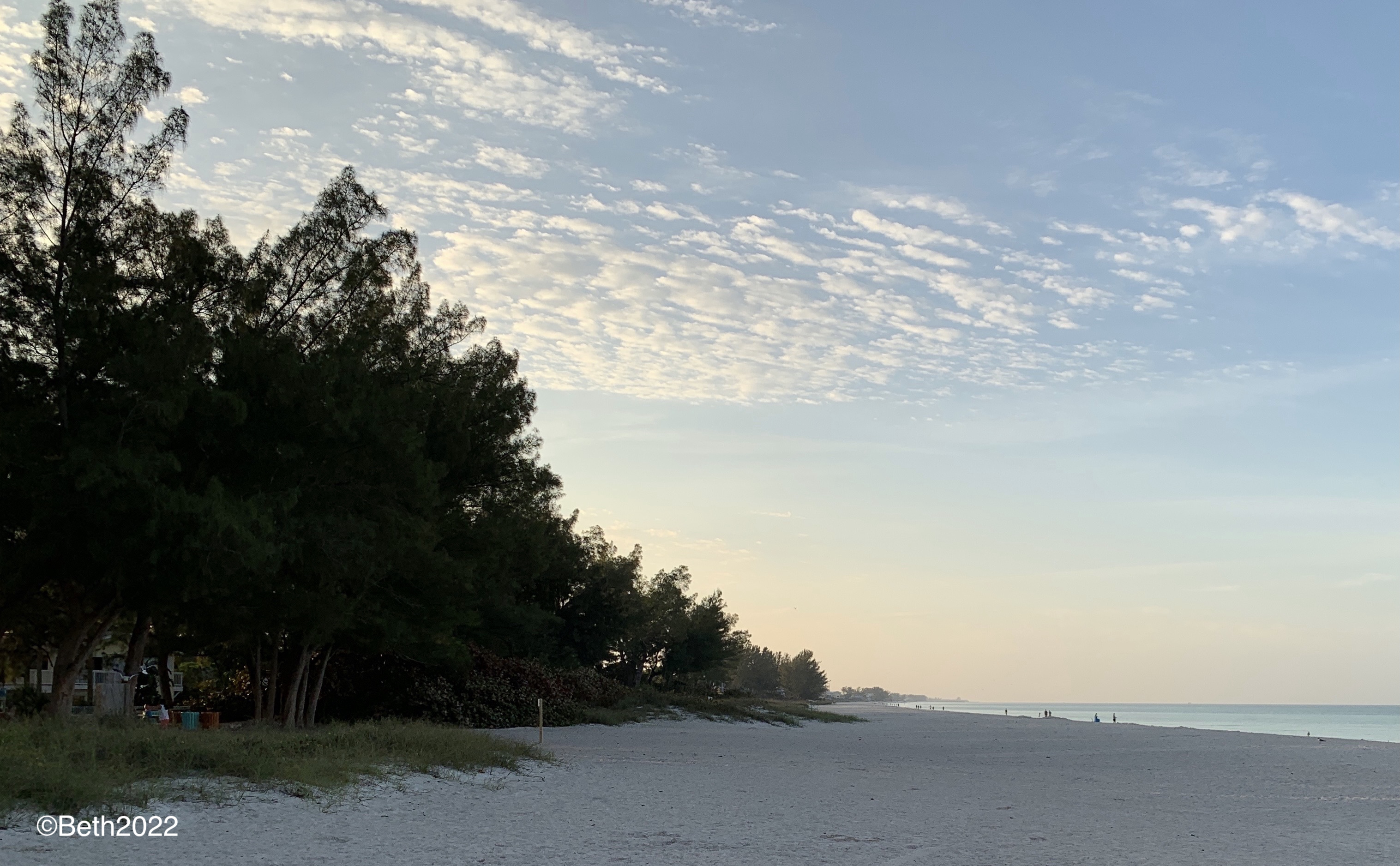
Early morning on a Gulf Coast beach in West Central Florida.

Early on there is the sound of seabirds and surf, the scent of sand and salt with a hint of fish. Steel-blue water surges inward tossing up sea jewels with names like cockle, calico scallop, cat’s paw, coquina and lucina on the sand before it retreats in a quiet hiss.

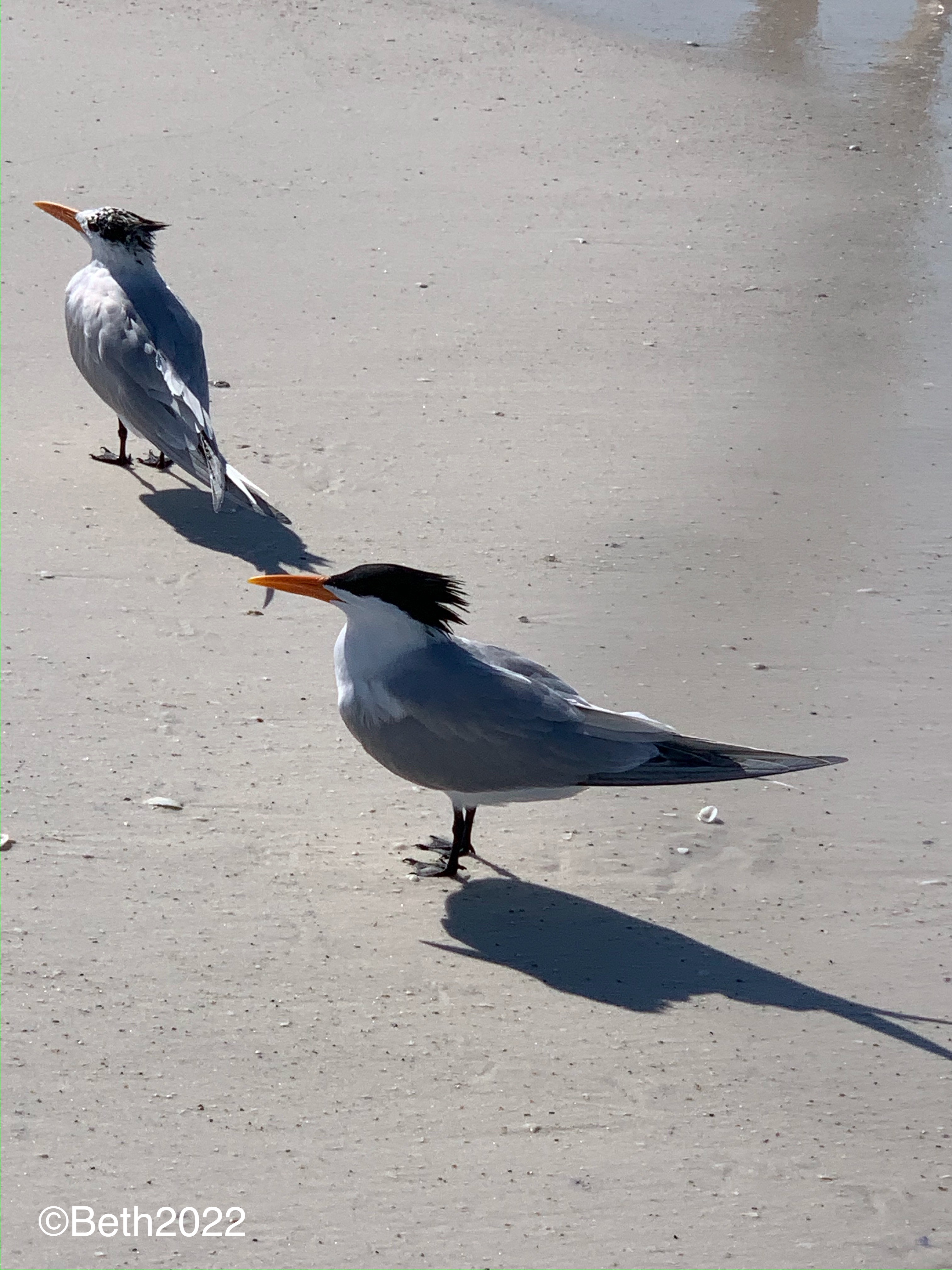
Willets, sanderlings, terns and other tiny shorebirds race ahead of the surf on their skinny legs. They probe the wet sand for breakfast invertebrates after each retreating wave. In contrast, brown pelicans swoop in soundlessly over the water. One plunges sharply, surfaces with a fish that squirms as the pelican swallows. On shore, a great blue heron stands companionably near a fisherman, waiting for the catch of the day.

Sanderlings (Calidris alba)

Royal terns (Thalasseus maximus)

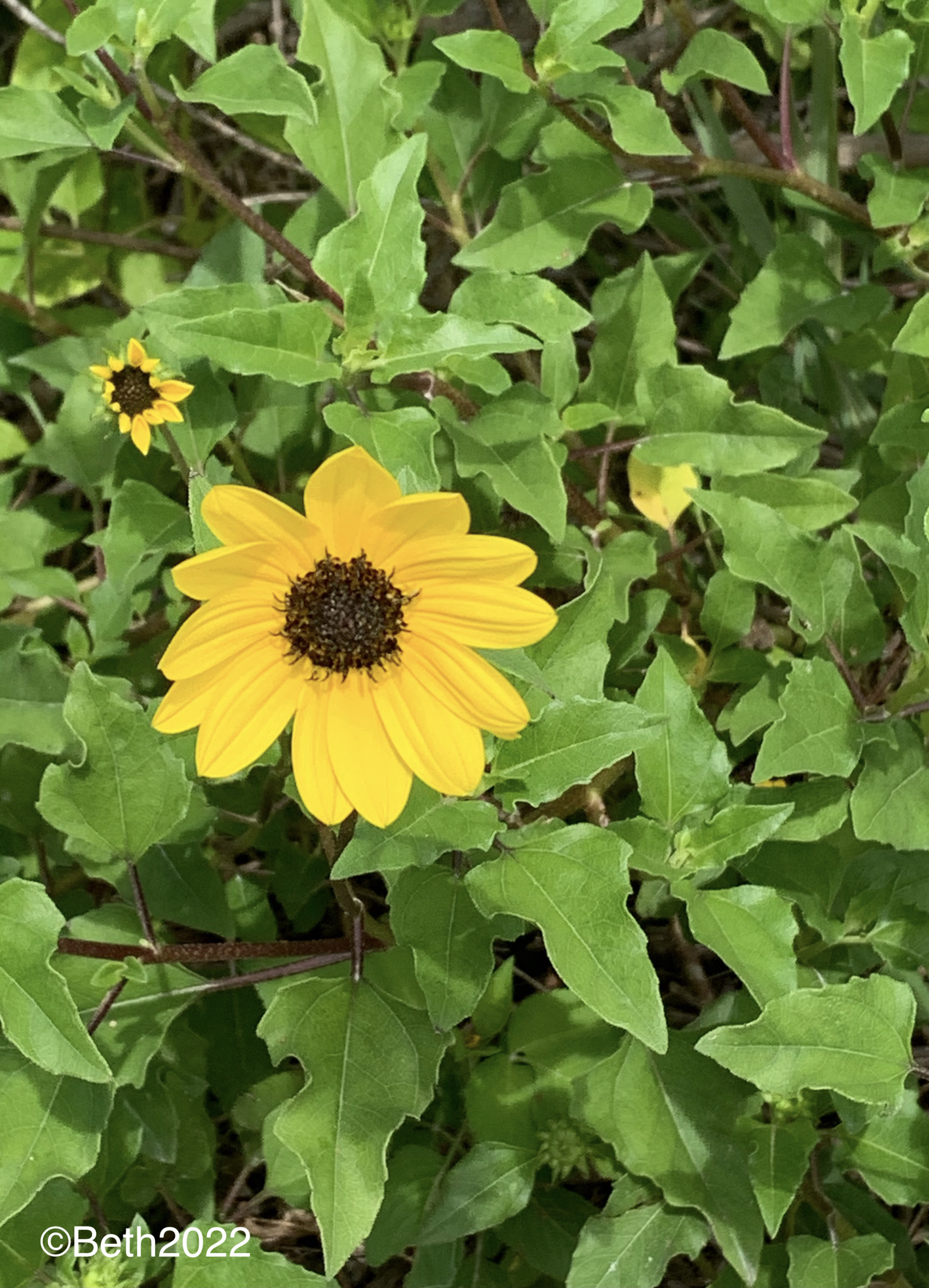
A few feet from shore, the rising sun lights up sea oxeye daisies, blanket flowers, dune sunflowers, seaside gentians, sea oats, sea grapes and other native plants. They help anchor the dunes and provide habitat for many insects, birds and other creatures.

Seaside gentian (Eustoma exaltatum)

Florida west coast dune sunflower (Helianthus debilis vestitus)

Blanket flower (Gaillardia pulchella)

They are lovely, but it is to the sea that I return; sea and open sky. The rhythmic swoosh and hiss, ebb and flow, lulls, relaxes, and focuses me on this present moment. It is peaceful, joyful, hopeful. A fresh start.

Robins and Apple Blossoms

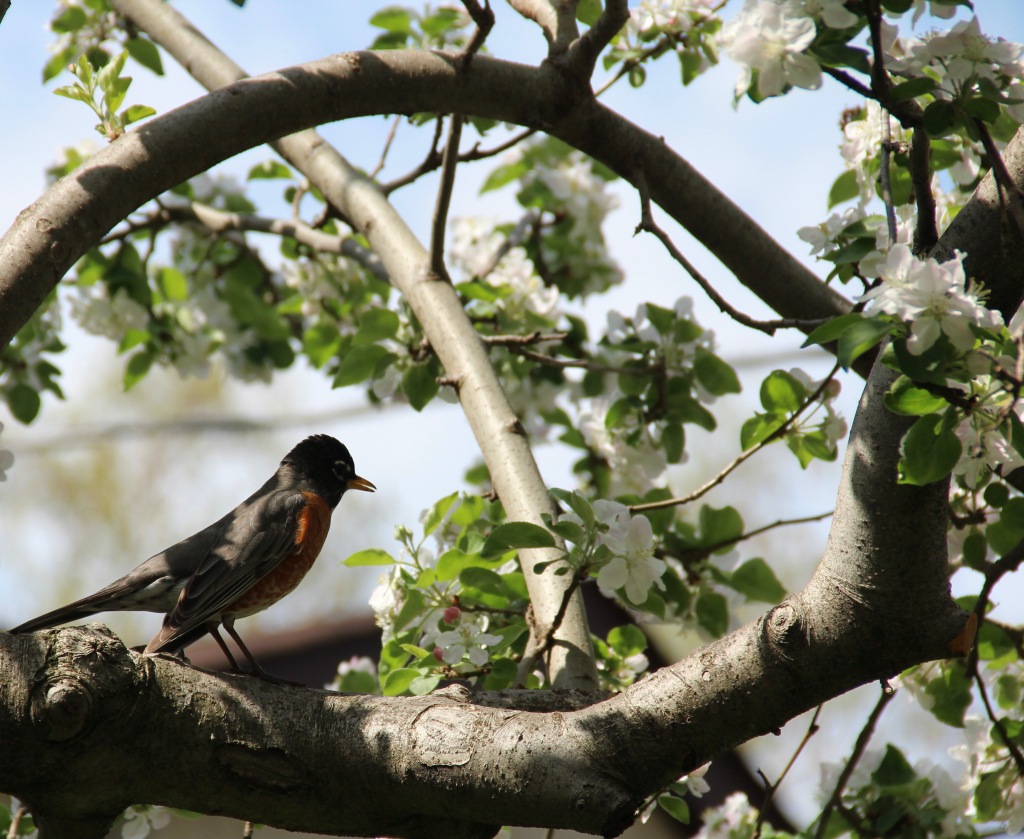
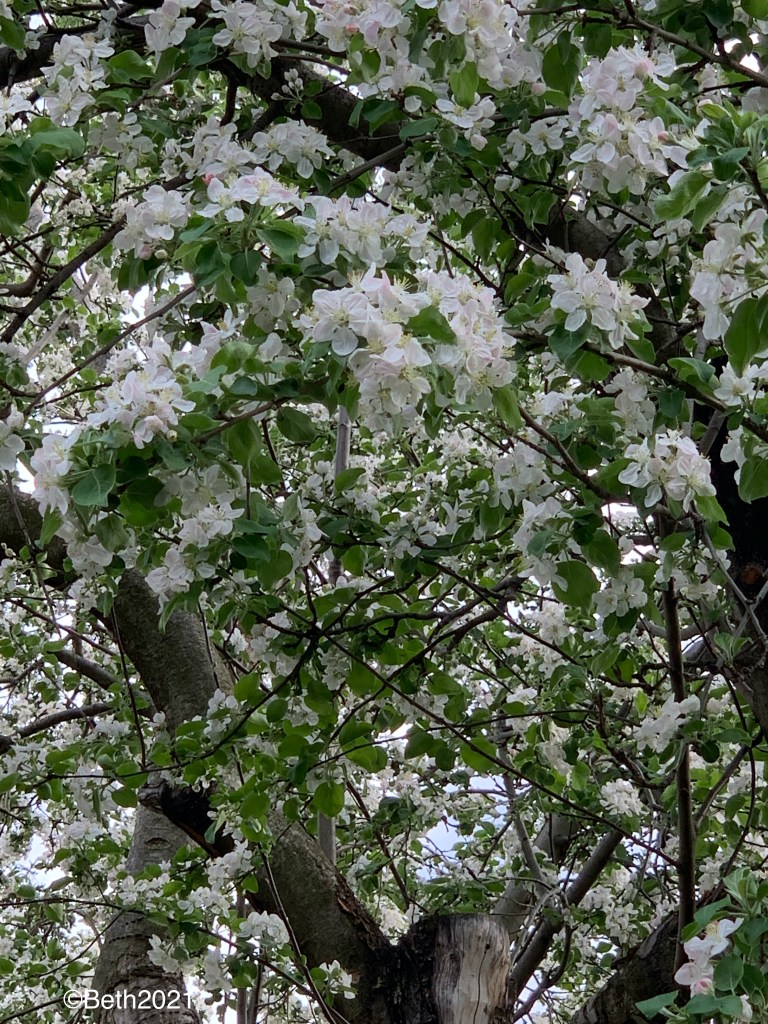
Spotting a robin in March signaled the onset of spring to me as a child. We had a “Golden Book” titled, Birds: A Child’s First Book About Our Most Familiar Birds. It featured drawings of neatly woven nests cradling delicate eggs and portraits of familiar garden birds. Illustrations often showed robin nests built in blossoming apple trees and that image, along with the robin’s melodic songs, became synonymous with spring in my young mind.

Decades later, my husband and I bought our home in Saint Paul. Our first evening there, we sat on the back stoop beneath a beacon apple tree that’s now more than 80 years old. Two adult robins flew in and out of its leafy crown indicating the presence of a nest. A chorus of high-pitched chirps greeted the parents as the hatchlings anticipated dinner, their tiny heads stretching over the nest’s rim. During the next few weeks, we were privy to nestling squabbles, flight training, food procuring and the proper way to down a worm!

Some say that red-winged blackbirds (Agelaius phoeniceus) are the new sign of spring’s return to Minnesota. Robins now winter in the state and I hear their sweet songs on milder midwinter days. Many birds can withstand very cold weather as long as they find enough food to fuel their metabolic rate. Gardens often feature crabapple, mountain ash, dogwood and other fruit eaten by wintering birds. City boulevard plantings include fruit trees and larger trees like hackberry. I frequently see large groups of wintering robins dart between the crowns of boulevard hackberries near Saint Catherine University in Saint Paul. Robins also eat bird feeder food during winter that they wouldn’t touch in other seasons. Many a robin has dined with the woodpeckers at our suet feeder!

Sometimes I wake up to robin song drifting in through my bedroom windows in the predawn darkness. I remember childhood mornings of their pure, lovely caroling along with the scent of lilacs, the touch of humid air and perhaps thunder rumbling in the distance from an early morning storm. These are joyful memories — and though robins often ride out the winter in Minnesota, their clear singing, and the beauty of apple blossoms, still signify spring to me.

Further Reading:

American Robin

Red-winged Blackbird

Early Spring Native Flowers: Bloodroot

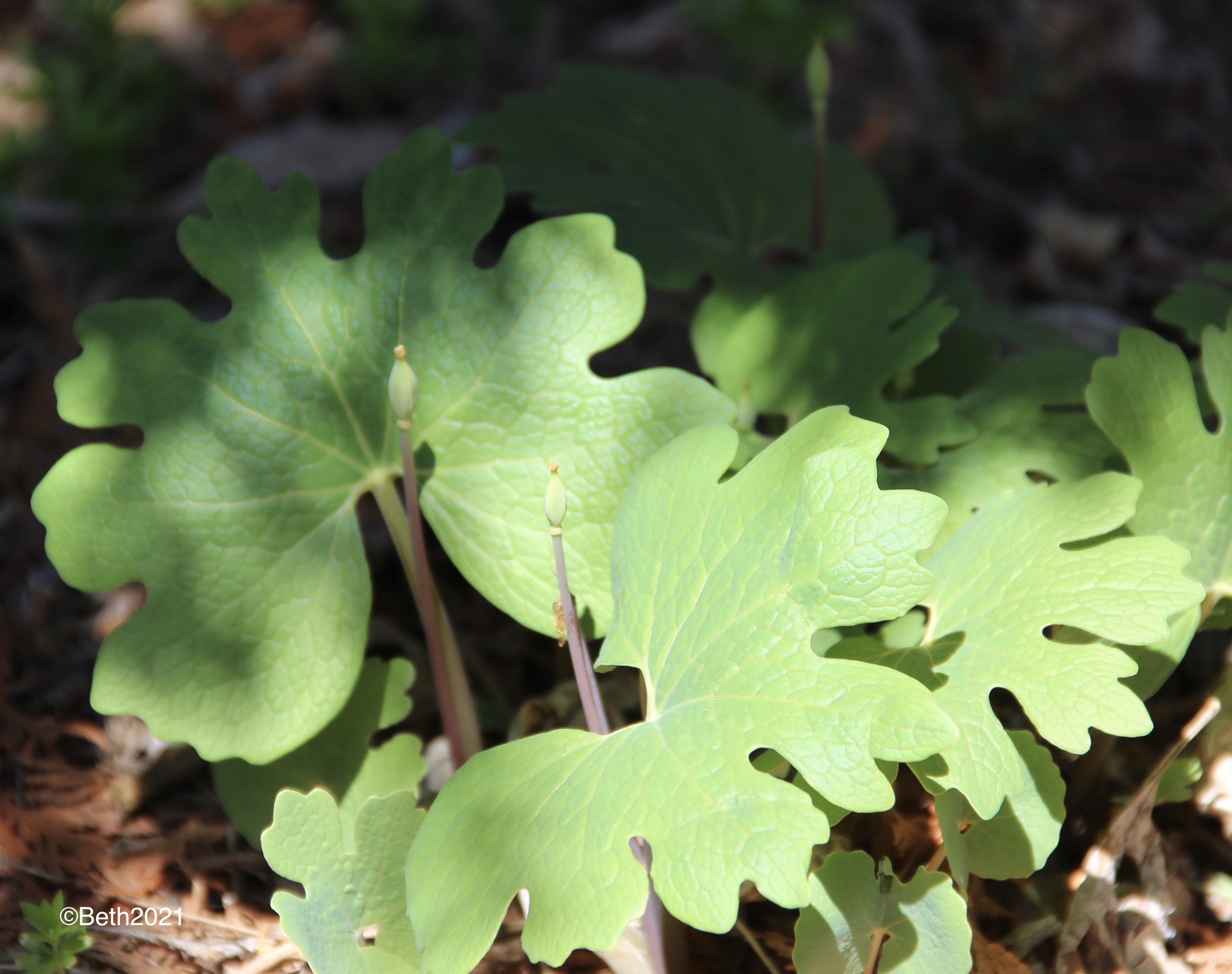
One of Minnesota’s earliest native wildflowers is bloodroot, (Sanguinea canadensis). Given its name, you might expect a scarlet or crimson flower. In fact, it blooms ice-white with a sun-gold center, though some emerge light pink. They look out of place, so stark and fresh among the remains of last year’s woodland growth and garden detritus. Its name refers to the toxic red-orange sap in the rhizome or root.

Each bloom emerges wrapped in a single curling leaf like a little blanket. The leaf remains curled until the blossom withers and then unfurls into a rounded leaf with a varying number of lobes. The leaves range in color from light green to blue-green depending on the plant’s age and condition. In its natural setting, bloodroot often grows along woodland edges, which provide sun in early spring and shade when the trees leaf out. In my garden, it grows along the edge of an arbor vitae hedge and under an ash tree. With shade and regular watering, bloodroot creates a pretty ground cover that lasts all summer under deciduous trees. If they aren’t watered during summer’s hot, dry spells, bloodroot leaves just go dormant until the following spring.

Native bees, honey bees and beetles pollinate bloodroot, which also can self-pollinate. Fertilized flowers form elongated capsules that enclose spherical seeds colored black, red, or brown. Here’s what’s special about bloodroot seeds: Each produces an elaiosome, an attachment containing lipids, amino acids and other nutrients. Attracted to these nutrients, ants carry the seeds back to their nests and feed the elaiosomes to their larvae. The ants either discard the remaining seed in a separate chamber of their nest, or toss it back out onto the ground. Either way, this process, called myrmecochory, helps ensure that the bloodroot seeds are dispersed for germination. Other spring wildflowers, such as violets, trilliums, hepaticas and Canada wild ginger, also form this mutual relationship with ants.

A member of the poppy family, bloodroot is native to much of eastern North America from Nova Scotia south to Florida, west to Manitoba and south to Texas. Native Americans used the plant’s red sap to make paint and to dye clothing, leather and other items. It blooms from March to May in Minnesota woodlands and was one of the first native wildflowers that I identified in the woods at our cabin years ago. The plants in most of these photos grow in our backyard. They hold special meaning for me because they were a gift from my aunt, who grew them under her trees for decades. They remind me of how she nurtured my love for nature when I was young.

Further reading:

Ants as Seed Dispersers

Friends of the Wildflower Garden – Bloodroot

Minnesota Board of Water and Soil Resources – Bloodroot

Wisconsin Horticulture – Bloodroot

Spring Happens All Around Us

On a recent morning, a friend looked outside and noticed the green blush beginning on trees and bushes. She recalled a teaching colleague’s comment during playground duty years ago. The colleague, a quiet woman of few words said, joyfully, “Oh, take a look! Spring is happening right before our eyes!”

Indeed it is. Thunderstorms, rain and mild temperatures coaxed baby leaves from their snug buds. They open like tiny green roses, flawless and smooth, not yet chewed upon by insects or mammals. Even on these cloudy, gray days buds and baby leaves paint the landscape in soft pastel greens and yellows. Don’t miss their fleeting, fragile beauty! They’ll quickly mature to full size and summer’s cool greens.

Maple Flowers

silvermapleflower1

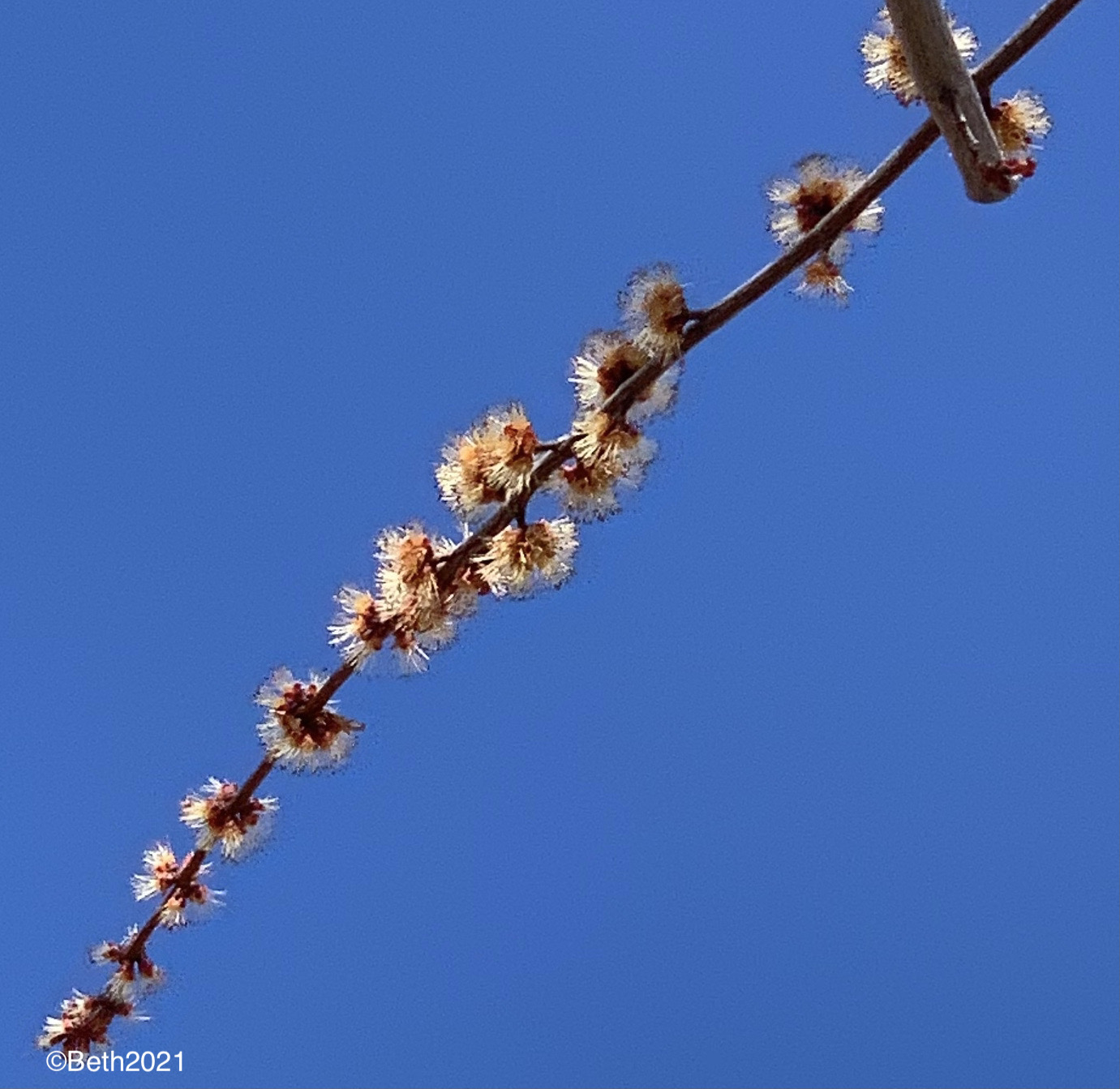
In Minnesota, native maple trees typically flower before bees and other pollinators are active.

Spring’s earliest flowers are popping open: gauzy crocus clusters, squill — Siberian and striped — and snowdrops that have bloomed through snow, cold and high winds for a month. They are lovely, these Eurasian transplants that paint the earth with pockets of bright color. Our native blooms are more hidden and less showy, yet are beautiful in their unflowerlike forms.

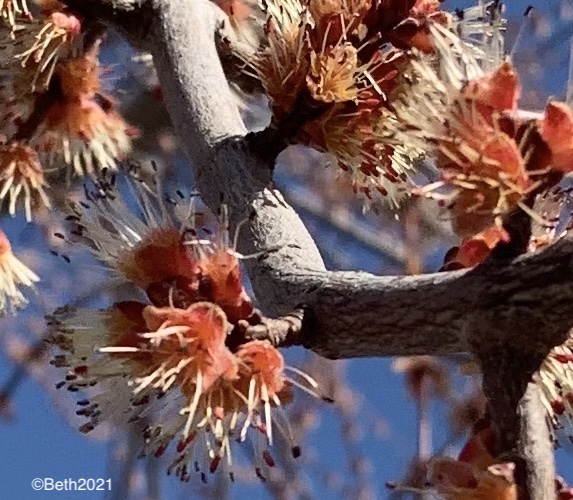
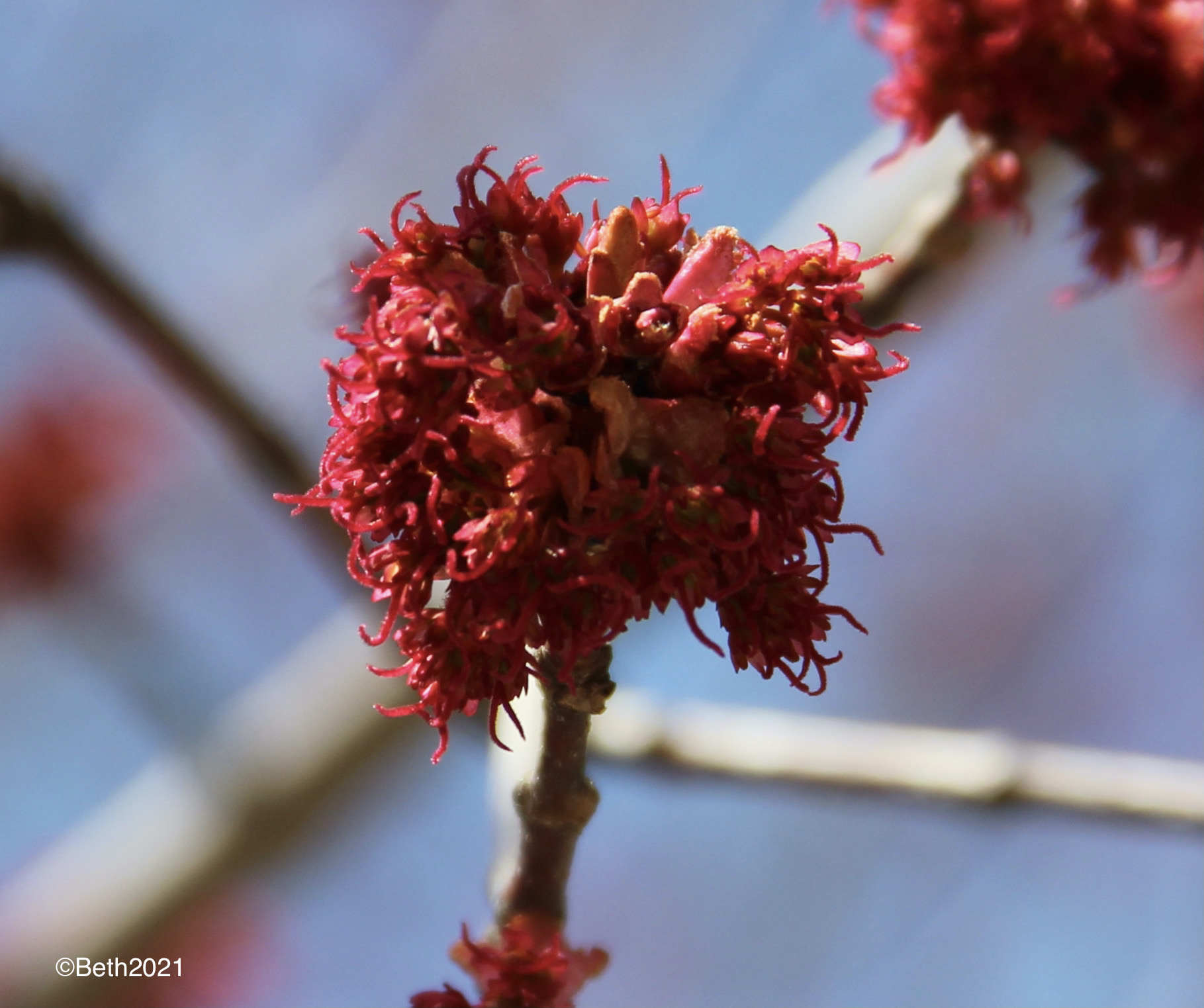
Look up at the maple trees. Easy to miss high overhead, these blossoms are small, muted and less recognizable as flowers. Each emerges from a scarlet bud coat and glitters with golden, translucent filaments tipped in auburn pollen. They remind me of minute, single-celled creatures that we might see in a drop of water under a microscope, or of the tiny squiggly animals living on a coral reef — beauty suspended in air rather than water.

silvermaplecaron

Male flowers of the silver maple (Acer saccharinum) are packed with pollen for wind dispersal.


The female flowers of red maples (Acer rubrum) remind me of tiny coral reef creatures.

Oh, and even if we don’t notice the flowers overhead, if you are allergic to tree pollen, your “nose knows” that maples are blooming! Why do they disperse so much pollen? In most years, maples and a few other trees bloom before native bees and honey bees are active. The early-flowering trees depend on indirect wind pollination. Male flowers produce copious pollen to successfully fertilize female flowers on other maples.

Black Eastern Tiger Swallowtail

An eastern tiger swallowtail black form female nectars on nepeta ‘Walker’s low.’

It’s late spring with the entire summer ahead of us. Nature’s greens are deep and full. Tiger swallowtails (Papilio glaucous) are on the wing now, the first of two times during the Minnesota summer. The first flight is typically in May-June and the second in July-August. The offspring of the second flight overwinter in their chrysalides.

I watch a bright yellow male patrolling his territory, repeating the same route through the large silver maples across the alleyway, over our apple tree and under my neighbor’s birch tree. He is quick to give chase to other males that trespass.

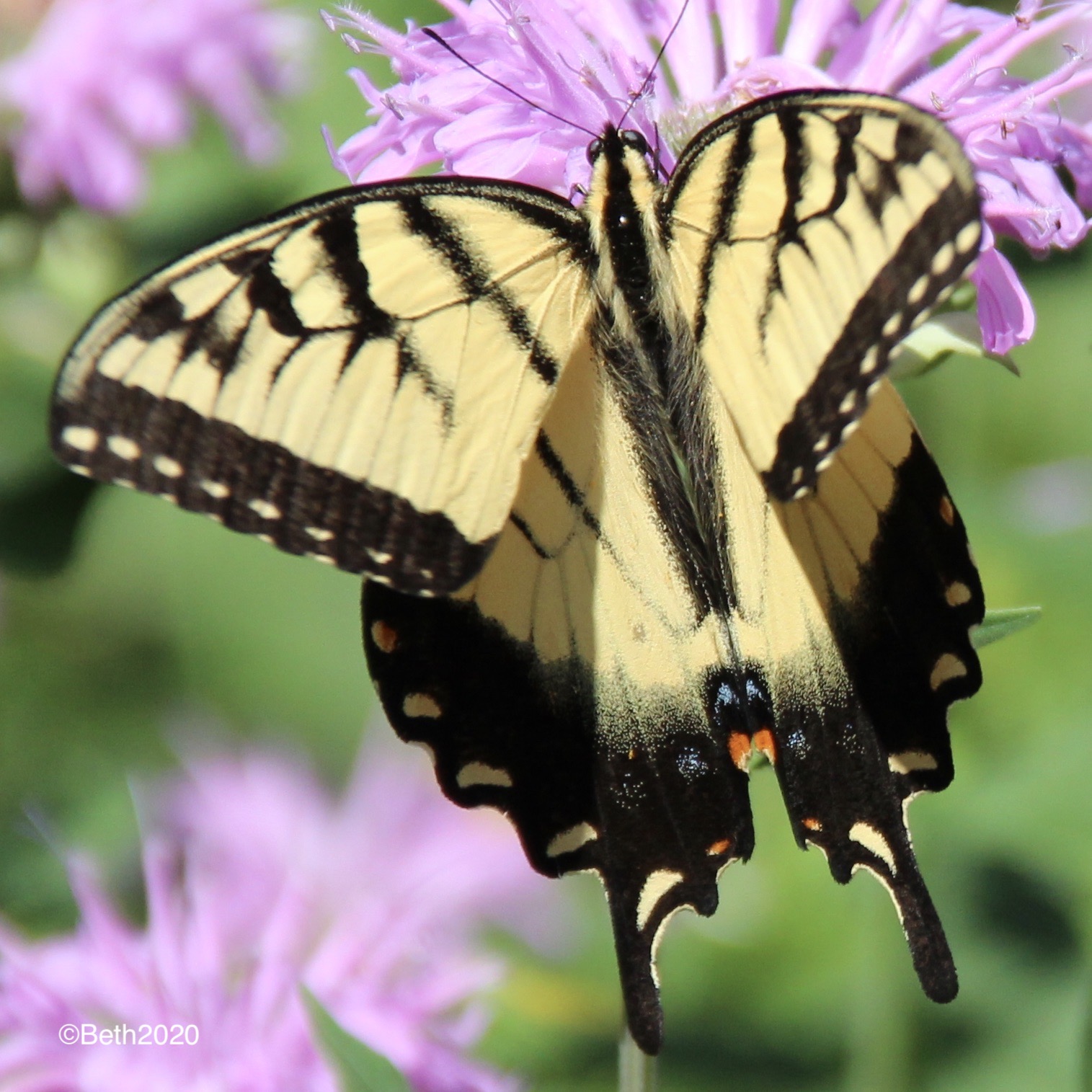
Eastern tiger swallowtail males are always yellow with black stripes and lack the wash of blue on the hind wings.

On this sunny, breezy morning, a black form female nectars in a sea of blue nepeta in our front garden. Her iridescent blue-on-black wings flutter repeatedly from one end of the garden to the other. She is full of energy and free of wing tatters and tears.

The female’s underwings are marked with bright orange spots and light blue scales.

Most eastern tiger swallowtails in Minnesota are yellow with black stripes. However, the female is dimorphic, or appears in two forms: the familiar black-striped yellow and a rarer black form washed with shimmering blue across its hind wings. Faint black stripes are often visible on the dark female.

Just a tiny percentage of females appear in the black form, especially this far north, but are  common in the southern United States. Why? Scientists think that the black form is a mimic of the pipevine swallowtail, which tastes horrible because the caterpillars feed solely on pipevine plants. (Think of monarchs and viceroys, another example of mimicry. Birds hate the taste of monarchs because they eat milkweed. Viceroys closely resemble monarchs, so birds often avoid them.) Pipevine swallowtails occasionally come as far north as Minnesota.

Interested in attracting eastern tiger swallowtails to your yard or garden? Favorite caterpillar foods include: chokecherry, ash, poplar, maple, apple and mountain ash. Adults nectar on many flower species including phlox, milkweed, Joe-Pye weed, blazing star, bee balm/bergamot and red clover.