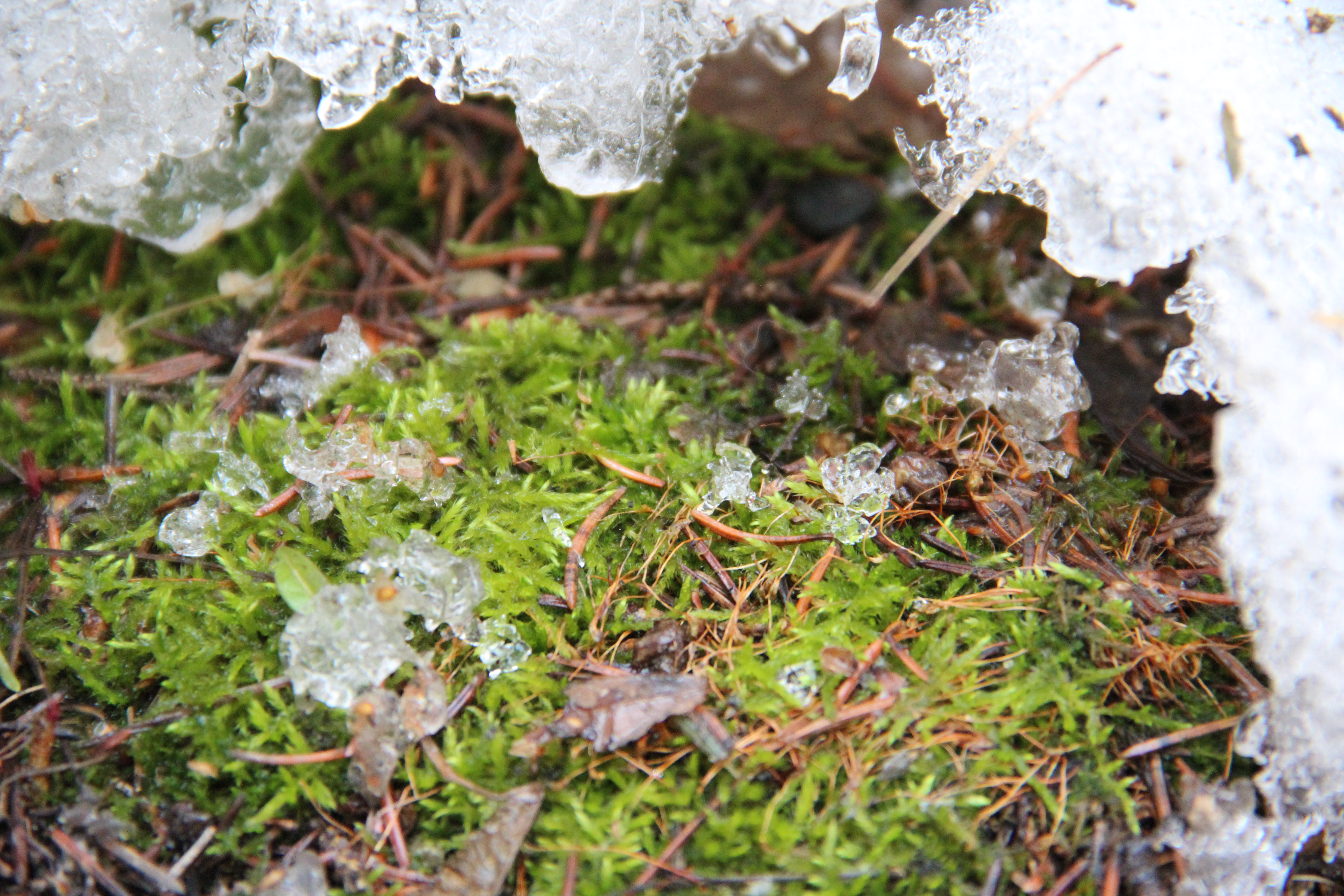
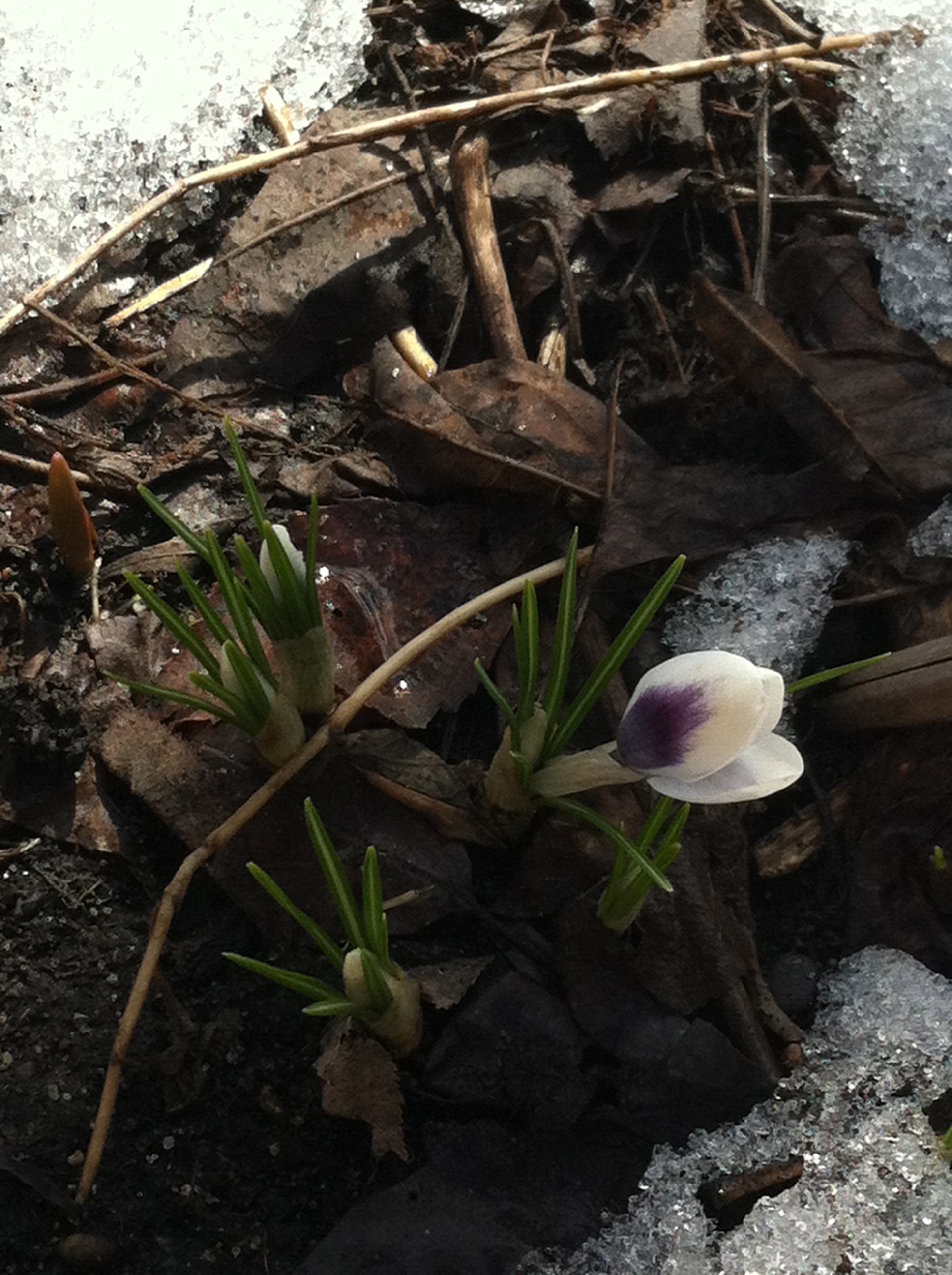
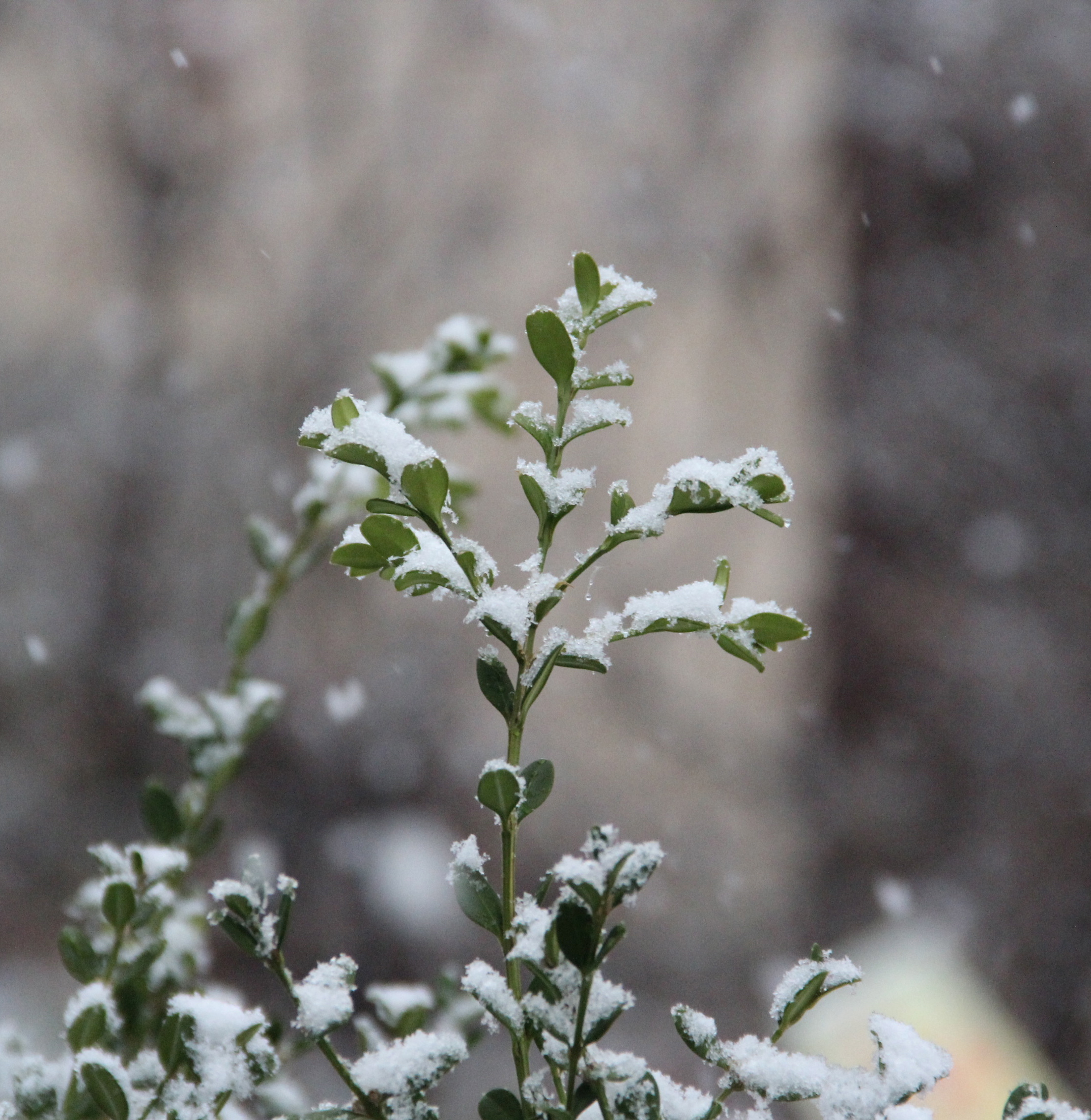
Early last week, I searched the few exposed patches of dirt for signs of bulbs pushing through the soil. No sign of bulbs in the north-facing garden, yet. Instead, I found the first bright green of the season: An oasis of moss tucked beneath a little cavern of melting snow under our spruce tree. Threaded with tiny seeds and spruce needles, the moss was the golden green of spring and droplets of melting snow refreshed it. Lovely, restful green; a beautiful, hopeful color after months of black and white.
Morning Song
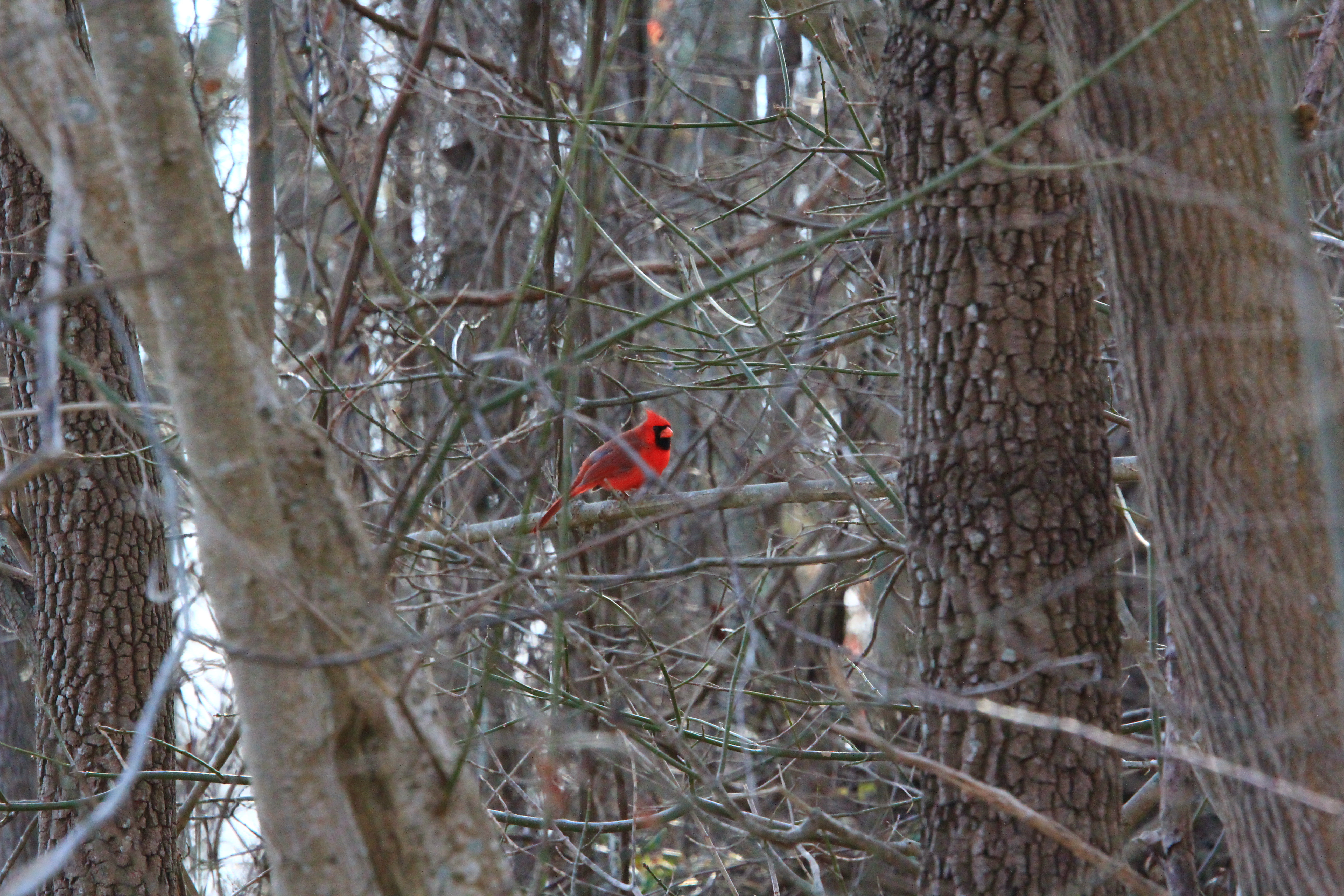
Each morning between 6:00 and 6:30, a male cardinal perches in the arbor vitae at the back of our yard and sings in the predawn darkness. His melodious whistles serenade his mate, define his territory and bring cheer to the cold morning.
When the sun is higher, he whistles a more intricately patterned call. Soon his mate comes to feed at the suet brick while he watches from the cedars, a red ornament decorating the green fronds. His lady is softly colored in olive and brown highlighted with pinkish red. I haven’t heard her song yet this year, but female cardinals are able to sing as lovely as males, and soon she will join him — especially when they begin nesting, to communicate location and the need for food.
Why does the sight of a cardinal bring joy to so many people? Cardinals are common, year-round residents throughout most of Minnesota, the eastern United States and Mexico. Yet, spotting a flash of red in a tree top, at a feeder, or in a garden is always delightful. For me, it is because cardinals sing when most other birds are silent — on frigid late-January mornings and sweltering late-summer afternoons; and because, most summers, they raise a family in the hardwood hedge in our backyard; and, simply for their red brilliance against the winter landscape or among the purple and gold in our September garden. A common bird, perhaps; uncommonly beautiful, most certainly.
Quaking Aspen Buds
Shiny, brown buds began to open on a neighbor’s quaking aspen trees today! Each open bud held what looked like a tiny, soft, gray cat’s paw, similar to a pussy willow bud. Aspens are members of the willow family, so it’s no coincidence that they bear soft, fuzzy catkins. The buds will develop into long catkins, which are the aspen’s flowers. They are wind-pollinated and the male catkins will release large amounts of yellow pollen into the air later in the spring. (According to pollen.com, poplars and junipers already are releasing low levels of pollen in the Twin Cities.) The seeds will develop and be dispersed with tufts of soft, white “cotton” before the leaves open.
Ready for Spring
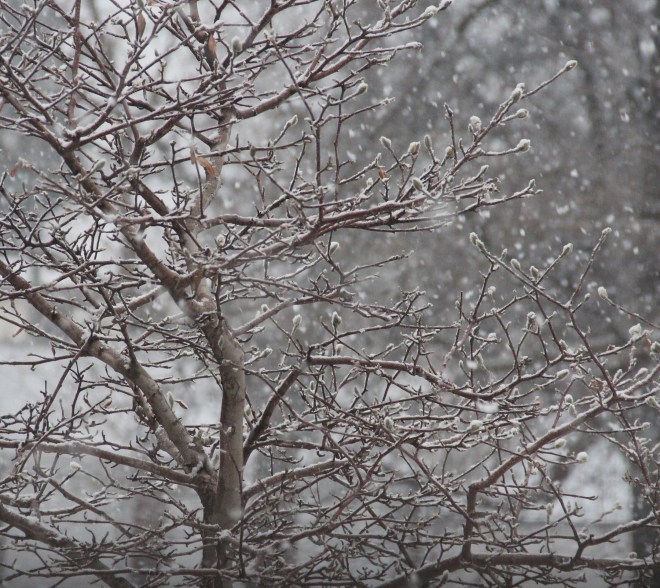
The sun rides higher in the sky and daylight lasts almost 11 hours, but those are just about the only signs of spring — and most of us long for a warm-up that stretches beyond a meager two days. Last week brought “bookend” snowstorms: 6.4 inches of new snow on Monday and 9.9 inches on Thursday/Thursday night, for a total of 16.3 inches measured at nearby Minneapolis-St. Paul International Airport.
How I pine for the first crocus to poke through the soil and open its delicate cup-shaped flower to the early spring sun! But, with at least two feet of snow, plus the snow from sidewalk shoveling heaped on top of the garden, it’s likely to be several weeks before the snow melts and sunlight warms the soil. As soon as I spy the first patch of dirt, I’ll be out every afternoon peering at the muddy earth for the first tiny, reddish-green tip of a crocus to push through to the light and signal the reawakening of life. What signals spring to you?
© Beth and Nature, Garden, Life, 2013-2014. All photographs and text are created by Beth unless specifically noted otherwise. Excerpts and links may be used as long as full and clear credit is given to Beth and Nature, Garden, Life with specific direction to the original content. Please do not use or duplicate material from Nature, Garden, Life without written permission from Beth.
Frost Flowers — and a Few Wild Ones
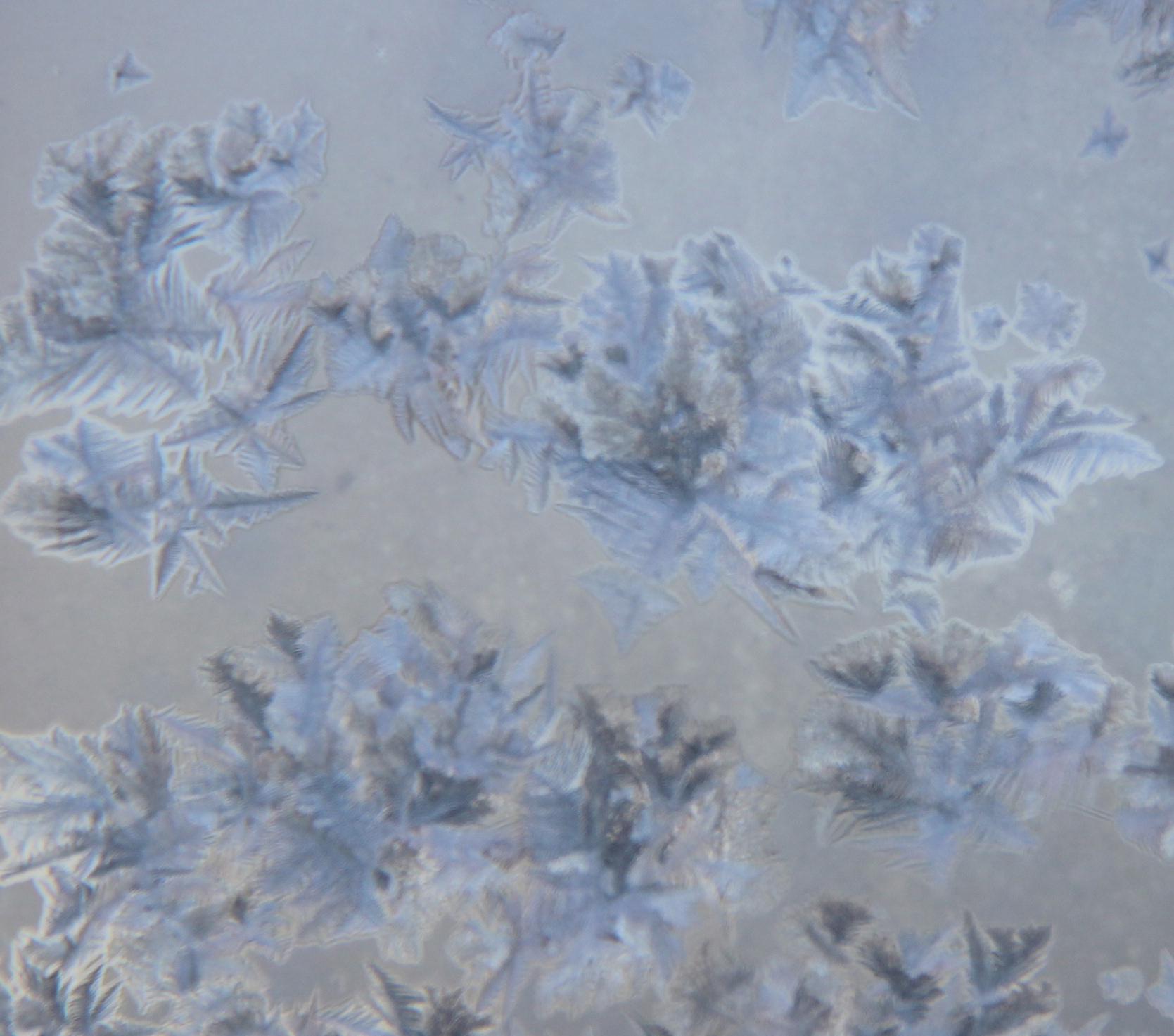
Crystalline flowers flow across the storm windows in our north-facing bathroom. In this subzero weather, the moisture from our steamy morning showers seeps through the old, loose-fitting decorative windows and condenses as frost on the cold glass panes that cover the screens. The patterns that take shape depend on the amount of dirt, scratches and residue on the glass, and the humidity level and temperature of the air. These patterns are often called frost flowers, roses or ferns.
According to Halldor Svavarsson at the Icelandic Web of Science the most commonly formed pattern of crystallization is hexagonal because it requires the least amount of energy. If the moisture settles and freezes quickly, the roses will be small and close together. If not, the roses may be fewer in number, larger in size and may spread out on the glass.
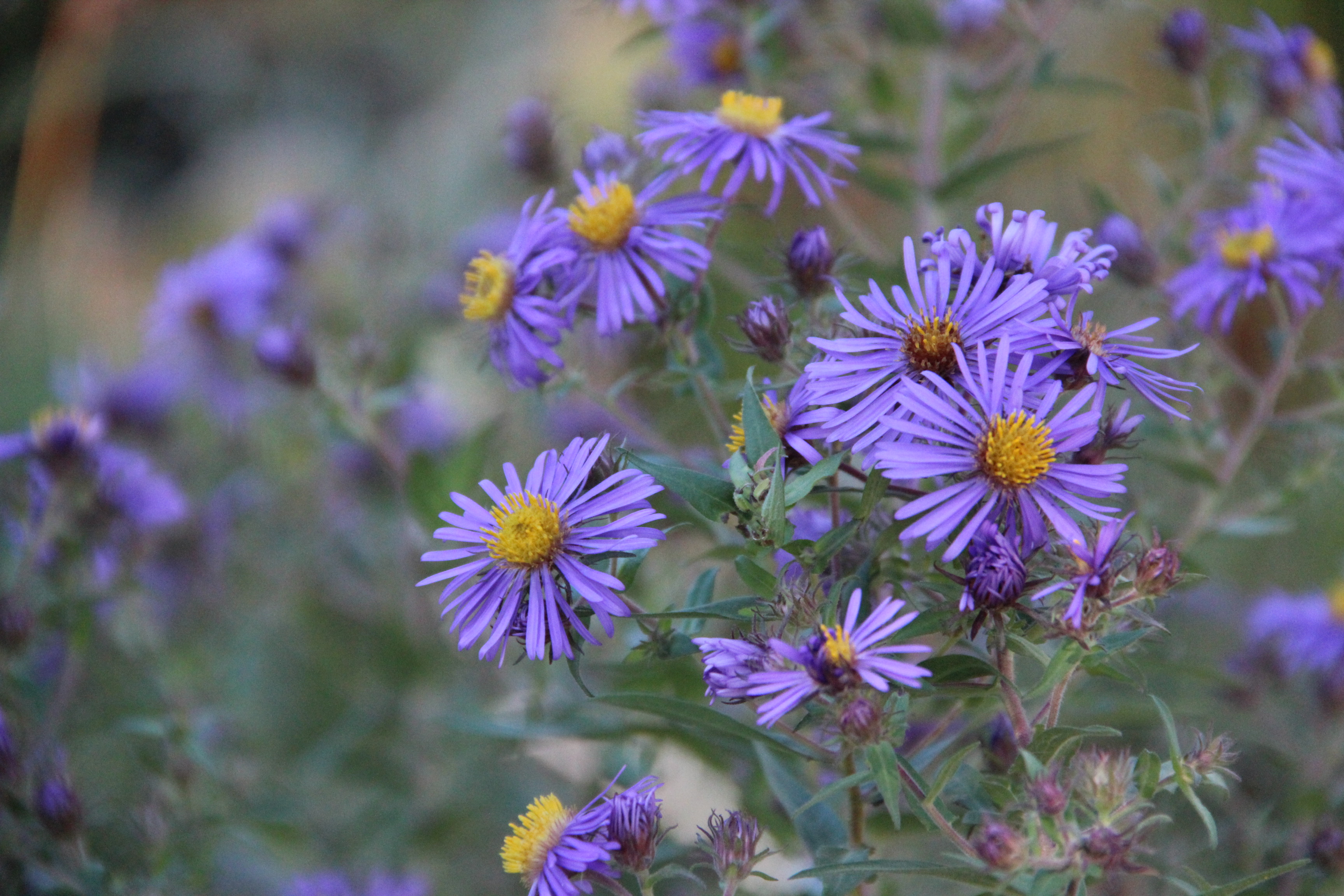
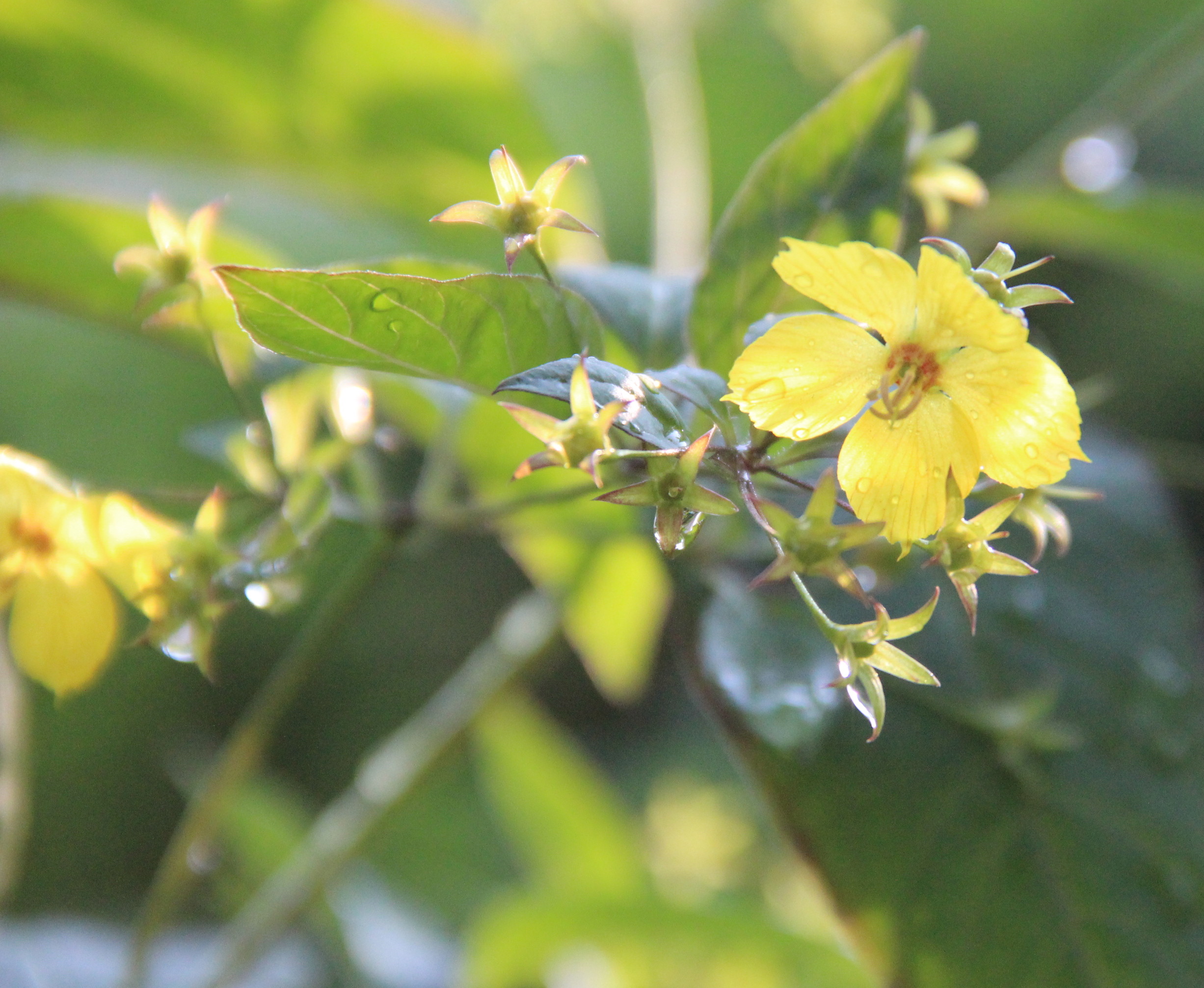
Frost roses and ferns are delicate and lovely, but I prefer nature’s wildflowers. Here are a few from last summer:

Native fringed loosestrife (Lysimachia ciliata) is unrelated to the non-native, invasive purple loosestrife.
© Beth and Nature, Garden, Life, 2013-2014. All photographs and text are created by Beth unless specifically noted otherwise. Excerpts and links may be used as long as full and clear credit is given to Beth and Nature, Garden, Life with specific direction to the original content. Please do not use or duplicate material from Nature, Garden, Life without written permission from Beth.
Nature: Looking Back at 2013
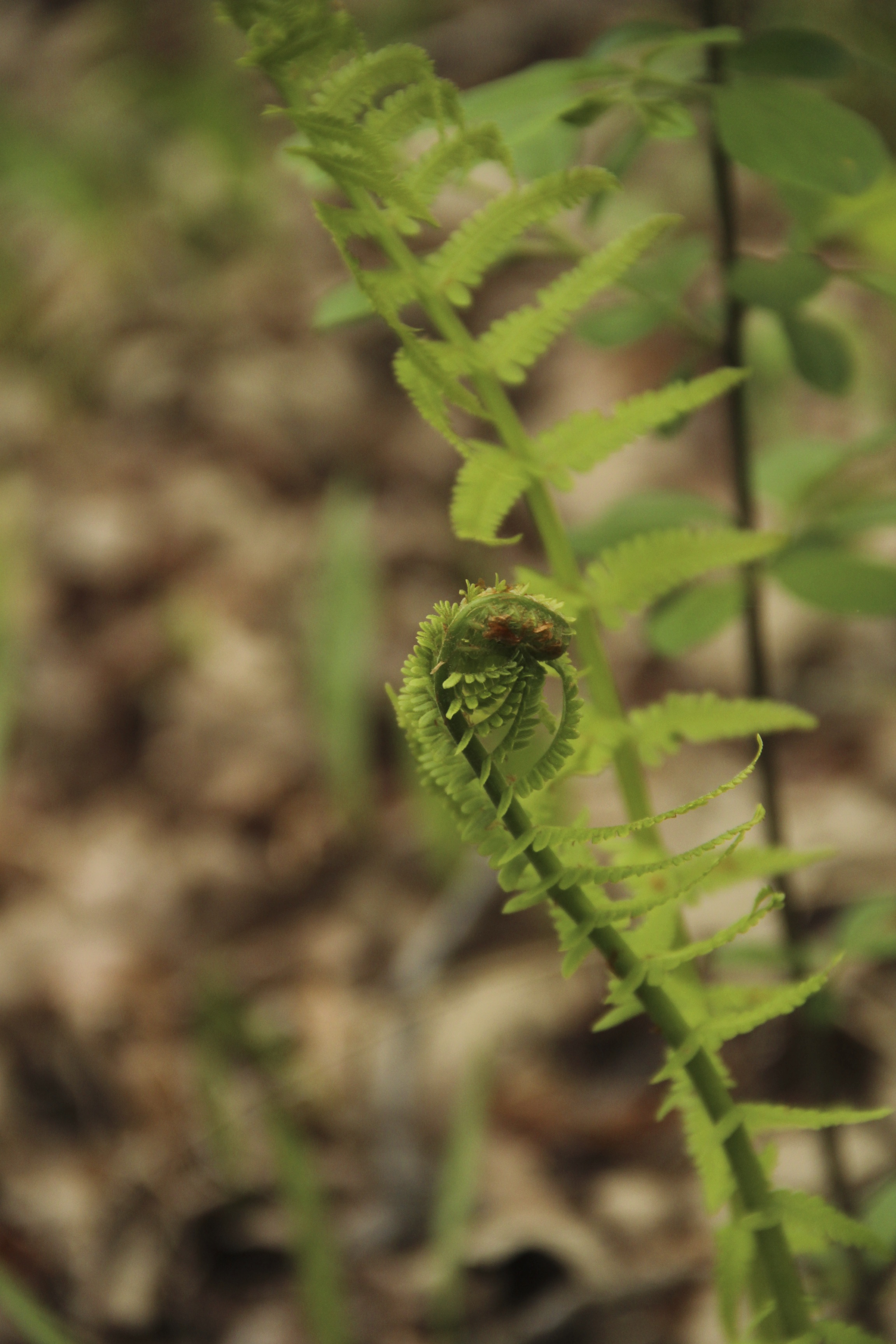
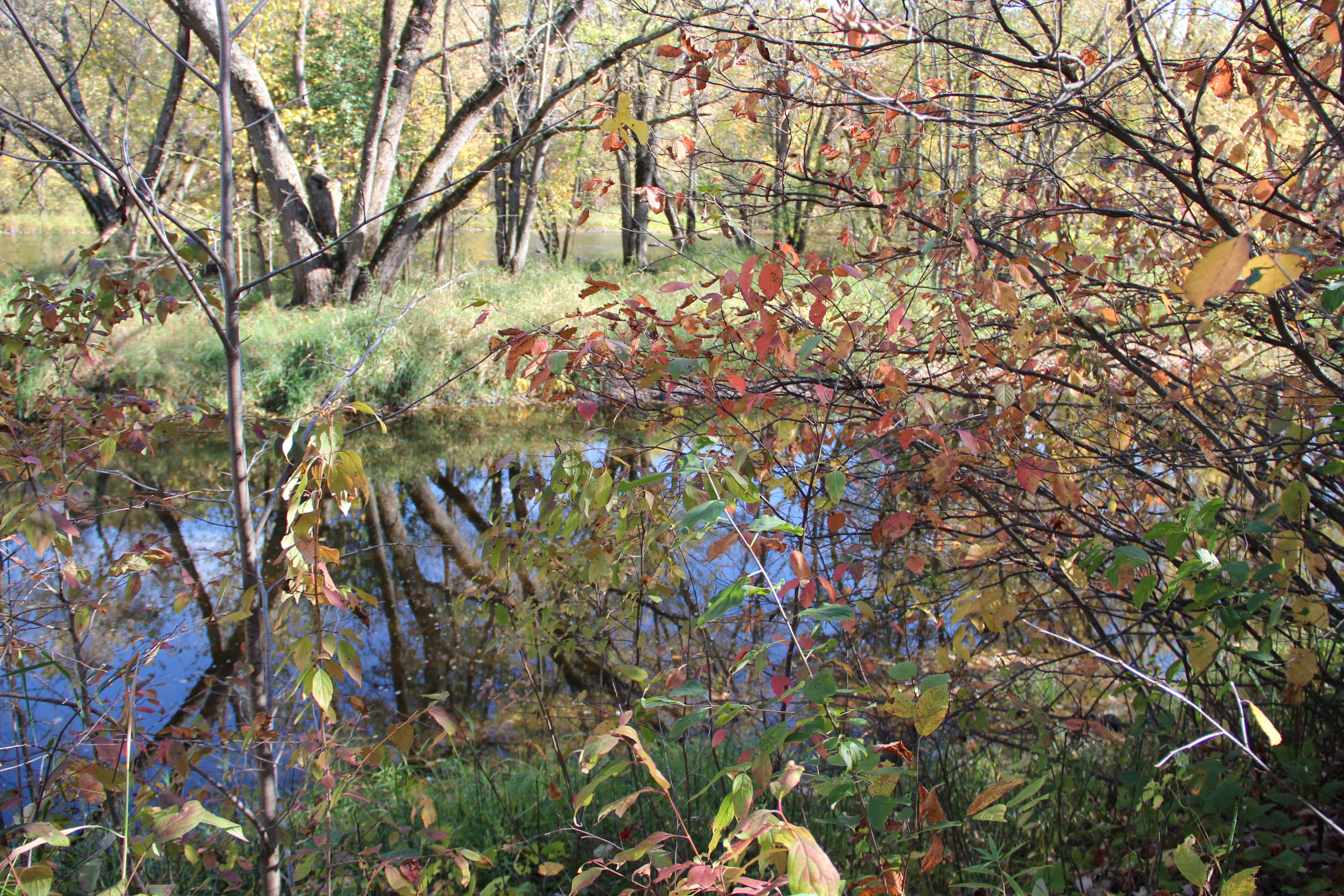
Snow, ice and cold blanket Minnesota now, but last June through October the woodlands bustled with life. From unfurling ferns, to hummingbirds and harebells, to the changing Snake River and autumn woods in Pine County, MN, here are a few of nature’s simple gifts in 2013 that I recall with gratitude — and look forward to seeing again in 2014. Happy New Year!

Large-flowered trillium (Trillium grandiflorum) and early meadow rue (Thalictrum dioicum) bloom at the base of a burr oak.
December Thaw
I walked a mile or so around our city neighborhood at noon today. The sun was gently warm in a powder-blue sky and a mild breeze blew from the south. Melting snow plunked and gurgled in metal downspouts, and chunks of ice on roof shingles loosened and crashed to the ground. Plants lost their winter snow caps. Squirrels snoozed on tree branches in the sun. Blue jays, black-capped chickadees and a white-breasted nuthatch chattered in the trees. Walkers smiled, called greetings and shed hats and mittens in the warmth.
Six weeks ago, a high of 47 degrees (F) would have felt very chilly and worthy of complaint. Today, it feels balmy — a glorious day to be outside. And though the next Arctic air mass will arrive tonight with subzero temperatures and dangerous wind chills, I’ll cherish this tiny foretaste of spring while I wait for the January thaw.
Northern Christmas Greetings
In the cold darkness of the northern winter, solstice arrived and soon the days will grow noticeably longer. May you know the beauty,
the quiet peace,
and the joy in this season of Light.
Winter Sky
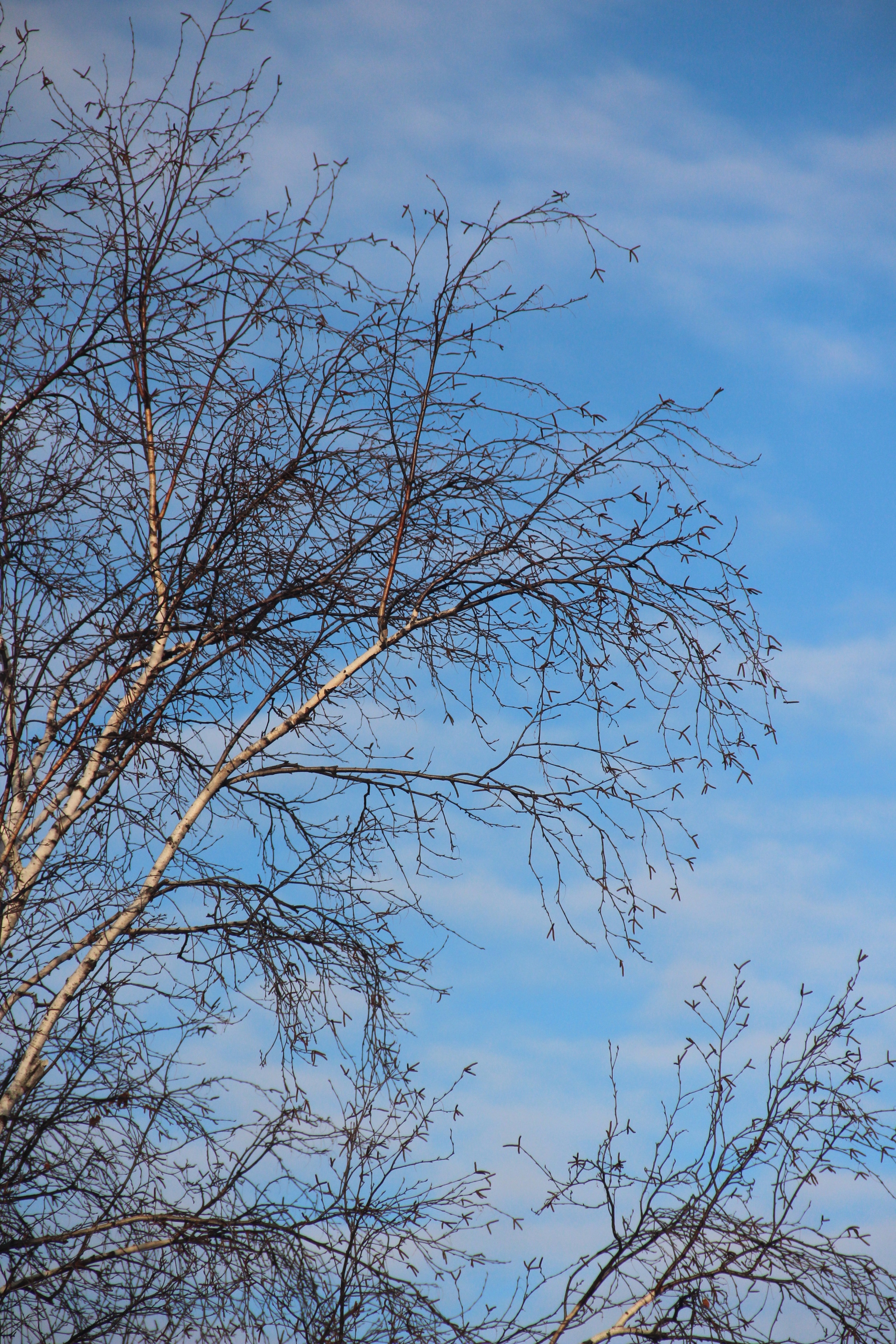
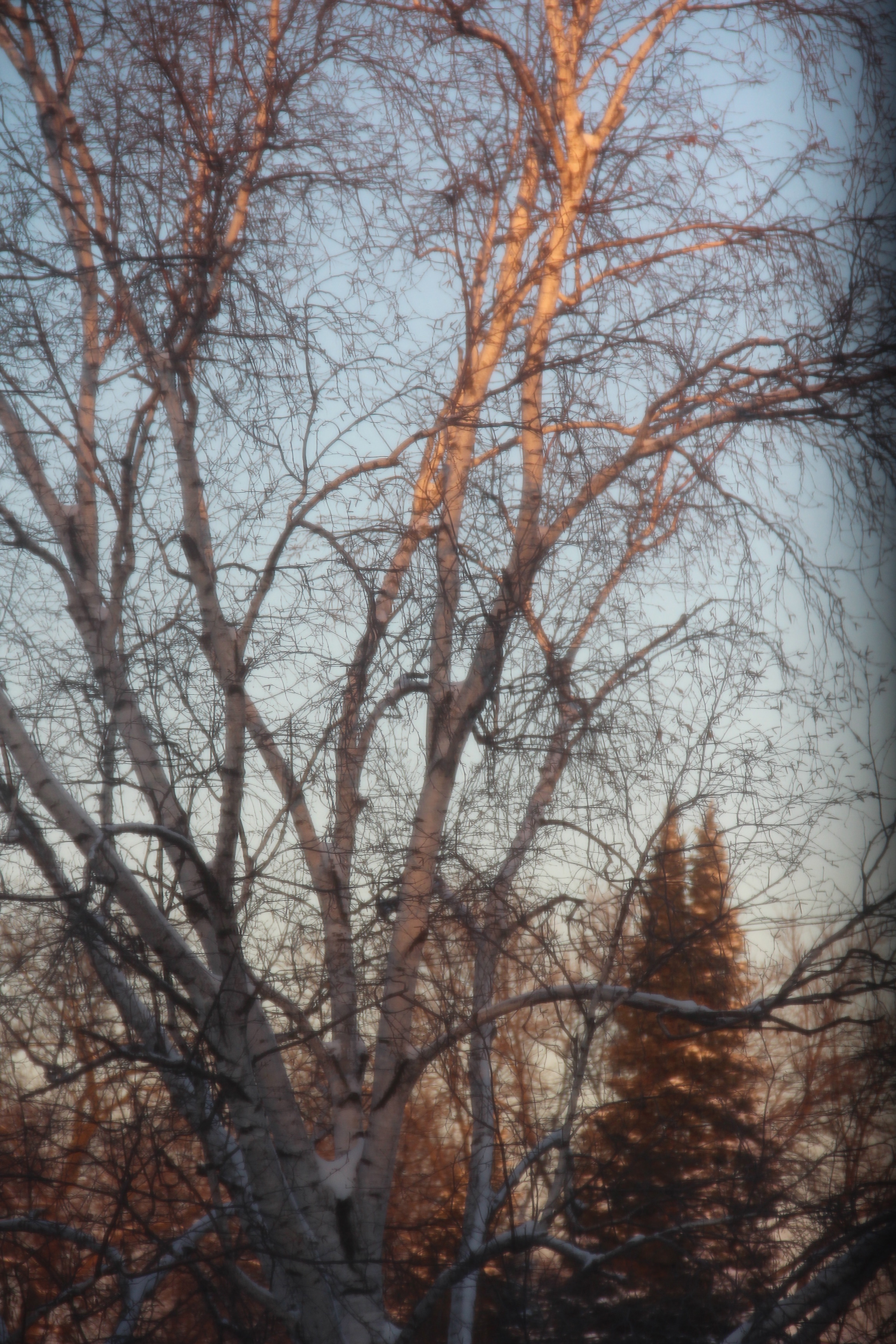
The winter sky is moody and ever-changing even in the city. The rising sun glows a warm orange on trees and buildings that belies the steely cold air.
The sky grows to a brilliant blue, then often softens to dove gray — especially in early winter when clouds quickly blanket the blue, sputter snowflakes, or spin a squall before moving out.
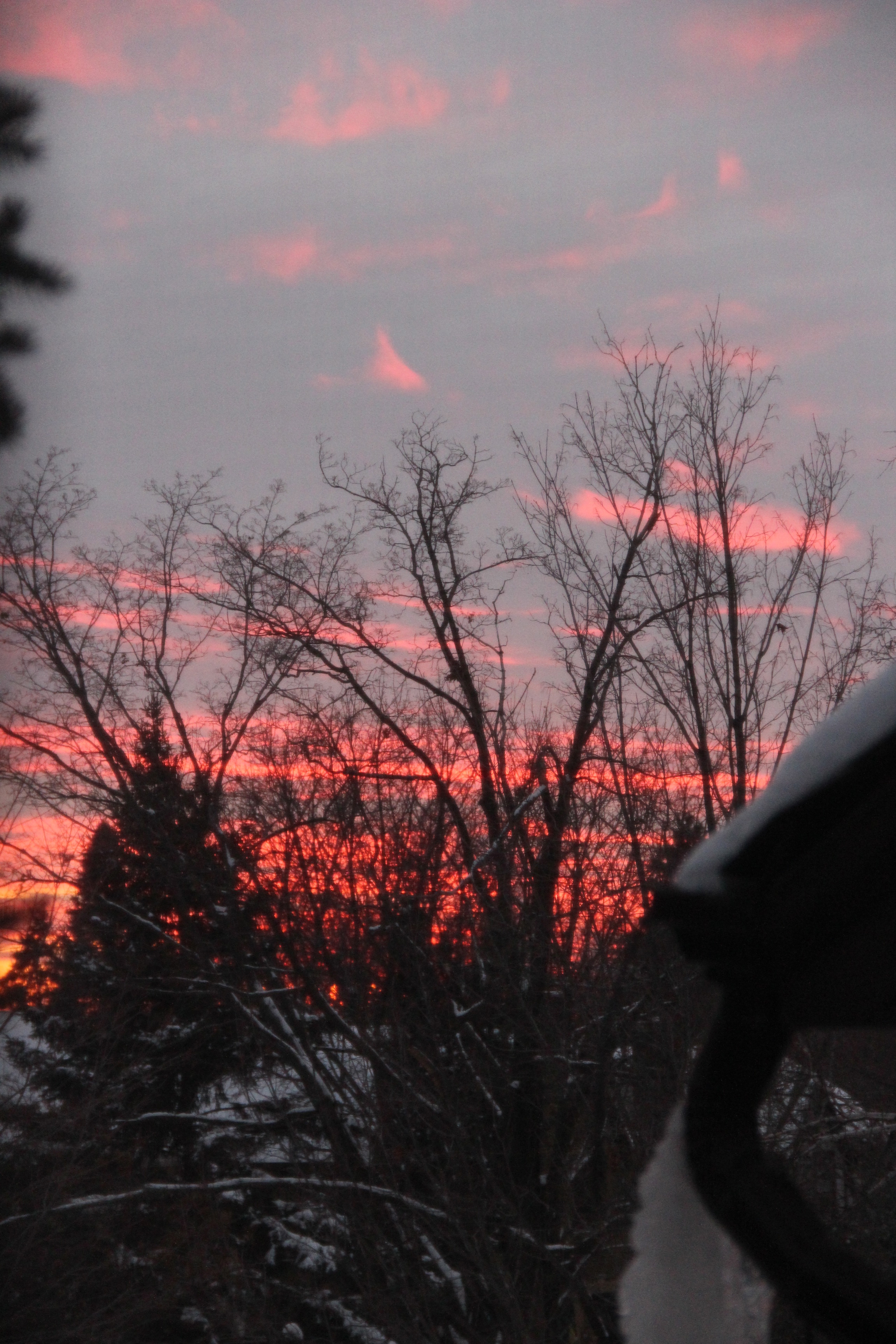
Winter sunsets fire the horizon unlike any other time of year. As the sun sinks lower, light streams through our southwest windows flooding the rooms with deep golden rays. I love that last burst of gentle, bright warmth and, for a few moments, I work in those rooms when possible — perhaps to write, catch up on paperwork, or even fold a basket of laundry. Soon afterward, broad strokes of rose illuminate the west, then slowly die down to pink embers.
Many evenings, in the final glow of twilight a silvery moon brightens against a pale, fading sky.
First “Sticking” Snow
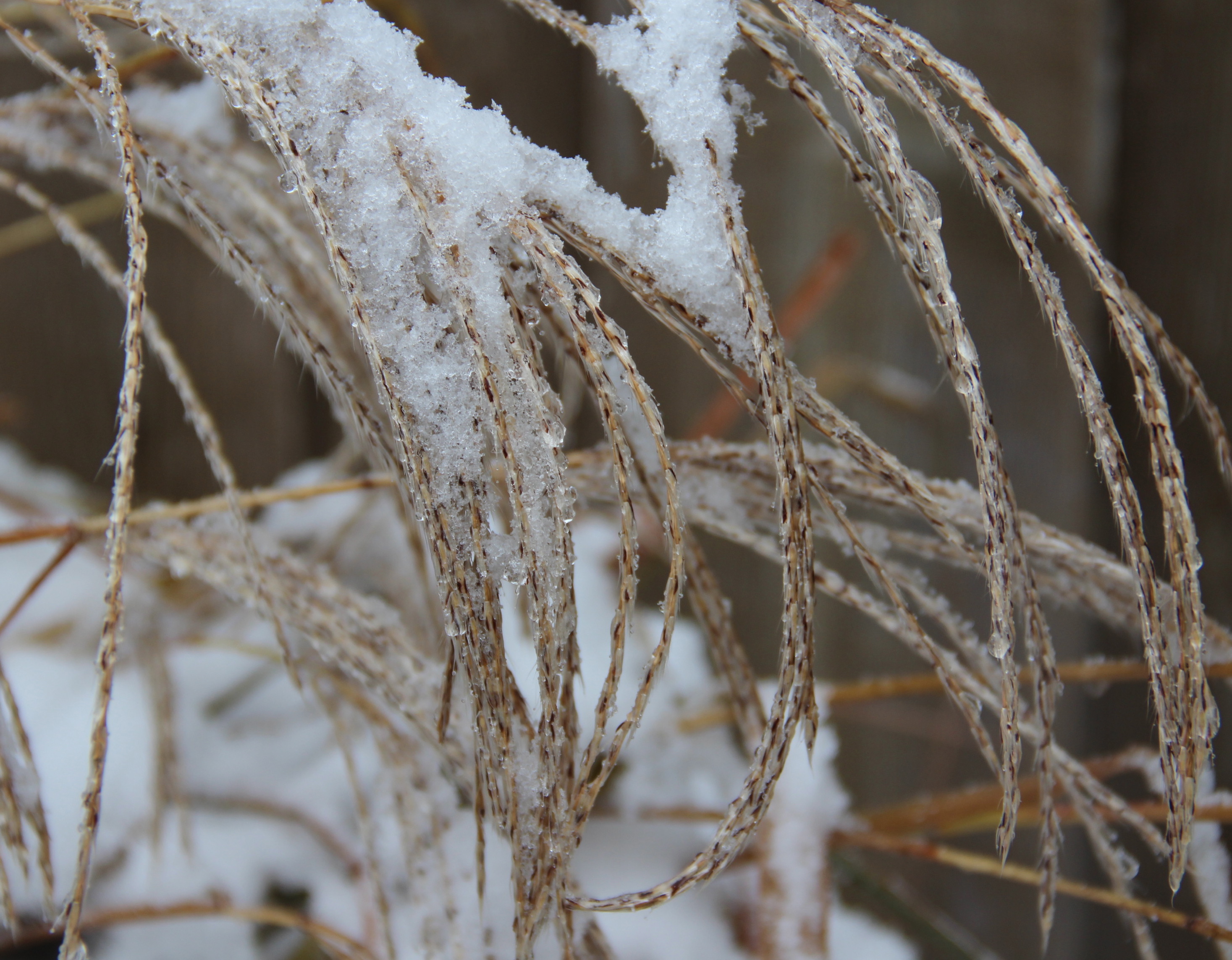
It started out as rain, then many hours of mist. Later, heavy wet snow changed to sleet and back again, weighing down and soaking seed heads, decorative grass and the few leaves that haven’t fallen from the trees. This snow is likely to stay for the rest of the winter, given the subzero temperatures and the prediction of more snow to arrive on Sunday.
I’m not a winter person, I’m a summer gal. I miss the melodious birdsong, the activity of butterflies, bees and colorful beetles in our garden, the leafed-out trees, the warmth of the sun and the long, long hours of northern daylight. But I try to find the raw, stark beauty revealed in the winter months. It is not the vivid, vital beauty of summer. No, it is a harsh beauty that complements the cold, brittle air, stinging wind and sharp light of December.
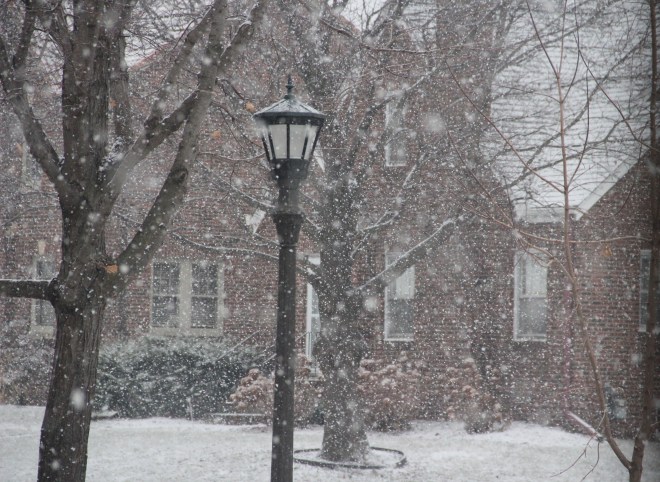
When snow falls, a temporary hush settles over the city, dampening the noise of traffic and aircraft, and making it easier to hear nature’s sounds — the quiet ticking of sleet and snowflake on spent plant stalks, the rustle and crackle of brittle leaves in the wind, a chickadee’s call and the honking of geese flying low overhead.
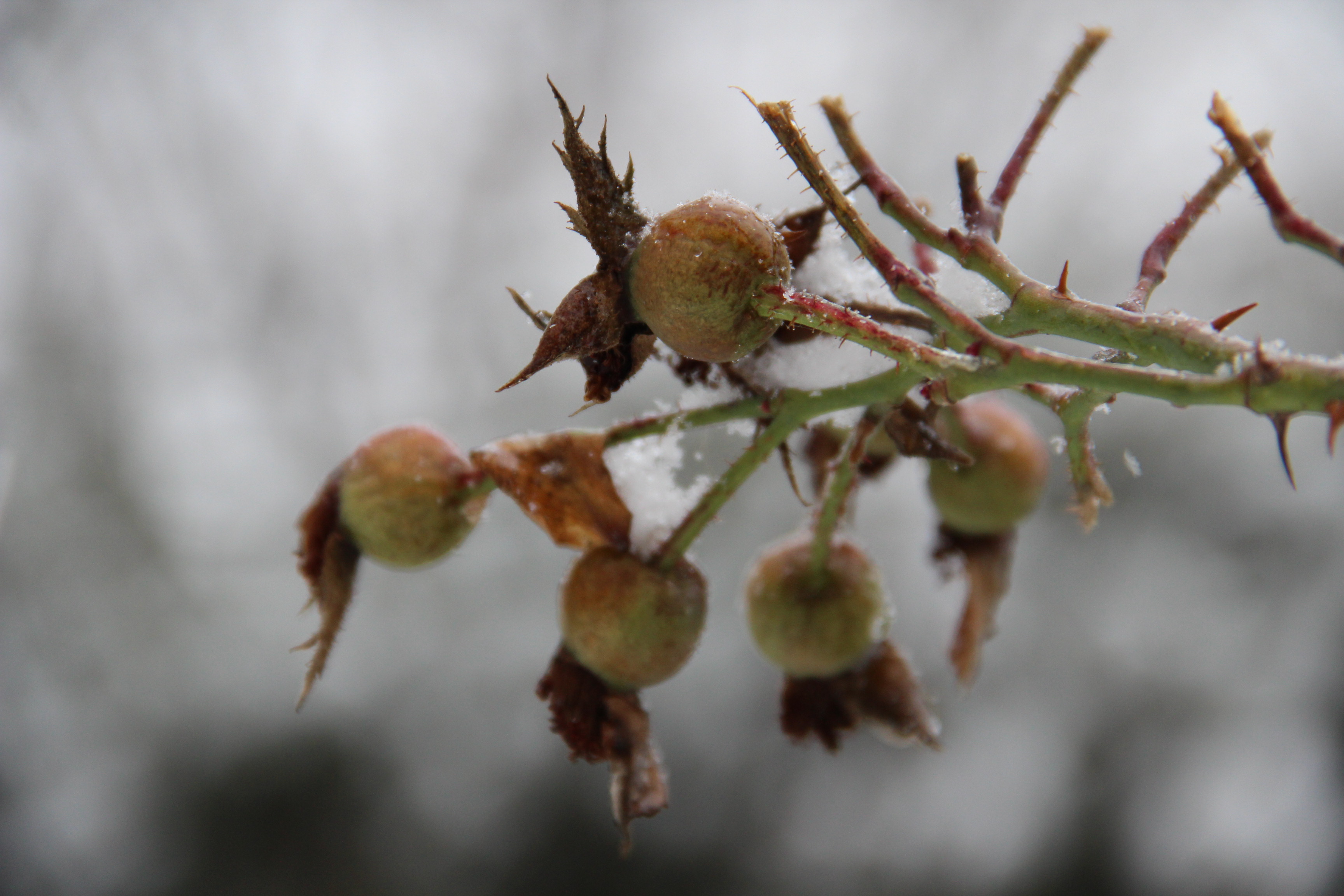
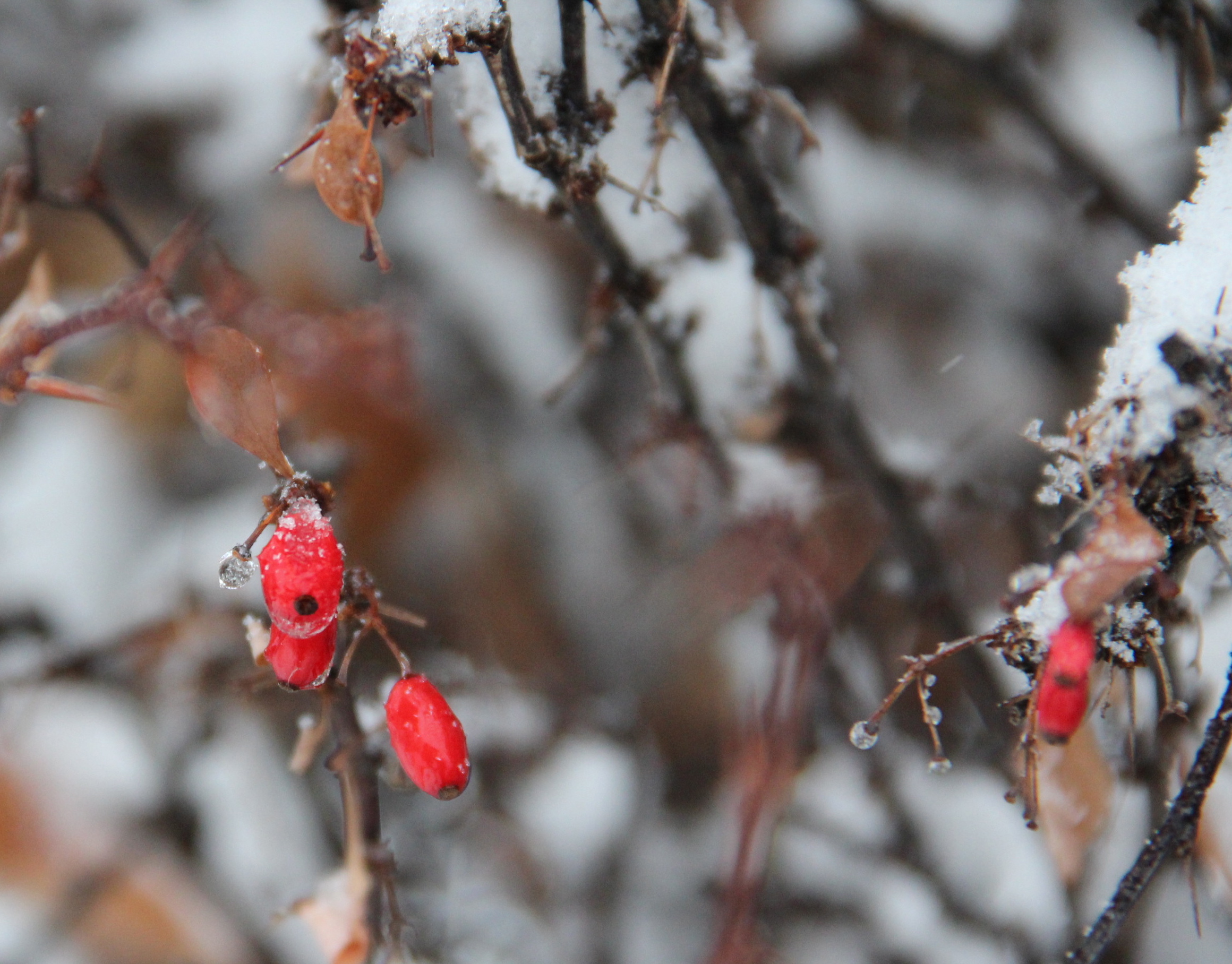
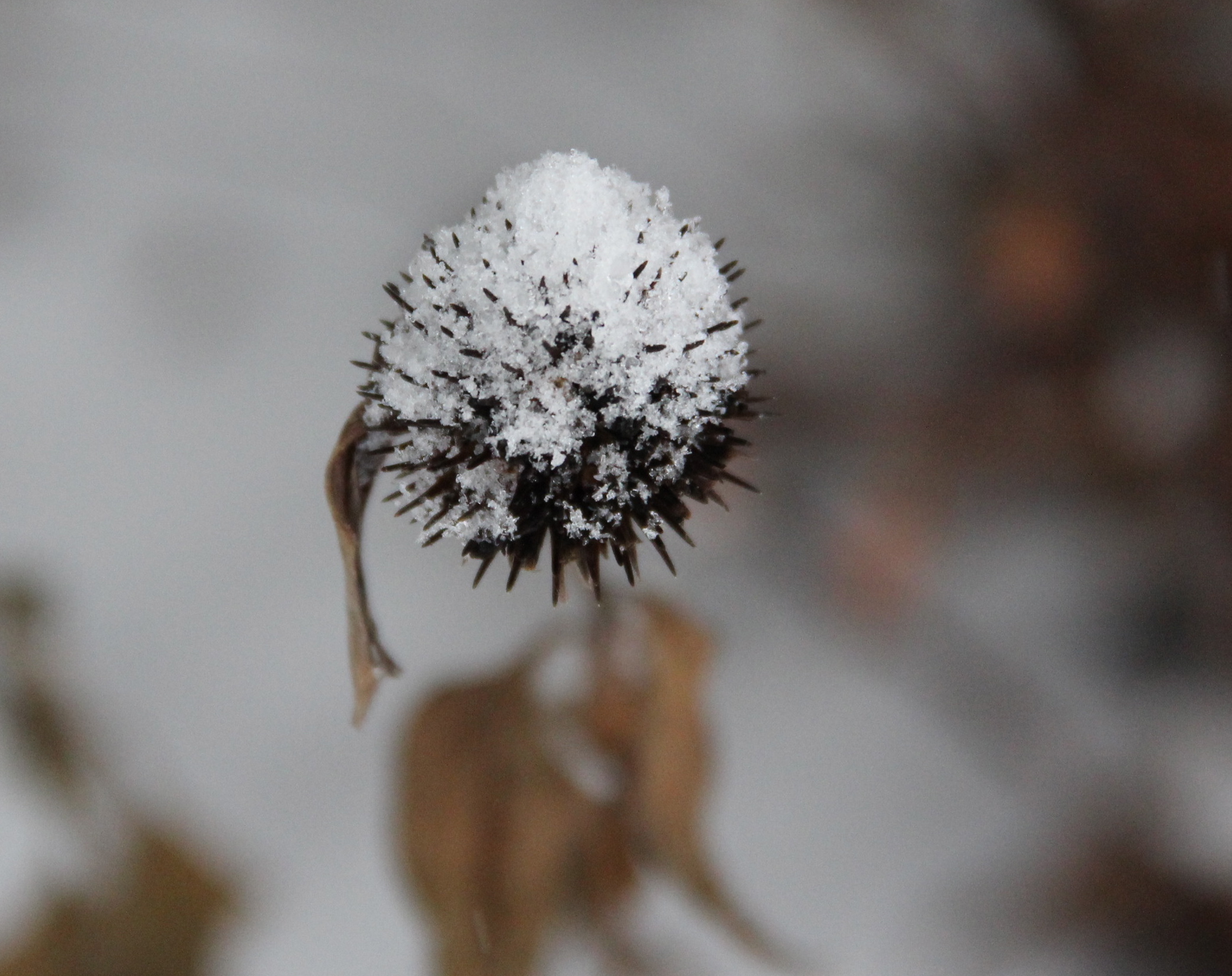
This snow wasn’t as pretty as most because it was too soggy to etch and highlight trees and other plants. But, I found a few lovely, wintry sights in the yard: